Prints just the plan, like a recipe card.
Last updated: November 22, 2026.
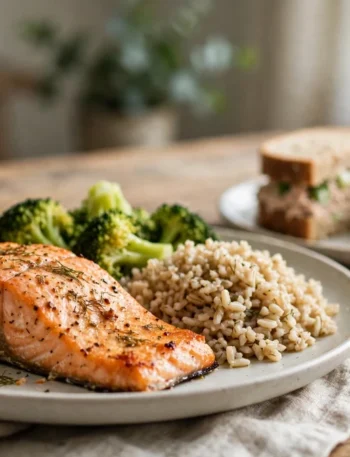
This anti inflammatory meal plan for beginners is a simple 7-day week at about 1,600 calories a day, built on the foods usually meant by an anti-inflammatory style of eating: plenty of vegetables and fruit, beans and lentils, whole grains, fish, nuts, and olive oil. It is a style of eating, not a treatment. It does not diagnose, treat, or cure any condition, and it makes no promise about inflammation or symptoms. Every portion is written out for beginners, and every number was calculated from USDA FoodData Central values.
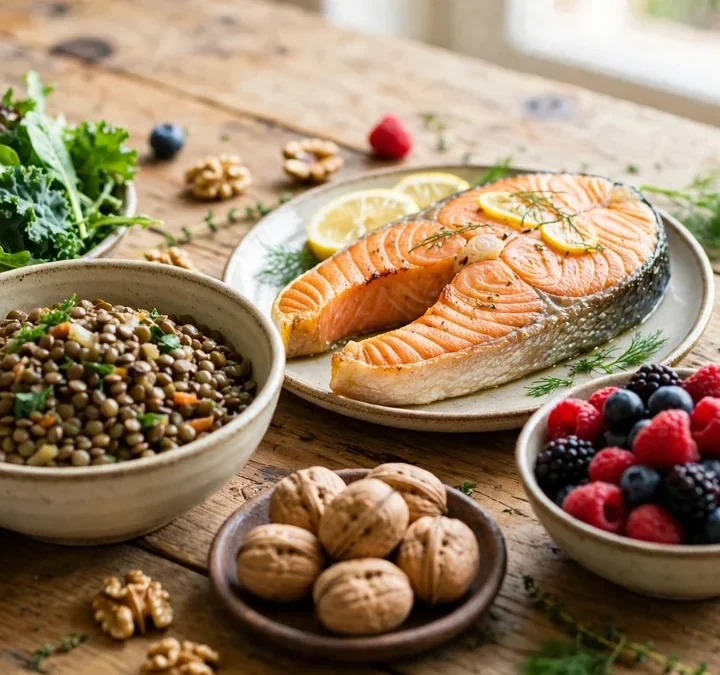
Salmon appears twice, berries and leafy greens show up most days, and walnuts, almonds, and olive oil provide the main fats. Protein averages about 106 grams a day and fiber about 39 grams a day. For many adults, a level near 1,600 calories lines up with gradual weight loss of about 1 to 2 pounds a week, though your own rate may differ. This plan sits in our By Diet Style collection, part of the full Diet Plans library.
Who this plan is for, and who should not follow it
This plan is for adult beginners who like the sound of this eating style and want it translated into exact meals: what to buy, how much to serve, and how the day adds up. The cooking is basic, and the ingredient lists are short.
Do not follow this plan if you are under 18, pregnant, or breastfeeding. If you have a diagnosed condition, including any inflammatory condition, or you take medication affected by food or weight change, review the plan with your doctor and a registered dietitian before starting, and do not stop or change any treatment because of a meal plan. This page is general education, not medical advice.
If you have a history of disordered eating, talk with a doctor or a registered dietitian before following any diet plan. For eating disorder support in the US, visit the National Alliance for Eating Disorders at allianceforeatingdisorders.com.
Plan overview
| Measure | Amount |
|---|---|
| Target calories per day | about 1,600 |
| Average calories per day (as written) | about 1607 |
| Average protein per day | about 106 g |
| Average carbohydrate per day | about 196 g |
| Average fat per day | about 48 g |
| Average fiber per day | about 39 g |
| Meals per day | 4 (breakfast, lunch, dinner, and snacks) |
Beginners do not need special products for this style. The pattern is the point: a vegetable or fruit at every meal, a bean, lentil, or whole grain dish most days, fish twice in the week, and olive oil as the main added fat.
The 7-day anti inflammatory meal plan for beginners
Portions are given in US household measures. Calories for each meal and day were calculated from USDA FoodData Central values for the exact foods and amounts listed. Season foods with herbs, spices, lemon, vinegar, and salsa as you like. Drink water, unsweetened tea, or black coffee freely.
Day 1
| Meal | Foods and portions | Calories |
|---|---|---|
| Breakfast | 3/4 cup plain low-fat Greek yogurt; 1/4 cup granola; 1 cup blueberries; 1/2 oz walnuts (about 1 tablespoon chopped) | about 447 |
| Lunch | 4 oz cooked salmon; 1 cup cooked quinoa; 2 cups raw spinach; 1 teaspoon olive oil; 1 medium tomato | about 503 |
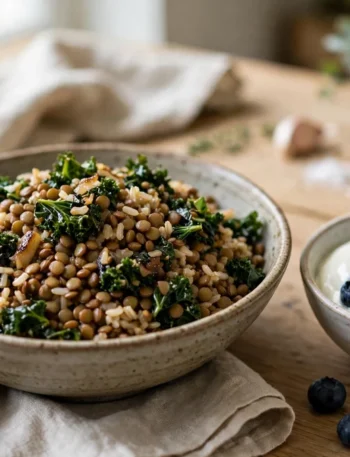
| Dinner | 1 cup cooked lentils; 1 cup cooked brown rice; 1 cup chopped carrots; 1 teaspoon olive oil | about 546 |
| Snacks | 1 orange; 1/2 oz almonds (about 12 almonds) | about 143 |
Day 1 total: about 1638 calories, 92 g protein, 209 g carbohydrate, 52 g fat, 42 g fiber.
Day 2
| Meal | Foods and portions | Calories |
|---|---|---|
| Breakfast | 2 large eggs; 1 cup cooked kale; 1 slice whole-wheat bread, toasted; 1/2 avocado | about 413 |
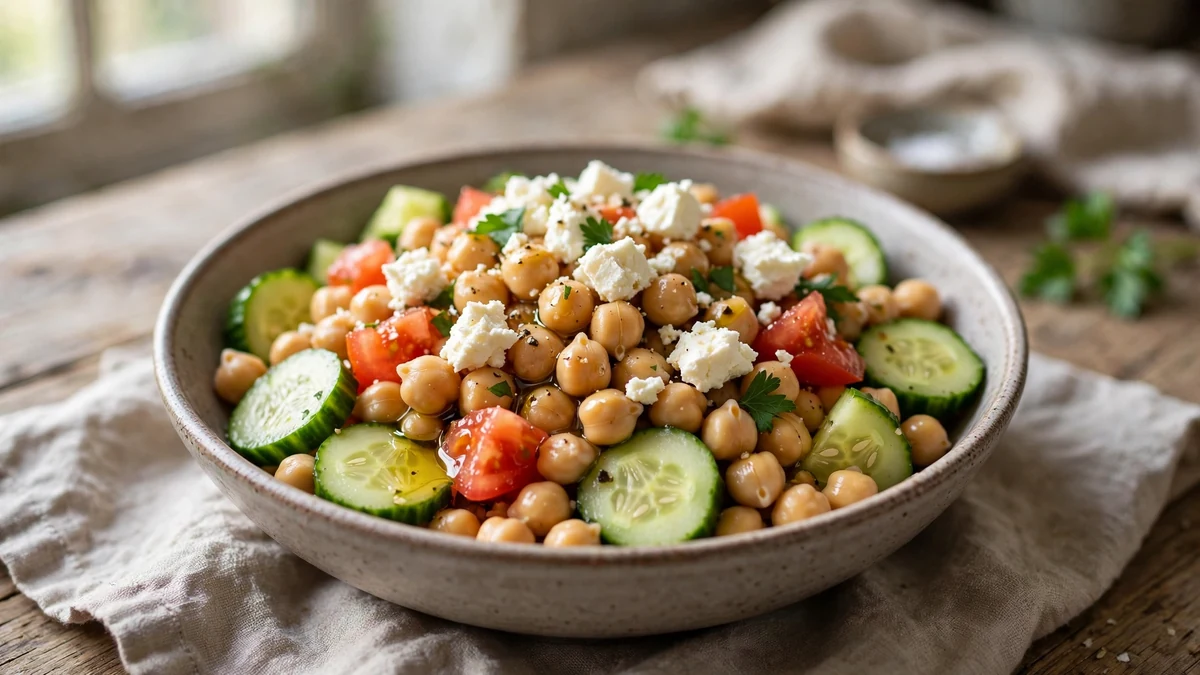
| Lunch | 1 cup cooked chickpeas; 1/2 cucumber, sliced; 1 medium tomato; 1 oz feta cheese, crumbled; 2 teaspoons olive oil | about 460 |
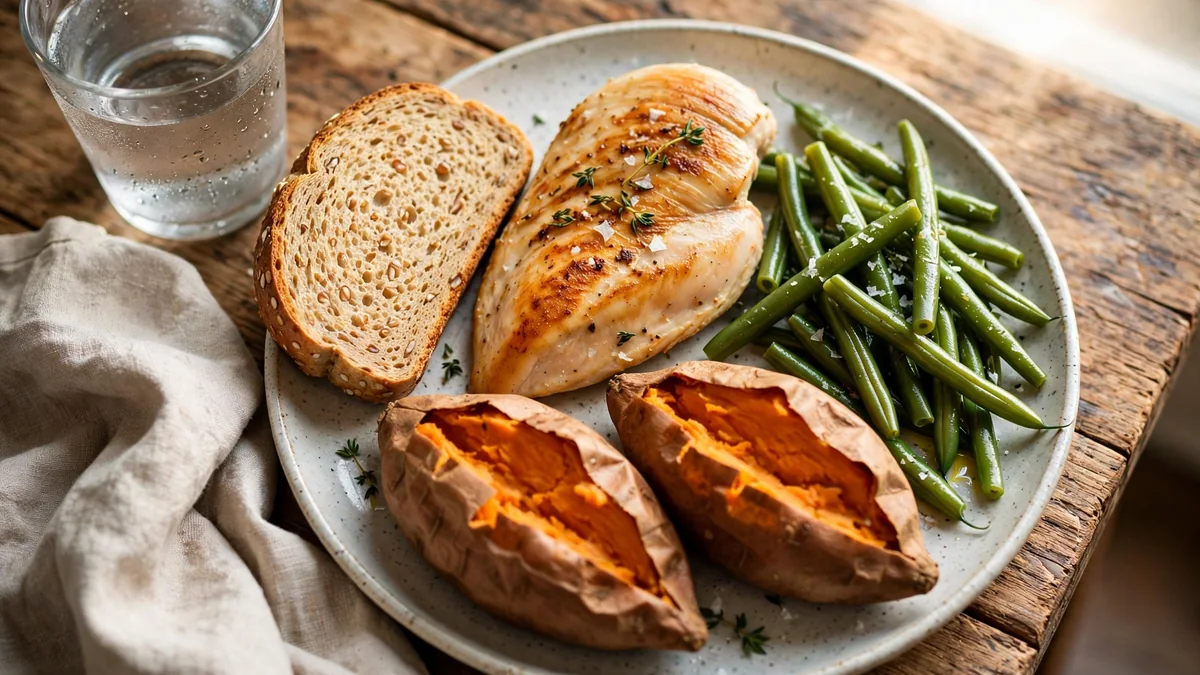
| Dinner | 5 oz cooked chicken breast; 2 medium baked sweet potatoes; 1 cup cooked green beans; 1 slice whole-wheat bread | about 564 |
| Snacks | 3/4 cup plain nonfat Greek yogurt; 1 cup strawberries | about 149 |
Day 2 total: about 1586 calories, 115 g protein, 171 g carbohydrate, 52 g fat, 41 g fiber.
Day 3
| Meal | Foods and portions | Calories |
|---|---|---|
| Breakfast | 1/2 cup dry rolled oats, cooked; 1 cup skim milk; 1 cup strawberries; 1 oz almonds (about 23 almonds) | about 448 |
| Lunch | 4 oz cooked turkey breast; 1 cup cooked bulgur; 2 cups green leaf lettuce; 2 teaspoons olive oil; 1/2 cucumber, sliced | about 423 |
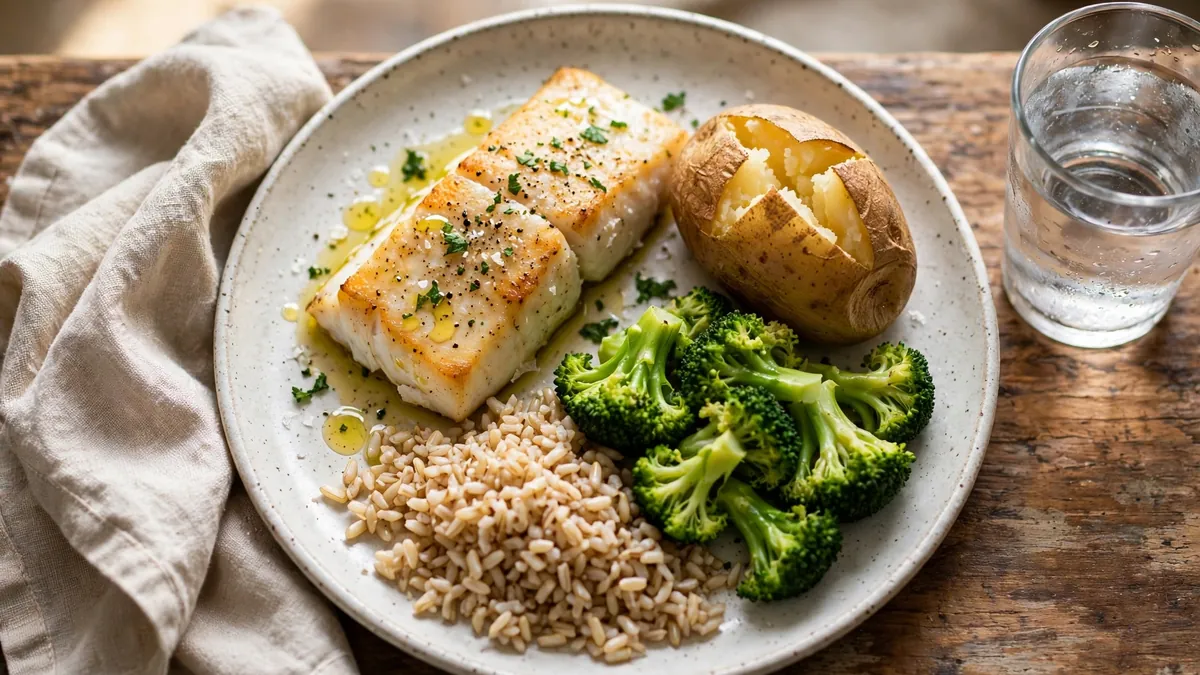
| Dinner | 6 oz cooked cod; 1 medium baked potato; 1 cup cooked broccoli; 2 teaspoons olive oil; 1/2 cup cooked brown rice | about 578 |
| Snacks | 1 medium pear; 1/2 oz walnuts (about 1 tablespoon chopped) | about 193 |
Day 3 total: about 1641 calories, 114 g protein, 194 g carbohydrate, 51 g fat, 36 g fiber.
Day 4
| Meal | Foods and portions | Calories |
|---|---|---|
| Breakfast | 1 cup low-fat cottage cheese; 1 cup raspberries; 1 slice whole-wheat bread, toasted; 1 tablespoon honey; 1 orange | about 433 |
| Lunch | 1 cup cooked black beans; 1/2 cup cooked brown rice; 1/2 avocado; 1/4 cup salsa; 2 cups raw spinach | about 494 |
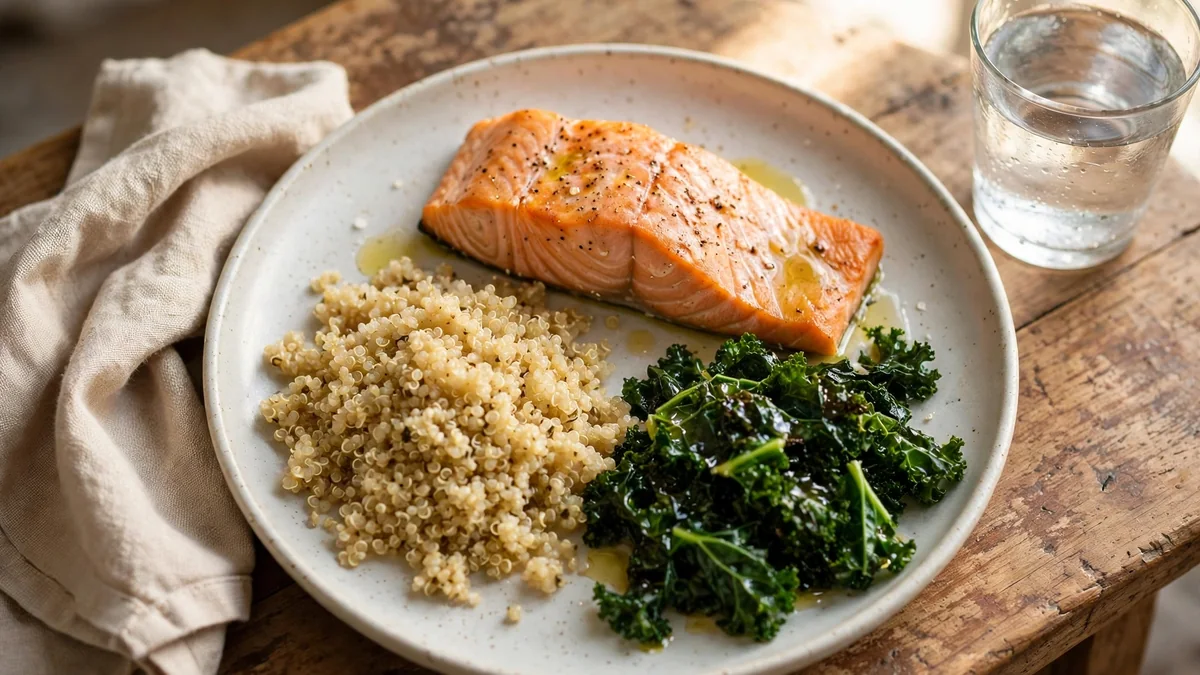
| Dinner | 5 oz cooked salmon; 1/2 cup cooked quinoa; 1 cup cooked kale; 1 teaspoon olive oil | about 467 |
| Snacks | 1 cup shelled edamame | about 188 |
Day 4 total: about 1581 calories, 119 g protein, 185 g carbohydrate, 45 g fat, 51 g fiber.
Day 5
| Meal | Foods and portions | Calories |
|---|---|---|
| Breakfast | 125 g firm tofu (about 4 1/2 oz), scrambled; 1 cup cooked kale; 1 medium baked sweet potato; 1 teaspoon olive oil; 1 orange | about 441 |
| Lunch | 1 can tuna in water, drained; 1 cup cooked white rice; 1/2 cucumber, sliced; 1 cup chopped carrots | about 462 |
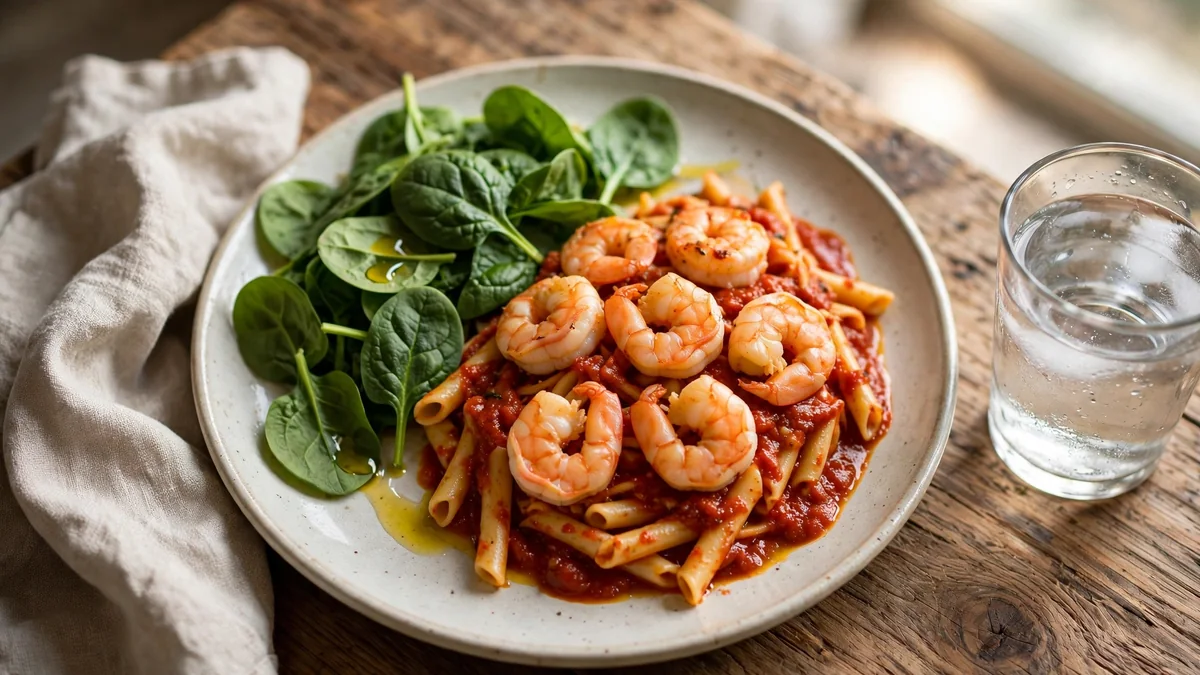
| Dinner | 6 oz cooked shrimp; 1 cup cooked pasta; 1/2 cup marinara sauce; 2 cups raw spinach; 1 teaspoon olive oil | about 540 |
| Snacks | 1 medium apple; 1 tablespoon peanut butter | about 190 |
Day 5 total: about 1633 calories, 118 g protein, 203 g carbohydrate, 41 g fat, 29 g fiber.
Day 6
| Meal | Foods and portions | Calories |
|---|---|---|
| Breakfast | 1 cup plain nonfat Greek yogurt; 1/2 cup dry rolled oats, stirred in; 1 medium pear; 1/2 oz walnuts (about 1 tablespoon chopped) | about 489 |
| Lunch | 1 cup cooked kidney beans; 1/2 cup cooked quinoa; 1 cup chopped carrots; 2 teaspoons olive oil | about 468 |
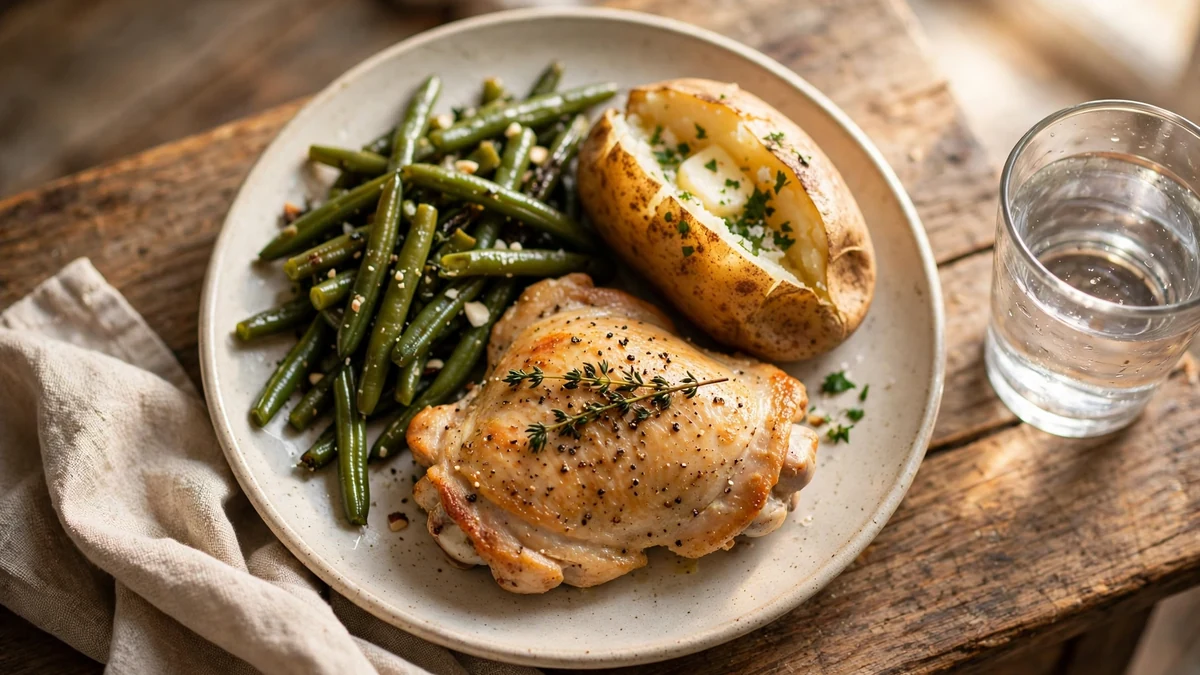
| Dinner | 5 oz cooked skinless chicken thigh; 1 cup cooked green beans; 1 medium baked potato | about 448 |
| Snacks | 1 cup grapes; 1/2 oz cheddar cheese | about 162 |
Day 6 total: about 1568 calories, 100 g protein, 209 g carbohydrate, 42 g fat, 38 g fiber.
Day 7
| Meal | Foods and portions | Calories |
|---|---|---|
| Breakfast | 1/2 cup dry rolled oats, cooked; 3/4 cup plain low-fat Greek yogurt; 1 medium apple, chopped; 1/2 oz walnuts (about 1 tablespoon chopped) | about 462 |
| Lunch | 1/4 cup hummus; 1 whole-wheat pita; 1 cup chopped carrots; 1/2 cucumber, cut into sticks; 1 medium bell pepper, cut into strips; 1 oz feta cheese, crumbled | about 439 |
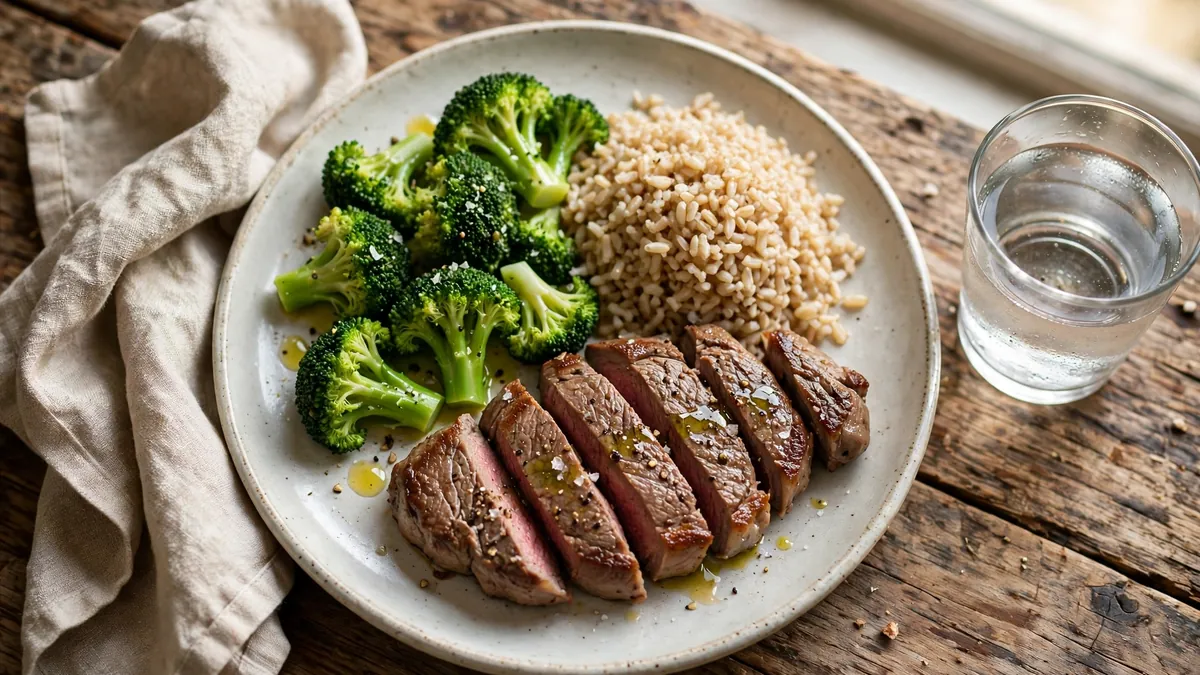
| Dinner | 4 oz cooked top sirloin; 1 cup cooked brown rice; 1 cup cooked broccoli; 1 teaspoon olive oil | about 534 |
| Snacks | 1 oz dark chocolate (70% cacao) | about 167 |
Day 7 total: about 1603 calories, 86 g protein, 203 g carbohydrate, 54 g fat, 33 g fiber.
Grocery list
This list covers the full week for one person, following the portions in the plan as written.
Produce
- Blueberries
- Strawberries
- Raspberries
- Grapes
- Apples
- Oranges
- Pears
- Avocados
- Broccoli
- Green beans
- Kale
- Fresh spinach
- Green leaf lettuce
- Cucumbers
- Tomatoes
- Carrots
- Bell peppers
- Sweet potatoes
- White potatoes
Meat and seafood
- Chicken breast
- Skinless chicken thighs
- Turkey breast
- Salmon fillets
- Cod fillets
- Shrimp
- Top sirloin steak
- Canned tuna in water
Dairy and eggs
- Large eggs
- Plain nonfat Greek yogurt
- Plain low-fat Greek yogurt
- Low-fat cottage cheese
- Skim milk
- Cheddar cheese
- Feta cheese
Pantry
- Rolled oats
- Granola
- Quinoa
- Brown rice
- White rice
- Bulgur
- Pasta
- Lentils
- Black beans
- Kidney beans
- Chickpeas
- Firm tofu
- Peanut butter
- Almonds
- Walnuts
- Olive oil
- Salsa
- Marinara sauce
- Honey
- Dark chocolate (70% cacao)
- Hummus
Frozen
- Shelled edamame
Bakery
- Whole-wheat bread
- Whole-wheat pita
Meal prep tips
- Cook the quinoa and brown rice in one session on day 1. They cover most of the week’s lunches and dinners.
- Bake the sweet potatoes and white potatoes for the week at once and refrigerate them.
- Cook a double batch of lentils on day 1; they keep for four days and anchor day 1’s dinner.
- Wash the greens, berries, and salad vegetables when you get home, and portion the nuts into single servings.
- Keep a small bottle of olive oil and lemons on the counter; that pairing dresses most of the salads in this plan.
Easy swaps
- Swap salmon for cod or shrimp in the same weight on day 1 or day 4; the pattern of the week stays the same.
- Swap lentils, kidney beans, black beans, and chickpeas cup for cup in the bean based meals.
- Swap quinoa for bulgur or brown rice, cup for cup of cooked grain.
- Swap kale for spinach in the same amount, cooked or raw, on any day.
- Swap raspberries for blueberries or strawberries, cup for cup, depending on price and season.
- Swap Greek yogurt for low-fat cottage cheese in the same amount at breakfasts and snacks.
How to adjust the calories safely
If this plan leaves you persistently hungry, low on energy, or losing faster than about 2 pounds a week, add food. To add roughly 200 to 300 calories a day using foods already in the plan, choose one: 1 oz of walnuts (about 183 calories) plus 1 teaspoon of olive oil on your vegetables (about 40 calories); or 1 cup of cooked quinoa split between lunch and dinner (about 222 calories); or 1 tablespoon of peanut butter (about 96 calories) plus 1 cup of skim milk (about 86 calories) plus a medium carrot (about 25 calories).
Never go below 1,200 calories a day for women or 1,500 calories a day for men. This plan is written at 1,600 calories, above both floors, but smaller or less active adults should confirm their own target with a registered dietitian rather than trimming this plan down on their own.
Common mistakes
- Expecting a meal plan to treat a condition. This style of eating supports general health habits; it is not a therapy, and it does not replace your care team.
- Buying specialty products with anti-inflammatory claims on the label. The pattern comes from ordinary foods, not from powders or supplements.
- Skipping the snack to save calories. The snack is part of the design; skipping it usually leads to a much larger dinner.
- Pouring olive oil and nuts without measuring. Both fit this style well, and both are calorie dense.
- Cooking every vegetable in oil. Steaming, baking, and raw preparations all appear in this week on purpose.
Pair it with a workout
Regular movement fits this style of eating well. The walking and beginner strength routines in our Exercise and Workouts section are a gentle place to start, and a short walk after meals is a simple first habit. Build up gradually, and stop any exercise that causes pain, dizziness, or chest pain.
Frequently asked questions
What does anti-inflammatory style actually mean?
It is a description of a dietary pattern, not a medical claim. Meals built mostly from vegetables, fruit, legumes, whole grains, fish, nuts, and olive oil are commonly described this way. This plan simply writes that pattern out as a week of measured meals.
Will this plan treat arthritis or another condition?
No. No meal plan on this site treats or cures any condition. If you have a diagnosed condition, follow your care team’s guidance, keep taking any prescribed treatment, and use a plan like this only as general eating structure that your doctor or dietitian has reviewed.
How is this different from your other anti-inflammatory plans?
Our 7-Day Anti-Inflammatory Meal Plan for Weight Loss is written at 1,500 calories for general readers, and our 7-Day No-Sugar Anti-Inflammatory Meal Plan removes added sugar entirely. This plan is 1,600 calories, uses different menus, and explains each step for beginners.
I am a beginner cook. Are these meals hard?
No. The week uses basic methods: boiling grains and lentils, baking potatoes and fish, scrambling eggs and tofu, and assembling salads and a hummus plate. Nothing needs special equipment beyond a pot, a pan, and a baking tray.
Can men follow this plan?
Yes, with attention to the total. At 1,600 calories the plan sits above the 1,500 calorie minimum for men, but tall or very active men will usually need the 200 to 300 calorie additions in the adjustment section every day.
Sources and further reading
- USDA FoodData Central, the source for every calorie and nutrient value in this plan: fdc.nal.usda.gov
- Dietary Guidelines for Americans, for the overall healthy eating pattern this plan follows: dietaryguidelines.gov
- MyPlate, for balanced plate ideas built from the same food groups: myplate.gov
- Centers for Disease Control and Prevention, for healthy weight guidance: cdc.gov
- MedlinePlus, for plain language background on healthy eating patterns: medlineplus.gov
This article is for general educational purposes only and is not medical, nutrition, or fitness advice. Talk with your doctor or a registered dietitian before changing your diet or starting an exercise program.