Prints just the plan, like a recipe card.
Last updated: November 22, 2026.
This no oven meal plan gives you 7 days of breakfasts, lunches, dinners, and snacks at about 1,500 calories a day, and not one of them needs an oven. Everything is made in a skillet, in a pot on the stovetop, in the microwave, or not cooked at all, which makes it a practical fit for small apartments, dorm kitchens, and anyone whose oven is broken or stays off in summer. Every portion is listed in plain US measures, and every number was calculated from USDA FoodData Central values. More plans organized by living situation live in our By Lifestyle diet plans.
Who this plan is for, and who should not follow it
This plan is for adults cooking without an oven who still want structured, balanced meals rather than takeout every night. It assumes only basic equipment: a skillet, a pot, a microwave, and a knife and board. A toaster is used for bread on two days, and plain untoasted bread works fine if you do not have one.
This plan is general education only and is not medical advice. Talk with your doctor or a registered dietitian before following it, especially if you have diabetes, kidney disease, or another condition affected by food, or if you take medication that food or weight change can affect. It is not for children or teenagers, and it is not for anyone who is pregnant or breastfeeding. Cook poultry, fish, and eggs thoroughly even without an oven: chicken and turkey should reach 165 degrees F in the thickest part, and a simple food thermometer is worth owning.
If you have a history of disordered eating, talk with a doctor or a registered dietitian before following any diet plan. For eating disorder support in the US, visit the National Alliance for Eating Disorders at allianceforeatingdisorders.com.
Plan overview
| Daily calorie target | About 1500 calories |
| Average protein per day | About 102 g |
| Average carbohydrate per day | About 191 g |
| Average fat per day | About 41 g |
| Average fiber per day | About 35 g |
| Meals per day | 4 (breakfast, lunch, dinner, and snacks) |
The pattern repeats on purpose: microwave or skillet breakfasts, no-cook or stovetop lunches, and skillet or one-pot dinners. Grains like rice, quinoa, bulgur, and pasta all cook on the stovetop, potatoes cook in the microwave, and vegetables steam in a covered skillet or pot with a splash of water.
How this no oven meal plan is built
Each day lands near 1,500 calories with protein at every meal, and each cooking method is named right in the menu so there are no surprises: skillet chicken, turkey, salmon, cod, shrimp, and tofu; stovetop lentils, beans, pasta, and grains; microwave oats and sweet potatoes; and no-cook tuna salad, chickpea salad, and hummus plates. Because 1,500 calories is the lowest level appropriate for most men, men should read the adjustment section and add food as described. If you want to check how this level compares with your own needs, our calorie calculator gives a general estimate to discuss with your doctor or dietitian.
The 7-day meal plan
Portions are given in US household measures. Calories for each meal and day were calculated from USDA FoodData Central values for the exact foods and amounts listed. The preparation named for each item (skillet, stovetop, microwave, or no-cook) is the only cooking required; nothing in the week is baked or roasted.
Day 1
| Meal | What to eat | Calories |
|---|---|---|
| Breakfast | 1/2 cup dry rolled oats, microwaved; 1 cup skim milk; 1 medium banana; 2 tablespoons chopped walnuts | about 434 |
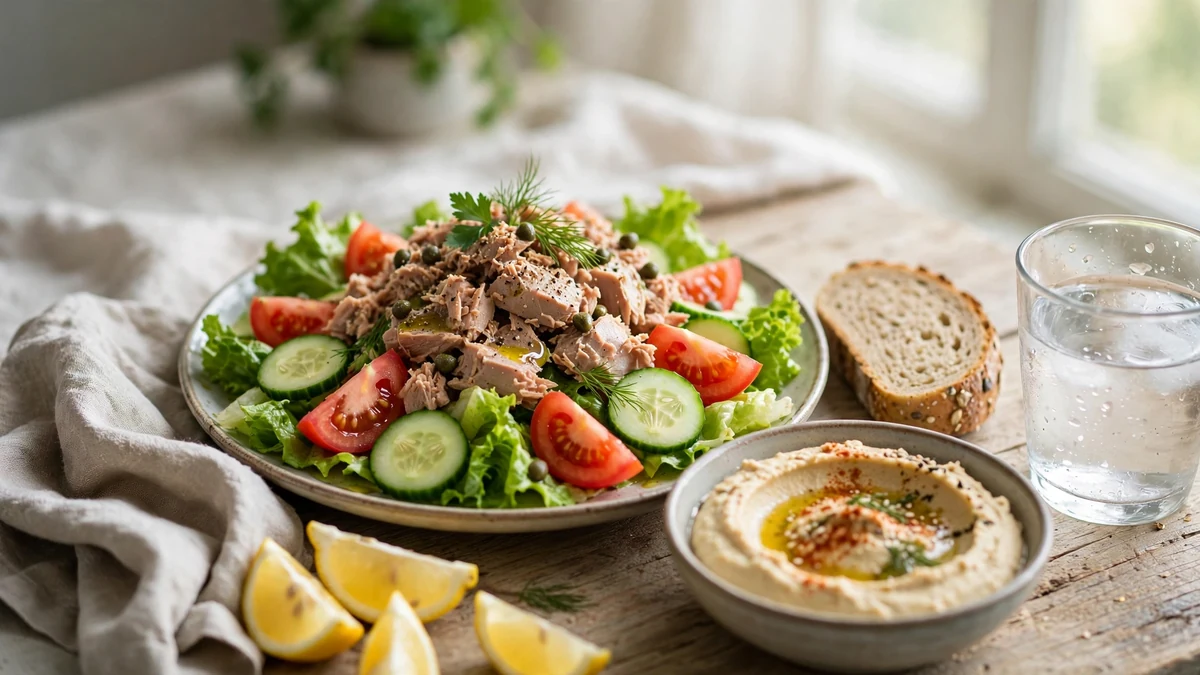
| Lunch | 1 can tuna in water, drained; 2 cups green leaf lettuce; 1 medium tomato; 1/2 cucumber, sliced; 1/4 cup hummus; 1 slice whole-wheat bread | about 388 |
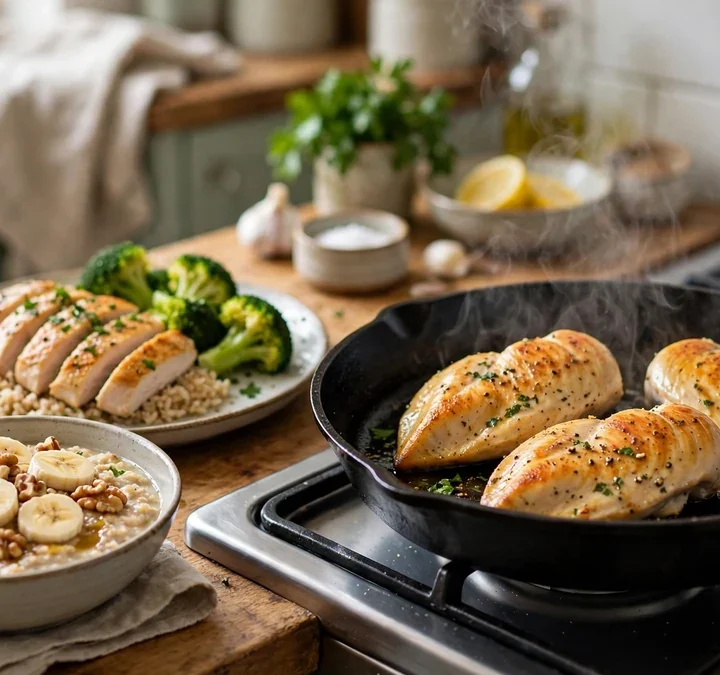
| Dinner | 5 oz chicken breast, cooked in a skillet; 1/2 cup cooked brown rice, microwaved or stovetop; 1 cup broccoli, steamed on the stovetop; 2 teaspoons olive oil | about 483 |
| Snacks | 3/4 cup plain nonfat Greek yogurt; 1 cup strawberries; 1 tablespoon honey | about 213 |
Day 1 total: about 1518 calories, 124 g protein, 174 g carbohydrate, 40 g fat, 25 g fiber.
Day 2
| Meal | What to eat | Calories |
|---|---|---|
| Breakfast | 2 large eggs, scrambled in a skillet; 1 slice whole-wheat toast (toaster); 1/2 avocado; 1 orange | about 417 |
| Lunch | 1 cup cooked lentils, simmered on the stovetop; 1 cup chopped carrots; 1/2 cup crushed canned tomatoes; 1 teaspoon olive oil; 1 slice whole-wheat bread | about 439 |
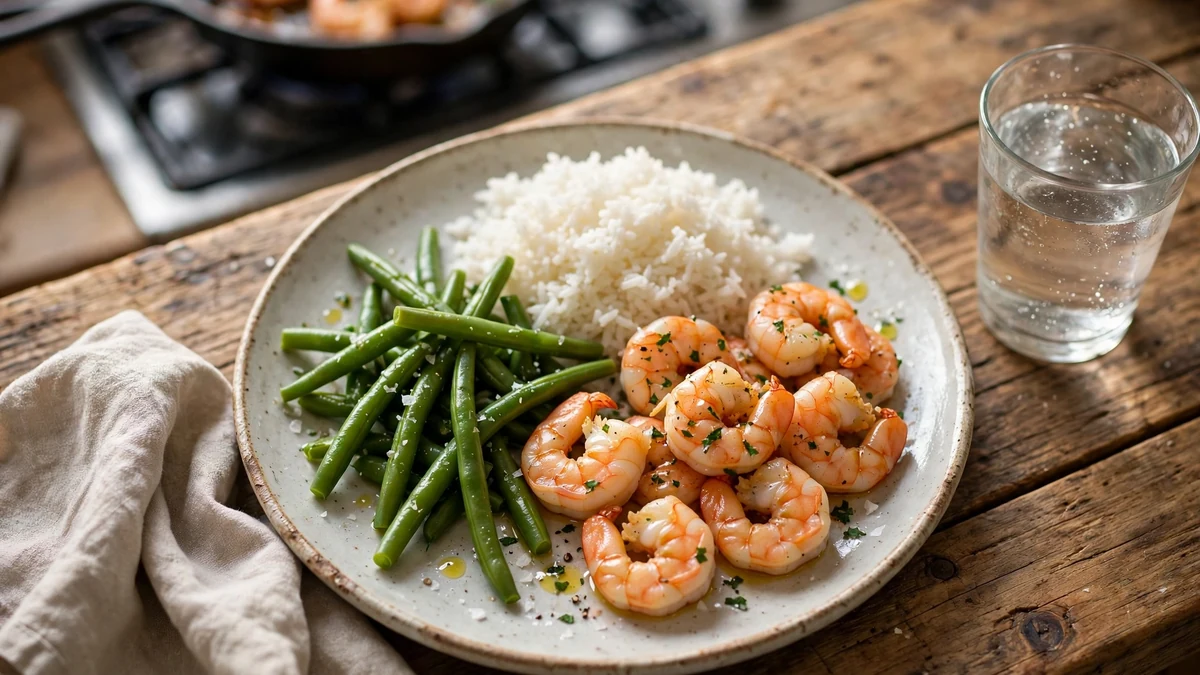
| Dinner | 6 oz shrimp, cooked in a skillet; 3/4 cup cooked white rice, stovetop; 1 cup green beans, steamed on the stovetop; 1 teaspoon olive oil | about 468 |
| Snacks | 1/2 cup low-fat cottage cheese; 1 cup grapes | about 186 |
Day 2 total: about 1509 calories, 104 g protein, 193 g carbohydrate, 39 g fat, 40 g fiber.
Day 3
| Meal | What to eat | Calories |
|---|---|---|
| Breakfast | 1 cup plain nonfat Greek yogurt; 1/4 cup granola; 1 cup raspberries | about 355 |
| Lunch | 1 flour tortilla, warmed in a dry skillet; 1 oz part-skim mozzarella; 1/2 cup cooked black beans, warmed on the stovetop; 1/4 cup salsa; 1/2 avocado | about 468 |
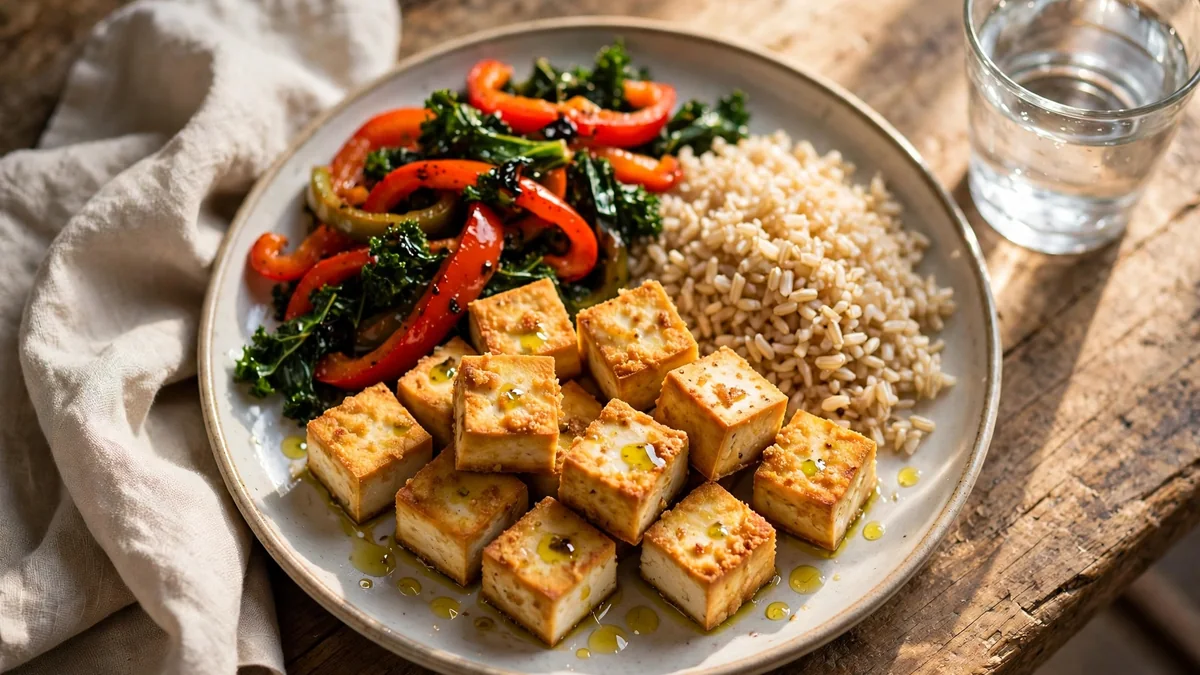
| Dinner | 125 g firm tofu, crisped in a skillet; 1 cup cooked brown rice, stovetop; 1 medium bell pepper, stir-fried in the skillet; 1 cup kale, wilted in the skillet; 2 teaspoons olive oil | about 568 |
| Snacks | 1 medium apple | about 95 |
Day 3 total: about 1486 calories, 83 g protein, 183 g carbohydrate, 53 g fat, 41 g fiber.
Day 4
| Meal | What to eat | Calories |
|---|---|---|
| Breakfast | 1/2 cup dry rolled oats, microwaved; 3/4 cup skim milk; 1 tablespoon peanut butter; 1 cup blueberries | about 396 |
| Lunch | 1 cup cooked chickpeas; 1/2 cucumber, sliced; 1 medium tomato; 1 oz feta cheese, crumbled; 2 teaspoons olive oil | about 460 |
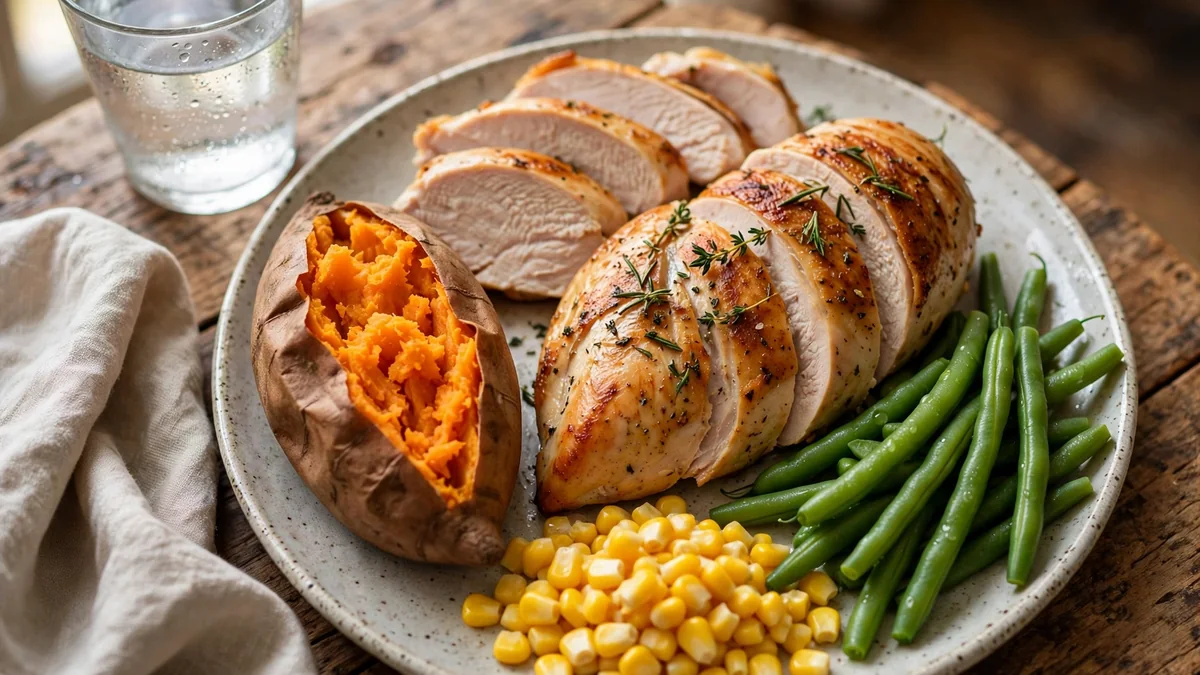
| Dinner | 5 oz turkey breast, cooked in a skillet; 1 medium sweet potato, microwaved; 1 cup green beans, steamed on the stovetop; 1/2 cup corn, steamed on the stovetop | about 434 |
| Snacks | 3/4 cup plain low-fat Greek yogurt; 1 medium pear | about 226 |
Day 4 total: about 1515 calories, 104 g protein, 200 g carbohydrate, 39 g fat, 38 g fiber.
Day 5
| Meal | What to eat | Calories |
|---|---|---|
| Breakfast | 1 large egg, cooked in a skillet; 2 slices whole-wheat toast (toaster); 1 oz cheddar cheese; 1 medium tomato | about 376 |
| Lunch | 1 cup pasta, boiled on the stovetop; 1/2 cup marinara sauce, warmed on the stovetop; 2 cups raw spinach, wilted into the pasta; 1 oz part-skim mozzarella; 1/2 cup cooked chickpeas | about 515 |
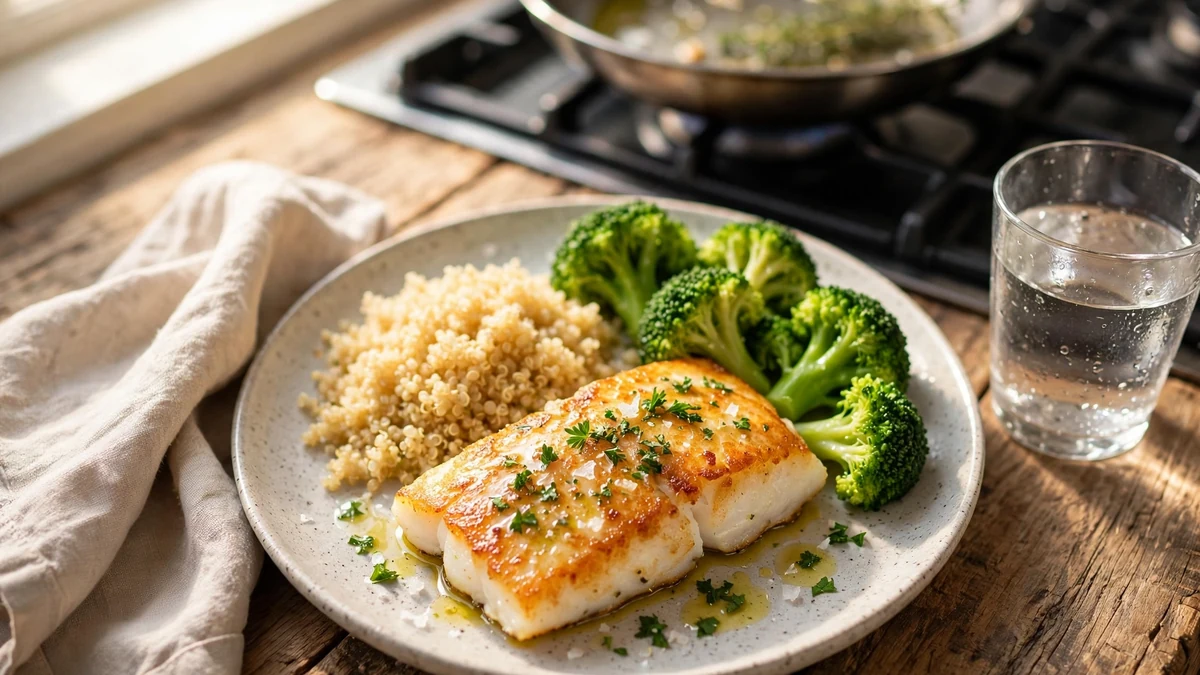
| Dinner | 6 oz cod, pan-seared in a skillet; 1/2 cup cooked quinoa, stovetop; 1 cup broccoli, steamed on the stovetop; 2 teaspoons olive oil | about 424 |
| Snacks | 1 cup skim milk; 1 medium banana | about 191 |
Day 5 total: about 1505 calories, 104 g protein, 182 g carbohydrate, 42 g fat, 28 g fiber.
Day 6
| Meal | What to eat | Calories |
|---|---|---|
| Breakfast | 1 cup low-fat cottage cheese; 1 medium pear; 1/4 cup granola | about 411 |
| Lunch | 4 oz chicken breast, cooked in a skillet; 1 flour tortilla; 2 tablespoons hummus; 2 cups green leaf lettuce; 1 medium tomato | about 406 |
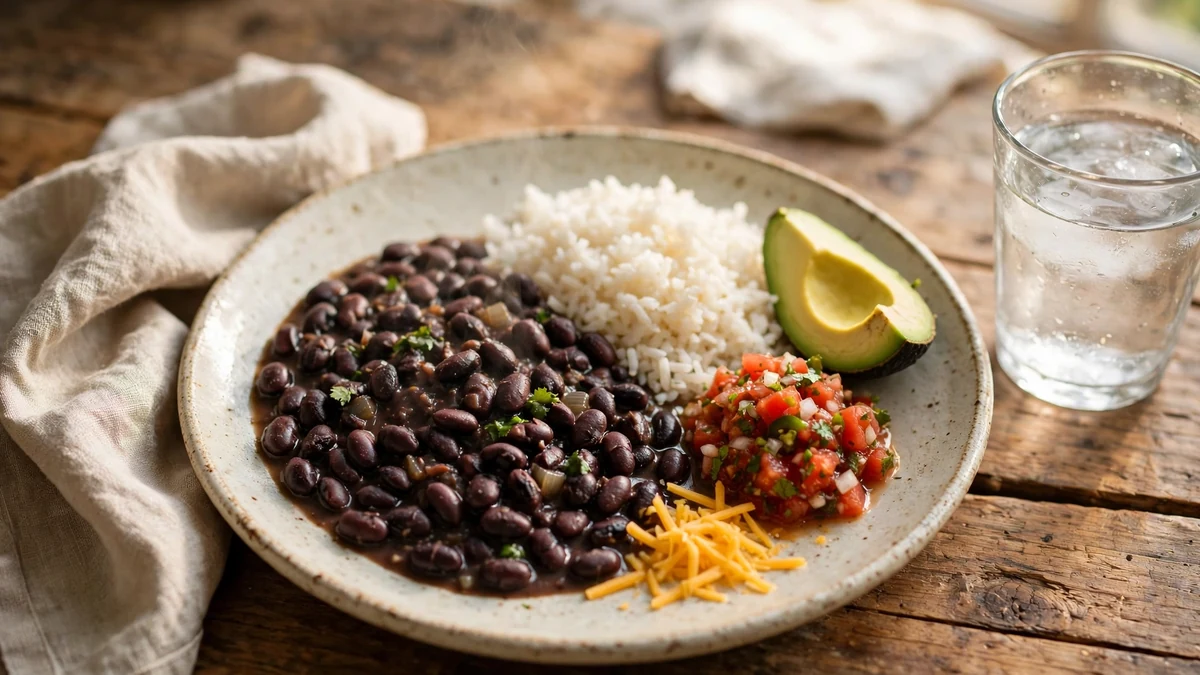
| Dinner | 1 cup cooked black beans, simmered on the stovetop; 3/4 cup cooked white rice, stovetop; 1/4 cup salsa; 1 oz cheddar cheese; 1/4 avocado | about 603 |
| Snacks | 1 orange | about 62 |
Day 6 total: about 1482 calories, 104 g protein, 188 g carbohydrate, 37 g fat, 35 g fiber.
Day 7
| Meal | What to eat | Calories |
|---|---|---|
| Breakfast | 1/2 cup dry rolled oats, microwaved; 3/4 cup plain nonfat Greek yogurt; 1 cup strawberries; 1 tablespoon maple syrup | about 353 |
| Lunch | 1/4 cup hummus; 1 whole-wheat pita; 1 cup chopped carrots; 1/2 cucumber, sliced; 1 oz feta cheese, crumbled | about 416 |
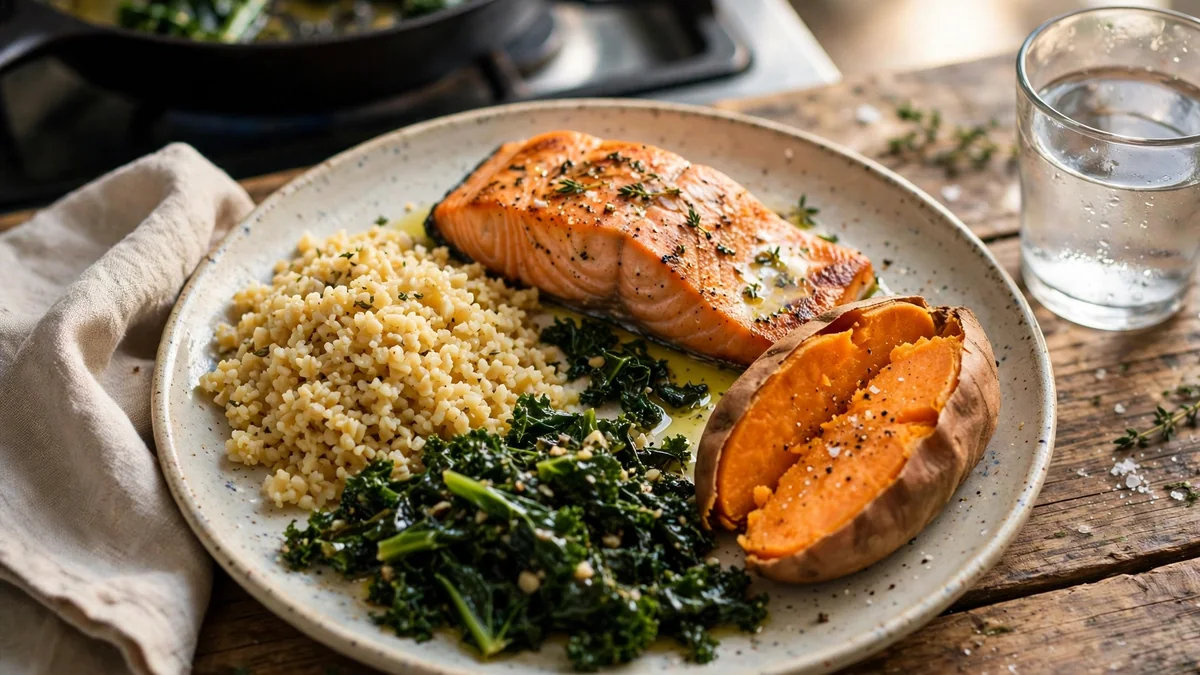
| Dinner | 4 oz salmon, cooked in a skillet; 1 cup cooked bulgur, stovetop; 1 medium sweet potato, microwaved; 1 cup kale, wilted in the skillet; 1 teaspoon olive oil | about 556 |
| Snacks | 3 cups air-popped popcorn; 1 cup skim milk | about 179 |
Day 7 total: about 1503 calories, 91 g protein, 218 g carbohydrate, 34 g fat, 36 g fiber.
Grocery list
This list covers the full week for one person, following the portions in the plan.
Produce
- Bananas, apples, pears, oranges, grapes, blueberries, strawberries, and raspberries
- Sweet potatoes
- Broccoli, green beans, kale, and corn
- Spinach and green leaf lettuce
- Cucumbers, tomatoes, carrots, and bell peppers
- Avocados
Meat and seafood
- Chicken breast
- Turkey breast
- Salmon fillets and cod fillets
- Shrimp
- Canned tuna in water
- Firm tofu
Dairy and eggs
- Large eggs
- Plain nonfat Greek yogurt and plain low-fat Greek yogurt
- Low-fat cottage cheese
- Skim milk
- Cheddar cheese, part-skim mozzarella, and feta cheese
Pantry
- Rolled oats and granola
- Brown rice, white rice, quinoa, bulgur, and pasta
- Black beans, lentils, and chickpeas (dry or canned, rinsed)
- Crushed canned tomatoes and marinara sauce
- Peanut butter and walnuts
- Olive oil, salsa, hummus, and honey
- Maple syrup
- Popcorn for air-popping
Frozen
- Frozen berries as a backup for fresh fruit
- Frozen corn and green beans if fresh is poor quality
Bakery
- Whole-wheat bread
- Whole-wheat pita and flour tortillas
Meal prep tips
- Cook a pot of brown rice and a pot of quinoa on day 1; both reheat in the microwave in minutes for the rest of the week.
- Simmer a double batch of the day 2 lentils and refrigerate half; lentils reheat well and can stand in for beans on a busy day.
- Microwave sweet potatoes in a batch of three or four, cool, and refrigerate; they reheat in about 2 minutes each.
- Wash and chop cucumbers, carrots, peppers, and tomatoes ahead so the no-cook lunches take under 5 minutes.
- Portion yogurt, cottage cheese, nuts, and popcorn into single servings so snacks stay at the planned size.
Easy swaps
- Swap skillet chicken, turkey, salmon, and cod for each other in the same portion; all cook in a skillet in similar time.
- Swap black beans, lentils, and chickpeas for each other, cup for cup; all simmer on the stovetop.
- Swap brown rice, white rice, quinoa, and bulgur for each other in equal cooked portions.
- Swap the microwave sweet potato for a microwaved white potato of the same size.
- Swap Greek yogurt for low-fat cottage cheese in the same amount at breakfast or snack time.
- Swap the hummus plate lunch for the tuna salad lunch if you are out of pita; the calories land close.
How to adjust the calories safely
This plan averages about 1,500 calories a day, which is at the lower end for many adults. Men should add about 200 to 300 calories a day, and so should anyone who is losing faster than about 1 to 2 pounds a week or feels persistently hungry or tired. Easy additions from the plan’s own foods: 1 cup of cooked quinoa (about 222 calories) added to a dinner; or 1 oz of walnuts (about 183 calories) plus a medium orange (about 62 calories) as a second snack; or 1/2 cup of cooked brown rice (about 114 calories) at lunch plus 1 tablespoon of peanut butter (about 96 calories) with the snack.
Never go below 1,200 calories a day for women or 1,500 calories a day for men without medical supervision. If you gain access to an oven later, nothing about the plan has to change; the same portions work either way.
Common mistakes
- Assuming no oven means no cooking, and defaulting to delivery food most nights. A skillet and a microwave cover this entire week.
- Overcrowding the skillet, which steams meat instead of browning it. Cook in two batches if the pan is small.
- Skipping the food thermometer because the portions are small. Thickness, not total size, decides when chicken and turkey are done.
- Letting the microwave sweet potato stand in for every vegetable. The plan rotates beans, greens, broccoli, and salads for a reason.
- Cutting portions below the plan to speed things up. At 1,500 calories the deficit is already built in.
Pair it with a workout
Small kitchens often come with small living spaces, and the routines in our Exercise and Workouts category include walking plans and simple strength sessions that need little room and no gym. Build up gradually, and stop any exercise that causes pain, dizziness, or chest pain. For another week built around a single appliance, our slow cooker and air fryer plans in the By Lifestyle collection use the same grocery staples.
Frequently asked questions
Can I really cook chicken safely without an oven?
Yes. A skillet over medium heat cooks a chicken breast through in roughly 12 to 16 minutes depending on thickness. Cut thick breasts in half horizontally so they cook evenly, and confirm 165 degrees F in the thickest part with a food thermometer.
What equipment do I actually need?
A skillet with a lid, a medium pot, a microwave, a knife, and a cutting board cover the whole week. The lid matters: it lets you steam vegetables and wilt greens in the same pan. A food thermometer is a small, worthwhile addition.
How do I cook a sweet potato in the microwave?
Wash it, prick it several times with a fork, and microwave on high for 5 to 8 minutes, turning once, until it gives when squeezed with a towel. Let it stand 2 minutes before cutting; the inside is very hot.
Is 1,500 calories enough for a man?
For most men it is the floor rather than the target. Men should use the additions in the adjustment section to reach at least 1,500 to 1,800 calories, and larger or active men need more. Never go below 1,500 calories a day for men without medical supervision.
Can I use a hot plate or single burner instead of a stove?
Yes. Every stovetop item in this plan uses one burner at a time, and the skillet and microwave items are unchanged. Just allow a little extra time when you switch pots between courses.
Sources and further reading
- USDA FoodData Central, the source for every calorie and nutrient value in this plan: fdc.nal.usda.gov
- Dietary Guidelines for Americans, for the overall healthy eating pattern this plan follows: dietaryguidelines.gov
- MyPlate, for balanced plate ideas built from the same food groups: myplate.gov
- Centers for Disease Control and Prevention, for healthy weight and physical activity guidance: cdc.gov
- MedlinePlus, for plain language background on nutrition and exercise: medlineplus.gov
This article is for general educational purposes only and is not medical, nutrition, or fitness advice. Talk with your doctor or a registered dietitian before changing your diet or starting an exercise program.