Prints just the plan, like a recipe card.
Last updated: November 22, 2026.
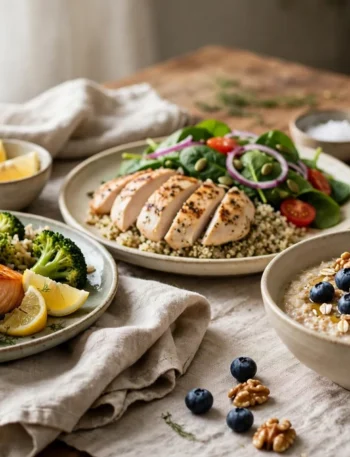
This meal plan for desk workers gives you 7 days of breakfasts, packed lunches, dinners, and desk snacks at about 1,500 calories a day, designed around the reality of a workday spent sitting: a quick breakfast at home, a lunch you pack in the morning or the night before, one planned snack that lives in your desk drawer, and a simple dinner. The packed lunches are the heart of the plan, because the workday lunch is where most desk workers lose the thread: cafeteria lines, vending machines, and whatever a coworker brought in. Every portion is listed in plain US measures, and every number was calculated from USDA FoodData Central values. The week averages about 111 grams of protein a day, which helps a seated day feel less like a long wait between meals. For many adults, 1,500 calories lines up with gradual weight loss of about 1 to 2 pounds a week. More plans like this one live in our By Lifestyle diet plans.
Who this plan is for, and who should not follow it
This plan is for adults who work at a desk most of the day, at an office or at home, and who can pack a lunch container and keep a snack in a drawer or bag. It suits people whose hardest hours are the long afternoon stretch, and whose dinners are usually fine but whose workday eating is unplanned. If you work from home, the same structure applies; the packed lunch simply waits in your fridge instead of a bag, which makes it even easier to keep.
This plan is not medical advice. Talk with your doctor or a registered dietitian before following it, especially if you have diabetes, kidney disease, or another condition affected by food, or if you take medication that food or weight change can affect. It is not for children or teenagers, and it is not for anyone who is pregnant or breastfeeding. This plan is written at 1,500 calories, a common level for women; men should use the adjustment section to add food every day, because men should not eat below 1,500 calories a day and most men need more.
If you have a history of disordered eating, talk with a doctor or a registered dietitian before following any diet plan. For eating disorder support in the US, visit the National Alliance for Eating Disorders at allianceforeatingdisorders.com.
Plan overview
| Daily calorie target | About 1500 calories |
| Average protein per day | About 111 g |
| Average carbohydrate per day | About 178 g |
| Average fat per day | About 39 g |
| Average fiber per day | About 31 g |
| Meals per day | 4 (breakfast, lunch, dinner, and snacks) |
The workday rhythm is deliberate: protein at breakfast, a packed lunch with real staying power, a planned desk snack in the mid afternoon when energy and willpower dip, and a measured dinner. The snack is not an extra; it is the tool that keeps the vending machine and the office candy jar out of your day.
How this meal plan for desk workers is built
Five of the seven lunches are packable bowls, wraps, and salads that travel in one container and taste fine cold or reheated: a quinoa chicken bowl, a turkey avocado wrap, a black bean and corn salad, a tuna sandwich with a yogurt based snack waiting for later, and a lentil bowl with feta. The desk snacks are shelf stable or fridge friendly portions you can stock on Monday: almonds, popcorn, fruit, yogurt, cottage cheese, cheese, and edamame. The plan also assumes you move a little: short walks and standing breaks during the day are part of a desk worker’s routine in general terms, and the workout section below builds on that. If you want to check how this level compares with your own needs, our calorie calculator gives a general estimate to discuss with your doctor or dietitian.
The 7-day meal plan
Portions are given in US household measures. Calories for each meal and day were calculated from USDA FoodData Central values for the exact foods and amounts listed. Pack lunches the night before whenever you can; a packed lunch in the fridge is a decision you do not have to make at 7 in the morning.
Day 1
| Meal | What to eat | Calories |
|---|---|---|
| Breakfast | 1 cup plain nonfat Greek yogurt; 1/2 cup dry rolled oats; 1 cup strawberries | about 345 |
| Lunch | 1 cup cooked quinoa; 4 oz cooked chicken breast; 1/2 cucumber; 1 medium tomato; 1 teaspoon olive oil | about 485 |
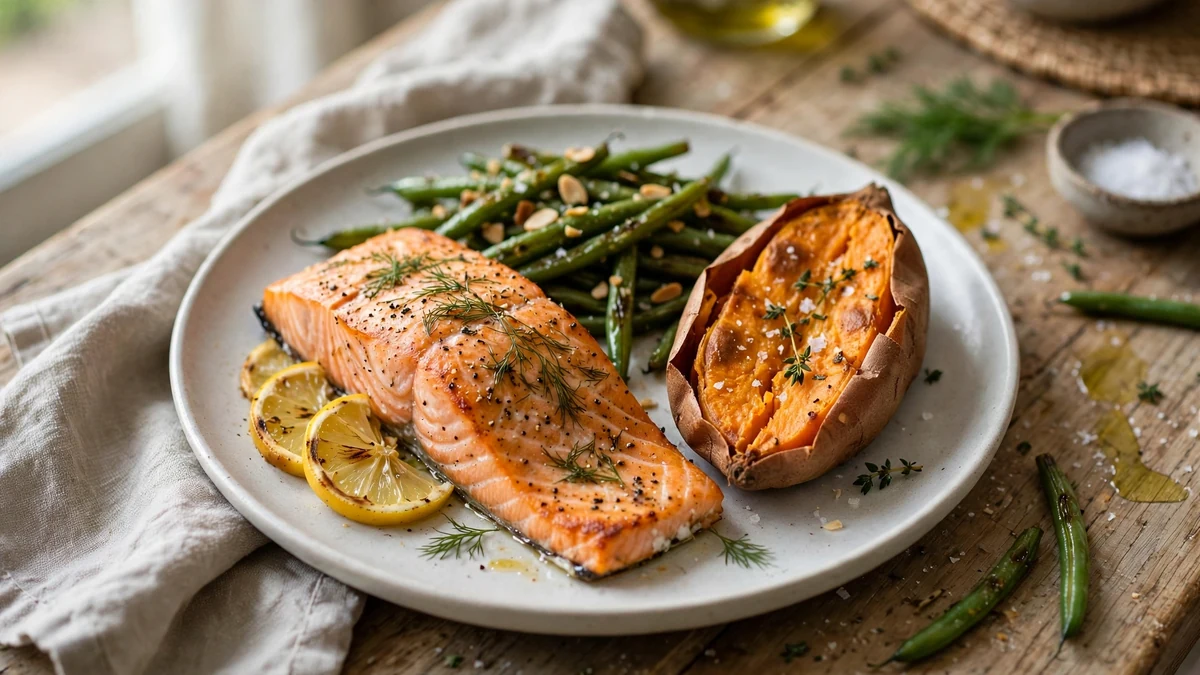
| Dinner | 5 oz cooked salmon; 1 medium baked sweet potato; 1 cup cooked green beans | about 405 |
| Snacks | 1 oz almonds; 1 medium apple | about 257 |
Day 1 total: about 1492 calories, 123 g protein, 160 g carbohydrate, 43 g fat, 30 g fiber.
Day 2
| Meal | What to eat | Calories |
|---|---|---|
| Breakfast | 2 large eggs; 2 slices whole-wheat bread; 1 orange | about 378 |
| Lunch | 1 flour tortilla; 4 oz cooked turkey breast; 1/2 avocado; 2 cups green leaf lettuce | about 431 |
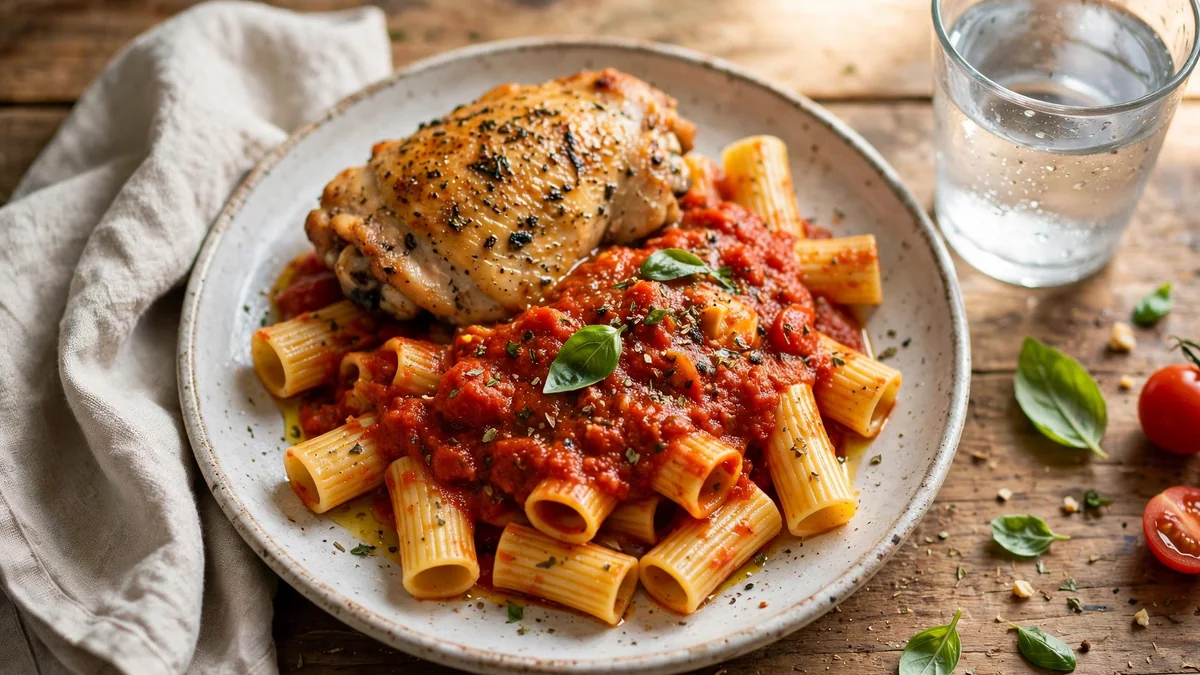
| Dinner | 1 cup cooked pasta; 1/2 cup marinara sauce; 4 oz cooked chicken thigh | about 486 |
| Snacks | 3 cups air-popped popcorn; 3/4 cup plain nonfat Greek yogurt | about 193 |
Day 2 total: about 1488 calories, 120 g protein, 152 g carbohydrate, 44 g fat, 22 g fiber.
Day 3
| Meal | What to eat | Calories |
|---|---|---|
| Breakfast | 1/2 cup dry rolled oats; 1 cup skim milk; 1 medium banana; 1/2 oz walnuts | about 434 |
| Lunch | 1 cup cooked black beans; 1/2 cup cooked corn; 1 medium bell pepper; 1/4 cup salsa; 1 oz feta cheese | about 422 |
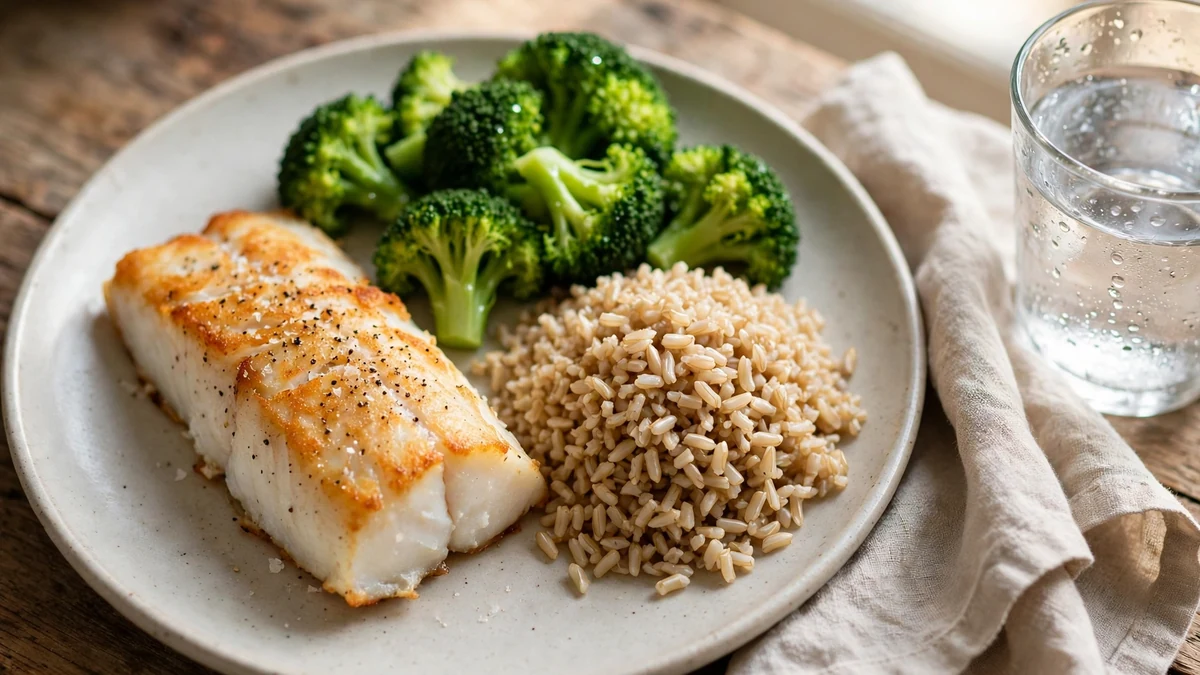
| Dinner | 6 oz cooked cod; 1 cup cooked brown rice; 1 cup cooked broccoli | about 461 |
| Snacks | 1/2 cup low-fat cottage cheese; 1 cup grapes | about 186 |
Day 3 total: about 1502 calories, 104 g protein, 226 g carbohydrate, 26 g fat, 38 g fiber.
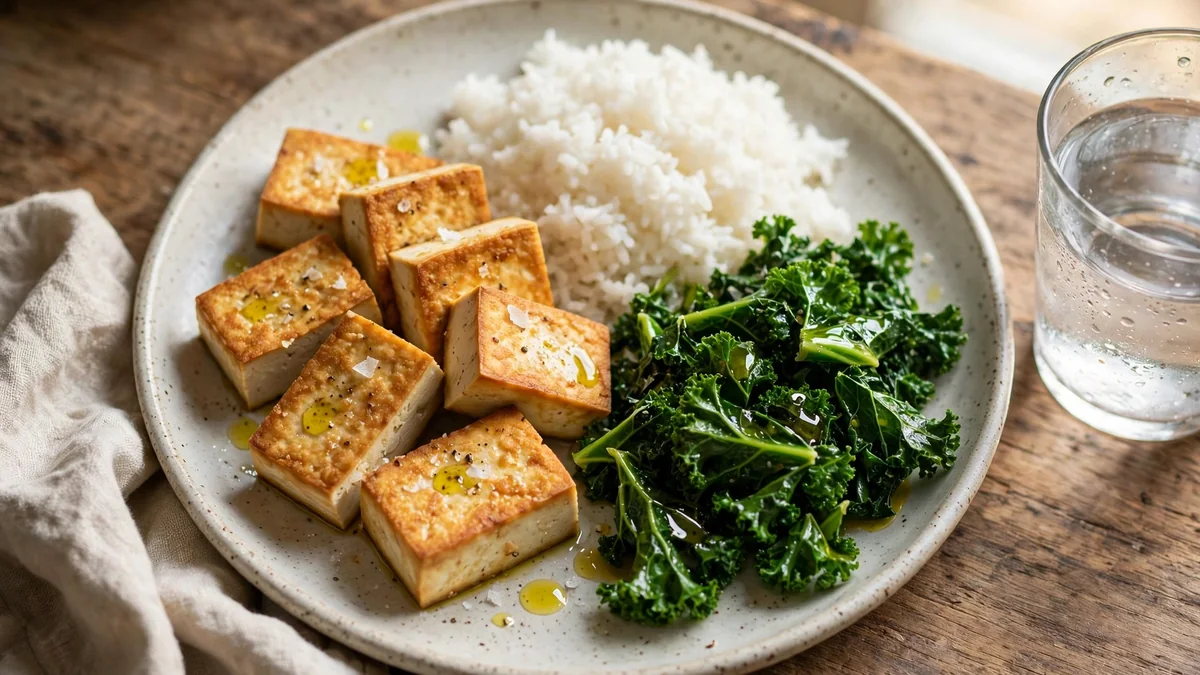
Day 4
| Meal | What to eat | Calories |
|---|---|---|
| Breakfast | 1 cup low-fat cottage cheese; 1 medium pear; 1/4 cup granola | about 411 |
| Lunch | 1 can tuna in water, drained; 2 slices whole-wheat bread; 1/2 cucumber | about 330 |
| Dinner | 125 g firm tofu (about 4 1/2 oz); 1 cup cooked white rice; 1 cup cooked kale; 1 teaspoon olive oil | about 517 |
| Snacks | 1/2 cup shelled edamame; 1 orange; 1/2 oz almonds | about 237 |
Day 4 total: about 1495 calories, 114 g protein, 168 g carbohydrate, 44 g fat, 28 g fiber.
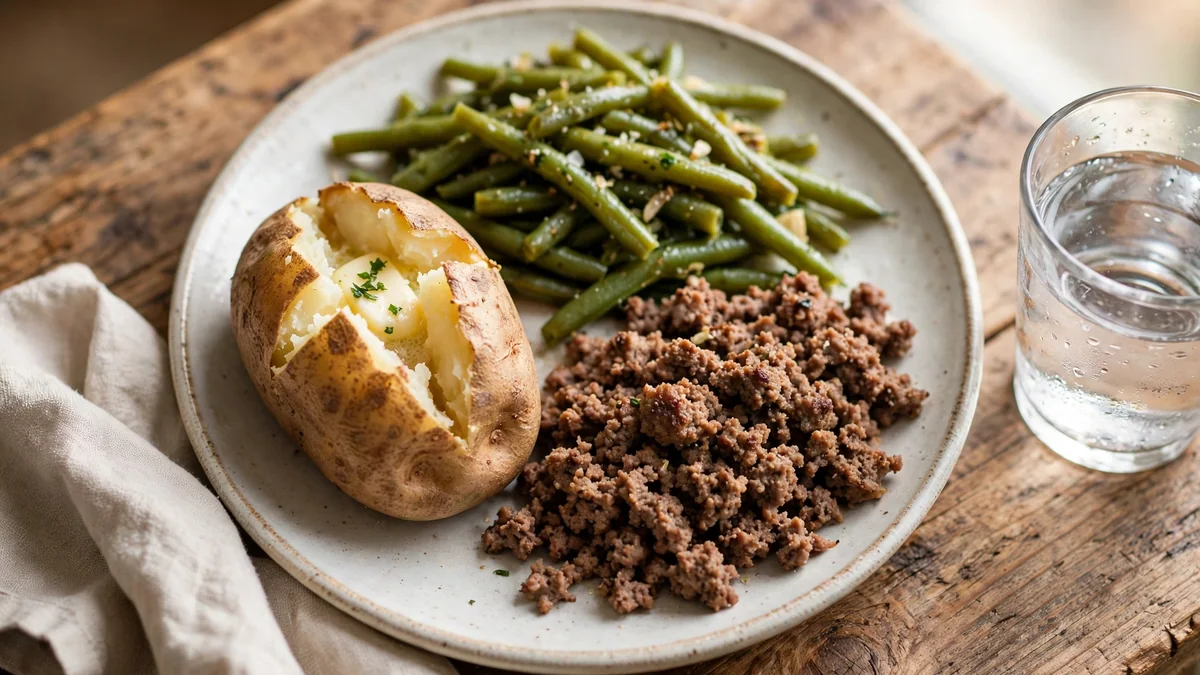
Day 5
| Meal | What to eat | Calories |
|---|---|---|
| Breakfast | 2 large eggs; 1 large egg white; 1 slice whole-wheat toast; 3/4 cup skim milk | about 317 |
| Lunch | 1 cup cooked lentils; 1 cup chopped carrots; 1 oz feta cheese; 1 slice whole-wheat bread | about 433 |
| Dinner | 4 oz lean ground beef (90% lean); 1 medium baked potato; 1 cup cooked green beans | about 439 |
| Snacks | 3/4 cup plain low-fat Greek yogurt; 1 cup raspberries; 1/2 oz almonds | about 269 |
Day 5 total: about 1459 calories, 111 g protein, 158 g carbohydrate, 45 g fat, 40 g fiber.
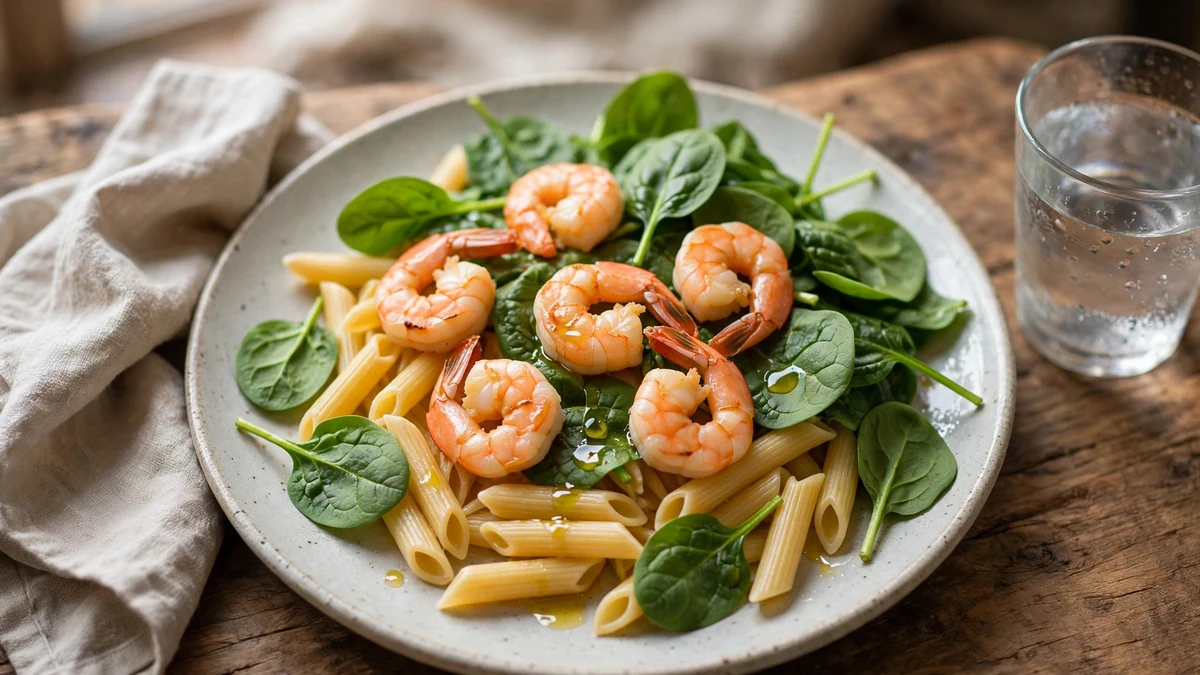
Day 6
| Meal | What to eat | Calories |
|---|---|---|
| Breakfast | 1 cup plain low-fat Greek yogurt; 1 cup blueberries; 1/4 cup granola | about 410 |
| Lunch | 4 oz cooked chicken breast; 1 whole-wheat pita; 2 tablespoons hummus; 1 medium tomato | about 429 |
| Dinner | 4 oz cooked shrimp; 1 cup cooked pasta; 2 cups raw spinach; 1 teaspoon olive oil | about 409 |
| Snacks | 1 medium apple; 1 tablespoon peanut butter | about 190 |
Day 6 total: about 1439 calories, 113 g protein, 170 g carbohydrate, 37 g fat, 22 g fiber.
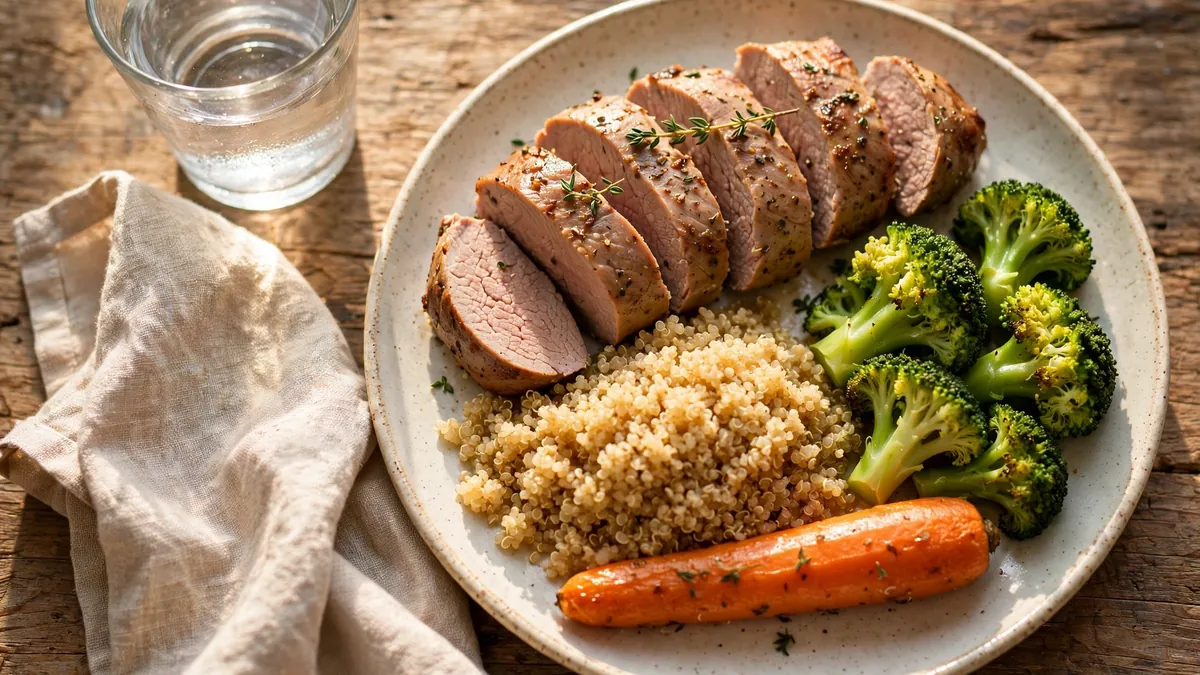
Day 7
| Meal | What to eat | Calories |
|---|---|---|
| Breakfast | 1/2 cup dry rolled oats; 3/4 cup skim milk; 1 medium apple; 1 tablespoon peanut butter | about 406 |
| Lunch | 1 cup cooked chickpeas; 1 slice whole-wheat bread; 1/2 cucumber | about 365 |
| Dinner | 5 oz cooked pork tenderloin; 1/2 cup cooked quinoa; 1 cup cooked broccoli; 1 medium carrot | about 394 |
| Snacks | 3 cups air-popped popcorn; 1 oz cheddar cheese; 1 cup grapes | about 312 |
Day 7 total: about 1477 calories, 91 g protein, 210 g carbohydrate, 35 g fat, 38 g fiber.
Grocery list
This list covers the full week for one person following the plan as written, including the desk drawer snacks.
Produce
- Apples, oranges, bananas, grapes, and a pear
- Strawberries, blueberries, and raspberries
- Sweet potatoes and white potatoes
- Broccoli, green beans, and kale
- Baby spinach and green leaf lettuce
- Carrots, tomatoes, cucumbers, and bell peppers
- An avocado or two
Meat and seafood
- Chicken breast and chicken thighs
- Turkey breast
- Salmon fillets and cod fillets
- Shrimp
- Pork tenderloin
- Lean ground beef (90% lean)
- Canned tuna in water
Dairy and eggs
- Large eggs and egg whites
- Plain nonfat Greek yogurt and plain low-fat Greek yogurt
- Low-fat cottage cheese
- Cheddar cheese and feta cheese
- Skim milk
Pantry
- Rolled oats and granola
- Brown rice and white rice, quinoa, and pasta
- Black beans, chickpeas, lentils, and corn
- Firm tofu
- Marinara sauce and salsa
- Peanut butter, hummus, and olive oil
- Almonds and walnuts
- Popcorn for air-popping or plain microwave popcorn
Frozen
- Shelled edamame
Bakery
- Whole-wheat bread
- Whole-wheat pita and flour tortillas
Meal prep tips
- Spend 30 minutes on Sunday cooking quinoa, brown rice, and a pot of lentils; the week’s packed bowls and salads assemble from them in minutes.
- Pack the next day’s lunch right after dinner, while you are already in the kitchen, and put your bag by the door.
- Stock the desk drawer on Monday with the week’s shelf stable snacks in single portions: almonds, popcorn, and fruit you rotate in daily.
- Keep a water bottle at your desk and refill it at set times. Thirst often reads as hunger during long seated stretches.
- Stand up and walk for a few minutes every hour or so, and take a short walk after lunch when you can. Movement breaks are part of the routine for desk workers, not a reward.
Easy swaps
- Swap any packed bowl’s protein for another in the same portion: chicken, turkey, tuna, tofu, shrimp, or beans all work over grains and vegetables.
- Swap quinoa for brown rice or bulgur, cup for cup, in the packed lunches.
- Swap black beans, chickpeas, and lentils for each other in equal portions.
- Swap Greek yogurt and cottage cheese for each other in breakfasts and snacks.
- Swap the desk snack fruit freely: an apple, orange, pear, banana, or a cup of grapes or berries all land in the same range.
- Swap salmon for cod or shrimp in the same portion range at dinner.
How to adjust the calories safely
If this plan leaves you persistently hungry, low on energy, or losing faster than about 2 pounds a week, add food. Men should add food from the start, because 1,500 calories is the lowest level men should use and most men need more. To add roughly 200 to 300 calories a day using foods already in the plan, choose one: 1 oz of almonds (about 162 calories) plus a medium orange (about 62 calories); or 1/2 cup of cooked quinoa (about 111 calories) added to the packed lunch and 2 tablespoons of hummus (about 53 calories) with the snack, plus 1 cup of skim milk (about 86 calories) during the day.
Never go below 1,200 calories a day for women or 1,500 calories a day for men. If you are a man following this plan, use the additions above every day, and talk with your doctor or a registered dietitian about the right level for you.
Common mistakes
- Skipping the packed lunch and deciding at noon. Noon decisions at a desk job usually end at the cafeteria line or a delivery app.
- Keeping unplanned snacks in the desk. If the drawer holds candy, the drawer wins; stock it with the planned snacks instead.
- Eating lunch at the keyboard while working and feeling unsatisfied after. Stepping away for ten minutes makes the same lunch feel like a meal.
- Sitting through the whole day without standing. Regular short walks and stretch breaks support energy and appetite steadiness in general terms.
- Treating coffee drinks as free. Sweetened coffee drinks can quietly add a meal’s worth of calories to a seated day.
Pair it with a workout
Desk work pairs naturally with walking: a walk before work, a short one after lunch, and another after dinner can add up to real daily movement without a gym. Pair this plan with the walking plans and beginner strength routines in our Exercise and Workouts category two or three days a week, and build up gradually. Stop any exercise that causes pain, dizziness, or chest pain, and check with your doctor before starting if you have been inactive or have a medical condition. For a high fiber week that packs just as well, see our 7-Day High-Fiber, No-Sugar Meal Plan for Weight Loss.
Frequently asked questions
How do I handle office treats and birthday cake?
Decide in advance, not in the moment. A simple rule that works for many desk workers: say yes to a small piece on the day itself, enjoy it, and let it stand in for that day’s planned snack rather than adding on top.
What if my office has no fridge or microwave?
Most of the packed lunches here hold up for a morning in an insulated bag with an ice pack: the wraps, the bean salad, the tuna sandwich, and the chickpea lunch all travel well. The yogurt, cottage cheese, and edamame snacks are the only ones that truly need the cold pack.
Why is there a planned snack every day?
Because the mid afternoon dip is predictable. A planned snack of about 200 calories at your desk is what stands between you and the vending machine at 3 in the afternoon, and it keeps you from arriving at dinner ravenous.
Is 1,500 calories enough for a man who works at a desk?
It is the floor, not the target. Most men, even sedentary ones, need more than 1,500 calories to lose weight at a steady, sustainable pace. Men should use the adjustment additions every day and talk with their doctor or dietitian about the right level.
Can I eat out for lunch once a week?
Yes. Pick the meal that most resembles the packed lunch it replaces: a protein, a grain, and vegetables, with fruit or a small side instead of fries, and keep the rest of the day as planned. One lunch out does not change the week; an unplanned pattern does.
Sources and further reading
- USDA FoodData Central, the source for every calorie and nutrient value in this plan: fdc.nal.usda.gov
- Dietary Guidelines for Americans, for the overall healthy eating pattern this plan follows: dietaryguidelines.gov
- MyPlate, for balanced plate ideas built from the same food groups: myplate.gov
- Centers for Disease Control and Prevention, for healthy weight guidance and workplace wellness information: cdc.gov
- MedlinePlus, for plain language background on nutrition and healthy eating: medlineplus.gov
This article is for general educational purposes only and is not medical, nutrition, or fitness advice. Talk with your doctor or a registered dietitian before changing your diet or starting an exercise program.