Prints just the plan, like a recipe card.
Last updated: November 22, 2026.
This meal plan for one person gives you 7 days of breakfasts, lunches, dinners, and snacks at about 1,500 calories a day, with every meal written as a true single serving. Where cooking a larger amount is unavoidable, the plan says so and uses the extra on purpose: the second chicken breast from day 1 becomes day 2 lunch, and half the day 3 lentils are frozen for day 4. Every portion is listed in plain US measures, and every number was calculated from USDA FoodData Central values. More plans organized by living situation live in our By Lifestyle diet plans.
Who this plan is for, and who should not follow it
This plan is for adults who live and cook alone and are tired of recipes that serve four. It suits people who shop once or twice a week, are comfortable freezing single portions, and want a structured week without a mountain of leftovers or waste.
This plan is general education only and is not medical advice. Talk with your doctor or a registered dietitian before following it, especially if you have diabetes, kidney disease, or another condition affected by food, or if you take medication that food or weight change can affect. It is not for children or teenagers, and it is not for anyone who is pregnant or breastfeeding. Follow safe leftover habits: refrigerate cooked food within 2 hours, eat refrigerated leftovers within 3 to 4 days, and freeze anything you will not use in that window.
If you have a history of disordered eating, talk with a doctor or a registered dietitian before following any diet plan. For eating disorder support in the US, visit the National Alliance for Eating Disorders at allianceforeatingdisorders.com.
Plan overview
| Daily calorie target | About 1500 calories |
| Average protein per day | About 106 g |
| Average carbohydrate per day | About 187 g |
| Average fat per day | About 42 g |
| Average fiber per day | About 36 g |
| Meals per day | 4 (breakfast, lunch, dinner, and snacks) |
The week is built on single-serve logic: cans of tuna that finish in one meal, eggs and yogurt in small counts, fish fillets bought singly or frozen one to a bag, and two deliberate batch moments (chicken on day 1, lentils on day 3) whose extras are already assigned to later meals.
How this meal plan for one person is built
Each day lands near 1,500 calories with protein at every meal. The grocery list is sized for one: a two-pack of salmon fillets covers days 2 and 7, a standard block of tofu is split across the week, and the turkey package is portioned and frozen raw on day 6. Because 1,500 calories is the lowest level appropriate for most men, men should read the adjustment section and add food as described. If you want to check how this level compares with your own needs, our calorie calculator gives a general estimate to discuss with your doctor or dietitian.
The 7-day meal plan
Portions are given in US household measures for one person. Calories for each meal and day were calculated from USDA FoodData Central values for the exact foods and amounts listed. Notes in parentheses tell you when to cook extra or thaw a portion; the listed amounts are always the amount you eat at that meal.
Day 1
| Meal | What to eat | Calories |
|---|---|---|
| Breakfast | 1/2 cup dry rolled oats, cooked; 1 cup skim milk; 1 cup blueberries; 2 tablespoons chopped walnuts | about 413 |
| Lunch | 2 large eggs, cooked any style; 1 slice whole-wheat toast; 1/2 avocado; 1 medium tomato | about 378 |
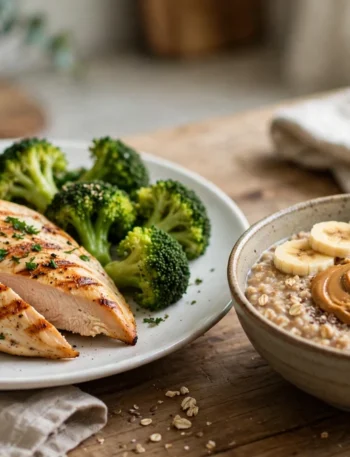
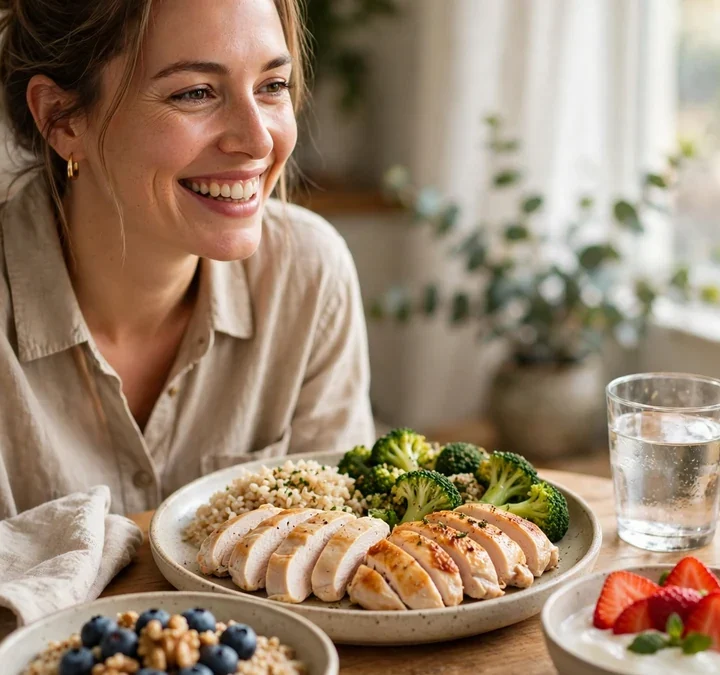
| Dinner | 5 oz cooked chicken breast (cook 2; save 1 for day 2); 1 cup cooked brown rice; 1 cup cooked broccoli; 1 teaspoon olive oil | about 556 |
| Snacks | 3/4 cup plain nonfat Greek yogurt; 1 cup strawberries | about 149 |
Day 1 total: about 1496 calories, 107 g protein, 165 g carbohydrate, 49 g fat, 28 g fiber.
Day 2
| Meal | What to eat | Calories |
|---|---|---|
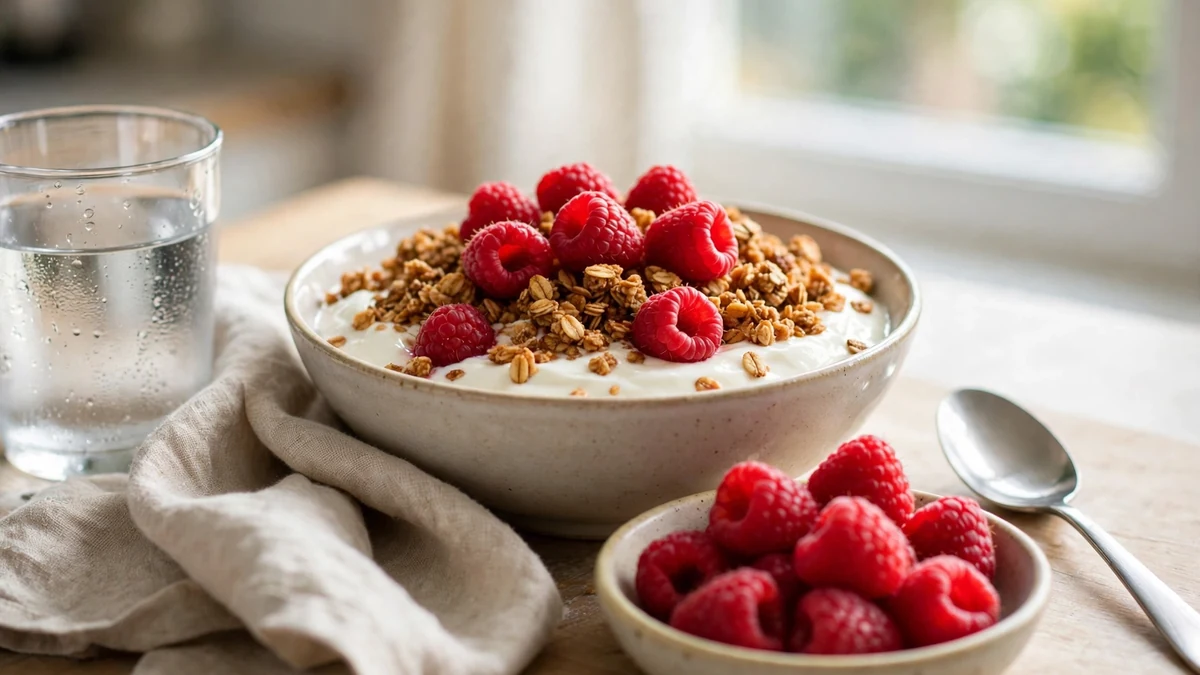
| Breakfast | 1 cup plain nonfat Greek yogurt; 1/4 cup granola; 1 cup raspberries | about 355 |
| Lunch | 4 oz cooked chicken breast (leftover from day 1); 1 whole-wheat pita; 2 tablespoons hummus; 2 cups green leaf lettuce; 1/2 cucumber, sliced | about 433 |
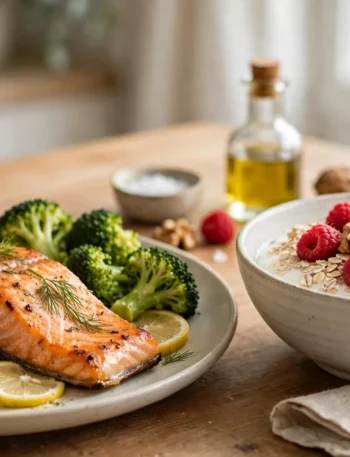
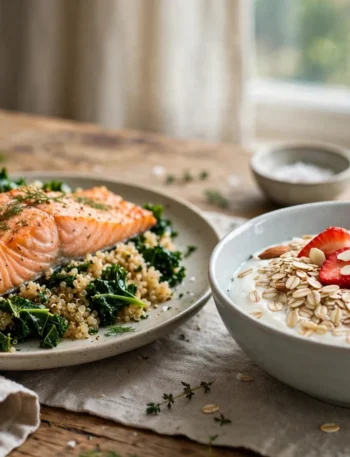
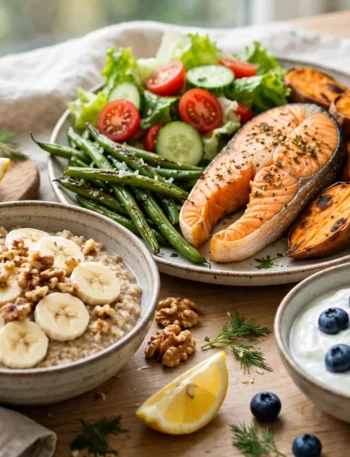
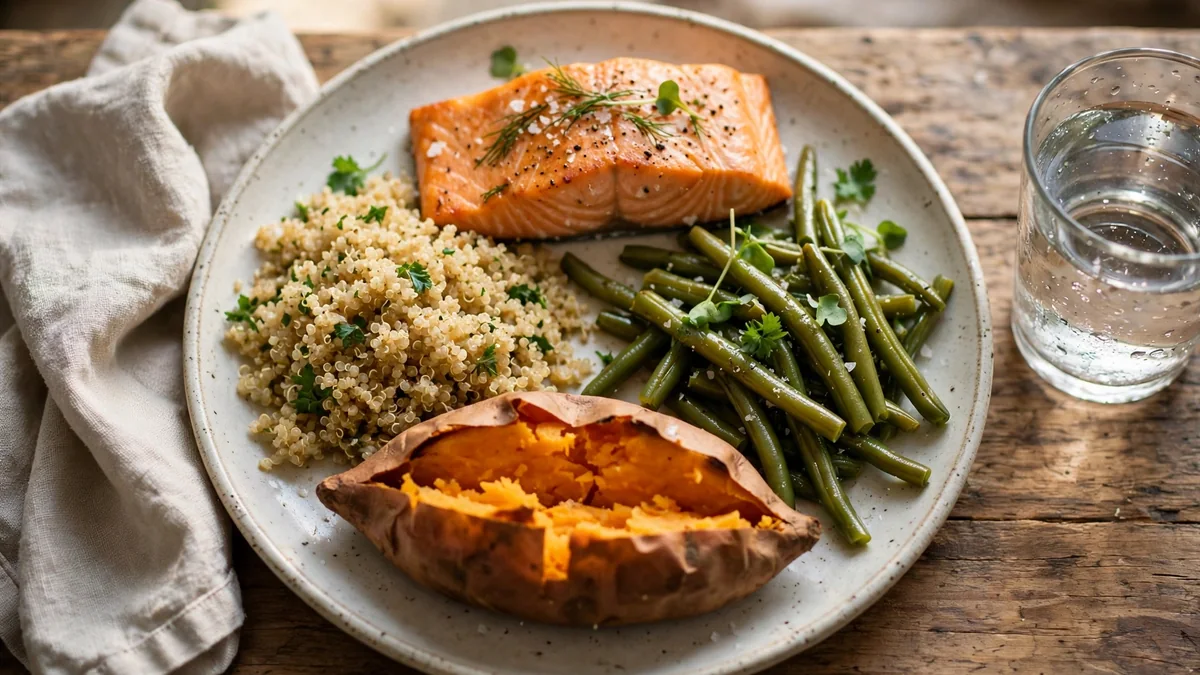
| Dinner | 4 oz cooked salmon (single fillet); 1/2 cup cooked quinoa; 1 medium baked sweet potato; 1 cup cooked green beans | about 464 |
| Snacks | 1/2 cup low-fat cottage cheese; 1 medium pear; 2 tablespoons chopped walnuts | about 274 |
Day 2 total: about 1526 calories, 129 g protein, 173 g carbohydrate, 39 g fat, 34 g fiber.
Day 3
| Meal | What to eat | Calories |
|---|---|---|
| Breakfast | 2 large eggs, cooked any style; 1 slice whole-wheat toast; 1 oz cheddar cheese; 1 orange | about 412 |
| Lunch | 1 cup cooked lentils (cook double; freeze half); 1 cup chopped carrots; 1/2 cup crushed canned tomatoes; 1 teaspoon olive oil; 1 slice whole-wheat bread | about 439 |
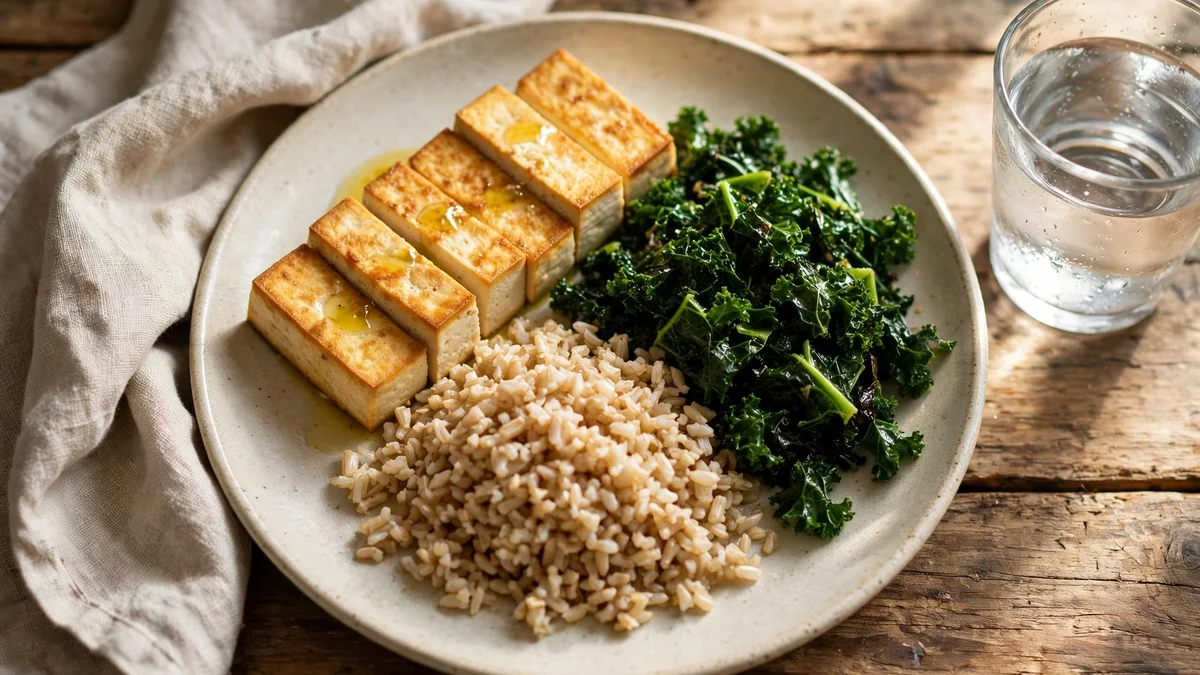
| Dinner | 125 g firm tofu (half a block); 1 cup cooked brown rice; 1 cup cooked kale; 1 teaspoon olive oil | about 505 |
| Snacks | 1 medium apple; 1 tablespoon peanut butter | about 190 |
Day 3 total: about 1545 calories, 84 g protein, 191 g carbohydrate, 56 g fat, 43 g fiber.
Day 4
| Meal | What to eat | Calories |
|---|---|---|
| Breakfast | 1 cup low-fat cottage cheese; 1 medium banana; 1/4 cup granola | about 414 |
| Lunch | 1 can tuna in water, drained; 1 slice whole-wheat bread; 2 cups green leaf lettuce; 1 medium tomato; 1/4 avocado; 2 tablespoons hummus | about 381 |
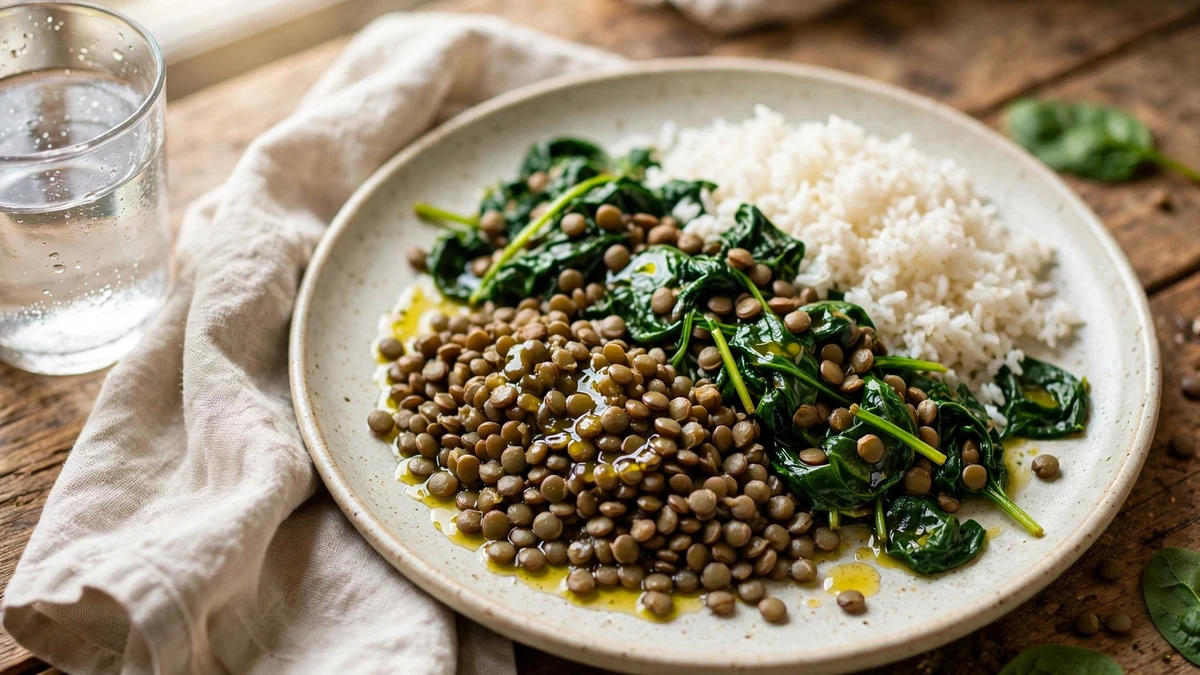
| Dinner | 1 cup cooked lentils (from the day 3 batch); 3/4 cup cooked white rice; 2 cups raw spinach, wilted in; 1 teaspoon olive oil | about 461 |
| Snacks | 1 cup skim milk; 1 oz dark chocolate (70% cacao) | about 253 |
Day 4 total: about 1510 calories, 104 g protein, 184 g carbohydrate, 41 g fat, 34 g fiber.
Day 5
| Meal | What to eat | Calories |
|---|---|---|
| Breakfast | 1/2 cup dry rolled oats, cooked; 3/4 cup skim milk; 1 tablespoon peanut butter; 1 cup strawberries | about 360 |
| Lunch | 1 cup cooked black beans; 2 corn tortillas; 1/4 cup salsa; 1 oz cheddar cheese | about 474 |
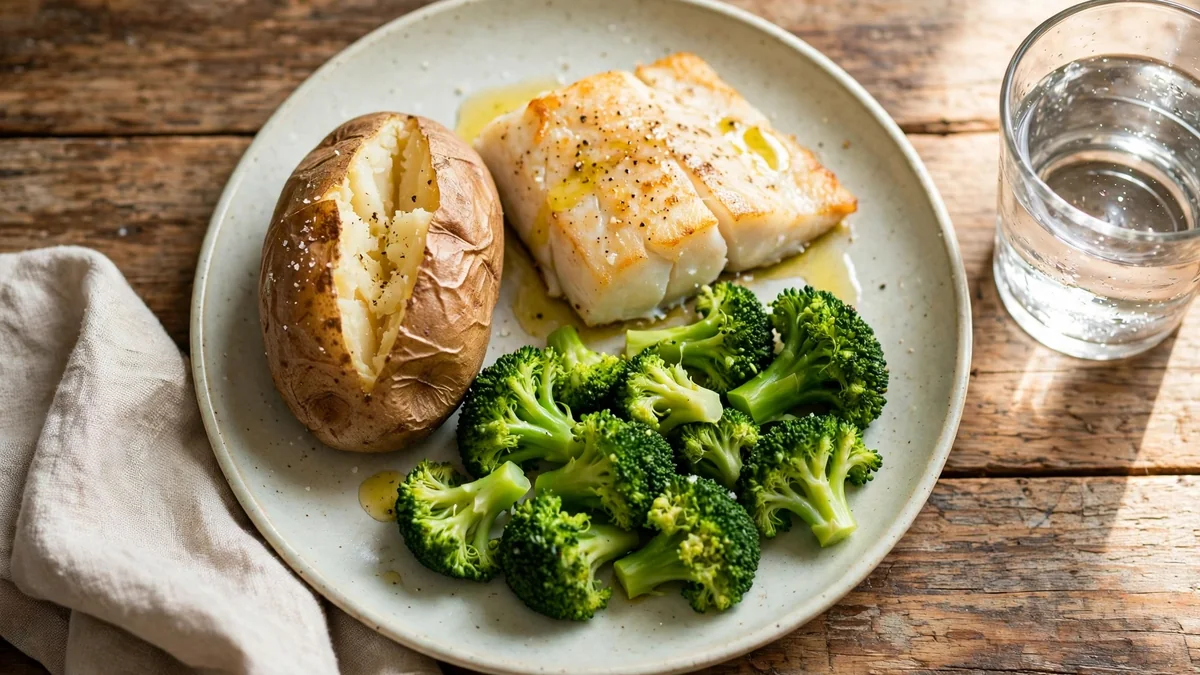
| Dinner | 6 oz cooked cod (single fillet); 1 medium baked potato; 1 cup cooked broccoli; 1 teaspoon olive oil | about 423 |
| Snacks | 3/4 cup plain low-fat Greek yogurt; 1 cup grapes | about 228 |
Day 5 total: about 1486 calories, 107 g protein, 199 g carbohydrate, 34 g fat, 37 g fiber.
Day 6
| Meal | What to eat | Calories |
|---|---|---|
| Breakfast | 1 large egg, cooked any style; 2 large egg whites; 2 slices whole-wheat toast; 1 cup skim milk | about 359 |
| Lunch | 1 cup cooked chickpeas; 1/2 cup cooked quinoa; 1 oz feta cheese, crumbled; 1/2 cucumber, sliced; 1 teaspoon olive oil | about 510 |
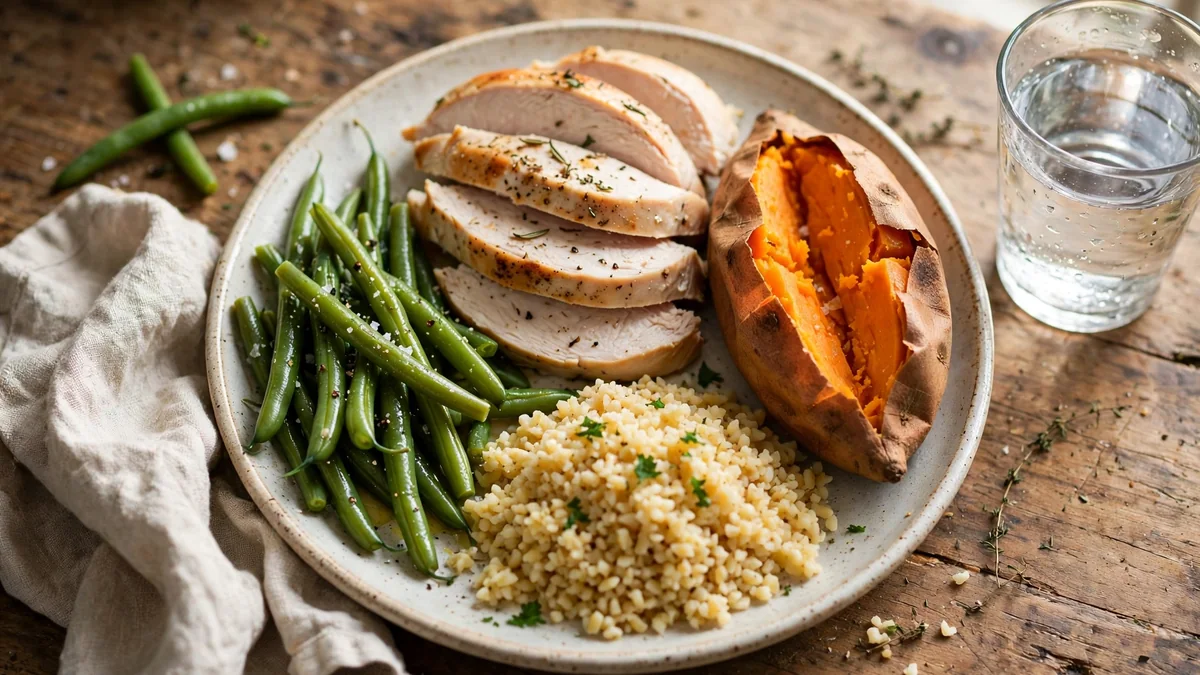
| Dinner | 4 oz cooked turkey breast (freeze the rest in portions); 1 medium baked sweet potato; 1 cup cooked bulgur; 1 cup cooked green beans | about 464 |
| Snacks | 1 medium pear; 2 tablespoons chopped walnuts | about 193 |
Day 6 total: about 1525 calories, 100 g protein, 206 g carbohydrate, 37 g fat, 42 g fiber.
Day 7
| Meal | What to eat | Calories |
|---|---|---|
| Breakfast | 3/4 cup plain nonfat Greek yogurt; 1/2 cup dry rolled oats, stirred in; 1 cup blueberries; 1 tablespoon honey | about 400 |
| Lunch | 4 oz cooked salmon (second fillet of a two-pack); 1 cup cooked bulgur; 2 cups green leaf lettuce; 1 medium tomato | about 390 |
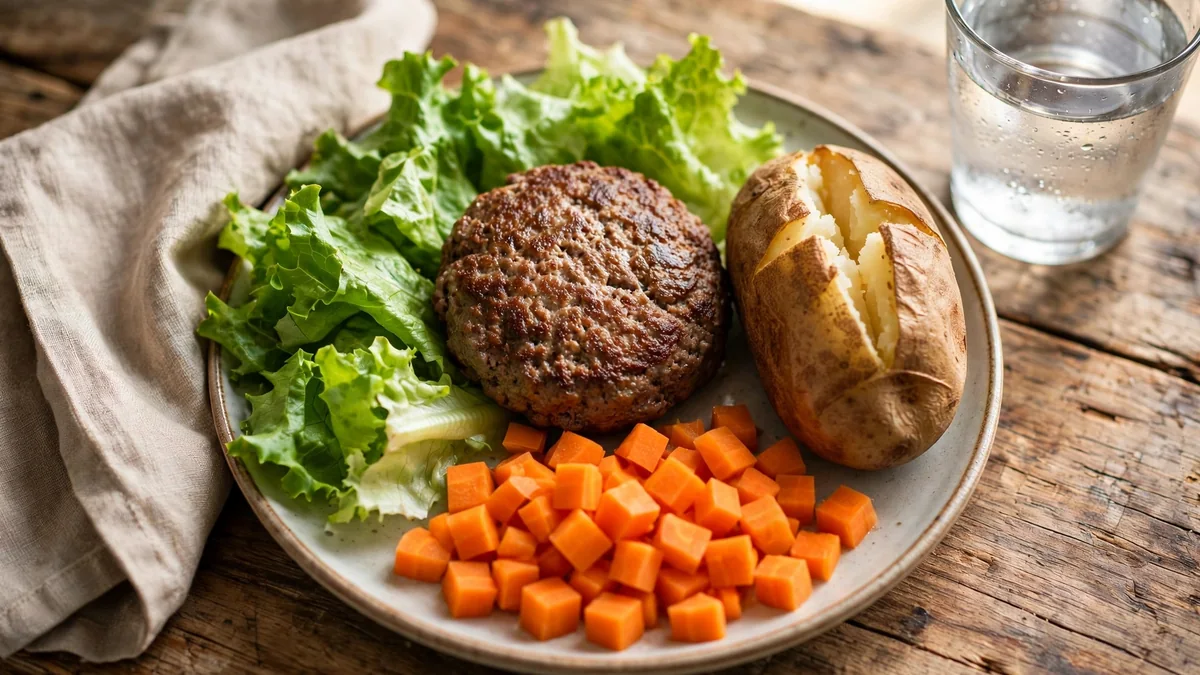
| Dinner | 4 oz cooked lean ground beef (90% lean), formed as a single patty; 1 medium baked potato; 1 cup chopped carrots; 2 cups green leaf lettuce | about 459 |
| Snacks | 3 cups air-popped popcorn; 1 cup skim milk; 1/2 oz almonds (about 12 almonds) | about 260 |
Day 7 total: about 1508 calories, 110 g protein, 194 g carbohydrate, 36 g fat, 31 g fiber.
Grocery list
This list covers the full week for one person, in the small quantities the plan actually uses.
Produce
- Bananas, apples, pears, oranges, grapes, blueberries, strawberries, and raspberries
- Sweet potatoes and baking potatoes (buy loose)
- Broccoli, green beans, and kale
- Spinach and green leaf lettuce
- Cucumbers, tomatoes, and carrots
- Avocados (buy 2)
Meat and seafood
- Chicken breast, 2 breasts
- Turkey breast, 1 small package
- Salmon fillets, a two-pack
- Cod fillet, 1
- Lean ground beef, 90% lean, about 1/4 lb
- Canned tuna in water, 1 can
- Firm tofu, 1 block
Dairy and eggs
- Large eggs and egg whites, 1 dozen
- Plain nonfat Greek yogurt and plain low-fat Greek yogurt
- Low-fat cottage cheese, 1 small tub
- Skim milk, 1 quart
- Cheddar cheese and feta cheese, small pieces
Pantry
- Rolled oats and granola
- Brown rice, white rice, quinoa, and bulgur
- Black beans, lentils, and chickpeas, 1 can each
- Crushed canned tomatoes, 1 can
- Peanut butter, almonds, and walnuts, small bags
- Olive oil, salsa, hummus, and honey
- Dark chocolate (70% cacao), one small bar
- Popcorn for air-popping
Frozen
- Frozen berries as a backup for fresh fruit
- Freezer bags or small containers for single portions
Bakery
- Whole-wheat bread (freeze half the loaf)
- Whole-wheat pita and corn tortillas
Meal prep tips
- On day 1, cook two chicken breasts at dinner and refrigerate one sliced for day 2 lunch; freeze the second half of the bread loaf the same day so it stays fresh all week.
- On day 3, cook a double batch of lentils, eat one portion, and freeze the other flat in a labeled bag for day 4 dinner.
- Portion the turkey package raw on day 6 into single 4 to 5 oz pieces, wrap, and freeze; thaw one overnight in the fridge whenever you need it.
- Split the tofu block on day 3, press and cook half, and store the rest submerged in fresh water in a sealed container for up to 3 days, or freeze it.
- Keep a running freezer list on the door: what went in, and when. Solo cooks waste the most food by forgetting what they froze.
Easy swaps
- Swap the salmon fillets for cod or turkey breast in the same portion if the fish counter only has large packs.
- Swap lentils, black beans, and chickpeas for each other, cup for cup; all freeze and thaw well in single portions.
- Swap brown rice, white rice, quinoa, and bulgur for each other in equal cooked portions; cook grains in small pots of 1 cup dry at a time.
- Swap Greek yogurt for low-fat cottage cheese in the same amount at breakfast or snack time.
- Swap the pear, apple, orange, and grapes for each other as the fruit in a meal; buy fruit in twos and threes, not bags.
- Swap the ground beef patty on day 7 for a turkey portion thawed from your day 6 freezer portions.
How to adjust the calories safely
This plan averages about 1,500 calories a day, which is at the lower end for many adults. Men should add about 200 to 300 calories a day, and so should anyone losing faster than about 1 to 2 pounds a week or feeling persistently hungry. Easy additions from the plan’s own foods, all in single servings: 1 cup of cooked quinoa (about 222 calories) added to a dinner; or 1 oz of almonds (about 162 calories) plus a medium orange (about 62 calories); or 1/2 cup of cooked brown rice (about 114 calories) at lunch plus 1 tablespoon of peanut butter (about 96 calories) with the snack.
Never go below 1,200 calories a day for women or 1,500 calories a day for men without medical supervision. Cooking for one is not a reason to eat less than your body needs; the freezer, not your plate, is where the extra food belongs.
Common mistakes
- Buying family packs without a portioning plan. If you buy big, portion and freeze the same day.
- Eating the leftover instead of the planned meal. The day 1 chicken and day 3 lentils already have assigned jobs; eating them early unravels two later days.
- Keeping leftovers too long. Cooked food keeps 3 to 4 days in the fridge; after that it should have been frozen or thrown away, not risked.
- Skipping the grocery list and shopping hungry, which for one person usually means snacks instead of the ingredients for real meals.
- Cutting the plan’s portions in half to save money or speed loss. At 1,500 calories the portions are already the plan; buy smaller amounts instead.
Pair it with a workout
Living alone often means exercising alone too, and the routines in our Exercise and Workouts category include walking plans and simple home strength sessions that need no partner and little equipment. Build up gradually, and stop any exercise that causes pain, dizziness, or chest pain. If you walk daily and want meals timed around that habit, see our 7-Day Meal Plan for Walkers.
Frequently asked questions
How do I stop wasting food when cooking for one?
Plan the leftovers before you cook, as this plan does: every batch has a named second use, and the rest is frozen in single portions the same day. A short freezer list on the door, with dates, prevents the forgotten-container problem.
How long do the leftovers in this plan keep?
The day 1 chicken is eaten on day 2, well within the 3 to 4 day fridge window for cooked poultry. The day 3 lentils are frozen, not refrigerated, so they keep for months and thaw for day 4. When in doubt, freeze early rather than late.
Can I freeze the cooked grains and beans?
Yes. Rice, quinoa, bulgur, beans, and lentils all freeze well in single portions. Cool them quickly, freeze flat in bags or small containers, and thaw overnight in the fridge or gently in the microwave with a splash of water.
Is 1,500 calories enough for a man living alone?
For most men it is the floor, not the target. Men should use the additions in the adjustment section to reach at least 1,500 to 1,800 calories, and larger or active men need more. Never go below 1,500 calories a day for men without medical supervision.
What if my store only sells large packs of meat?
Buy the pack, then portion it raw into single 4 to 6 oz pieces the day you shop, wrap each piece, and freeze. You will use the portions across this week and the next, at the same per-meal cost and with no waste.
Sources and further reading
- USDA FoodData Central, the source for every calorie and nutrient value in this plan: fdc.nal.usda.gov
- Dietary Guidelines for Americans, for the overall healthy eating pattern this plan follows: dietaryguidelines.gov
- MyPlate, for balanced plate ideas built from the same food groups: myplate.gov
- Centers for Disease Control and Prevention, for healthy weight and physical activity guidance: cdc.gov
- MedlinePlus, for plain language background on nutrition and exercise: medlineplus.gov
This article is for general educational purposes only and is not medical, nutrition, or fitness advice. Talk with your doctor or a registered dietitian before changing your diet or starting an exercise program.