Prints just the plan, like a recipe card.
Last updated: November 22, 2026.
This meal plan for beginners gives you 7 days of breakfasts, lunches, dinners, and snacks at about 1,500 calories a day, written for someone who has never followed a meal plan and barely cooks yet. Every meal is assembled from a short list of ordinary grocery foods, and every step is spelled out: if a meal needs cooking, the plan section below tells you what to do, in order. There are no specialty ingredients, no long recipes, and nothing you need a scale for. Every portion is listed in plain US measures, and every number was calculated from USDA FoodData Central values. The week averages about 108 grams of protein a day. For many adults, 1,500 calories lines up with gradual weight loss of about 1 to 2 pounds a week. More plans like this one live in our By Lifestyle diet plans.
Who this plan is for, and who should not follow it
This plan is for total beginners: people who eat out or order in most days, who are not sure how to cook chicken or rice, and who want a first week that feels possible instead of overwhelming. If you can boil water, use a microwave, and spread peanut butter on toast, you can make every meal here. Read the short how to cook notes before your first shopping trip.
This plan is not medical advice. Talk with your doctor or a registered dietitian before following it, especially if you have diabetes, kidney disease, or another condition affected by food, or if you take medication that food or weight change can affect. It is not for children or teenagers, and it is not for anyone who is pregnant or breastfeeding. This plan is written at 1,500 calories, which is a common level for women; men should use the adjustment section to add food, because men should not eat below 1,500 calories a day and most men need more.
If you have a history of disordered eating, talk with a doctor or a registered dietitian before following any diet plan. For eating disorder support in the US, visit the National Alliance for Eating Disorders at allianceforeatingdisorders.com.
Plan overview
| Daily calorie target | About 1500 calories |
| Average protein per day | About 108 g |
| Average carbohydrate per day | About 186 g |
| Average fat per day | About 39 g |
| Average fiber per day | About 31 g |
| Meals per day | 4 (breakfast, lunch, dinner, and snacks) |
The pattern never changes, which is the point: breakfast is oatmeal, eggs, yogurt, or cottage cheese; lunch is a sandwich, a wrap, or a bean or lentil bowl; dinner is one protein, one grain or potato, and one vegetable; and there is one planned snack so you are not left guessing.
How this meal plan for beginners works, step by step
Here is every cooking skill the week uses, explained once. Oatmeal: put the oats and twice as much water in a bowl, microwave 2 to 3 minutes, stir, and let it sit a minute; or simmer on the stove for 5 minutes. Rice: buy the microwave pouch kind if you want zero effort, or simmer 1 part rice in 2 parts water, covered, for about 18 minutes without lifting the lid. Eggs: crack into a nonstick pan over medium heat, stir with a spatula until set, about 3 minutes; or microwave in a greased bowl in 30 second bursts, stirring between. Chicken, fish, and pork: cook in a pan over medium heat or bake at 400 degrees F until the thickest part is white and firm all the way through with no pink left, about 6 to 8 minutes per side for a breast or fillet. Frozen vegetables like broccoli and green beans: microwave in their bag or a covered bowl with a splash of water for 4 to 5 minutes. Potatoes: scrub, poke with a fork, and microwave 6 to 8 minutes, turning once, until soft when squeezed. That is the whole skill set. If you want to check how this calorie level compares with your own needs, our calorie calculator gives a general estimate to discuss with your doctor or dietitian.
The 7-day meal plan
Portions are given in US household measures. Calories for each meal and day were calculated from USDA FoodData Central values for the exact foods and amounts listed. Salt, pepper, garlic powder, and dried herbs are free flavor.
Day 1
| Meal | What to eat | Calories |
|---|---|---|
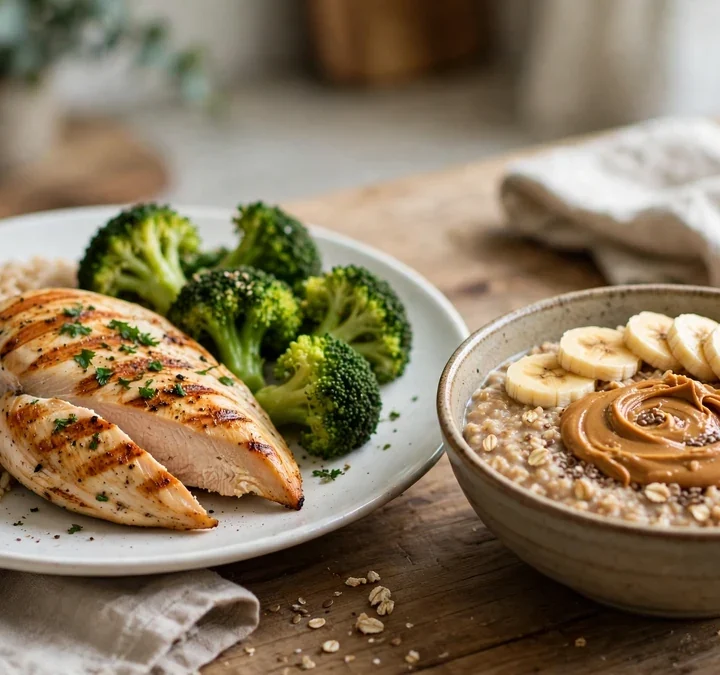
| Breakfast | 1/2 cup dry rolled oats; 1 cup skim milk; 1 medium banana; 1 tablespoon peanut butter | about 438 |
| Lunch | 1 can tuna in water, drained; 2 slices whole-wheat bread; 2 cups green leaf lettuce; 1 medium apple | about 420 |
| Dinner | 4 oz cooked chicken breast; 1 cup cooked brown rice; 1 cup cooked broccoli | about 469 |
| Snacks | 3/4 cup plain nonfat Greek yogurt; 1 cup strawberries | about 149 |
Day 1 total: about 1476 calories, 118 g protein, 200 g carbohydrate, 25 g fat, 28 g fiber.
Day 2
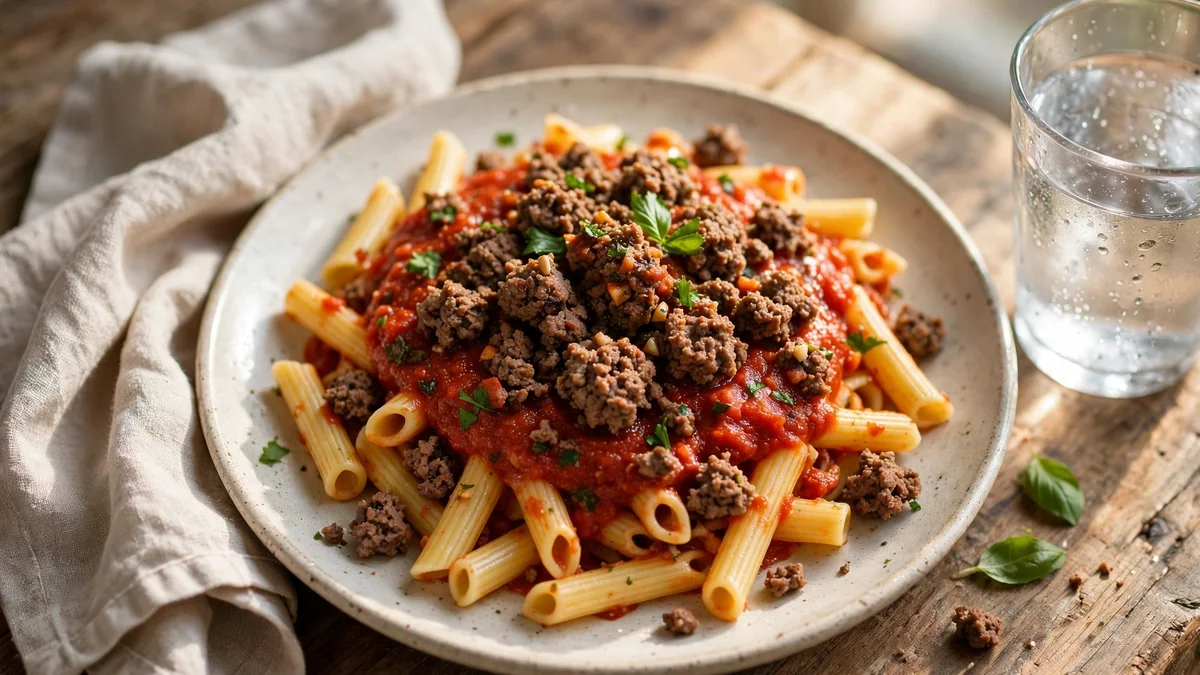
| Meal | What to eat | Calories |
|---|---|---|
| Breakfast | 2 large eggs; 1 slice whole-wheat toast; 1 orange; 1 cup skim milk | about 383 |
| Lunch | 4 oz cooked turkey breast; 2 slices whole-wheat bread; 1 oz cheddar cheese; 1 medium tomato | about 464 |
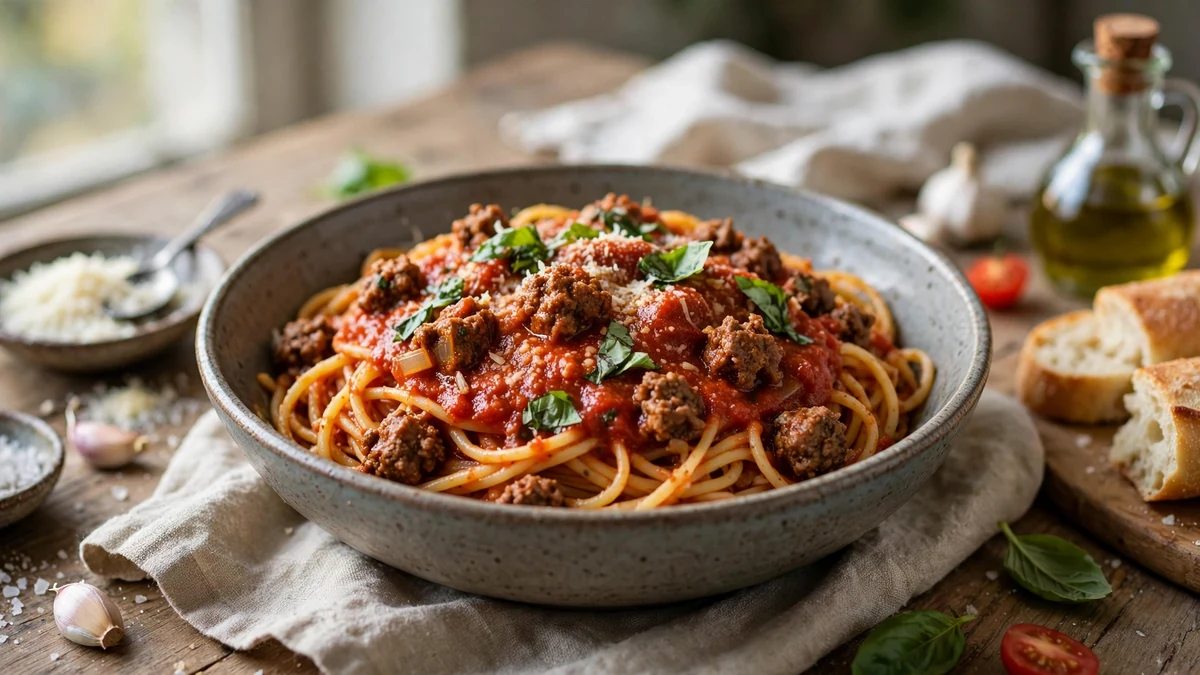
| Dinner | 1 cup cooked pasta; 1/2 cup marinara sauce; 4 oz lean ground beef (90% lean) | about 529 |
| Snacks | 1/2 cup low-fat cottage cheese; 1 medium pear | about 183 |
Day 2 total: about 1559 calories, 130 g protein, 157 g carbohydrate, 45 g fat, 21 g fiber.
Day 3
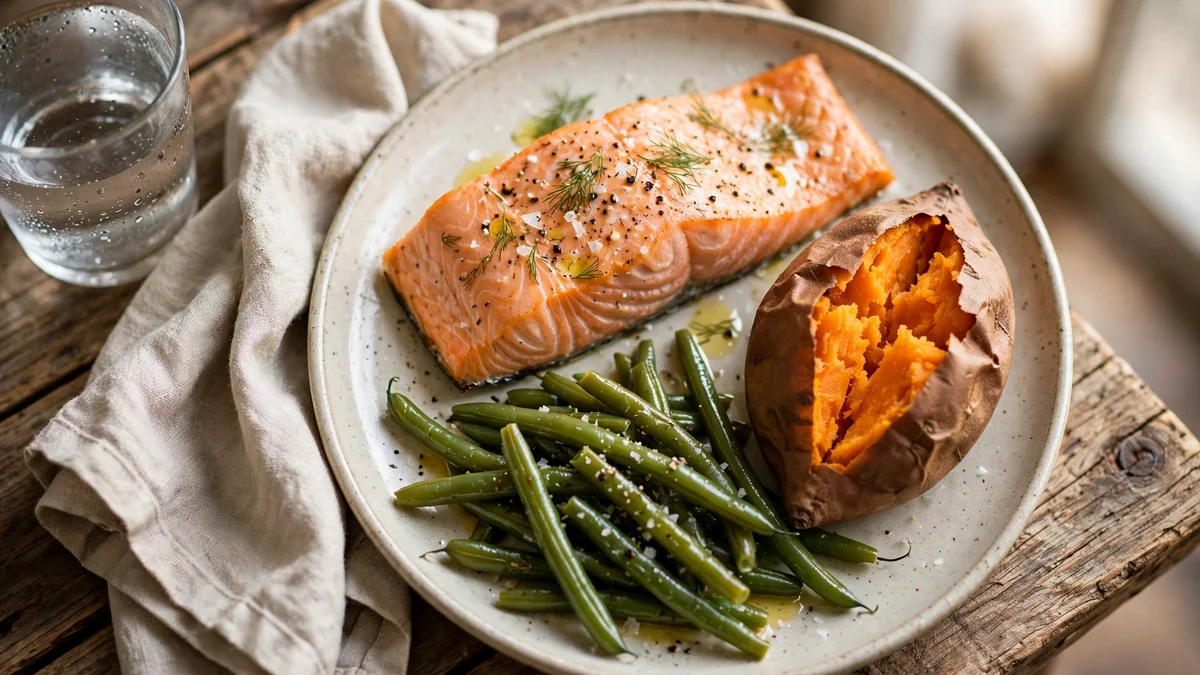
| Meal | What to eat | Calories |
|---|---|---|
| Breakfast | 1 cup plain low-fat Greek yogurt; 1/4 cup granola; 1 cup blueberries | about 410 |
| Lunch | 1/2 cup cooked black beans; 1 flour tortilla; 1 oz cheddar cheese; 1/4 cup salsa | about 381 |
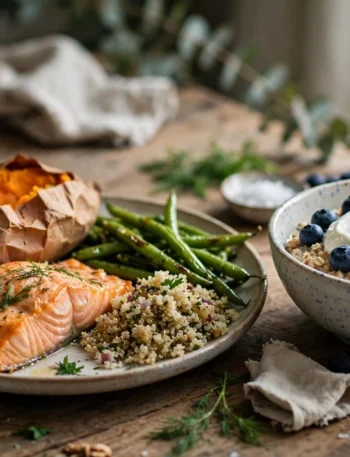
| Dinner | 4 oz cooked salmon; 1 medium baked sweet potato; 1 cup cooked green beans | about 352 |
| Snacks | 3 cups air-popped popcorn; 1 cup skim milk; 1 oz almonds | about 341 |
Day 3 total: about 1483 calories, 99 g protein, 165 g carbohydrate, 51 g fat, 31 g fiber.
Day 4
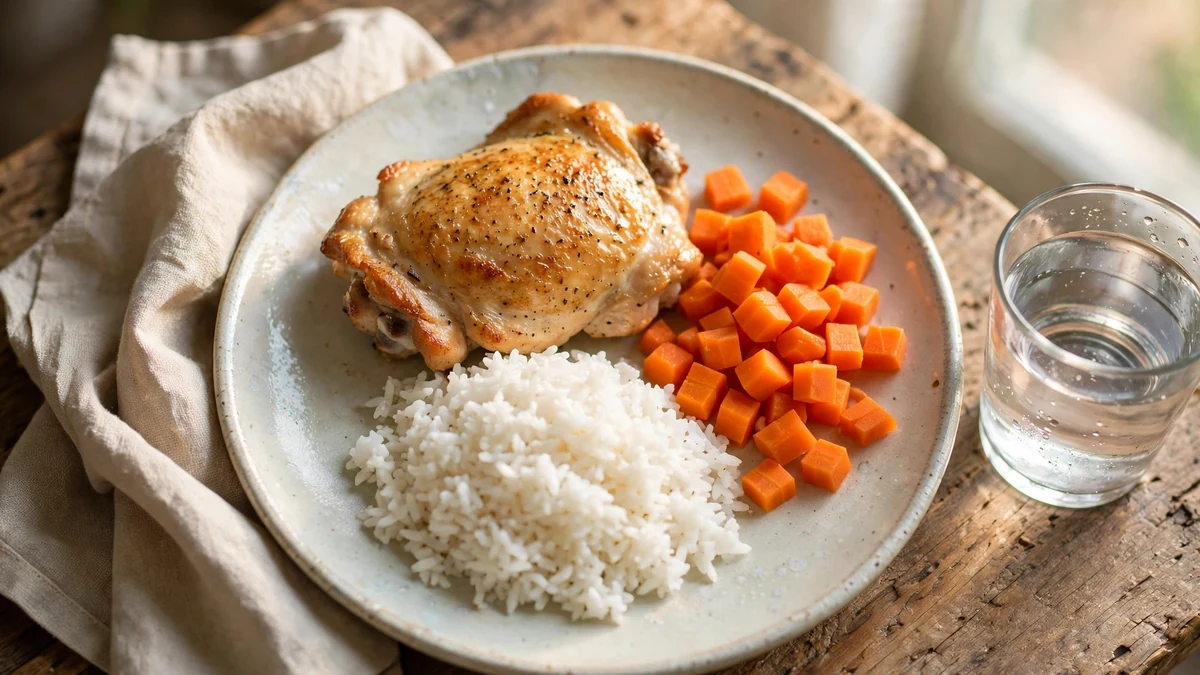
| Meal | What to eat | Calories |
|---|---|---|
| Breakfast | 1/2 cup dry rolled oats; 3/4 cup skim milk; 1 cup raspberries; 1 tablespoon honey | about 344 |
| Lunch | 2 large eggs; 2 slices whole-wheat bread; 1/2 avocado | about 436 |
| Dinner | 4 oz cooked chicken thigh; 1 cup cooked white rice; 1 cup chopped carrots | about 495 |
| Snacks | 3/4 cup plain nonfat Greek yogurt; 1 cup grapes | about 204 |
Day 4 total: about 1480 calories, 88 g protein, 201 g carbohydrate, 39 g fat, 27 g fiber.
Day 5
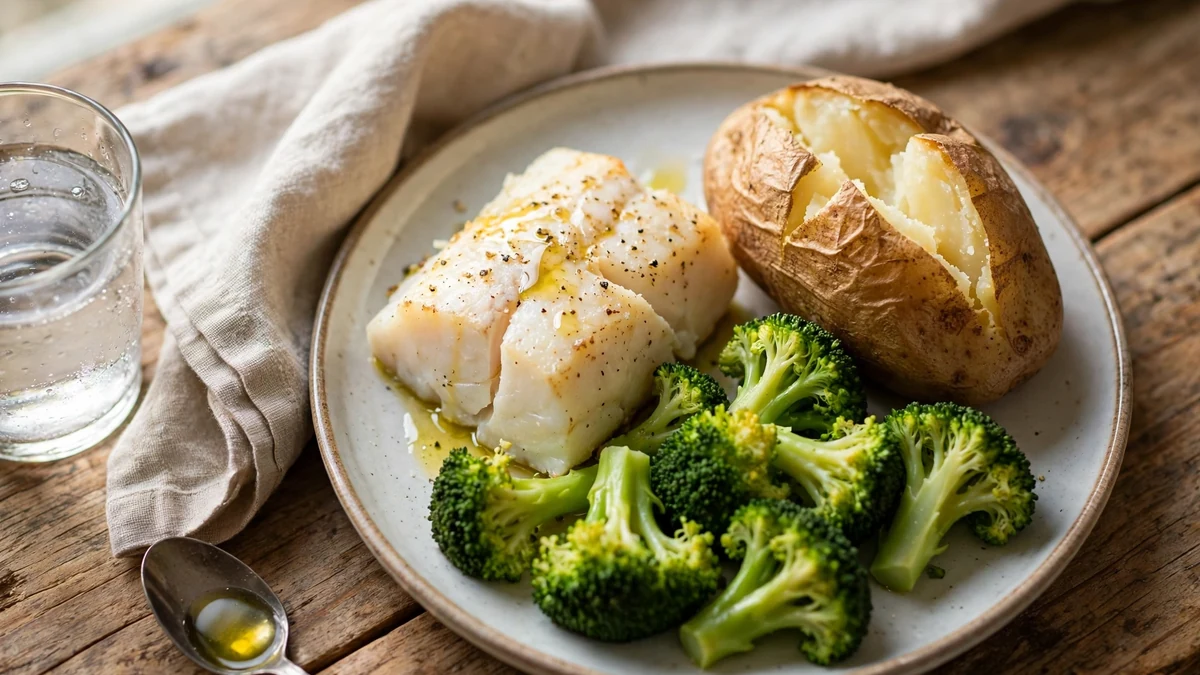
| Meal | What to eat | Calories |
|---|---|---|
| Breakfast | 1 cup low-fat cottage cheese; 1 cup strawberries; 1 slice whole-wheat toast; 1 medium banana | about 397 |
| Lunch | 1 cup cooked chickpeas; 1/2 cucumber; 1 medium tomato; 1 slice whole-wheat bread | about 387 |
| Dinner | 6 oz cooked cod; 1 medium baked potato; 1 cup cooked broccoli; 1 teaspoon olive oil | about 423 |
| Snacks | 1/4 cup hummus; 1 cup chopped carrots; 1 medium apple | about 253 |
Day 5 total: about 1460 calories, 106 g protein, 220 g carbohydrate, 23 g fat, 43 g fiber.
Day 6
| Meal | What to eat | Calories |
|---|---|---|
| Breakfast | 2 large eggs; 1 large egg white; 1 slice whole-wheat toast; 3/4 cup skim milk; 1 tablespoon peanut butter | about 413 |
| Lunch | 1 cup cooked lentils; 1 cup chopped carrots; 1 slice whole-wheat bread | about 359 |
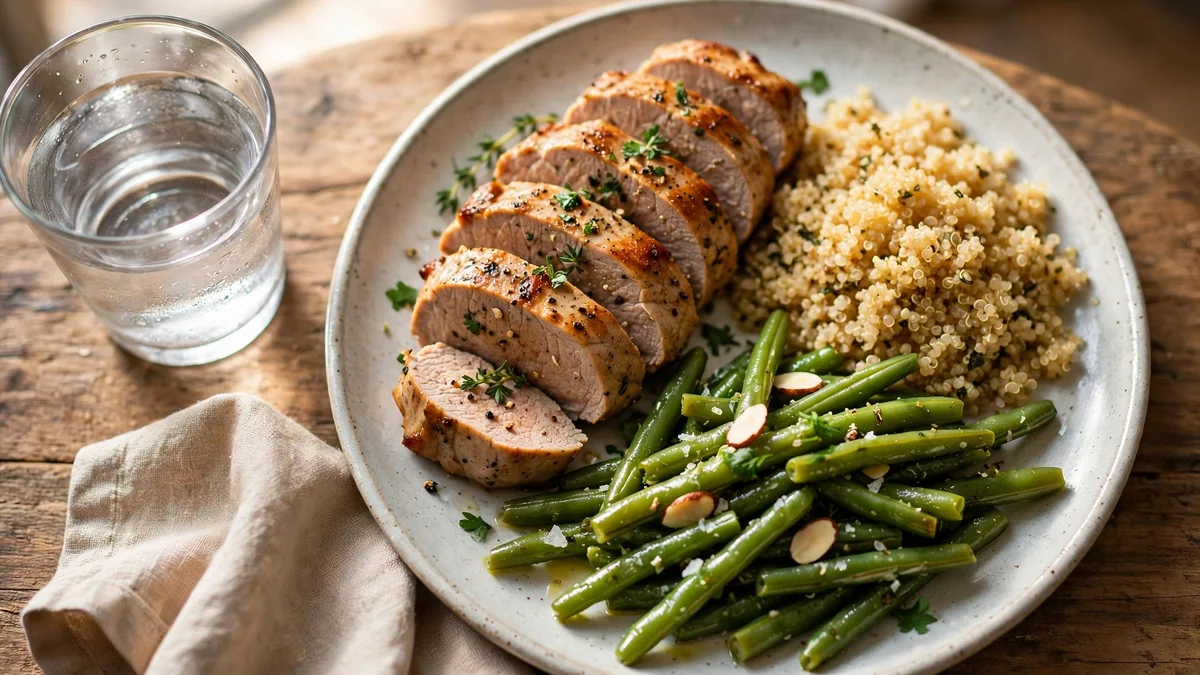
| Dinner | 4 oz cooked pork tenderloin; 1 cup cooked quinoa; 1 cup cooked green beans | about 427 |
| Snacks | 3/4 cup plain low-fat Greek yogurt; 1 cup blueberries; 1/2 oz walnuts | about 300 |
Day 6 total: about 1499 calories, 113 g protein, 171 g carbohydrate, 43 g fat, 38 g fiber.
Day 7
| Meal | What to eat | Calories |
|---|---|---|
| Breakfast | 1/2 cup dry rolled oats; 1 cup skim milk; 1 medium apple; 1/2 oz walnuts | about 424 |
| Lunch | 4 oz cooked chicken breast; 1 whole-wheat pita; 2 tablespoons hummus; 1/2 cucumber | about 422 |
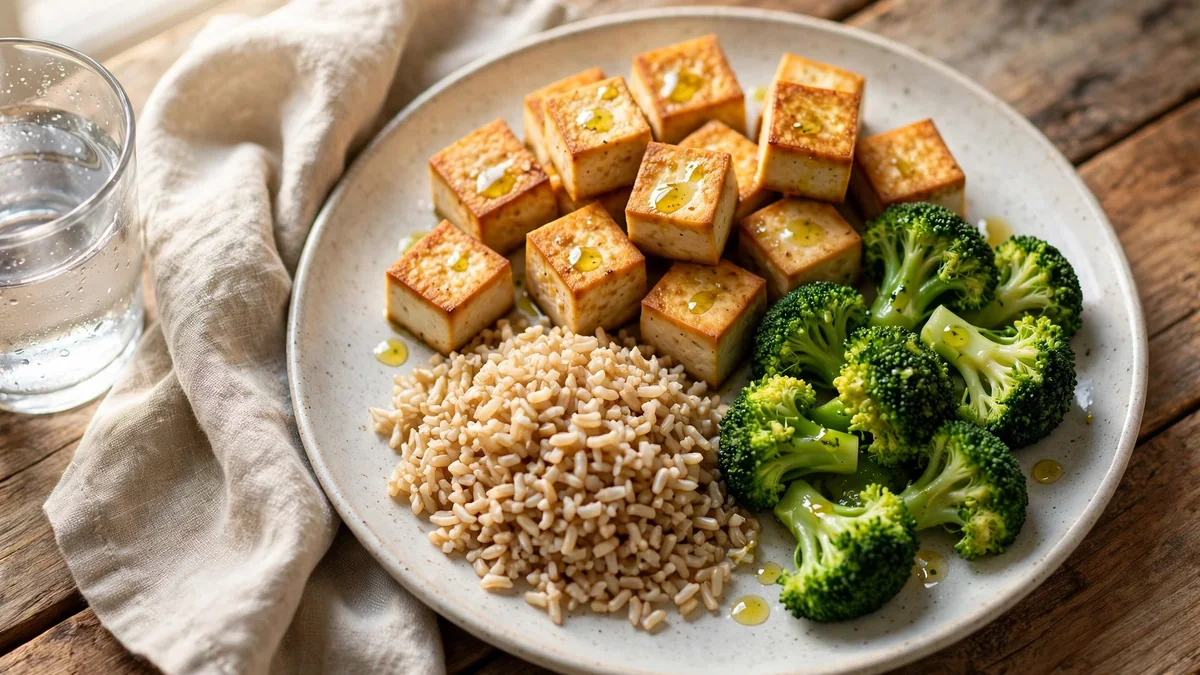
| Dinner | 125 g firm tofu (about 4 1/2 oz); 1/2 cup cooked brown rice; 1 cup cooked broccoli; 1 teaspoon olive oil | about 389 |
| Snacks | 1 orange; 1 oz cheddar cheese; 3 cups air-popped popcorn | about 269 |
Day 7 total: about 1504 calories, 99 g protein, 185 g carbohydrate, 48 g fat, 31 g fiber.
Grocery list
This list covers the full week for one person following the plan as written, using the simplest versions of everything, including frozen vegetables in a bag.
Produce
- Bananas, apples, oranges, grapes, and a pear
- Strawberries, blueberries, and raspberries (fresh or frozen)
- Sweet potatoes and white potatoes
- Broccoli and green beans (fresh or frozen)
- Green leaf lettuce, carrots, tomatoes, and cucumbers
- An avocado or two
Meat and seafood
- Chicken breast and chicken thighs
- Turkey breast
- Salmon fillets and cod fillets
- Pork tenderloin
- Lean ground beef (90% lean)
- Canned tuna in water
Dairy and eggs
- Large eggs and egg whites
- Plain nonfat Greek yogurt and plain low-fat Greek yogurt
- Low-fat cottage cheese
- Cheddar cheese
- Skim milk
Pantry
- Rolled oats and granola
- Brown rice and white rice, quinoa, and pasta
- Black beans, chickpeas, and lentils (dry or canned)
- Firm tofu
- Marinara sauce and salsa
- Peanut butter, hummus, and olive oil
- Almonds and walnuts
- Honey
- Popcorn for air-popping or plain microwave popcorn
Frozen
- Frozen broccoli and green beans, if you prefer them to fresh
- Frozen berries as a backup
Bakery
- Whole-wheat bread
- Whole-wheat pita and flour tortillas
Meal prep tips
- Start with just two prep tasks on day one: cook a pot of rice and bake the sweet potatoes. Everything else can be made at mealtime in under 15 minutes.
- Set out tomorrow’s breakfast the night before. Oats, milk, and fruit in a jar in the fridge make the morning automatic.
- Keep a short list on your phone of what you bought. Beginners waste the most food by forgetting what is in the fridge.
- Cook double at dinner on days when you like the meal; the leftovers are tomorrow’s lunch with no extra work.
- Put the snack foods where you can see them and the unplanned foods out of sight. At the start, environment beats willpower.
Easy swaps
- Swap chicken breast for turkey breast, or chicken thigh for pork tenderloin, in equal portions.
- Swap salmon for cod or canned tuna in the same portion range if fish prices or confidence are a problem.
- Swap black beans, chickpeas, and lentils for each other in equal portions.
- Swap Greek yogurt and cottage cheese for each other in breakfasts and snacks.
- Swap brown rice for white rice, quinoa, or pasta in similar portions under any dinner.
- Swap any fresh fruit for another in the same portion; an apple, orange, pear, or cup of berries all land in the same range.
How to adjust the calories safely
If this plan leaves you persistently hungry, low on energy, or losing faster than about 2 pounds a week, add food. Men should add food from the start, because 1,500 calories is the lowest level men should use and most men need more. To add roughly 200 to 300 calories a day using foods already in the plan, choose one: 1 oz of almonds (about 162 calories) plus a medium orange (about 62 calories); or 1/2 cup of cooked quinoa (about 111 calories) added to lunch and 2 tablespoons of hummus (about 53 calories) with the snack, plus 1 cup of skim milk (about 86 calories) during the day.
Never go below 1,200 calories a day for women or 1,500 calories a day for men. If you are a man following this plan, use the additions above every day to stay above 1,500, and talk with your doctor or a registered dietitian about the right level for you.
Common mistakes
- Trying to learn five new recipes at once. This plan uses a handful of simple meals on purpose; boring and done beats fancy and abandoned.
- Skipping the snack and then raiding the kitchen at night. The snack is planned, measured, and part of the day.
- Eyeballing portions of calorie dense foods like peanut butter, cheese, and nuts. Use measuring cups and a tablespoon for the first week, until your eye learns the sizes.
- Quitting after one off day. A single meal changes nothing; the next planned meal is the only thing that matters.
- Drinking calories that are not in the plan, such as soda, juice, or sweetened coffee drinks.
Pair it with a workout
Start with walking, the most beginner friendly exercise. Pair this plan with the walking plans and beginner strength routines in our Exercise and Workouts category, and build up gradually, even ten minutes at a time. Stop any exercise that causes pain, dizziness, or chest pain, and check with your doctor before starting if you have been inactive or have a medical condition. When you want a gentle, structured pattern to grow into next, our 7-Day No-Sugar Mediterranean Diet Meal Plan uses the same simple building blocks.
Frequently asked questions
I have never cooked. Can I really make these meals?
Yes. The how to section above covers every skill the week needs: microwave oatmeal, scrambled eggs, pan cooked chicken and fish, bag steamed vegetables, and a microwaved potato. Most meals take one pan and under 15 minutes. Start with day 1; confidence comes from finishing the first few meals.
Do I need a kitchen scale?
No. Portions are written in cups, tablespoons, slices, and pieces you can count. For meat and fish, picture a deck of cards; that is about a 4 oz portion, until your eye learns it.
What if I do not like a food on the plan?
Use the swaps section. Every protein, grain, bean, and fruit in the plan has a like for like swap that keeps the day near the same calories.
Is 1,500 calories enough for me?
For many women it is a reasonable weight loss level. For men it is the minimum, and most men should add 200 to 300 calories using the adjustment section. If you feel tired, hungry all day, or are losing faster than about 2 pounds a week, add food and check your level with your doctor or dietitian.
What do I do after the first week?
Repeat it. Beginners improve fastest by repeating a week that works and changing one or two meals with the swaps, rather than starting over with a brand new plan. After two or three repeats, you will know the portions by heart.
Sources and further reading
- USDA FoodData Central, the source for every calorie and nutrient value in this plan: fdc.nal.usda.gov
- Dietary Guidelines for Americans, for the overall healthy eating pattern this plan follows: dietaryguidelines.gov
- MyPlate, for balanced plate ideas and simple starter recipes built from the same food groups: myplate.gov
- Centers for Disease Control and Prevention, for healthy weight guidance: cdc.gov
- MedlinePlus, for plain language background on nutrition basics: medlineplus.gov
This article is for general educational purposes only and is not medical, nutrition, or fitness advice. Talk with your doctor or a registered dietitian before changing your diet or starting an exercise program.