Prints just the plan, like a recipe card.
Last updated: November 22, 2026.
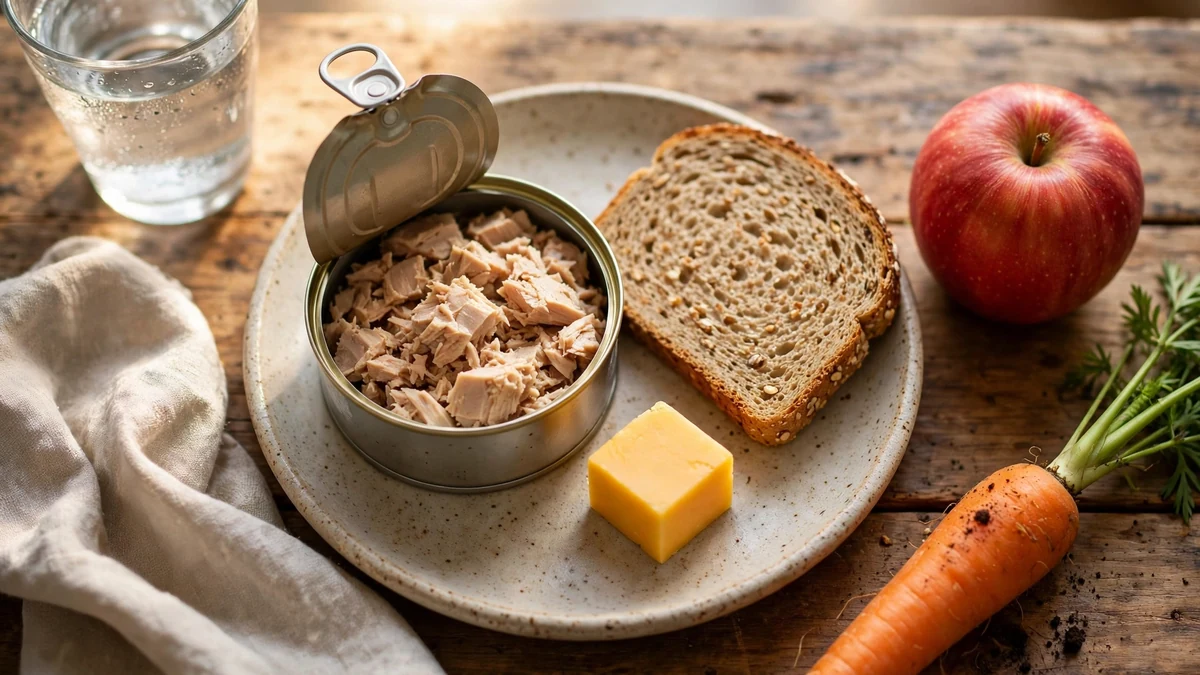
This no cook meal plan covers a full week of breakfasts, lunches, dinners, and snacks at about 1,500 calories a day without turning on the stove or the oven at all. Every meal is assembled from ready-to-eat foods: canned tuna, ready-to-eat cooked chicken and turkey, canned beans, yogurt, cottage cheese, cheese, hummus, breads, salads, and fruit. Overnight oats, soaked in milk in the refrigerator, are the only breakfast that needs lead time. The week averages about 118 grams of protein a day, high for a plan with no cooking, because tuna, chicken, Greek yogurt, and beans carry most of the load. Every number was calculated from USDA FoodData Central values. For many adults, 1,500 calories a day lines up with gradual weight loss of about 1 to 2 pounds a week. More plans organized by how you live are in our By Lifestyle diet plans.
Who this plan is for, and who should not follow it
This plan is for adults who cannot or do not want to cook for a week: people in dorm rooms, shared houses, temporary housing, or hot weather, and anyone whose kitchen time is currently zero. It also works when work takes over every evening for a week.
This plan is not medical advice. Talk with your doctor or a registered dietitian before following it, especially if you have diabetes, kidney disease, or another condition affected by food, or if you take medication that food or weight change can affect. It is not for children or teenagers, and it is not for anyone who is pregnant or breastfeeding. At about 1,500 calories a day this plan is written mainly for women; it sits exactly at the men’s minimum, so men should use the adjustment section to eat above 1,500 calories, and no one should eat below 1,200 calories a day (women) or 1,500 calories a day (men).
If you have a history of disordered eating, talk with a doctor or a registered dietitian before following any diet plan. For eating disorder support in the US, visit the National Alliance for Eating Disorders at allianceforeatingdisorders.com.
Plan overview
| Daily calorie target | About 1500 calories |
| Average protein per day | About 118 g |
| Average carbohydrate per day | About 173 g |
| Average fat per day | About 45 g |
| Average fiber per day | About 33 g |
| Meals per day | 4 (breakfast, lunch, dinner, and snacks) |
The pattern is assembly, not cooking: a yogurt, cottage cheese, or overnight oats breakfast; a sandwich, pita, or bean salad lunch; a protein and salad plate for dinner; and one planned snack. Protein comes from foods sold ready to eat, and fiber from beans, whole grains, vegetables, and fruit.
How this no cook meal plan works without a stove
Three habits make a no cook meal plan hold together. First, anchor every lunch and dinner on a ready protein: canned tuna, ready-to-eat cooked chicken or turkey, cooked shrimp, canned beans, or edamame thawed from frozen. Second, build the plate around it with foods that need no heat: salad greens, tomatoes, cucumbers, carrots, bread, pita, or corn tortillas. Third, keep the refrigerator cold and organized, because a no-cook week depends on perishable food staying safe: keep it at or below 40 degrees F, refrigerate cooked meats, yogurt, and cheese as soon as you get home, use opened ready-to-eat meats within 3 to 4 days, and throw out anything that smells off or has sat out for more than 2 hours. If you want to check whether 1,500 calories is the right level for you, our calorie calculator gives a general estimate to discuss with your doctor or dietitian.
The 7-day meal plan
Portions are given in US household measures. Calories for each meal and day were calculated from USDA FoodData Central values for the exact foods and amounts listed. Everything is served cold or at room temperature; the overnight oats soften in the refrigerator overnight, no cooking involved.
Day 1
| Meal | What to eat | Calories |
|---|---|---|
| Breakfast | 1 cup plain low-fat Greek yogurt; 1/4 cup granola; 1 cup strawberries | about 374 |
| Lunch | 1 can tuna in water, drained; 1 whole-wheat pita; 2 cups green leaf lettuce; 2 tablespoons hummus; 1/2 cucumber; 1 medium tomato | about 422 |
| Dinner | 5 oz ready-to-eat cooked chicken breast; 1 slice whole-wheat bread; 1/2 avocado; 2 cups green leaf lettuce; 1 medium tomato | about 468 |
| Snacks | 1 medium apple; 1 tablespoon peanut butter | about 190 |
Day 1 total: about 1455 calories, 124 g protein, 145 g carbohydrate, 46 g fat, 28 g fiber.
Day 2
| Meal | What to eat | Calories |
|---|---|---|
| Breakfast | 1/2 cup dry rolled oats, soaked overnight in the milk (overnight oats); 3/4 cup skim milk; 1 medium banana; 1/2 oz walnuts (about 2 tablespoons chopped) | about 413 |
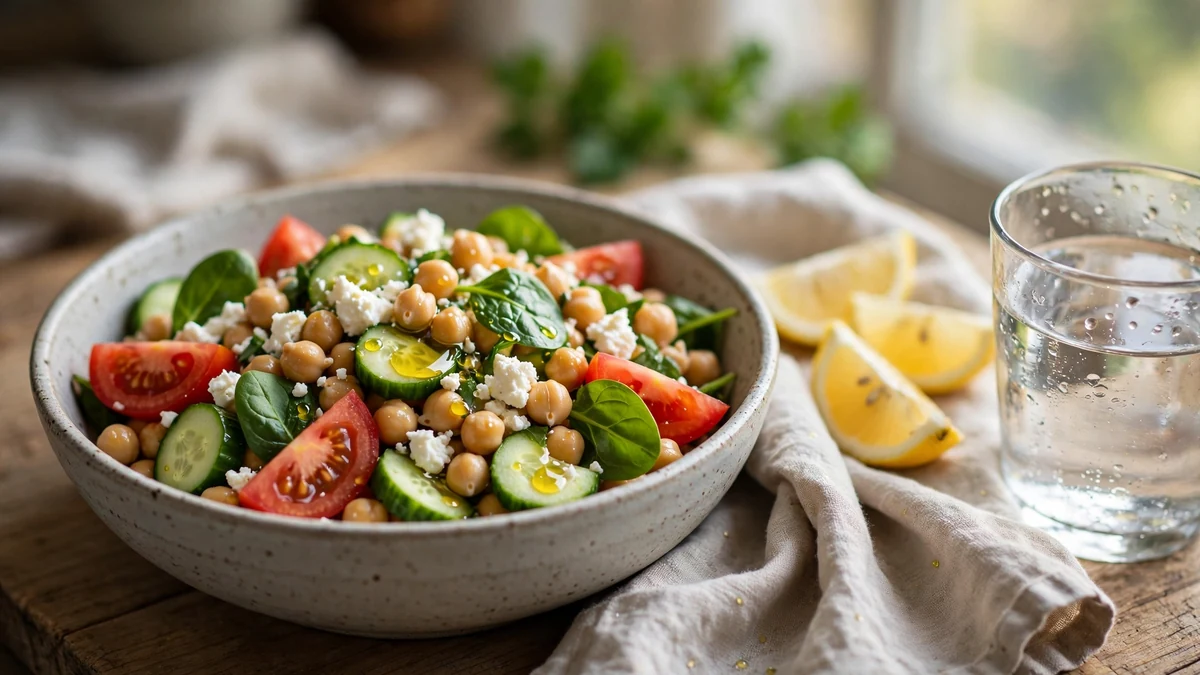
| Lunch | 1 cup canned chickpeas, drained and rinsed; 1/2 cucumber; 1 medium tomato; 1 oz feta cheese; 1 teaspoon olive oil; 2 cups raw spinach | about 434 |
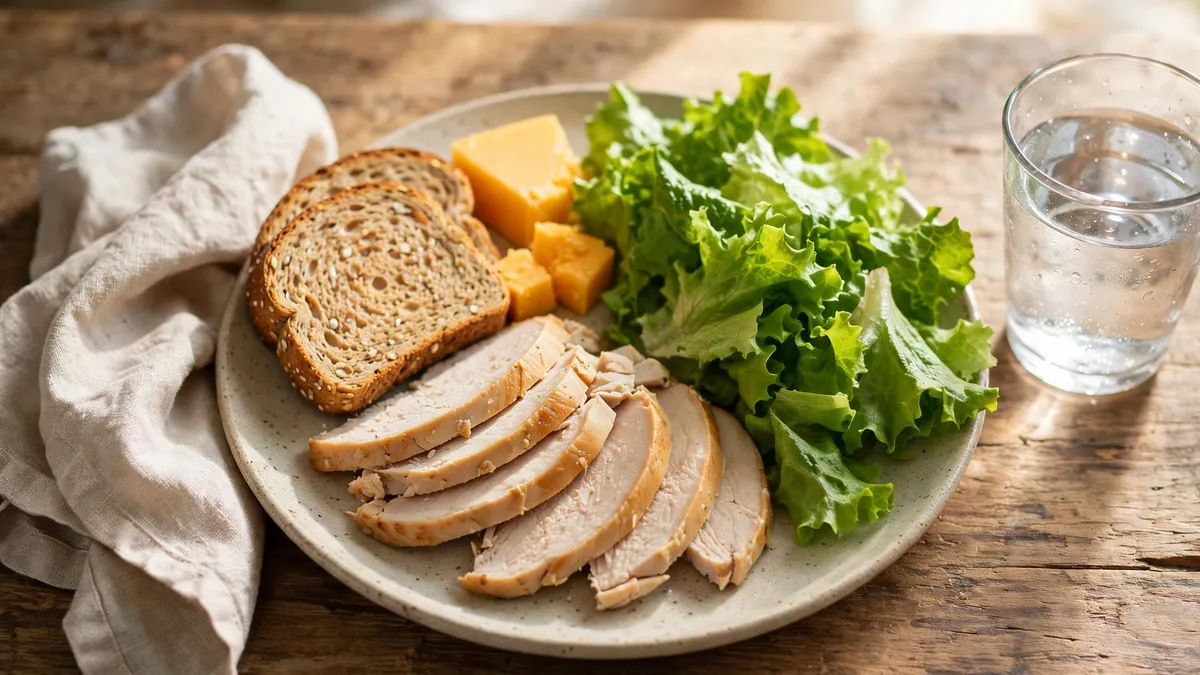
| Dinner | 5 oz ready-to-eat sliced cooked turkey breast; 2 slices whole-wheat bread; 1 oz cheddar cheese; 2 cups green leaf lettuce | about 496 |
| Snacks | 1/2 cup low-fat cottage cheese; 1 cup grapes | about 186 |
Day 2 total: about 1528 calories, 111 g protein, 182 g carbohydrate, 44 g fat, 30 g fiber.
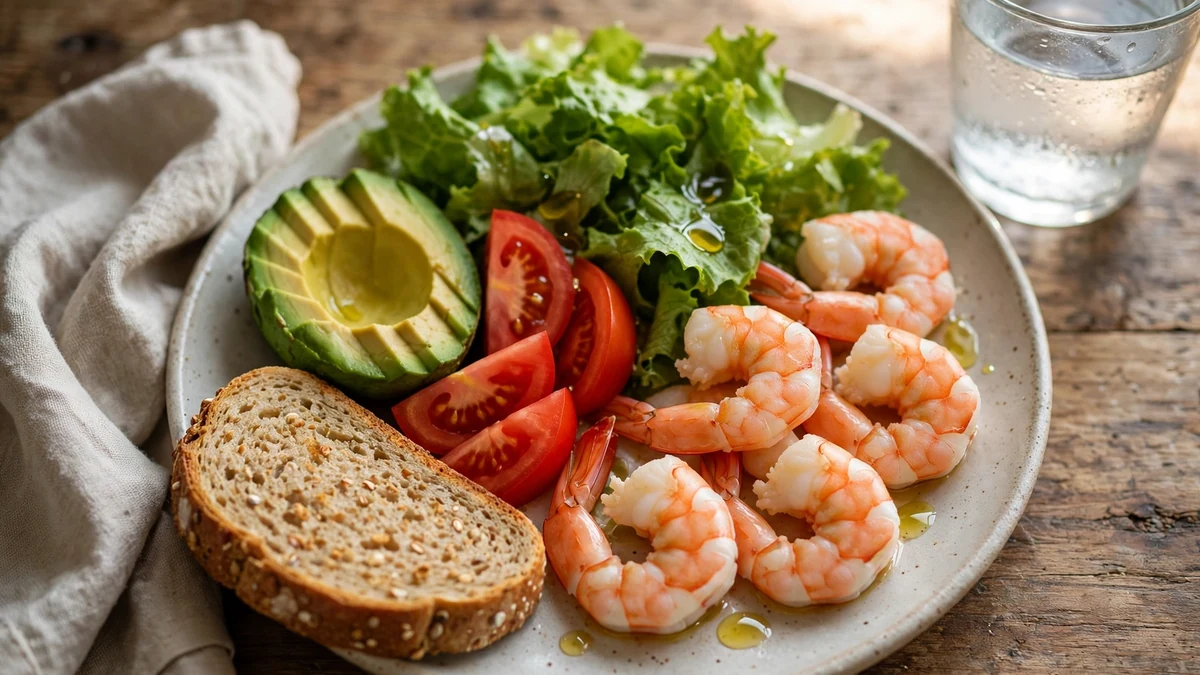
Day 3
| Meal | What to eat | Calories |
|---|---|---|
| Breakfast | 1 cup low-fat cottage cheese; 1 medium pear; 1 slice whole-wheat bread; 1 tablespoon honey | about 409 |
| Lunch | 1/2 cup canned black beans, drained and rinsed; about 2/3 cup cooked corn, thawed from frozen; 1/4 cup salsa; 2 corn tortillas; 1 oz cheddar cheese | about 456 |
| Dinner | 6 oz cooked shrimp, chilled; 2 cups green leaf lettuce; 1/2 avocado; 1 medium tomato; 1 teaspoon olive oil; 1 slice whole-wheat bread | about 476 |
| Snacks | 3/4 cup plain nonfat Greek yogurt; 1 cup raspberries | about 164 |
Day 3 total: about 1505 calories, 120 g protein, 184 g carbohydrate, 38 g fat, 39 g fiber.
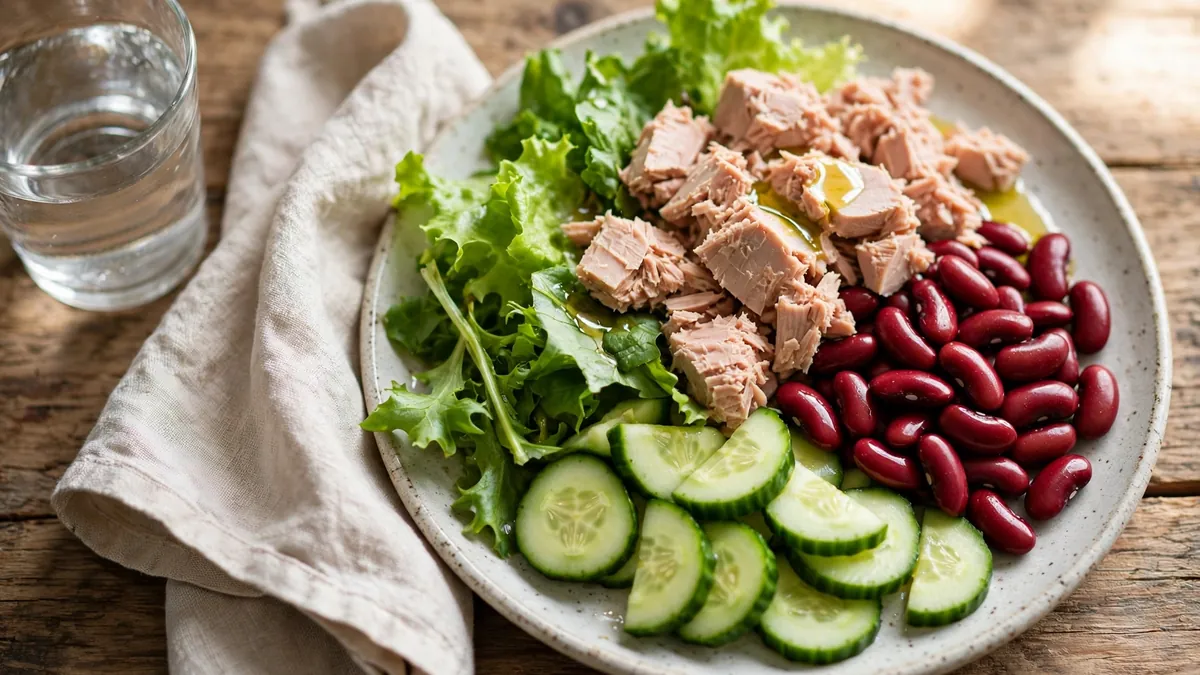
Day 4
| Meal | What to eat | Calories |
|---|---|---|
| Breakfast | 1 cup plain nonfat Greek yogurt; 1/2 cup dry rolled oats, stirred in (overnight oats style); 1 cup blueberries | about 381 |
| Lunch | 4 oz ready-to-eat cooked chicken breast; 1 flour tortilla; 2 tablespoons hummus; 2 cups raw spinach; 1 medium tomato; 1 oz part-skim mozzarella cheese | about 492 |
| Dinner | 1 can tuna in water, drained; 1 cup canned kidney beans, drained and rinsed; 2 cups green leaf lettuce; 1/2 cucumber; 1 teaspoon olive oil | about 444 |
| Snacks | 1 orange; 1 oz almonds (about 1/4 cup) | about 224 |
Day 4 total: about 1540 calories, 133 g protein, 162 g carbohydrate, 43 g fat, 34 g fiber.
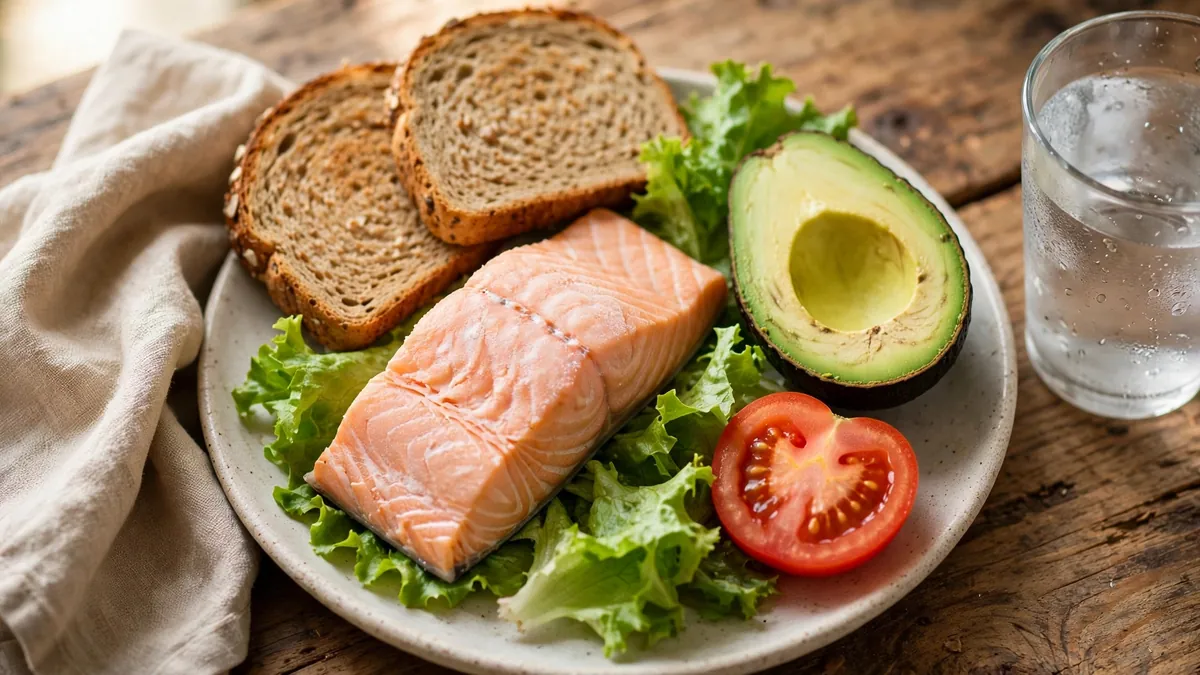
Day 5
| Meal | What to eat | Calories |
|---|---|---|
| Breakfast | 1/2 cup dry rolled oats, soaked overnight in the milk (overnight oats); 1 cup skim milk; 1 cup strawberries; 1 tablespoon peanut butter | about 382 |
| Lunch | 1 cup shelled edamame, thawed from frozen; 1 whole-wheat pita; 1 medium carrot; 2 tablespoons hummus | about 433 |
| Dinner | 4 oz cooked salmon fillet, chilled; 2 slices whole-wheat bread; 1/2 avocado; 2 cups green leaf lettuce; 1 medium tomato | about 520 |
| Snacks | 1/2 cup low-fat cottage cheese; 1 medium apple | about 176 |
Day 5 total: about 1511 calories, 100 g protein, 184 g carbohydrate, 48 g fat, 38 g fiber.
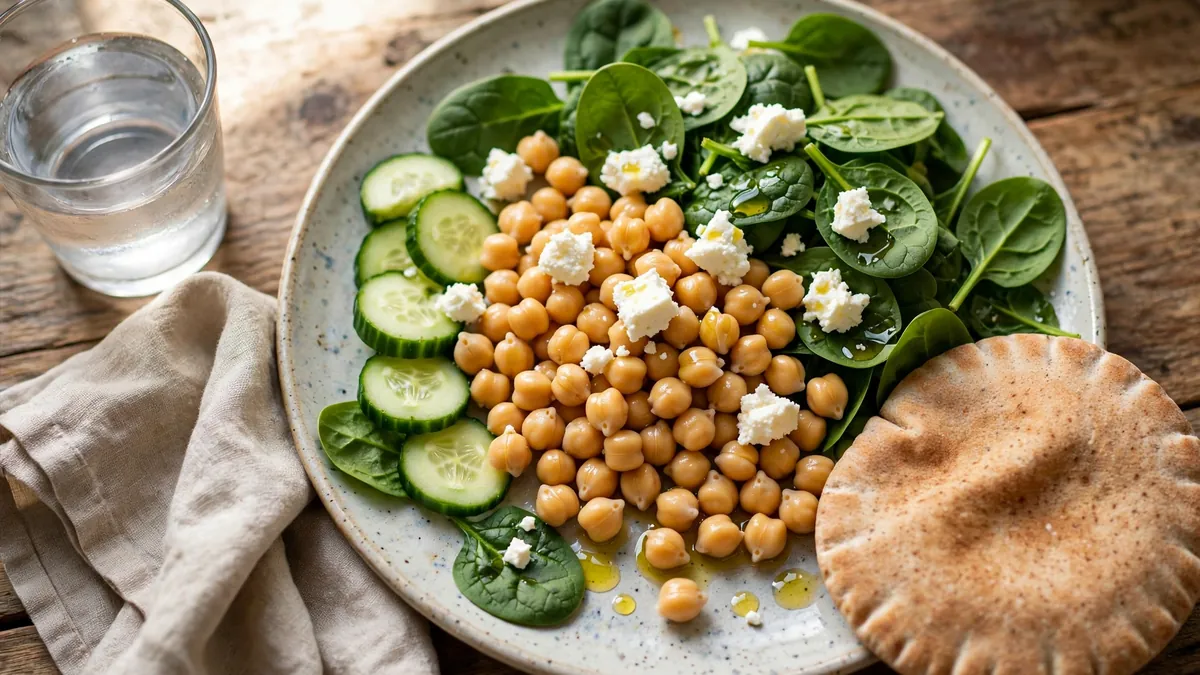
Day 6
| Meal | What to eat | Calories |
|---|---|---|
| Breakfast | 3/4 cup plain low-fat Greek yogurt; 1/4 cup granola; 1 medium banana | about 376 |
| Lunch | 4 oz ready-to-eat sliced cooked turkey breast; 2 slices whole-wheat bread; 1/2 avocado; 2 cups green leaf lettuce; 1 medium tomato | about 480 |
| Dinner | 1/2 cup canned chickpeas, drained and rinsed; 1 oz feta cheese; 2 cups raw spinach; 1/2 cucumber; 2 teaspoons olive oil; 1 whole-wheat pita | about 485 |
| Snacks | 1 medium pear; 1/2 oz walnuts (about 2 tablespoons chopped) | about 193 |
Day 6 total: about 1534 calories, 91 g protein, 185 g carbohydrate, 55 g fat, 35 g fiber.
Day 7
| Meal | What to eat | Calories |
|---|---|---|
| Breakfast | 1 cup low-fat cottage cheese; 1 slice whole-wheat bread; 1 cup strawberries; 1 tablespoon honey; 3/4 cup skim milk | about 420 |
| Lunch | 5 oz ready-to-eat cooked chicken breast; 2 corn tortillas; 1/4 cup salsa; 1/2 avocado; 2 cups green leaf lettuce | about 497 |
| Dinner | 1 can tuna in water, drained; 1 oz cheddar cheese; 1 slice whole-wheat bread; 1 medium apple; 1 medium carrot | about 469 |
| Snacks | 3/4 cup plain nonfat Greek yogurt; 1 cup blueberries | about 185 |
Day 7 total: about 1571 calories, 148 g protein, 166 g carbohydrate, 38 g fat, 27 g fiber.
Grocery list
This list covers the full week for one person. Most of it keeps for the whole week in the refrigerator; buy the ready-to-eat cooked meats in two smaller batches if you prefer them fresher.
Produce
- Baby spinach and green leaf lettuce
- Tomatoes, cucumbers, and carrots
- Strawberries, raspberries, blueberries, and grapes
- Apples, bananas, pears, and oranges
- Avocados
Meat and seafood
- Ready-to-eat cooked chicken breast
- Ready-to-eat sliced cooked turkey breast
- Cooked shrimp, chilled
- Cooked salmon fillet, chilled
- Canned tuna in water
Dairy and eggs
- Plain nonfat Greek yogurt and plain low-fat Greek yogurt
- Low-fat cottage cheese
- Cheddar cheese, feta cheese, and part-skim mozzarella cheese
- Skim milk
Pantry
- Rolled oats and granola
- Canned black beans, kidney beans, and chickpeas
- Hummus, salsa, peanut butter, and olive oil
- Almonds and walnuts
- Honey
Frozen
- Shelled edamame
- Frozen cooked corn
Bakery
- Whole-wheat bread
- Whole-wheat pita
- Corn tortillas and a flour tortilla
Meal prep tips
- Spend 15 minutes on assembly prep: wash the greens and vegetables, portion the nuts and cheese, and set out the next day’s cans and bread.
- Put the overnight oats together the night before, in a jar or covered bowl, so breakfast is ready when you wake up.
- Refrigerate perishables as soon as you get home from the store, and keep the refrigerator at or below 40 degrees F.
- Use opened ready-to-eat cooked meats within 3 to 4 days. Buy them in two batches across the week if your store sells small packs.
- Keep a cooler bag with an ice pack for lunches taken to work, so salads and yogurt stay cold.
Easy swaps
- Swap canned tuna, ready-to-eat chicken, and sliced turkey for each other in equal portions in any sandwich, pita, or wrap.
- Swap black beans, kidney beans, and chickpeas for each other in equal portions in the salads.
- Swap Greek yogurt and cottage cheese for each other in the breakfasts and snacks.
- Swap the cooked shrimp plate for the same weight of chilled cooked salmon, and the other way around.
- Swap any fruit for another of a similar portion, apple for pear, blueberries for raspberries, so the week fits what is ripe and on sale.
How to adjust the calories safely
If this plan leaves you persistently hungry, low on energy, or losing faster than about 2 pounds a week, add food. To add roughly 200 to 300 calories a day using foods already in the plan, choose one: 1 oz of almonds (about 162 calories) plus a medium orange (about 62 calories); or 1/2 cup of cottage cheese (about 81 calories) with 2 tablespoons of hummus (about 53 calories) and a slice of whole-wheat bread (about 81 calories); or 1 cup of skim milk (about 86 calories) plus 1 tablespoon of peanut butter (about 96 calories) spread on the snack apple.
Never go below 1,200 calories a day for women or 1,500 calories a day for men. This plan averages about 1,500 calories, which is the men’s floor, so men following it should use the additions above every day, and taller or more active women should use them as needed.
Common mistakes
- Letting ready-to-eat food sit out. A no-cook week is a refrigerator week: perishables go back in the fridge right after each meal, and anything left out more than 2 hours should be thrown away.
- Keeping opened cooked meats too long. Three to four days is the limit; if you will not finish a pack in that time, buy a smaller one.
- Building lunches with no protein anchor. A salad and bread alone will not keep you full at 1,500 calories; every lunch and dinner here has a named protein for a reason.
- Skipping the snack and then raiding the pantry at night. The snack is sized into the day.
- Assuming no-cook means no planning. The plan works because the shopping and the overnight oats happen ahead of time.
Pair it with a workout
A week with no cooking frees up the evening slot that dinner usually takes, which makes it a good week to start a walking habit. Pair this plan with the walking plans and beginner strength routines in our Exercise and Workouts category, and build up gradually. Stop any exercise that causes pain, dizziness, or chest pain, and check with your doctor before starting if you have been inactive or have a medical condition. When you are ready to cook again, our 7-Day Diet Meal Plan to Lose Weight: 1,200 Calories shows the level below this one, and our Diet Plans library covers every level above it.
Frequently asked questions
Are overnight oats really no-cook?
Yes. Rolled oats soften in milk or yogurt in the refrigerator over several hours, no heat involved. The texture is chewier than hot oatmeal. Make them the night before in a covered jar.
Is it safe to eat ready-to-eat cooked meats all week?
It is, with normal food safety habits: buy them cold, refrigerate at or below 40 degrees F as soon as you get home, and use opened packs within 3 to 4 days. If anything smells off, throw it out.
Can I get enough protein without cooking?
This plan averages about 118 grams a day, from tuna, chicken, turkey, shrimp, salmon, Greek yogurt, cottage cheese, beans, and edamame. Ready-to-eat proteins are the same foods as home-cooked ones; only the cook is different.
What about hot food cravings by day 4?
That is the most common reason people leave a no-cook week early. Hot drinks and the crunch and variety in the salads help. And nothing bad happens if you cook one dinner and return to the plan the next day; the days are independent.
Is 1,500 calories enough for me?
For many women it is a reasonable weight loss level. For men it is the minimum, so men should use the adjustment additions daily. If you are tall, very active, or losing faster than about 2 pounds a week, add food and check your level with your doctor or dietitian.
Sources and further reading
- USDA FoodData Central, the source for every calorie and nutrient value in this plan: fdc.nal.usda.gov
- Dietary Guidelines for Americans, for the overall healthy eating pattern this plan follows: dietaryguidelines.gov
- MyPlate, for balanced plate ideas built from the same food groups: myplate.gov
- Centers for Disease Control and Prevention, for healthy weight guidance: cdc.gov
- MedlinePlus, for plain language background on weight loss and nutrition: medlineplus.gov
This article is for general educational purposes only and is not medical, nutrition, or fitness advice. Talk with your doctor or a registered dietitian before changing your diet or starting an exercise program.