
Last updated: November 23, 2026.
You open your grocery receipt and wonder how eating well can cost this much. If you are trying to follow a diet plan and also keep spending under control, the two goals can feel like they pull in opposite directions.
The direct answer is that grocery budgeting on a diet works best when you plan around a short list of flexible staples, shop with a list tied to actual meals, use what you already have, and cut waste before you cut quality. You do not need the most expensive foods to eat well. A simple plan, repeated with small variations, is usually cheaper and easier than a new set of special ingredients every week.
This guide is part of our Nutrition Basics collection, where we cover everyday food skills in plain words. The meals in our 7-Day 1,500-Calorie Meal Plan for Women can be adapted with the budget swaps below, and the full library is in Diet Plans.
Key takeaways
- Plan meals around versatile staples you already like, then add fresh items to round them out.
- A list based on real meals, and on what is already in your kitchen, prevents most impulse spending and waste.
- Frozen and canned foods can be practical, budget-friendly parts of a healthy pattern.
- Compare unit prices and package sizes, and buy larger amounts only of foods you will actually use.
- Cutting food waste is often the easiest saving, because you keep the food you already paid for.
Start with a simple weekly plan
Budgeting gets easier when the week has a shape. You do not need to plan every bite. Start by choosing a few dinners you know how to make, one or two easy lunches, and a breakfast you can repeat. Leave one night open for leftovers or a very simple meal, such as eggs, beans, vegetables, and toast.
Imagine a week built on three anchors: a pot of soup or chili, a sheet pan dinner with chicken or tofu and vegetables, and a pasta or grain bowl night. Each anchor uses overlapping ingredients, so a bag of carrots, a head of cabbage, or a large container of yogurt can serve more than one meal instead of sitting unused.
Check your kitchen before you shop
Before writing a list, look in the pantry, fridge, and freezer. Many households already own part of the next few meals: rice, oats, dried or canned beans, pasta, frozen vegetables, eggs, or canned fish. Planning one or two meals around those items first lowers the bill and clears space before older food spoils.
Write a list by section
Group your list the way you move through a store: produce, protein foods, dairy or alternatives, grains, frozen foods, and pantry items. A grouped list is faster to follow and makes it easier to notice if an item is missing or duplicated.
Build your cart around flexible staples
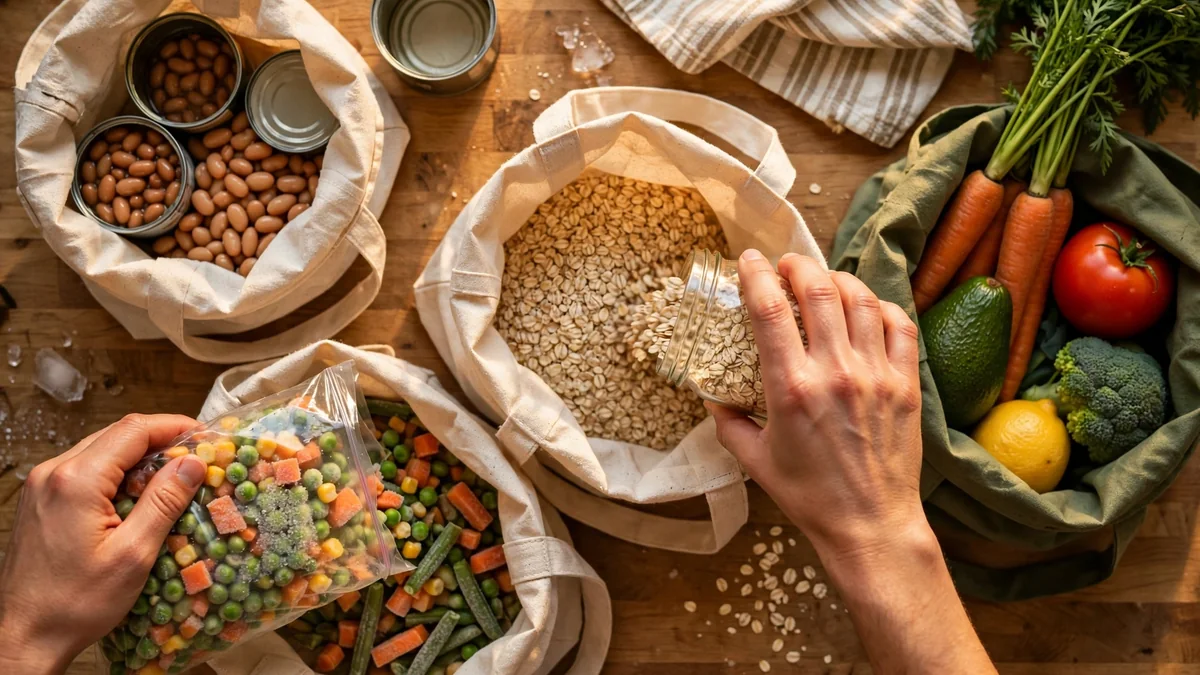
Staples are foods that can appear in many meals and keep well. Dry beans and lentils, oats, rice, eggs, frozen vegetables, canned tomatoes, and seasonal fresh produce are common examples. Buying around staples means fewer single-use ingredients bought for one recipe and never opened again.
Protein deserves special attention because it often costs the most. Balance the week instead of serving the most expensive option every night. Beans, lentils, eggs, canned fish, and tofu can take some meals, while poultry, fish, or meat take others. This keeps meals satisfying and varied without letting one category dominate the receipt.
Use frozen and canned foods with confidence
Frozen vegetables and fruit are picked and frozen for storage, keep for a long time, and let you use only what you need. Canned beans and vegetables are also practical. Check the label, choose lower sodium options when available, and rinse canned beans under water before use. For canned fruit, options packed in water or juice are a practical choice when you want to limit added sugar. Our Calorie Calculator can help you keep portions in line with your overall plan while you make these swaps.
Let the season guide fresh produce
Fresh produce that is in season nearby is often a good value and tastes better, which means it is more likely to be eaten. That said, there is no need to chase a perfect list. Choose a few fresh items for the next few days, and rely on frozen or canned options for later in the week. This pattern cuts spoilage and still keeps vegetables and fruit on the plate.
Shop in ways that protect the budget
Small shopping habits add up. Compare the unit price on shelf labels when sizes differ, since a larger package is only a saving if you will use it before it spoils. Store brands and generic versions of basic foods are worth comparing on the label, especially for staples like oats, rice, beans, and frozen vegetables.
| Habit | Why it helps | Simple way to start |
|---|---|---|
| Shop with a meal-based list | Connects spending to meals you will eat | Write three dinners at the top of the list |
| Compare unit prices | Shows the real cost across package sizes | Check two sizes of one staple each trip |
| Buy bulk only for regular staples | Avoids waste from large, unused packages | Choose foods you use every week, like oats or rice |
| Limit extra trips | Each extra trip invites unplanned extras | Keep a running list and shop on your planned day |
Timing can help too. Shopping when you are very hungry makes everything look necessary. If you can, eat a snack or meal first, and give yourself enough time to compare labels without rushing.
Be careful with sales
A sale only saves money when the food fits your plan and will be used. A discounted item you throw away was not a bargain. Sales are most useful for shelf-stable and frozen staples you buy regularly. For fresh foods, buy sale amounts you can cook, share, or freeze safely in time.
Make the food you buy go further
The cheapest food is often the food already in your fridge that gets eaten instead of discarded. Store leftovers in clear containers where you can see them, label them if that helps your household, and plan a leftovers night each week. Cooked grains, roasted vegetables, and leftover protein can become a soup, a grain bowl, or a simple fried rice style meal the next day.
When you cook, consider making an extra portion of a meal that freezes well, such as soup, chili, or a bean dish. That extra portion becomes a ready meal on a busy night, when ordering food or making an extra shopping trip would otherwise be tempting. Our 7-Day Meal Plan for Walkers shows how simple, repeatable meals can support an active routine without special ingredients.
Store food so it lasts
A few storage basics protect your spending. Keep older items at the front so they are used first. Store herbs and salad greens with a dry paper towel if that helps them stay fresh in your fridge, freeze bread you will not use soon, and move leftovers to the freezer if plans change. When in doubt about whether a food is still safe, follow official food safety guidance rather than guessing.
What to do next
Start small this week. Plan three dinners, check your kitchen before you write the list, choose one protein swap that costs less, and schedule a leftovers night. Write down what you spent and what you threw away, without judgment. That simple record shows you where your own budget leaks, which is more useful than any general tip.
Next week, repeat what worked and adjust one thing. Over a few weeks, you will build a personal list of staples, meals, and habits that fit your taste, your health goals, and your budget. If an active routine is part of your plan, the Indoor Walking Workout for Beginners and our Exercise and Workouts collection are free ways to stay active at home.
Who should talk with a professional first
Talk with a registered dietitian if you need to follow a medical diet, such as for diabetes, kidney disease, food allergies, or digestive conditions, while also working within a tight budget. A dietitian can help you find lower cost options that still meet your medical needs. Your doctor can also point you toward local food support programs if affording enough food is a concern.
If you have a history of disordered eating, talk with a doctor or a registered dietitian before following any diet plan. For eating disorder support in the US, visit the National Alliance for Eating Disorders at allianceforeatingdisorders.com.
Frequently asked questions
Can I eat healthy on a tight grocery budget?
Yes, in most cases a healthy pattern can be built from simple, lower cost foods. Beans, lentils, eggs, oats, rice, frozen vegetables, and seasonal produce are all nutritious and widely available. The key is planning around those foods most of the time, rather than relying on specialty products marketed for diets.
Are frozen vegetables as good as fresh?
Frozen vegetables are a practical and nutritious option, and they have the advantage of keeping until you need them. Fresh vegetables are also valuable, especially when they are in season and will be eaten soon. Many households do best with a mix: fresh for the next few days, frozen for the rest of the week.
How can I lower the cost of protein?
Spread protein across different sources during the week. Use beans, lentils, eggs, canned fish, or tofu for some meals, and save higher cost meat or fresh fish for others. Buying a larger amount of a protein you use often, portioning it, and freezing it safely can also help if you have the storage space.
Should I buy in bulk to save money?
Only for foods you use regularly and can store properly, such as oats, rice, dried beans, or frozen vegetables. Bulk buying perishable foods you may not finish usually wastes money instead of saving it. Check the unit price, your storage space, and how quickly your household will use the item before deciding.
What if my family eats differently from me?
Shared base meals can keep costs down without cooking two full dinners. Serve the same grains, vegetables, and protein, and let each person adjust portions and extras at the table. This approach keeps shopping simpler and avoids buying a separate set of special foods for one person.
How do I stop wasting so much food?
Plan a leftovers night, store leftovers where you can see them, and use the oldest items first. Buy fresh food in amounts that match the next few days, and lean on frozen and canned foods for later in the week. A short weekly note on what got thrown away will quickly show your main pattern.
Sources and further reading
- MyPlate, healthy eating on a budget guidance: myplate.gov
- USDA FoodData Central, food nutrition information: fdc.nal.usda.gov
- Dietary Guidelines for Americans, official nutrition guidance: dietaryguidelines.gov
- Academy of Nutrition and Dietetics, everyday nutrition information: eatright.org
This article is for general educational purposes only and is not medical, nutrition, or fitness advice. Talk with your doctor or a registered dietitian before changing your diet or starting an exercise program.