Last updated: November 23, 2026.
Three weeks of careful eating and regular walks, and the scale shows the same number, or a higher one. Many people quit at exactly this moment, convinced nothing is working. Sometimes they are wrong: the scale is one narrow instrument, and it can sit still while other real changes are under way.
This guide covers the other ways to track progress: waist measurements, clothing fit, photos, strength and stamina markers, and simple habit records. Used together, they give a fairer picture than any single number, and they protect your motivation on the weeks the scale refuses to cooperate.
Where this guide fits
This article is part of our Tools and Calculators collection. It sits beside Smart Scales: How They Work, which explains what scale numbers can and cannot tell you, and Food Diaries, which tracks the input side of the equation. The plans and workouts themselves are in Diet Plans.
Key takeaways
- Weight fluctuates daily with water, food, and digestion, so a still scale does not always mean a stalled effort.
- A waist measurement, taken the same way each time, is a simple and meaningful second signal.
- Clothing fit, progress photos, and strength or walking milestones all record change the scale can miss.
- Track habits as well as outcomes: the behaviors are what you control, and outcomes follow them with a lag.
- Use several markers on a weekly or monthly rhythm, and judge the overall direction, not any single reading.
Why the scale alone misleads
Daily weight is mostly water noise
Your body weight moves by a few pounds across a single day and across a week, driven by hydration, salt, carbohydrate stores, and digestion. Fat change is far slower than these swings. A weigh-in after a salty restaurant meal and a hard workout can easily hide a week of genuine progress, which is why weekly averages and monthly trends are the only fair way to read the scale at all.
Recomposition hides in plain sight
When someone begins strength training while eating in a modest deficit, they can lose fat and gain some muscle at the same time, especially early on. The scale may barely move while their waist shrinks and their strength climbs. That is not failure; it is one of the best outcomes available, and only non-scale markers reveal it.
Measurements that tell the truth
Waist measurement
Use a soft tape at the level of your navel, standing relaxed, tape snug but not compressing the skin. Measure in the morning, record the number, and repeat every one to two weeks under the same conditions. Waist size relates to health risk in ways total weight does not, and it often moves before the scale does.
Clothing as an instrument
Pick one honest item: a pair of trousers or a belt notch that is currently snug. Try it on every week or two. Clothing integrates changes across your whole body without numbers at all, and many people find it the most convincing evidence of all, because it is their own daily experience.
Progress photos
Photos taken monthly, in the same place, light, clothing, and poses (front, side, back), show shape changes that mirrors hide through familiarity. Keep them private, store them where you control them, and compare month to month rather than week to week. If photos distress you, skip this marker entirely; there are plenty of others.
Performance and life markers
Strength and stamina milestones
Write down what your body can do: the walking route that used to wind you now feels easy, you added reps to an exercise, you carry groceries in one trip. These milestones are progress in the most literal sense, and unlike the scale they almost never move backward on a random Tuesday.
Energy, sleep, and mood
A simple daily rating, even a number from one to five for energy, takes ten seconds and builds a revealing record over a month. Many people find their energy and sleep improve before their weight changes much, and seeing that improvement recorded keeps the whole project in perspective.
Habit records
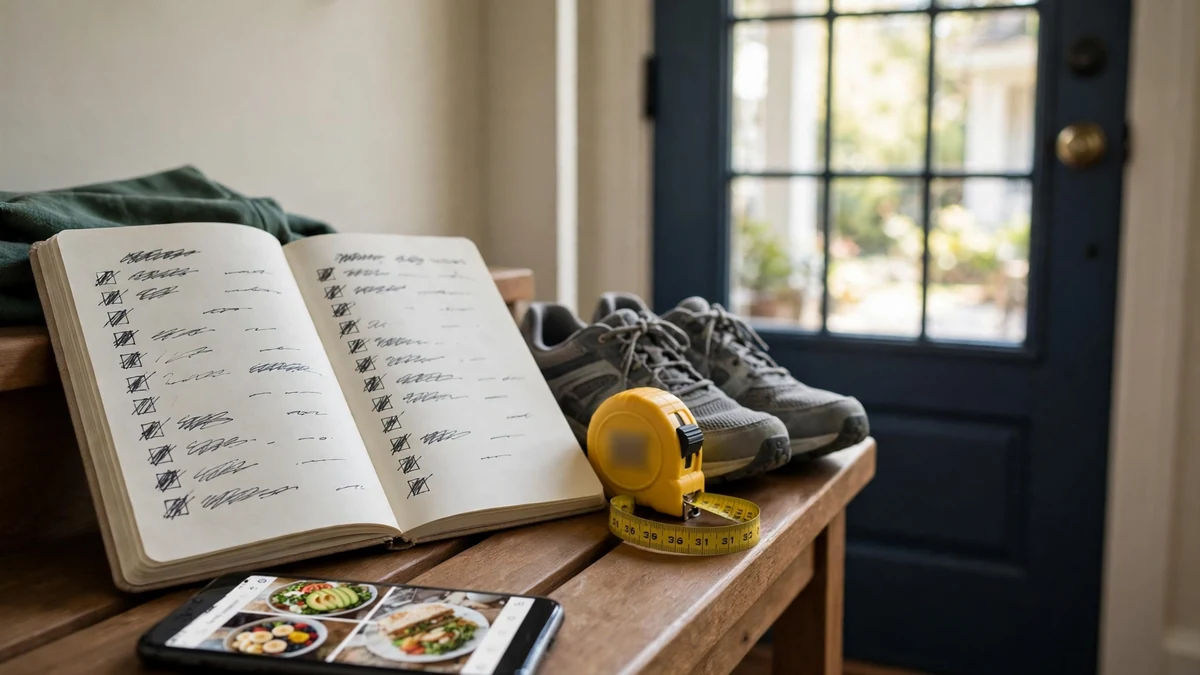
Outcomes lag; habits are immediate. A calendar check mark for each day you followed your meal plan, walked, or trained tells you whether the system is running. If the habit record is strong and outcomes lag for a few weeks, patience is usually the right call. If the habit record is patchy, it points to the real fix.
| Marker | How often to check |
|---|---|
| Waist measurement | Every 1 to 2 weeks |
| Clothing fit test | Every 1 to 2 weeks |
| Progress photos | Monthly, same setup |
| Strength or walking milestone | When you notice it, logged |
| Habit check marks | Daily, reviewed weekly |
Putting it together: a simple tracking rhythm
A weekly five-minute review
Choose one day to glance at the week: habit check marks, average weight if you weigh, and any milestone you noticed. Write one sentence about what you will keep doing and one small thing you will adjust. Five minutes, no drama, and the project stays steered rather than judged.
When the markers disagree
Disagreement is information. Scale flat but waist down and strength up means the plan is working. Everything flat for a month, habits included, means the plan needs a change, such as a food diary week to find hidden calories. Let the combined picture, not the loudest single number, make the decision.
Who should talk with a professional first
If you have a medical condition, are unsure whether your rate of change is healthy, or find that tracking of any kind is harming your mood or your relationship with food, bring it to your doctor or a registered dietitian rather than pushing through alone.
If you have a history of disordered eating, talk with a doctor or a registered dietitian before following any diet plan. For eating disorder support in the US, visit the National Alliance for Eating Disorders at allianceforeatingdisorders.com.
Frequently asked questions
How long before non-scale changes appear?
Energy and stamina changes often show within a few weeks. Waist and clothing changes typically need several consistent weeks, and photos read best monthly. If several markers are moving, the scale usually follows eventually; bodies differ in the order they reveal change.
Should I stop weighing myself?
Only if weighing harms more than it informs. Many people keep the scale but demote it: weekly averages only, viewed beside the other markers. Others hand weight tracking to their doctor’s visits. Any system you can sustain calmly is the right one.
What are non-scale victories, exactly?
The term describes any genuine improvement that is not a scale number: a belt notch, a flight of stairs taken easily, a smaller clothing size, better sleep, a medication review that goes well with your doctor. Naming and recording them is the whole practice this article describes.
My waist is not changing either. What then?
First check the habit record honestly, then run one week of careful food tracking to find hidden intake. If a month of verified consistency changes nothing, that is a good reason to review the plan with your doctor, who can also check for medical factors.
Can I track too many things?
Yes. If tracking takes more than a few minutes a day or starts to feel like surveillance, cut it back to two markers: one outcome, such as waist, and one habit, such as a daily check mark. A light system kept for months beats a thorough one abandoned in week two.
Sources and further reading
- CDC, healthy weight guidance and measuring advice: cdc.gov
- National Heart, Lung, and Blood Institute, weight management resources: nhlbi.nih.gov
- MedlinePlus, weight control information: medlineplus.gov
This article is for general educational purposes only and is not medical, nutrition, or fitness advice. Talk with your doctor or a registered dietitian before changing your diet or starting an exercise program.