Prints just the plan, like a recipe card.
Last updated: November 23, 2026.
You bought a pair of dumbbells, or someone gave you a set, and now they sit in the corner while you wonder what to actually do with them. This full-body dumbbell workout turns that corner pair into a complete beginner routine.
The session trains your legs, back, chest, shoulders, and arms with six classic dumbbell moves, each taught step by step. It suits healthy beginners and takes about 30 minutes. You need one pair of light dumbbells. A light pair, about 2 to 5 pounds, is a common starting point for smaller upper body moves, and 5 to 10 pounds suits many beginners for leg moves; use whatever lets you keep clean form.
This workout sits in our Exercise and Workouts collection, along with bodyweight and band routines for equipment-free days. It pairs well with the 7-Day Meal Plan for Strength Training Beginners from our Diet Plans library.
Key takeaways
- Six moves cover the whole body: goblet squat, row, floor press, deadlift pattern, overhead press, and bridge.
- Form decides the weight, not the other way around. If form breaks, the dumbbells are too heavy for that move.
- Rest 60 to 90 seconds between sets and keep one or two good reps in reserve.
- Two sessions a week is a strong start; three suits you once recovery feels easy.
Who this workout is for, and who should check with a doctor first
This workout is for adults who are new to lifting weights and want one balanced session to repeat and improve. It helps if you have already tried bodyweight squats and bridges, but it is not required.
Check with your doctor first if you have been inactive for a long time, have a heart condition, have joint or back problems, have high blood pressure that is not controlled, are pregnant, have had recent surgery or an injury, or have a history of chest pain. Grip and wrist issues also matter, since every move involves holding weights.
If you have a history of disordered eating, talk with a doctor or a registered dietitian before following any diet plan. For eating disorder support in the US, visit the National Alliance for Eating Disorders at allianceforeatingdisorders.com.
What you need
- One pair of dumbbells you can lift with control. Two pairs (lighter and heavier) are handy but not required.
- A mat or carpet, and a sturdy chair for balance or seated options.
- A clear space about 6 feet by 6 feet, away from anything breakable.
- Supportive shoes, comfortable clothing, water, and a towel.
Warm-up (5 minutes)
- March in place for 1 minute.
- Do 10 arm circles each way and 10 shoulder rolls.
- Do 8 bodyweight squats to a comfortable depth.
- Do 8 hip hinges with no weight: hands on hips, push hips back, stand tall.
- Pick up your dumbbells and do 4 slow rows and 4 light presses at half effort to rehearse the patterns.
The workout: full-body dumbbell session
Do the moves in order, resting 60 to 90 seconds between sets. Aim for 2 to 3 sets of each. Every set should end feeling like you could have done one or two more clean reps, no more.
| Exercise | Reps | Sets |
|---|---|---|
| Goblet squat | 8 to 12 | 2 to 3 |
| One-arm dumbbell row | 8 to 10 per side | 2 to 3 |
| Dumbbell floor press | 8 to 12 | 2 to 3 |
| Dumbbell deadlift (hip hinge) | 8 to 12 | 2 to 3 |
| Overhead press | 6 to 10 | 2 to 3 |
| Glute bridge (bodyweight or weighted) | 10 to 15 | 2 |
Goblet squat
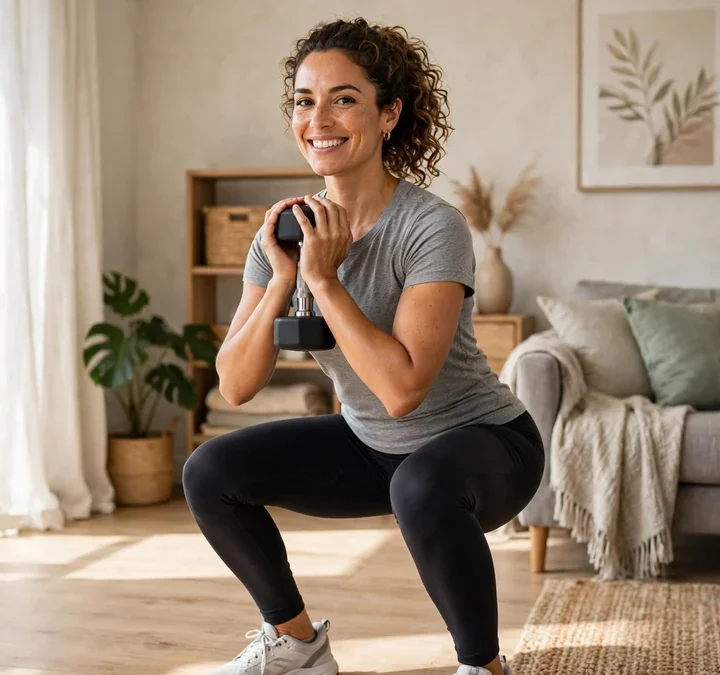
Hold one dumbbell vertically at your chest with both hands under the top end. Stand with feet slightly wider than hip width, toes turned out a little. Sit your hips back and down between your heels, keeping your chest lifted and the weight close. Press through your whole foot to stand.
Easier: Squat to a chair placed behind you, or use no weight and cross your arms.
Harder: Slow the descent to three seconds, or hold a slightly heavier dumbbell if form stays clean.
One-arm dumbbell row
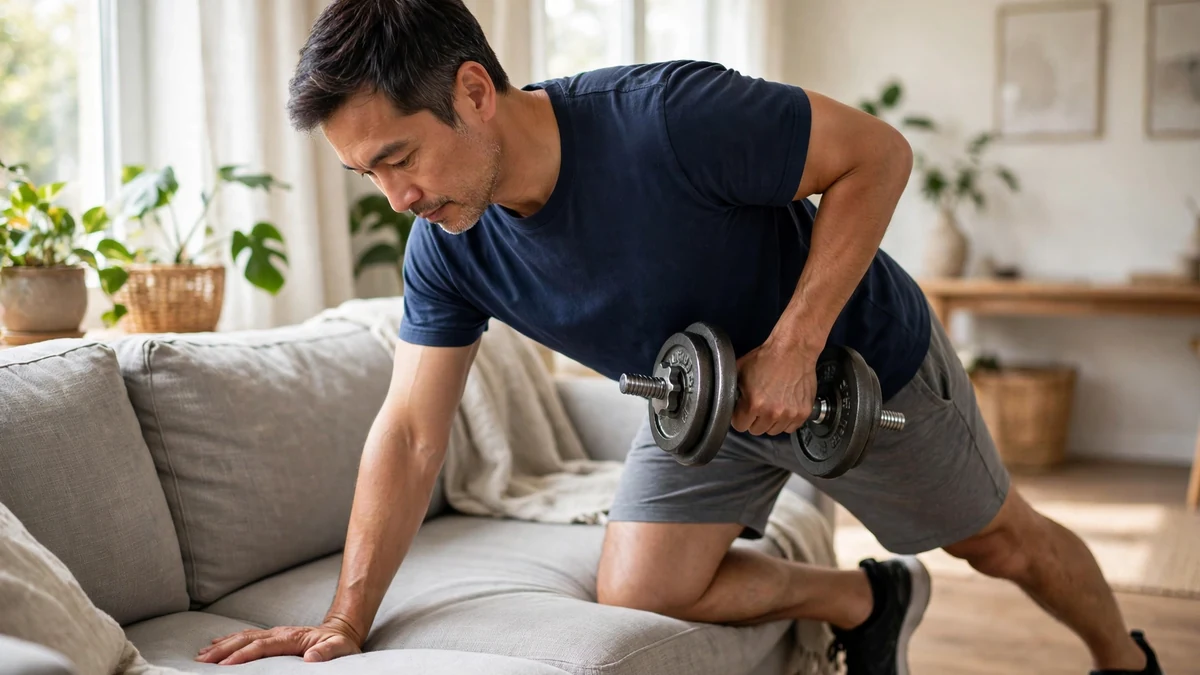
Stand beside a sturdy chair or couch. Place your left knee and left hand on the seat for support, right foot on the floor, back flat and roughly parallel to the floor. Hold the dumbbell in your right hand, arm hanging. Pull the weight up toward your ribs, squeezing your shoulder blade, then lower slowly. Finish the reps, then switch sides.
Easier: Use your lightest dumbbell and a shorter pull, stopping when your elbow reaches your side.
Harder: Pause for two seconds at the top of each rep.
Dumbbell floor press
Lie on your back on a mat with a dumbbell in each hand, knees bent and feet flat. Press the weights up above your chest until your arms are straight, then lower until the backs of your upper arms rest lightly on the floor. Keep your wrists straight and your elbows at about 45 degrees from your body.
Easier: Press one dumbbell held with both hands, or use your lightest pair.
Harder: Slow the lowering phase to three seconds.
Dumbbell deadlift (hip hinge)
Stand with feet hip width apart, a dumbbell in each hand in front of your thighs. Soften your knees, push your hips back, and slide the weights down the fronts of your legs while keeping your back flat and chest lifted. When you feel a stretch in the backs of your thighs, push your hips forward to stand tall and squeeze your glutes.
Easier: Practice the hinge with no weights, hands sliding down your thighs, and a smaller range.
Harder: Pause for two seconds at the bottom of each rep, keeping the back flat.
Overhead press
Stand tall (or sit in a sturdy chair) with a dumbbell in each hand at shoulder height, palms facing forward or toward each other. Tighten your stomach, then press the weights overhead until your arms are straight but not locked. Lower slowly to shoulder height. Keep your ribs down; do not arch your back to finish a rep.
Easier: Press one arm at a time, or use your lightest dumbbells and fewer reps.
Harder: Add a rep or two per set, or press from standing if you started seated.
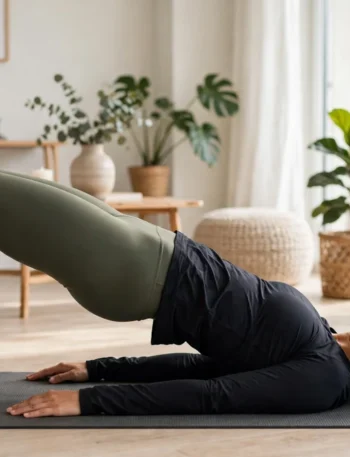
Glute bridge
Lie on your back, knees bent, feet flat. Press through your heels to lift your hips into a straight line from shoulders to knees, squeeze for one second, and lower slowly. Rest a dumbbell across your hips, held steady with both hands, only if bodyweight bridges already feel easy.
Easier: Lift partway and rest between reps.
Harder: Hold the top for 3 seconds, or add the light dumbbell across your hips.
Cool-down and stretching
- Set the weights down and walk slowly for 1 minute.
- Standing quad stretch holding a chair, 30 seconds per side.
- Seated or standing hamstring stretch, 30 seconds per side.
- Doorway chest stretch, 30 seconds per side.
- Cross-body shoulder stretch, 30 seconds per side.
- Finish with 5 slow breaths, shaking out your arms and hands.
How to progress
Weeks 1 and 2: 2 sets of each move, twice a week, with weights that feel light to moderate. Weeks 3 and 4: add reps until you reach the top of each range, then add a third set. After that, the classic next step is a slightly heavier dumbbell for the leg moves (squat, deadlift, bridge), since legs usually progress faster than shoulders. If a heavier weight is not available, slow the lowering phase of each rep to three or four seconds, which makes the same weight meaningfully harder. Change one variable at a time and write down what you used.
Safety notes
Stop and rest if you feel pain, dizziness, nausea, or chest pain, and seek medical help right away for chest pain. Talk with your doctor before starting if you have been inactive or have a health condition. Choose good form over speed and heavier weights. Never exercise through sharp joint pain. Keep your back flat during rows and hinges; a rounding back under load is a stop-and-reset signal. Store dumbbells where they cannot roll onto feet, and never lift over your face without a controlled grip.
Common mistakes
- Picking weights that force you to swing, arch, or hold your breath.
- Letting the back round during the deadlift hinge.
- Pressing overhead with the ribs flared and the lower back arched.
- Rushing the lowering phase, which is half the exercise.
- Skipping the row and ending up with push muscles only.
- Jumping to heavier dumbbells before the current ones feel controlled.
Pair it with a diet plan
Lifting days go well with regular meals that include protein. The 7-Day Meal Plan for Strength Training Beginners plans a balanced week. Use the Calorie Calculator to sanity-check your intake against your new routine.
Frequently asked questions
What weight should I start with?
Start lighter than you think you need. A light pair, about 2 to 5 pounds, is a common starting point for presses, and many beginners handle 5 to 10 pounds for squats and deadlifts. The right weight lets you finish a set with good form and one or two reps left in reserve.
Can one pair of dumbbells be enough?
Yes, for the first months. You can make a single pair harder by slowing reps down, pausing at the hardest point, and adding sets. When leg moves feel easy even done slowly, a second, heavier pair is the natural next purchase.
How many times a week should I do this workout?
Two times a week is a solid start, and three works once you recover well between sessions. Always leave at least one rest day between full-body sessions. Walking on off days complements this routine well.
Is it normal for one side to feel weaker?
Yes, almost everyone has a stronger side. That is why the row is done one arm at a time. Start each set with your weaker side and match its reps on the stronger side, rather than doing extra reps where it is easy.
Do I need a bench?
No. The floor press replaces the bench press here, and the floor actually gives you a safe stopping point for your arms. A chair or couch handles support for rows. This whole session was designed for a living room.
Sources and further reading
- Physical Activity Guidelines for Americans, US Department of Health and Human Services: health.gov
- CDC, physical activity basics for adults: cdc.gov
- MedlinePlus, exercise and physical fitness background: medlineplus.gov
This article is for general educational purposes only and is not medical, nutrition, or fitness advice. Talk with your doctor or a registered dietitian before changing your diet or starting an exercise program.