Prints just the plan, like a recipe card.
Last updated: November 22, 2026.
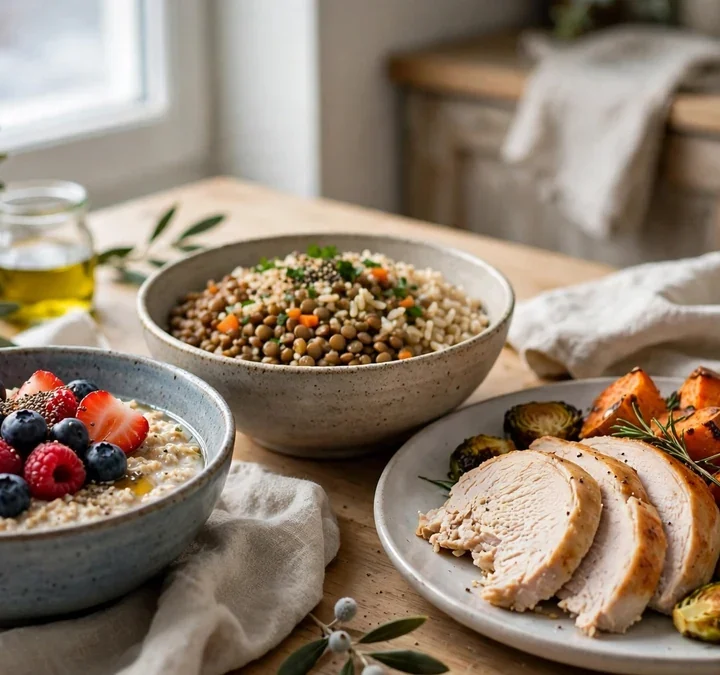
This new year reset meal plan is a complete 7-day plan at about 1,500 calories a day. It is not a juice week, a fast, or a punishment for December. It is simply a return to regular, balanced eating after the holidays: three normal meals, planned snacks, plenty of vegetables, beans, whole grains, and protein at every meal. Every portion is spelled out in plain US measures, and every number was calculated from USDA FoodData Central values.
The holidays usually mean irregular meals, more sweets and rich foods, less sleep, and less movement. The fastest way to feel like yourself again is not an extreme week. It is a steady one: regular meal times, food you cook at home, water instead of sweet drinks, and a grocery list that makes the week easy to repeat. This plan averages about 112 g of protein and 38 g of fiber a day, so it is filling even at a moderate calorie level.
For many adults, 1,500 calories a day with a modest deficit is generally consistent with gradual weight loss of about 1 to 2 pounds a week, though individual results vary and nothing is promised. Browse the other seasonal plans in Seasonal and Holiday or the full Diet Plans collection if you want a different starting point.
Who this plan is for, and who should not follow it
This plan is for adults who ate and drank more than usual over the holidays and want a calm, structured week to get back to normal habits. It suits home cooks who like simple food: oatmeal, eggs, salads, bean bowls, and sheet-pan style dinners.
This article is general education, not medical advice. Talk with your doctor or a registered dietitian before following this plan, especially if you have diabetes, kidney disease, or another condition, or you take medication affected by food. This plan is not for children or teenagers, or for anyone who is pregnant or breastfeeding. At 1,500 calories it sits at the minimum level for men, so most men should add food using the adjustment section below.
If you have a history of disordered eating, talk with a doctor or a registered dietitian before following any diet plan. For eating disorder support in the US, visit the National Alliance for Eating Disorders at allianceforeatingdisorders.com.
Plan overview
| Measure | Amount |
|---|---|
| Target calories per day | About 1,500 calories |
| Average protein per day | About 112 g |
| Average carbohydrate per day | About 182 g |
| Average fat per day | About 41 g |
| Average fiber per day | About 38 g |
| Meals per day | Breakfast, lunch, dinner, and snacks |
Nothing in this week is exotic. The reset comes from the pattern: protein and fiber at every meal, vegetables at lunch and dinner, fruit for sweetness, and no sweetened drinks. If you finish the week and want to keep the structure, our 7-Day High-Fiber, No-Sugar Meal Plan is a natural next step.
The 7-day new year reset meal plan
Cook grains and beans in batches on day 1 and the week mostly assembles itself. Season freely with salt, pepper, dried herbs, chili flakes, lemon, and vinegar; none of them change the numbers. Drink water, unsweetened tea, or black coffee freely.
Day 1
| Meal | Menu | Calories |
|---|---|---|
| Breakfast | 1/2 cup dry rolled oats; 3/4 cup plain low-fat Greek yogurt; 1 cup strawberries; 1 oz walnuts (about 1/4 cup) | About 507 |
| Lunch | 1 cup cooked lentils; 1/2 cup cooked brown rice; 1 cup chopped carrots; 2 cups fresh spinach; 1 teaspoon olive oil | About 446 |
| Dinner | 5 oz cooked turkey breast; 1 medium baked sweet potato; 1 cup cooked green beans; 2 cups green leaf lettuce; 1 teaspoon olive oil | About 406 |
| Snacks | 1 medium apple; 3/4 cup skim milk | About 159 |
Day 1 total: about 1518 calories, 106 g protein, 196 g carbohydrate, 40 g fat, 44 g fiber.
Day 2
| Meal | Menu | Calories |
|---|---|---|
| Breakfast | 2 large eggs; 2 slices whole-wheat toast; 1 orange; 3/4 cup skim milk | About 442 |
| Lunch | 1 cup cooked chickpeas; 1/2 cucumber; 1 medium tomato; 1 oz feta cheese; 1 teaspoon olive oil; 2 cups green leaf lettuce | About 431 |
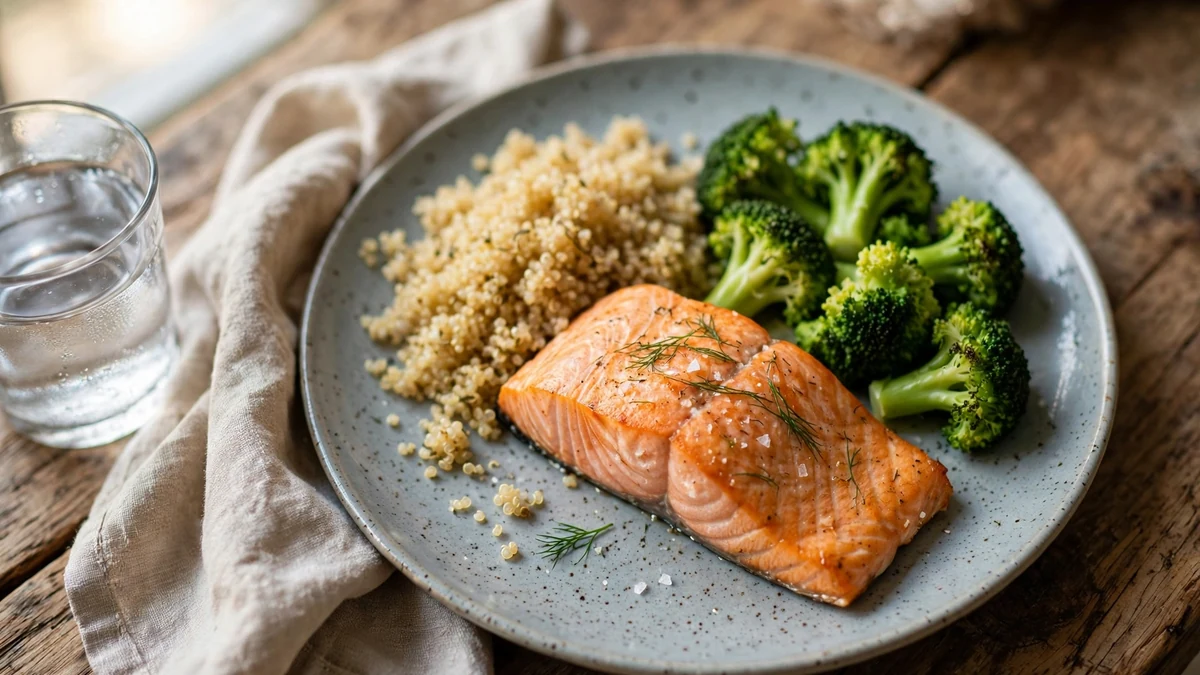
| Dinner | 4 oz cooked salmon; 3/4 cup cooked quinoa; 1 cup cooked broccoli | About 428 |
| Snacks | 3 cups air-popped popcorn; 1 cup grapes | About 197 |
Day 2 total: about 1498 calories, 92 g protein, 196 g carbohydrate, 42 g fat, 36 g fiber.
Day 3
| Meal | Menu | Calories |
|---|---|---|
| Breakfast | 1 cup plain nonfat Greek yogurt; 1/4 cup granola; 1 cup blueberries | About 376 |
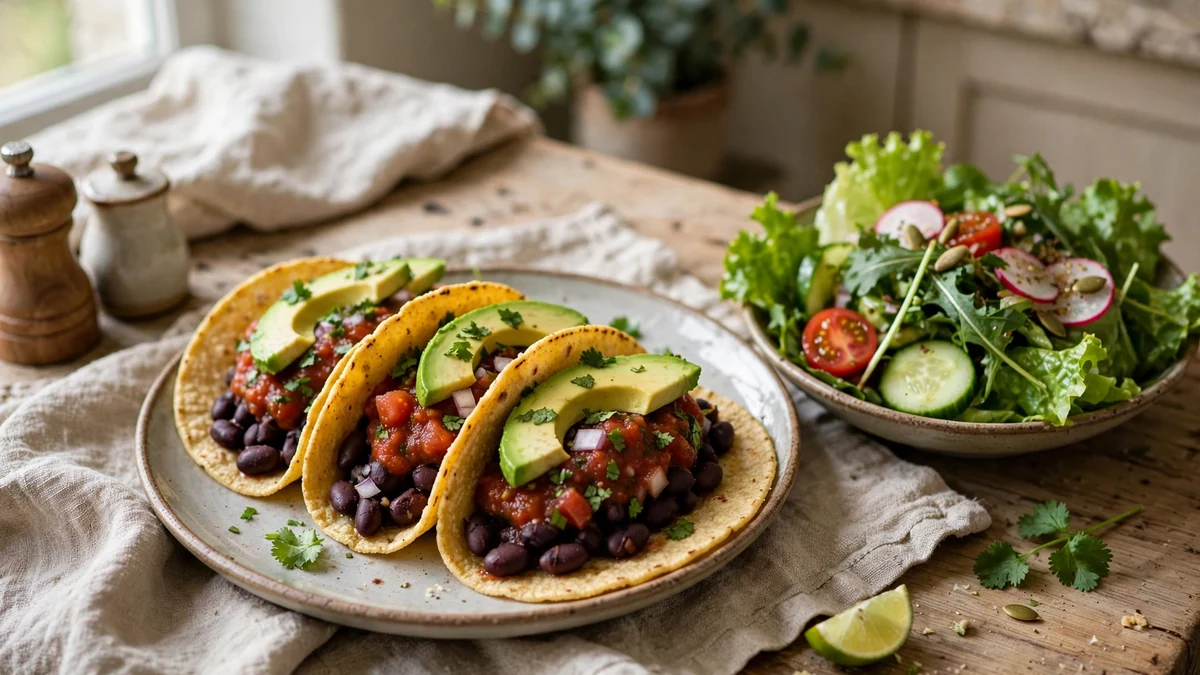
| Lunch | 1 cup cooked black beans; 2 corn tortillas; 1/4 cup salsa; 1/2 avocado; 2 cups green leaf lettuce | About 490 |
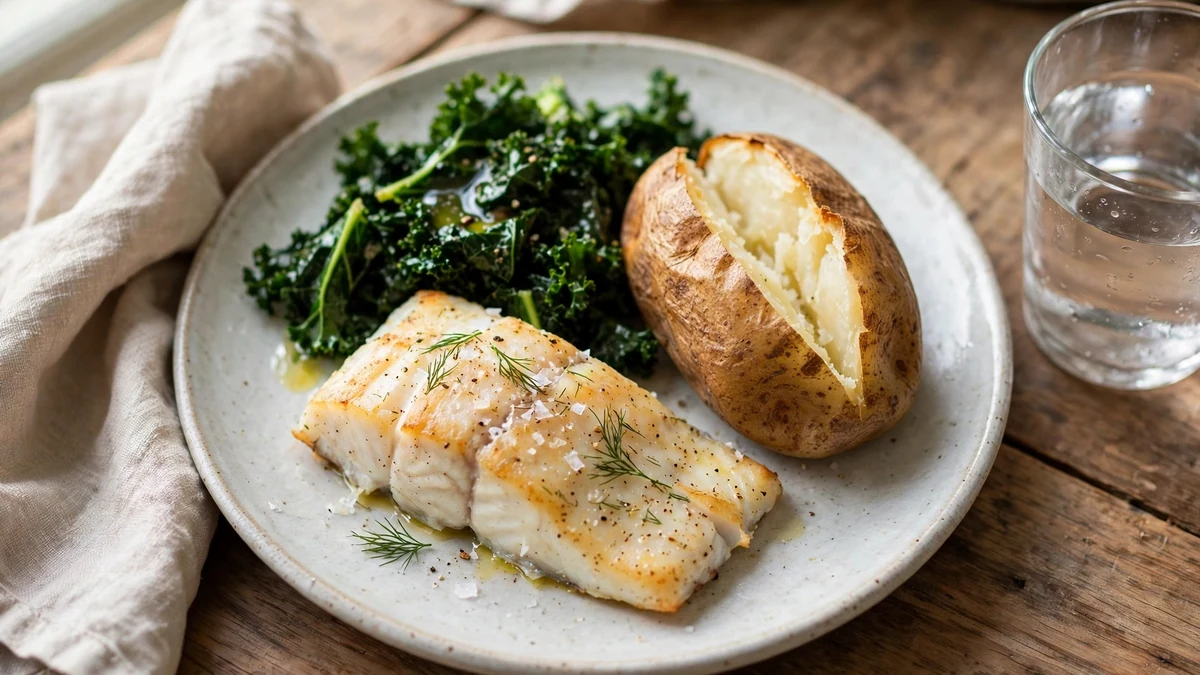
| Dinner | 6 oz cooked cod; 1 medium baked potato; 1 cup cooked kale; 1 teaspoon olive oil | About 426 |
| Snacks | 1 large egg; 1 cup raspberries; 3/4 cup skim milk | About 206 |
Day 3 total: about 1497 calories, 112 g protein, 188 g carbohydrate, 37 g fat, 46 g fiber.
Day 4
| Meal | Menu | Calories |
|---|---|---|
| Breakfast | 1/2 cup dry rolled oats; 1 cup skim milk; 1 cup raspberries; 1/2 oz almonds (about 12 almonds) | About 382 |
| Lunch | 4 oz cooked chicken breast; 3/4 cup cooked pasta; 1/2 cup marinara sauce; 2 cups fresh spinach; 1 oz part-skim mozzarella | About 511 |
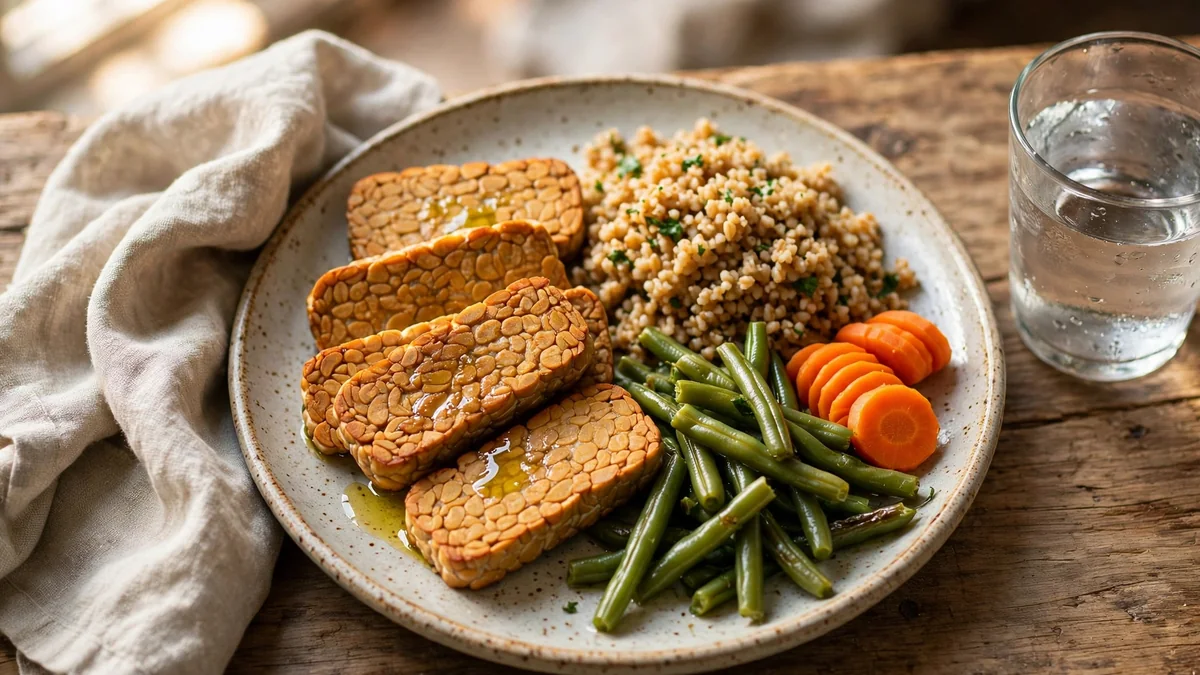
| Dinner | 100 g tempeh (about 3 1/2 oz); 1 cup cooked bulgur; 1 cup cooked green beans; 1 medium carrot; 1 teaspoon olive oil | About 452 |
| Snacks | 3/4 cup plain nonfat Greek yogurt; 1 cup strawberries | About 149 |
Day 4 total: about 1494 calories, 116 g protein, 177 g carbohydrate, 41 g fat, 36 g fiber.
Day 5
| Meal | Menu | Calories |
|---|---|---|
| Breakfast | 2 large eggs; 1 slice whole-wheat toast; 1/2 avocado; 1 medium tomato; 3/4 cup skim milk | About 442 |
| Lunch | 1 cup cooked kidney beans; 1/2 cup cooked quinoa; 1/2 cucumber; 1 medium tomato; 1 teaspoon olive oil | About 413 |
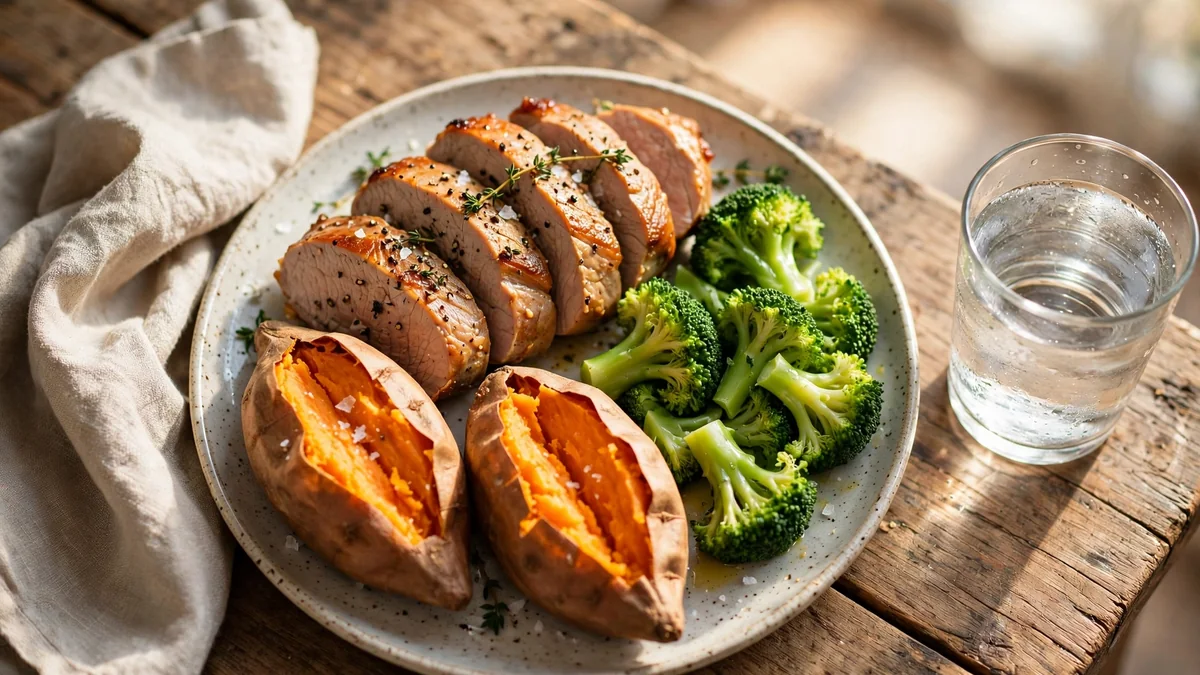
| Dinner | 5 oz cooked pork tenderloin; 2 medium baked sweet potatoes; 1 cup cooked broccoli | About 463 |
| Snacks | 1/2 cup low-fat cottage cheese; 1 cup blueberries | About 166 |
Day 5 total: about 1484 calories, 107 g protein, 186 g carbohydrate, 38 g fat, 42 g fiber.
Day 6
| Meal | Menu | Calories |
|---|---|---|
| Breakfast | 1 cup low-fat cottage cheese; 1 medium banana; 1/2 oz walnuts (about 2 tablespoons chopped) | About 359 |
| Lunch | 1 can tuna in water, drained; 1 whole-wheat pita; 2 cups green leaf lettuce; 1 medium tomato; 2 tablespoons hummus | About 407 |
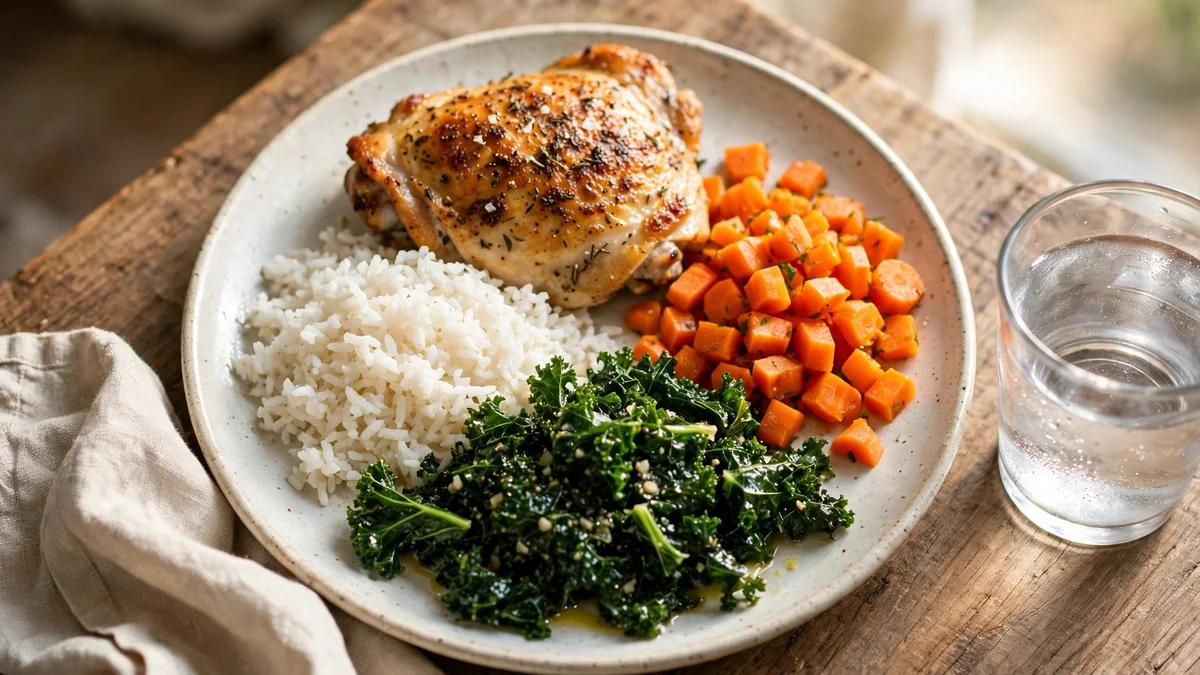
| Dinner | 5 oz cooked chicken thigh; 1/2 cup cooked white rice; 1 cup chopped carrots; 1 cup cooked kale | About 485 |
| Snacks | 1 cup shelled edamame; 1 orange | About 249 |
Day 6 total: about 1500 calories, 132 g protein, 158 g carbohydrate, 41 g fat, 30 g fiber.
Day 7
| Meal | Menu | Calories |
|---|---|---|
| Breakfast | 3/4 cup plain low-fat Greek yogurt; 1/2 cup dry rolled oats; 1 medium apple; 1/2 oz walnuts (about 2 tablespoons chopped) | About 462 |
| Lunch | 4 oz cooked shrimp; 1 cup cooked bulgur; 1/2 cucumber; 1 medium tomato; 1 oz feta cheese; 1 teaspoon olive oil | About 437 |
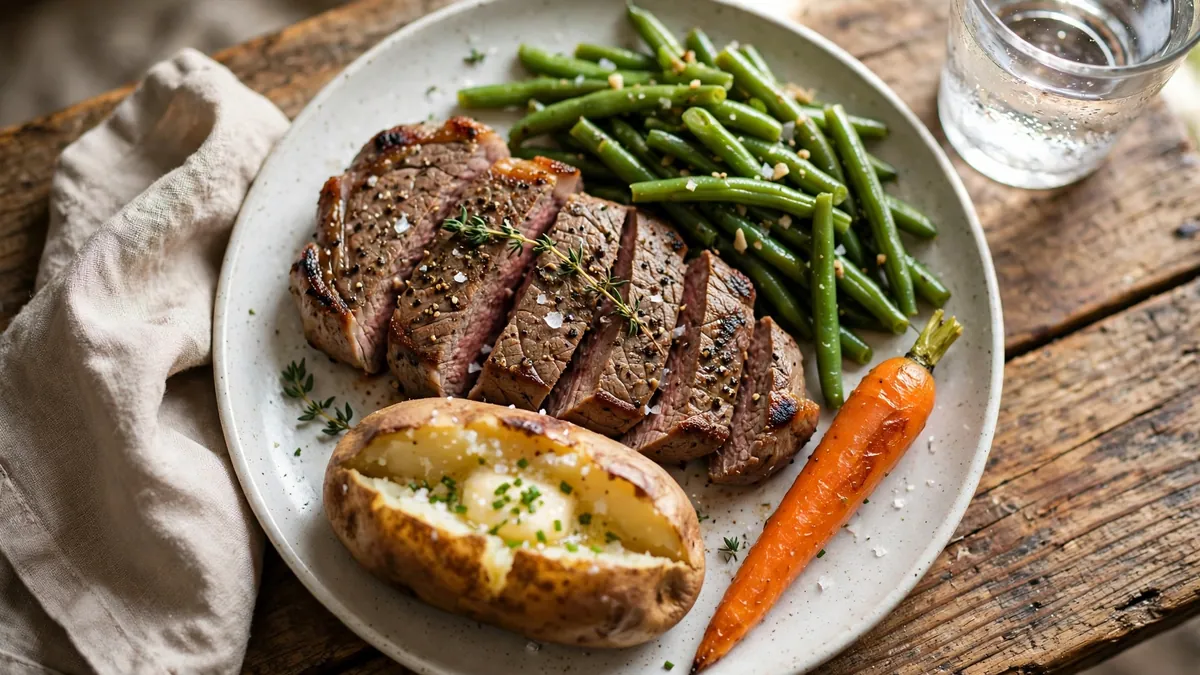
| Dinner | 5 oz cooked top sirloin; 1 medium baked potato; 1 cup cooked green beans; 1 medium carrot | About 486 |
| Snacks | 1/2 oz dark chocolate (70% cacao); 3/4 cup skim milk | About 148 |
Day 7 total: about 1533 calories, 119 g protein, 171 g carbohydrate, 45 g fat, 30 g fiber.
Grocery list
Quantities depend on how many people are eating, so use the plan portions to scale this list. Grouped by store section:
- Produce: Strawberries, Carrots, Fresh spinach, Sweet potatoes, Green beans, Green leaf lettuce, Cucumbers, Tomatoes, Oranges, Grapes, Blueberries, Avocados, Potatoes, Kale, Raspberries, Bananas, Apples.
- Meat and seafood: Turkey breast, Salmon, Cod, Pork tenderloin, Chicken thighs, Canned tuna in water, Shrimp, Top sirloin steak, Chicken breast.
- Dairy and eggs: Plain low-fat Greek yogurt, Skim milk, Eggs, Feta cheese, Plain nonfat Greek yogurt, Part-skim mozzarella, Low-fat cottage cheese.
- Pantry: Rolled oats, Walnuts, Lentils, Brown rice, Olive oil, Chickpeas, Quinoa, Granola, Black beans, Salsa, Pasta, Marinara sauce, Tempeh, Bulgur, Almonds, Kidney beans, Hummus, Dark chocolate (70% cacao), White rice.
- Frozen: Shelled edamame.
- Bakery: Whole-wheat bread, Corn tortillas, Whole-wheat pita.
Meal prep tips
- Cook the lentils, brown rice, quinoa, and bulgur on day 1. Together they cover most of the week’s lunches and dinners.
- Bake all the sweet potatoes and white potatoes in one oven session and refrigerate them whole.
- Hard-boil a few eggs for the day 3 snack and quick breakfasts.
- Wash greens and berries, and chop carrots and cucumbers, so salads take minutes to assemble.
- Clear the holiday leftovers out of the refrigerator before you start, or freeze them in portions for another month. Out of sight makes the new routine easier.
- Portion nuts and granola into single servings when you unpack groceries; both are easy to over-pour.
Easy swaps
- Swap lentils, black beans, kidney beans, and chickpeas cup for cup in the bowls and salads.
- Swap turkey breast, chicken breast, and chicken thigh in the same cooked weights; thighs add a few calories, breast a few less.
- Swap salmon, cod, and shrimp in similar portions at dinner.
- Swap raspberries, strawberries, and blueberries cup for cup at breakfasts and snacks.
- Swap bulgur, quinoa, and brown rice in equal cooked portions.
- Swap the popcorn snack for 1 cup of shelled edamame when you want more protein.
- Swap Greek yogurt and cottage cheese in equal portions at breakfast.
How to adjust the calories safely
To build this plan up to about 1,800 calories a day, add roughly 300 calories from foods already in the plan: 1 oz of almonds (about 162 calories), 1 tablespoon of peanut butter (about 96 calories), and 1 teaspoon of olive oil on your vegetables (about 40 calories). To reach about 2,000 calories, add 1 cup of cooked quinoa (about 222 calories) at lunch or dinner as well.
Never go below 1,200 calories a day for women or 1,500 calories a day for men. Because this plan sits at 1,500, men should treat it as their floor and use the additions above whenever they are hungry, losing strength, or very active. Going lower after the holidays does not speed anything up; it mostly makes the routine harder to keep.
Common mistakes
- Trying to undo the holidays in three days. Skipping meals or cutting far below the plan leads to rebound eating by the weekend.
- Keeping holiday sweets and leftovers in easy reach while you restart. Environment beats willpower.
- Drinking calories again: juice, sweet coffee drinks, and leftover party drinks are not in the plan numbers.
- Weighing yourself on January 1 and judging the plan by the first reading. Holiday weight includes water and glycogen; judge the trend after two weeks.
- Quitting movement because the gym is crowded. Walking counts, and our exercise library has home options.
Pair it with a workout
The best January exercise plan is the one you will still be doing in March. Start with walking and one or two beginner strength sessions a week from our Exercise and Workouts category, build up gradually, and stop any exercise that causes pain, dizziness, or chest pain. Check with your doctor before starting if you have been inactive or have a medical condition.
Frequently asked questions
Do I need a special reset or fasting week after the holidays?
No. Your body does not need a special program to return to normal after a few weeks of richer eating. Regular meals, enough protein and fiber, water, sleep, and movement are what restore your routine, and that is exactly what this week provides.
How much of my holiday weight gain is real?
Some of the quick scale jump after the holidays is water, glycogen, and fuller digestion rather than body fat, and it settles within a week or two of normal eating. Judge your progress by the trend over several weeks, not by the first few readings.
Can I repeat this week?
Yes. The days are nutritionally similar, so you can repeat the week or trade days around. After two weeks, many people move to a longer plan such as our 7-Day No-Sugar Mediterranean Diet Meal Plan for variety.
Can men follow this plan?
Yes, at 1,500 calories it meets the men’s minimum exactly. Most men, and taller or very active women, should use the adjustment section to reach 1,800 to 2,000 calories.
What if I still have holiday events in early January?
Eat the plan’s breakfast and a light plan lunch, enjoy the event meal without trying to compensate the next day, and return to the plan at the following meal. One meal does not decide a week.
Can I follow this plan if I have diabetes?
Only after your doctor or registered dietitian reviews it. The meals are ordinary whole foods, but any change in eating pattern can affect blood sugar and medication needs.
Sources and further reading
- USDA FoodData Central, the source of all nutrition values on this page
- Dietary Guidelines for Americans
- MyPlate, USDA meal planning guidance
- CDC, healthy weight and losing weight
- MedlinePlus, weight control
This article is for general educational purposes only and is not medical, nutrition, or fitness advice. Talk with your doctor or a registered dietitian before changing your diet or starting an exercise program.