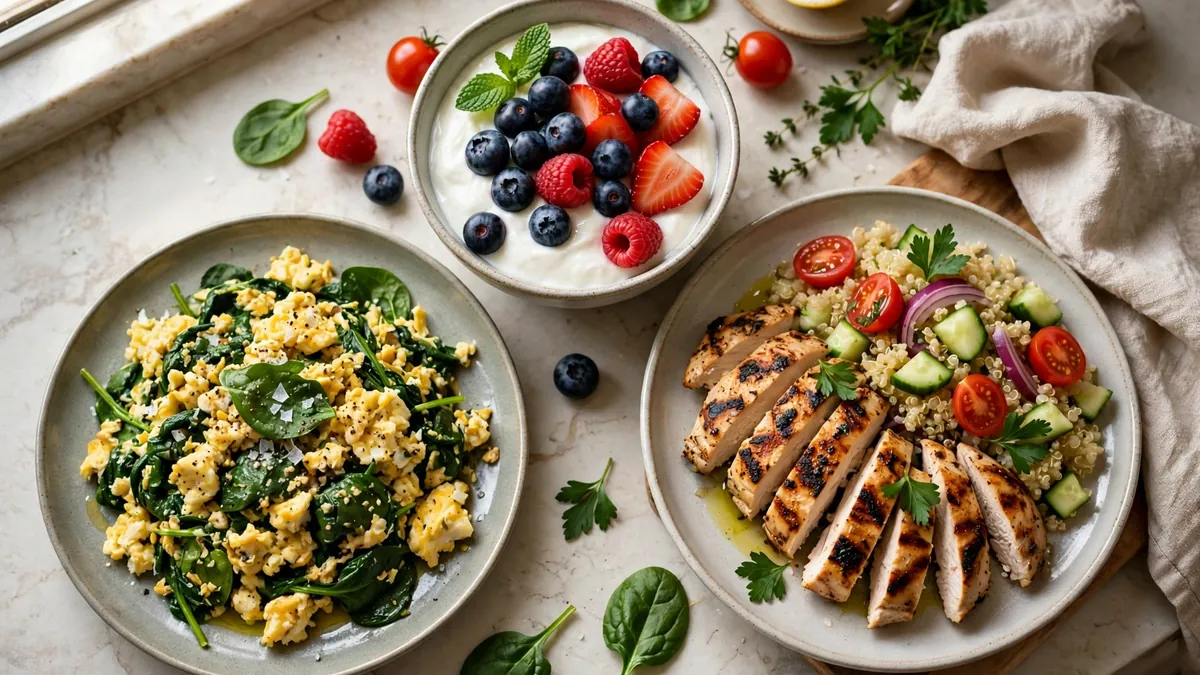
This high protein meal plan is a beginner friendly week at about 1,600 calories a day that averages about 140 grams of protein a day. It was written for people who are new to eating high protein on purpose: the meals are simple, the ingredient lists are short, and every meal has one obvious protein anchor you can see on the plate, such as eggs, Greek yogurt, chicken, turkey, fish, or beans.
Every day spells out breakfast, lunch, dinner, and a snack with exact foods and US portions, and every number was calculated from USDA FoodData Central values. There are no protein powders, bars, or special products in this week. All of the protein comes from ordinary grocery food, which is the easiest way to learn what a high protein day actually looks like.
Protein at this level helps many people feel full on fewer calories and supports muscle while they lose weight, especially alongside beginner strength training. For many adults, 1,600 calories a day lines up with gradual weight loss of about 1 to 2 pounds a week, though your own rate may vary and nothing is promised. You will find this plan in our By Diet Style collection. Our 7-Day High-Protein Meal Plan for Weight Loss uses a different menu at the same calorie level, and the vegetarian high-protein plan covers the meat free version.
Who this plan is for, and who should not follow it
This plan is for adults who eat meat, fish, eggs, and dairy, who are starting strength training or simply want to stop feeling hungry on a weight loss plan, and who want the protein question answered in advance instead of tracked meal by meal. The cooking is basic: scrambles, sheet pan dinners, sandwiches, and one pot chili.
Do not follow this plan if you are under 18, pregnant, or breastfeeding. If you have kidney disease, talk with your doctor before eating a high protein diet, because protein targets often need to be set individually. If you have diabetes or another condition, or you take medication affected by food, review the plan with your doctor or a registered dietitian before starting. This page is general education, not medical advice.
If you have a history of disordered eating, talk with a doctor or a registered dietitian before following any diet plan. For eating disorder support in the US, visit the National Alliance for Eating Disorders at allianceforeatingdisorders.com.
Plan overview
Measure
Amount
Target calories per day
about 1,600
Average calories per day (as written)
about 1572
Average protein per day
about 140 g
Average carbohydrate per day
about 164 g
Average fat per day
about 41 g
Average fiber per day
about 28 g
Meals per day
4 (breakfast, lunch, dinner, and snacks)
Protein is spread across the whole day instead of loaded into one meal. Breakfasts provide roughly 18 to 36 grams, lunches and dinners usually provide 45 to 56 grams, and the snacks are protein foods too, not filler.
The 7-day high protein meal plan
Portions are given in US household measures. Calories for each meal and day were calculated from USDA FoodData Central values for the exact foods and amounts listed. Cook proteins plainly with salt, pepper, garlic, smoked paprika, or chili flakes as you like. Drink water, unsweetened tea, or black coffee freely.
Day 1
Meal
Foods and portions
Calories
Breakfast
2 large eggs; 3 large egg whites; 2 cups raw spinach, wilted; 1 oz cheddar cheese; 1 slice whole-wheat toast
about 416
Lunch
5 oz cooked turkey breast; 1 cup cooked quinoa; 1 cup cooked broccoli
about 485
Dinner
5 oz cooked top sirloin; 1 medium baked potato; 1 cup cooked green beans
about 461
Snacks
3/4 cup plain nonfat Greek yogurt; 1 cup raspberries
about 164
Day 1 total: about 1527 calories, 159 g protein, 133 g carbohydrate, 40 g fat, 29 g fiber.
Day 2
Meal
Foods and portions
Calories
Breakfast
1 cup plain low-fat (2%) Greek yogurt; 1/4 cup granola; 1 cup blueberries
about 410
Lunch
5 oz cooked chicken breast; 1 cup cooked brown rice; 1 cup chopped carrots; 1 teaspoon olive oil
about 554
Dinner
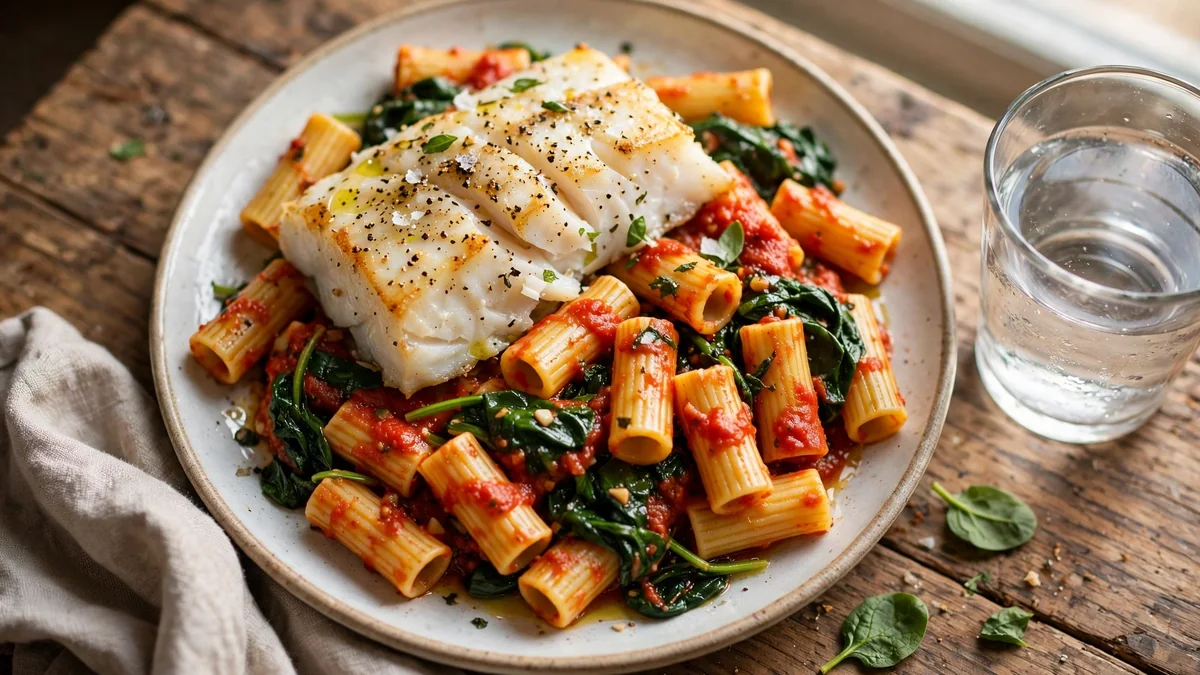
6 oz cooked cod; 1 cup cooked pasta; 1/2 cup marinara sauce; 2 cups raw spinach, wilted into the pasta
about 476
Snacks
1/2 cup low-fat cottage cheese; 1 cup strawberries
about 130
Day 2 total: about 1570 calories, 145 g protein, 176 g carbohydrate, 31 g fat, 22 g fiber.
Day 3
Meal
Foods and portions
Calories
Breakfast
1/2 cup dry rolled oats, cooked; 1 cup skim milk; 1 tablespoon peanut butter; 1/2 medium banana, sliced
about 386
Lunch
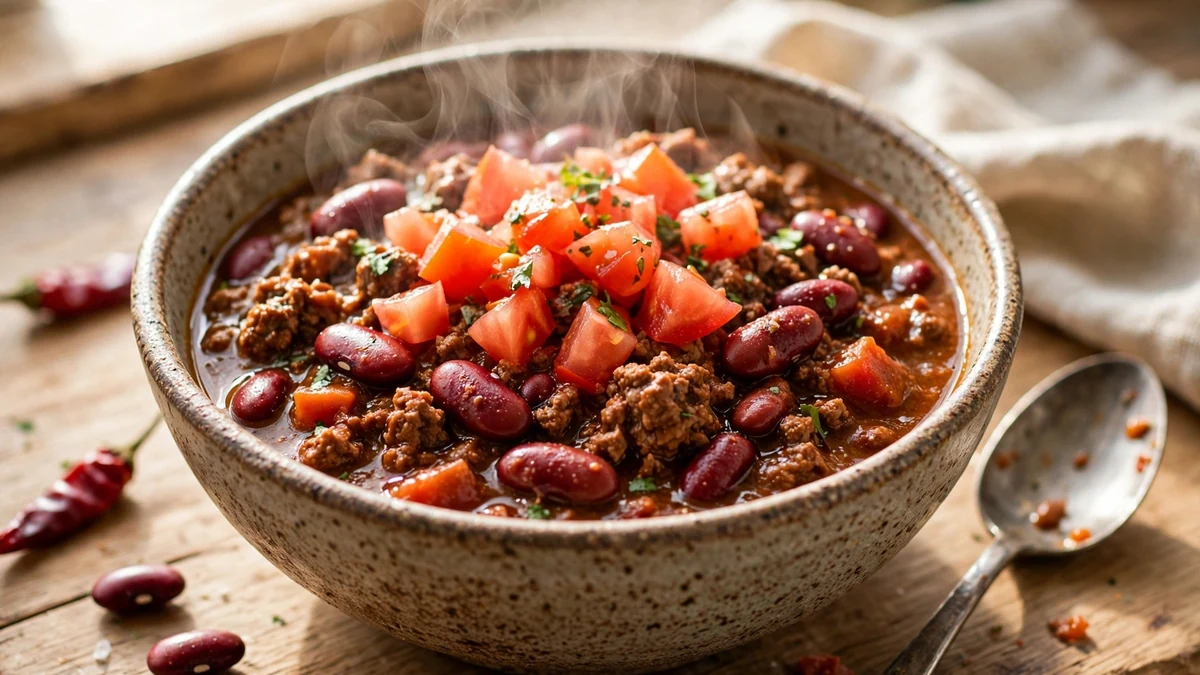
5 oz cooked lean ground beef (90% lean); 1 cup cooked kidney beans; 1 medium tomato, chopped; 1/4 cup salsa
about 574
Dinner
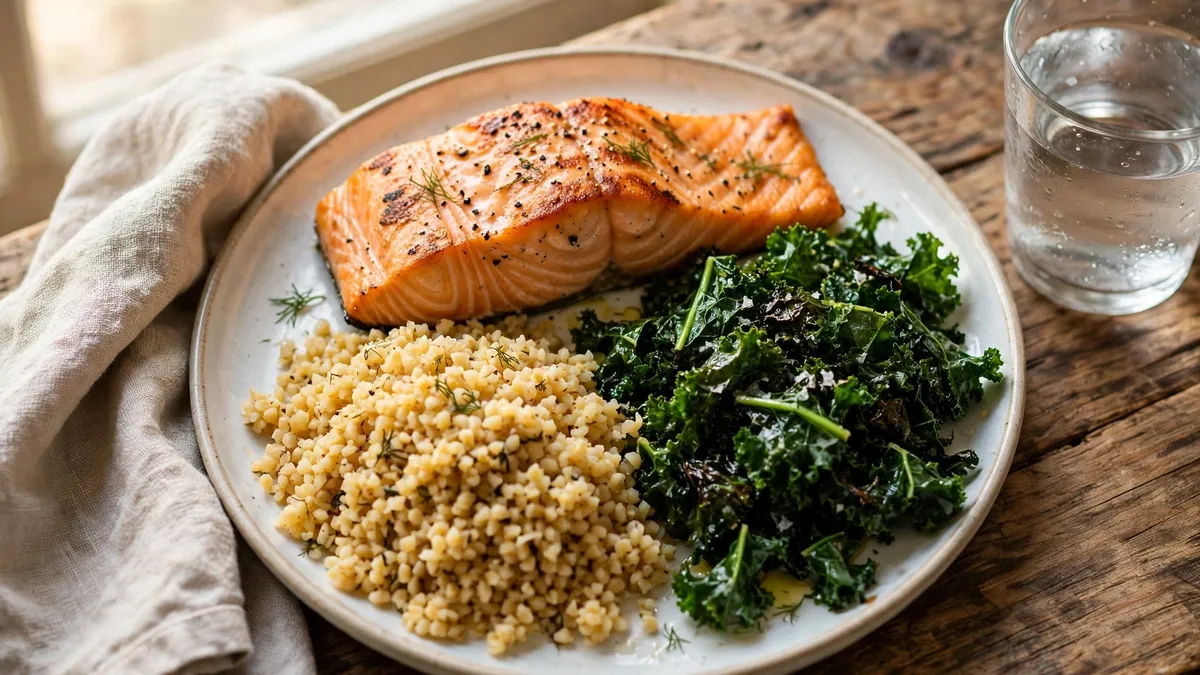
5 oz cooked salmon; 1 cup cooked bulgur; 1 cup cooked kale
about 467
Snacks
1 large egg, hard-boiled; 1 medium apple
about 172
Day 3 total: about 1598 calories, 125 g protein, 172 g carbohydrate, 49 g fat, 38 g fiber.
Day 4
Meal
Foods and portions
Calories
Breakfast
1 cup low-fat cottage cheese; 1 medium pear; 1/2 oz walnuts (about 2 tablespoons chopped)
about 356
Lunch
1 can tuna in water, drained; 2 slices whole-wheat bread; 1 oz part-skim mozzarella; 1 medium tomato; 2 cups green leaf lettuce
about 430
Dinner
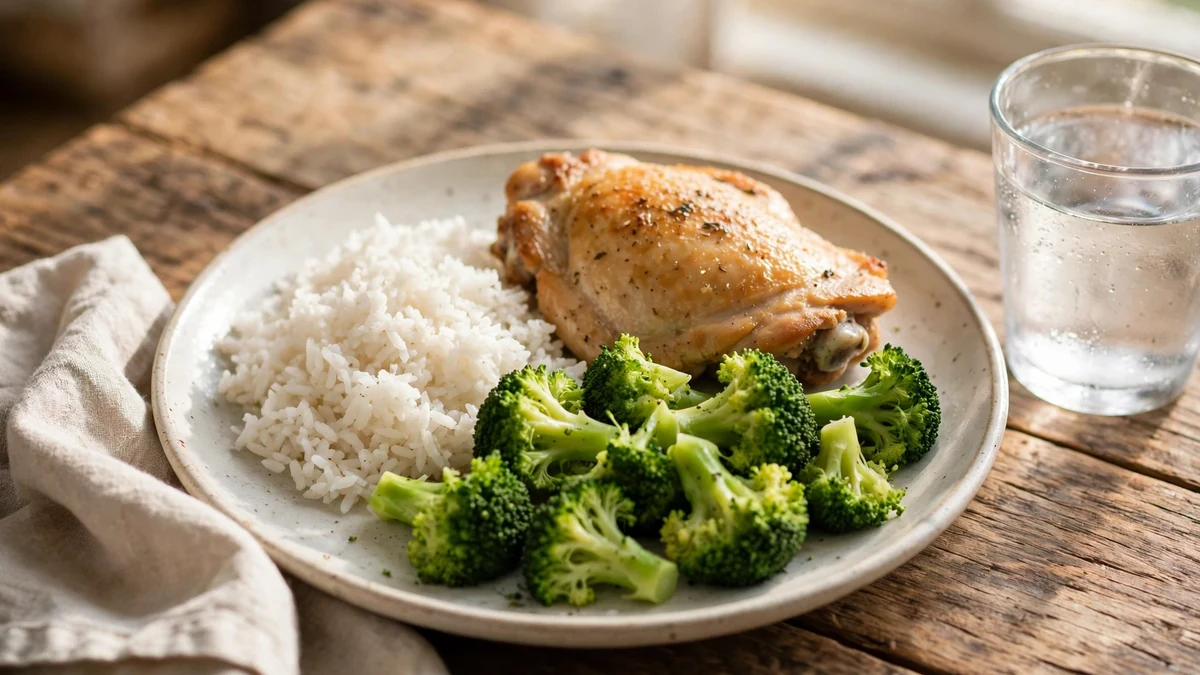
6 oz cooked chicken thigh, skinless; 1 cup cooked white rice; 1 cup cooked broccoli
about 599
Snacks
1 cup skim milk; 1 oz almonds (about 1/4 cup)
about 248
Day 4 total: about 1633 calories, 141 g protein, 152 g carbohydrate, 53 g fat, 22 g fiber.
Day 5
Meal
Foods and portions
Calories
Breakfast
2 large eggs; 3 large egg whites; 1 slice whole-wheat toast; 1 medium orange; 3/4 cup skim milk
about 414
Lunch
6 oz cooked shrimp; 1 cup cooked quinoa; 1 medium bell pepper, sliced; 1 teaspoon olive oil
about 488
Dinner
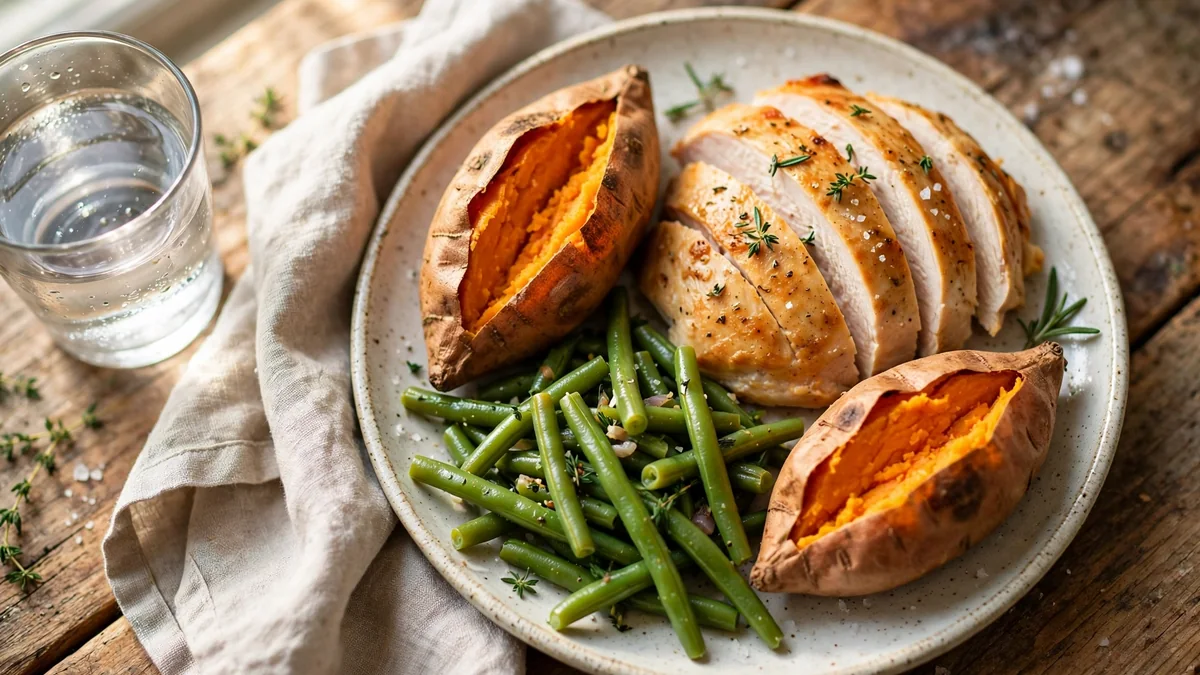
5 oz cooked turkey breast; 2 medium baked sweet potatoes; 1 cup cooked green beans
about 458
Snacks
3/4 cup plain low-fat (2%) Greek yogurt; 1 cup strawberries
about 173
Day 5 total: about 1532 calories, 151 g protein, 163 g carbohydrate, 31 g fat, 27 g fiber.
Day 6
Meal
Foods and portions
Calories
Breakfast
1/2 cup dry rolled oats, cooked; 1 cup plain nonfat Greek yogurt; 1 cup blueberries
about 381
Lunch
100 g tempeh (about 3 1/2 oz); 1 cup cooked brown rice; 1 cup cooked broccoli; 1 teaspoon olive oil
about 514
Dinner
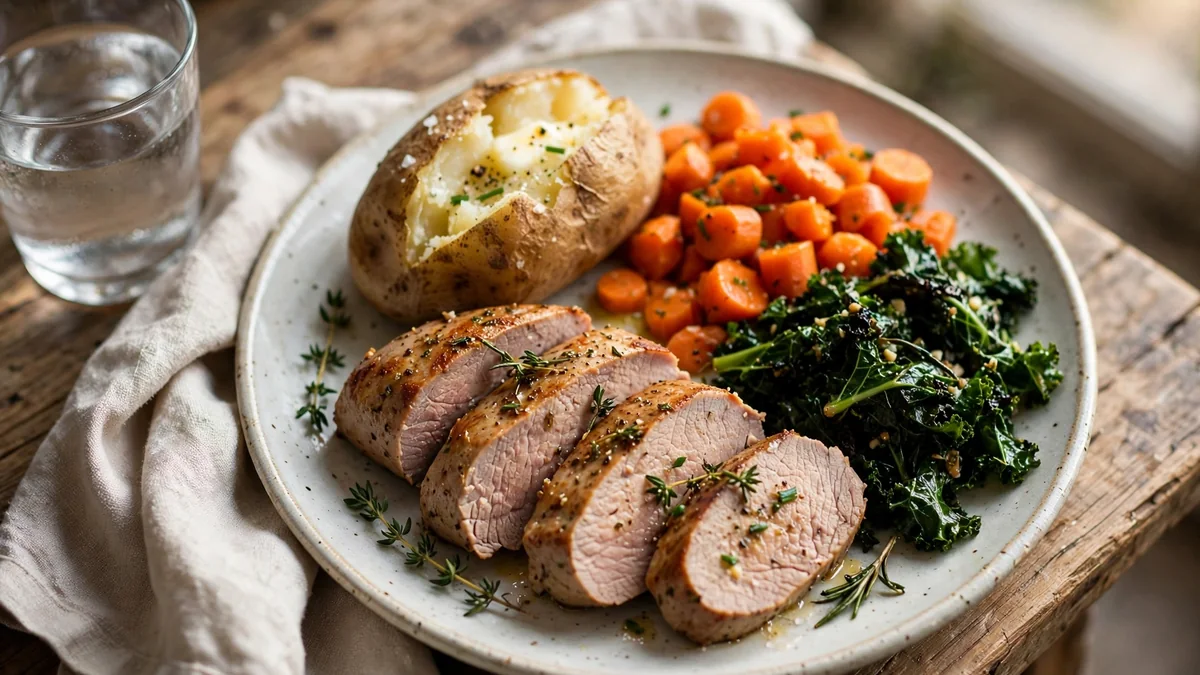
6 oz cooked pork tenderloin; 1 medium baked potato; 1 cup chopped carrots, cooked; 1 cup cooked kale
about 503
Snacks
1 cup shelled edamame
about 188
Day 6 total: about 1585 calories, 132 g protein, 190 g carbohydrate, 38 g fat, 33 g fiber.
Day 7
Meal
Foods and portions
Calories
Breakfast
2 slices whole-wheat toast; 2 large eggs; 1 oz cheddar cheese; 1 medium tomato, sliced
about 453
Lunch
5 oz cooked chicken breast; 1 cup cooked pasta; 1 cup cooked broccoli; 1 teaspoon olive oil
about 550
Dinner
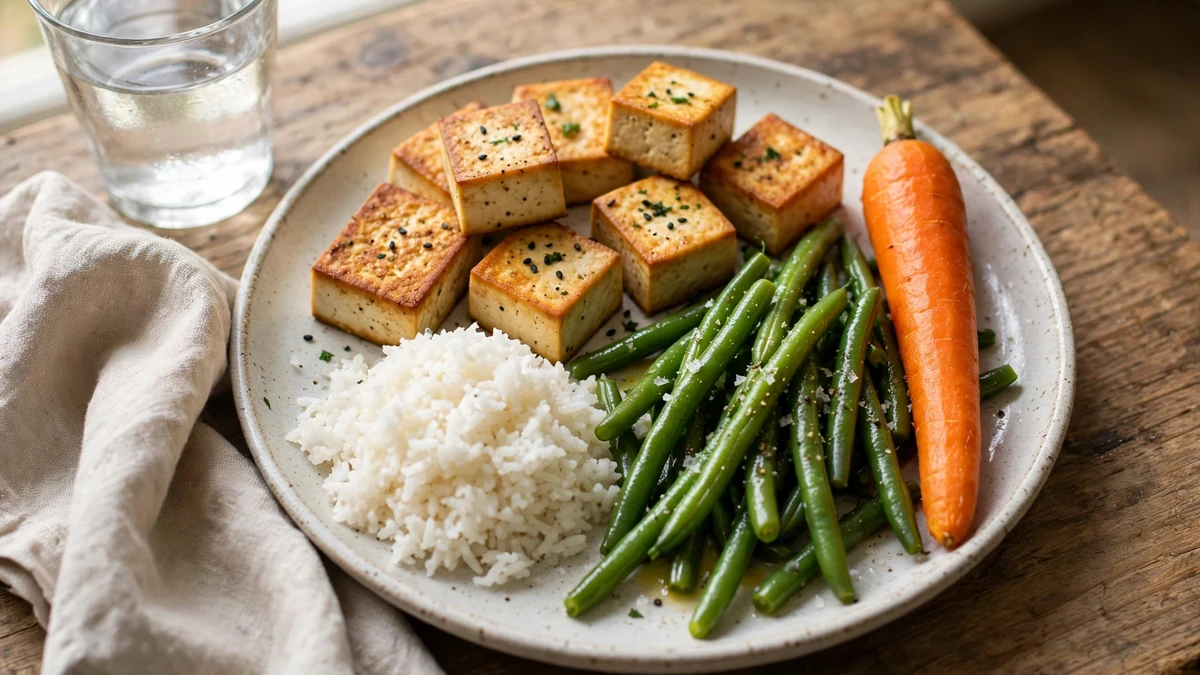
125 g firm tofu (about 4 1/2 oz); 1/2 cup cooked white rice; 1 cup cooked green beans; 1 medium carrot
about 370
Snacks
1/2 cup low-fat cottage cheese; 1 cup grapes
about 186
Day 7 total: about 1558 calories, 126 g protein, 164 g carbohydrate, 47 g fat, 23 g fiber.
Grocery list
This list covers the full week for one person following the plan as written. Amounts you need depend on package sizes, so buy at least the quantities the plan uses and keep the pantry staples on hand for repeat weeks.
Produce
Fresh spinach
Broccoli
White potatoes
Green beans
Raspberries
Blueberries
Carrots
Strawberries
Bananas
Tomatoes
Kale
Apples
Pears
Green leaf lettuce
Oranges
Bell peppers
Sweet potatoes
Grapes
Meat and seafood
Turkey breast
Top sirloin steak
Chicken breast
Cod fillets
Lean ground beef (90% lean)
Salmon fillets
Chicken thighs
Shrimp
Pork tenderloin
Dairy and eggs
Large eggs
Large eggs (for egg whites)
Cheddar cheese
Plain nonfat Greek yogurt
Plain low-fat Greek yogurt
Low-fat cottage cheese
Skim milk
Part-skim mozzarella
Pantry
Quinoa
Granola
Brown rice
Olive oil
Pasta
Marinara sauce
Rolled oats
Peanut butter
Kidney beans
Salsa
Bulgur
Walnuts
Canned tuna in water
White rice
Almonds
Tempeh
Firm tofu
Frozen
Shelled edamame
Bakery
Whole-wheat bread
Meal prep tips
Cook the chicken breast, turkey breast, and chicken thigh portions for the week in two batches, on day 1 and day 4, and slice them for lunches and dinners.
Hard-boil a dozen eggs at the start of the week. They cover the day 3 snack and give you a backup protein for any meal that falls short.
Cook brown rice, white rice, quinoa, and bulgur in larger amounts than one meal needs, then refrigerate the extra for later days.
Make the day 3 beef and kidney bean chili in a full batch. It reheats well for two days and freezes in single portions.
Portion Greek yogurt, cottage cheese, nuts, and edamame into single servings so the protein snack is ready before hunger peaks.
Wash and chop the carrots, peppers, and salad vegetables on shopping day so assembling plates takes minutes.
Easy swaps
Swap chicken breast and turkey breast for each other in equal portions at any meal.
Swap salmon for cod in the same portion, or cod for shrimp, if one is on sale or not liked.
Swap Greek yogurt and low-fat cottage cheese evenly in breakfasts and snacks; both are protein anchors.
Swap tempeh for firm tofu in the same weight on day 6; tofu is a little lower in protein, so add a hard-boiled egg that day if you like.
Swap quinoa, bulgur, brown rice, and white rice in the same cooked amounts as side dishes.
Swap the edamame snack for 3/4 cup of Greek yogurt when you want similar protein without soy.
Swap any berry for another berry cup for cup, or use a medium apple, pear, or orange instead.
How to adjust the calories safely
If 1,600 calories leaves you too hungry, losing weight faster than about 2 pounds a week after the first week, or unable to train well, add about 200 to 300 calories a day. Keep the protein pattern when you add: 1 cup of skim milk (about 86 calories) plus 1 oz of almonds (about 162 calories); or an extra Greek yogurt snack (about 100 to 124 calories) plus 1 tablespoon of peanut butter (about 96 calories); or an extra 1/2 cup of cooked quinoa at dinner (about 111 calories) plus a hard-boiled egg (about 78 calories).
Never go below 1,200 calories a day for women or 1,500 calories a day for men. Those floors are minimums, not targets. Men, taller adults, and anyone who is very active should use the additions above whenever this plan as written is not enough, and anyone who feels dizzy, unwell, or constantly exhausted should eat more and talk with a doctor or a registered dietitian.
Common mistakes
Eating a low protein breakfast and trying to catch up at dinner. Spreading protein across the day is easier on appetite and on your schedule, so keep the egg, yogurt, and cottage cheese breakfasts as written.
Skipping the snacks to save calories, then getting so hungry at dinner that portions quietly double. The snacks here are protein foods and part of the design.
Assuming you need powders or bars to eat high protein. This week reaches about 140 grams a day with ordinary food alone.
Eyeballing nuts, cheese, and olive oil. These are healthy foods, but a large handful of nuts can add several hundred uncounted calories.
Weighing yourself daily and changing the plan after every reading. Judge the trend over two to three weeks instead.
Pair it with a workout
Protein works best alongside resistance training, because strength work is what tells your body to keep muscle while you lose weight. Browse our Exercise and Workouts section for beginner dumbbell and bodyweight routines, and add walking on the days between strength sessions. Start at the easier options, use the warm-up and cool-down in each routine, and check with your doctor before starting if you have been inactive or have a medical condition.
Frequently asked questions
How does this plan reach about 140 grams of protein without powders?
By putting a protein anchor at every eating time: eggs or Greek yogurt at breakfast, a full portion of meat, fish, tofu, or beans at lunch and dinner, and yogurt, cottage cheese, milk, eggs, or edamame as snacks. No single food does the job; the pattern does.
I am new to this. Which day should I start with?
Day 1 is the gentlest start: a simple egg scramble, a turkey and quinoa lunch you can batch cook, and a sirloin dinner. Cook extra turkey and quinoa that day and days 2 and 5 get easier as well.
Is this much protein hard on the kidneys?
For healthy adults, protein at this level from ordinary food is a common feature of weight loss plans. If you have kidney disease or have ever been told to limit protein, do not follow this plan until your doctor sets your personal target. When in doubt, ask before you start.
Can I follow this plan if I do not eat red meat?
Yes. Swap the sirloin, ground beef, and pork meals for the same portions of chicken breast, turkey breast, cod, or tofu. The chili on day 3 also works with ground turkey in place of the beef.
What if I am still hungry between meals?
First, follow the plan as written for a full week, including the snacks, and drink water through the day. If hunger stays strong, use the adjustment section to add 200 to 300 calories of protein rich food. A slightly higher level you can keep beats a lower level you quit.
Can I repeat days or swap meals between days?
Yes. Whole days can be traded freely, and any lunch can swap with any other lunch. The daily totals stay close because every day was built to the same target and the same protein pattern.
Sources and further reading
USDA FoodData Central, the source for every calorie and nutrient value in this plan: fdc.nal.usda.gov
Dietary Guidelines for Americans, for protein food guidance and the overall eating pattern: dietaryguidelines.gov
MyPlate, for guidance on protein foods and portion building: myplate.gov
Academy of Nutrition and Dietetics, for practical guidance on working with a registered dietitian: eatright.org
MedlinePlus, for plain language background on protein in the diet: medlineplus.gov
This article is for general educational purposes only and is not medical, nutrition, or fitness advice. Talk with your doctor or a registered dietitian before changing your diet or starting an exercise program.
Servings:
7
Calories:
1572
Description
A beginner friendly high protein week at about 1,600 calories and about 140 grams of protein a day, built entirely from ordinary grocery food with no powders or bars. Every meal has one clear protein anchor, such as eggs, Greek yogurt, chicken, turkey, fish, or beans. The full plan with exact portions for every meal is on this page; the card below shows the condensed grocery list, one line per day, and the average day's nutrition.
Ingredients
Produce: fresh spinach, broccoli, white potatoes, green beans, raspberries, blueberries, carrots, strawberries, bananas, tomatoes, kale, apples, pears, green leaf lettuce, oranges, bell peppers, sweet potatoes, grapes
Dairy and eggs: large eggs , cheddar cheese, plain nonfat Greek yogurt, plain low-fat Greek yogurt, low-fat cottage cheese, skim milk, part-skim mozzarella (whole eggs and egg whites)
Pantry: quinoa, granola, brown rice, olive oil, pasta, marinara sauce, rolled oats, peanut butter, kidney beans, salsa, bulgur, walnuts, canned tuna in water, white rice, almonds, tempeh, firm tofu
Frozen: shelled edamame
Bakery: whole-wheat bread
Instructions
1
Day 1: Egg and egg white scramble with spinach, cheddar, and toast; turkey with quinoa and broccoli; sirloin with a baked potato and green beans; Greek yogurt with raspberries.
2
Day 2: Greek yogurt with granola and blueberries; chicken with brown rice and carrots; cod with pasta marinara and spinach; cottage cheese with strawberries.
3
Day 3: Oatmeal with milk, peanut butter, and banana; beef and kidney bean chili with tomato and salsa; salmon with bulgur and kale; a hard-boiled egg and an apple.
4
Day 4: Cottage cheese with pear and walnuts; tuna sandwich with mozzarella and salad; chicken thigh with white rice and broccoli; milk and almonds.
5
Day 5: Eggs and egg whites with toast, an orange, and milk; shrimp with quinoa and bell pepper; turkey with sweet potatoes and green beans; Greek yogurt with strawberries.
6
Day 6: Oatmeal with Greek yogurt and blueberries; tempeh with brown rice and broccoli; pork tenderloin with a baked potato, carrots, and kale; shelled edamame.
7
Day 7: Egg and cheddar toast with tomato; chicken with pasta and broccoli; tofu with white rice, green beans, and carrot; cottage cheese with grapes.
Nutrition Facts
Servings 7
Amount Per Serving
Calories1572kcal
% Daily Value *
Total Fat41g64%
Total Carbohydrate164g55%
Dietary Fiber28g113%
Protein140g280%
* Percent Daily Values are based on a 2,000 calorie diet. Your daily value may be higher or lower depending on your calorie needs.
Pin this recipe to share with your friends and followers.
Laura
Food and Lifestyle Blogger
Hi, I'm Laura, a full-time food blogger, mother of 2 beautiful daughters and a lovely wife. I live in New Jersey with my family. Loves traveling, sharing new recipes, and spending time with my family.