Prints just the plan, like a recipe card.
Last updated: November 22, 2026.
This 21 day meal plan runs for three weeks at about 1,500 calories a day. Week 1 is written out in full with exact foods, US portions, and USDA-calculated calories for every meal. Weeks 2 and 3 follow a rotation guide built on the same pattern, so the plan stays varied while the grocery list stays familiar. Every number in the core week was calculated from USDA FoodData Central values.
Three weeks is a practical length for settling into a routine: long enough for the meals to become automatic, short enough to see the whole block from the start. Protein averages about 109 grams a day and fiber about 33 grams a day across breakfast, lunch, dinner, and a snack.
You will find this plan in our By Diet Style collection, part of the full Diet Plans library. If three weeks goes well and you want a fourth, the 28-Day Meal Plan for Weight Loss continues the same approach at a slightly higher level.
Who this plan is for, and who should not follow it
This plan is for adults who want a longer, steady block of structured eating: three weeks to build the shopping, cooking, and portion habits rather than just finish a short challenge. It suits people who cook at home most days and like repeating a base week with planned changes.
This plan is general education only and is not medical advice. Talk with your doctor or a registered dietitian before starting, especially if you have diabetes, kidney disease, or another condition affected by food, or you take medication that food or weight change can affect. It is not for children or teenagers, and it is not for anyone who is pregnant or breastfeeding.
At about 1,500 calories a day, this plan is written mainly for women. That level is the minimum for men, so men should use the adjustment section to add food every day rather than treating 1,500 calories as a weight loss target.
If you have a history of disordered eating, talk with a doctor or a registered dietitian before following any diet plan. For eating disorder support in the US, visit the National Alliance for Eating Disorders at allianceforeatingdisorders.com.
Plan overview
| Measure | Amount |
|---|---|
| Target calories per day | about 1,500 |
| Average calories per day (as written) | about 1505 |
| Average protein per day | about 109 g |
| Average carbohydrate per day | about 187 g |
| Average fat per day | about 39 g |
| Average fiber per day | about 33 g |
| Meals per day | 4 (breakfast, lunch, dinner, and snacks) |
The overview and day tables describe the fully written core week. Weeks 2 and 3 follow the same pattern and approximate totals using the rotation guide after the day tables.
The 7-day core of the 21 day meal plan
Portions are given in US household measures. Calories for each meal and day were calculated from USDA FoodData Central values for the exact foods and amounts listed. Season foods with herbs, spices, lemon, vinegar, and salsa as you like.
Day 1
| Meal | Foods and portions | Calories |
|---|---|---|
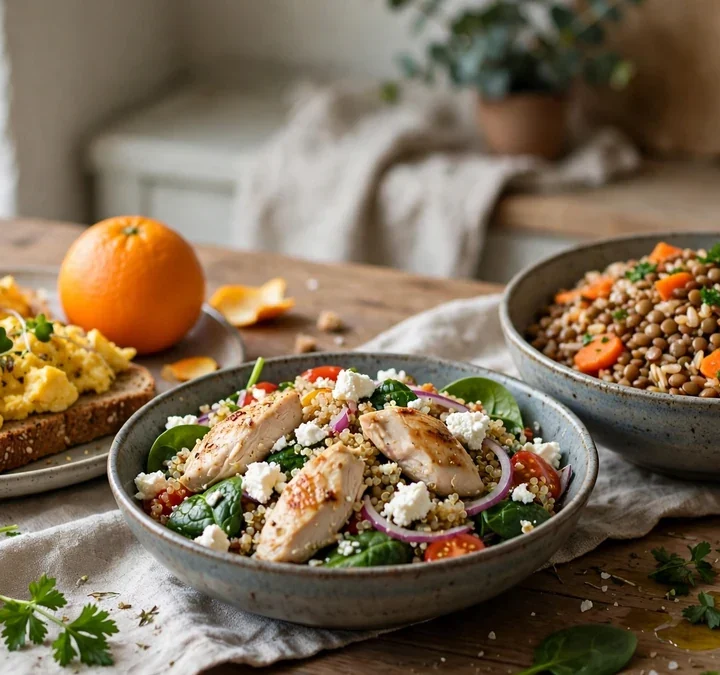
| Breakfast | 2 large eggs, cooked any style; 1 slice whole-wheat toast; 1 cup skim milk; 1 orange | about 383 |
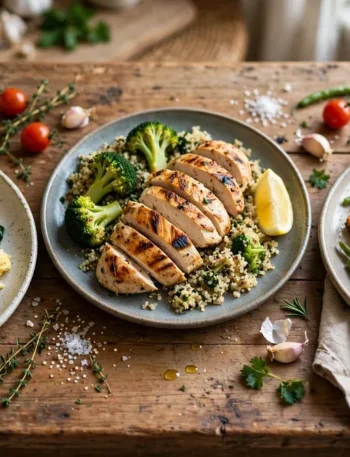
| Lunch | 5 oz cooked chicken breast; 3/4 cup cooked quinoa; 2 cups raw spinach; 1 oz feta cheese, crumbled; 1 teaspoon olive oil | about 529 |
| Dinner | 1 cup cooked lentils; 1/2 cup cooked brown rice; 1 medium carrot; 2 teaspoons olive oil | about 445 |
| Snacks | 3/4 cup plain nonfat Greek yogurt; 1/2 cup blueberries | about 142 |
Day 1 total: about 1499 calories, 121 g protein, 160 g carbohydrate, 43 g fat, 31 g fiber.
Day 2
| Meal | Foods and portions | Calories |
|---|---|---|
| Breakfast | 1/2 cup dry rolled oats, cooked; 3/4 cup plain low-fat Greek yogurt; 1 cup strawberries; 1 tablespoon honey | about 388 |
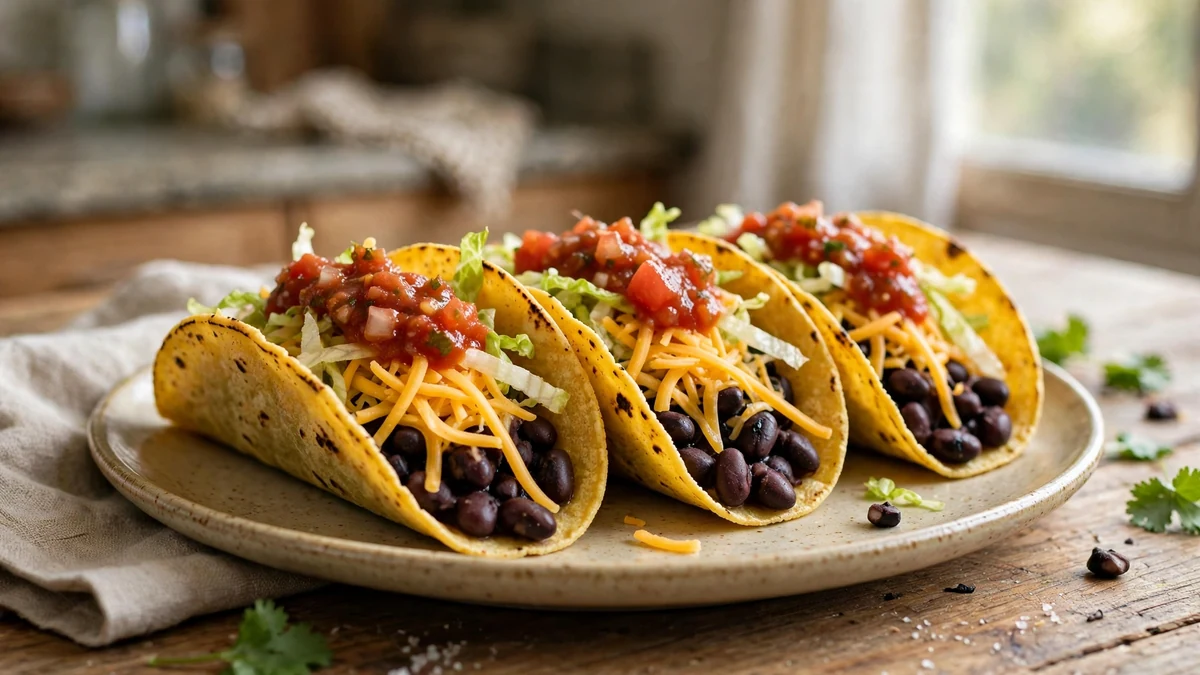
| Lunch | 1 cup cooked black beans; 2 corn tortillas; 1 oz cheddar cheese; 1/4 cup salsa; 2 cups green leaf lettuce | about 485 |
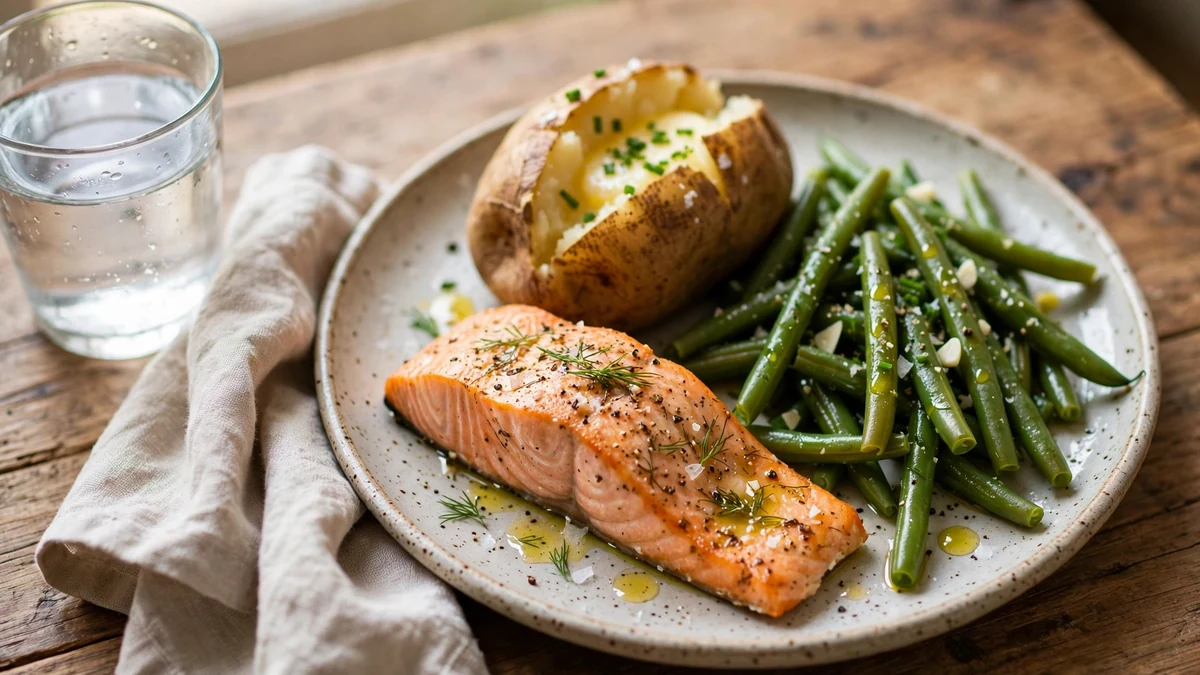
| Dinner | 4 oz cooked salmon; 1 medium baked potato; 1 cup cooked green beans; 1 teaspoon olive oil | about 440 |
| Snacks | 1/2 cup low-fat cottage cheese; 1/2 medium pear; 1/2 oz walnuts (about 1 tablespoon chopped) | about 224 |
Day 2 total: about 1536 calories, 102 g protein, 196 g carbohydrate, 43 g fat, 38 g fiber.
Day 3
| Meal | Foods and portions | Calories |
|---|---|---|
| Breakfast | 2 slices whole-wheat toast; 2 tablespoons peanut butter; 1 medium banana | about 458 |
| Lunch | 1 can tuna in water, drained; 1 whole-wheat pita; 1/2 cucumber, sliced; 1 medium tomato; 2 tablespoons hummus | about 412 |
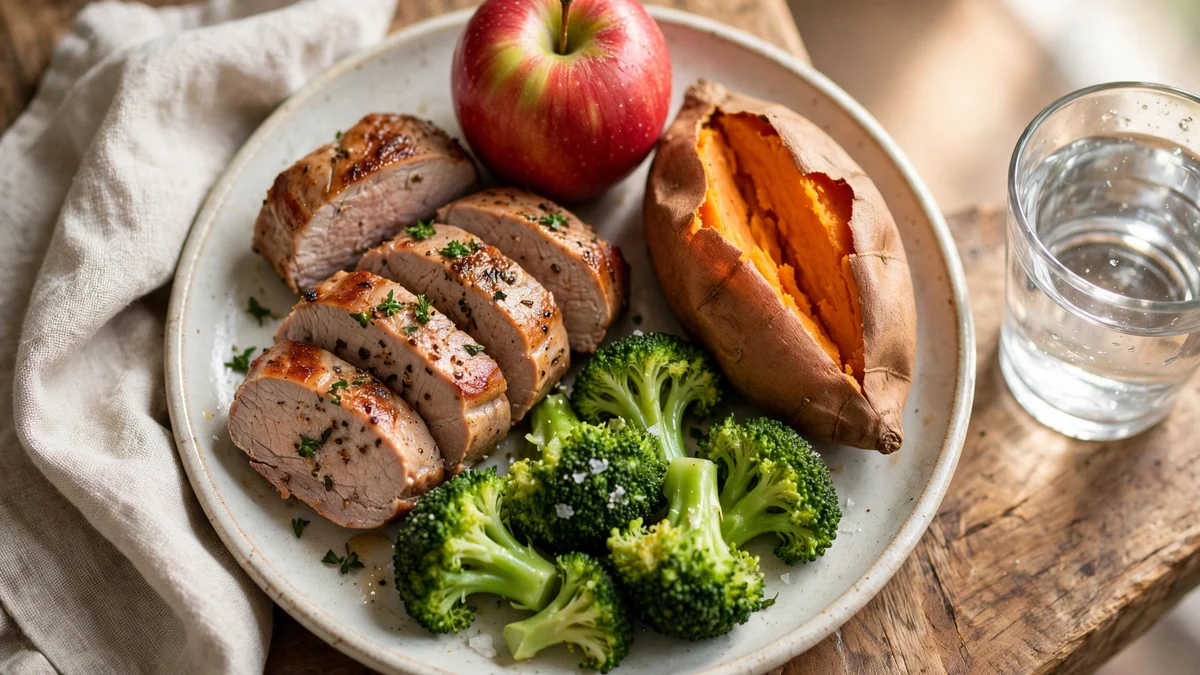
| Dinner | 5 oz cooked pork tenderloin; 1 medium baked sweet potato; 1 cup cooked broccoli; 1 medium apple | about 455 |
| Snacks | 3/4 cup skim milk; 3 cups air-popped popcorn | about 157 |
Day 3 total: about 1481 calories, 107 g protein, 199 g carbohydrate, 34 g fat, 32 g fiber.
Day 4
| Meal | Foods and portions | Calories |
|---|---|---|
| Breakfast | 1 cup plain nonfat Greek yogurt; 1/4 cup granola; 1 cup raspberries | about 355 |
| Lunch | 100 g tempeh (about 3 1/2 oz); 3/4 cup cooked brown rice; 1 cup cooked kale; 1 teaspoon olive oil | about 460 |
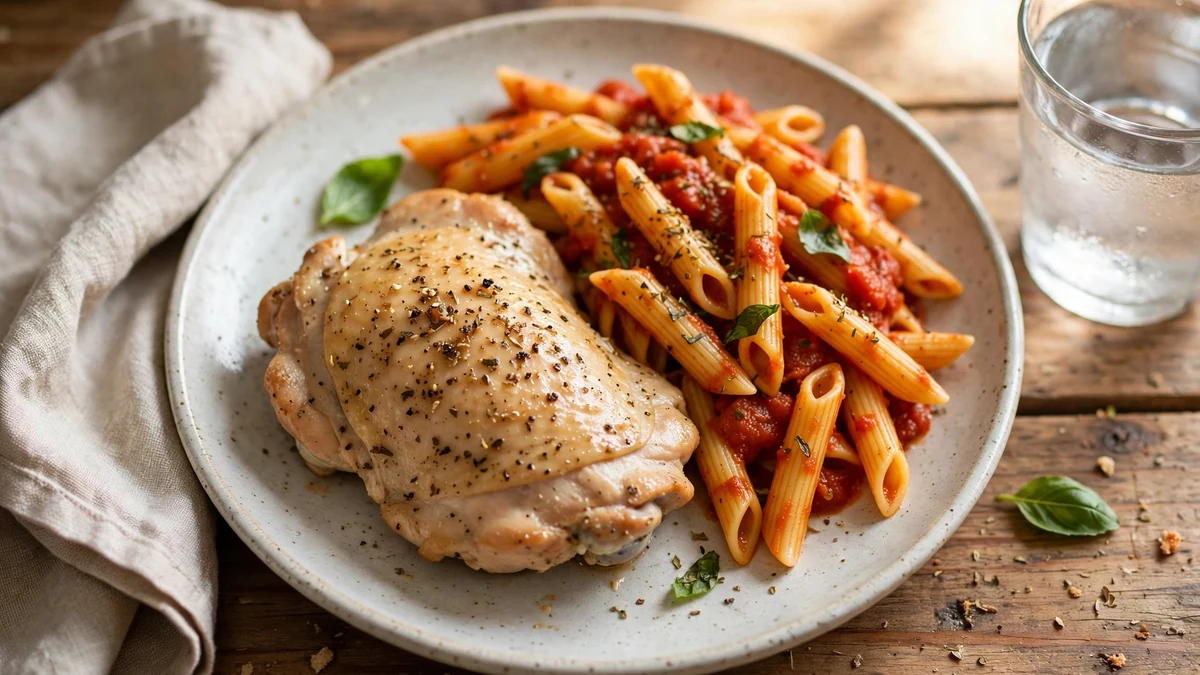
| Dinner | 5 oz cooked skinless chicken thigh; 1 cup cooked pasta; 1/2 cup marinara sauce | about 538 |
| Snacks | 1 medium apple; 1/2 oz almonds (about 12 almonds) | about 176 |
Day 4 total: about 1529 calories, 107 g protein, 170 g carbohydrate, 49 g fat, 27 g fiber.
Day 5
| Meal | Foods and portions | Calories |
|---|---|---|
| Breakfast | 1/2 cup dry rolled oats, cooked; 1 cup skim milk; 1 cup blueberries; 1/2 oz walnuts (about 1 tablespoon chopped) | about 413 |
| Lunch | 1 cup cooked chickpeas; 1 cup cooked bulgur; 2 cups raw spinach; 1 teaspoon olive oil | about 474 |
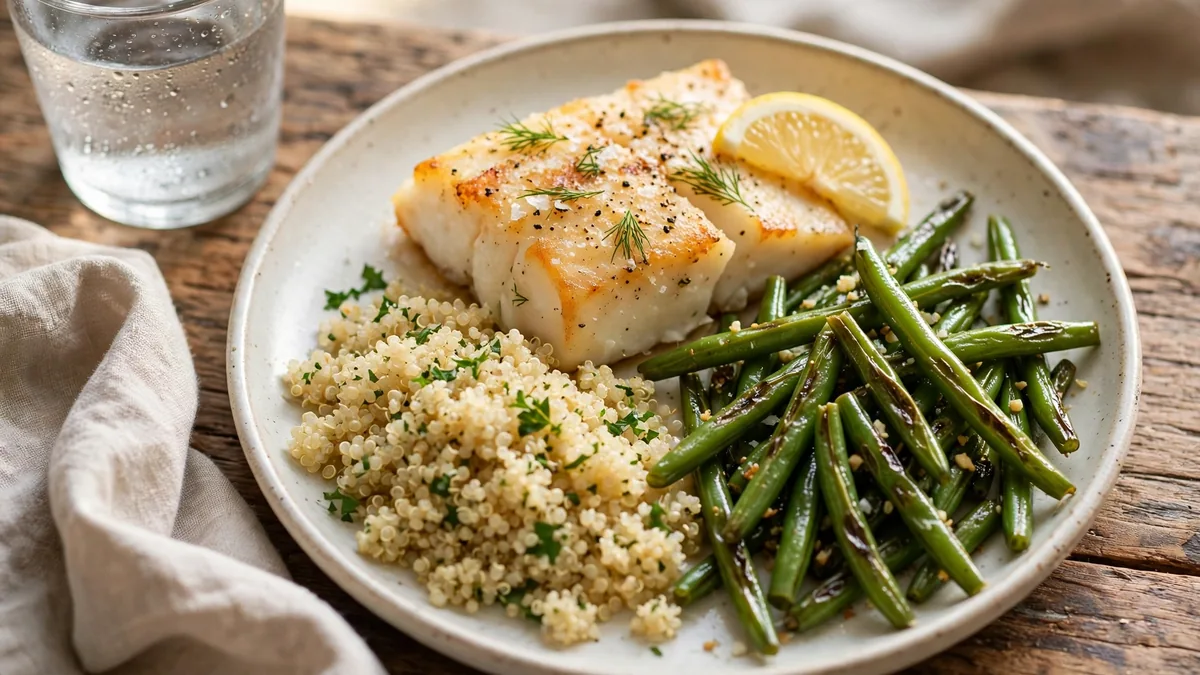
| Dinner | 6 oz cooked cod; 1 cup cooked quinoa; 1 cup cooked green beans | about 444 |
| Snacks | 1 large egg, hard-boiled; 1 orange | about 139 |
Day 5 total: about 1470 calories, 96 g protein, 208 g carbohydrate, 33 g fat, 43 g fiber.
Day 6
| Meal | Foods and portions | Calories |
|---|---|---|
| Breakfast | 2 large eggs, cooked any style; 1/2 avocado; 1 slice whole-wheat toast; 1 medium tomato, sliced | about 378 |
| Lunch | 1 cup cooked kidney beans; 3/4 cup cooked white rice; 1/4 cup salsa; 1/2 oz cheddar cheese | about 481 |
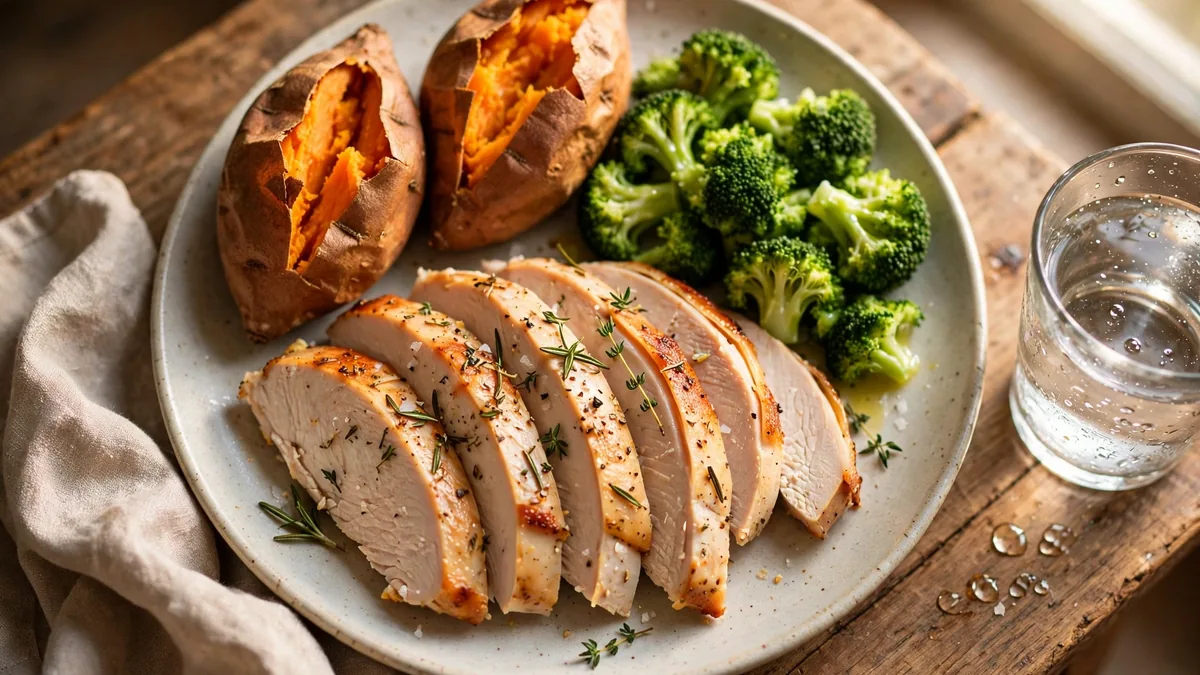
| Dinner | 5 oz cooked turkey breast; 2 medium baked sweet potatoes; 1/2 cup cooked broccoli | about 441 |
| Snacks | 3/4 cup plain low-fat Greek yogurt; 1 cup strawberries | about 173 |
Day 6 total: about 1473 calories, 110 g protein, 181 g carbohydrate, 36 g fat, 36 g fiber.
Day 7
| Meal | Foods and portions | Calories |
|---|---|---|
| Breakfast | 1 cup low-fat cottage cheese; 1 medium banana; 1 slice whole-wheat toast; 1 tablespoon honey | about 412 |
| Lunch | 5 oz cooked shrimp; 1 cup cooked pasta; 1/2 cup marinara sauce; 2 cups green leaf lettuce | about 463 |
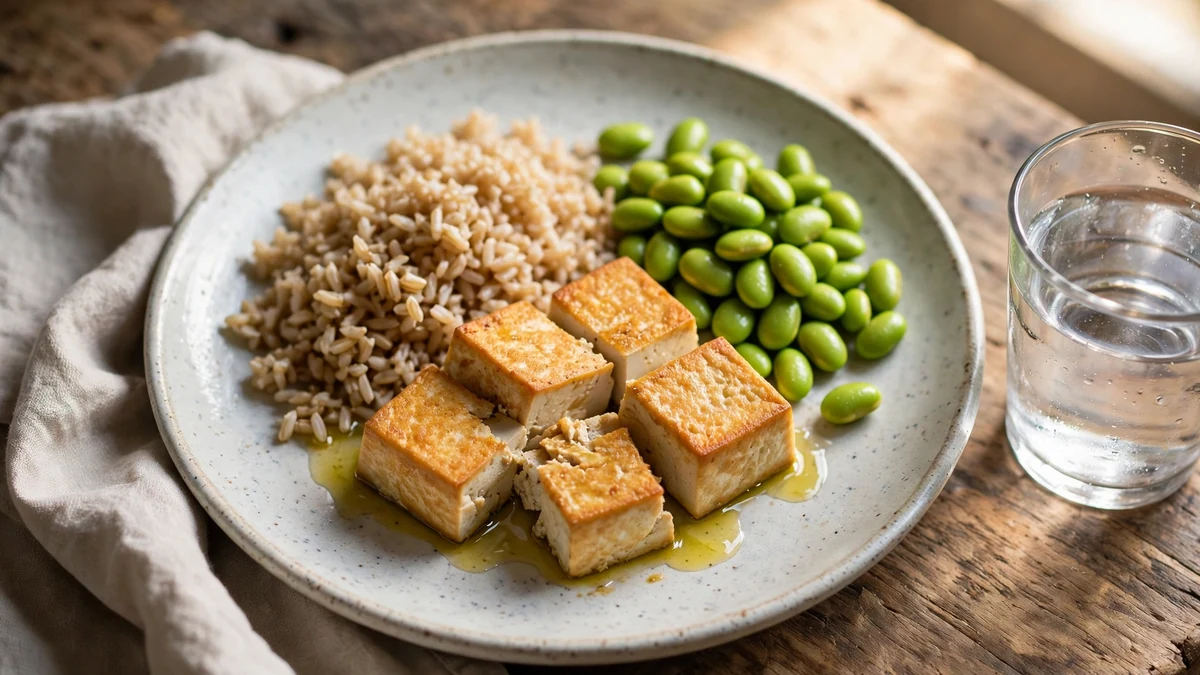
| Dinner | 1 portion firm tofu (125 g, about 4 1/2 oz); 3/4 cup cooked brown rice; 1/2 cup shelled edamame; 1 teaspoon olive oil | about 485 |
| Snacks | 1 cup grapes; 1 oz part-skim mozzarella | about 187 |
Day 7 total: about 1548 calories, 119 g protein, 196 g carbohydrate, 36 g fat, 21 g fiber.
Weeks 2 and 3: how to rotate this 21 day meal plan
Weeks 2 and 3 repeat the pattern of the core week, not the identical menus. Every day keeps the same shape: a protein breakfast, a lunch built on a lean protein or legumes with a whole grain, a dinner with a protein, a grain or potato, and vegetables, and one snack. The outline below is a pattern guide with no separate calorie counts; keep core-week portions for every meal and the days land at the same approximate level.
Sample rotation week (use for week 2, then vary again for week 3)
| Day | Breakfast | Lunch | Dinner | Snack |
|---|---|---|---|---|
| Day 1 | Oats, yogurt, strawberries, honey | Black bean tacos, cheddar, salsa | Salmon, baked potato, green beans | Cottage cheese, pear, walnuts |
| Day 2 | Toast, peanut butter, banana | Tuna pita, hummus, vegetables | Pork, sweet potato, broccoli, apple | Milk and popcorn |
| Day 3 | Yogurt, granola, raspberries | Tempeh, brown rice, kale | Chicken thigh pasta, marinara | Apple and almonds |
| Day 4 | Oats, milk, blueberries, walnuts | Chickpea bulgur bowl, spinach | Cod, quinoa, green beans | Egg and an orange |
| Day 5 | Eggs, toast, milk, orange | Chicken, quinoa, spinach, feta | Lentils, brown rice, carrots | Yogurt and blueberries |
| Day 6 | Cottage cheese, banana, toast, honey | Shrimp pasta, marinara, greens | Tofu, brown rice, edamame | Grapes and mozzarella |
| Day 7 | Eggs, avocado, toast, tomato | Kidney beans, rice, salsa, cheddar | Turkey, sweet potatoes, broccoli | Yogurt and strawberries |
For week 3, repeat the core week or the rotation week, whichever you preferred, and change two or three proteins and fruits. By the third week most people no longer need to measure the familiar meals; keep measuring the calorie-dense foods, such as oils, nuts, cheese, and granola, because those portions drift first.
Grocery list
This list covers the full 7-day core week for one person, following the portions in the plan.
Produce
- Apples, bananas, oranges, pears, strawberries, raspberries, and grapes
- Blueberries (fresh or frozen)
- Spinach and green leaf lettuce
- Broccoli, green beans, kale, and carrots
- Cucumbers, tomatoes, and avocados
- Sweet potatoes and white potatoes
Meat and seafood
- Chicken breast and skinless chicken thighs
- Turkey breast
- Salmon fillets and cod fillets
- Shrimp
- Pork tenderloin
- Canned tuna in water
Dairy and eggs
- Large eggs
- Plain nonfat Greek yogurt and plain low-fat Greek yogurt
- Low-fat cottage cheese
- Skim milk
- Cheddar cheese, feta cheese, and part-skim mozzarella
Pantry
- Rolled oats and granola
- Brown rice, white rice, quinoa, bulgur, and pasta
- Lentils, black beans, kidney beans, and chickpeas (dry or canned, rinsed)
- Tempeh, firm tofu, and shelled edamame
- Peanut butter, almonds, and walnuts
- Olive oil, salsa, marinara sauce, hummus, and honey
- Popcorn for air-popping
Frozen
- Frozen shelled edamame, if not bought fresh
- Frozen berries as a backup for fresh fruit
Bakery
- Whole-wheat bread
- Whole-wheat pita
- Corn tortillas (usually in the bread or international aisle)
Meal prep tips
- Batch-cook two proteins and two grains every Sunday; the rotation weeks are built from the same base.
- Keep a running list of the meals your household liked, and build week 3 around those.
- Freeze extra portions of lentil and bean dishes in week 1 for busy days in weeks 2 and 3.
- Portion oils, nuts, cheese, and granola rather than serving from the container; these drift first.
- Restock produce twice a week so salads and fruit stay fresh across all three weeks.
Easy swaps
- Swap salmon for cod or shrimp in the same portion range on any fish day.
- Swap chicken and turkey for each other, ounce for ounce.
- Swap lentils, black beans, kidney beans, and chickpeas for each other in equal portions.
- Swap quinoa, bulgur, and brown rice for each other, cup for cup.
- Swap cottage cheese for the same amount of plain Greek yogurt.
- Swap any berry for another berry, cup for cup, and any nut for another nut, ounce for ounce.
How to adjust the calories safely
To add about 200 to 300 calories a day, for men, taller or more active people, or anyone losing faster than about 1 to 2 pounds a week, use foods already in the plan: 1 oz of walnuts (about 183 calories) plus a hard-boiled egg (about 78 calories); or 2 tablespoons of peanut butter (about 191 calories) at breakfast; or 1 oz of almonds (about 162 calories) plus 1 cup of skim milk (about 86 calories).
Never go below 1,200 calories a day for women or 1,500 calories a day for men without medical supervision. If hunger grows across the three weeks, raise the level slightly rather than white-knuckling through the final week.
Common mistakes
- Front-loading all the variety into week 1 and eating plain repeats by week 3. Spread the interesting meals across the block.
- Letting portions drift in week 3 because the meals feel familiar. Keep measuring oils, nuts, cheese, and grains.
- Treating a flat week on the scale as failure. Weight change is uneven over three weeks; judge the full block.
- Skipping the snack to bank calories for dinner. The day is designed as four eating times.
- Quitting after one off-plan day in week 2. Return at the next meal; the block is long enough to absorb it.
Pair it with a workout
Across three weeks, build movement gradually: daily walks, plus two short strength sessions a week from our Exercise and Workouts category, adding a little time or a third session in week 3 if recovery feels good. Stop any exercise that causes pain, dizziness, or chest pain.
Frequently asked questions
How much weight will I lose in 21 days?
No plan can promise a number. A 1,500 calorie level lines up with gradual loss of about 1 to 2 pounds a week for many adults, but your own change depends on your size, activity, and starting point, and week-to-week changes are uneven.
Do I have to cook different meals in weeks 2 and 3?
No. You can repeat the core week three times. The rotation guide is there because most people stick with a longer plan better when a few proteins, grains, and fruits change each week.
What if my weight does not change in week 2?
That is common and not a reason to cut calories further. Check the drift-prone portions first, oils, nuts, cheese, and granola, keep the pattern for the full three weeks, and talk with a registered dietitian if nothing has changed after the block ends.
Can I eat out during the 21 days?
Yes, occasionally. Choose a meal that matches the pattern, a lean protein, vegetables, and a measured grain or potato portion, and return to the plan at the next meal. Frequent restaurant meals make the calorie level hard to hold.
What should I do on day 22?
Keep the pattern and pick your next step: repeat the block, move to the 28-day plan, or take a planned period at a higher maintenance-style level before another block. Use our calorie calculator if you want to recheck your level.
Can men follow this plan?
Yes, with the additions in the adjustment section every day. At 1,500 calories this plan sits at the men’s minimum, and most men need the extra 200 to 300 calories to make it a sensible level.
Sources and further reading
- USDA FoodData Central, the source for all food values used here: fdc.nal.usda.gov
- Dietary Guidelines for Americans: dietaryguidelines.gov
- MyPlate, meal building guidance: myplate.gov
- Centers for Disease Control and Prevention, healthy weight guidance: cdc.gov
- MedlinePlus, plain-language nutrition background: medlineplus.gov
This article is for general educational purposes only and is not medical, nutrition, or fitness advice. Talk with your doctor or a registered dietitian before changing your diet or starting an exercise program.