Prints just the plan, like a recipe card.
Last updated: November 22, 2026.
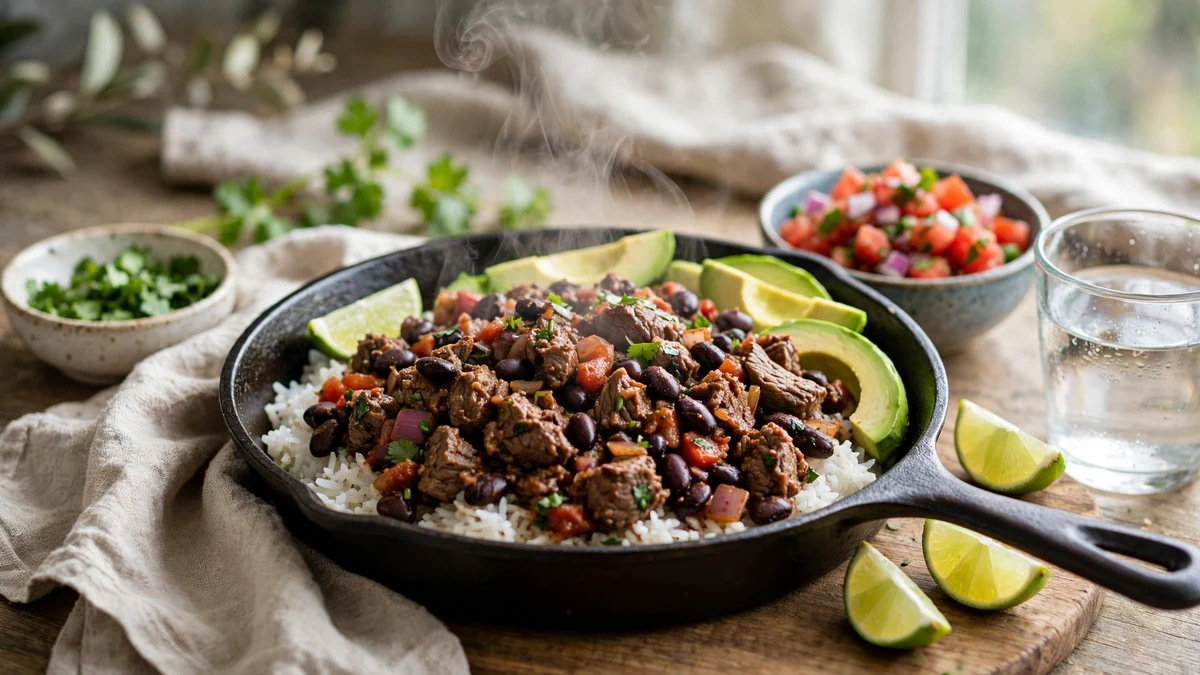
This 30 minute meals meal plan is a full week of breakfasts, lunches, dinners, and snacks at about 1,600 calories a day where every dinner is on the table in 30 minutes or less, and breakfasts and lunches take 10 minutes or less. The dinners use fast methods on purpose: shrimp pasta, pan-seared salmon with a microwaved sweet potato, a beef and black bean skillet, cod with pasta, pork medallions with quinoa, a tofu and broccoli rice bowl, and turkey tacos. The week averages about 120 grams of protein a day. Every number was calculated from USDA FoodData Central values. For many adults, 1,600 calories a day lines up with gradual weight loss of about 1 to 2 pounds a week. More plans organized by how you live are in our By Lifestyle diet plans.
Who this plan is for, and who should not follow it
This plan is for adults who cook at home but have half an hour at most on weeknights: people getting home from work, parents between activities, and anyone who orders takeout mainly because cooking feels slow. If you can boil pasta water and work one skillet, you can cook every dinner here.
This plan is not medical advice. Talk with your doctor or a registered dietitian before following it, especially if you have diabetes, kidney disease, or another condition affected by food, or if you take medication that food or weight change can affect. It is not for children or teenagers, and it is not for anyone who is pregnant or breastfeeding. At about 1,600 calories a day this plan suits many women and smaller men; men who are tall or active should use the adjustment section, and no one should eat below 1,200 calories a day (women) or 1,500 calories a day (men).
If you have a history of disordered eating, talk with a doctor or a registered dietitian before following any diet plan. For eating disorder support in the US, visit the National Alliance for Eating Disorders at allianceforeatingdisorders.com.
Plan overview
| Daily calorie target | About 1600 calories |
| Average protein per day | About 120 g |
| Average carbohydrate per day | About 185 g |
| Average fat per day | About 47 g |
| Average fiber per day | About 35 g |
| Meals per day | 4 (breakfast, lunch, dinner, and snacks) |
The pattern is a fast breakfast, a lunch that assembles in minutes, a one pan dinner in 30 minutes or less, and one planned snack. Microwave rice and quinoa pouches, canned beans, and quick vegetables are used deliberately; they are how real 30 minute dinners happen.
How this 30 minute meals meal plan keeps dinner fast
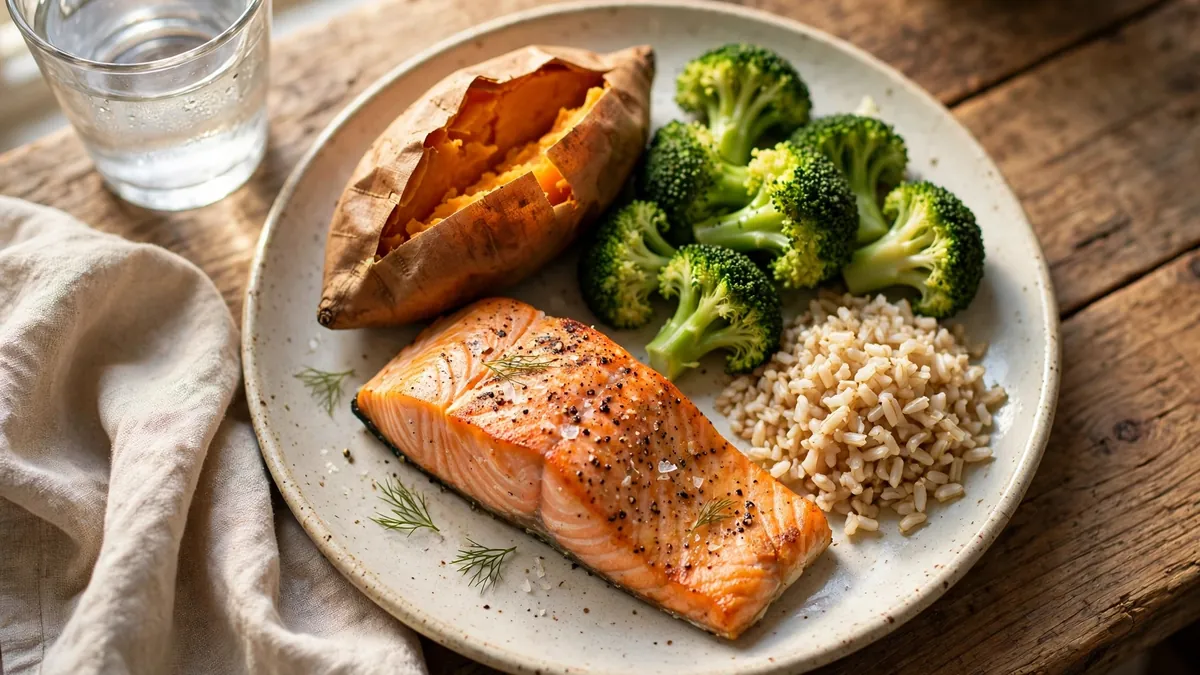
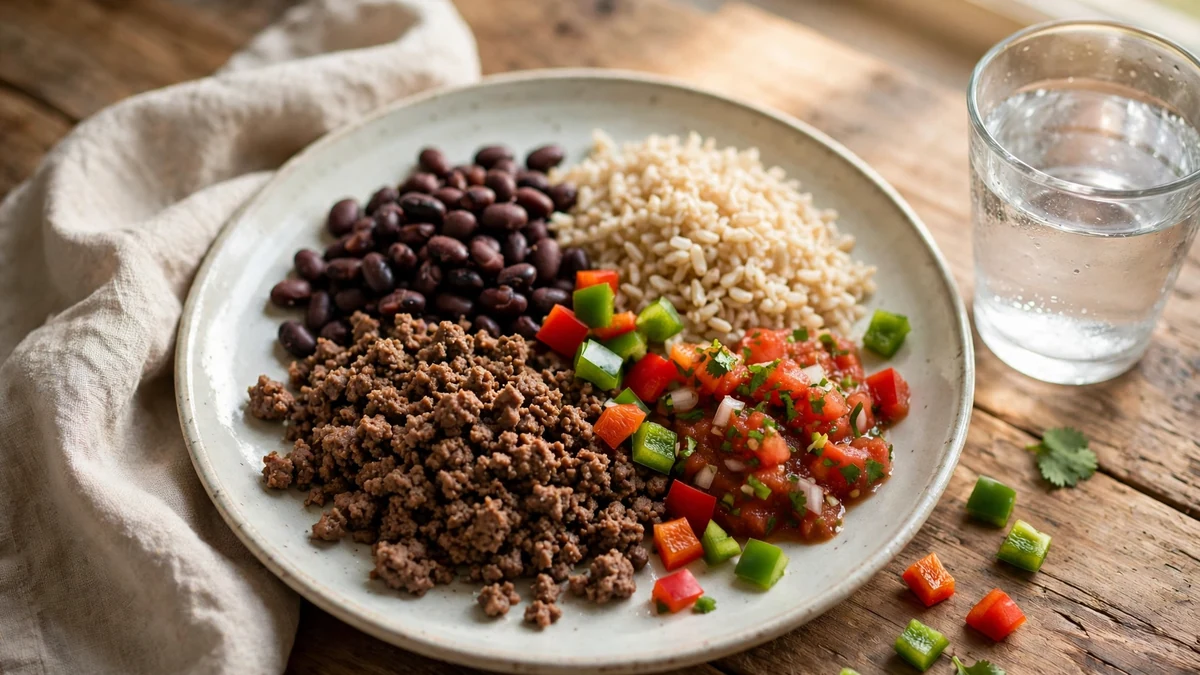
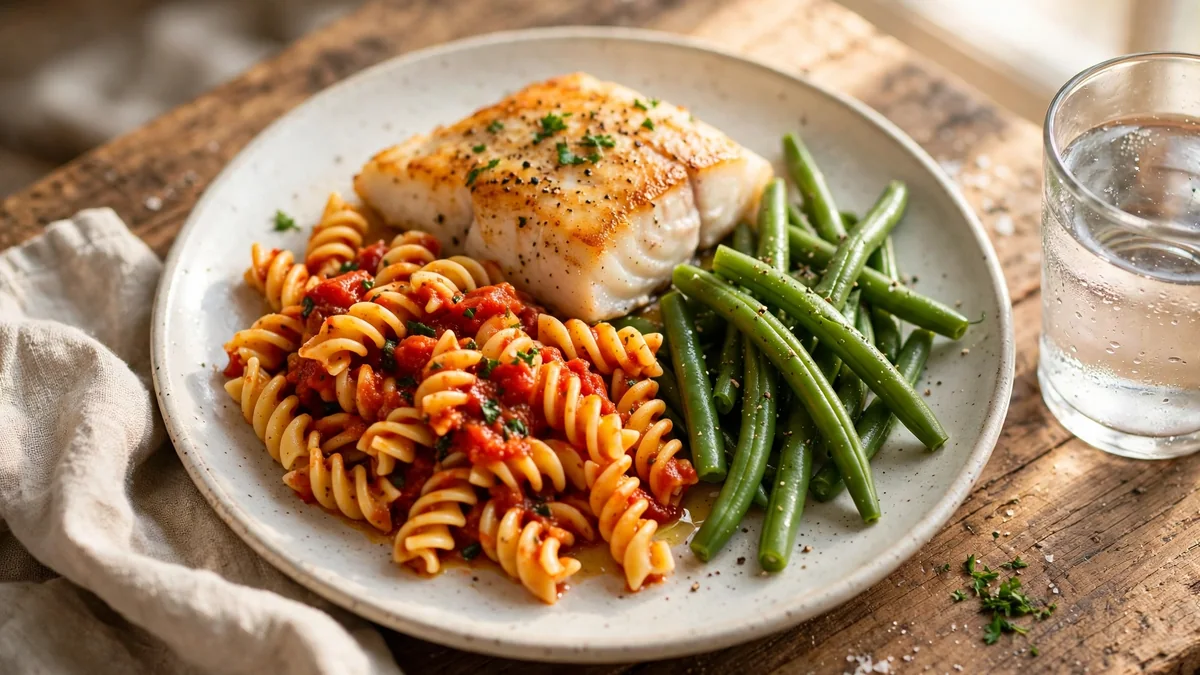
Each dinner names its shortcut. Day 1 shrimp pasta takes about 20 minutes; shrimp cook in 3 to 4 minutes and the spinach wilts in the hot pasta. Day 2 salmon takes about 25 minutes, searing while the sweet potato microwaves and the broccoli steams. Day 3 is a 20 minute beef and black bean skillet over a microwave rice pouch. Day 4 cod with pasta and marinara takes about 25 minutes. Day 5 pork medallions sear in about 15 minutes, with quinoa and sauteed kale. Day 6 tofu and broccoli over rice and day 7 turkey tacos each take about 20 minutes. Nothing needs marinating, breading, or a second pan. If you want to check whether 1,600 calories is the right level for you, our calorie calculator gives a general estimate to discuss with your doctor or dietitian.
The 7-day meal plan
Portions are given in US household measures. Calories for each meal and day were calculated from USDA FoodData Central values for the exact foods and amounts listed. Start the pasta or rice first at every dinner, then cook the protein while it finishes. Season freely with dried herbs, garlic, cumin, smoked paprika, and black pepper. Cook poultry to 165 degrees F and ground beef to 160 degrees F.
Day 1
| Meal | What to eat | Calories |
|---|---|---|
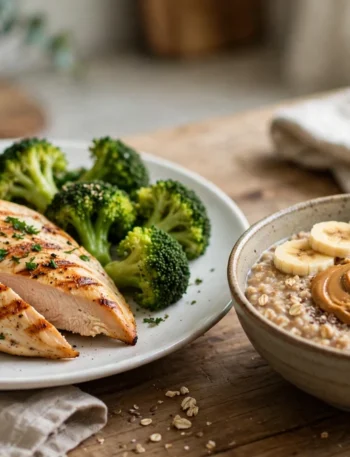
| Breakfast | 1/2 cup dry rolled oats; 1 cup skim milk; 1 medium banana; 1 tablespoon peanut butter | about 438 |
| Lunch | 1 can tuna in water, drained; 2 slices whole-wheat bread; 2 cups green leaf lettuce; 1 medium tomato; 2 tablespoons hummus | about 401 |
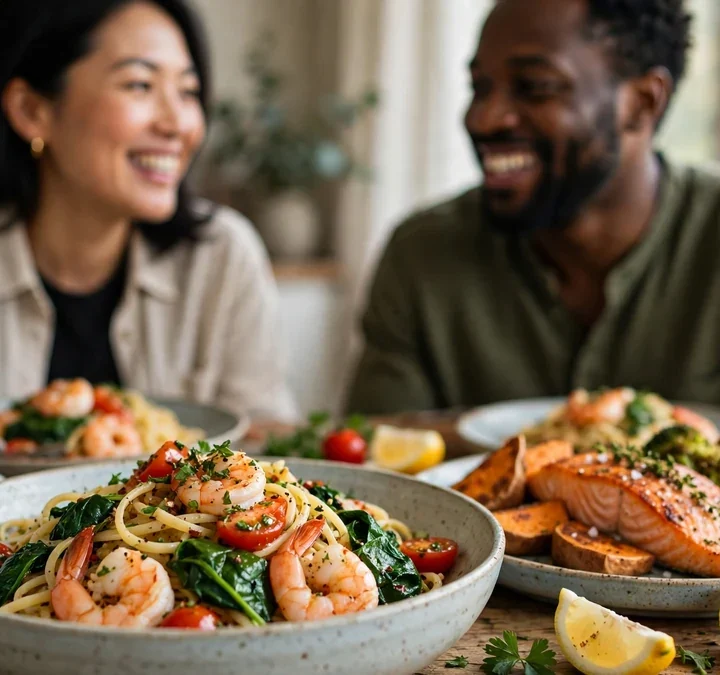
| Dinner | 4 oz shrimp; 1 cup cooked pasta; 2 cups raw spinach; 1 medium tomato; 2 teaspoons olive oil; 1 oz feta cheese | about 545 |
| Snacks | 3/4 cup plain nonfat Greek yogurt; 1 cup strawberries; 1 tablespoon honey | about 213 |
Day 1 total: about 1597 calories, 117 g protein, 198 g carbohydrate, 40 g fat, 24 g fiber.
Day 2
| Meal | What to eat | Calories |
|---|---|---|
| Breakfast | 2 large eggs; 1 slice whole-wheat toast; 1/2 avocado; 1 orange | about 417 |
| Lunch | 5 oz cooked chicken breast; 1/2 cup cooked quinoa; 1/2 cucumber; 1 medium tomato; 1 teaspoon olive oil; 1 oz feta cheese | about 497 |
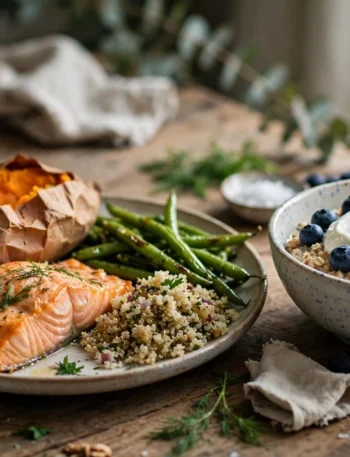
| Dinner | 5 oz salmon fillet; 1 medium sweet potato, microwaved; 1 cup broccoli florets, steamed; 1/2 cup cooked brown rice (microwave pouch) | about 530 |
| Snacks | 1/2 cup low-fat cottage cheese; 1 medium pear | about 183 |
Day 2 total: about 1627 calories, 132 g protein, 155 g carbohydrate, 55 g fat, 31 g fiber.
Day 3
| Meal | What to eat | Calories |
|---|---|---|
| Breakfast | 1 cup plain low-fat Greek yogurt; 1/4 cup granola; 1 cup blueberries | about 410 |
| Lunch | 1 cup cooked lentils (microwave pouch or canned, rinsed); 1 cup chopped carrots; 1 oz feta cheese; 2 cups raw spinach; 1 teaspoon olive oil; 1 slice whole-wheat bread | about 487 |
| Dinner | 4 oz lean ground beef (90% lean); 1/2 cup canned black beans, drained and rinsed; 1/2 cup cooked brown rice (microwave pouch); 1 medium bell pepper, chopped; 1/4 cup salsa | about 515 |
| Snacks | 1 medium apple; 1/2 oz almonds (about 1 tablespoon) | about 176 |
Day 3 total: about 1588 calories, 103 g protein, 197 g carbohydrate, 48 g fat, 47 g fiber.
Day 4
| Meal | What to eat | Calories |
|---|---|---|
| Breakfast | 1/2 cup dry rolled oats; 3/4 cup plain nonfat Greek yogurt; 1 cup raspberries; 1/2 oz walnuts (about 2 tablespoons chopped) | about 407 |
| Lunch | 5 oz cooked turkey breast; 1 whole-wheat pita; 1/2 avocado; 2 cups green leaf lettuce | about 507 |
| Dinner | 6 oz cod fillet; 1 cup cooked pasta; 1/2 cup marinara sauce; 1 cup green beans, steamed | about 506 |
| Snacks | 3 cups air-popped popcorn; 1 cup skim milk | about 179 |
Day 4 total: about 1599 calories, 140 g protein, 187 g carbohydrate, 35 g fat, 35 g fiber.
Day 5
| Meal | What to eat | Calories |
|---|---|---|
| Breakfast | 1 large egg; 2 large egg whites; 1 slice whole-wheat toast; 1 oz cheddar cheese; 1 cup skim milk; 1 cup strawberries | about 459 |
| Lunch | 1 cup canned black beans, drained and rinsed; 2 corn tortillas; 1/2 avocado; 1/4 cup salsa | about 479 |
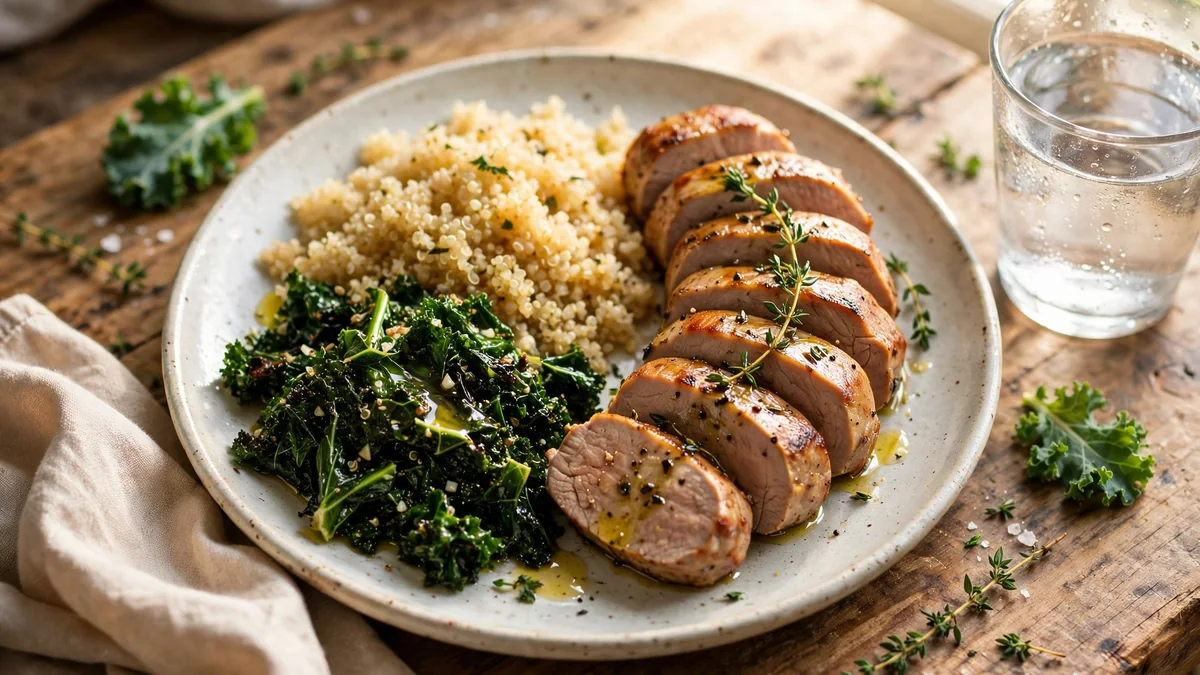
| Dinner | 5 oz pork tenderloin, sliced into medallions; 1 cup cooked quinoa; 1 cup kale, sauteed; 1 teaspoon olive oil | about 522 |
| Snacks | 3/4 cup plain nonfat Greek yogurt; 1 cup grapes | about 204 |
Day 5 total: about 1665 calories, 126 g protein, 193 g carbohydrate, 46 g fat, 39 g fiber.
Day 6
| Meal | What to eat | Calories |
|---|---|---|
| Breakfast | 1 cup low-fat cottage cheese; 1 medium apple; 1 oz walnuts (about 1/4 cup) | about 440 |
| Lunch | 4 oz cooked chicken thigh; 1 cup cooked bulgur; 1/2 cucumber; 1 medium tomato; 1 teaspoon olive oil | about 430 |
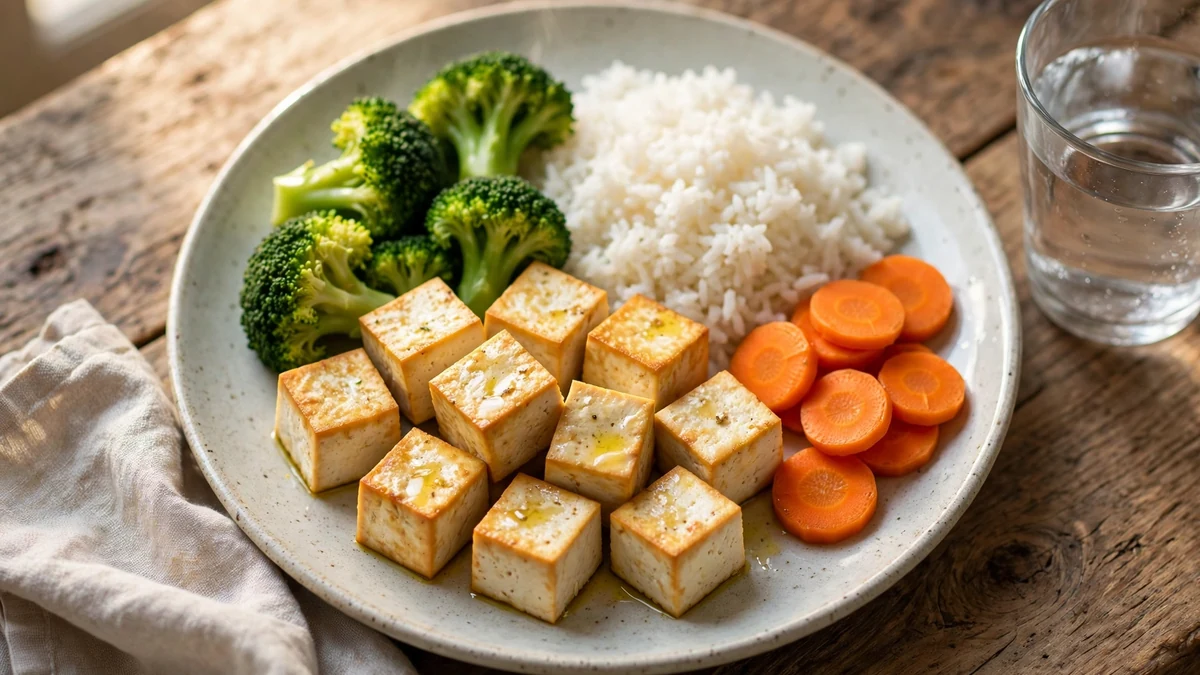
| Dinner | 125 g firm tofu (about 4 1/2 oz), cubed; 1 cup cooked white rice; 1 cup broccoli florets; 1 medium carrot, sliced; 1 teaspoon olive oil | about 540 |
| Snacks | 1 medium banana; 3/4 cup skim milk | about 169 |
Day 6 total: about 1580 calories, 106 g protein, 186 g carbohydrate, 53 g fat, 30 g fiber.
Day 7
| Meal | What to eat | Calories |
|---|---|---|
| Breakfast | 1/2 cup dry rolled oats; 1 cup skim milk; 1 cup blueberries; 1/2 oz almonds (about 1 tablespoon) | about 403 |
| Lunch | 4 oz cooked salmon; 2 slices whole-wheat bread; 2 cups green leaf lettuce; 1/2 avocado | about 498 |
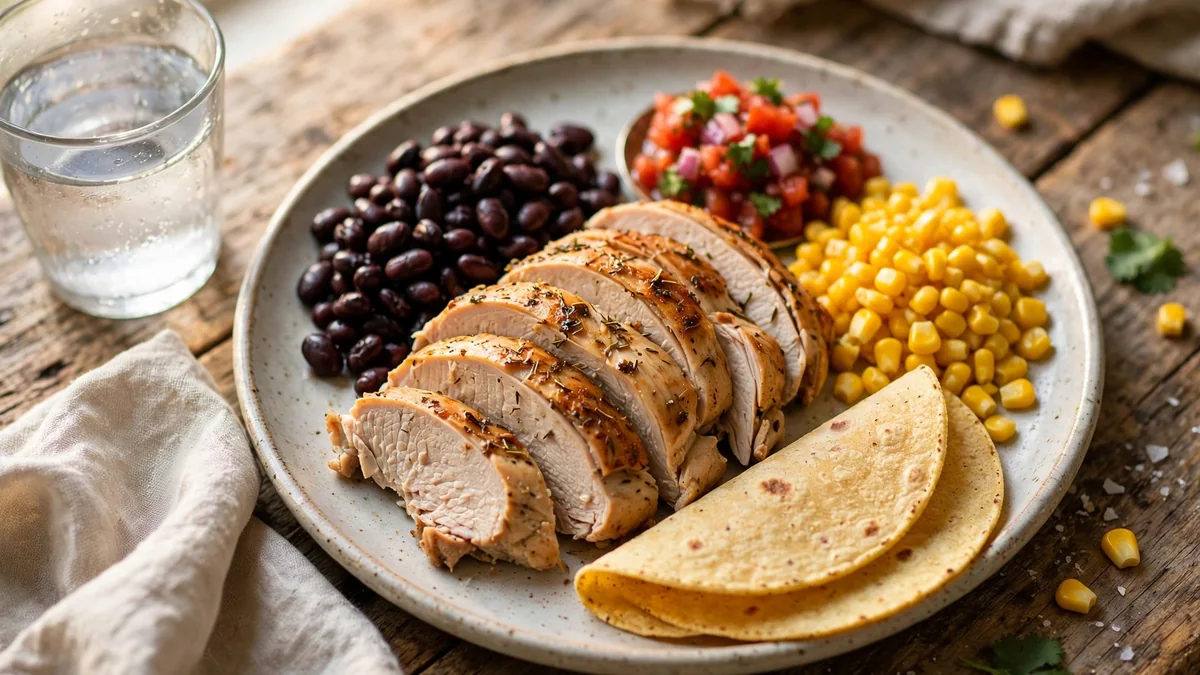
| Dinner | 5 oz ground or sliced turkey breast, cooked in the skillet; 2 corn tortillas; 1/2 cup canned black beans, drained and rinsed; 1/4 cup salsa; about 2/3 cup cooked corn | about 550 |
| Snacks | 1 oz dark chocolate (70% cacao) | about 167 |
Day 7 total: about 1618 calories, 117 g protein, 181 g carbohydrate, 52 g fat, 37 g fiber.
Grocery list
This list covers the full week for one person. Buy microwave rice and quinoa pouches for the fast dinners, and canned beans so no soaking or long simmering is needed.
Produce
- Sweet potatoes
- Broccoli and green beans
- Baby spinach, green leaf lettuce, and kale
- Carrots, tomatoes, bell peppers, and cucumbers
- Strawberries, raspberries, blueberries, and grapes
- Apples, bananas, pears, and oranges
- Avocados
Meat and seafood
- Chicken breast and chicken thighs
- Turkey breast
- Salmon fillets and cod fillets
- Shrimp
- Pork tenderloin
- Lean ground beef (90% lean)
- Canned tuna in water
Dairy and eggs
- Large eggs and egg whites
- Plain nonfat Greek yogurt and plain low-fat Greek yogurt
- Low-fat cottage cheese
- Cheddar cheese and feta cheese
- Skim milk
Pantry
- Rolled oats and granola
- Brown rice, white rice, quinoa, bulgur, and pasta (microwave pouches for the grains where you can)
- Canned black beans, plus lentils
- Marinara sauce and salsa
- Firm tofu
- Hummus, peanut butter, and olive oil
- Almonds and walnuts
- Honey and dark chocolate (70% cacao)
- Popcorn for air-popping
Frozen
- Frozen cooked corn
- Frozen broccoli and green beans as backup
Bakery
- Whole-wheat bread
- Whole-wheat pita
- Corn tortillas
Meal prep tips
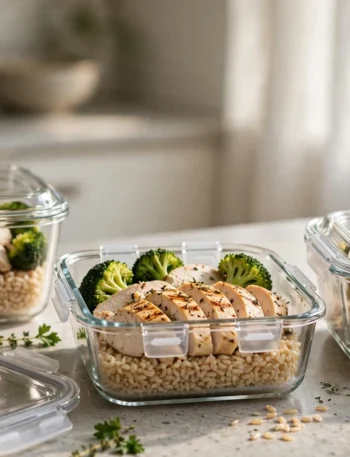
- This plan needs almost no advance prep, but washing the greens and vegetables on shopping day saves a few minutes every night.
- Keep microwave rice and quinoa pouches in the pantry. They are the difference between a 20 minute dinner and a 45 minute one.
- Set out the dinner ingredients before you start cooking. With fast dinners, the cooking is quicker than the gathering.
- Double the day 3 skillet or the day 7 taco filling when you cook it, and lunch the next day is already handled.
Easy swaps
- Swap the fast proteins freely: shrimp, cod, salmon, chicken, and turkey all cook in under 15 minutes in a skillet, in the same portion range.
- Swap quinoa, bulgur, brown rice, and white rice for each other in equal portions, including the microwave pouches.
- Swap black beans, kidney beans, and lentils for each other in equal portions in the skillet and the lunches.
- Swap Greek yogurt and cottage cheese for each other in the breakfasts and snacks.
- Swap the tofu dinner for 100 g of tempeh plus a teaspoon less olive oil if you prefer a firmer texture.
- Swap any dinner vegetable for another quick one, broccoli for green beans or kale, cup for cup.
How to adjust the calories safely
If this plan leaves you persistently hungry, low on energy, or losing faster than about 2 pounds a week, add food. To add roughly 200 to 300 calories a day using foods already in the plan, choose one: 1 oz of almonds (about 162 calories) plus a medium orange (about 62 calories); or 1/2 cup of cooked quinoa (about 111 calories) added to a dinner and 2 tablespoons of hummus (about 53 calories) with the snack, plus 1 cup of skim milk (about 86 calories) during the day.
Never go below 1,200 calories a day for women or 1,500 calories a day for men. Men following this 1,600 calorie plan are close to their floor; larger or active men should use the additions above every day.
Common mistakes
- Choosing dinners that need marinating, breading, or a long oven roast on a weeknight, then giving up and ordering in. Every dinner here is a one pan or one pot meal.
- Starting the protein before the pasta or rice. The grain takes the longest; start it first and the whole dinner lands together.
- Overcooking shrimp and fish while waiting for sides. Shrimp need 3 to 4 minutes; cook them last.
- Skipping the snack to save time and arriving at dinner ravenous. The snack takes two minutes and is sized into the day.
- Letting the fast plan drift into fast food. The 30 minutes here is home cooking time, and the portions and numbers only hold for the foods listed.
Pair it with a workout
A 30 minute dinner leaves the rest of the evening open, which pairs naturally with a 20 to 30 minute walk or a short beginner strength session. Pair this plan with the walking plans and beginner strength routines in our Exercise and Workouts category, and build up gradually. Stop any exercise that causes pain, dizziness, or chest pain, and check with your doctor before starting if you have been inactive or have a medical condition. For a week with no meat at a similar level, see our 7-Day No-Sugar High-Protein Vegetarian Meal Plan.
Frequently asked questions
Are the dinner times realistic for a beginner cook?
Yes. The times assume one skillet or pot, ingredients gathered first, and microwave pouches for the grains. A beginner may run 5 minutes over on a new dinner the first night and under time a week later, which is why the plan repeats simple methods.
Do microwave rice pouches change the nutrition?
The values in this plan come from USDA data for cooked rice and quinoa, and plain microwave pouches are the same foods cooked the same way. Choose plain pouches rather than flavored ones, which can add oil and sodium that are not in these numbers.
What if I have 45 minutes some nights?
Nothing needs to change; the same dinners simply feel relaxed. If you want to use the time, roast the sweet potato and vegetables instead of microwaving and steaming them. The foods, portions, and numbers stay the same.
Can I repeat my favorite dinner twice in the week?
Yes. Swap a whole day for another whole day, or swap one dinner for another dinner in the plan, and the day totals stay close because the dinners are all in a similar calorie range.
Is 1,600 calories enough for me?
For many women and smaller men it is a reasonable weight loss level. Larger or very active men should use the adjustment additions daily. If you feel persistently tired or hungry, or lose faster than about 2 pounds a week, eat more and check your level with your doctor or dietitian.
Sources and further reading
- USDA FoodData Central, the source for every calorie and nutrient value in this plan: fdc.nal.usda.gov
- Dietary Guidelines for Americans, for the overall healthy eating pattern this plan follows: dietaryguidelines.gov
- MyPlate, for balanced plate ideas built from the same food groups: myplate.gov
- Centers for Disease Control and Prevention, for healthy weight guidance: cdc.gov
- MedlinePlus, for plain language background on weight loss and nutrition: medlineplus.gov
This article is for general educational purposes only and is not medical, nutrition, or fitness advice. Talk with your doctor or a registered dietitian before changing your diet or starting an exercise program.