

Prints just the plan, like a recipe card.
Last updated: November 22, 2026.
This is a 7-day diabetes meal plan for weight loss set at about 1,500 calories a day. Every day spells out the exact foods and portions for breakfast, lunch, dinner, and snacks, and the carbohydrate is spread fairly evenly across the day, with roughly 45 to 60 grams at each main meal. That steady pattern is the main idea behind diabetes meal planning: similar amounts of carbohydrate at similar times make blood sugar easier to manage alongside your care team’s advice. All of the calorie and nutrient numbers on this page were calculated from USDA FoodData Central values for the foods listed, so you can follow the plan exactly as written.
The plan uses ordinary foods from a US grocery store: oats, eggs, chicken, turkey, salmon, canned tuna, beans, lentils, whole grains, vegetables, fruit, yogurt, and cheese. There are no special products to buy and no supplements. Protein averages about 110 grams a day and fiber about 35 grams a day, which helps most people feel full on fewer calories.
Who this plan is for, and who should not follow it
This plan is for adults with type 2 diabetes, or adults told they have high blood sugar, who want a structured week of meals at a moderate calorie level while they work on weight loss with their care team. It suits people who cook at home most days and who want the carbohydrate counting largely done for them.
This plan is general education only. It is not medical advice, and it does not replace the guidance of your own doctor or registered dietitian. If you have diabetes, or you take insulin or any medication that lowers blood sugar, review this plan with your doctor and a registered dietitian before following it. Changing how much carbohydrate you eat can change how your medication works, and your care team may need to adjust doses or monitoring. Do not follow this plan if you are pregnant or breastfeeding, if you are under 18, or if you have kidney disease, unless your own care team has approved the calorie and protein levels for you.
If you have a history of disordered eating, talk with a doctor or a registered dietitian before following any diet plan. For eating disorder support in the US, visit the National Alliance for Eating Disorders at allianceforeatingdisorders.com.
Plan overview
| Item | Amount |
|---|---|
| Target calories | About 1,500 calories per day |
| Average protein | About 110 g per day |
| Average carbohydrate | About 178 g per day, roughly 45 to 60 g at each main meal |
| Average fat | About 43 g per day |
| Average fiber | About 35 g per day |
| Meals per day | 3 meals plus snacks |
Numbers are the 7-day averages from the daily totals below. Individual days range from about 1,453 to 1,523 calories, which is normal for a real week of eating.
The 7-day meal plan
Portions are given in US measures. Weigh or measure foods for the first few days until your eye learns the portions. Drink water or other unsweetened drinks with meals; they are not counted in the totals.
Day 1
| Meal | Foods and portions | Calories |
|---|---|---|
| Breakfast | 1/2 cup dry rolled oats, cooked 3/4 cup skim milk 1 cup blueberries 1/2 oz walnuts (about 2 tablespoons chopped) | 392 |
| Lunch | 4 oz cooked chicken breast 1 cup cooked quinoa 1 cup cooked broccoli 1 1/2 teaspoons olive oil | 525 |
| Dinner | 4 oz cooked salmon 1 medium baked sweet potato 1 cup cooked green beans 2 cups green leaf lettuce 1 slice whole-wheat bread | 443 |
| Snacks | 3/4 cup plain nonfat Greek yogurt 1 cup strawberries | 149 |
Day 1 total: about 1509 calories, 118 g protein, 177 g carbohydrate, 40 g fat, 33 g fiber.
Day 2
| Meal | Foods and portions | Calories |
|---|---|---|
| Breakfast | 1 large egg, scrambled or boiled 1 large egg white 2 slices whole-wheat toast 1 tablespoon peanut butter 1/2 medium banana, sliced | 413 |
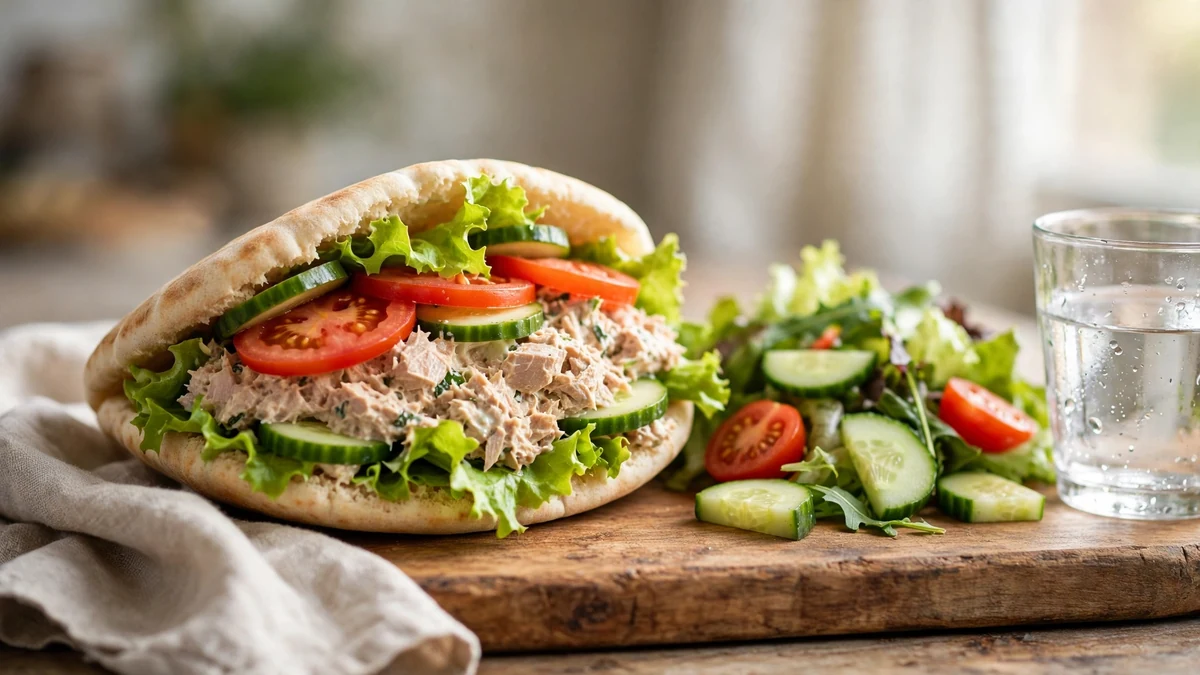
| Lunch | 1 can tuna in water, drained 1 whole-wheat pita 2 cups green leaf lettuce 1 medium tomato 1/2 cucumber, sliced 1 teaspoon olive oil | 409 |
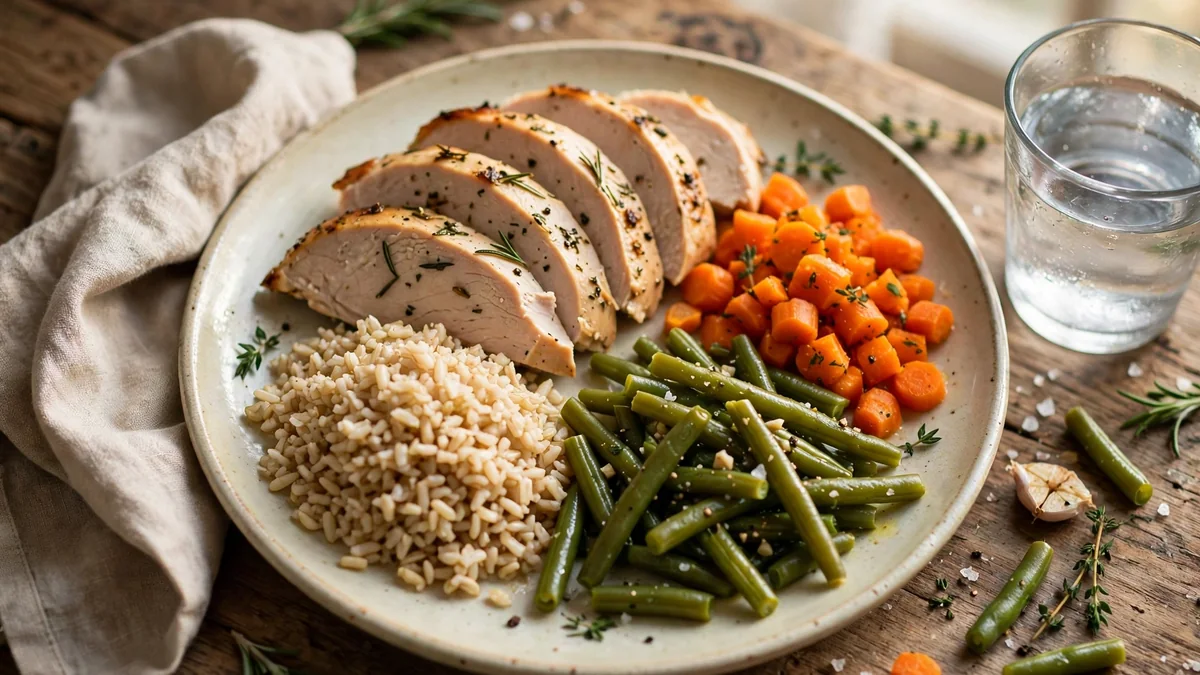
| Dinner | 5 oz cooked turkey breast about 3/4 cup cooked brown rice 1 cup chopped carrots, cooked 1 cup cooked green beans | 477 |
| Snacks | 1 medium apple 1/2 oz almonds (about 12 almonds) | 176 |
Day 2 total: about 1475 calories, 115 g protein, 178 g carbohydrate, 38 g fat, 29 g fiber.
Day 3
| Meal | Foods and portions | Calories |
|---|---|---|
| Breakfast | 3/4 cup plain low-fat Greek yogurt about 1/3 cup dry rolled oats, stirred in 1 cup raspberries 1/2 oz walnuts (about 2 tablespoons chopped) | 393 |
| Lunch | 1 cup cooked lentils 1 oz feta cheese, crumbled 2 cups raw spinach 1/2 cucumber, sliced 1 medium tomato 1 1/2 teaspoons olive oil | 413 |
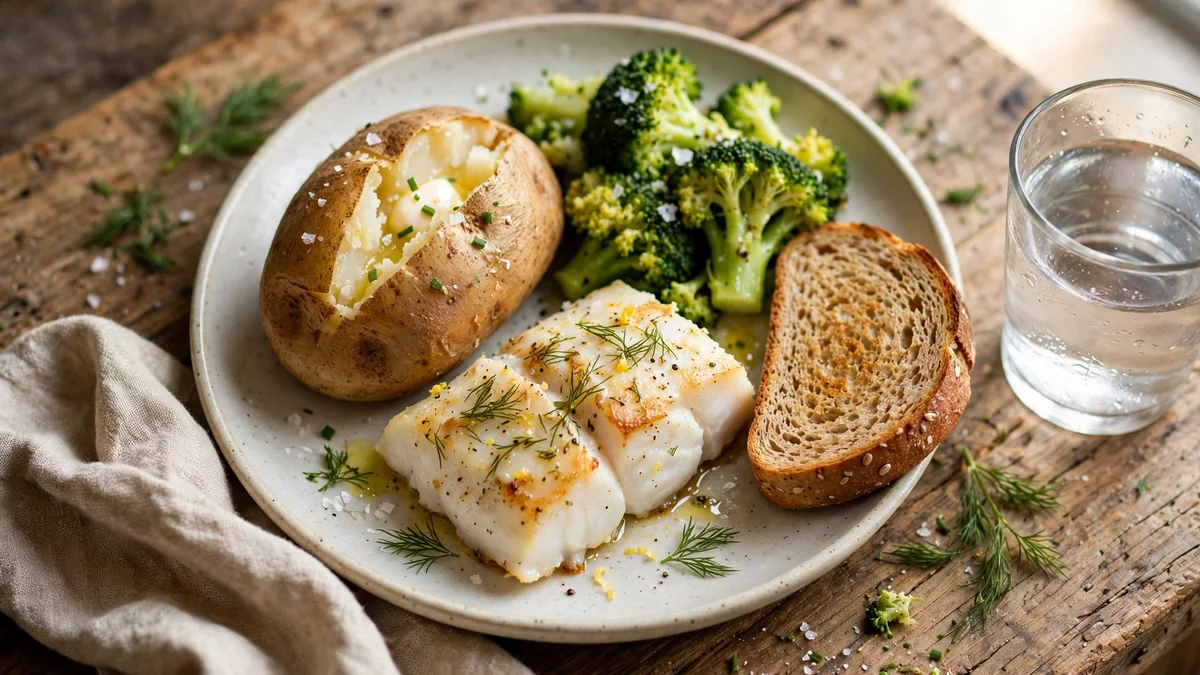
| Dinner | 6 oz cooked cod 1 medium baked potato 1 cup cooked broccoli 1 slice whole-wheat bread | 464 |
| Snacks | 1/2 cup low-fat cottage cheese 1 medium pear | 183 |
Day 3 total: about 1453 calories, 115 g protein, 183 g carbohydrate, 34 g fat, 47 g fiber.
Day 4
| Meal | Foods and portions | Calories |
|---|---|---|
| Breakfast | 1/2 cup dry rolled oats, cooked 1 tablespoon peanut butter 1/2 medium banana, sliced 3/4 cup skim milk | 364 |
| Lunch | 4 oz cooked chicken breast 1 cup cooked pasta 1/2 cup marinara sauce 2 cups raw spinach, wilted into the pasta 1 medium bell pepper, sliced | 508 |
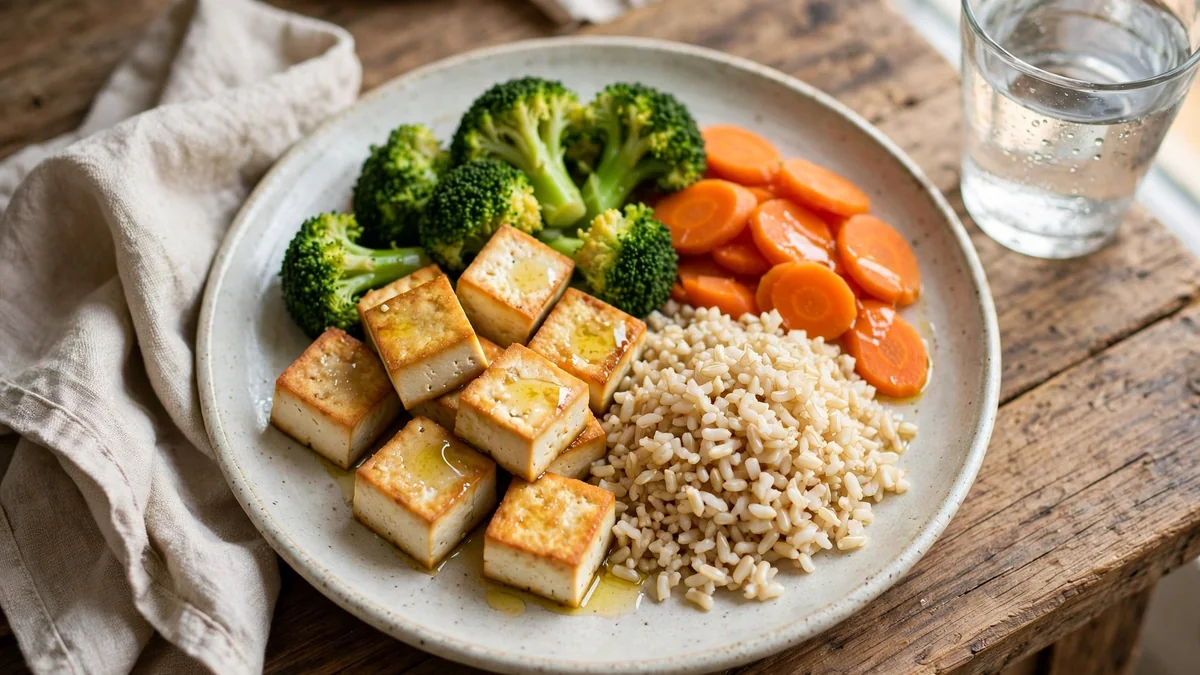
| Dinner | 125 g firm tofu (about 4 1/2 oz) about 3/4 cup cooked brown rice 1 cup cooked broccoli 1 medium carrot, cooked 1 1/2 teaspoons olive oil | 494 |
| Snacks | 3 cups air-popped popcorn 3/4 cup skim milk | 157 |
Day 4 total: about 1523 calories, 102 g protein, 197 g carbohydrate, 41 g fat, 30 g fiber.
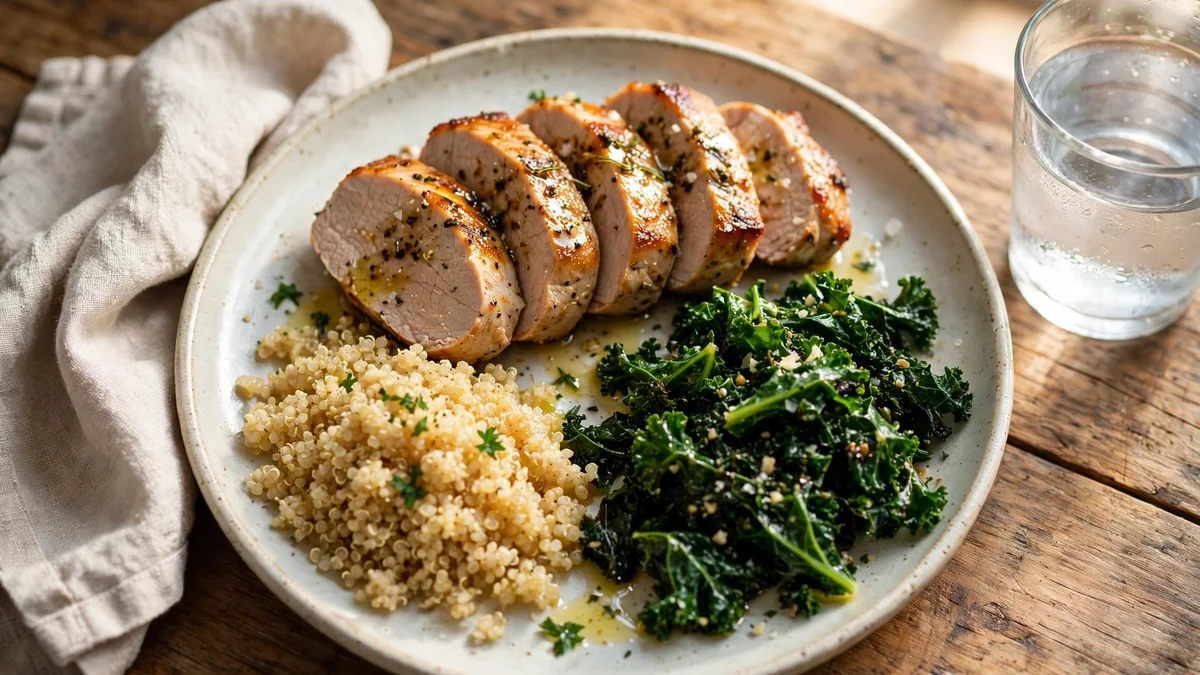
Day 5
| Meal | Foods and portions | Calories |
|---|---|---|
| Breakfast | 1 slice whole-wheat toast 2 large eggs, scrambled or boiled 1/2 avocado 1 cup strawberries 3/4 cup skim milk | 469 |
| Lunch | 3/4 cup cooked black beans 1 corn tortilla 1/4 cup salsa 1/2 avocado 2 cups green leaf lettuce | 376 |
| Dinner | 5 oz cooked pork tenderloin 1 cup cooked quinoa 1 cup cooked kale 1 teaspoon olive oil | 522 |
| Snacks | 3/4 cup plain nonfat Greek yogurt 1/2 cup blueberries | 142 |
Day 5 total: about 1510 calories, 109 g protein, 160 g carbohydrate, 52 g fat, 40 g fiber.
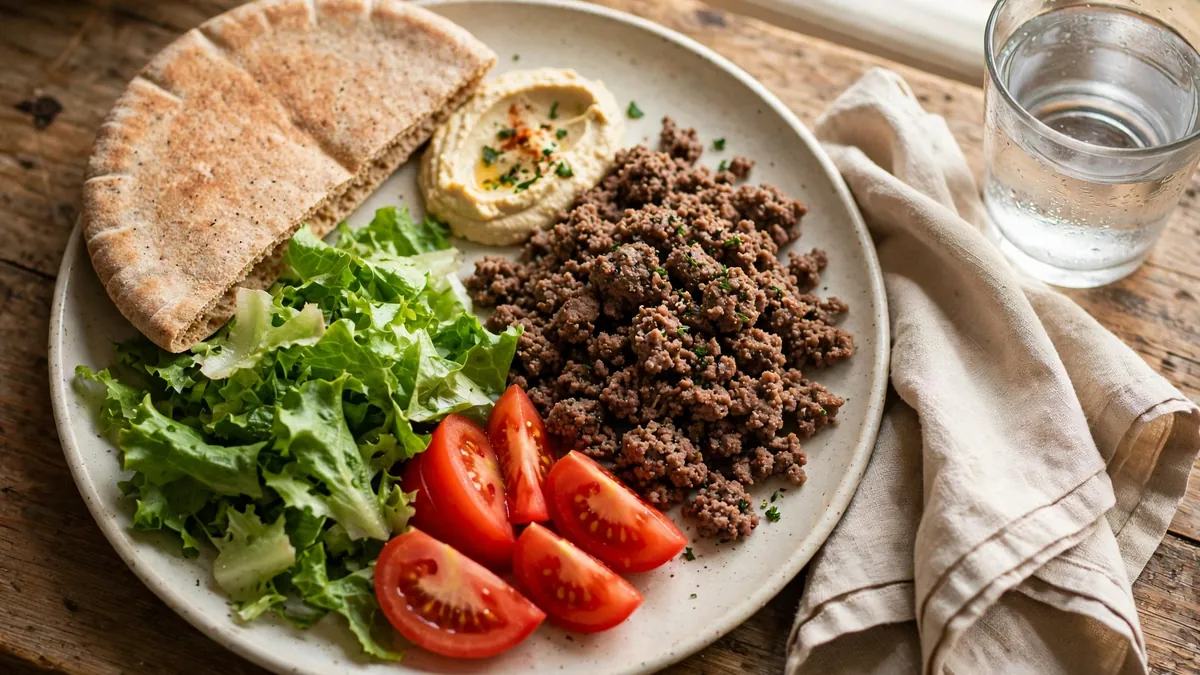
Day 6
| Meal | Foods and portions | Calories |
|---|---|---|
| Breakfast | 3/4 cup plain nonfat Greek yogurt 1/2 cup dry rolled oats, stirred in 1 cup strawberries 1/2 oz almonds (about 12 almonds) | 382 |
| Lunch | 4 oz cooked shrimp about 3/4 cup cooked white rice 1 medium bell pepper 1/2 cucumber, sliced 1 1/2 teaspoons olive oil | 417 |
| Dinner | 4 oz cooked lean ground beef (90% lean) 1 whole-wheat pita 2 cups green leaf lettuce 1 medium tomato 2 tablespoons hummus | 499 |
| Snacks | 1 orange 1/2 oz walnuts (about 2 tablespoons chopped) 1 1/2 cups air-popped popcorn | 200 |
Day 6 total: about 1497 calories, 102 g protein, 174 g carbohydrate, 47 g fat, 25 g fiber.
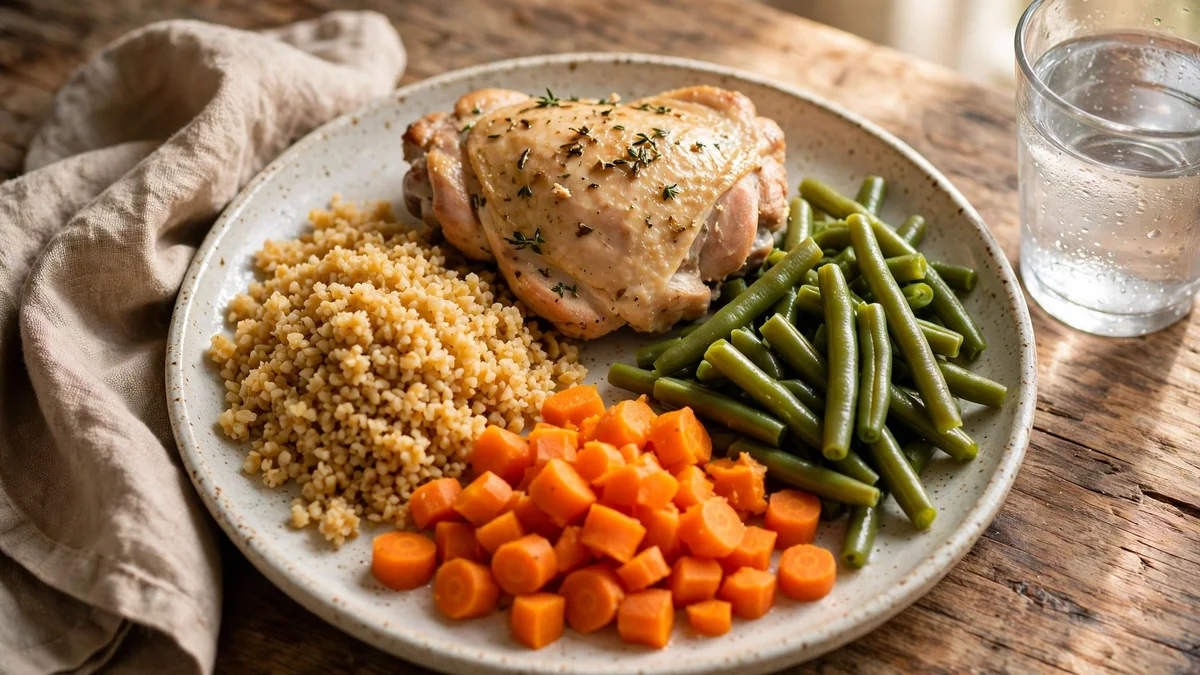
Day 7
| Meal | Foods and portions | Calories |
|---|---|---|
| Breakfast | 1 large egg 2 large egg whites 2 slices whole-wheat toast 1 oz cheddar cheese 2 cups raw spinach, cooked with the eggs 1 orange | 481 |
| Lunch | 1 cup cooked chickpeas 1/2 cucumber, sliced 1 medium tomato 1 oz feta cheese, crumbled 1 teaspoon olive oil | 420 |
| Dinner | 5 oz cooked chicken thigh, skinless 1 cup cooked bulgur 1 cup cooked green beans 1 cup chopped carrots, cooked | 501 |
| Snacks | 1 cup skim milk 1/2 cup raspberries | 117 |
Day 7 total: about 1520 calories, 109 g protein, 176 g carbohydrate, 46 g fat, 42 g fiber.
Grocery list
This list covers the full week for one person. Amounts follow the portions in the plan; buy a little extra of the fresh produce if your household shares meals.
Produce
- Blueberries, strawberries, raspberries, 1 orange, apples, 1 pear, bananas
- Spinach, green leaf lettuce, cucumbers, tomatoes, bell peppers
- Broccoli, green beans, carrots, sweet potatoes, 1 baking potato
- Avocados
Meat and seafood
- Chicken breast and skinless chicken thighs
- Turkey breast
- Salmon fillets
- Cod fillets
- Shrimp
- Lean ground beef (90% lean)
- Pork tenderloin
- Canned tuna in water
Dairy and eggs
- Eggs
- Plain nonfat Greek yogurt and plain low-fat Greek yogurt
- Low-fat cottage cheese
- Skim milk
- Cheddar cheese and feta cheese
Pantry
- Rolled oats
- Quinoa, brown rice, white rice, bulgur, pasta
- Black beans, chickpeas, lentils (dry or canned, rinsed)
- Firm tofu
- Whole-wheat bread, whole-wheat pitas, corn tortillas
- Peanut butter, almonds, walnuts
- Olive oil, salsa, marinara sauce, hummus
- Air-popped popcorn
Frozen
- Frozen green beans or broccoli as backup vegetables
- Frozen berries for weeks when fresh fruit is expensive
Bakery
- Whole-wheat bread and whole-wheat pitas, if not bought from the pantry aisle
Meal prep tips
- Cook a large batch of quinoa and brown rice on Sunday. Portion them into 3/4 cup and 1 cup containers so weekday meals take minutes.
- Grill or bake several chicken breasts and the turkey breast at once. Slice and refrigerate for up to 3 to 4 days, or freeze in single portions.
- Wash and chop carrots, peppers, and cucumbers ahead of time and store them in sealed containers with a paper towel to keep them crisp.
- Hard-boil a batch of eggs for the egg breakfasts and quick snacks.
- Portion nuts into 1/2 oz servings. It is easy to pour three servings without noticing.
- Keep breakfast simple on busy mornings: the yogurt, oats, and berry combinations can be assembled the night before.
Easy swaps
- Swap salmon for cod, or cod for shrimp, in similar portions. The calories stay close and the carbohydrate does not change.
- Swap quinoa for the same amount of cooked brown rice or bulgur.
- Swap black beans, chickpeas, and lentils cup for cup in the bean and lentil meals.
- Swap raspberries, strawberries, and blueberries cup for cup. Fruit portions were chosen to keep carbohydrate similar.
- Swap chicken breast for turkey breast in the same portion size.
- Swap skim milk for the same amount of plain nonfat Greek yogurt thinned with water in oatmeal, or use half of each.
- Swap the whole-wheat pita for 2 corn tortillas plus a small side salad to keep the meal close in calories and carbohydrate.
How to adjust the calories safely
If you are still hungry on this plan, or your care team wants you at a higher calorie level, add about 200 to 300 calories a day using foods from this plan. Examples: add 1 tablespoon of peanut butter (about 96 calories) and a medium apple (about 95 calories), or add 1 cup of cooked quinoa (about 222 calories) split between lunch and dinner, or add 1 oz of almonds (about 162 calories) plus 1/2 cup of skim milk (about 43 calories). When you add carbohydrate foods, spread them across the day rather than adding them all to one meal, and tell your care team, because your carbohydrate total will change.
Never go below 1,200 calories a day for women or 1,500 calories a day for men without medical supervision. This plan is written at about 1,500 calories. Men who find it too low, and anyone whose doctor recommends a higher level, should use the additions above to reach the level their care team sets.
Common mistakes
- Skipping meals and then eating a very large dinner. The carbohydrate consistency only works if you actually eat the meals as spread out.
- Drinking calories. Juice, regular soda, and sweetened coffee drinks add carbohydrate that is not in the plan totals.
- Guessing portions of rice, pasta, and nuts. These foods are calorie dense, and a heaped cup is not the measured cup in the plan.
- Changing the plan without telling your care team. If you take insulin or a sulfonylurea, eating much less carbohydrate than usual can cause low blood sugar.
- Treating one high reading as failure. Blood sugar responds to sleep, illness, stress, and medication timing as well as food. Look at patterns and discuss them with your care team.
Pair it with a workout
Regular movement helps with both weight and blood sugar management. Many people with diabetes find a walk after meals a practical place to start. Browse the walking plans and beginner routines in our Exercise and Workouts section and build up gradually. If you take medication that can cause low blood sugar, ask your care team how to handle exercise, snacks, and monitoring before you start a new routine.
Frequently asked questions
How much carbohydrate is in each meal?
Breakfasts, lunches, and dinners each provide roughly 45 to 60 grams of carbohydrate, and the full day averages about 178 grams. Snacks are smaller, at about 17 to 30 grams. Your own target may be different, so confirm the right range with your registered dietitian.
Can I follow this plan if I take insulin or metformin?
Only with your care team’s approval. Any change in carbohydrate intake can change how diabetes medication works. Show your doctor or dietitian this plan before you start, and ask how to monitor and what to do if your readings run low.
What can I drink on this plan?
Water is the default. Unsweetened tea and black coffee are also fine for most people. Avoid regular soda, sweet tea, and juice, which add fast carbohydrate with no fiber. Ask your care team about alcohol, which can affect blood sugar for hours.
What if I am still hungry between meals?
First check that you are eating all the planned food, including the snacks. If hunger persists, use the additions in the adjustment section above and spread them across the day. Persistent hunger is also worth mentioning to your care team, since some medications affect appetite.
Can I repeat this week or swap days around?
Yes. The days are nutritionally similar, so you can repeat the week or trade full days. Keep the within-day structure, because the carbohydrate spacing is built into each day.
Is this plan suitable for type 1 diabetes?
This page is general education written with type 2 diabetes in mind. People with type 1 diabetes need individualized carbohydrate and insulin guidance. Do not use this plan to change your eating pattern without your own care team’s input.
Sources and further reading
- USDA FoodData Central, the source for all food values used here: fdc.nal.usda.gov
- American Diabetes Association, food and blood sugar education: diabetes.org
- National Institute of Diabetes and Digestive and Kidney Diseases, diabetes diet and nutrition: niddk.nih.gov
- MedlinePlus, diabetes and meal planning summaries: medlineplus.gov
- Dietary Guidelines for Americans: dietaryguidelines.gov
This article is for general educational purposes only and is not medical, nutrition, or fitness advice. Talk with your doctor or a registered dietitian before changing your diet or starting an exercise program.