Prints just the plan, like a recipe card.
Last updated: November 22, 2026.
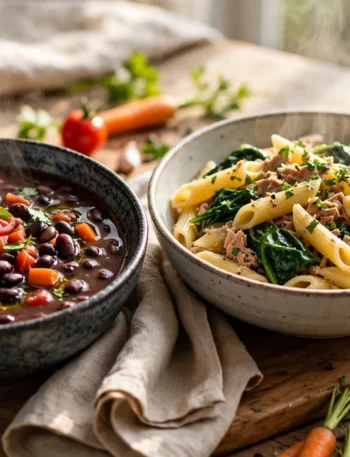
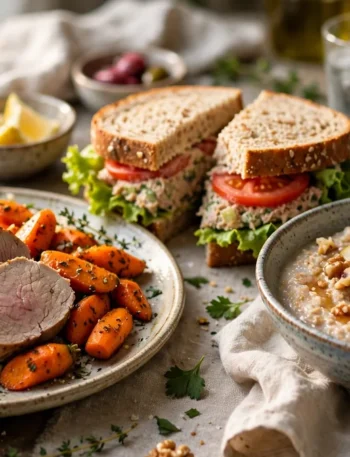
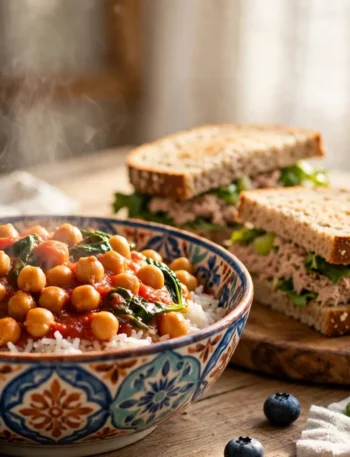
This farmers market meal plan lays out a full week of eating at about 1,600 calories a day, built around what a good market stall sells in season: eggs, leafy greens, zucchini, cauliflower, carrots, peppers, tomatoes, sweet potatoes, corn, berries, and fruit, with chicken, fish, pork, beans, and grains in supporting roles. Every food is listed with an exact US portion, and every calorie and macro number was calculated from USDA FoodData Central values for the portions shown.
The market advantage for weight loss is freshness you can taste, which makes simple cooking enough. The plan is deliberately flexible about which vegetables fill each slot, because a market week depends on the season; the swaps section gives the rules for trading one vegetable for another without breaking the numbers. Protein averages about 108 grams a day and fiber about 36 grams a day. For many adults, a level near 1,600 calories lines up with gradual weight loss of about 1 to 2 pounds a week, though your own rate may be slower or faster and no plan can promise a result.
You will find more seasonal weeks in our Meal Prep and Grocery Lists collection, part of the full Diet Plans library. For a vegetable forward week with a Mediterranean shape, see our Mediterranean meal plan.
Who this plan is for, and who should not follow it
This plan is for adults who shop at a farmers market most weeks, enjoy cooking with whatever looks best that day, and want the structure of a written plan without giving up seasonal flexibility. It suits spring through fall best in most of the US, and anyone who eats more vegetables when they are fresh and local.
Do not follow this plan if you are under 18, pregnant, or breastfeeding. If you have diabetes, kidney disease, or any condition affected by food, or you take medication affected by food or weight change, review the plan with your doctor and a registered dietitian before starting. This plan is written at 1,600 calories; anyone who needs a lower level should use a plan written at that level rather than shrinking these portions on their own. This page is general education, not medical advice.
If you have a history of disordered eating, talk with a doctor or a registered dietitian before following any diet plan. For eating disorder support in the US, visit the National Alliance for Eating Disorders at allianceforeatingdisorders.com.
Plan overview
| Measure | Amount |
|---|---|
| Target calories per day | about 1,600 |
| Average calories per day (as written) | about 1593 |
| Average protein per day | about 108 g |
| Average carbohydrate per day | about 190 g |
| Average fat per day | about 49 g |
| Average fiber per day | about 36 g |
| Meals per day | 4 (breakfast, lunch, dinner, and snacks) |
The week is written for a market in full season. Each vegetable slot names the first choice, and the swaps section explains how to trade slots: leafy greens for leafy greens, sturdy vegetables for sturdy vegetables, and fruit for fruit, always in the same amounts.
The 7-day farmers market meal plan
Portions are given in US household measures. Calories for each meal and day were calculated from USDA FoodData Central values for the exact foods and amounts listed. Wash market produce well before use. Season foods with herbs, spices, lemon, vinegar, and salsa as you like. Drink water, unsweetened tea, or black coffee freely.
Day 1
| Meal | Foods and portions | Calories |
|---|---|---|
| Breakfast | 1 large egg; 3 large egg whites; 2 cups raw spinach; 1 medium bell pepper, chopped; 1 slice whole-wheat toast; 1 oz cheddar cheese; 1 cup skim milk | about 448 |
| Lunch | 1 cup cooked chickpeas; 2 cups green leaf lettuce; 1 oz feta cheese; 1/2 cucumber, sliced; 2 teaspoons olive oil | about 449 |
| Dinner | 4 oz cooked salmon; about 2 cups cooked zucchini; 1 cup cooked quinoa; 1 teaspoon olive oil | about 497 |
| Snacks | 1 medium apple; 1 oz cheddar cheese | about 209 |
Day 1 total: about 1603 calories, 105 g protein, 157 g carbohydrate, 64 g fat, 31 g fiber.
Day 2
| Meal | Foods and portions | Calories |
|---|---|---|
| Breakfast | 1/2 cup dry rolled oats, cooked; 3/4 cup plain nonfat Greek yogurt; 1 cup blueberries; 1/2 oz walnuts (about 2 tablespoons chopped) | about 428 |
| Lunch | 2 large eggs; 2 cups green leaf lettuce; 1 medium tomato; 2 slices whole-wheat bread; 1/2 avocado | about 469 |
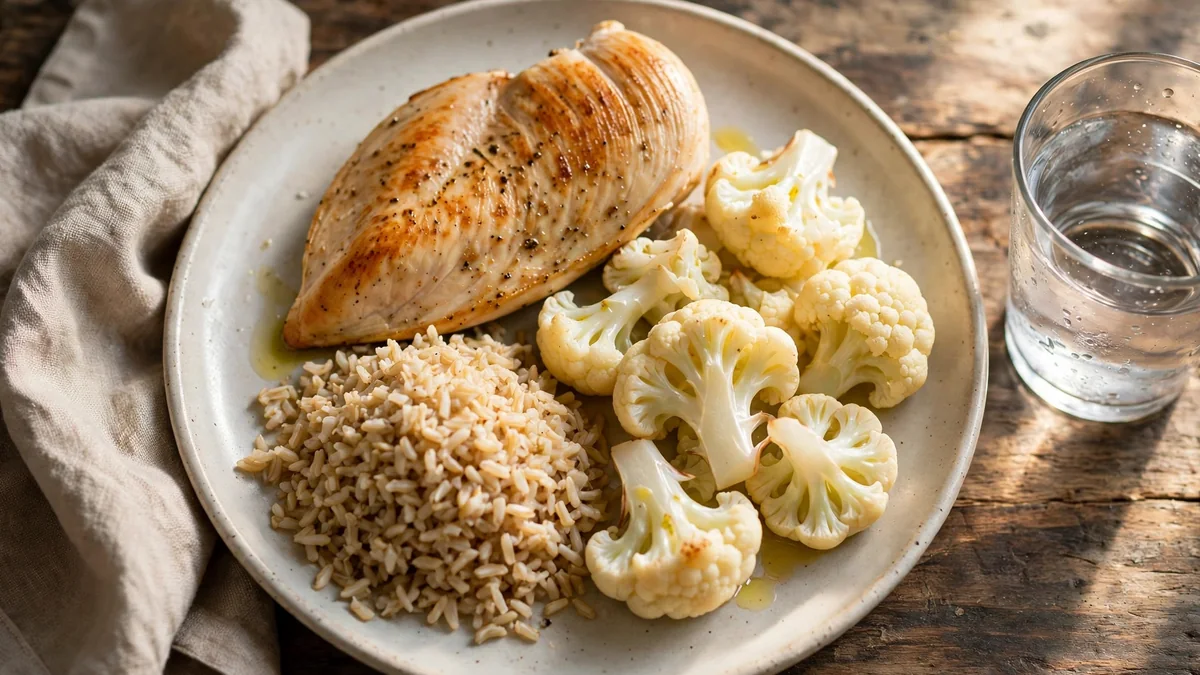
| Dinner | 5 oz cooked chicken breast; 2 cups cooked cauliflower florets; 1 cup cooked brown rice; 1 teaspoon olive oil | about 548 |
| Snacks | 3 cups air-popped popcorn; 1 orange | about 154 |
Day 2 total: about 1599 calories, 107 g protein, 188 g carbohydrate, 51 g fat, 34 g fiber.
Day 3
| Meal | Foods and portions | Calories |
|---|---|---|
| Breakfast | 1 cup low-fat cottage cheese; 1 cup strawberries; 1 slice whole-wheat toast; 1 tablespoon peanut butter | about 388 |
| Lunch | 1 cup cooked lentils; about 2 cups cooked zucchini; 1 oz feta cheese; 1 slice whole-wheat bread | about 411 |
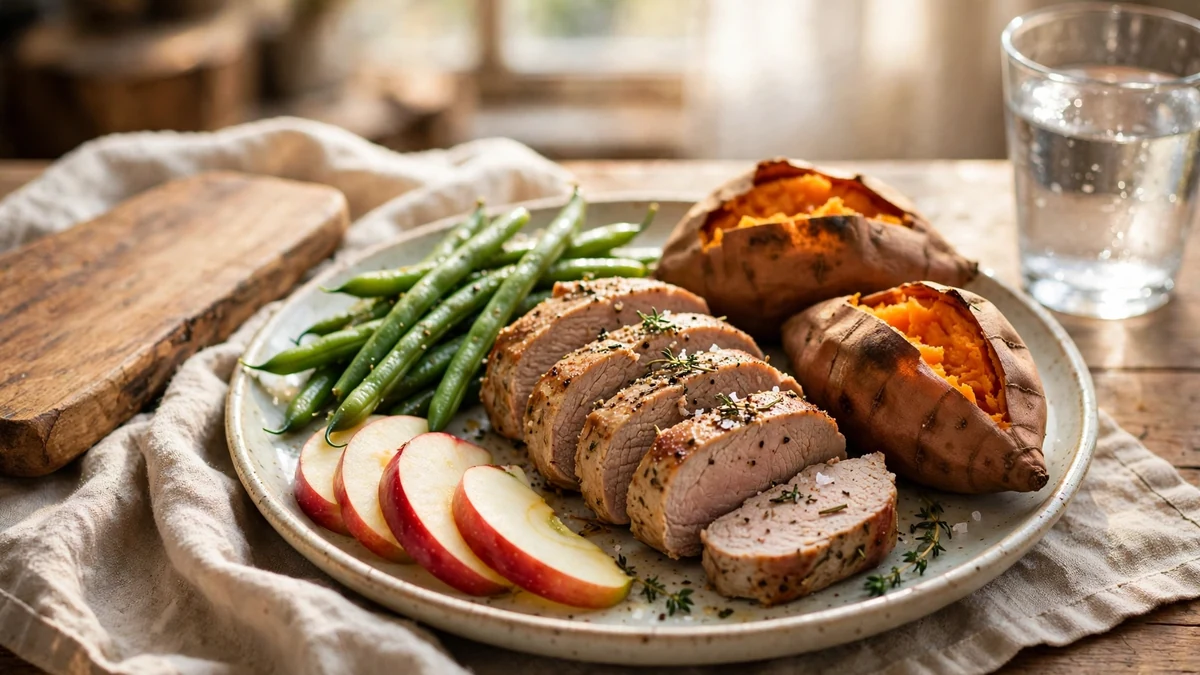
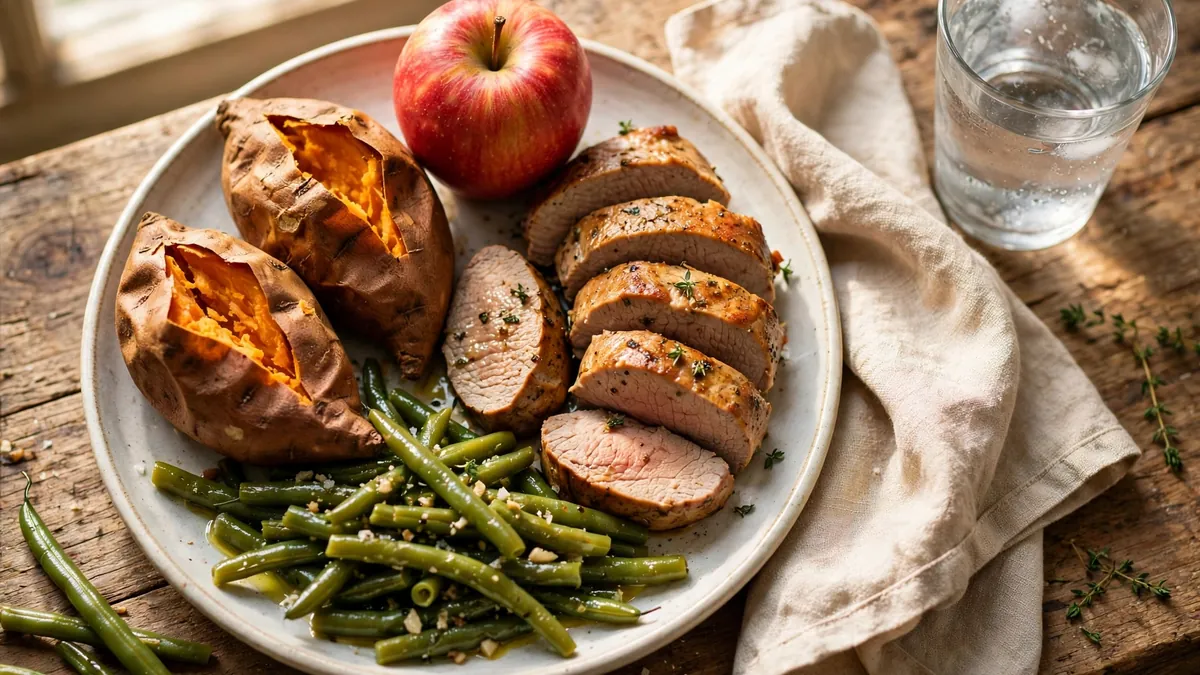
| Dinner | 5 oz cooked pork tenderloin; 2 medium baked sweet potatoes; 1 cup cooked green beans; 1 medium apple | about 547 |
| Snacks | 1 oz almonds (about 23 almonds); 1 cup grapes | about 266 |
Day 3 total: about 1611 calories, 116 g protein, 209 g carbohydrate, 41 g fat, 46 g fiber.
Day 4
| Meal | Foods and portions | Calories |
|---|---|---|
| Breakfast | 2 large eggs; 2 slices whole-wheat toast; 1 orange | about 378 |
| Lunch | 1 cup cooked chickpeas; 1 medium bell pepper, chopped; 1/2 cucumber, sliced; 1 oz feta cheese; 2 teaspoons olive oil | about 462 |
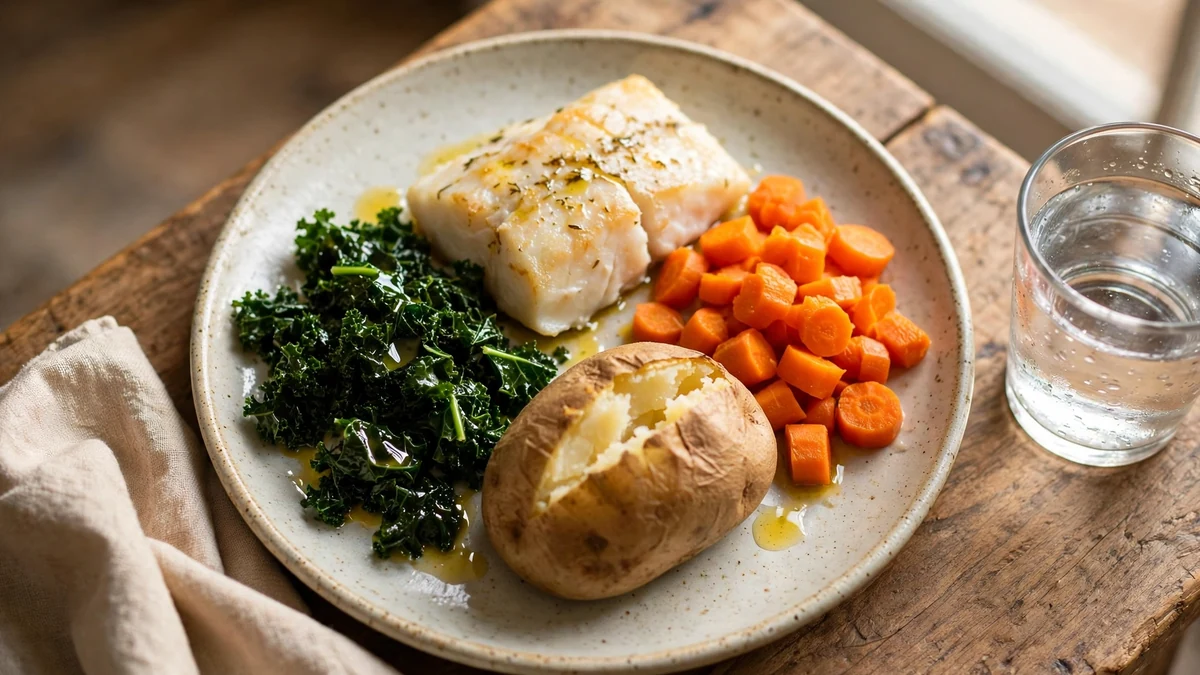
| Dinner | 6 oz cooked cod; 1 medium baked potato; 1 cup chopped carrots, cooked; 1 cup cooked kale; 2 teaspoons olive oil | about 518 |
| Snacks | 1 oz dark chocolate; 1 cup strawberries | about 216 |
Day 4 total: about 1574 calories, 93 g protein, 177 g carbohydrate, 58 g fat, 38 g fiber.
Day 5
| Meal | Foods and portions | Calories |
|---|---|---|
| Breakfast | 1/2 cup dry rolled oats, cooked; 1 cup skim milk; 1 medium banana; 1 tablespoon peanut butter | about 438 |
| Lunch | 4 oz cooked turkey breast; 1 whole-wheat pita; 1 medium tomato; 2 cups green leaf lettuce; 2 tablespoons hummus | about 420 |
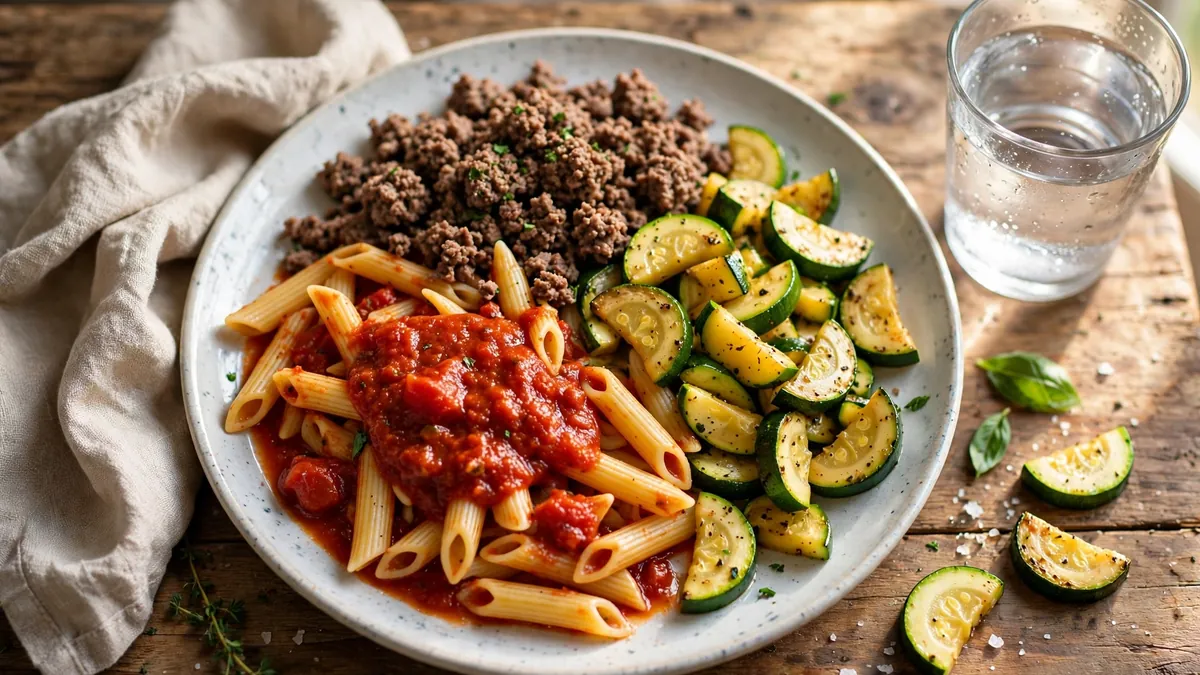
| Dinner | 4 oz cooked lean ground beef (90% lean); 1 cup cooked pasta; about 2 cups cooked zucchini; 1/2 cup marinara sauce | about 559 |
| Snacks | 3/4 cup plain nonfat Greek yogurt; 1 cup blueberries | about 185 |
Day 5 total: about 1601 calories, 122 g protein, 204 g carbohydrate, 36 g fat, 26 g fiber.
Day 6
| Meal | Foods and portions | Calories |
|---|---|---|
| Breakfast | 1/2 cup dry rolled oats, cooked; 3/4 cup skim milk; 1 medium pear; 1/2 oz walnuts (about 2 tablespoons chopped) | about 409 |
| Lunch | 1 cup cooked quinoa; 1/2 cup cooked black beans; 1 cup cooked corn kernels; 1 medium bell pepper, chopped; 1/4 avocado | about 541 |
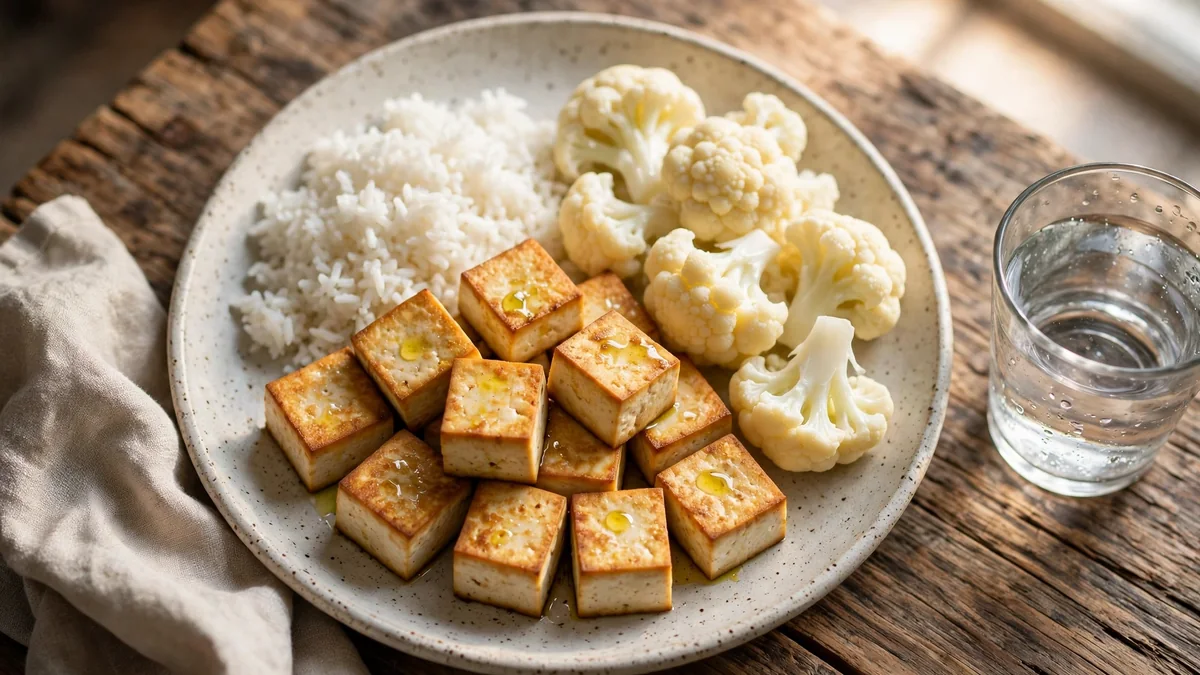
| Dinner | 125 g firm tofu (about 4 1/2 oz); 2 cups cooked cauliflower florets; 1 cup cooked white rice; 1 teaspoon olive oil | about 506 |
| Snacks | 1/4 cup hummus; 1 medium carrot, cut into sticks; 1/2 cucumber, sliced | about 146 |
Day 6 total: about 1603 calories, 71 g protein, 246 g carbohydrate, 46 g fat, 44 g fiber.
Day 7
| Meal | Foods and portions | Calories |
|---|---|---|
| Breakfast | 2 large eggs; 2 large egg whites; 1 slice whole-wheat toast; 1 cup strawberries; 1 cup skim milk | about 404 |
| Lunch | 1 can tuna in water, drained; 4 cups green leaf lettuce; 1 medium tomato; 1 large egg, hard-boiled; 1 slice whole-wheat bread; 1 teaspoon olive oil | about 395 |
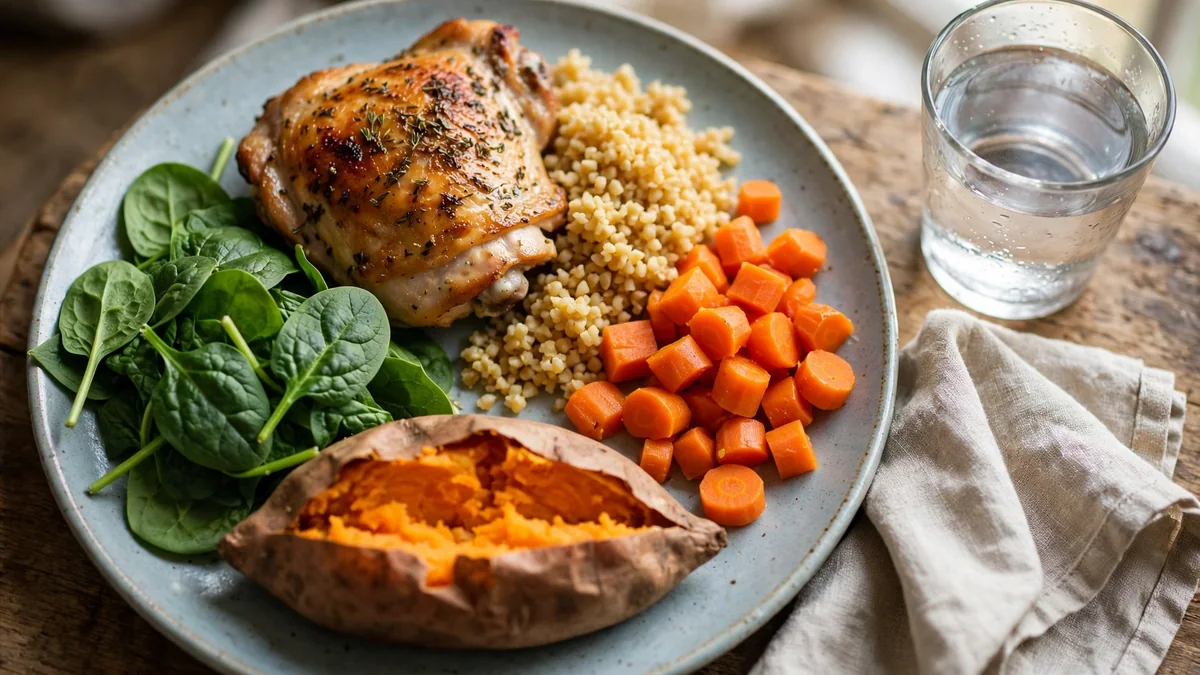
| Dinner | 5 oz cooked chicken thigh; 1 cup cooked bulgur; 1 cup chopped carrots, cooked; 2 cups raw spinach; 1 medium baked sweet potato | about 574 |
| Snacks | 1 cup shelled edamame | about 188 |
Day 7 total: about 1561 calories, 139 g protein, 148 g carbohydrate, 48 g fat, 35 g fiber.
Grocery list
This list covers the full week for one person following the plan as written. Buy the produce at the market and the pantry, dairy, and proteins wherever you normally shop; the list is grouped the way the plan’s other grocery lists are, so the two trips stay simple.
Produce
- Spinach
- Green leaf lettuce
- Bell peppers
- Zucchini
- Cauliflower
- Carrots
- Tomatoes
- Cucumbers
- Kale
- Green beans
- Sweet potatoes
- White potatoes
- Corn on the cob or kernels
- Blueberries
- Strawberries
- Grapes
- Apples
- Pears
- Oranges
- Bananas
- Avocados
Meat and seafood
- Chicken breast
- Chicken thighs
- Turkey breast
- Salmon fillets
- Cod fillets
- Pork tenderloin
- Lean ground beef (90% lean)
Dairy and eggs
- Farm or store eggs, large
- Plain nonfat Greek yogurt
- Low-fat cottage cheese
- Skim milk
- Feta cheese
- Cheddar cheese
Pantry
- Rolled oats
- Walnuts
- Almonds
- Quinoa
- Brown rice
- White rice
- Bulgur
- Pasta
- Marinara sauce
- Chickpeas
- Black beans
- Lentils
- Firm tofu
- Edamame (frozen)
- Hummus
- Peanut butter
- Olive oil
- Dark chocolate
- Popcorn for air-popping
- Canned tuna in water
Bakery
- Whole-wheat bread
- Whole-wheat pita
Meal prep tips
- Go to the market with the plan’s vegetable slots in mind, not a rigid list. Buy the best looking sturdy vegetable for the sturdy slots and the best leafy green for the green slots.
- Use the most delicate produce first: berries, greens, and tomatoes early in the week; carrots, cabbage style vegetables, potatoes, and apples keep for the end.
- Wash and dry greens as soon as you get home and store them with a paper towel in the container. They keep days longer and are ready for the plan’s salads.
- Cook the quinoa, brown rice, white rice, and bulgur in one session on day 1. The market vegetables then only need a pan or a pot each evening.
- Freeze any market surplus at its peak: chopped zucchini, peppers, and berries all freeze well for later weeks.
Easy swaps
- Swap zucchini for the same amount of cooked cauliflower, green beans, or broccoli in any meal; the sturdy vegetable slots are interchangeable.
- Swap spinach for the same amount of any leafy green, raw or cooked as the meal directs.
- Swap blueberries, strawberries, and grapes cup for cup, and apples and pears one for one, based on what the fruit stall has.
- Swap salmon for cod in the same weight on day 1, or the other way around on day 4.
- Swap chicken thigh for chicken breast in the same weight on day 7, or turkey breast on day 5.
- Swap chickpeas for lentils or black beans, cup for cup, in the bean based lunches.
- Swap quinoa for bulgur or brown rice, cup for cup of cooked grain, on any day.
How to adjust the calories safely
If this plan leaves you persistently hungry, low on energy, or losing faster than about 2 pounds a week, add food. To add roughly 200 to 300 calories a day using foods already in the plan, choose one: 1 oz of walnuts (about 183 calories) plus 1 teaspoon of olive oil on your vegetables (about 40 calories); or 1 cup of skim milk (about 86 calories) plus 1 tablespoon of peanut butter (about 96 calories) plus a medium carrot (about 25 calories); or an extra 1 cup of cooked quinoa split between lunch and dinner (about 222 calories).
Never go below 1,200 calories a day for women or 1,500 calories a day for men. This plan is written at 1,600 calories, above the women’s floor and just above the men’s floor, so men who are tall or very active should use the additions above on most days, and anyone who needs a lower level should choose a plan written at that level instead.
Common mistakes
- Buying beautiful produce with no slot for it. Market enthusiasm is real; shop the plan’s slots first and add one treat item, not five.
- Saving the delicate produce for the weekend. Berries and greens bought on Saturday are at their best on Saturday and Sunday, not the following Friday.
- Assuming market food needs no washing. Rinse produce well, especially leafy greens and anything eaten raw.
- Skipping the snack to save calories. The snack is part of the design; skipping it usually leads to a much larger dinner.
- Treating the plan as fixed when the season disagrees. A market plan is meant to flex; use the swaps rules and keep the amounts, and the numbers still hold.
Pair it with a workout
Regular movement makes a weight loss plan easier to keep and helps protect muscle while you lose weight. A walk to the market with a backpack for the shopping is a legitimate start. Browse the walking plans and beginner strength routines in our Exercise and Workouts category, start with the level that matches your current fitness, and build up gradually. Stop any exercise that causes pain, dizziness, or chest pain, and check with your doctor before starting if you have been inactive or have a medical condition.
Frequently asked questions
What if my market does not have zucchini or cauliflower this week?
Use the swaps rules: any sturdy vegetable in the same amount takes the slot. Green beans, broccoli, carrots, and cabbage all work in the zucchini and cauliflower meals, and the day totals stay close to the written numbers.
Can I follow this plan in winter?
Yes, with winter market produce: use kale, cabbage, carrots, potatoes, sweet potatoes, apples, and pears in the slots, and frozen vegetables for anything the season does not offer. The structure and amounts do not change.
Is farmers market produce more nutritious?
It is often fresher, because it travels a shorter distance and is picked closer to ripe. The USDA values used here are the standard ones for each food, so the plan’s numbers stay honest either way.
Do I have to eat the snack every day?
The snack is part of the calorie design, not an extra. If you prefer three meals, move the snack foods into the nearest meal rather than dropping them, so the day still adds up to the written total.
What can I drink on this plan?
Water is the default. Plain coffee and unsweetened tea have almost no calories and fit the plan as written. The numbers do not include milk, cream, or sugar added to drinks, so count those as extra if you use them.
Can I buy the proteins at the market too?
If your market has a meat or fish stall you trust, yes; the plan’s portions and cooking stay the same. Keep raw meat and fish cold on the way home and refrigerate them as soon as you arrive.
Sources and further reading
- USDA FoodData Central, the source for every calorie and nutrient value in this plan: fdc.nal.usda.gov
- Dietary Guidelines for Americans, for the overall healthy eating pattern this plan follows: dietaryguidelines.gov
- MyPlate, for balanced plate ideas built from the same food groups: myplate.gov
- Centers for Disease Control and Prevention, for healthy weight guidance: cdc.gov
- MedlinePlus, for plain language background on weight loss and meal planning: medlineplus.gov
This article is for general educational purposes only and is not medical, nutrition, or fitness advice. Talk with your doctor or a registered dietitian before changing your diet or starting an exercise program.