Prints just the plan, like a recipe card.
Last updated: November 22, 2026.
This low impact meal plan gives you 7 days of breakfasts, lunches, dinners, and snacks at about 1,500 calories a day, written for adults whose doctors have suggested gentle, joint-friendly activity and a calmer pace of change. The food is soft-textured and easy to prepare where it helps: soups, baked fish, tender chicken, beans, and cooked vegetables, with protein at every meal to support the muscles that protect your joints. Every portion is listed in plain US measures, and every number was calculated from USDA FoodData Central values. More plans organized by lifestyle live in our By Lifestyle diet plans.
Who this plan is for, and who should not follow it
This plan is for adults who have been told to keep activity gentle, for example easy walking, water exercise, or chair-based movement, and who want a moderate calorie level with filling, protein-forward meals. It suits people who prefer softer textures, simple cooking, and a week that does not demand long sessions in the kitchen.
This plan is general education only and is not medical advice, and it does not treat arthritis or any other joint or health condition. Talk with your doctor or a registered dietitian before following it, especially if you have diabetes, kidney disease, or a joint condition affected by food or activity, or if you take medication that food or weight change can affect. It is not for children or teenagers, and it is not for anyone who is pregnant or breastfeeding. Follow your own doctor’s guidance about which activities are right for you, and stop any activity that causes sharp or lasting pain.
If you have a history of disordered eating, talk with a doctor or a registered dietitian before following any diet plan. For eating disorder support in the US, visit the National Alliance for Eating Disorders at allianceforeatingdisorders.com.
Plan overview
| Daily calorie target | About 1500 calories |
| Average protein per day | About 110 g |
| Average carbohydrate per day | About 186 g |
| Average fat per day | About 41 g |
| Average fiber per day | About 37 g |
| Meals per day | 4 (breakfast, lunch, dinner, and snacks) |
The week leans on foods many people find easy to eat and prepare: salmon and other fish, lentils and beans, eggs, yogurt, oats, and well-cooked vegetables, with healthy fats from olive oil, avocado, and nuts in measured amounts. Fiber averages over 30 grams a day, which helps 1,500 calories feel satisfying.
How this low impact meal plan is built
Each day follows the same calm pattern: a soft, protein-rich breakfast, a lunch that can be assembled or gently reheated, a cooked dinner with tender protein and vegetables, and one planned snack. Fish appears twice, legumes anchor several meals, and no day asks for chewy, heavy portions. Because 1,500 calories is the lowest level appropriate for most men, men should read the adjustment section and add food as described. If you want to check how this level compares with your own needs, our calorie calculator gives a general estimate to discuss with your doctor or dietitian.
The 7-day meal plan
Portions are given in US household measures. Calories for each meal and day were calculated from USDA FoodData Central values for the exact foods and amounts listed. Cook vegetables until tender if that is more comfortable, and season with dried herbs, garlic, lemon, and black pepper instead of heavy sauces.
Day 1
| Meal | What to eat | Calories |
|---|---|---|
| Breakfast | 1/2 cup dry rolled oats, cooked; 1 cup skim milk; 1 cup blueberries; 2 tablespoons chopped walnuts | about 413 |
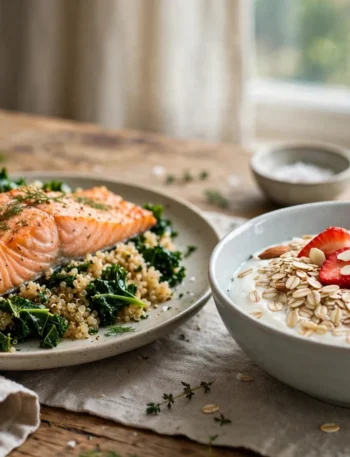
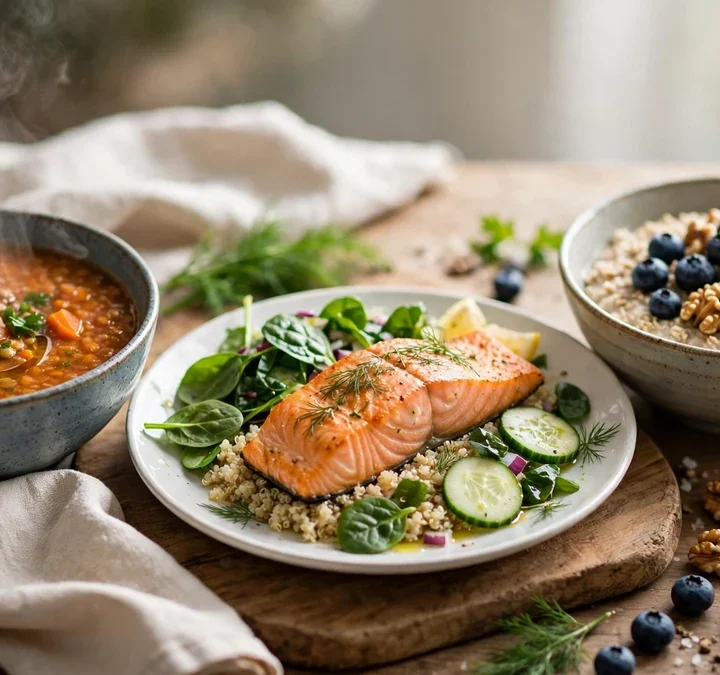
| Lunch | 4 oz cooked salmon; 1/2 cup cooked quinoa; 2 cups raw spinach; 1/2 cucumber, sliced; 1 teaspoon olive oil; 1/4 avocado | about 447 |
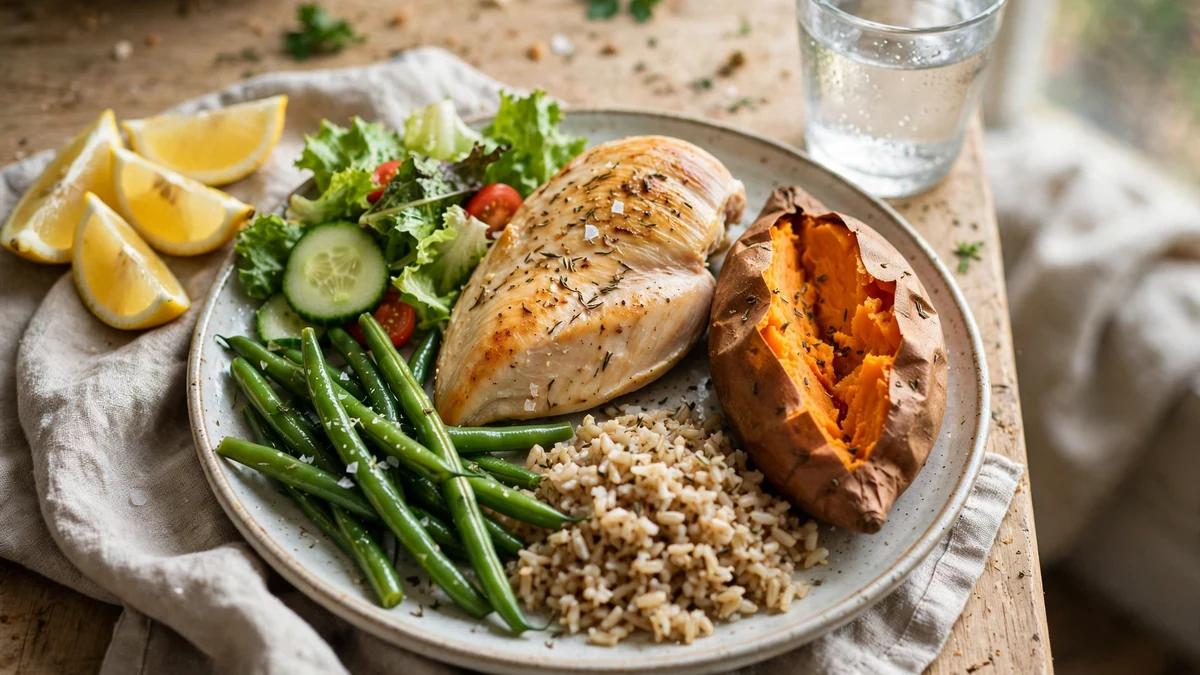
| Dinner | 4 oz cooked chicken breast; 1 medium baked sweet potato; 1/2 cup cooked brown rice; 1 cup cooked green beans; 2 cups green leaf lettuce | about 458 |
| Snacks | 3/4 cup plain nonfat Greek yogurt; 1 cup strawberries; 1 tablespoon honey | about 213 |
Day 1 total: about 1531 calories, 114 g protein, 186 g carbohydrate, 41 g fat, 29 g fiber.
Day 2
| Meal | What to eat | Calories |
|---|---|---|
| Breakfast | 2 large eggs, cooked any style; 1 slice whole-wheat toast; 1/2 avocado; 1 orange | about 417 |
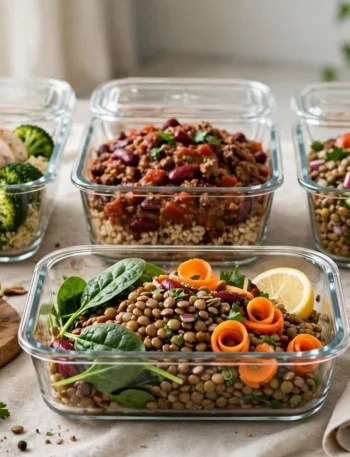
| Lunch | 1 cup cooked lentils; 1 cup chopped carrots; 1/2 cup crushed canned tomatoes; 1 teaspoon olive oil; 1 slice whole-wheat bread | about 439 |
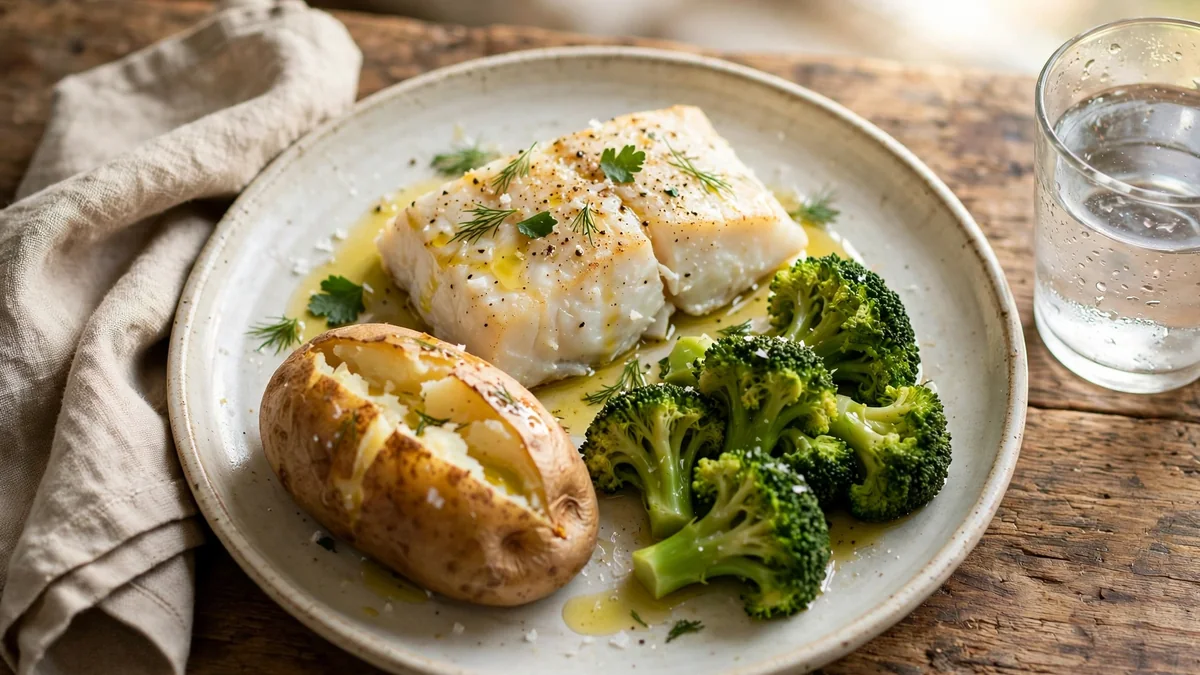
| Dinner | 6 oz cooked cod; 1 medium baked potato; 1 cup cooked broccoli; 2 teaspoons olive oil | about 463 |
| Snacks | 1/2 cup low-fat cottage cheese; 1 medium pear | about 183 |
Day 2 total: about 1502 calories, 106 g protein, 186 g carbohydrate, 43 g fat, 47 g fiber.
Day 3
| Meal | What to eat | Calories |
|---|---|---|
| Breakfast | 1 cup plain nonfat Greek yogurt; 1/4 cup granola; 1 cup raspberries | about 355 |
| Lunch | 4 oz cooked turkey breast; 1 whole-wheat pita; 1/4 cup hummus; 1 medium tomato; 2 cups green leaf lettuce | about 473 |
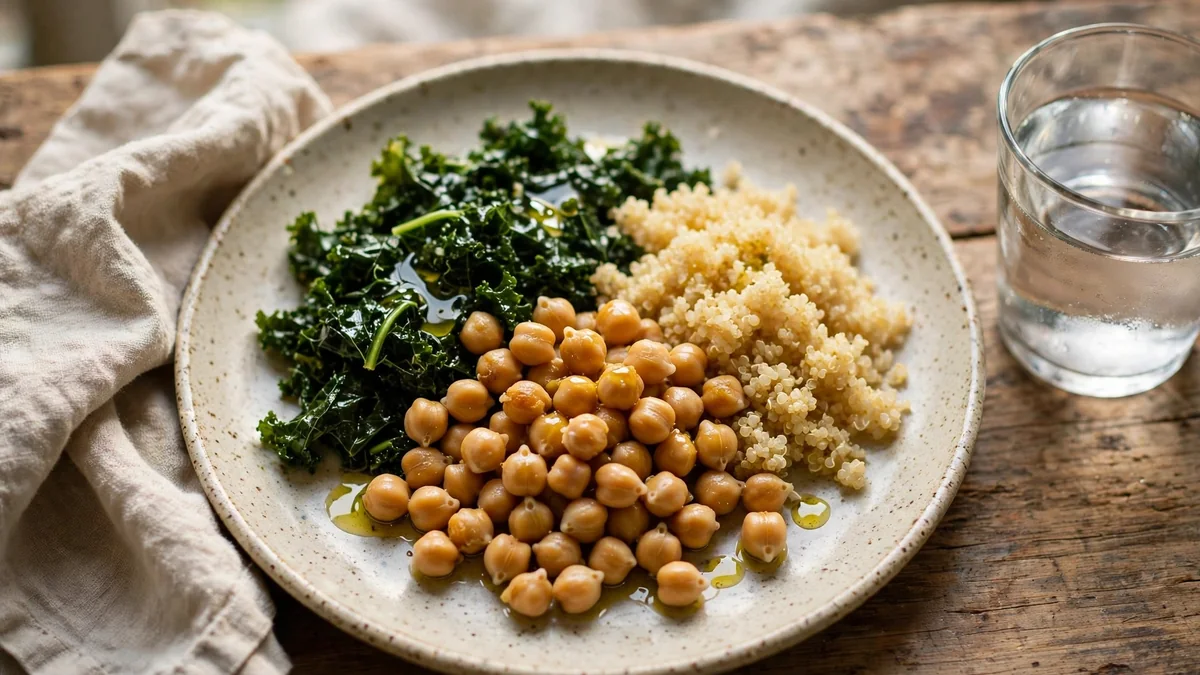
| Dinner | 1 cup cooked chickpeas; 1/2 cup cooked quinoa; 1 cup cooked kale; 2 teaspoons olive oil | about 517 |
| Snacks | 1 medium apple; 1/2 oz almonds (about 12 almonds) | about 176 |
Day 3 total: about 1521 calories, 102 g protein, 194 g carbohydrate, 42 g fat, 44 g fiber.
Day 4
| Meal | What to eat | Calories |
|---|---|---|
| Breakfast | 1 cup low-fat cottage cheese; 1 medium banana; 2 tablespoons chopped walnuts | about 359 |
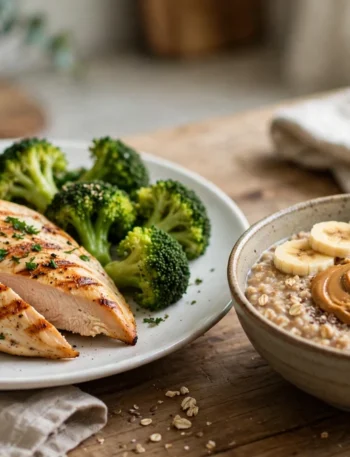
| Lunch | 5 oz cooked chicken breast; 1/2 cup cooked brown rice; 1 cup cooked broccoli; 1 teaspoon olive oil | about 443 |
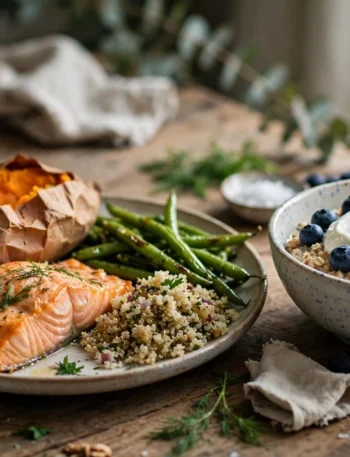
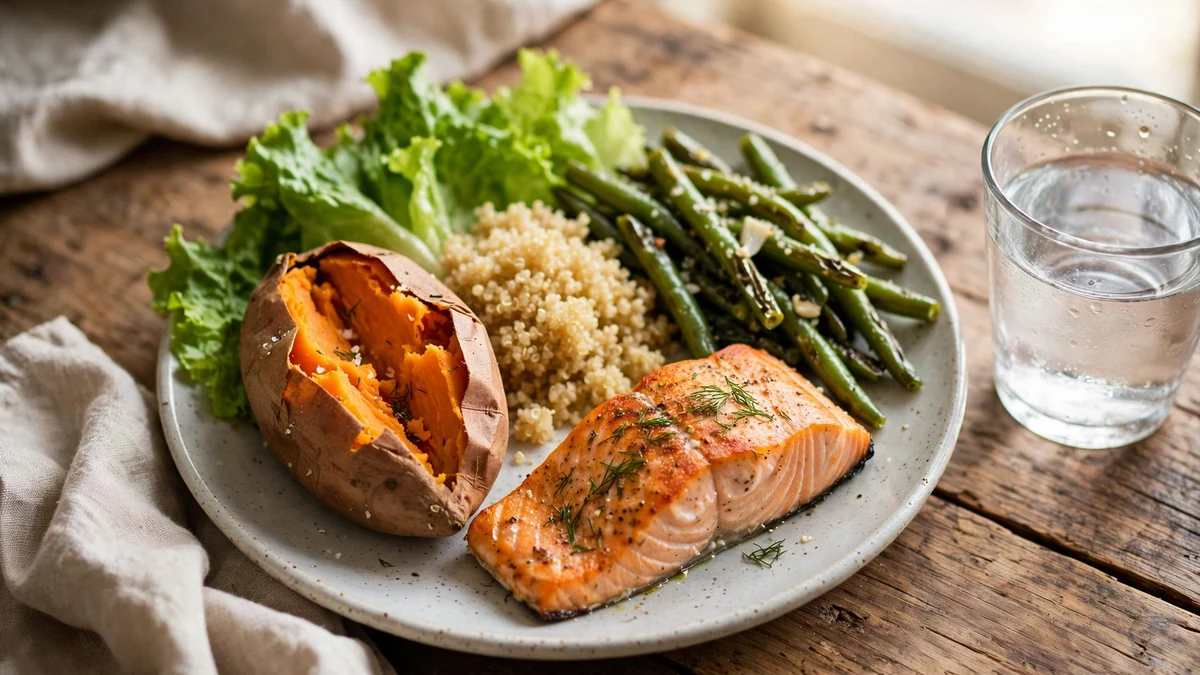
| Dinner | 4 oz cooked salmon; 1 medium baked sweet potato; 1/2 cup cooked quinoa; 1 cup cooked green beans; 2 cups green leaf lettuce | about 474 |
| Snacks | 1 cup skim milk; 1 oz dark chocolate (70% cacao) | about 253 |
Day 4 total: about 1530 calories, 131 g protein, 150 g carbohydrate, 47 g fat, 25 g fiber.
Day 5
| Meal | What to eat | Calories |
|---|---|---|
| Breakfast | 1/2 cup dry rolled oats, cooked; 3/4 cup skim milk; 1 tablespoon peanut butter; 1 cup strawberries | about 360 |
| Lunch | 1 cup cooked black beans; 2 corn tortillas; 1/4 cup salsa; 1/2 avocado; 2 cups green leaf lettuce | about 490 |
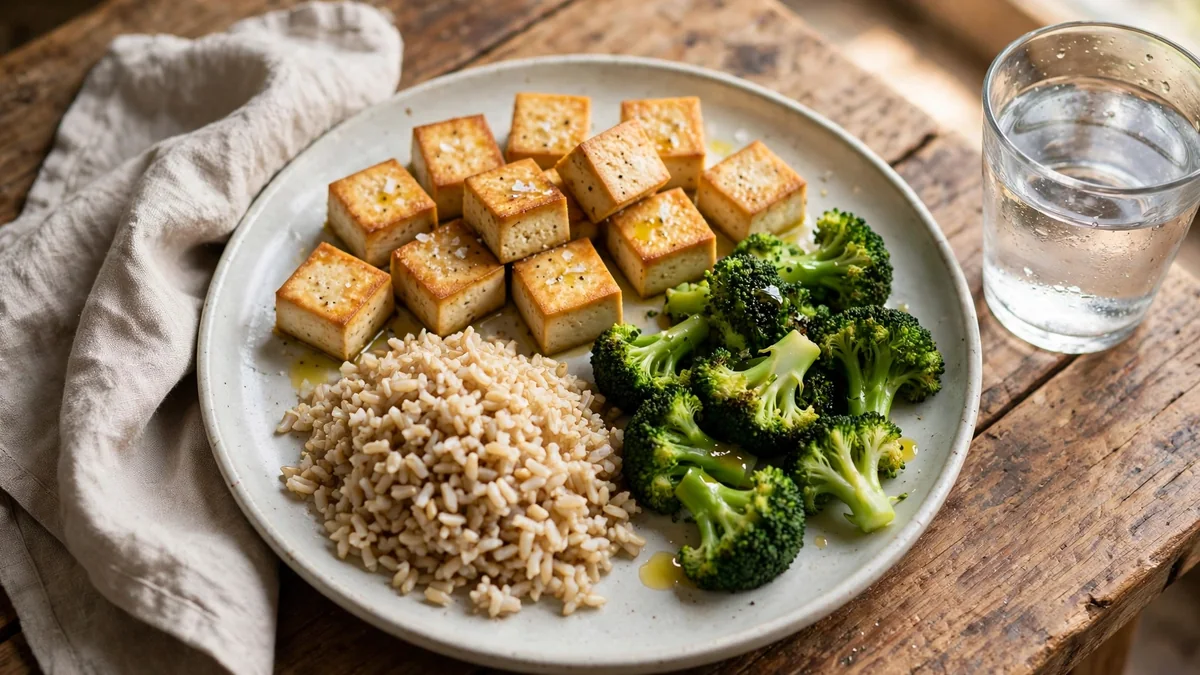
| Dinner | 125 g firm tofu; 1 cup cooked brown rice; 1 cup cooked broccoli; 1 teaspoon olive oil | about 502 |
| Snacks | 1 orange; 1 cup grapes | about 166 |
Day 5 total: about 1518 calories, 70 g protein, 233 g carbohydrate, 43 g fat, 49 g fiber.
Day 6
| Meal | What to eat | Calories |
|---|---|---|
| Breakfast | 2 large eggs, cooked any style; 2 large egg whites; 1 slice whole-wheat toast; 1 medium tomato; 1 cup skim milk | about 378 |
| Lunch | 1 can tuna in water, drained; 2 slices whole-wheat bread; 1/2 cucumber, sliced; 1 medium carrot; 1/4 avocado | about 416 |
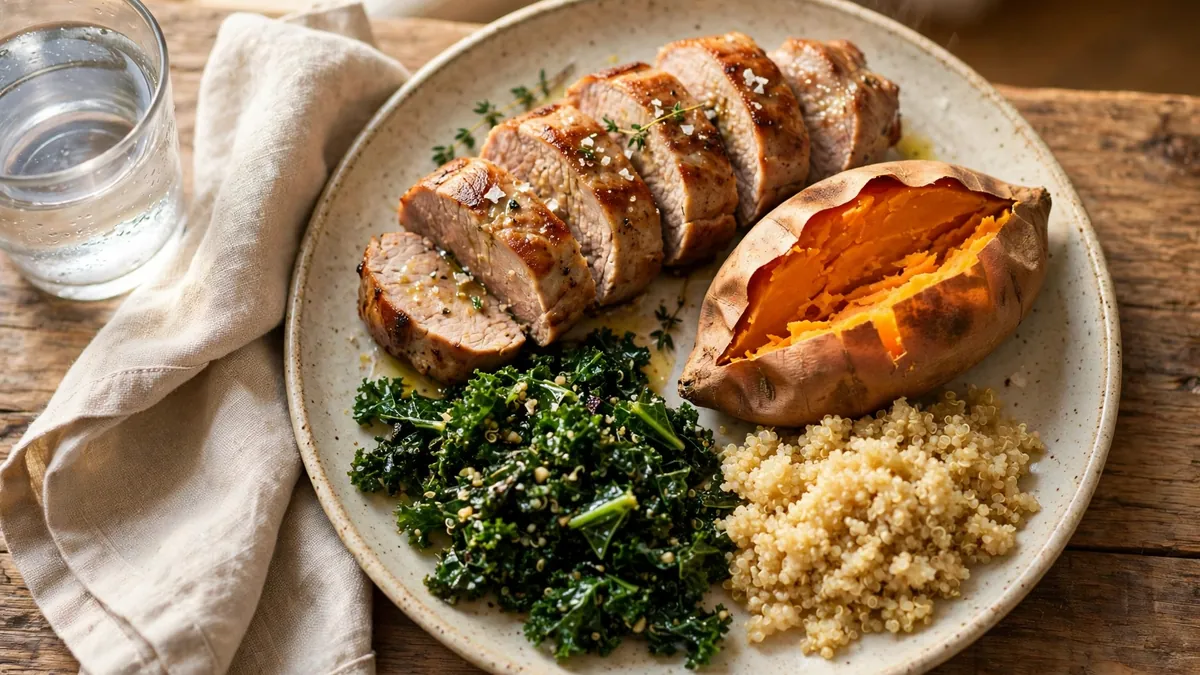
| Dinner | 5 oz cooked pork tenderloin; 1 medium baked sweet potato; 1/2 cup cooked quinoa; 1 cup cooked kale | about 474 |
| Snacks | 3/4 cup plain low-fat Greek yogurt; 1 cup grapes | about 228 |
Day 6 total: about 1496 calories, 137 g protein, 156 g carbohydrate, 36 g fat, 23 g fiber.
Day 7
| Meal | What to eat | Calories |
|---|---|---|
| Breakfast | 3/4 cup plain nonfat Greek yogurt; 1/2 cup dry rolled oats, stirred in; 1 cup blueberries; 1 tablespoon maple syrup | about 388 |
| Lunch | 1 cup shelled edamame; 1/2 cup cooked quinoa; 1/2 cucumber, sliced; 1 cup chopped carrots; 1 teaspoon olive oil | about 406 |
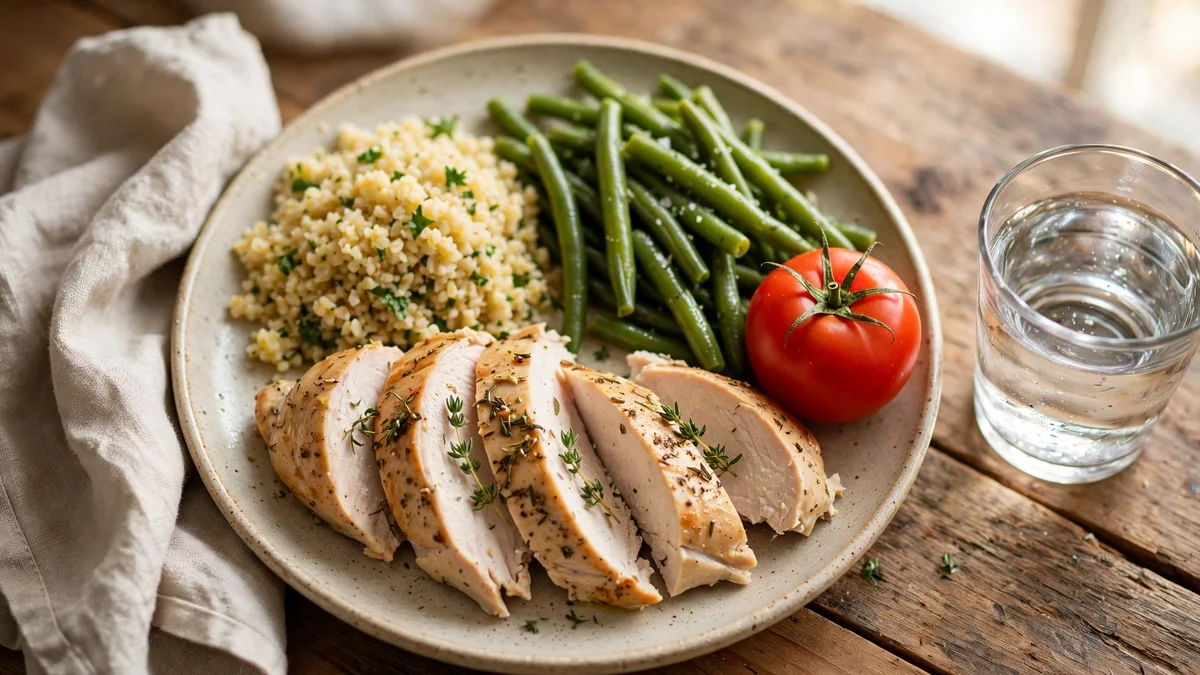
| Dinner | 5 oz cooked turkey breast; 1 cup cooked bulgur; 1 cup cooked green beans; 1 medium tomato | about 426 |
| Snacks | 1 medium pear; 1 oz cheddar cheese; 1 tablespoon chopped walnuts | about 262 |
Day 7 total: about 1482 calories, 108 g protein, 195 g carbohydrate, 37 g fat, 42 g fiber.
Grocery list
This list covers the full week for one person, following the portions in the plan.
Produce
- Bananas, apples, pears, oranges, grapes, blueberries, strawberries, and raspberries
- Sweet potatoes and baking potatoes
- Broccoli, green beans, and kale
- Spinach and green leaf lettuce
- Cucumbers, tomatoes, and carrots
- Avocados
Meat and seafood
- Chicken breast
- Turkey breast
- Salmon fillets and cod fillets
- Pork tenderloin
- Canned tuna in water
- Firm tofu and frozen shelled edamame
Dairy and eggs
- Large eggs and egg whites
- Plain nonfat Greek yogurt and plain low-fat Greek yogurt
- Low-fat cottage cheese
- Skim milk
- Cheddar cheese
Pantry
- Rolled oats and granola
- Brown rice, quinoa, and bulgur
- Black beans, lentils, and chickpeas (dry or canned, rinsed)
- Crushed canned tomatoes
- Peanut butter, almonds, and walnuts
- Olive oil, salsa, hummus, and honey
- Maple syrup and dark chocolate (70% cacao)
Frozen
- Frozen berries as a backup for fresh fruit
- Frozen green beans or broccoli if fresh is poor quality
Bakery
- Whole-wheat bread
- Whole-wheat pita and corn tortillas
Meal prep tips
- Make the lentil and tomato soup on day 2 in a double batch; the second half reheats gently for a no-cook-effort lunch later in the week if you swap a day.
- Bake sweet potatoes and white potatoes in one session and refrigerate; they soften again quickly in the microwave.
- Cook quinoa and brown rice on day 1 and portion them into containers for the week’s lunches and dinners.
- Wash and chop cucumbers, carrots, and tomatoes ahead, and store them in water-tight containers so salads take minutes.
- Portion yogurt, cottage cheese, nuts, and fruit into single servings so snacks need no measuring on tired days.
Easy swaps
- Swap salmon for cod or turkey breast in the same portion if fish is not appealing that day.
- Swap lentils, black beans, and chickpeas for each other, cup for cup.
- Swap quinoa, brown rice, and bulgur for each other in equal cooked portions.
- Swap Greek yogurt for low-fat cottage cheese in the same amount at breakfast or snack time.
- Swap the pear, apple, orange, and grapes for each other as the fruit in a meal.
- Swap firm tofu for the same weight of tempeh plus 1 teaspoon of olive oil to keep calories similar.
How to adjust the calories safely
This plan averages about 1,500 calories a day, which is at the lower end for many adults. Men should add about 200 to 300 calories a day to stay comfortably above the men’s floor, and any adult who is losing faster than about 1 to 2 pounds a week, feels persistently tired, or finds gentle activity getting harder should add food too. Easy additions from the plan’s own foods: 1 cup of cooked quinoa (about 222 calories) added to a dinner; or 1 oz of walnuts (about 183 calories) plus a medium orange (about 62 calories); or 1/2 cup of low-fat cottage cheese (about 81 calories) with 1 tablespoon of honey (about 64 calories) and 1/2 cup of cooked brown rice (about 114 calories) at lunch.
Never go below 1,200 calories a day for women or 1,500 calories a day for men without medical supervision. Eating too little works against the goal here: muscles support your joints, and they need protein and energy to stay strong.
Common mistakes
- Cutting calories further because progress feels slow. At 1,500 calories the deficit is already real; going lower risks muscle loss and fatigue.
- Skipping protein at breakfast. The morning meal sets up steadier hunger for the whole day.
- Assuming gentle activity means no activity matters. Easy, regular movement is exactly what this plan is designed to support; follow your doctor’s guidance on type and amount.
- Drinking calories in juice or sweetened tea, which add up quickly and are not counted in the plan.
- Pushing through joint pain to keep up with an exercise video. Stop, rest, and raise persistent pain with your doctor.
Pair it with a workout
This plan is designed to sit alongside the gentle routines in our Exercise and Workouts category, including easy walking and beginner mobility sessions. Choose the activities your doctor has cleared for you, build up a few minutes at a time, and stop any exercise that causes pain, dizziness, or chest pain. For a similar week built specifically around daily walks, see our 7-Day Meal Plan for Walkers in the same By Lifestyle collection.
Frequently asked questions
Does this plan help joint pain?
No meal plan can promise that, and this one does not claim to treat arthritis or any other condition. It simply provides balanced, protein-forward meals at a moderate calorie level. Questions about joint pain belong with your doctor, who knows your situation.
What kinds of activity fit a low impact lifestyle?
In general terms, adults are often guided toward easy walking, swimming or water exercise, stationary cycling, and gentle mobility or chair-based routines. Your own doctor’s advice comes first, because the right choice depends on your joints and overall health.
Is 1,500 calories enough for a man?
For most men it is the minimum, not the target. Men should use the additions in the adjustment section to reach at least 1,500 to 1,800 calories, and larger or more active men need more. Never go below 1,500 calories a day for men without medical supervision.
Are the meals soft enough for sore teeth or a sensitive stomach?
Most dinners are cooked until tender, and the soups, eggs, yogurt, and beans are naturally soft. If chewing is difficult, cook vegetables longer, choose the soup and fish days more often, and talk with your doctor or dietitian about texture changes.
Can I repeat this week?
Yes. The 7 days are nutritionally similar, so repeating the week or rotating favorite days is fine. Use the swap list to change proteins and grains so the food stays interesting.
Sources and further reading
- USDA FoodData Central, the source for every calorie and nutrient value in this plan: fdc.nal.usda.gov
- Dietary Guidelines for Americans, for the overall healthy eating pattern this plan follows: dietaryguidelines.gov
- MyPlate, for balanced plate ideas built from the same food groups: myplate.gov
- MedlinePlus, for plain language background on nutrition and exercise: medlineplus.gov
- Centers for Disease Control and Prevention, for healthy weight and physical activity guidance: cdc.gov
This article is for general educational purposes only and is not medical, nutrition, or fitness advice. Talk with your doctor or a registered dietitian before changing your diet or starting an exercise program.