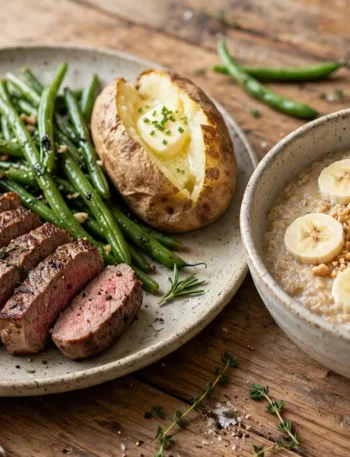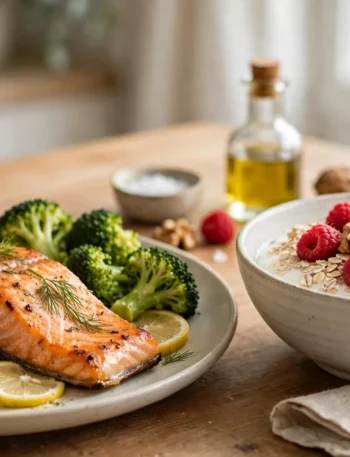
Prints just the plan, like a recipe card.
Last updated: November 22, 2026.
This meal plan for busy professionals gives you 7 days of breakfasts, lunches, dinners, and snacks at about 1,600 calories a day, designed around a simple rule: cook a few times, eat well all week. Dinners are built in portions that leave planned leftovers, lunches are assemblies that take five minutes, and no weekday meal needs more than a microwave, a knife, and a bowl. Protein averages about 124 grams a day, which keeps hunger quiet through long afternoons. Every portion is listed in plain US measures, and every number was calculated from USDA FoodData Central values. More plans like this one live in our By Lifestyle diet plans, and the full library is under Diet Plans.
Who this plan is for, and who should not follow it
This plan is for working adults whose weekdays run on meetings and deadlines and who cannot cook a fresh meal three times a day. It fits people willing to spend about an hour cooking on Sunday and a few short sessions midweek, in exchange for lunches that pack themselves and dinners that mostly reheat.
This plan is not medical advice. Talk with your doctor or a registered dietitian before following it, especially if you have diabetes, kidney disease, or another condition affected by food, or if you take medication that food or weight change can affect. It is not for children or teenagers, and it is not for anyone who is pregnant or breastfeeding. At 1,600 calories this plan is above the 1,500 calorie floor for men, but very active men and men with physical jobs will need the additions in the adjustment section.
If you have a history of disordered eating, talk with a doctor or a registered dietitian before following any diet plan. For eating disorder support in the US, visit the National Alliance for Eating Disorders at allianceforeatingdisorders.com.
Plan overview
| Daily calorie target | About 1600 calories |
| Average protein per day | About 124 g |
| Average carbohydrate per day | About 195 g |
| Average fat per day | About 43 g |
| Average fiber per day | About 36 g |
| Meals per day | 4 (breakfast, lunch, dinner, and snacks) |
The structure is the strategy: a cooked protein and a cooked grain from Sunday carry four of the week’s lunches, two dinners are deliberately doubled, and breakfast is either overnight oats, a yogurt parfait, or a five minute egg scramble. Protein averages about 124 grams a day and fiber about 36 grams.
How this meal plan for busy professionals is built
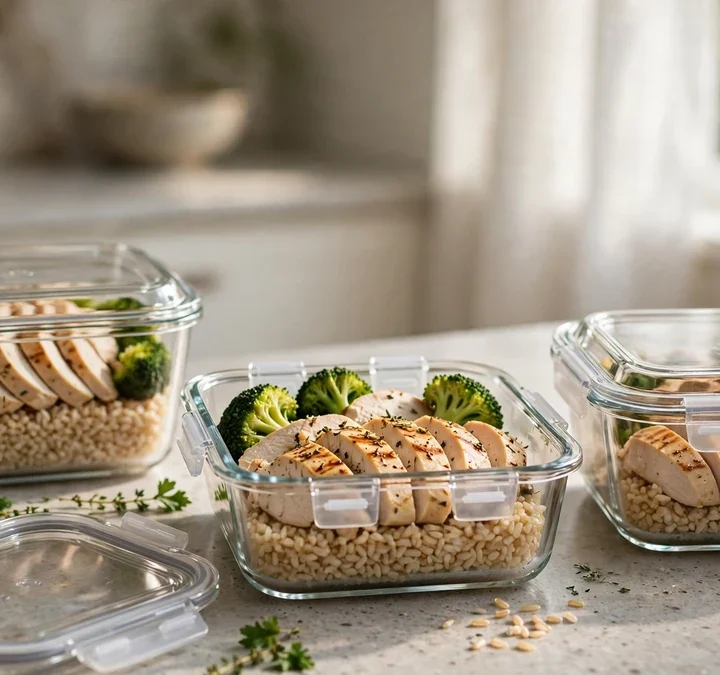
Sunday’s session is the engine: bake the chicken for days 1 and 2, cook the quinoa and brown rice, bake the potatoes, and make the lentil soup base. Day 2’s lunch is day 1’s chicken over quinoa, day 7 repeats the same trick with fresh chicken, and the day 6 chili is sized so lunch the next day is already handled if you want it.
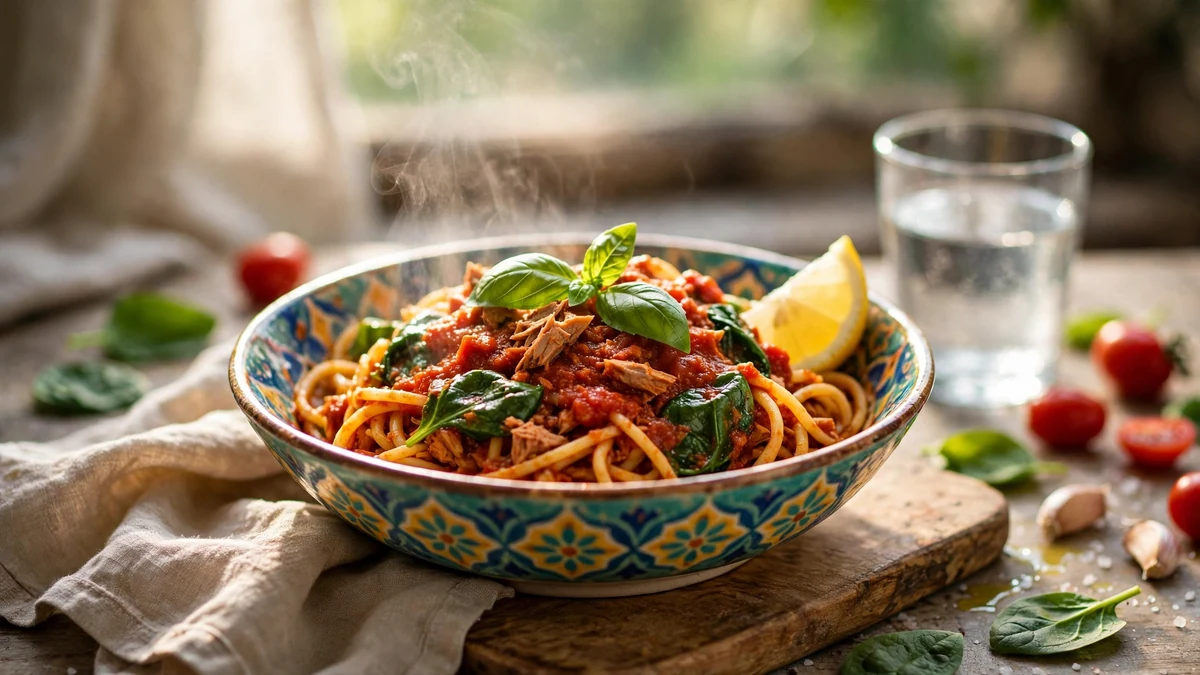
Weekday cooking is kept to three short jobs: a tuna pasta that takes twelve minutes, a salmon dinner that bakes while you change clothes, and an egg scramble breakfast. Everything else is assembly: sandwiches, pitas, salads, and bowls. If you want to check how 1,600 calories compares with your own needs, our calorie calculator gives a general estimate to discuss with your doctor or dietitian.
The 7-day meal plan
Portions are given in US household measures. Calories for each meal and day were calculated from USDA FoodData Central values for the exact foods and amounts listed. Refrigerate packed lunches within 2 hours of making them, and use cooked leftovers within 3 to 4 days.
Day 1
| Meal | What to eat | Calories |
|---|---|---|
| Breakfast | 3/4 cup plain nonfat Greek yogurt; 1/4 cup granola; 1 cup strawberries; 1 tablespoon honey | about 359 |
| Lunch | 1 can tuna in water, drained; 1 whole-wheat pita; 2 tablespoons hummus; 2 cups green leaf lettuce; 1 medium tomato; 1/2 cucumber, sliced | about 422 |
| Dinner | 6 oz cooked chicken breast; 1 cup cooked brown rice; 1 cup cooked broccoli; 1 teaspoon olive oil | about 602 |
| Snacks | 1 cup grapes; 1 oz cheddar cheese | about 219 |
Day 1 total: about 1603 calories, 131 g protein, 190 g carbohydrate, 39 g fat, 23 g fiber.
Day 2
| Meal | What to eat | Calories |
|---|---|---|
| Breakfast | 1/2 cup dry rolled oats; 1 cup skim milk; 1 medium banana; 1 tablespoon peanut butter | about 438 |
| Lunch | 4 oz cooked chicken breast; 1 cup cooked quinoa; 1 cup cooked kale; 1 teaspoon olive oil | about 505 |
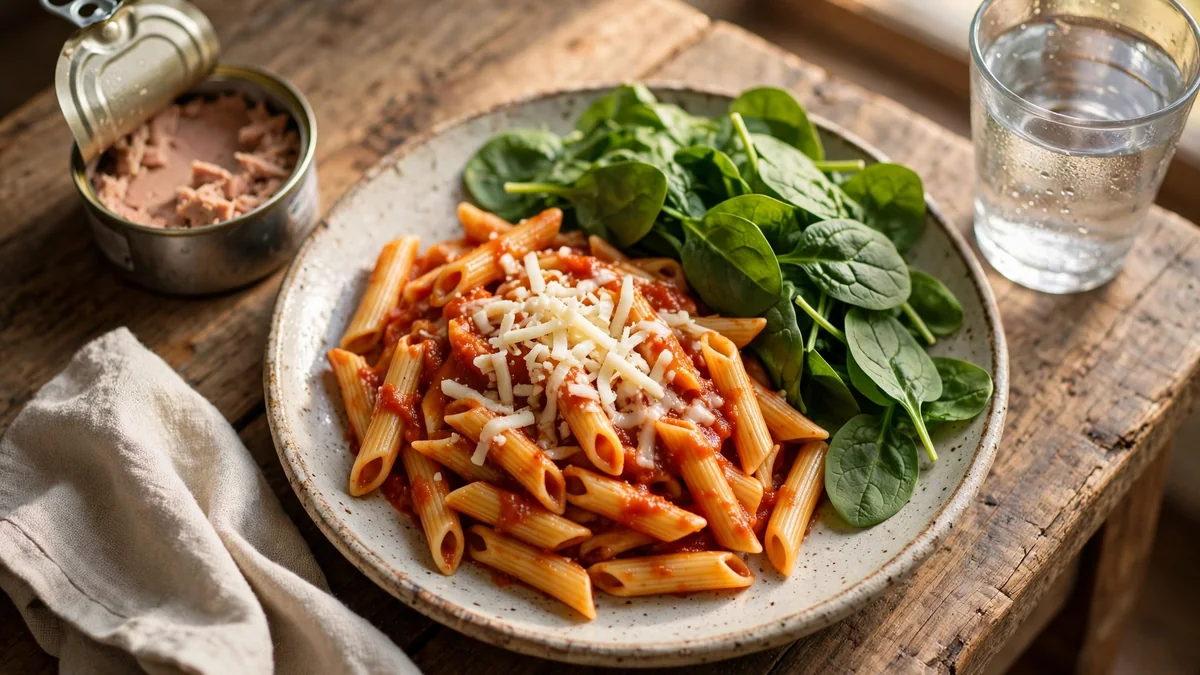
| Dinner | 1 can tuna in water, drained; 1 cup cooked pasta; 1/2 cup marinara sauce; 2 cups raw spinach; 1 oz part-skim mozzarella cheese | about 534 |
| Snacks | 1/2 cup low-fat cottage cheese; 1 cup strawberries | about 130 |
Day 2 total: about 1607 calories, 127 g protein, 187 g carbohydrate, 40 g fat, 25 g fiber.
Day 3
| Meal | What to eat | Calories |
|---|---|---|
| Breakfast | 2 slices whole-wheat bread; 2 tablespoons peanut butter; 1 cup skim milk; 1 medium apple | about 533 |
| Lunch | 5 oz cooked turkey breast; 2 slices whole-wheat bread; 1 oz cheddar cheese; 2 cups green leaf lettuce; 1 medium tomato; 1 medium apple | about 612 |
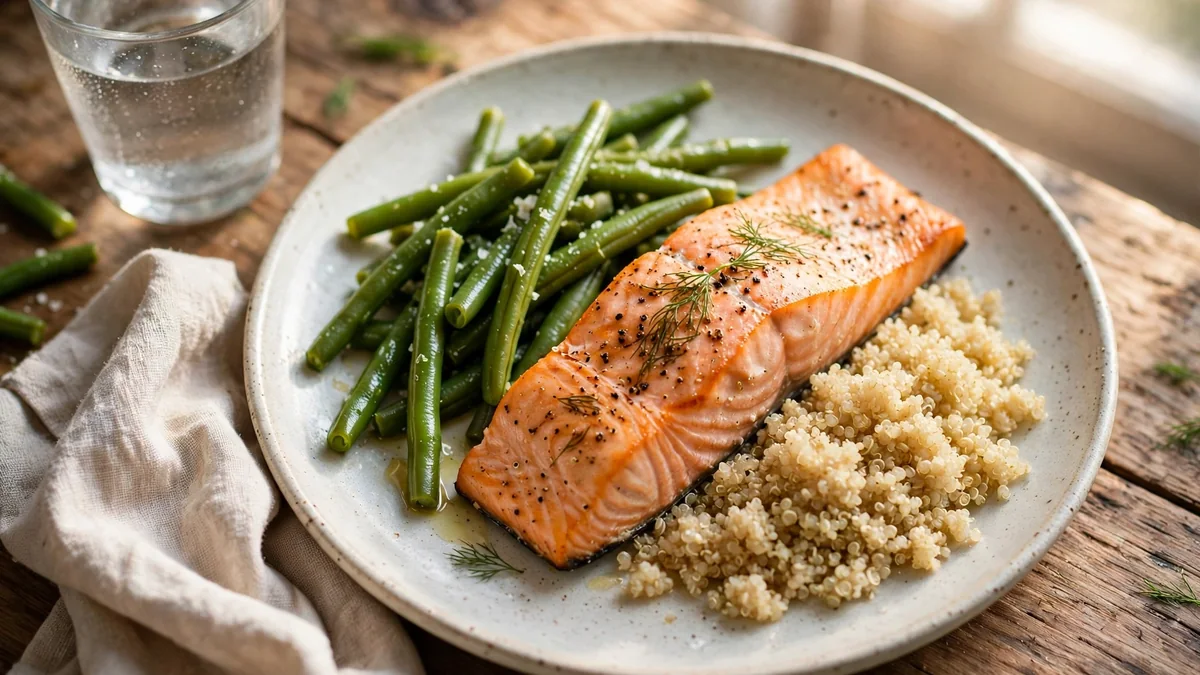
| Dinner | 4 oz cooked salmon; 1 cup cooked green beans; 1/2 cup cooked quinoa | about 361 |
| Snacks | 1/2 cup low-fat cottage cheese; 1 cup strawberries | about 130 |
Day 3 total: about 1636 calories, 134 g protein, 176 g carbohydrate, 48 g fat, 30 g fiber.
Day 4
| Meal | What to eat | Calories |
|---|---|---|
| Breakfast | 1 large egg; 3 large egg whites; 1 oz part-skim mozzarella cheese; 1 slice whole-wheat bread; 2 cups raw spinach; 1 medium tomato | about 329 |
| Lunch | 1 cup cooked black beans; 1/2 cup cooked brown rice; 1/2 avocado; 1/4 cup salsa; about 2/3 cup cooked corn | about 576 |
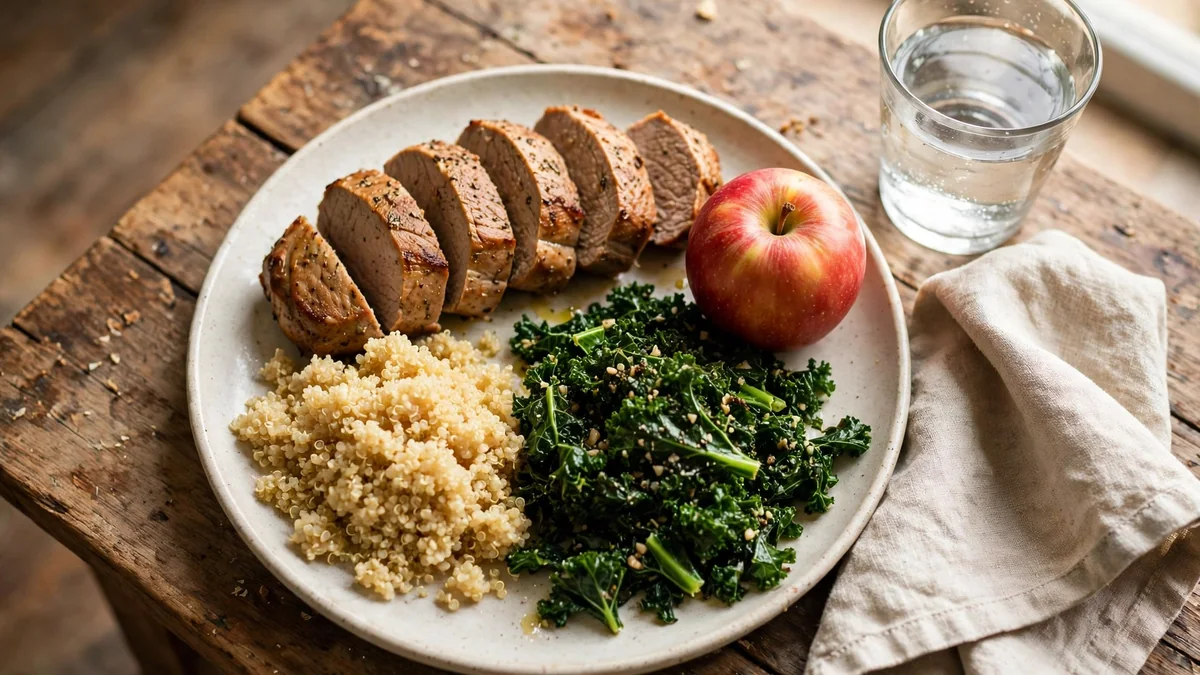
| Dinner | 5 oz cooked pork tenderloin; 1 cup cooked quinoa; 1 cup cooked kale; 1 medium apple | about 577 |
| Snacks | 3 cups air-popped popcorn; 1 cup skim milk | about 179 |
Day 4 total: about 1660 calories, 115 g protein, 222 g carbohydrate, 39 g fat, 46 g fiber.
Day 5
| Meal | What to eat | Calories |
|---|---|---|
| Breakfast | 2 large eggs; 2 slices whole-wheat bread; 1/2 avocado; 1 orange | about 498 |
| Lunch | 1 cup cooked chickpeas; 1/2 cucumber, sliced; 1 medium tomato; 1 oz feta cheese, crumbled; 2 teaspoons olive oil; 2 cups green leaf lettuce | about 471 |
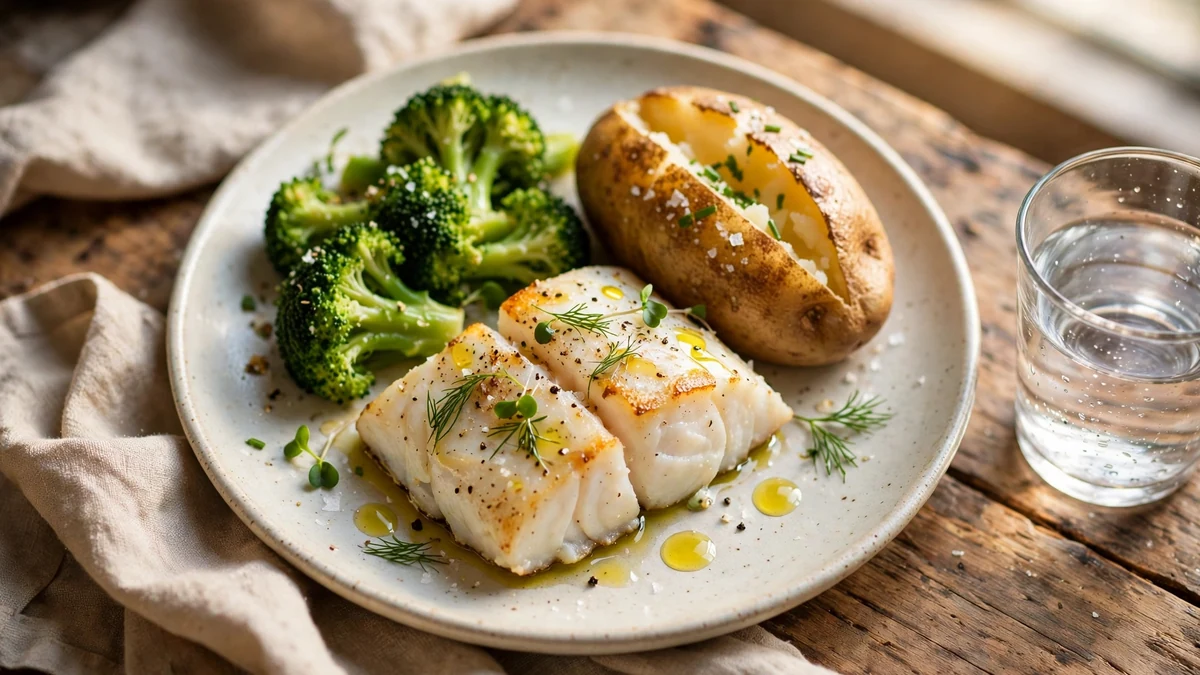
| Dinner | 6 oz cooked cod; 1 medium baked potato; 1 cup cooked broccoli; 2 teaspoons olive oil | about 463 |
| Snacks | 1/4 cup hummus; 1 cup chopped carrots | about 159 |
Day 5 total: about 1590 calories, 95 g protein, 176 g carbohydrate, 61 g fat, 42 g fiber.
Day 6
| Meal | What to eat | Calories |
|---|---|---|
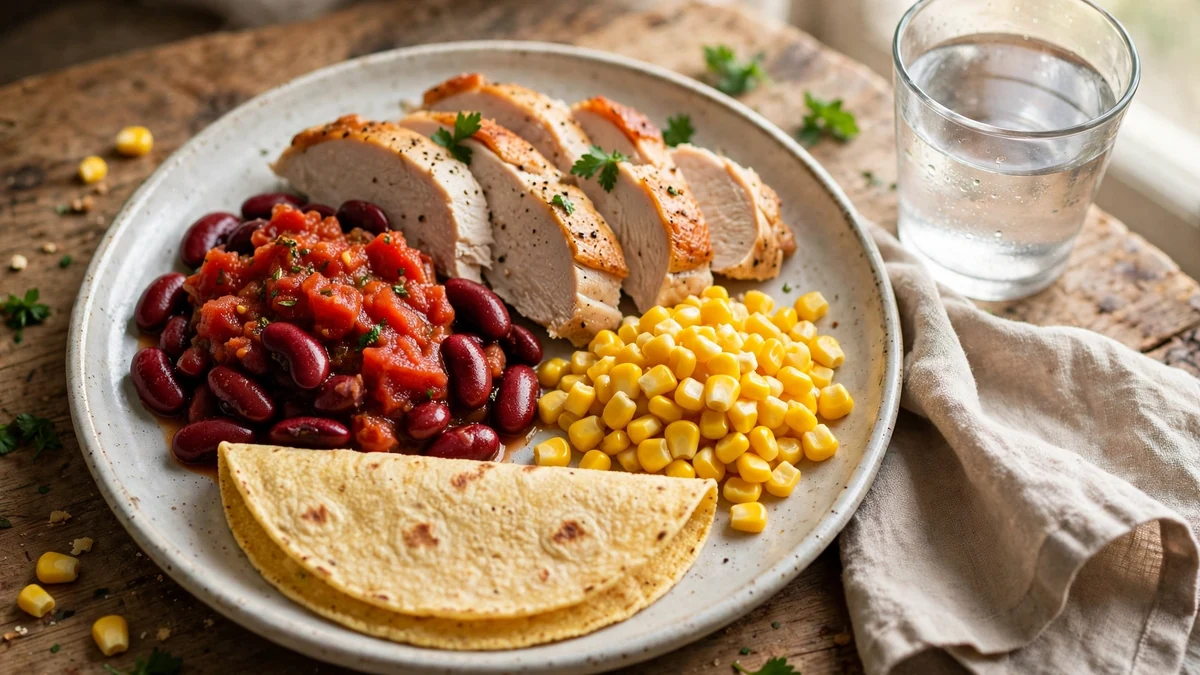
| Breakfast | 1 cup low-fat cottage cheese; 1 medium pear; 1 oz walnuts (about 1/4 cup) | about 447 |
| Lunch | 1 cup cooked lentils; 1 cup chopped carrots; 1/2 cup crushed canned tomatoes; 1 teaspoon olive oil; 1 slice whole-wheat bread | about 431 |
| Dinner | 5 oz cooked turkey breast; 1 cup cooked kidney beans; 1 cup crushed canned tomatoes; about 2/3 cup cooked corn; 1 corn tortilla | about 650 |
| Snacks | 1/2 cup low-fat cottage cheese; 1 cup strawberries | about 130 |
Day 6 total: about 1658 calories, 139 g protein, 211 g carbohydrate, 36 g fat, 54 g fiber.
Day 7
| Meal | What to eat | Calories |
|---|---|---|
| Breakfast | 1/2 cup dry rolled oats; 3/4 cup plain low-fat Greek yogurt; 1 cup blueberries; 1 tablespoon maple syrup | about 412 |
| Lunch | 4 oz cooked chicken breast; 1 cup cooked quinoa; 1 cup cooked kale; 1 teaspoon olive oil | about 505 |
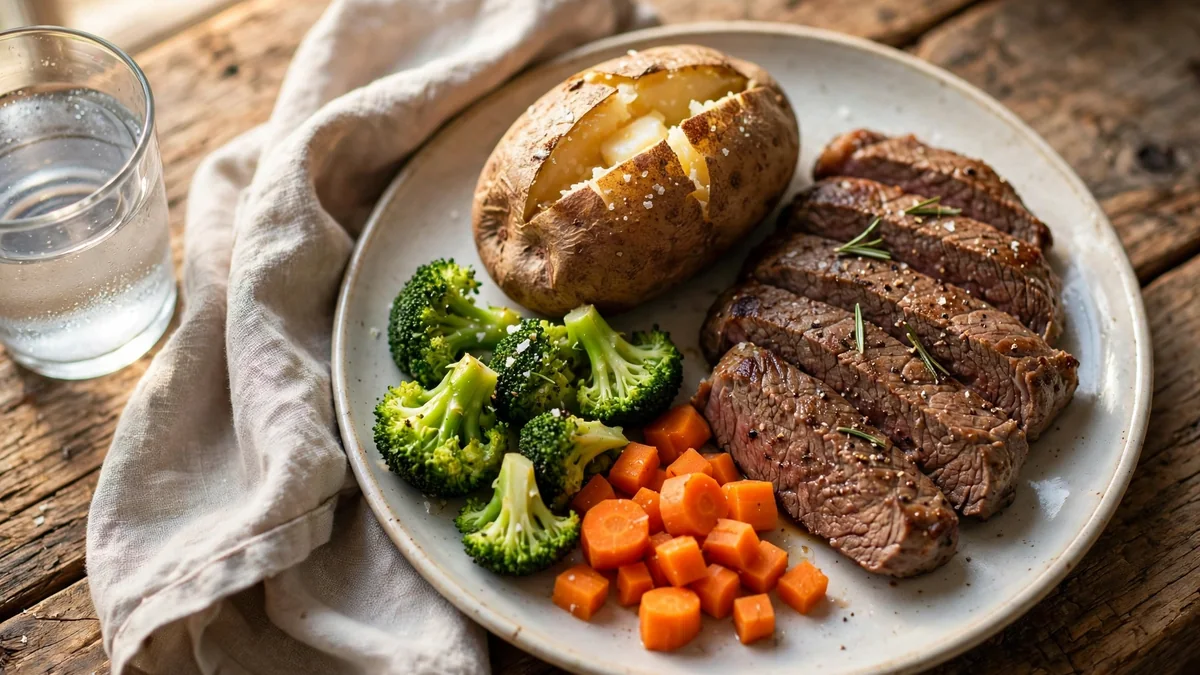
| Dinner | 5 oz cooked beef sirloin; 1 medium baked potato; 1 cup cooked broccoli; 1 cup chopped carrots | about 525 |
| Snacks | 1 medium apple; 1 tablespoon peanut butter | about 190 |
Day 7 total: about 1632 calories, 126 g protein, 201 g carbohydrate, 39 g fat, 33 g fiber.
Grocery list
This list covers the full week for one person, following the portions in the plan. It is written for one Sunday shop plus nothing else; everything keeps until its day if the fish is bought frozen.
Produce
- Bananas, oranges, apples, pears, strawberries, grapes, and blueberries
- Avocados
- Spinach and green leaf lettuce
- Kale, broccoli, and green beans
- Carrots, cucumbers, and tomatoes
- Sweet potatoes and white potatoes
- Corn (fresh or frozen)
Meat and seafood
- Chicken breast and turkey breast
- Beef top sirloin and pork tenderloin
- Salmon fillets and cod fillets
- Canned tuna in water
Dairy and eggs
- Large eggs and egg whites
- Plain nonfat Greek yogurt and plain low-fat Greek yogurt
- Low-fat cottage cheese
- Cheddar cheese and part-skim mozzarella
- Skim milk
Pantry
- Rolled oats and granola
- Brown rice, white rice, quinoa, and pasta
- Black beans, kidney beans, and lentils (dry or canned, rinsed)
- Chickpeas
- Crushed canned tomatoes and marinara sauce
- Salsa and hummus
- Peanut butter, almonds, and walnuts
- Olive oil, honey, and maple syrup
- Popcorn for air-popping
Frozen
- Frozen salmon and cod portions for late week dinners
- Frozen corn and berries as backups
Bakery
- Whole-wheat bread
- Whole-wheat pita
- Corn tortillas
Meal prep tips
- Sunday, about one hour: bake all the chicken, cook the quinoa and brown rice, bake the potatoes, and portion the grains into containers.
- Pack lunches the night before in the container you will carry; morning assembly is where busy plans usually fail.
- Make the lentil soup and the turkey chili in full pots; both are lunches and dinners later in the week, not single meals.
- Keep a desk drawer kit from the plan’s own foods: popcorn kernels for the office microwave or a portion of almonds, so a missed lunch does not become a vending machine run.
- Freeze the day 5 cod and day 7 beef portions if your shop is more than three days before you cook them.
Easy swaps
- Swap any lunch for the tuna pita or the turkey sandwich; both assemble in five minutes and travel well.
- Swap chicken breast for turkey breast or pork tenderloin in the same portions in any cooked meal.
- Swap brown rice, white rice, and quinoa for each other cup for cup in bowls and dinners.
- Swap the yogurt parfait breakfast for overnight oats made from the same ingredients when mornings are rushed.
- Swap black beans, kidney beans, and lentils for each other in equal portions in the chili and bowls.
- Swap fresh salmon and cod for their frozen equivalents; the plan’s numbers do not change.
How to adjust the calories safely
If 1,600 calories leaves you persistently hungry, low on energy, or losing faster than about 2 pounds a week, add food. To add roughly 200 to 300 calories a day using foods already in the plan, choose one: 1 oz of almonds (about 162 calories) kept at your desk plus an orange (about 62 calories); 1 cup of cooked quinoa (about 222 calories) added to a dinner; or 3/4 cup of plain Greek yogurt with 1 cup of raspberries (about 188 calories) plus 1 tablespoon of honey (about 64 calories) as a second snack.
Never go below 1,200 calories a day for women or 1,500 calories a day for men. Men with long, physical workdays should treat the additions above as standard, not optional, and anyone training hard several times a week should add them on training days at minimum.
Common mistakes
- Skipping the Sunday session and planning to improvise. This plan’s weekday ease is bought on Sunday; without it, every day becomes a decision.
- Letting lunch default to whatever is near the office. The packed lunches are the plan; restaurant meals are not counted in these numbers.
- Eating the planned leftovers as seconds at dinner. The second portion has a job tomorrow; plate tomorrow’s lunch before you sit down.
- Skipping breakfast on deadline days, then raiding the snack table at 4 PM. The breakfasts here take five minutes or none.
- Keeping cooked food past 4 days because the week got busy. Freeze what you will not eat by day 4.
Pair it with a workout
Short, scheduled sessions beat ambitious ones for a full calendar: two or three 30 minute strength sessions and walking on the other days fit around this plan well. The routines in our Exercise and Workouts category include beginner options you can do at home; build up gradually and stop any exercise that causes pain, dizziness, or chest pain. On heavy training days, use the adjustment foods rather than borrowing calories from the next day.
Frequently asked questions
How much cooking does this plan really need?
About an hour on Sunday, then three short jobs all week: a twelve minute tuna pasta, a salmon dinner that bakes unattended, and egg scrambles. Every other weekday meal is assembly or reheating.
What if a work lunch or dinner lands on a plan day?
Follow the shape of the planned meal rather than the exact foods: a palm-and-a-half of protein, a fist of grains or potatoes, and as many vegetables as the menu offers, with water or an unsweetened drink. Then return to the plan at the next meal without trying to pay anything back.
Can I prep this plan for two people?
Yes. Double every portion in the Sunday session and the doubled dinners, and pack two lunches at night instead of one. The per-person numbers stay the same.
Is 1,600 calories right for me?
It is a reasonable weight loss level for many adults and sits above the 1,500 calorie floor for men. If you are very active, tall, or losing faster than about 2 pounds a week, use the adjustment section to add 200 to 300 calories.
How long do the prepped foods keep?
Cooked chicken, grains, soups, and chili keep 3 to 4 days in the refrigerator. The plan is sequenced so the Sunday cooking is eaten by Wednesday; freeze anything your week pushes past that.
Sources and further reading
- USDA FoodData Central, the source for every calorie and nutrient value in this plan: fdc.nal.usda.gov
- Dietary Guidelines for Americans, for the overall healthy eating pattern this plan follows: dietaryguidelines.gov
- MyPlate, for balanced plate ideas built from the same food groups: myplate.gov
- Centers for Disease Control and Prevention, for healthy weight guidance: cdc.gov
- MedlinePlus, for plain language background on meal planning and food safety: medlineplus.gov
This article is for general educational purposes only and is not medical, nutrition, or fitness advice. Talk with your doctor or a registered dietitian before changing your diet or starting an exercise program.