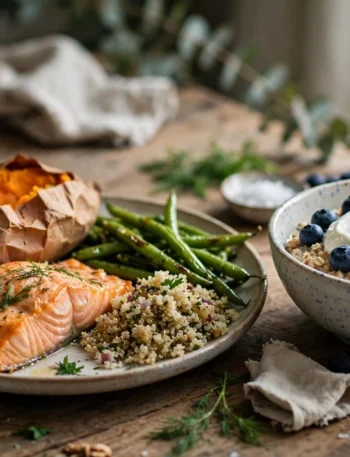
Prints just the plan, like a recipe card.
Last updated: November 22, 2026.
This meal plan for remote workers gives you 7 days of breakfasts, lunches, dinners, and snacks at about 1,500 calories a day, built around the problem every home worker knows: the kitchen is ten steps away all day. The answer here is structure, not willpower. Meals happen at set times, snacks are planned and portioned instead of grazed, and lunch is a real plate you sit down for, away from the keyboard. Protein averages about 113 grams a day, which keeps hunger from driving the grazing in the first place. Every portion is listed in plain US measures, and every number was calculated from USDA FoodData Central values. More plans like this one live in our By Lifestyle diet plans, and the full library is under Diet Plans.
Who this plan is for, and who should not follow it
This plan is for adults who work from home most days and find that unstructured access to food, not appetite, is what pushes calories up: a handful here, a leftover there, a second lunch during a slow call. It fits people who can keep three meal times and one planned snack time, and who are willing to plate food and sit down rather than eat at the desk.
This plan is not medical advice. Talk with your doctor or a registered dietitian before following it, especially if you have diabetes, kidney disease, or another condition affected by food, or if you take medication that food or weight change can affect. It is not for children or teenagers, and it is not for anyone who is pregnant or breastfeeding. At 1,500 calories this plan sits exactly at the floor for men, so men should use the adjustment section to add food every day; it is written at a level most men should not go below, and many should eat above.
If you have a history of disordered eating, talk with a doctor or a registered dietitian before following any diet plan. For eating disorder support in the US, visit the National Alliance for Eating Disorders at allianceforeatingdisorders.com.
Plan overview
| Daily calorie target | About 1500 calories |
| Average protein per day | About 113 g |
| Average carbohydrate per day | About 186 g |
| Average fat per day | About 39 g |
| Average fiber per day | About 37 g |
| Meals per day | 4 (breakfast, lunch, dinner, and snacks) |
The day has four fixed points: breakfast, lunch, one planned snack, and dinner. Nothing else is on the menu, which is the point. Protein averages about 113 grams a day and fiber about 37 grams, so the meals themselves are filling enough that the structure is easy to keep.
How this meal plan for remote workers is built
Each meal is a plate, not a project: oatmeal or eggs at breakfast, a pita, salad, soup, or bowl at lunch, and a protein with a grain and a vegetable at dinner. The snack is deliberately modest and satisfying, cottage cheese with strawberries or yogurt with raspberries, and it belongs at a set time in the afternoon, not spread across the day.
Two small rules do the heavy lifting. First, food is eaten at the table, not at the desk, so work and eating stop blending together. Second, seconds live in the refrigerator as tomorrow’s ingredients, not on the counter. If you want to check how 1,500 calories compares with your own needs, our calorie calculator gives a general estimate to discuss with your doctor or dietitian.
The 7-day meal plan
Portions are given in US household measures. Calories for each meal and day were calculated from USDA FoodData Central values for the exact foods and amounts listed. A suggested rhythm: breakfast before you log on, lunch midday away from your desk, the snack at a set afternoon time, and dinner after you close the laptop.
Day 1
| Meal | What to eat | Calories |
|---|---|---|
| Breakfast | 1/2 cup dry rolled oats; 1 cup skim milk; 1 medium banana; 1 tablespoon peanut butter | about 438 |
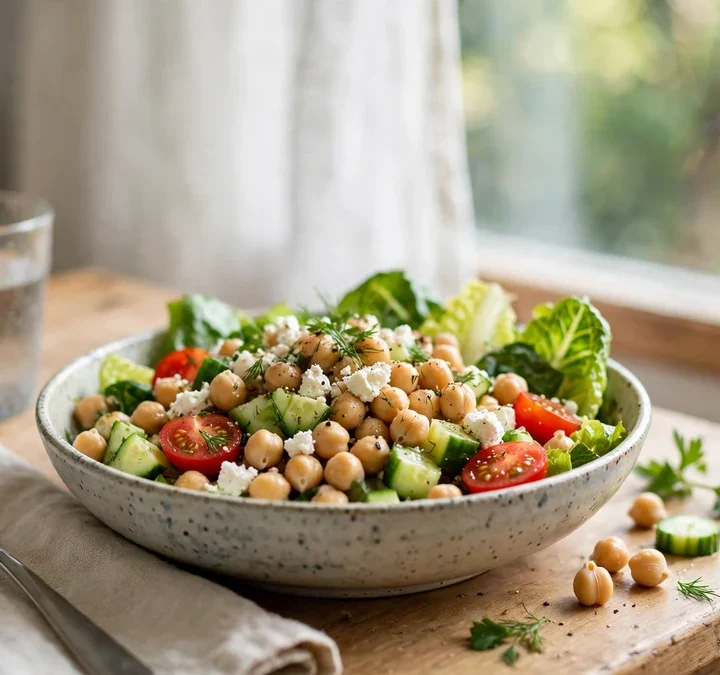
| Lunch | 1 cup cooked chickpeas; 1/2 cucumber, sliced; 1 medium tomato; 1 oz feta cheese, crumbled; 2 teaspoons olive oil; 2 cups green leaf lettuce | about 471 |
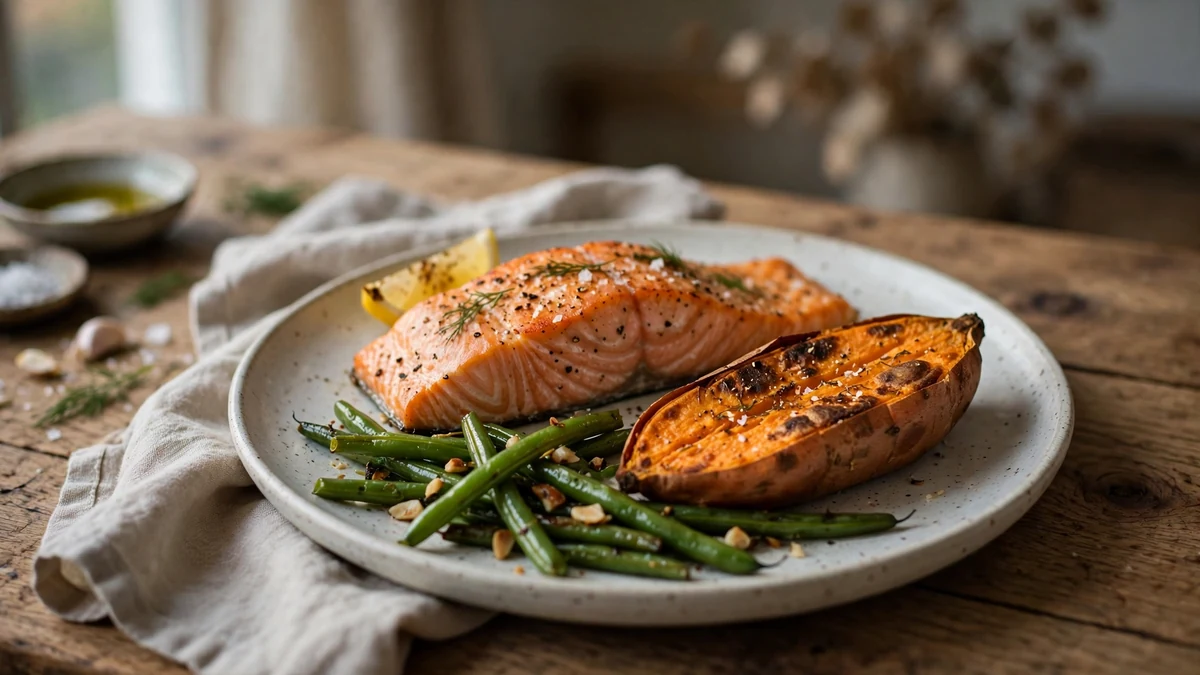
| Dinner | 4 oz cooked salmon; 1 medium baked sweet potato; 1 cup cooked green beans; 1 teaspoon olive oil | about 392 |
| Snacks | 3/4 cup plain nonfat Greek yogurt; 1 cup raspberries | about 164 |
Day 1 total: about 1465 calories, 92 g protein, 180 g carbohydrate, 47 g fat, 39 g fiber.
Day 2
| Meal | What to eat | Calories |
|---|---|---|
| Breakfast | 3/4 cup plain nonfat Greek yogurt; 1/4 cup granola; 1 cup strawberries; 1 tablespoon honey | about 359 |
| Lunch | 1 cup cooked lentils; 1 cup chopped carrots; 1/2 cup crushed canned tomatoes; 2 teaspoons olive oil; 1 slice whole-wheat bread | about 470 |
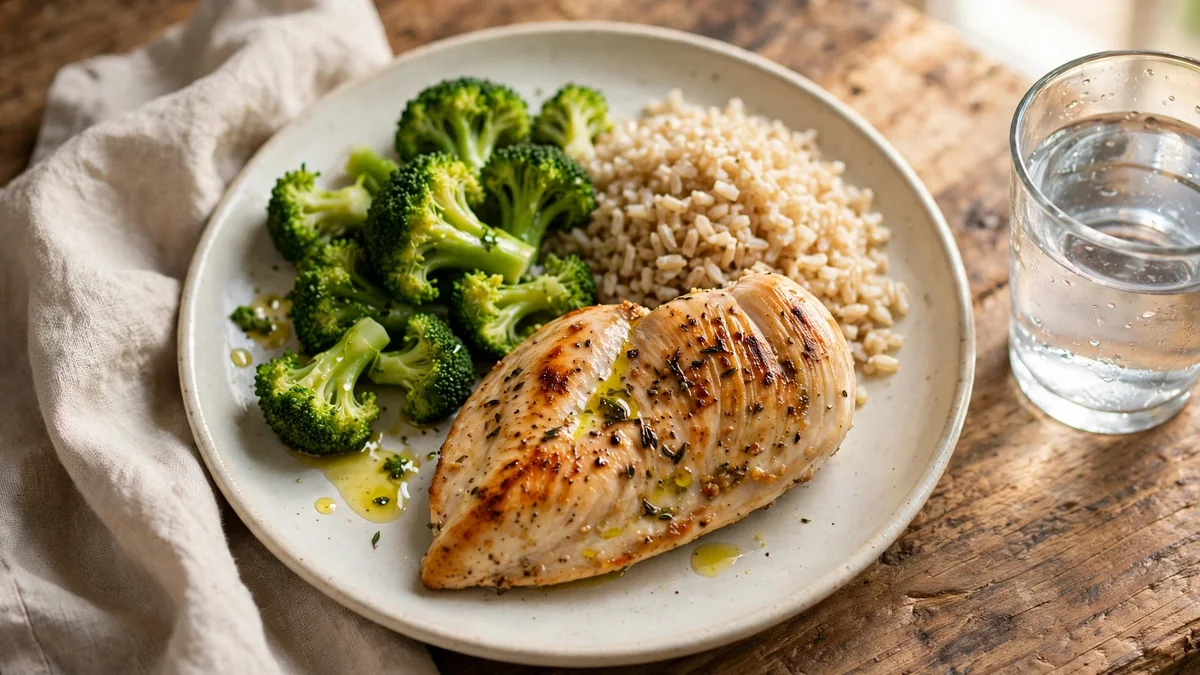
| Dinner | 6 oz cooked chicken breast; 1 cup cooked brown rice; 1 cup cooked broccoli; 1 teaspoon olive oil | about 602 |
| Snacks | 1/2 cup low-fat cottage cheese; 1 cup strawberries | about 130 |
Day 2 total: about 1562 calories, 124 g protein, 196 g carbohydrate, 34 g fat, 40 g fiber.
Day 3
| Meal | What to eat | Calories |
|---|---|---|
| Breakfast | 2 large eggs; 2 slices whole-wheat bread; 1/2 avocado; 1 orange | about 498 |
| Lunch | 1 can tuna in water, drained; 1 whole-wheat pita; 2 tablespoons hummus; 2 cups green leaf lettuce; 1 medium tomato; 1/2 cucumber, sliced | about 422 |
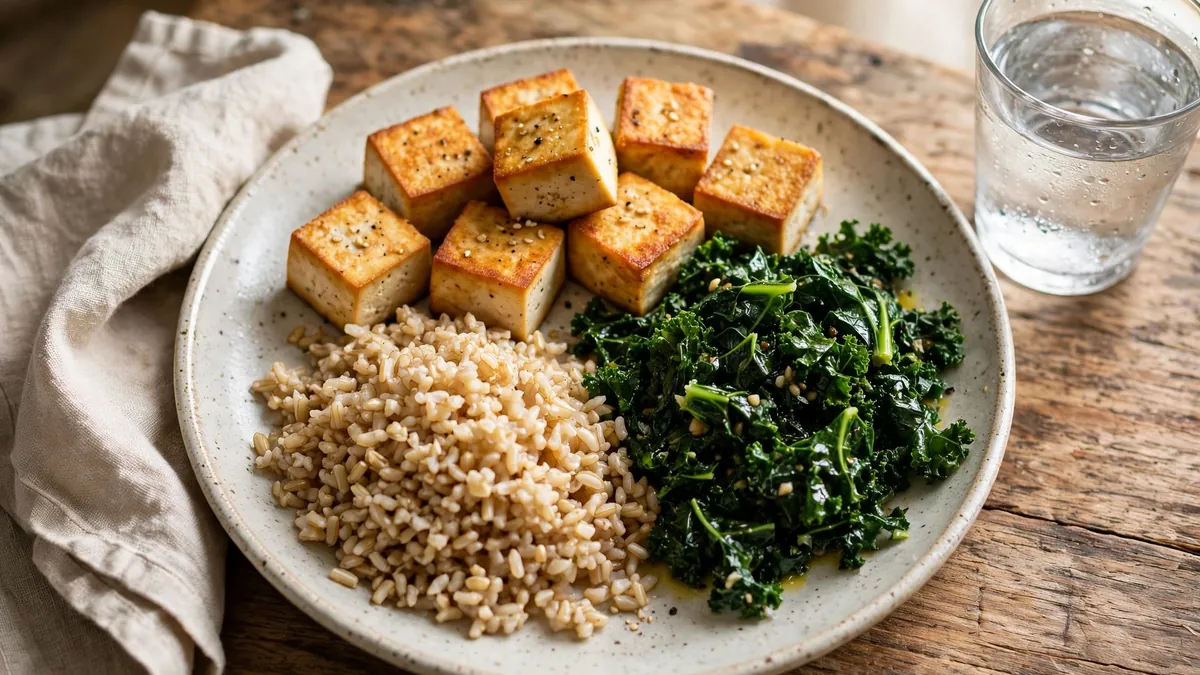
| Dinner | 125 g firm tofu (about 4 1/2 oz); 1 cup cooked brown rice; 1 cup cooked kale | about 465 |
| Snacks | 1/2 cup low-fat cottage cheese; 1 cup strawberries | about 130 |
Day 3 total: about 1515 calories, 108 g protein, 175 g carbohydrate, 48 g fat, 32 g fiber.
Day 4
| Meal | What to eat | Calories |
|---|---|---|
| Breakfast | 1 cup low-fat cottage cheese; 1 medium pear; 1 oz walnuts (about 1/4 cup) | about 447 |
| Lunch | 1 cup cooked black beans; 1/2 cup cooked brown rice; 1/2 avocado; 1/4 cup salsa; about 2/3 cup cooked corn | about 576 |
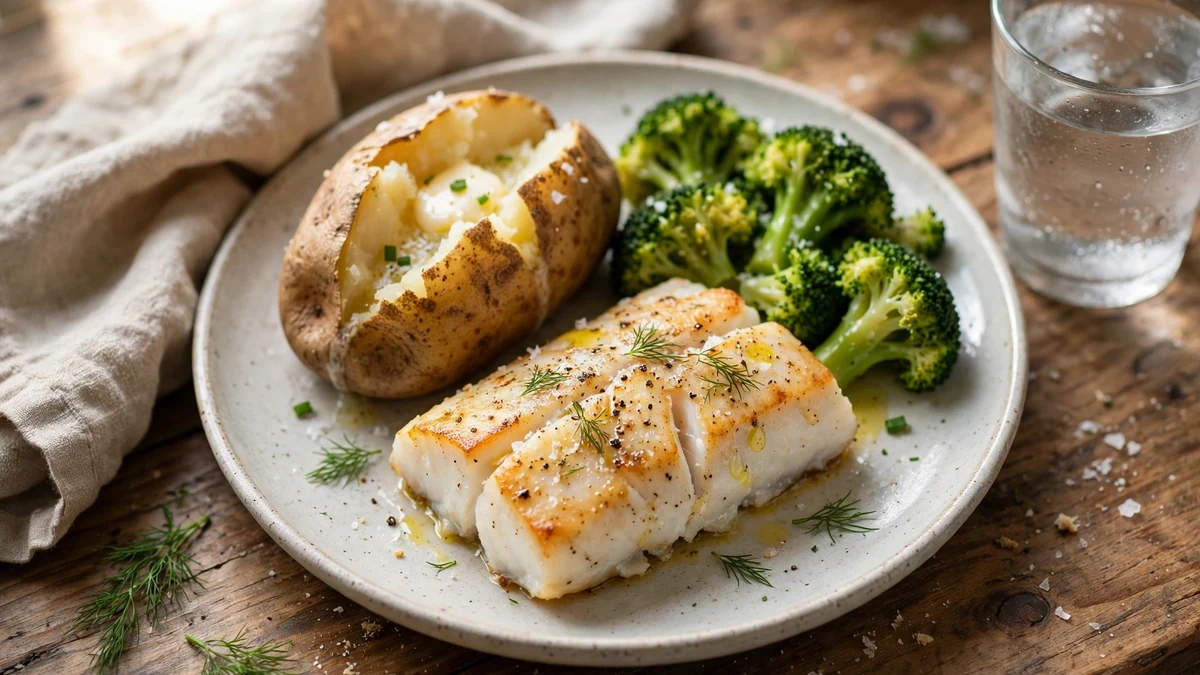
| Dinner | 6 oz cooked cod; 1 medium baked potato; 1 cup cooked broccoli | about 384 |
| Snacks | 3/4 cup plain nonfat Greek yogurt; 1 cup raspberries | about 164 |
Day 4 total: about 1571 calories, 122 g protein, 199 g carbohydrate, 39 g fat, 49 g fiber.
Day 5
| Meal | What to eat | Calories |
|---|---|---|
| Breakfast | 1 large egg; 3 large egg whites; 1 oz part-skim mozzarella cheese; 1 slice whole-wheat bread; 2 cups raw spinach; 1 medium tomato | about 329 |
| Lunch | 1 can tuna in water, drained; 1 whole-wheat pita; 2 tablespoons hummus; 2 cups green leaf lettuce; 1 medium tomato; 1/2 cucumber, sliced | about 422 |
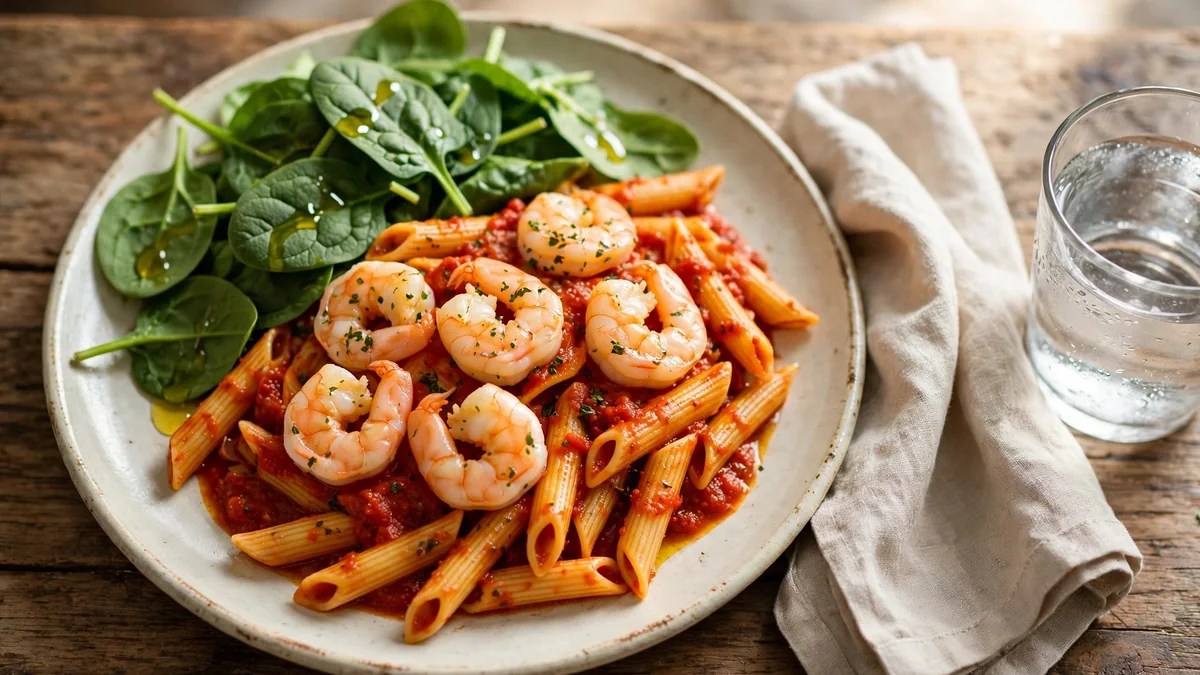
| Dinner | 6 oz cooked shrimp; 1 cup cooked pasta; 1/2 cup marinara sauce; 2 cups raw spinach; 1 teaspoon olive oil | about 540 |
| Snacks | 1/2 cup low-fat cottage cheese; 1 cup strawberries; 1 cup skim milk | about 216 |
Day 5 total: about 1506 calories, 143 g protein, 160 g carbohydrate, 33 g fat, 22 g fiber.
Day 6
| Meal | What to eat | Calories |
|---|---|---|
| Breakfast | 1/2 cup dry rolled oats; 3/4 cup plain low-fat Greek yogurt; 1 cup blueberries; 1 tablespoon maple syrup | about 412 |
| Lunch | 1 cup cooked chickpeas; 1/2 cucumber, sliced; 1 medium tomato; 1 oz feta cheese, crumbled; 2 teaspoons olive oil; 2 cups green leaf lettuce | about 471 |
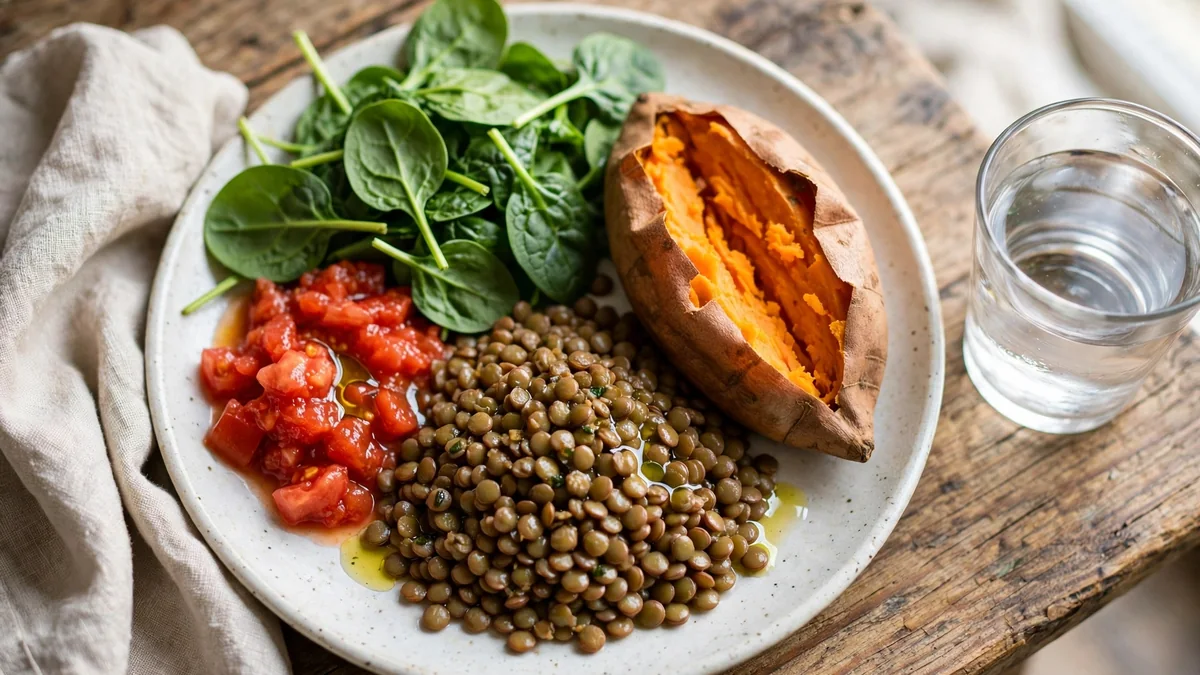
| Dinner | 1 cup cooked lentils; 1 medium baked sweet potato; 2 cups raw spinach; 1/2 cup crushed canned tomatoes; 2 teaspoons olive oil | about 454 |
| Snacks | 1/2 cup low-fat cottage cheese; 1 cup strawberries | about 130 |
Day 6 total: about 1466 calories, 83 g protein, 212 g carbohydrate, 38 g fat, 49 g fiber.
Day 7
| Meal | What to eat | Calories |
|---|---|---|
| Breakfast | 1/2 cup dry rolled oats; 1 cup skim milk; 1 medium banana; 1 tablespoon peanut butter | about 438 |
| Lunch | 4 oz cooked chicken breast; 1 cup cooked quinoa; 1 cup cooked kale; 1 teaspoon olive oil | about 505 |
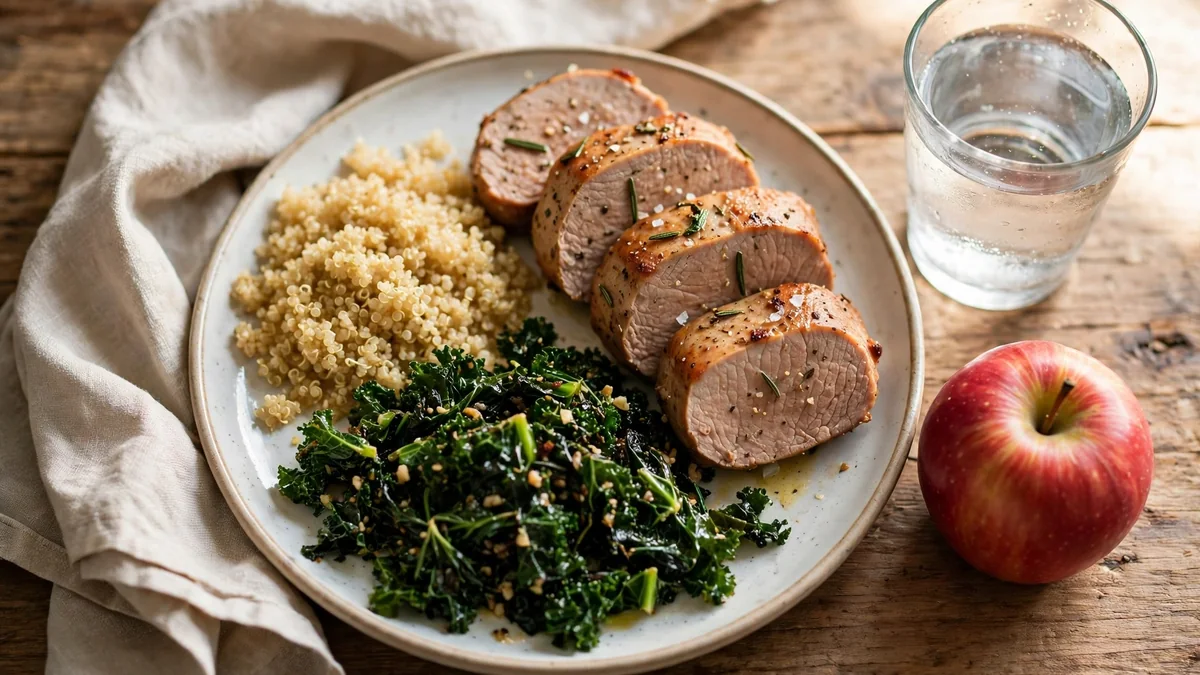
| Dinner | 4 oz cooked pork tenderloin; 1/2 cup cooked quinoa; 1 cup cooked kale; 1 medium apple | about 425 |
| Snacks | 1/2 cup low-fat cottage cheese; 1 cup strawberries | about 130 |
Day 7 total: about 1499 calories, 118 g protein, 182 g carbohydrate, 35 g fat, 29 g fiber.
Grocery list
This list covers the full week for one person, following the portions in the plan. Most of it keeps all week in the refrigerator, which matters when there is no commute past a store.
Produce
- Bananas, oranges, apples, pears, strawberries, and blueberries
- Avocados and raspberries
- Spinach and green leaf lettuce
- Kale, broccoli, and green beans
- Carrots, cucumbers, and tomatoes
- Sweet potatoes and white potatoes
- Corn (fresh or frozen)
Meat and seafood
- Chicken breast and pork tenderloin
- Salmon fillets, cod fillets, and shrimp
- Canned tuna in water
- Firm tofu (calcium-set)
Dairy and eggs
- Large eggs and egg whites
- Plain nonfat Greek yogurt and plain low-fat Greek yogurt
- Low-fat cottage cheese
- Cheddar cheese, feta cheese, and part-skim mozzarella
- Skim milk
Pantry
- Rolled oats and granola
- Brown rice, white rice, quinoa, and pasta
- Black beans, kidney beans, and lentils (dry or canned, rinsed)
- Chickpeas
- Crushed canned tomatoes and marinara sauce
- Salsa and hummus
- Peanut butter, almonds, and walnuts
- Olive oil, honey, and maple syrup
Frozen
- Frozen shrimp and cod for late week dinners
- Frozen corn and berries as backups
Bakery
- Whole-wheat bread
- Whole-wheat pita
- Corn tortillas
Meal prep tips
- Portion the snack foods on Sunday into seven single servings. A snack you have to measure at 3 PM is a snack that grows.
- Cook the quinoa, brown rice, and lentils in one session; four of the week’s meals are built from them.
- Keep the lunch ingredients together on one refrigerator shelf so the midday plate takes five minutes to build.
- Bake the sweet potatoes and white potatoes ahead; they anchor two dinners and reheat in minutes.
- Put the fruit bowl where you can see it and the snack foods out of sight in a closed container; at home, placement is half the plan.
Easy swaps
- Swap the cottage cheese snack for the same amount of plain Greek yogurt, or the yogurt snack for cottage cheese.
- Swap salmon for cod or shrimp in the same portion at any dinner.
- Swap black beans, kidney beans, and lentils for each other in equal portions in bowls and soups.
- Swap the tuna pita for a chicken and greens plate with a slice of whole-wheat bread.
- Swap skim milk for the same amount of water plus 2 tablespoons of Greek yogurt in oatmeal.
- Swap any cooked vegetable for another in the same amount: broccoli, green beans, kale, and carrots rotate freely.
How to adjust the calories safely
If 1,500 calories leaves you persistently hungry, low on energy, or losing faster than about 2 pounds a week, add food, and men should add food from day one. To add roughly 200 to 300 calories a day using foods already in the plan, choose one: 1 oz of almonds (about 162 calories) as a second planned snack plus an orange (about 62 calories); 1 cup of cooked quinoa (about 222 calories) added to a dinner; or 1 tablespoon of peanut butter (about 96 calories) on the breakfast toast plus 1 cup of skim milk (about 86 calories) with lunch.
Never go below 1,200 calories a day for women or 1,500 calories a day for men. Because this plan is written at 1,500, there is no room to trim it further; if you find yourself skipping the snack to save calories, you are below the plan, not ahead of it.
Common mistakes
- Grazing between the planned meals. A bite while cooking, a handful while passing the kitchen: at home these add up faster than any single meal. If it is not one of the four meals, it is not on the plan.
- Eating lunch at the desk while working. You will finish without registering the meal and be hungry again in an hour. Plate it, sit elsewhere, take the break.
- Skipping the planned snack and then raiding the kitchen at 6 PM. The afternoon snack exists to protect dinner.
- Keeping trigger foods at eye level. Move your household’s snack foods to a high shelf or a closed box; the plan’s foods get the front of the refrigerator.
- Treating weekends as days off from structure. The plan runs seven days; keep the same four meal times on Saturday and Sunday.
Pair it with a workout
Working from home removes the commute walk, so movement has to be scheduled like a meeting: a walk after lunch, a short strength session before dinner. The routines in our Exercise and Workouts category are built for small spaces and short breaks; build up gradually and stop any exercise that causes pain, dizziness, or chest pain. Pairing the after-lunch walk with the planned snack time gives the afternoon a shape that keeps both habits alive.
Frequently asked questions
Why does this plan schedule snacks instead of banning them?
Because at home, unplanned snacking is the default, and a planned, portioned snack at a set time replaces the grazing rather than just forbidding it. One snack you chose beats six handfuls you did not.
Is 1,500 calories enough if I work from home and barely move?
It is a reasonable weight loss level for many women and sits at the floor for men, who should add the adjustment foods daily. Low activity lowers your needs somewhat, but it does not lower the safety floors: 1,200 for women and 1,500 for men.
What do I do about household food that is not mine?
Keep your plan’s ingredients together on one shelf and one drawer, and agree with the people you live with that those are spoken for. Shared treats can live somewhere you do not open ten times a day.
Can I move the meal times?
Yes. The times matter less than the pattern: three meals and one planned snack, at roughly the same times each day, eaten seated and away from your desk.
What if I am hungry an hour after dinner?
Check the basics first: did you eat the full dinner and the planned snack? If yes and it keeps happening, use the adjustment section to add 200 to 300 calories daily rather than adding an unplanned fifth meal.
Sources and further reading
- USDA FoodData Central, the source for every calorie and nutrient value in this plan: fdc.nal.usda.gov
- Dietary Guidelines for Americans, for the overall healthy eating pattern this plan follows: dietaryguidelines.gov
- MyPlate, for balanced plate ideas built from the same food groups: myplate.gov
- Centers for Disease Control and Prevention, for healthy weight guidance: cdc.gov
- MedlinePlus, for plain language background on healthy eating habits: medlineplus.gov
This article is for general educational purposes only and is not medical, nutrition, or fitness advice. Talk with your doctor or a registered dietitian before changing your diet or starting an exercise program.