Prints just the plan, like a recipe card.
Last updated: November 22, 2026.
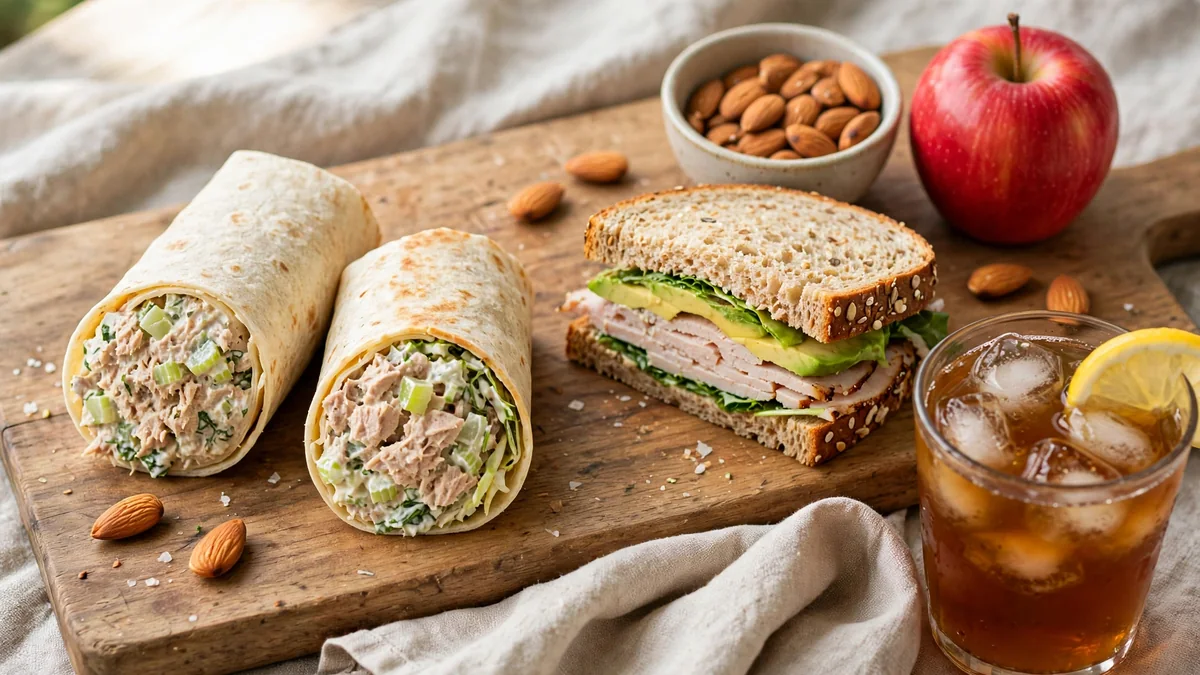
This meal plan for travelers gives you 7 days of breakfasts, lunches, dinners, and snacks at about 1,600 calories a day, split the way a traveler’s week actually splits: home days with a real kitchen, and travel days built entirely from widely available grocery foods that need no cooking at all. On the road days, every meal comes from things any supermarket, airport shop, or convenience store stocks: yogurt, granola, canned tuna, tortillas, cheese, hummus, fruit, nuts, and popcorn. No restaurant names, no brand names, and nothing that requires a stove. Every portion is listed in plain US measures, and every number was calculated from USDA FoodData Central values. The week averages about 108 grams of protein a day. For many adults, 1,600 calories lines up with gradual weight loss of about 1 to 2 pounds a week. More plans like this one live in our By Lifestyle diet plans.
Who this plan is for, and who should not follow it
This plan is for adults who travel often for work or family, spend several days a month in hotels or on the road, and find that travel days are where their eating falls apart. It assumes you can stop at a grocery store at the start of a trip, or pack a small bag of shelf stable foods from home. Days 1, 4, and 7 are home days; days 2, 3, 5, and 6 are travel days. If your trip runs longer, repeat the travel days in any order; each one stands on its own near 1,600 calories.
This plan is not medical advice. Talk with your doctor or a registered dietitian before following it, especially if you have diabetes, kidney disease, or another condition affected by food, or if you take medication that food or weight change can affect. It is not for children or teenagers, and it is not for anyone who is pregnant or breastfeeding. If you have food safety questions on the road, the general rule used here is simple: keep cold foods cold with an ice pack or hotel fridge, and do not keep perishable food at room temperature for more than about 2 hours.
If you have a history of disordered eating, talk with a doctor or a registered dietitian before following any diet plan. For eating disorder support in the US, visit the National Alliance for Eating Disorders at allianceforeatingdisorders.com.
Plan overview
| Daily calorie target | About 1600 calories |
| Average protein per day | About 108 g |
| Average carbohydrate per day | About 192 g |
| Average fat per day | About 48 g |
| Average fiber per day | About 35 g |
| Meals per day | 4 (breakfast, lunch, dinner, and snacks) |
The design rule for travel days is that protein cannot depend on cooking. Yogurt, cottage cheese, canned tuna, cheese, hummus, beans, edamame, and nuts carry the protein on the road, while home days use the kitchen for salmon, shrimp, pork, eggs, and lentils so the week still feels varied.
How this meal plan for travelers is organized
Each day is labeled by type. Home days (1, 4, and 7) cook normally: oatmeal, eggs, lentil bowls, baked fish, and stir style dinners. Travel days (2, 3, 5, and 6) are no-cook: wraps and sandwiches assembled in a hotel room, a peanut butter and banana sandwich that survives a carry-on, a hummus and pita plate, bean and tortilla dinners, and snacks that live in your bag. The travel breakfasts lean on yogurt and granola because nearly every hotel and grocery stocks both. Pack or buy on arrival: a can opener for the tuna if your cans need one, or buy the pouch and pop top versions. If you want to check how this level compares with your own needs, our calorie calculator gives a general estimate to discuss with your doctor or dietitian.
The 7-day meal plan
Portions are given in US household measures. Calories for each meal and day were calculated from USDA FoodData Central values for the exact foods and amounts listed. On travel days, keep the yogurt, cheese, cottage cheese, and edamame in a hotel fridge or on ice, and eat the fresh fruit within the day.
Day 1 (home)
| Meal | What to eat | Calories |
|---|---|---|
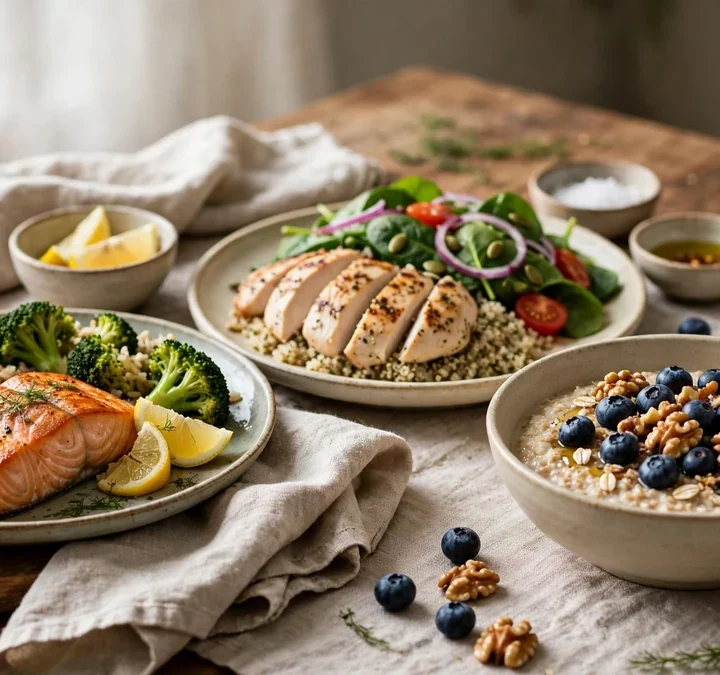
| Breakfast | 1/2 cup dry rolled oats; 1 cup skim milk; 1 cup blueberries; 1/2 oz walnuts | about 413 |
| Lunch | 5 oz cooked chicken breast; 1 cup cooked quinoa; 2 cups raw spinach; 1 medium tomato; 1 teaspoon olive oil | about 532 |
| Dinner | 4 oz cooked salmon; 1/2 cup cooked brown rice; 1 cup cooked broccoli | about 375 |
| Snacks | 3/4 cup plain nonfat Greek yogurt; 1 medium banana; 1/2 oz almonds | about 286 |
Day 1 total: about 1606 calories, 128 g protein, 180 g carbohydrate, 45 g fat, 28 g fiber.
Day 2 (travel)
| Meal | What to eat | Calories |
|---|---|---|
| Breakfast | 1 cup plain low-fat Greek yogurt; 1/4 cup granola; 1 medium banana | about 431 |
| Lunch | 1 can tuna in water, drained; 1 flour tortilla; 1 oz cheddar cheese; 1 medium apple | about 497 |
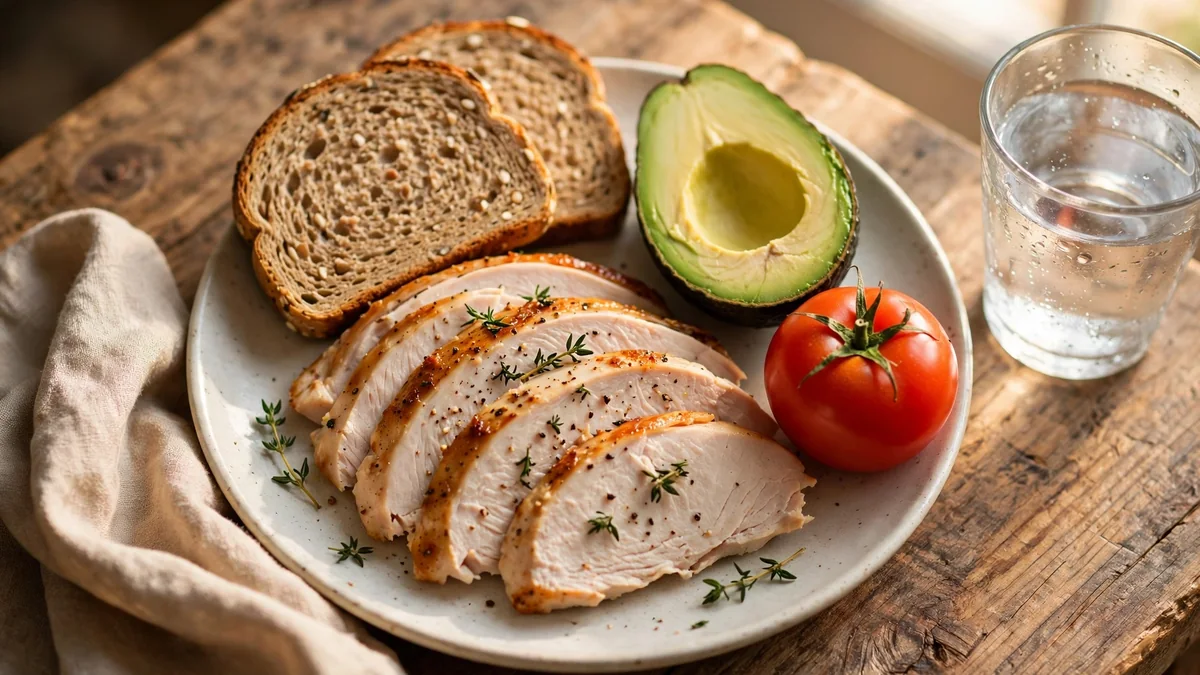
| Dinner | 4 oz cooked turkey breast; 2 slices whole-wheat bread; 1/2 avocado; 1 medium tomato | about 470 |
| Snacks | 1 oz almonds; 1 orange | about 224 |
Day 2 total: about 1620 calories, 121 g protein, 161 g carbohydrate, 59 g fat, 28 g fiber.
Day 3 (travel)
| Meal | What to eat | Calories |
|---|---|---|
| Breakfast | 1/2 cup granola; 1 cup skim milk; 1 cup strawberries | about 428 |
| Lunch | 2 slices whole-wheat bread; 2 tablespoons peanut butter; 1 medium banana | about 458 |
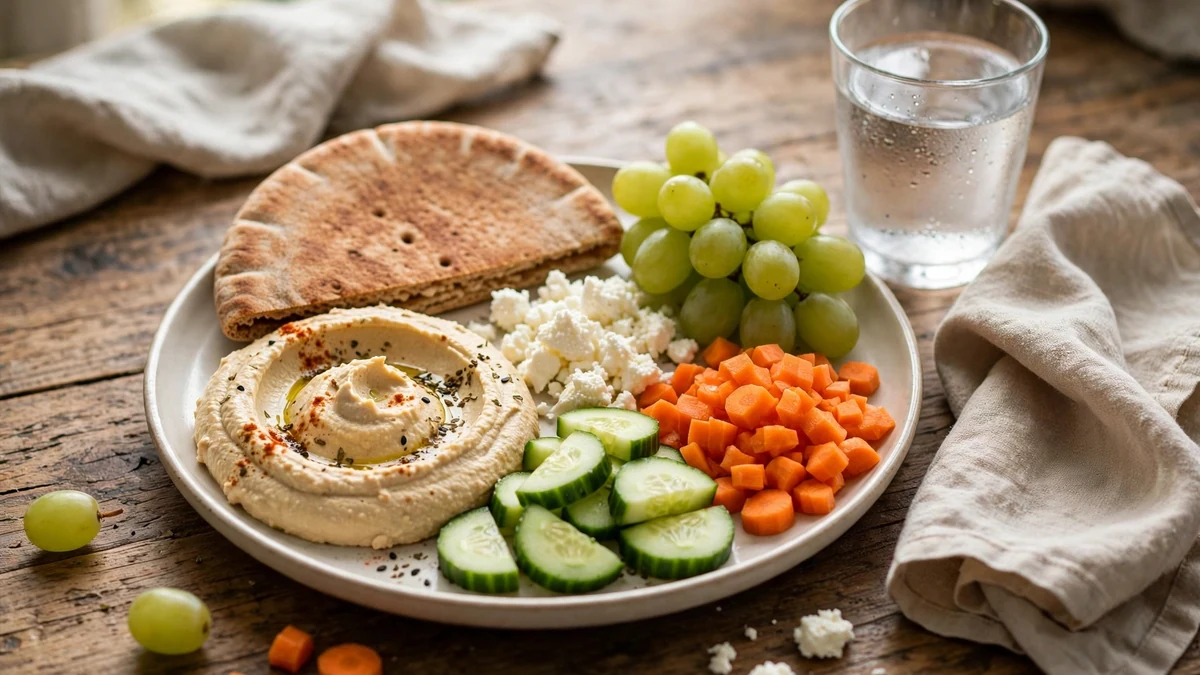
| Dinner | 1/4 cup hummus; 1 whole-wheat pita; 1 oz feta cheese; 1/2 cucumber; 1 cup chopped carrots; 1 cup grapes | about 520 |
| Snacks | 3 cups air-popped popcorn; 1 oz cheddar cheese | about 208 |
Day 3 total: about 1613 calories, 60 g protein, 229 g carbohydrate, 58 g fat, 32 g fiber.
Day 4 (home)
| Meal | What to eat | Calories |
|---|---|---|
| Breakfast | 2 large eggs; 2 slices whole-wheat bread; 1/2 avocado; 1 orange | about 498 |
| Lunch | 1 cup cooked lentils; 1/2 cup cooked brown rice; 1 cup chopped carrots; 1 oz feta cheese | about 467 |
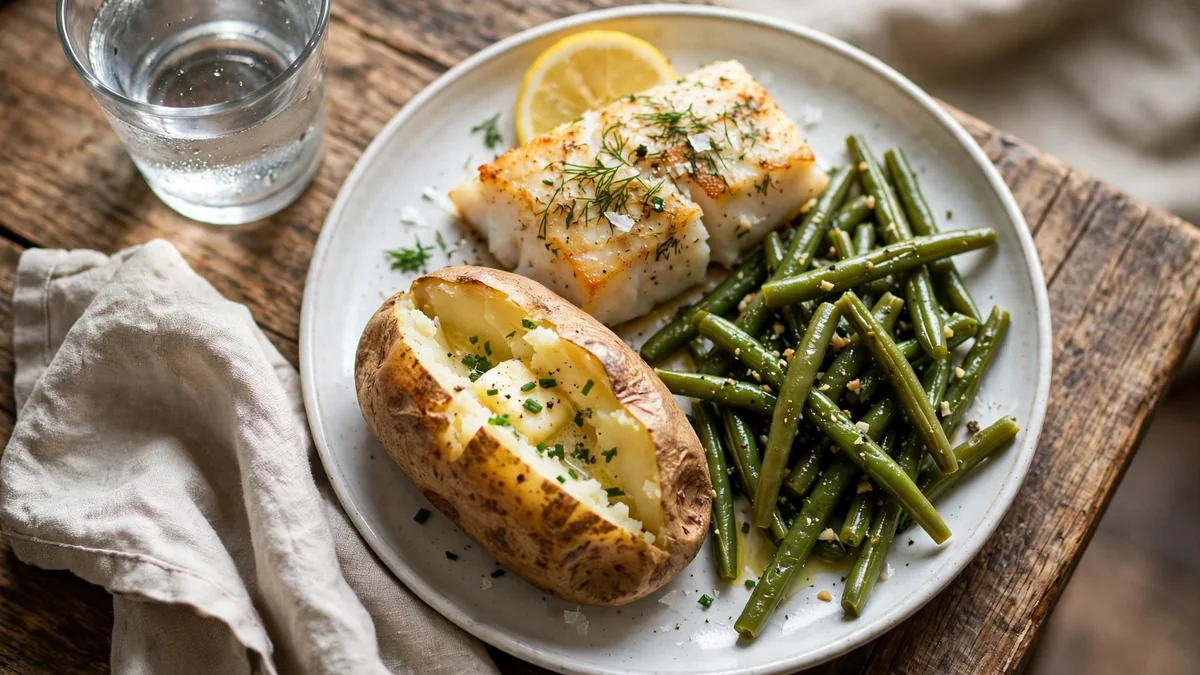
| Dinner | 6 oz cooked cod; 1 medium baked potato; 1 cup cooked green beans | about 373 |
| Snacks | 1/2 cup low-fat cottage cheese; 1 medium pear; 1/2 oz walnuts | about 274 |
Day 4 total: about 1612 calories, 111 g protein, 202 g carbohydrate, 45 g fat, 46 g fiber.
Day 5 (travel)
| Meal | What to eat | Calories |
|---|---|---|
| Breakfast | 1 cup plain nonfat Greek yogurt; 1/4 cup granola; 1 cup raspberries | about 355 |
| Lunch | 1 cup cooked chickpeas; 2 corn tortillas; 1/4 cup salsa; 1/2 cucumber | about 416 |
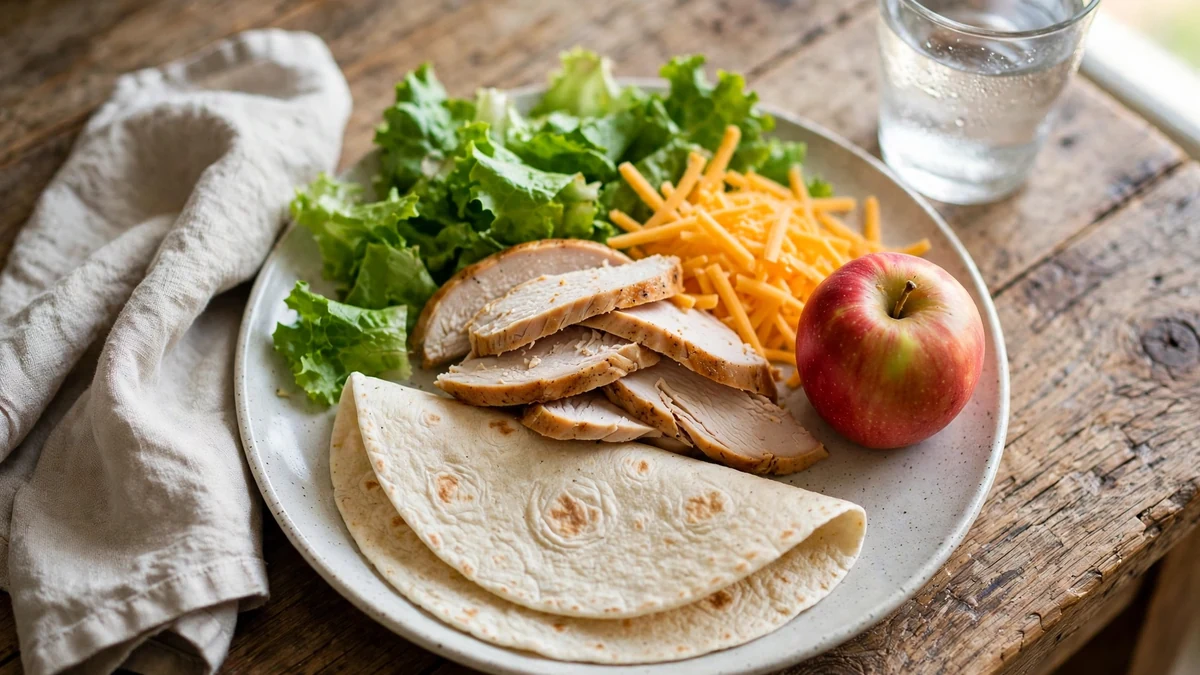
| Dinner | 1 flour tortilla; 4 oz cooked turkey breast; 1 oz cheddar cheese; 2 cups green leaf lettuce; 1 medium apple | about 520 |
| Snacks | 1 cup shelled edamame; 3/4 cup skim milk | about 252 |
Day 5 total: about 1543 calories, 120 g protein, 188 g carbohydrate, 39 g fat, 43 g fiber.
Day 6 (travel)
| Meal | What to eat | Calories |
|---|---|---|
| Breakfast | 1 cup low-fat cottage cheese; 1 cup strawberries; 1/4 cup granola | about 358 |
| Lunch | 1 can tuna in water, drained; 1 whole-wheat pita; 2 tablespoons hummus; 1/2 cucumber | about 389 |
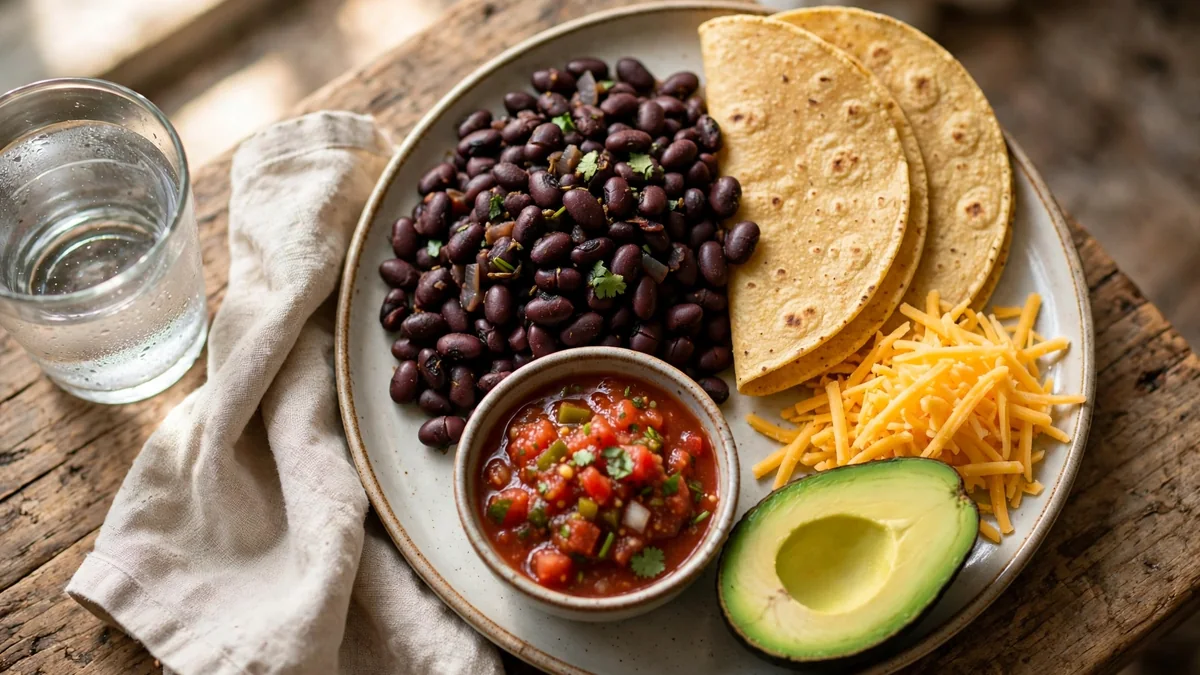
| Dinner | 1 cup cooked black beans; 2 corn tortillas; 1 oz cheddar cheese; 1/4 cup salsa; 1/2 avocado | about 594 |
| Snacks | 1 oz walnuts; 1 orange | about 245 |
Day 6 total: about 1586 calories, 103 g protein, 174 g carbohydrate, 59 g fat, 41 g fiber.
Day 7 (home)
| Meal | What to eat | Calories |
|---|---|---|
| Breakfast | 1/2 cup dry rolled oats; 3/4 cup skim milk; 1 medium apple; 1 tablespoon peanut butter | about 406 |
| Lunch | 4 oz cooked shrimp; 1 cup cooked pasta; 2 cups raw spinach; 1 teaspoon olive oil | about 409 |
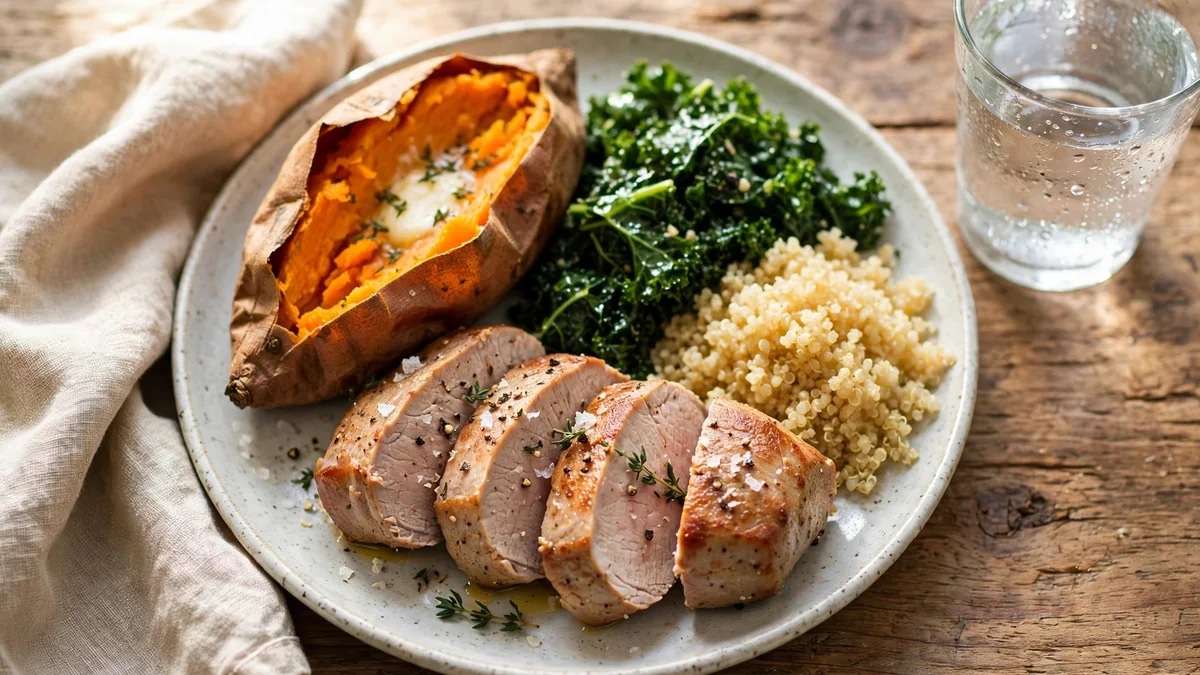
| Dinner | 5 oz cooked pork tenderloin; 1 medium baked sweet potato; 1 cup cooked kale; 1/2 cup cooked quinoa | about 474 |
| Snacks | 3/4 cup plain low-fat Greek yogurt; 1 cup blueberries; 1 tablespoon honey | about 272 |
Day 7 total: about 1562 calories, 117 g protein, 208 g carbohydrate, 32 g fat, 26 g fiber.
Grocery list
This list covers the full week for one person. The home day items are the first three groups; the travel day items are mostly the pantry, dairy, and produce that travel well.
Produce
- Bananas, apples, oranges, grapes, and a pear
- Strawberries, blueberries, and raspberries
- Sweet potatoes and white potatoes
- Broccoli, green beans, and kale
- Baby spinach and green leaf lettuce
- Carrots, tomatoes, and cucumbers
- Avocados
Meat and seafood
- Chicken breast and turkey breast (deli sliced turkey works for travel days)
- Salmon fillets and cod fillets
- Shrimp
- Pork tenderloin
- Canned tuna in water (pouches travel best)
Dairy and eggs
- Large eggs
- Plain nonfat Greek yogurt and plain low-fat Greek yogurt (single serve cups travel well)
- Low-fat cottage cheese
- Cheddar cheese and feta cheese
- Skim milk
Pantry
- Rolled oats and granola
- Brown rice, quinoa, and pasta
- Black beans, chickpeas, and lentils (canned, rinsed, for travel days)
- Salsa
- Peanut butter, hummus, honey, and olive oil
- Almonds and walnuts
- Popcorn (plain microwave bags for hotel rooms)
Frozen
- Shelled edamame
Bakery
- Whole-wheat bread
- Whole-wheat pita, corn tortillas, and flour tortillas
Meal prep tips
- Pack a travel food kit that lives in your suitcase: peanut butter, granola, nuts in single portions, popcorn bags, and tuna pouches. Restock it when you unpack, not when you repack.
- On arrival, make one grocery stop for the perishables: yogurt, cheese, cottage cheese, fruit, and hummus. Ten minutes of shopping covers the whole trip.
- Cook the home day grains and lentils in double batches before a trip; they wait in the fridge for your return day.
- Keep cold foods in the hotel fridge or on an ice pack, and throw out perishables that sat out more than about 2 hours rather than risking a sick travel day.
- Carry the day’s snack in your bag, not your checked luggage, so delays do not turn into unplanned airport meals.
Easy swaps
- Swap canned tuna for canned chicken or a second bean meal in the same portion range on travel days.
- Swap turkey and chicken breast for each other in equal portions, at home or on the road.
- Swap black beans, chickpeas, and lentils for each other in equal portions.
- Swap Greek yogurt and cottage cheese for each other in breakfasts and snacks.
- Swap any travel fruit for another in the same portion; bananas and apples travel best, berries are for the hotel fridge.
- Swap salmon for cod or shrimp in the same portion range on home days.
How to adjust the calories safely
If this plan leaves you persistently hungry, low on energy, or losing faster than about 2 pounds a week, add food. Travel days with long drives or heavy walking often need the additions. To add roughly 200 to 300 calories a day using foods already in the plan, choose one: 1 oz of walnuts (about 183 calories) plus a medium orange (about 62 calories); or 2 tablespoons of peanut butter (about 191 calories) spread across the day’s sandwich and snack, plus 1 cup of skim milk (about 86 calories).
Never go below 1,200 calories a day for women or 1,500 calories a day for men. This plan is written at 1,600 calories, above both floors, but taller, more active travelers and most men on long travel days should use the additions and talk with their doctor or a registered dietitian about the right level.
Common mistakes
- Treating travel days as free days. Four unplanned days can erase three careful home days; the no-cook travel meals exist so that does not happen.
- Relying on airport and gas station food by default. A ten minute grocery stop at the start of a trip replaces most of it with foods you chose.
- Skipping breakfast on travel mornings and arriving at lunch ravenous. The yogurt and granola breakfast takes two minutes in a hotel room.
- Keeping perishable food in a warm car or bag all day. Use the fridge or ice pack, and when in doubt, throw it out.
- Drinking calories on the road that are not in the plan, such as soda and sweetened coffee drinks during long drives.
Pair it with a workout
Travel pairs well with walking: airport laps during layovers, a walk around the hotel neighborhood after dinner, and bodyweight routines in the room. Pair this plan with the walking plans and beginner strength routines in our Exercise and Workouts category, and build up gradually. Stop any exercise that causes pain, dizziness, or chest pain, and check with your doctor before starting if you have been inactive or have a medical condition. For calm weeks at home, our 7-Day No-Sugar Mediterranean Diet Meal Plan is a good pattern to rotate in.
Frequently asked questions
What if my hotel room has no fridge?
Lean on the shelf stable travel meals: the peanut butter and banana sandwich day, tuna pouches with tortillas, nuts, popcorn, granola with a small shelf stable milk, and whole fruit. Ask the front desk about a fridge; many hotels will bring one or store a small bag for you, but the plan works without one for a day or two.
Can I eat restaurant meals on a trip and still use this plan?
Yes, occasionally. Replace a travel day meal with a restaurant meal of a similar shape: a protein, a grain or potato, and vegetables, with fruit or a small side instead of fries. Keep the rest of the day as planned. The plan’s job is to cover the default days, not to forbid every meal out.
How do I handle time zones and odd meal times?
Keep the four eating slots and let the clock move. Eat breakfast when you wake, space lunch and dinner through your waking day, and keep the planned snack for the longest gap. Anchoring to your day rather than the home clock keeps hunger steadier while your body adjusts.
Is 1,600 calories enough on travel days?
For many adults it is a reasonable weight loss level, but long drives, heavy walking tours, and most men will need more. Use the adjustment additions on those days, and never go below 1,200 calories a day for women or 1,500 for men.
What should I pack from home versus buy on arrival?
Pack the shelf stable kit: peanut butter, granola, portioned nuts, popcorn, tuna pouches, and tortillas if you have room. Buy the perishables on arrival: yogurt, cottage cheese, cheese, hummus, milk, and fruit.
Sources and further reading
- USDA FoodData Central, the source for every calorie and nutrient value in this plan: fdc.nal.usda.gov
- Dietary Guidelines for Americans, for the overall healthy eating pattern this plan follows: dietaryguidelines.gov
- MyPlate, for balanced plate ideas built from the same food groups: myplate.gov
- Centers for Disease Control and Prevention, for healthy weight guidance: cdc.gov
- MedlinePlus, for plain language background on nutrition and food safety: medlineplus.gov
This article is for general educational purposes only and is not medical, nutrition, or fitness advice. Talk with your doctor or a registered dietitian before changing your diet or starting an exercise program.