Prints just the plan, like a recipe card.
Last updated: November 22, 2026.
This spring meal plan is a complete 7-day plan at about 1,500 calories a day built around the foods that come back in spring: leafy greens, green beans, strawberries, eggs, and lighter plates like a salmon salad and shrimp pasta. After a winter of soups and baked dishes, it is a week of food that tastes like the season turning.
Spring eating tends to lighten on its own, and this plan leans into that without shrinking the portions. Salads carry real protein, vegetables are cooked briefly so they stay bright, and fruit shows up at breakfast and snacks. Asparagus, the classic spring vegetable, is not in the menus (the plan sticks to widely available staples), but the FAQ explains how to swap it in. Every number was calculated from USDA FoodData Central values.
For many adults, 1,500 calories a day with a modest deficit is generally consistent with gradual weight loss of about 1 to 2 pounds a week, though individual results vary and nothing is promised. Find more seasonal plans in Seasonal and Holiday and the full Diet Plans collection.
Who this plan is for, and who should not follow it
This plan is for adults who want to eat with the season and trade heavy winter plates for salads, greens, and berries for a week. It suits anyone who shops at a farmers market or a regular grocery store and wants the produce to lead.
This article is general education, not medical advice. Talk with your doctor or a registered dietitian before following this plan, especially if you have diabetes, kidney or heart disease, or you take medication affected by food. This plan is not for children or teenagers, or for anyone who is pregnant or breastfeeding.
If you have a history of disordered eating, talk with a doctor or a registered dietitian before following any diet plan. For eating disorder support in the US, visit the National Alliance for Eating Disorders at allianceforeatingdisorders.com.
Plan overview
| Measure | Amount |
|---|---|
| Target calories per day | About 1,500 calories |
| Average protein per day | About 111 g |
| Average carbohydrate per day | About 175 g |
| Average fat per day | About 41 g |
| Average fiber per day | About 31 g |
| Meals per day | Breakfast, lunch, dinner, and snacks |
Strawberries appear often, in breakfasts, salads, and snacks. When their price or quality is poor, raspberries or blueberries swap in cup for cup. Green beans are the week’s cooked green vegetable, with broccoli, kale, and spinach in support.
The 7-day spring meal plan
Dress salads at the table with the listed olive oil and a squeeze of lemon or a splash of vinegar, so the greens stay crisp. Season freely with salt, pepper, garlic, and fresh or dried herbs. Drink water, unsweetened tea, or black coffee freely.
Day 1
| Meal | Menu | Calories |
|---|---|---|
| Breakfast | 1/2 cup dry rolled oats; 3/4 cup plain nonfat Greek yogurt; 1 cup blueberries; 1 tablespoon honey | About 400 |
| Lunch | Salmon salad plate: 4 oz cooked salmon; 2 cups green leaf lettuce; 1/2 cucumber; 1 medium tomato; 1 teaspoon olive oil; 1 slice whole-wheat bread | About 374 |
| Dinner | 5 oz cooked chicken breast; 1 cup cooked quinoa; 1 cup cooked green beans | About 500 |
| Snacks | 1/2 cup low-fat cottage cheese; 1 cup strawberries; 1/2 oz almonds (about 12 almonds) | About 211 |
Day 1 total: about 1485 calories, 132 g protein, 163 g carbohydrate, 37 g fat, 26 g fiber.
Day 2
| Meal | Menu | Calories |
|---|---|---|
| Breakfast | 2 large eggs; 2 slices whole-wheat toast; 1 orange | About 378 |
| Lunch | Egg salad: 2 large eggs, chopped; 1/3 cup plain nonfat Greek yogurt, as the dressing; 2 slices whole-wheat bread; 1 medium carrot | About 391 |
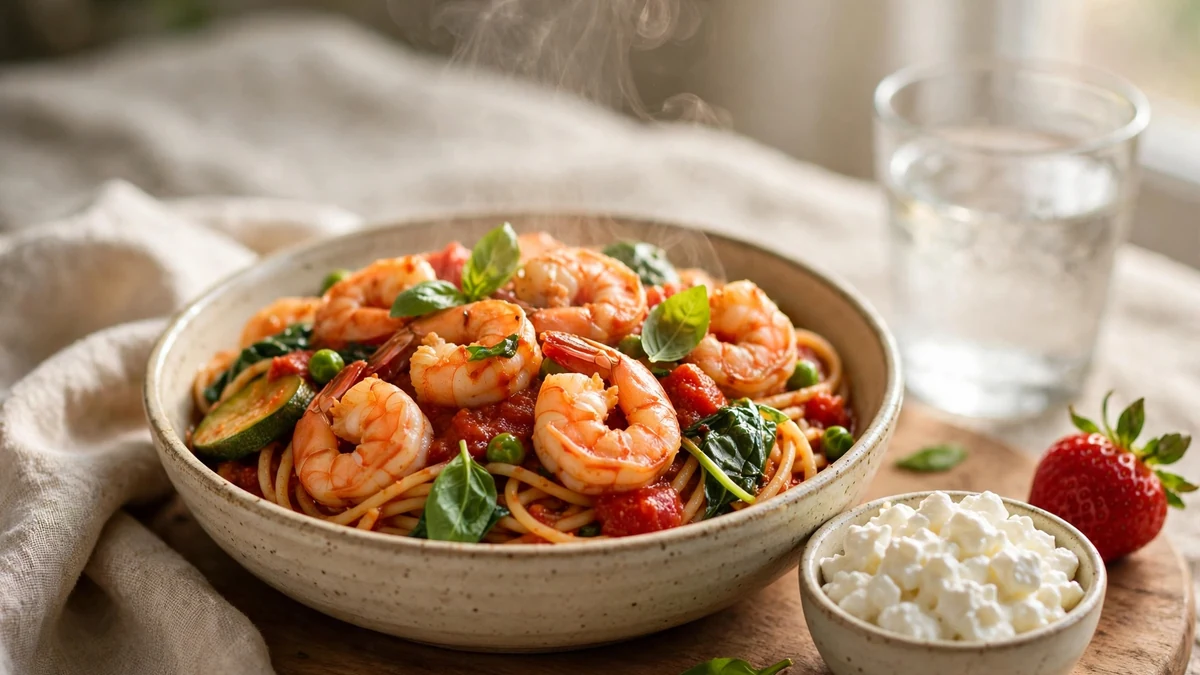
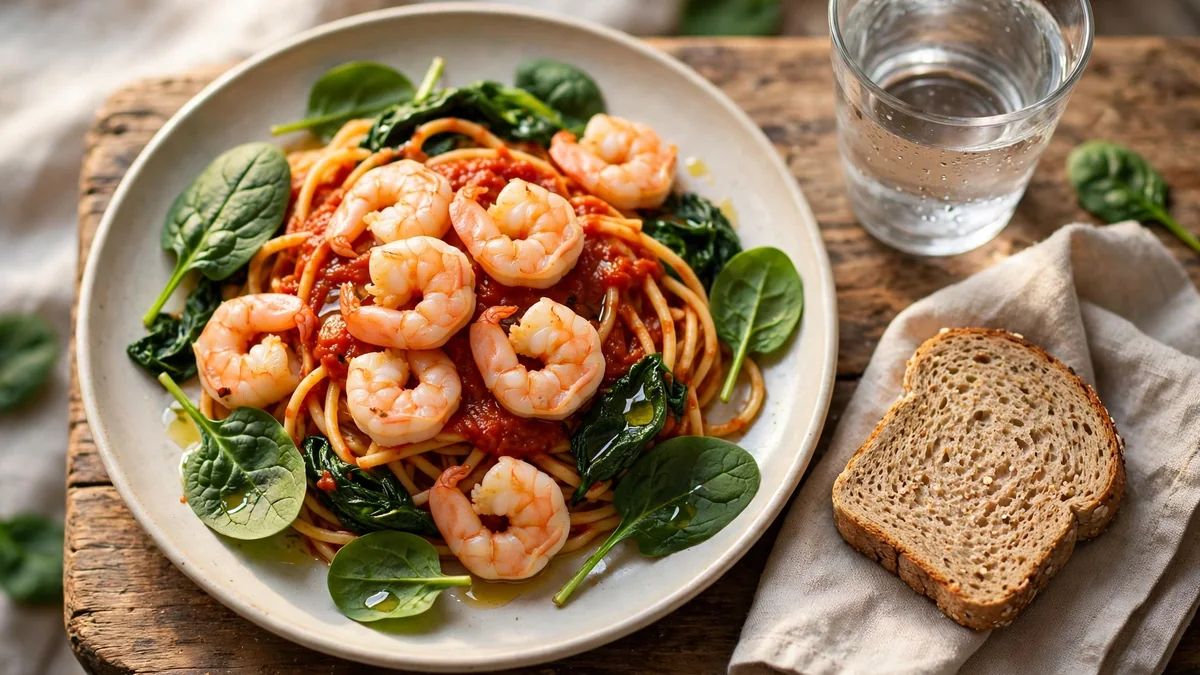
| Dinner | Shrimp pasta: 4 oz cooked shrimp; 1 cup cooked pasta; 1/2 cup marinara sauce; 1 teaspoon olive oil; 2 cups fresh spinach; 1 slice whole-wheat bread | About 552 |
| Snacks | 3/4 cup plain nonfat Greek yogurt; 1 cup blueberries | About 185 |
Day 2 total: about 1506 calories, 111 g protein, 179 g carbohydrate, 39 g fat, 24 g fiber.
Day 3
| Meal | Menu | Calories |
|---|---|---|
| Breakfast | 1 cup plain nonfat Greek yogurt; 1/4 cup granola; 1 cup raspberries | About 355 |
| Lunch | Lentil salad: 1 cup cooked lentils; 1 oz feta cheese; 1 medium tomato; 1/2 cucumber; 1 teaspoon olive oil; 2 cups fresh spinach; 1 slice whole-wheat bread | About 471 |
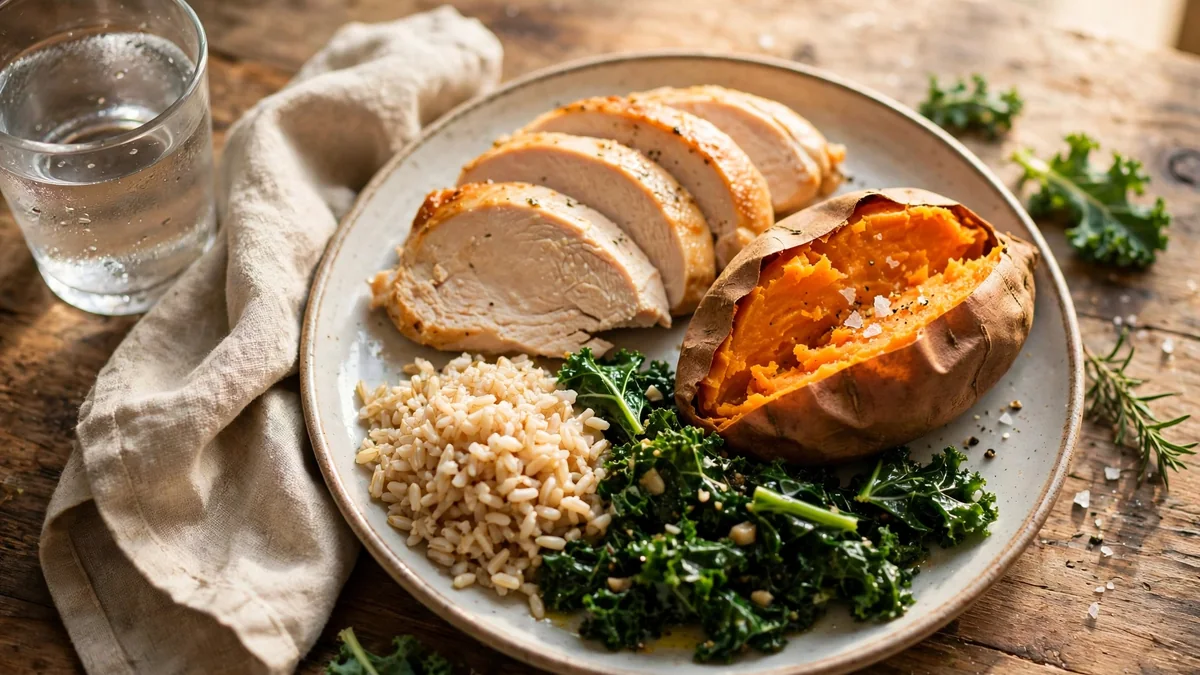
| Dinner | 5 oz cooked turkey breast; 1 medium baked sweet potato; 1 cup cooked kale; 1/2 cup cooked brown rice | About 483 |
| Snacks | 3 cups air-popped popcorn; 1 orange | About 154 |
Day 3 total: about 1464 calories, 116 g protein, 192 g carbohydrate, 29 g fat, 46 g fiber.
Day 4
| Meal | Menu | Calories |
|---|---|---|
| Breakfast | 2 large eggs; 1 slice whole-wheat toast; 1/2 avocado | About 356 |
| Lunch | Strawberry chicken salad: 4 oz cooked chicken breast; 2 cups fresh spinach; 1 cup strawberries; 1 oz walnuts (about 1/4 cup); 1 oz feta cheese | About 506 |
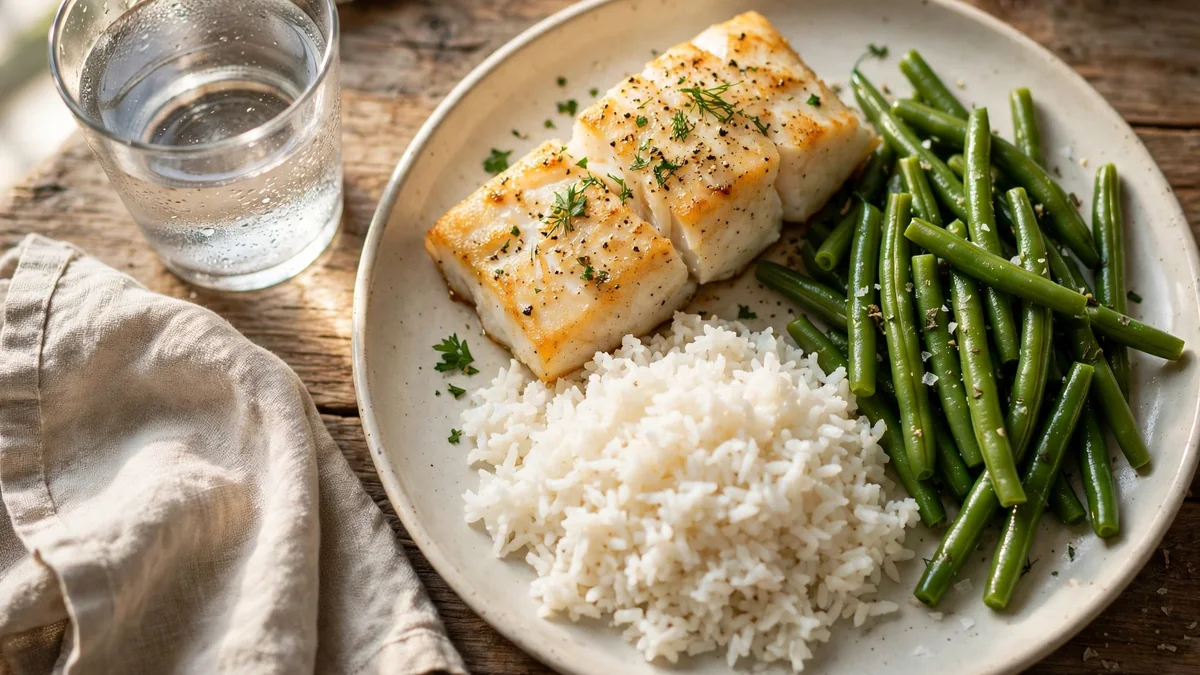
| Dinner | 6 oz cooked cod; 1 cup cooked white rice; 1 cup cooked green beans | About 463 |
| Snacks | 2 tablespoons hummus; 1 cup chopped carrots; 1/2 cucumber | About 121 |
Day 4 total: about 1445 calories, 114 g protein, 124 g carbohydrate, 57 g fat, 23 g fiber.
Day 5
| Meal | Menu | Calories |
|---|---|---|
| Breakfast | 1/2 cup dry rolled oats; 1 tablespoon peanut butter; 1 medium banana; 3/4 cup skim milk | About 417 |
| Lunch | Edamame rice bowl: 1 cup shelled edamame; 1 cup cooked brown rice; 1 cup chopped carrots; 1/2 cucumber | About 483 |
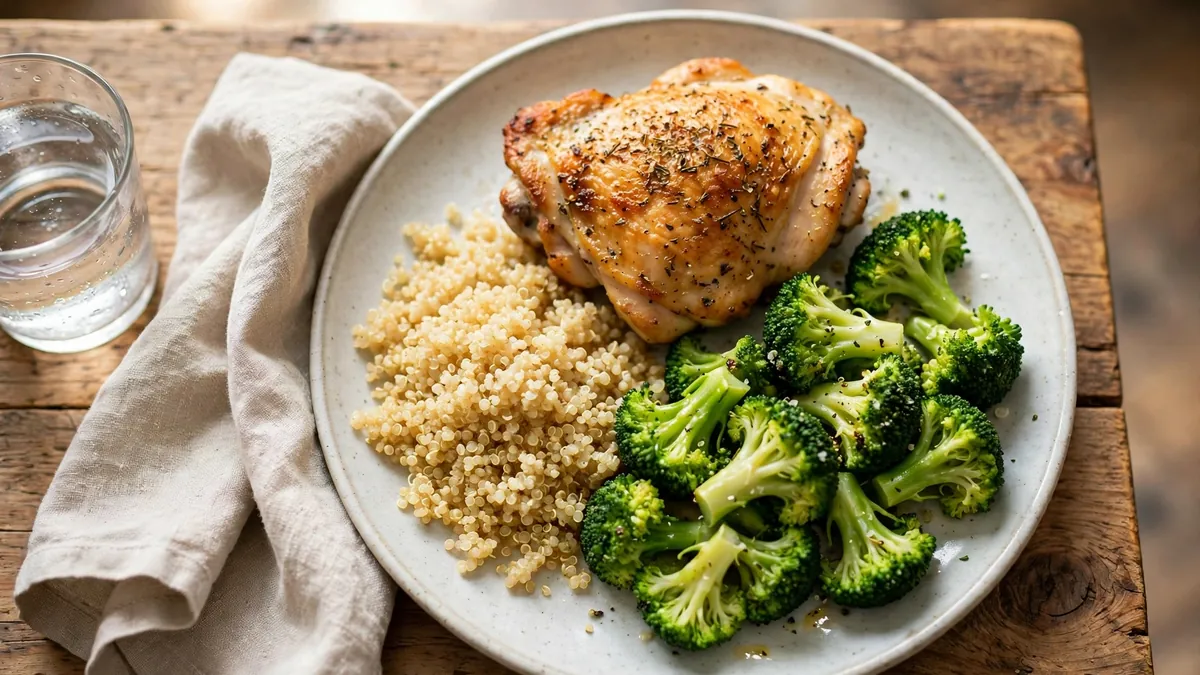
| Dinner | 5 oz cooked chicken thigh; 1 cup cooked broccoli; 1/2 cup cooked quinoa | About 420 |
| Snacks | 1 large egg; 1 medium pear | About 179 |
Day 5 total: about 1499 calories, 92 g protein, 202 g carbohydrate, 41 g fat, 36 g fiber.
Day 6
| Meal | Menu | Calories |
|---|---|---|
| Breakfast | 3/4 cup plain low-fat Greek yogurt; 1/4 cup granola; 1 cup strawberries; 1 tablespoon honey | About 383 |
| Lunch | Tuna salad plate: 1 can tuna in water, drained; 2 cups green leaf lettuce; 1 medium tomato; 1/2 cucumber; 1 large egg; 1 teaspoon olive oil; 1 whole-wheat pita | About 486 |
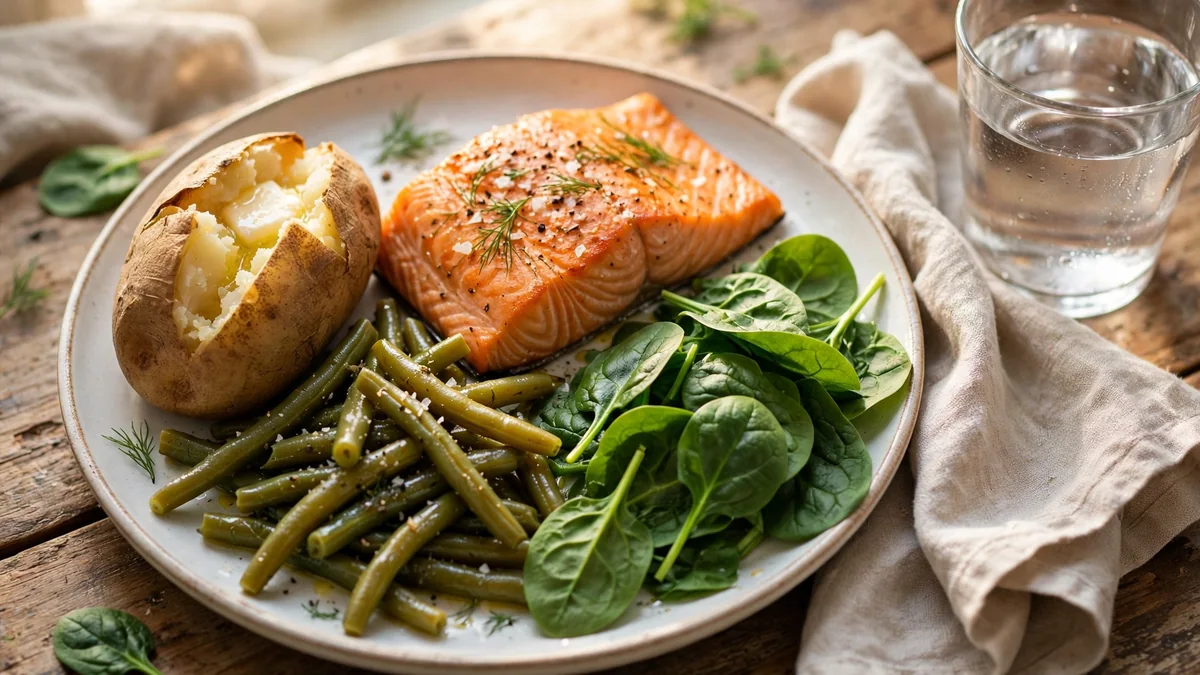
| Dinner | 4 oz cooked salmon; 1 medium baked potato; 1 cup cooked green beans; 2 cups fresh spinach | About 414 |
| Snacks | 1/2 oz almonds (about 12 almonds); 1 cup grapes | About 185 |
Day 6 total: about 1469 calories, 107 g protein, 175 g carbohydrate, 43 g fat, 24 g fiber.
Day 7
| Meal | Menu | Calories |
|---|---|---|
| Breakfast | 2 large eggs; 1 medium baked potato, cubed for a hash; 1 medium bell pepper; 1 teaspoon olive oil | About 369 |
| Lunch | Chickpea salad: 1 cup cooked chickpeas; 1/2 cucumber; 1 medium tomato; 1 oz feta cheese; 2 cups fresh spinach; 1 slice whole-wheat bread | About 475 |
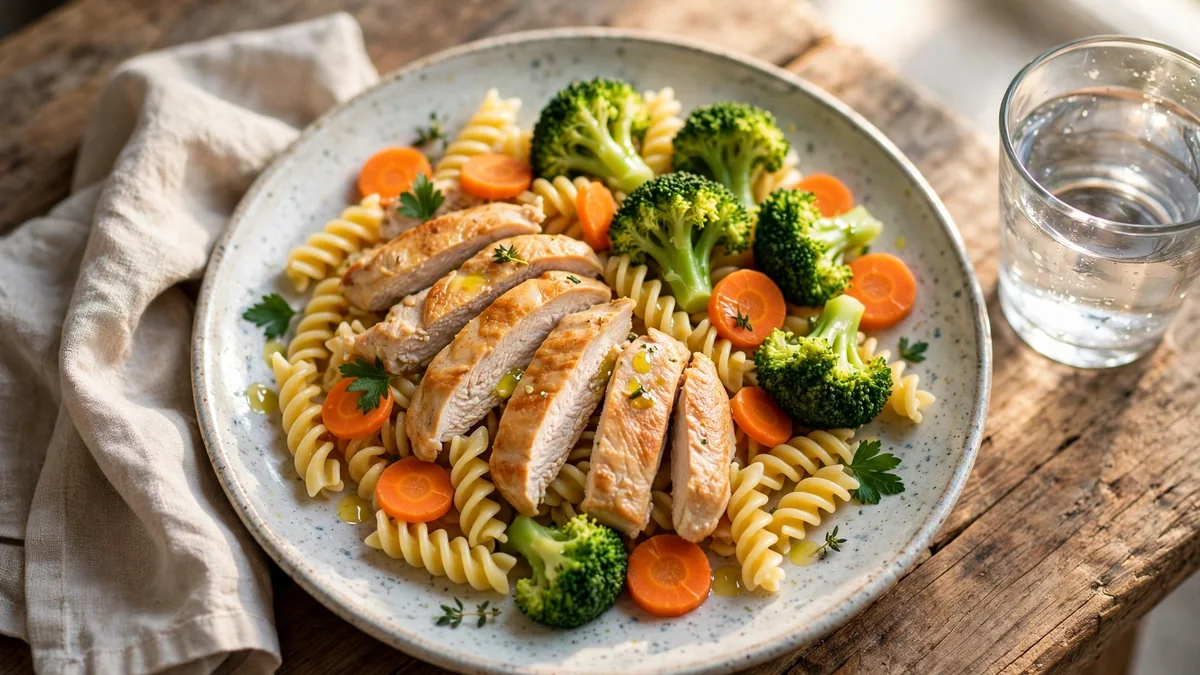
| Dinner | Spring pasta: 1 cup cooked pasta; 4 oz cooked chicken breast; 1 cup cooked broccoli; 1 medium carrot; 1 teaspoon olive oil | About 527 |
| Snacks | 1 cup strawberries; 3/4 cup plain nonfat Greek yogurt | About 149 |
Day 7 total: about 1520 calories, 109 g protein, 189 g carbohydrate, 39 g fat, 35 g fiber.
Grocery list
Quantities depend on how many people are eating, so use the plan portions to scale this list. Grouped by store section:
- Produce: Fresh spinach, Green leaf lettuce, Green beans, Strawberries, Blueberries, Raspberries, Bananas, Oranges, Pears, Grapes, Tomatoes, Cucumbers, Carrots, Bell peppers, Potatoes, Sweet potatoes, Broccoli, Kale, Avocados.
- Meat and seafood: Salmon, Chicken breast, Chicken thighs, Turkey breast, Shrimp, Cod, Canned tuna in water.
- Dairy and eggs: Eggs, Skim milk, Plain nonfat Greek yogurt, Plain low-fat Greek yogurt, Low-fat cottage cheese, Feta cheese.
- Pantry: Rolled oats, Peanut butter, Honey, Granola, Quinoa, Brown rice, White rice, Pasta, Marinara sauce, Lentils, Chickpeas, Olive oil, Walnuts, Almonds, Hummus.
- Frozen: Shelled edamame, plus green beans as a backup vegetable.
- Bakery: Whole-wheat bread, Whole-wheat pitas.
Meal prep tips
- Wash and dry the greens once, and store them with a paper towel in the container. Crisp greens make the salads happen on busy days.
- Cook the quinoa and rice ahead and refrigerate in measured portions.
- Hard-boil eggs for the tuna plate and the snacks at the start of the week.
- Hull the strawberries when you bring them home, and use them within the first few days while they are at their best.
- Portion the walnuts and almonds. They appear in salads and snacks, and both are easy to over-pour.
Easy swaps
- Swap green beans for broccoli in equal cooked portions, or for asparagus when it is in season (see the FAQ).
- Swap salmon for cod or chicken breast in the same cooked weight.
- Swap strawberries, raspberries, and blueberries for each other, cup for cup.
- Swap quinoa for brown rice or white rice in equal cooked portions.
- Swap feta for part-skim mozzarella in the same weight in the salads.
- Swap the edamame bowl for the lentil salad pattern, or the other way around, at lunch.
How to adjust the calories safely
To build this plan up to about 1,700 calories a day, add roughly 200 calories from foods already in the plan: an extra slice of whole-wheat toast with 1 tablespoon of peanut butter (about 177 calories), or 1 oz of walnuts (about 183 calories) as an extra snack. To reach about 2,000 calories, add 1 cup of cooked quinoa (about 222 calories) split across lunch and dinner as well. Our Calorie Calculator can help you set your own target.
Never go below 1,200 calories a day for women or 1,500 calories a day for men. This plan sits at the men’s minimum, so men who are tall, very active, or still hungry should use the additions above rather than following it exactly.
Common mistakes
- Building salads with no protein and wondering why you are hungry by mid-afternoon. Every salad here carries chicken, salmon, tuna, eggs, or beans.
- Pouring dressing freely. The olive oil in this plan is counted by the teaspoon; a free pour can double it.
- Skipping the planned snack and then overeating at dinner. The snacks are small on purpose and part of the day’s structure.
- Buying beautiful spring produce and letting it wilt. The salads are placed early in the week for a reason; swap two days if your shopping day differs.
- Assuming light seasonal food means small portions. These are full plates; the lightness comes from the ingredients, not the amounts.
Pair it with a workout
Spring is walking season. Pair this plan with the walking and beginner strength routines in our Exercise and Workouts category, starting with short walks after meals and building up gradually. Stop any exercise that causes pain, dizziness, or chest pain, and check with your doctor before starting if you have been inactive or have a medical condition. When the weather turns cold again, our 7-Day Winter Comfort Food Meal Plan keeps the same structure with warmer dishes.
Frequently asked questions
Can I add asparagus to this plan?
Yes. Asparagus is the classic spring vegetable; it simply was not part of the staple list these menus were calculated from. A cup of cooked asparagus can replace the green beans in any dinner for a very similar number of calories.
What if strawberries are expensive or poor quality?
Swap in raspberries or blueberries, cup for cup, anywhere strawberries appear. Frozen berries, thawed, also work in the yogurt breakfasts.
Can men follow this plan?
Yes, with the adjustment section. At 1,500 calories the plan sits at the men’s minimum, so most men should add the 200 to 300 calorie options.
Is this an extreme spring reset plan?
No. It is simply a week of lighter, produce-forward meals with full portions and regular snacks. Nothing about it is extreme, and it can be repeated with the swaps.
Do the salads travel well for work lunches?
Yes, if the dressing travels separately. Pack the greens, protein, and vegetables together, and add the olive oil and lemon at the table.
Can I follow it for more than one week?
You can repeat the week using the swaps to change the proteins, grains, and berries. For a longer routine, vary the days and talk with a registered dietitian about your overall pattern.
Sources and further reading
- USDA FoodData Central, the source of all nutrition values on this page
- Dietary Guidelines for Americans
- MyPlate, USDA meal planning guidance
- MedlinePlus, healthy eating with seasonal produce
- CDC, healthy weight and losing weight
This article is for general educational purposes only and is not medical, nutrition, or fitness advice. Talk with your doctor or a registered dietitian before changing your diet or starting an exercise program.