
Prints just the plan, like a recipe card.
Last updated: November 23, 2026.
Weekday walks have a ceiling: work, family, and daylight all squeeze them. But weekends are different. What if one longer, slower walk on Saturday or Sunday could do the heavy lifting for your endurance, while your weekday walks stay short and easy?
That is exactly the strategy in this guide. You will keep two or three short walks during the week, then add one longer weekend walk that grows by about 5 minutes each week, from 40 minutes up to 75 or 90. Longer walks build endurance in a way short ones cannot, and they do it gently, because the pace stays comfortable the whole way. All you need is a route you enjoy and a free morning.
This workout sits in our Exercise and Workouts collection, next to the shorter beginner plans that feed into it. If your weekends often involve travel or visiting family, the 7-Day Meal Plan for Frequent Travelers in our Diet Plans library pairs well with an on-the-go walking life.
Key takeaways
- One long weekend walk plus two or three short weekday walks is a complete endurance strategy.
- Grow the long walk by about 5 minutes a week, no faster, from 40 minutes upward.
- The pace stays comfortable throughout. Endurance is built with time, not suffering.
- Plan the long walk like an outing: a good route, water, and nowhere to rush afterward.
- Every fourth week, keep the long walk the same or shorter. Adaptation needs easy weeks too.
Who this workout is for, and who should check with a doctor first
This guide is for adults who can already walk 30 minutes comfortably and want to build toward hour-long walks. It suits people who enjoy walking as an outing in itself: a new trail, a long neighborhood loop, a walk to a farmers market and back. If your longest comfortable walk is still under 30 minutes, build that first with a beginner plan, then come back here.
Check with your doctor before building longer walks if you have been inactive for a long time, have a heart condition or a history of chest pain, have joint or foot problems, are pregnant, or have had recent surgery or an injury. Longer walks are more time on your feet, so feet, knees, and hips get a vote; listen to them.
If you have a history of disordered eating, talk with a doctor or a registered dietitian before following any diet plan. For eating disorder support in the US, visit the National Alliance for Eating Disorders at allianceforeatingdisorders.com.
What you need
- Supportive, well broken-in walking shoes, and socks that do not rub
- A long route you can extend: a park trail, a river path, a big neighborhood loop, or an out-and-back road
- Water, carried with you on walks over 45 minutes
- Weather-appropriate layers, a hat or sunscreen in summer, and a phone for safety
- Optional: a walking partner, a podcast queue, or a destination like a coffee shop at the halfway point
Warm-up (5 minutes)
Long walks deserve the same warm-up as any workout, even though the pace is gentle throughout.
- Minutes 1 to 2: stroll. Start noticeably slower than your cruising pace. Let your joints loosen.
- Minutes 3 to 4: easy pace. Add shoulder rolls and a few deep breaths. Check your posture: tall, relaxed, eyes ahead.
- Minute 5: settle. Arrive at your comfortable long-walk pace, the one you could hold for an hour.
The long weekend walk
The weekly structure is simple, and the long walk grows on a schedule. Weekday walks stay at 20 to 30 easy or comfortable minutes, 2 or 3 times. The weekend walk follows this build.
| Week | Weekend long walk | Weekday walks | Notes |
|---|---|---|---|
| 1 | 40 minutes | 2 to 3 x 20 to 30 minutes | Find your route. |
| 2 | 45 minutes | 2 to 3 x 20 to 30 minutes | Carry water. |
| 3 | 50 minutes | 2 to 3 x 20 to 30 minutes | Try a new loop. |
| 4 | 40 minutes | 2 to 3 x 20 to 30 minutes | Easier week on purpose. |
| 5 | 55 minutes | 2 to 3 x 25 to 30 minutes | Resume building. |
| 6 | 60 minutes | 2 to 3 x 25 to 30 minutes | The one-hour mark. |
| 7 | 70 minutes | 2 to 3 x 25 to 30 minutes | Plan a destination. |
| 8 | 60 minutes | 2 to 3 x 25 to 30 minutes | Easier week; then continue toward 75 to 90 if you like. |
The first half: settle in
Walk the first half at your comfortable pace, resisting the urge to start fast because you feel fresh. On an out-and-back route, your turnaround point is simply half your planned time. Notice how your body feels at the turnaround: that reading tells you whether today’s plan was right.
Easier: Turn around 5 minutes early on any day that feels off. Harder: Choose a route with gentle rolling rises in the first half.
The second half: steady home
The walk home is where endurance is quietly built. Keep the same comfortable pace, or a touch slower if your legs are tired. Let your arms swing, keep your posture tall, and break the remaining distance into landmarks: the bridge, the big tree, the corner store. Finishing with decent form and a normal breathing rate is the goal, not beating your outbound time.
Easier: Slow down and add a standing rest minute whenever you need one. Harder: Make the final 10 minutes very slightly brisker, only in weeks when the full distance already feels easy.
Weekday maintenance walks
Your two or three weekday walks hold the habit and keep your legs fresh for the weekend. Keep them at 20 to 30 minutes, easy to comfortable, with no intervals and no agenda. Think of them as deposits that the weekend walk withdraws as endurance.
Easier: Two walks of 20 minutes. Harder: Three walks of 30 minutes, one with a few brisk minutes if you enjoy them.
Cool-down and stretching
Walk the last 5 minutes of the long walk slowly. After an hour on your feet, stretching is not optional decoration; it is how you walk comfortably again on Monday. Hold each stretch about 30 seconds per side.
- Calf stretch against a wall, both the straight-knee and bent-knee versions.
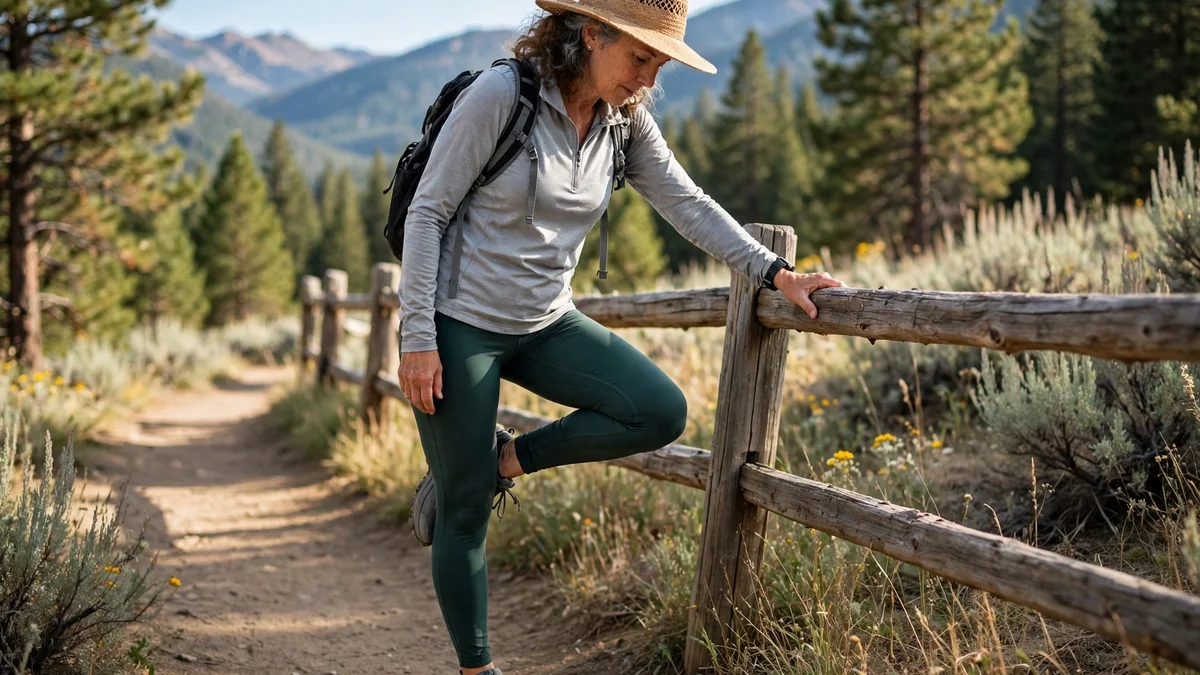
- Standing thigh stretch holding a support.
- Hip flexor stretch in a short lunge.
- Hamstring stretch: heel on a low step or the ground ahead of you, gentle hinge.
- Figure-four stretch for the outer hip, done standing while holding a support: cross one ankle over the opposite knee and sit back slightly.
How to progress
The table above is the progression: add about 5 minutes to the long walk each week, with an easier week every fourth week. After week 8, you can continue toward 75 or 90 minutes using the same rhythm, or hold at an hour and spend your energy elsewhere, such as adding strength sessions. Foot care is part of progression too: trim toenails, deal with hot spots early, and replace worn shoes, because long walks find every weakness in your gear. With this structure, your weekly total comfortably reaches the general activity targets described in the Sources section, and it does so with only one long outing a week.
Safety notes
- Stop and rest right away if you feel pain, dizziness, nausea, or chest pain. On a long route, sit down, call for help or a ride if needed, and seek medical help promptly for chest pain.
- Talk with your doctor before starting if you have been inactive for a long time or have any health condition.
- Choose good form over speed, especially in the second half when fatigue bends posture.
- Never push through sharp joint pain or a developing blister to finish a planned distance. Turn around early; the route will be there next week.
- Carry water on any walk over 45 minutes, more in heat, and tell someone your route on remote trails.
- Build distance on familiar ground first. Save brand-new trails for when the distance is old news.
Common mistakes
- Adding 15 or 20 minutes to the long walk in one jump because week one felt easy.
- Walking the long walk too fast and spending two days recovering from a “gentle” outing.
- Skipping the easier fourth week, then plateauing and wondering why.
- Wearing new shoes on the longest walk of the month.
- Forgetting water because the weather felt cool at the start.
Pair it with a diet plan
Long weekend walks often mean eating away from home, which is where the 7-Day Meal Plan for Frequent Travelers helps: it is built for people whose weeks include restaurants, road stops, and other people’s kitchens. To make sure your intake matches your growing mileage, the Calorie Calculator offers a general estimate to discuss with your doctor or dietitian.
Frequently asked questions
How long should my long walk eventually be?
There is no required target. Many people find 60 to 90 minutes a satisfying weekend outing that covers their endurance needs. Stop growing it whenever it fits your life and still feels enjoyable.
Can the long walk be split into morning and evening halves?
In a pinch, yes, and it still counts as a big day of walking. The single continuous walk builds a specific kind of endurance, though, so keep most long walks in one piece when you can.
What should I eat before a long walk?
A normal meal an hour or two before, or a small snack if you walk first thing. You do not need special fuel for walks at this level, just do not start hungry, and carry water.
My feet ache after 50 minutes. Is that normal?
Mild tiredness is common while you adapt. Aching that changes how you walk, or pain in one specific spot, points to shoes, socks, or a foot issue worth checking. Slow the progression and sort the gear first.
What if the weather ruins my weekend?
Move the long walk to the other weekend day, shorten it, or do it indoors on a treadmill or indoor track in two parts. Protect the weekly rhythm, not the exact distance.
Sources and further reading
- Physical Activity Guidelines for Americans, US Department of Health and Human Services: health.gov
- CDC, physical activity for adults: cdc.gov
- American Heart Association, recommendations for physical activity in adults: heart.org
- MedlinePlus, exercise and physical fitness: medlineplus.gov
This article is for general educational purposes only and is not medical, nutrition, or fitness advice. Talk with your doctor or a registered dietitian before changing your diet or starting an exercise program.