
Last updated: November 23, 2026.
Two very different offers land in front of anyone trying to eat better: a service that delivers ready-made meals to your door, or a program that teaches you to plan, shop, and cook for yourself with coaching or group support. Both promise to make weight loss easier. They just make it easier in opposite ways.
Neither type is automatically better. Meal delivery removes daily decisions but costs more and ends when the deliveries do. Programs build skills that last but ask more of your time and attention. This guide compares the two by type, feature by feature, so you can match the approach to your budget, schedule, and cooking life.
Where this guide fits
This article is part of our Tools and Calculators collection. If cost is your main concern, our 7-Day Low-Cost Plant-Based Meal Plan and the other plans in Diet Plans show what home cooking can look like at the simple end, and our Calorie Calculator helps you set the calorie level any approach should aim at.
Key takeaways
- Meal delivery services sell convenience: portioned meals arrive ready to heat, with little planning or cooking.
- Weight loss programs sell structure and skills: meal plans, coaching, groups, or app tools that teach you to feed yourself.
- Delivery usually costs more per meal than home cooking; programs usually cost more in time and effort.
- The most important question is what happens when it ends. Skills and habits transfer; deliveries stop.
- Some people combine both: delivery for the busiest weeks, home cooking skills for the long term.
The main types, in general
Meal delivery services
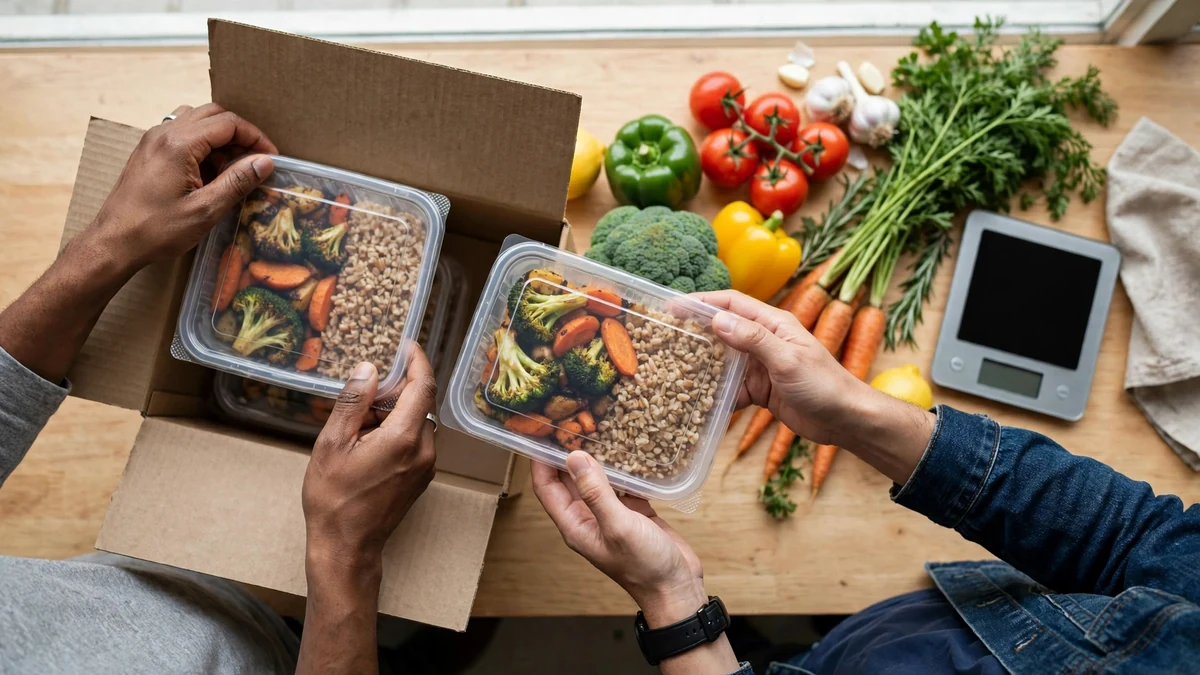
Within this type there are several subtypes. Some deliver fully prepared meals you only heat. Some deliver meal kits with ingredients and recipes, which still involve cooking but remove planning and shopping. Some focus on specific eating patterns, such as lower carbohydrate or plant-based menus. In all cases, the product is food plus convenience, and portions are set by the service.
Structured weight loss programs
Programs also come in subtypes. Some are app-based, giving you tracking tools, lessons, and a points or calorie system. Some are group-based, built around weekly meetings or online communities. Some include personal coaching or dietitian contact. Medically supervised programs are a separate category again, run through clinics with a doctor involved; our guide to medical weight loss clinics covers the questions to ask there. What unites the non-medical types is that you still buy and prepare most of your own food.
The do-it-yourself middle
Between the two sits the approach this website is built on: a written meal plan, a grocery list, and your own kitchen. It is the least expensive route and builds the most skill, but it offers no coach and no box at the door. Many people start here, then add support only where they feel a genuine gap.
Comparing the types, feature by feature
Cost structure
Delivery charges per meal or per week, and the total climbs quickly because you are paying for ingredients, preparation, packaging, and shipping. Programs charge membership or subscription fees while groceries remain a separate cost. Comparing honestly means adding groceries to the program side and asking what the delivery side replaces: restaurant meals and takeout, or inexpensive home cooking? The answer changes the math completely.
Time and effort
Delivery asks minutes per meal. Programs ask for planning, shopping, and cooking time every week, though that time shrinks as routines form. Meal kits sit in between: no planning, but real cooking. Be honest about your evenings; the best system on paper fails if it needs time you do not have.
Flexibility and real life
Programs generally travel better: you can eat at a restaurant, a family dinner, or on vacation using the same skills. Delivery works best in a controlled home routine and can clash with travel, guests, and shifting schedules. Pausing, skipping weeks, and canceling terms are worth reading closely for subscription types of either kind.
What you learn
This is the deepest difference. Programs and home cooking teach portions, label reading, and meal building, which keep working after you stop paying. Delivery teaches comparatively little, because the decisions were made for you. That is not a flaw if your goal is short-term structure, but it matters for maintenance, which is where most people struggle.
| Feature | Meal delivery | Program |
|---|---|---|
| Main thing you pay for | Prepared food and convenience | Structure, tools, support |
| Your weekly time | Very low | Planning and cooking time |
| Skills after it ends | Limited | Portions, planning, cooking |
| Flexibility for travel and events | Lower | Higher |
Questions to ask any service or program
About the eating pattern
What calorie level do the meals or plans target, and can it be adjusted? How are allergies, medical conditions, and foods you dislike handled? Does the approach include enough protein and fiber to keep you full? Any service that cannot answer plainly is telling you something.
About the commitment
How does pausing or canceling work, and is there a minimum term? What happens to the price after any introductory period? Are there add-on costs for coaching, materials, or required food products? Read these terms before the first payment, not after the third box.
About medical situations
If you have diabetes, kidney disease, a history of disordered eating, or you take medication affected by diet, neither a delivery menu nor a general program substitutes for your own doctor and dietitian. Some services screen for this and some do not. Raise it yourself, early.
Who should talk with a professional first
Anyone considering a very structured or restrictive eating approach should review it with their doctor first, especially with a medical condition or a medication that interacts with food or weight change.
If you have a history of disordered eating, talk with a doctor or a registered dietitian before following any diet plan. For eating disorder support in the US, visit the National Alliance for Eating Disorders at allianceforeatingdisorders.com.
Frequently asked questions
Which type works better for weight loss?
Both types can work while you follow them, because both create a calorie deficit in different ways. The more useful question is which one you can follow for months and what remains when you stop. Adherence and the maintenance plan after the paid period matter more than the format.
Is meal delivery worth it if I hate cooking?
It can be a reasonable bridge, especially during a busy season, if the cost fits your budget. Many people use delivery for weekday lunches or dinners only, and cook simply the rest of the time, which lowers the cost and still builds some kitchen routine.
Can I do a program and cook from this site?
Yes. Programs generally set the framework, such as a calorie or points target, and you can fill it with any meals that fit, including the free plans here. Check your target with the Calorie Calculator and choose plans that match your level.
What is the catch with free trials?
Trials often convert to paid subscriptions automatically, and cancellation steps are not always obvious. Set a reminder for the trial’s end date the day you sign up, and read the renewal terms before entering payment details.
How do I decide between the two?
Write down your real constraints: weekly food budget, evenings available for cooking, and how you feel about planning. If time is the binding constraint and money is not, delivery fits. If budget is binding or you want permanent skills, a program or a self-guided plan fits. Your honest constraint, not advertising, should decide.
Sources and further reading
- ChooseMyPlate, US Department of Agriculture meal planning guidance: myplate.gov
- CDC, healthy weight and eating guidance: cdc.gov
- Academy of Nutrition and Dietetics, consumer nutrition information: eatright.org
This article is for general educational purposes only and is not medical, nutrition, or fitness advice. Talk with your doctor or a registered dietitian before changing your diet or starting an exercise program.