Last updated: November 23, 2026.
Your new scale does not just show your weight. It offers body fat percentage, muscle mass, body water, and a small graph of your progress. It sounds like a laboratory report. How much of it should you believe?
Here is the plain version: a smart scale measures your weight accurately, like any good scale, and estimates everything else using an electrical signal and some formulas. Those estimates can be useful as rough trends and misleading as exact numbers. This guide explains the technology, what each number means, and how to weigh yourself in a way that gives you data you can trust.
Where this guide fits
This article is part of our Tools and Calculators collection. It belongs with Beyond the Scale, which covers waist measurements, photos, and other progress markers, and with Fitness Trackers: How They Work and Their Limits. The full library is in Diet Plans.
Key takeaways
- A smart scale’s weight reading is a real measurement. Its body composition numbers are estimates from a formula.
- The method is called bioelectrical impedance: a tiny, painless current passes through your feet, and the scale guesses body composition from how the signal travels.
- Hydration, meals, exercise, and time of day swing the estimates a lot, sometimes from one hour to the next.
- Weigh under the same conditions each time and judge by weekly averages, never by single readings.
- If the numbers on any scale start to harm your mood or your eating habits, step back and talk with your doctor.
How a smart scale works
The weight part is simple
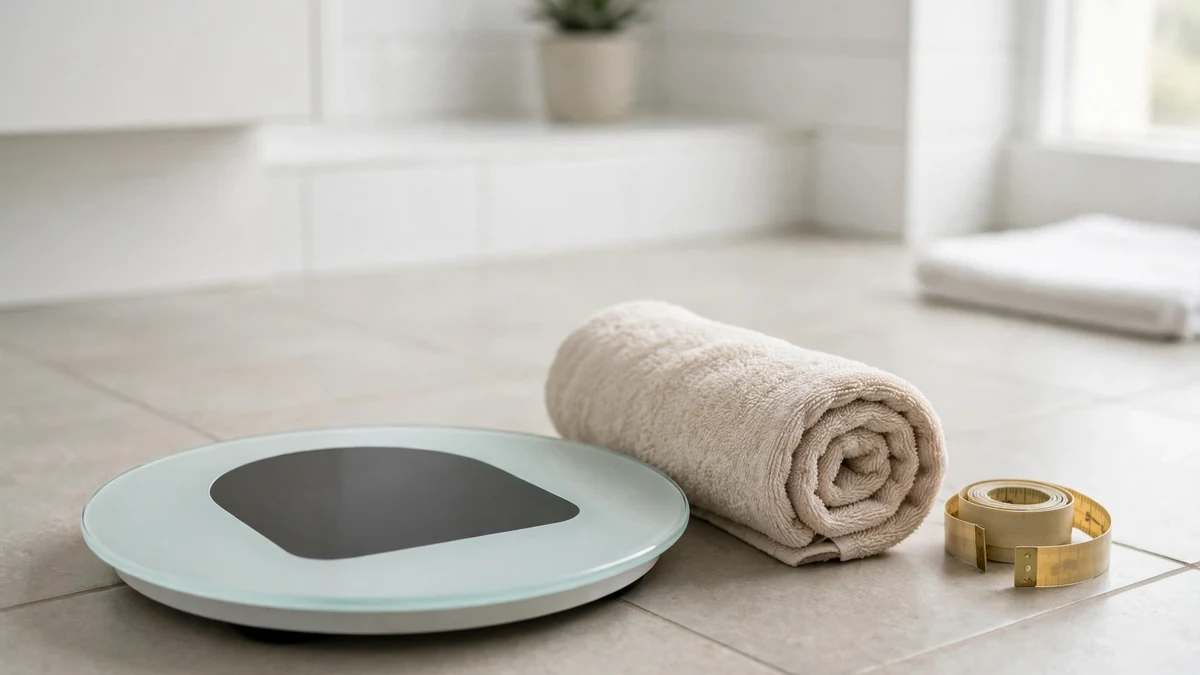
Under the platform sit load sensors that measure force, the same basic technology as an ordinary bathroom scale. Weight is the one number the device truly measures, and a decent scale of any type is consistent from day to day when used on a hard, flat floor.
The body composition part is an estimate
Metal contacts on the platform send a very small electrical current through your feet, too weak to feel. Muscle and other lean tissue contain more water and conduct the signal more easily than fat does. The scale measures the resistance, then feeds it into a formula along with the height, age, and sex from your profile, and produces estimates of body fat percentage, lean mass, and body water. Because it is a formula fed by a single signal through your lower body, the output is an informed guess, not a scan.
Why the estimates jump around
Anything that changes the water in your body changes the signal. A big glass of water, a salty dinner, a hard workout, a hot shower, or a trip to the bathroom can all shift the body fat estimate noticeably within the same day, even though your actual body composition obviously did not change. This is normal behavior for the technology, and it is the main reason to read these numbers as slow trends only, if you read them at all.
What the displayed numbers mean
Weight and BMI
Weight is your total mass, and it naturally fluctuates by a few pounds across days with water, food, and digestion. BMI is a ratio of weight to height that the scale or app calculates from your profile. It is a rough population screening number, not a measure of your individual health, and it cannot tell muscle from fat.
Body fat percentage and lean mass
These are the impedance estimates described above. If you follow them at all, compare monthly averages taken under identical conditions, and expect a wide margin of error. A change that looks dramatic in one reading usually disappears when you average a week of mornings.
Body water and other extras
Some scales display body water, bone mass, or metabolic age. These are further calculations layered on the same single signal, each one step further from anything measured. Treat them as entertainment-grade context rather than health information, and never make medical decisions from them.
How to weigh yourself for data you can use
Same time, same conditions
The most useful routine is simple: weigh in the morning, after the bathroom, before eating or drinking, in the same amount of clothing, with the scale on a hard floor in the same spot. Consistency cannot make an estimate exact, but it removes most of the avoidable noise.
Averages beat single days
Your weight on any one morning is a sample, not a verdict. Compare this week’s average with last week’s average, and look at the direction over a month. Many people find that weighing a few times a week and averaging is calmer and just as informative as daily checks.
How often is a personal choice
Daily, weekly, or monthly weighing can all work. What matters is that the habit informs you without distressing you. Some people do best asking a partner to track the trend, or weighing only at a doctor’s office, and those are perfectly reasonable systems too.
| Scale number | Measured or estimated? |
|---|---|
| Weight | Measured; the most reliable figure |
| BMI | Calculated from weight and height |
| Body fat and lean mass | Estimated from impedance; trend only |
| Body water, bone mass | Further estimates; rough context at best |
Safety notes about the device itself
The impedance signal passes through the body, so manufacturers commonly advise people with pacemakers or other implanted medical devices, and people who are pregnant, to use the scale for weight only or to check with their doctor before using the body composition feature. Follow the guidance that came with your device, and ask your doctor if you are unsure whether it applies to you.
Who should talk with a professional first
If you have a heart condition, kidney disease, or any condition where fluid balance is medically important, your doctor’s measurements and advice replace anything a home scale estimates. The same goes for interpreting BMI or body composition in a medical context.
If you have a history of disordered eating, talk with a doctor or a registered dietitian before following any diet plan. For eating disorder support in the US, visit the National Alliance for Eating Disorders at allianceforeatingdisorders.com.
Frequently asked questions
Why did my body fat percentage change overnight?
Because the estimate follows your hydration, and hydration changes overnight. A salty meal, a workout, or simply drinking more or less water alters the electrical signal. Your actual body fat did not meaningfully change in a night. Look at averages over weeks instead.
Is a smart scale more accurate than a regular scale?
For weight, they are comparable; both measure with load sensors. The smart scale adds estimates and app tracking. If the extra numbers motivate you and you read them as rough trends, they can be a plus. If they confuse or discourage you, a simple scale plus a notebook does the same core job.
Should I trust the body fat number or my waist measurement?
A tape measure around your waist, taken the same way each time, is a simple measurement you control, and many people find its trend more believable than an impedance estimate. Using both, plus how your clothes fit, gives a fuller picture than any single number.
Where should the scale live?
On a hard, flat surface such as tile or wood, not on carpet, which can distort readings. Keep it in one place, because moving it between floors and surfaces adds noise to your comparisons.
Can two people share one smart scale?
Yes. Most smart scales recognize different users by weight range and profile, and each person’s estimates come from their own entered details. Guest or weight-only modes usually exist for visitors who do not want body composition estimates at all.
Sources and further reading
- MedlinePlus, information on body weight and healthy living: medlineplus.gov
- CDC, healthy weight guidance for adults: cdc.gov
- National Heart, Lung, and Blood Institute, weight management resources: nhlbi.nih.gov
This article is for general educational purposes only and is not medical, nutrition, or fitness advice. Talk with your doctor or a registered dietitian before changing your diet or starting an exercise program.