Prints just the plan, like a recipe card.
Last updated: November 22, 2026.
This plate method meal plan shows you how to build a full week of weight loss meals with one simple visual rule: half the plate vegetables, one quarter protein, and one quarter whole grains or starchy vegetables. Every lunch and dinner below is written in those proportions at about 1,500 calories a day, with exact foods and US portions, so you can see what the fractions look like as real food. Every calorie and macro number on this page was calculated from USDA FoodData Central values for the portions listed.
Protein averages about 112 grams a day and fiber about 38 grams a day. At 1,500 calories, this plan is sized for gradual loss of about 1 to 2 pounds a week for many adults, though your own rate may vary and no plan can promise a result.
You will find more eating styles in our By Diet Style collection, part of the full Diet Plans library. Our 7-Day No-Sugar Mediterranean Diet Meal Plan follows similar proportions with a Mediterranean menu.
Who this plan is for, and who should not follow it
This plan is for adults who dislike counting and tracking and would rather judge portions by eye. Once you learn the proportions on a dinner plate, you can use them at home, at a buffet, or in a restaurant without an app.
This page is general education, not medical advice. Talk with your doctor or a registered dietitian before following it, especially if you have diabetes, kidney disease, or another condition affected by food, or if you take medication that food or weight change can affect. Do not follow this plan if you are under 18, pregnant, or breastfeeding.
If you have a history of disordered eating, talk with a doctor or a registered dietitian before following any diet plan. For eating disorder support in the US, visit the National Alliance for Eating Disorders at allianceforeatingdisorders.com.
Plan overview
| Measure | Amount |
|---|---|
| Target calories per day | about 1,500 |
| Average calories per day (as written) | about 1473 |
| Average protein per day | about 112 g |
| Average carbohydrate per day | about 178 g |
| Average fat per day | about 39 g |
| Average fiber per day | about 38 g |
| Meals per day | 4 (breakfast, lunch, dinner, and snacks) |
The overview uses the plate proportions at lunch and dinner every day. Breakfasts follow the same spirit in a simpler form: a protein food, a whole grain or fruit, and something colorful on the side.
How the plate method works
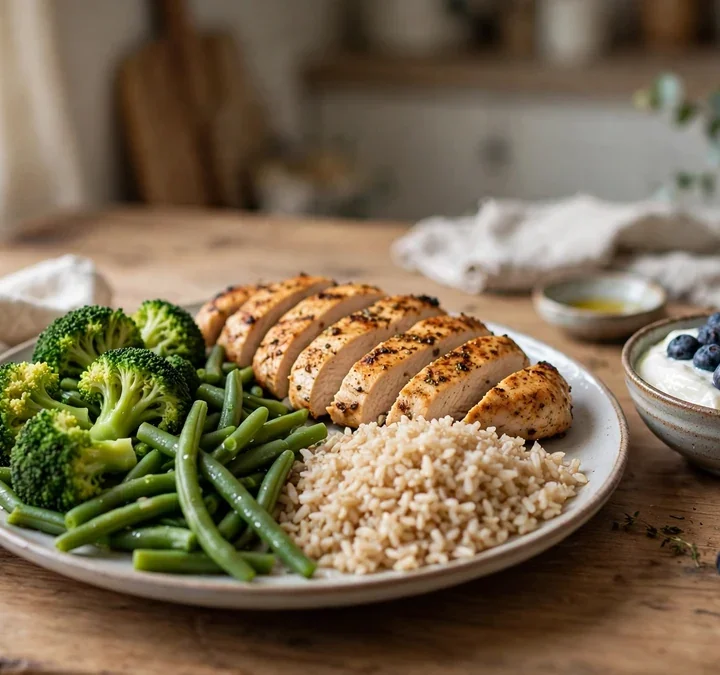
Picture a standard 9-inch dinner plate divided into three sections. Fill half the plate with non-starchy vegetables: salad greens, broccoli, green beans, kale, carrots, peppers, or tomatoes. Fill one quarter with a protein food: chicken, fish, turkey, eggs, tofu, beans, or lentils. Fill the last quarter with a whole grain or a starchy vegetable: brown rice, quinoa, bulgur, pasta, or a baked potato or sweet potato. Add a small amount of a healthy fat, such as a teaspoon of olive oil or a few nuts.
The method works for weight loss because the vegetable half is bulky and low in calories, so the plate looks full while the total stays moderate. The protein quarter keeps you full, and the grain quarter is the part most people over-serve, which is why it is capped at one quarter. Every lunch and dinner in this plan is a worked example of that plate, with the amounts weighed out for you this once so you can learn the look of each section.
The 7-day plate method meal plan
Portions are given in US household measures. Calories for each meal and day were calculated from USDA FoodData Central values for the exact foods and amounts listed. Use a plate close to 9 inches across if you have one; a much larger plate quietly enlarges every section. Drink water, unsweetened tea, or black coffee freely.
Day 1
| Meal | Foods and portions | Calories |
|---|---|---|
| Breakfast | 2 large eggs; 1 slice whole-wheat toast; 1 cup strawberries; 3/4 cup skim milk | about 349 |
| Lunch | 4 oz cooked chicken breast; 1/2 cup cooked brown rice; 1 cup cooked broccoli; 1 cup cooked green beans; 1 teaspoon olive oil | about 439 |
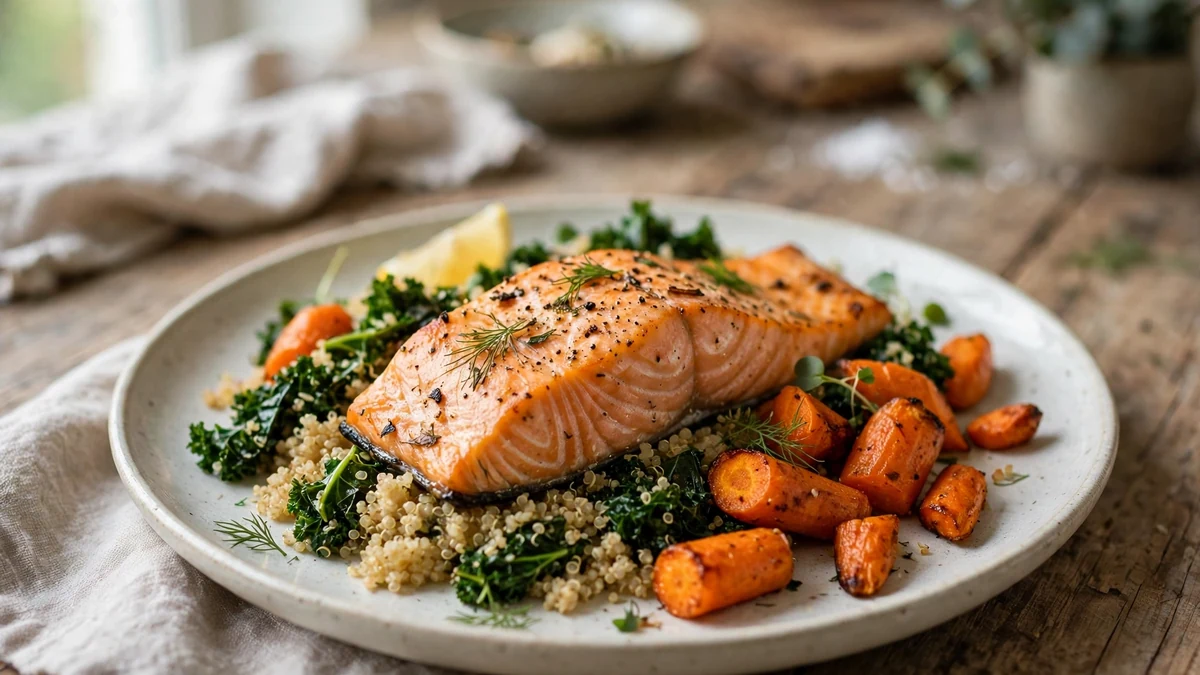
| Dinner | 5 oz cooked salmon; 1/2 cup cooked quinoa; 1 cup cooked kale; 1 cup chopped carrots | about 480 |
| Snacks | 3/4 cup plain nonfat Greek yogurt; 1 cup blueberries | about 185 |
Day 1 total: about 1452 calories, 131 g protein, 147 g carbohydrate, 39 g fat, 28 g fiber.
Day 2
| Meal | Foods and portions | Calories |
|---|---|---|
| Breakfast | 1/2 cup dry rolled oats, cooked; 1 cup skim milk; 1/2 medium banana, sliced; 1 tablespoon peanut butter | about 386 |
| Lunch | 1 can tuna in water, drained; 1 whole-wheat pita; 2 cups green leaf lettuce; 1 medium tomato; 1/2 cucumber, sliced; 1 teaspoon olive oil | about 409 |
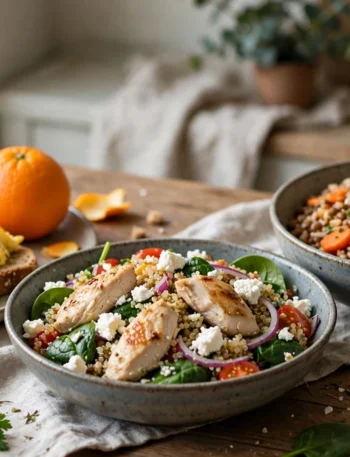
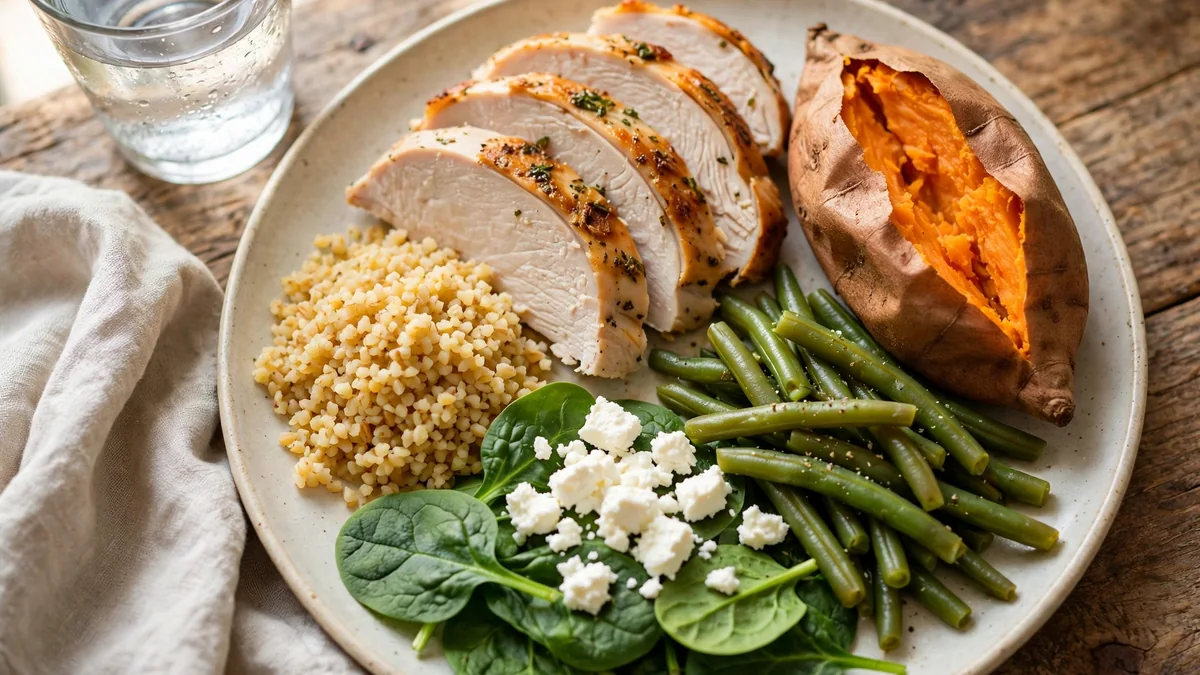
| Dinner | 4 oz cooked turkey breast; 1 medium baked sweet potato; 1 cup cooked green beans; 2 cups raw spinach; 1 oz feta cheese, crumbled; 1/2 cup cooked bulgur | about 478 |
| Snacks | 1 medium apple; 1/2 oz almonds (about 12 almonds) | about 176 |
Day 2 total: about 1448 calories, 106 g protein, 184 g carbohydrate, 38 g fat, 33 g fiber.
Day 3
| Meal | Foods and portions | Calories |
|---|---|---|
| Breakfast | 3/4 cup plain low-fat (2%) Greek yogurt; 1/4 cup granola; 1 cup raspberries | about 335 |
| Lunch | 1 cup cooked black beans; 1/2 cup cooked brown rice; 1/4 cup salsa; 1/2 avocado; 2 cups green leaf lettuce | about 491 |
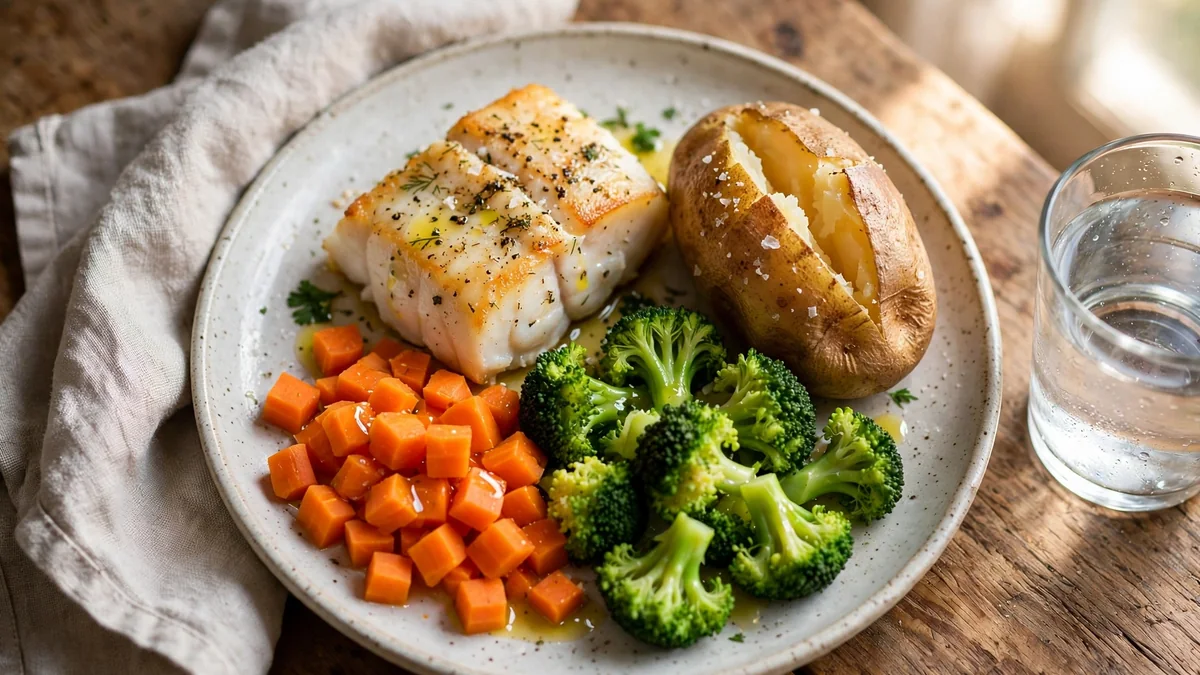
| Dinner | 6 oz cooked cod; 1 medium baked potato; 1 cup cooked broccoli; 1 cup chopped carrots; 1 teaspoon olive oil | about 476 |
| Snacks | 1/2 cup low-fat cottage cheese; 1 medium pear | about 183 |
Day 3 total: about 1484 calories, 106 g protein, 202 g carbohydrate, 33 g fat, 52 g fiber.
Day 4
| Meal | Foods and portions | Calories |
|---|---|---|
| Breakfast | 1 large egg; 2 large egg whites; 1 slice whole-wheat toast; 1/2 avocado; 1 medium tomato, sliced; 3/4 cup skim milk | about 399 |
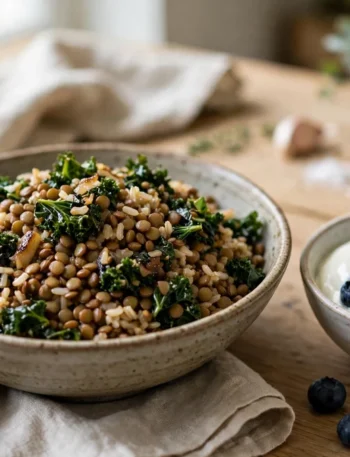
| Lunch | 1 cup cooked lentils; 1/2 cup cooked quinoa; 1 medium bell pepper; 1 teaspoon olive oil; 1 oz feta cheese, crumbled | about 475 |
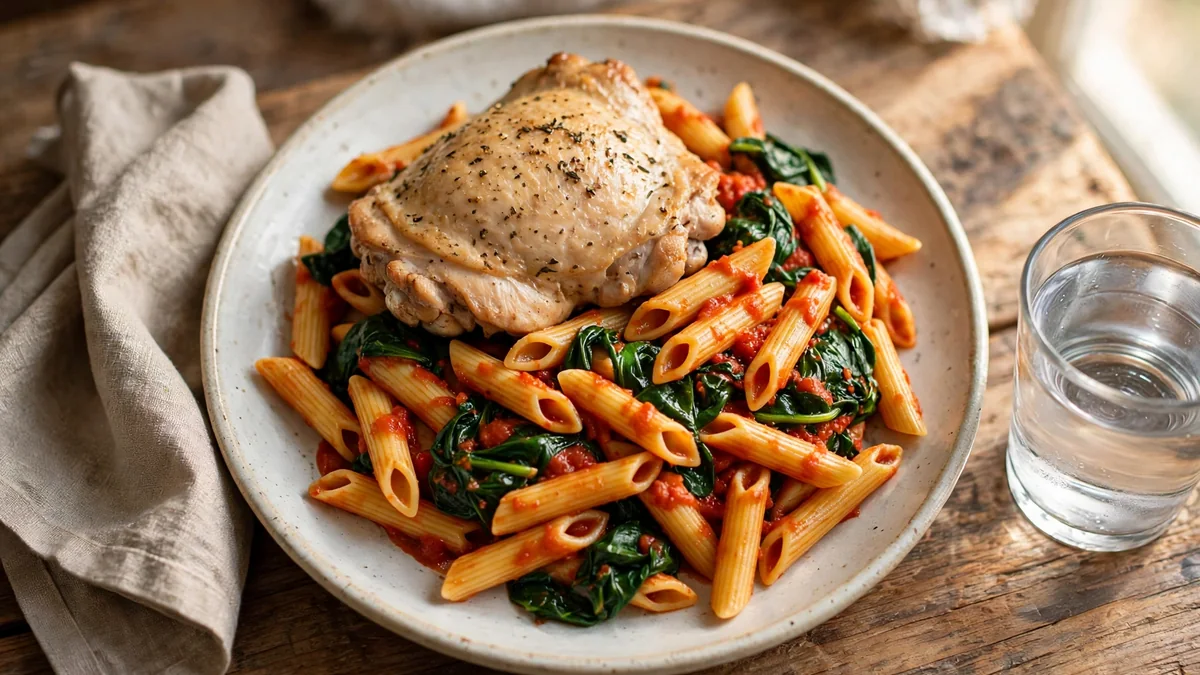
| Dinner | 5 oz cooked chicken thigh, skinless; 1/2 cup cooked pasta; 1/2 cup marinara sauce; 2 cups raw spinach, wilted into the pasta | about 441 |
| Snacks | 3 cups air-popped popcorn; 1 medium orange | about 154 |
Day 4 total: about 1470 calories, 100 g protein, 167 g carbohydrate, 47 g fat, 40 g fiber.
Day 5
| Meal | Foods and portions | Calories |
|---|---|---|
| Breakfast | 1/2 cup dry rolled oats, cooked; 3/4 cup plain nonfat Greek yogurt; 1 cup strawberries; 1 tablespoon honey | about 364 |
| Lunch | 1 cup cooked chickpeas; 2 cups green leaf lettuce; 1 medium tomato; 1/2 cucumber, sliced; 1 teaspoon olive oil; 1 slice whole-wheat bread | about 437 |
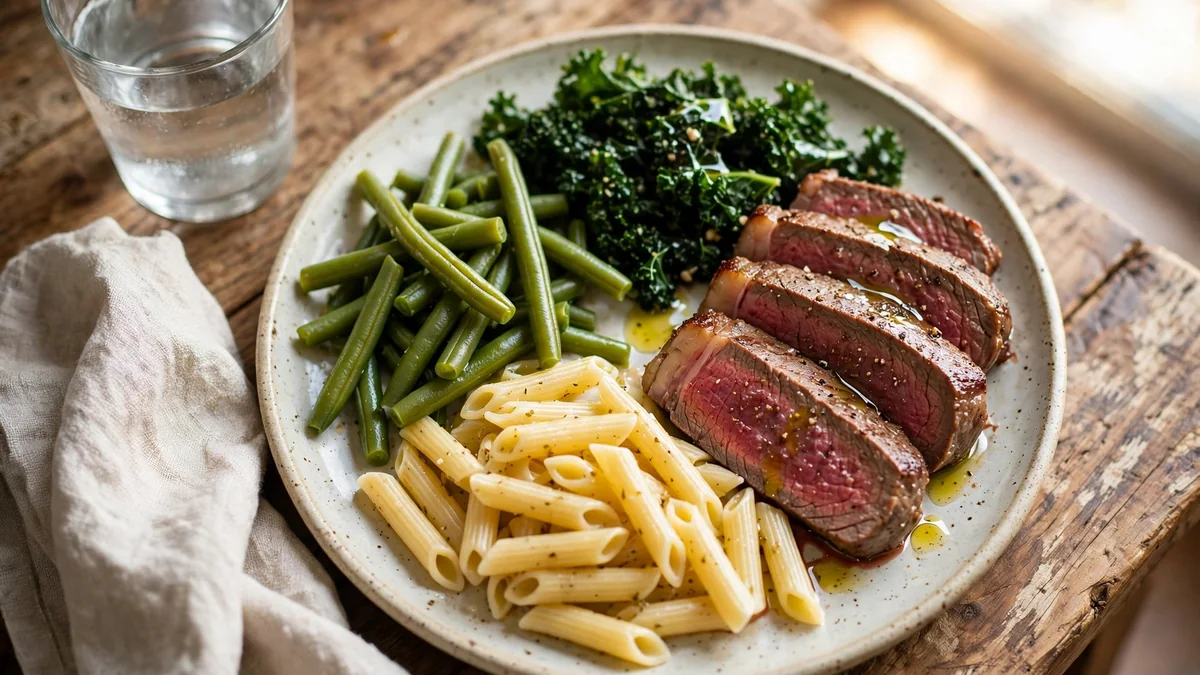
| Dinner | 4 oz cooked beef sirloin; 1/2 cup cooked pasta; 1 cup cooked green beans; 1 cup cooked kale; 1 teaspoon olive oil | about 464 |
| Snacks | 3/4 cup plain low-fat (2%) Greek yogurt; 1 cup grapes | about 228 |
Day 5 total: about 1494 calories, 107 g protein, 204 g carbohydrate, 32 g fat, 34 g fiber.
Day 6
| Meal | Foods and portions | Calories |
|---|---|---|
| Breakfast | 2 slices whole-wheat toast; 1 tablespoon peanut butter; 1 medium banana; 3/4 cup skim milk | about 426 |
| Lunch | 4 oz cooked shrimp; 1 cup cooked bulgur; 1 cup cooked broccoli; 1 medium carrot; 1 teaspoon olive oil | about 405 |
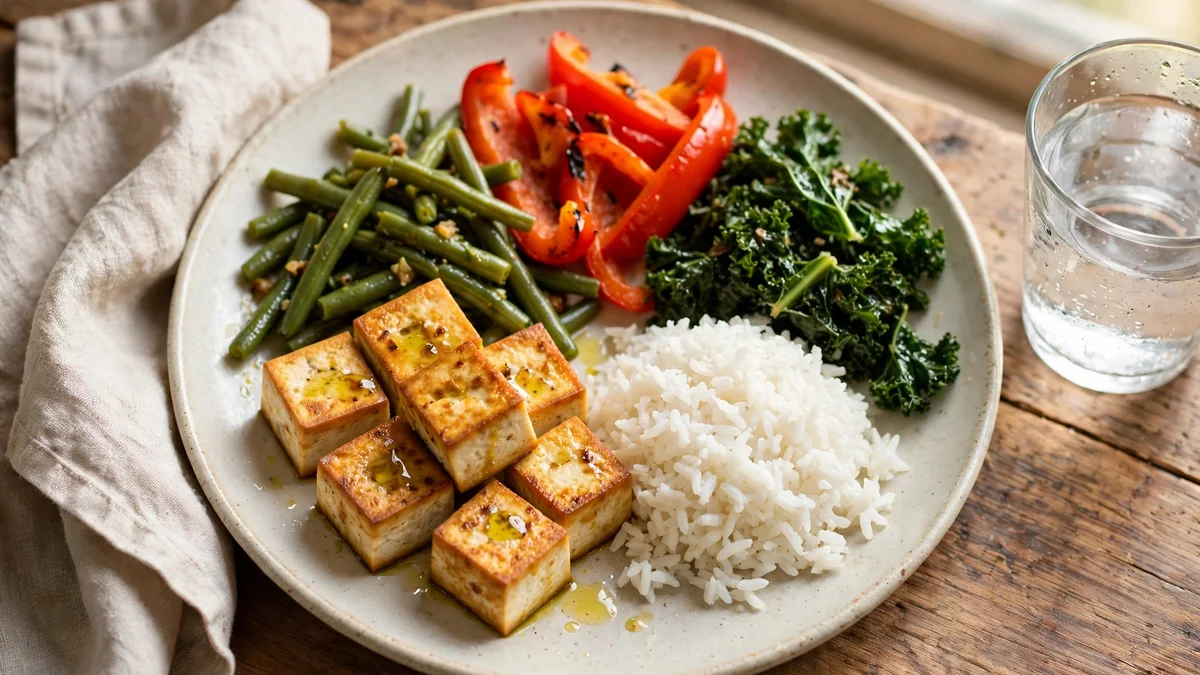
| Dinner | 125 g firm tofu (about 4 1/2 oz); 1/2 cup cooked white rice; 1 cup cooked green beans; 1 medium bell pepper; 1 cup cooked kale; 1 teaspoon olive oil | about 465 |
| Snacks | 1/2 cup low-fat cottage cheese; 1 cup strawberries; 1/2 oz walnuts (about 2 tablespoons chopped) | about 222 |
Day 6 total: about 1518 calories, 103 g protein, 188 g carbohydrate, 47 g fat, 39 g fiber.
Day 7
| Meal | Foods and portions | Calories |
|---|---|---|
| Breakfast | 1 cup low-fat cottage cheese; 1 medium pear; 1 slice whole-wheat toast | about 345 |
| Lunch | 1 cup shelled edamame; 1/2 cup cooked quinoa; 1 cup chopped carrots; 1/2 cucumber, sliced; 1 teaspoon olive oil | about 406 |
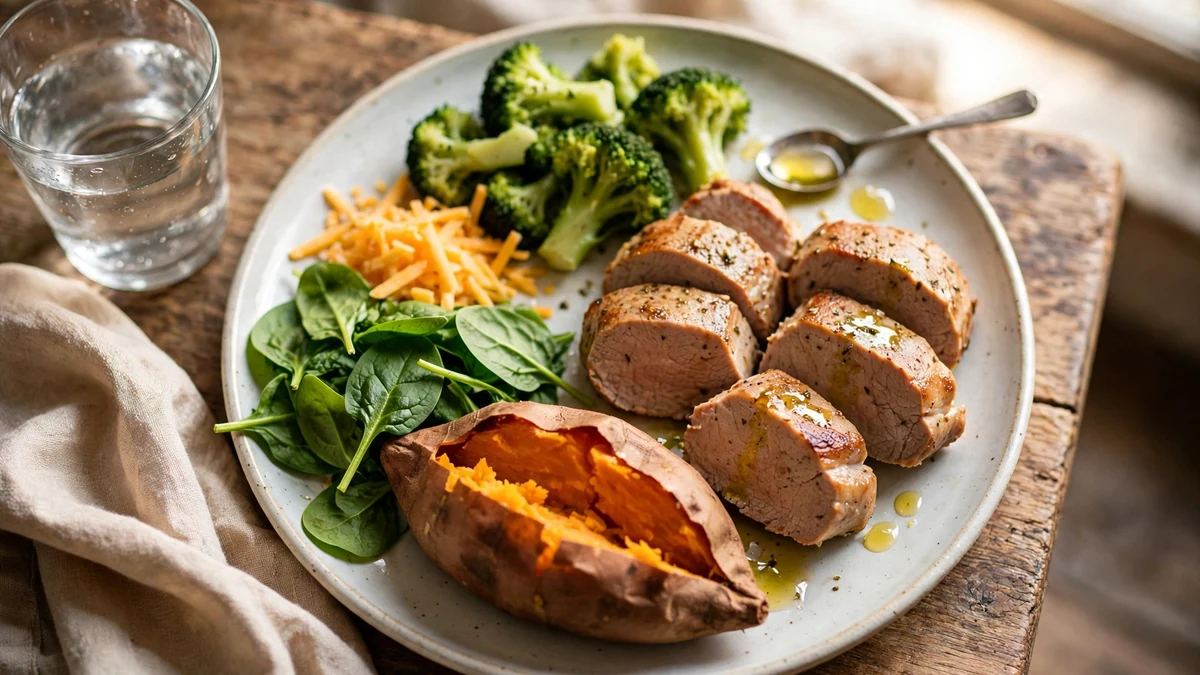
| Dinner | 5 oz cooked pork tenderloin; 1 medium baked sweet potato; 1 cup cooked broccoli; 2 cups raw spinach; 1 oz cheddar cheese; 1 teaspoon olive oil | about 529 |
| Snacks | 3/4 cup plain nonfat Greek yogurt; 1 cup raspberries | about 164 |
Day 7 total: about 1444 calories, 127 g protein, 155 g carbohydrate, 40 g fat, 40 g fiber.
Grocery list
This list covers the full week for one person following the plan as written.
Produce
- Strawberries
- Blueberries
- Raspberries
- Grapes
- Apples
- Pears
- Oranges
- Bananas
- Broccoli
- Green beans
- Kale
- Fresh spinach
- Green leaf lettuce
- Carrots
- Bell peppers
- Tomatoes
- Cucumbers
- Avocados
- Sweet potatoes
- White potatoes
Meat and seafood
- Chicken breast
- Chicken thighs
- Turkey breast
- Salmon fillets
- Cod fillets
- Shrimp
- Beef sirloin
- Pork tenderloin
- Canned tuna in water
Dairy and eggs
- Large eggs
- Egg whites
- Plain nonfat Greek yogurt
- Plain low-fat Greek yogurt
- Low-fat cottage cheese
- Skim milk
- Feta cheese
- Cheddar cheese
Pantry
- Rolled oats
- Brown rice
- Quinoa
- Bulgur
- Pasta
- Black beans
- Lentils
- Chickpeas
- Peanut butter
- Olive oil
- Salsa
- Marinara sauce
- Honey
- Granola
- Almonds
- Walnuts
- Popcorn for air-popping
Frozen
- Shelled edamame
Bakery
- Whole-wheat bread
- Whole-wheat pita
Meal prep tips
- Cook the brown rice, quinoa, and bulgur in one session on day 1; the quarter plate grain sections for most of the week come from those three pots.
- Bake the sweet potatoes and white potatoes for the week at once and refrigerate; they reheat well.
- Wash and chop the salad vegetables and greens when you get home, so filling the vegetable half takes a minute, not a cutting board session.
- Grill or bake the chicken, turkey, and pork portions in one batch and slice them; protein quarters are then ready to plate.
- Keep your 9-inch plate at the front of the cupboard, so it is the one you reach for.
Easy swaps
- Swap any protein quarter for another of the same size: 4 oz of chicken, turkey, salmon, tofu, or a cup of beans all fill the same section.
- Swap the grain quarter cup for cup: brown rice, quinoa, bulgur, and pasta are interchangeable in the plan’s amounts.
- Swap broccoli, green beans, kale, and carrots freely in the vegetable half; variety matters more than the exact vegetable.
- Swap raspberries, blueberries, and strawberries cup for cup at breakfasts and snacks.
- Swap Greek yogurt for low-fat cottage cheese in the same amount at snacks.
- Swap the shrimp lunch on day 6 for the same weight of cooked chicken breast with the same vegetables and grain.
How to adjust the calories safely
If this plan leaves you persistently hungry, low on energy, or losing faster than about 2 pounds a week, add food. To add roughly 200 to 300 calories a day using foods already in the plan, choose one: 1 oz of walnuts (about 183 calories) plus 1 teaspoon of olive oil on your vegetables (about 40 calories); or 1 cup of skim milk (about 86 calories) plus 1 tablespoon of peanut butter (about 96 calories) plus a medium carrot (about 25 calories); or an extra 1 cup of cooked quinoa in the grain section, split between lunch and dinner (about 222 calories).
Never go below 1,200 calories a day for women or 1,500 calories a day for men. Because this plan is written at the men’s floor of 1,500, men should add one of the options above every day, and taller or very active adults should do the same when the plan is not enough.
Common mistakes
- Using an oversized plate. On a 12-inch plate, every section grows by about a third and the method stops working.
- Letting the grain quarter creep. Rice and pasta are the easiest foods to over-serve; measure them for the first week until your eye learns the amount.
- Counting starchy vegetables as the vegetable half. Potatoes and corn belong in the grain quarter in this method, not the vegetable half.
- Skipping the protein quarter at lunch and making it up with snacks later. Each plate needs its protein section to keep you full.
- Dressing, cheese, and oil poured over a correct plate sit outside the three sections and add up quickly.
Pair it with a workout
Movement makes portion habits easier to keep, because regular activity steadies appetite and energy. Browse the walking plans and beginner strength routines in our Exercise and Workouts category, start with the level that matches your current fitness, and build up gradually. Stop any exercise that causes pain, dizziness, or chest pain, and check with your doctor before starting if you have been inactive or have any medical condition.
Frequently asked questions
Do I need a special divided plate or an app?
No. A plain dinner plate about 9 inches across is all you need. Divided plates can help in the first days, but an ordinary plate and the proportions above are enough.
How do breakfasts fit the plate method?
Breakfast foods do not plate as neatly, so this plan applies the same idea loosely: a protein food such as eggs or Greek yogurt, a whole grain or starchy food such as oats or toast, and fruit or vegetables for color and fiber. The strict half, quarter, quarter layout is used at lunch and dinner, where it matters most.
How is this different from the Mediterranean plan on this site?
The Mediterranean plan is built around a named eating pattern and removes added sugar. This plate method plan is pattern neutral: it teaches proportions you can apply to almost any cuisine, and the menus are completely different.
What if I am still hungry after a plate?
First add more non-starchy vegetables, which is the cheapest section in calories. If you are hungry most days, use the adjustment section to add 200 to 300 calories a day rather than quietly enlarging the grain quarter.
Can I use the plate method in a restaurant?
Yes, and that is one of its strengths. Order a protein, ask for double vegetables, and keep the starch portion to about a quarter of the plate. Sauces and dressings on the side let you control the extras that sit outside the sections.
What drinks fit this plan?
Water is the default. Unsweetened tea and black coffee are fine. Juice, soda, and sweetened coffee drinks add calories without filling any section of the plate, so they are not part of the plan as written.
Sources and further reading
- USDA FoodData Central, the source for every calorie and nutrient value in this plan: fdc.nal.usda.gov
- MyPlate, the US Department of Agriculture guide built on the same plate proportions: myplate.gov
- Dietary Guidelines for Americans, for the healthy eating patterns behind this plan: dietaryguidelines.gov
- Centers for Disease Control and Prevention, for healthy weight guidance: cdc.gov
- MedlinePlus, for plain language background on portion sizes and healthy eating: medlineplus.gov
This article is for general educational purposes only and is not medical, nutrition, or fitness advice. Talk with your doctor or a registered dietitian before changing your diet or starting an exercise program.