Prints just the plan, like a recipe card.
Last updated: November 22, 2026.
This dairy free meal plan lays out a full week of eating at about 1,500 calories a day, with exact foods and US portions for breakfast, lunch, dinner, and a snack every day. There is no milk, yogurt, cheese, or cottage cheese anywhere in the week. Protein comes from meat, fish, eggs, tofu, tempeh, beans, and lentils instead, and every calorie and macro number on this page was calculated from USDA FoodData Central values for the portions listed.
Protein averages about 96 grams a day and fiber about 37 grams a day, which shows that dropping dairy does not have to mean dropping protein. At 1,500 calories, it is sized for gradual loss of about 1 to 2 pounds a week for many adults, though your own rate may vary and no plan can promise a result.
You will find more eating styles in our By Diet Style collection, part of the full Diet Plans library. Our 7-Day Anti-Inflammatory Meal Plan for Weight Loss is another produce-forward week with a completely different menu.
Who this plan is for, and who should not follow it
This plan is for adults who avoid dairy, whether because of a milk allergy, lactose intolerance, or personal preference, and who want a weight loss week planned out in advance. It suits anyone who is tired of building meals around cheese and yogurt and wants to see how a full week looks without them.
If you have a milk allergy, read every label anyway: dairy hides in breads, sauces, deli meats, and packaged foods that are not part of this plan. If you avoid dairy for lactose intolerance, note that this plan removes lactose along with everything else, which is stricter than many people with intolerance need. Calcium deserves a thought on any dairy-free week; this plan leans on kale, broccoli, edamame, tofu made with calcium sulfate, and almonds, and a registered dietitian can tell you whether that covers your needs. If you have diabetes, kidney disease, or another condition affected by food, or you take medication that food or weight change can affect, review this plan with your doctor and a registered dietitian before you start. Do not follow this plan if you are under 18, pregnant, or breastfeeding. This page is general education, not medical advice.
If you have a history of disordered eating, talk with a doctor or a registered dietitian before following any diet plan. For eating disorder support in the US, visit the National Alliance for Eating Disorders at allianceforeatingdisorders.com.
Plan overview
| Measure | Amount |
|---|---|
| Target calories per day | about 1,500 |
| Average calories per day (as written) | about 1506 |
| Average protein per day | about 96 g |
| Average carbohydrate per day | about 183 g |
| Average fat per day | about 49 g |
| Average fiber per day | about 37 g |
| Meals per day | 4 (breakfast, lunch, dinner, and snacks) |
No dairy appears in any meal. Eggs appear often; eggs are not a dairy food, despite sitting near the milk in many grocery stores.
How this dairy free meal plan covers protein and calcium
The usual worry about eating without dairy is protein, and this week answers it directly: eggs at breakfast, chicken, turkey, fish, pork, or beef at main meals, and tofu, tempeh, edamame, beans, and lentils in rotation. Hummus and peanut butter fill the creamy role that cheese and yogurt often play, and avocado adds richness to plates and tacos.
For calcium, the plan uses foods that naturally carry it: leafy kale, broccoli, edamame, almonds, and tofu prepared with calcium sulfate, which is the tofu in our food database. Spread across the week alongside vitamin D from salmon and eggs, that is a reasonable general pattern, but needs vary, so treat it as a starting point and raise the question with your clinician or dietitian if dairy-free eating is long term for you.
The 7-day meal plan
Portions are given in US household measures. Cook poultry, beef, and pork thoroughly, refrigerate leftovers within 2 hours, and rinse canned beans to reduce sodium.
Day 1
| Meal | What to eat | Calories |
|---|---|---|
| Breakfast | 1/2 cup dry rolled oats; 1 tablespoon peanut butter; 1 medium banana; 1 cup raspberries | about 416 |
| Lunch | 4 oz cooked chicken breast; 2 slices whole-wheat bread; 2 tablespoons hummus; 1 medium tomato; 2 cups green leaf lettuce | about 434 |
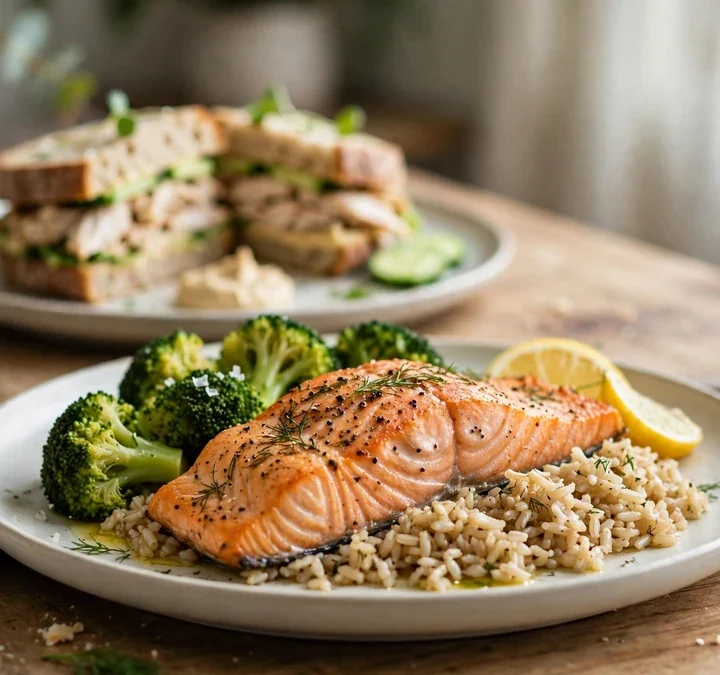
| Dinner | 5 oz cooked salmon; 1/2 cup cooked brown rice; 1 cup cooked broccoli; 1 teaspoon olive oil | about 467 |
| Snacks | 1 medium apple; 1/2 oz almonds (about 6 almonds) | about 176 |
Day 1 total: about 1493 calories, 104 g protein, 176 g carbohydrate, 46 g fat, 36 g fiber.
Day 2
| Meal | What to eat | Calories |
|---|---|---|
| Breakfast | 2 large eggs; 1 slice whole-wheat bread; 1/2 avocado; 1 medium tomato | about 378 |
| Lunch | 1 cup cooked lentils; 1 cup chopped carrots; 1/2 cup crushed canned tomatoes; 2 teaspoons olive oil; 1 slice whole-wheat bread | about 478 |
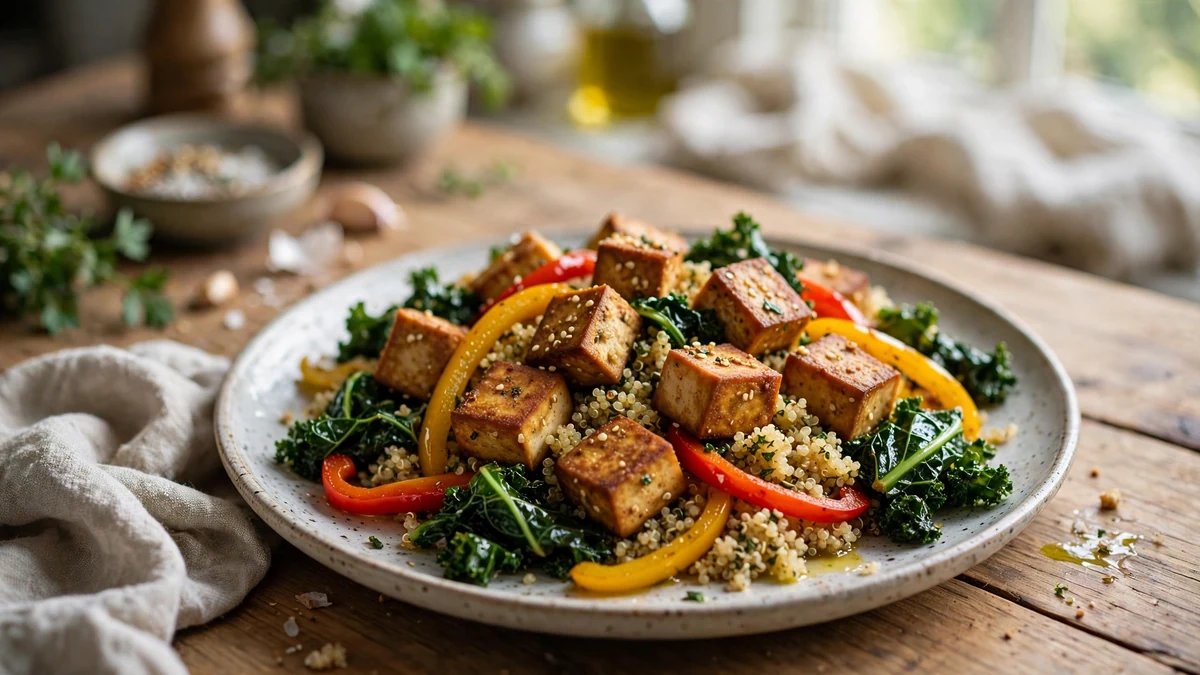
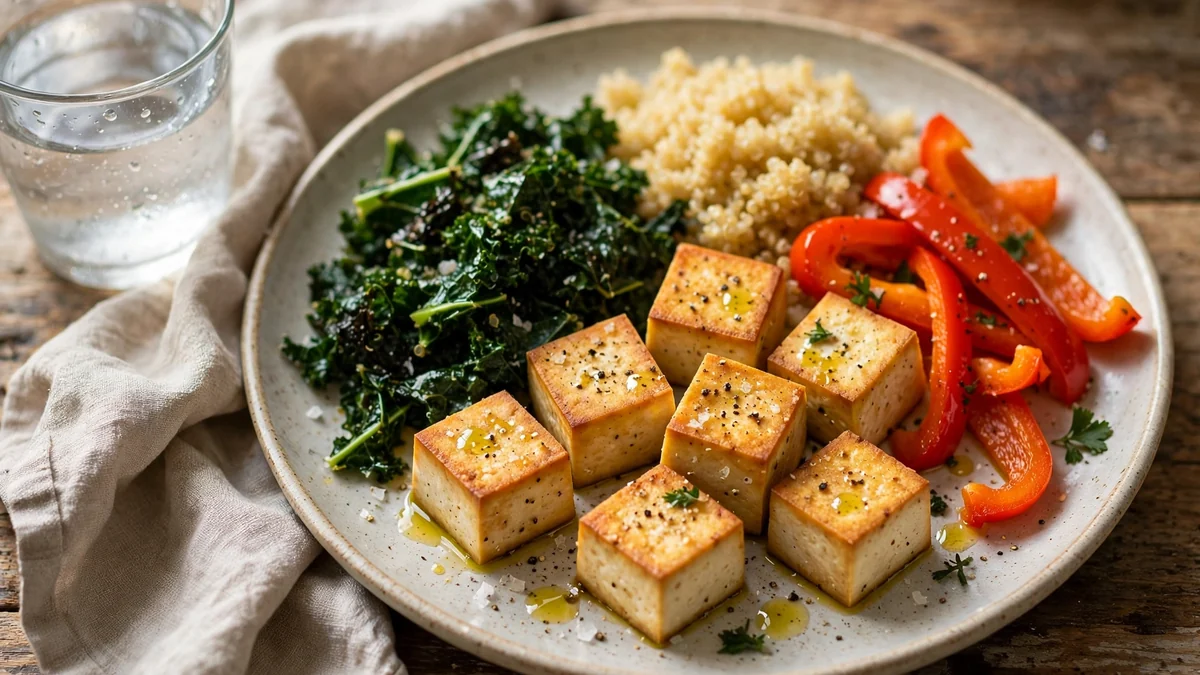
| Dinner | 125 g firm tofu (about 4 1/2 oz); 1/2 cup cooked quinoa; 1 cup cooked kale; 1 medium bell pepper; 2 teaspoons olive oil | about 452 |
| Snacks | 1 cup strawberries; 1/2 cup shelled edamame | about 143 |
Day 2 total: about 1451 calories, 85 g protein, 154 g carbohydrate, 62 g fat, 50 g fiber.
Day 3
| Meal | What to eat | Calories |
|---|---|---|
| Breakfast | 1/2 cup dry rolled oats; 1 cup strawberries; 1 oz walnuts (about 1/4 cup); 1 tablespoon honey | about 447 |
| Lunch | 1 can tuna in water, drained; 1 whole-wheat pita; 2 tablespoons hummus; 1/2 cucumber; 2 cups green leaf lettuce | about 400 |
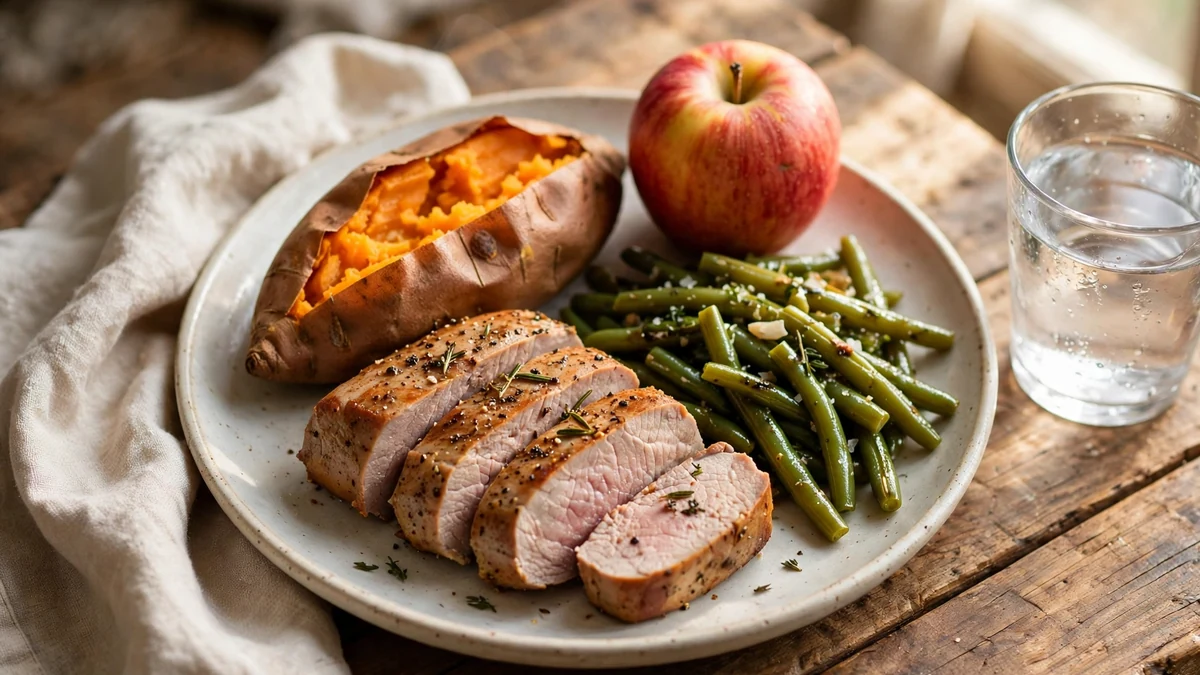
| Dinner | 5 oz cooked pork tenderloin; 1 medium baked sweet potato; 1 cup cooked green beans; 1 medium apple | about 444 |
| Snacks | 1 medium banana; 1 tablespoon peanut butter | about 201 |
Day 3 total: about 1492 calories, 95 g protein, 197 g carbohydrate, 43 g fat, 32 g fiber.
Day 4
| Meal | What to eat | Calories |
|---|---|---|
| Breakfast | 2 large eggs; 2 large egg whites; 2 cups fresh spinach; 1 slice whole-wheat bread; 1/4 cup salsa; 1/2 avocado | about 422 |
| Lunch | 1 cup cooked black beans; 1/2 cup cooked brown rice; 2/3 cup cooked corn; 1/4 cup salsa; 2 cups green leaf lettuce | about 467 |
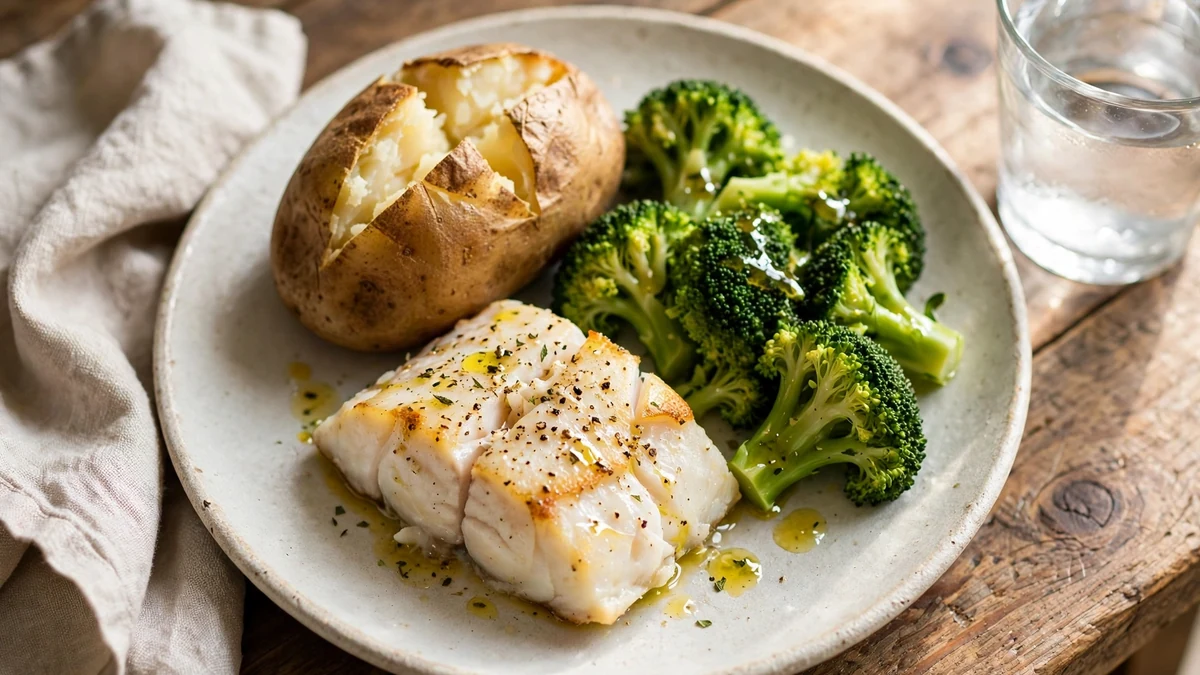
| Dinner | 6 oz cooked cod; 1 medium baked potato; 1 cup cooked broccoli; 2 teaspoons olive oil | about 463 |
| Snacks | 1 medium pear; 1/2 oz almonds (about 6 almonds) | about 183 |
Day 4 total: about 1535 calories, 101 g protein, 195 g carbohydrate, 45 g fat, 46 g fiber.
Day 5
| Meal | What to eat | Calories |
|---|---|---|
| Breakfast | 125 g firm tofu (about 4 1/2 oz); 2 cups fresh spinach; 1 medium tomato; 1 slice whole-wheat bread; 1 teaspoon olive oil; 1 orange | about 398 |
| Lunch | 1 cup cooked chickpeas; 1/2 cucumber; 1 medium bell pepper; 2 teaspoons olive oil; 2 tablespoons hummus | about 440 |
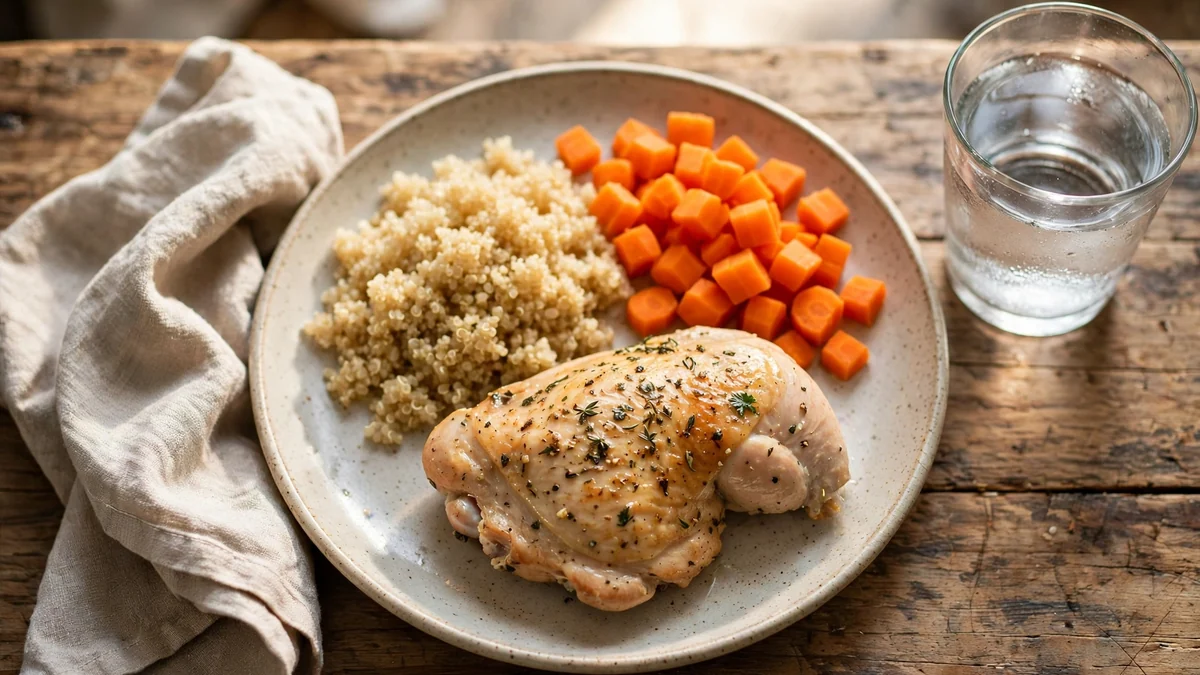
| Dinner | 4 oz cooked skinless chicken thigh; 1 cup cooked quinoa; 1 cup chopped carrots | about 477 |
| Snacks | 1 cup grapes; 1/2 oz walnuts (about 1 tablespoon chopped) | about 196 |
Day 5 total: about 1511 calories, 88 g protein, 181 g carbohydrate, 56 g fat, 38 g fiber.
Day 6
| Meal | What to eat | Calories |
|---|---|---|
| Breakfast | 1/2 cup dry rolled oats; 1 cup blueberries; 2 tablespoons peanut butter | about 427 |
| Lunch | 100 g tempeh (about 3 1/2 oz); 1/2 cup cooked brown rice; 1 cup cooked kale; 1 medium carrot; 1 teaspoon olive oil | about 428 |
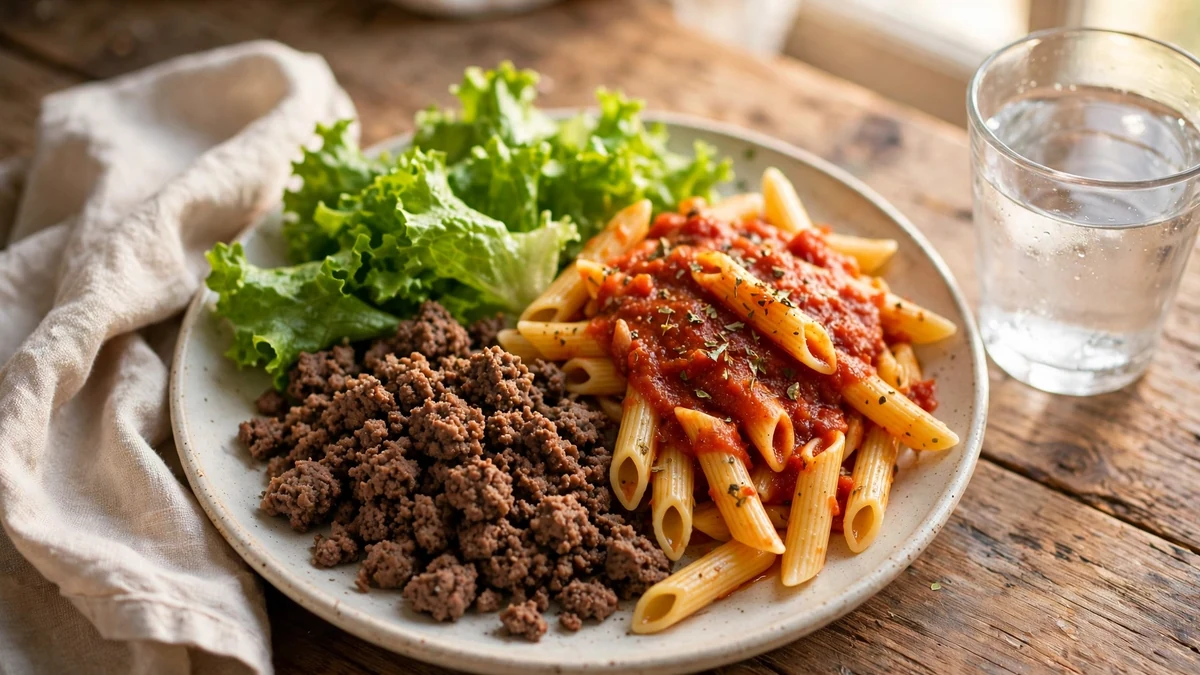
| Dinner | 4 oz cooked lean ground beef (90% lean); 3/4 cup cooked pasta; 1/2 cup marinara sauce; 2 cups green leaf lettuce | about 484 |
| Snacks | 1 medium apple; 3 cups air-popped popcorn | about 188 |
Day 6 total: about 1528 calories, 83 g protein, 187 g carbohydrate, 55 g fat, 28 g fiber.
Day 7
| Meal | What to eat | Calories |
|---|---|---|
| Breakfast | 2 large eggs; 1 medium baked sweet potato; 2 cups fresh spinach; 1/4 cup salsa; 1 slice whole-wheat bread; 1/4 avocado | about 431 |
| Lunch | 5 oz cooked shrimp; 1 cup cooked white rice; 1 cup cooked green beans; 1 teaspoon olive oil | about 493 |
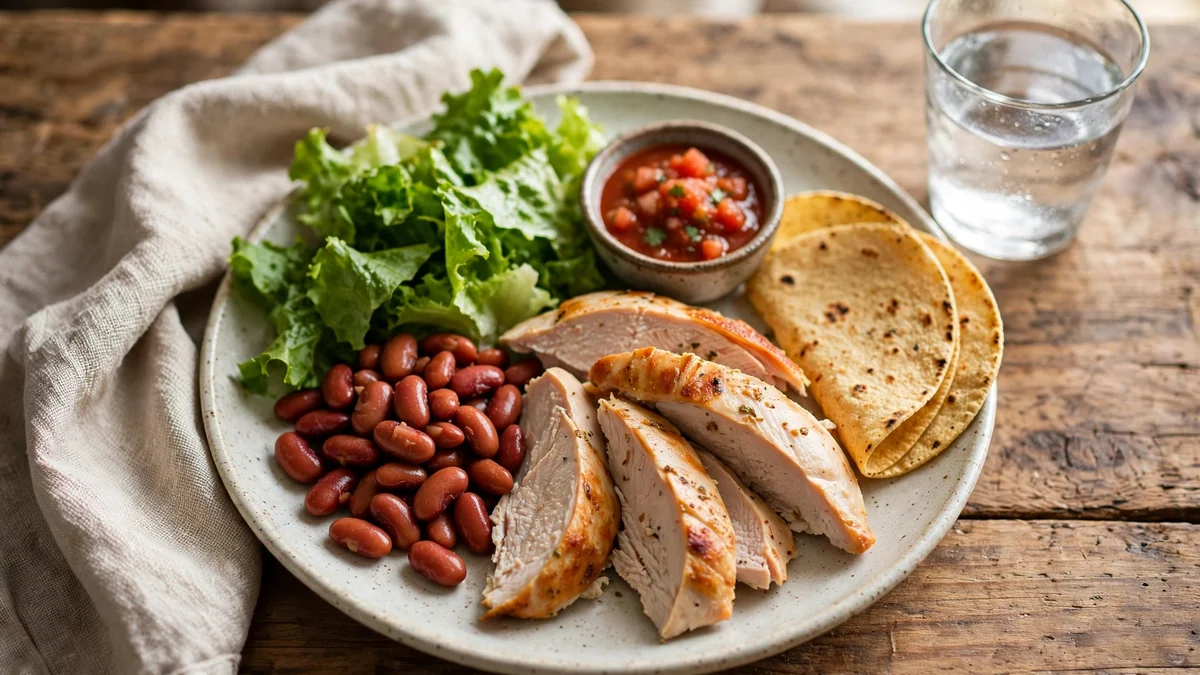
| Dinner | 4 oz cooked turkey breast; 1/2 cup cooked kidney beans; 2 corn tortillas; 1/4 cup salsa; 2 cups green leaf lettuce | about 421 |
| Snacks | 1 medium banana; 1/2 oz almonds (about 6 almonds) | about 186 |
Day 7 total: about 1531 calories, 113 g protein, 192 g carbohydrate, 37 g fat, 32 g fiber.
Grocery list
This list covers the full week for one person, following the portions in the plan. Note the dairy aisle is skipped entirely.
Produce
- Sweet potatoes and white potatoes
- Broccoli, green beans, and kale
- Fresh spinach and green leaf lettuce
- Carrots, cucumbers, tomatoes, and bell peppers
- Apples, pears, bananas, oranges, and grapes
- Blueberries, strawberries, and raspberries
- Avocados
Meat and seafood
- Chicken breast and skinless chicken thighs
- Turkey breast
- Salmon fillets, cod fillets, and shrimp
- Pork tenderloin
- Lean ground beef (90% lean)
- Canned tuna in water
- Firm tofu and tempeh
- Shelled edamame
Dairy and eggs
- Large eggs and egg whites only. No milk, yogurt, or cheese is used in this plan
Pantry
- Rolled oats
- Brown rice, white rice, quinoa, and pasta
- Lentils, black beans, kidney beans, and chickpeas (dry or canned)
- Hummus, salsa, and marinara sauce
- Crushed canned tomatoes
- Peanut butter, almonds, and walnuts
- Olive oil
- Honey
- Popcorn for air-popping
- Corn tortillas
Frozen
- Frozen shelled edamame, if not bought fresh
- Frozen berries as a backup for fresh fruit
Bakery
- Whole-wheat bread
- Whole-wheat pita (check the label if you have a milk allergy)
Meal prep tips
- Cook a pot each of brown rice and quinoa on day 1; both carry lunches and dinners all week.
- Press and cube the tofu ahead so day 2 and day 5 plates come together fast.
- Make the day 2 lentil soup in a double batch; it reheats well and covers a busy evening.
- Portion hummus, nuts, and popcorn into single servings so snacks stay at the planned size.
- Wash greens and chop peppers, cucumbers, and carrots ahead, so salads take minutes.
- Hard-boil a few eggs at the start of the week for fast breakfasts and snack insurance.
Easy swaps
- Swap tofu and tempeh for each other in similar portions; tempeh runs a little higher in calories, so trim the oil that day.
- Swap chicken breast and turkey breast for each other, ounce for ounce.
- Swap cod, shrimp, and salmon for each other in the same portion; calories stay close.
- Swap black beans, kidney beans, and chickpeas for each other in equal portions.
- Swap hummus for the same amount of mashed avocado with salsa when you want a different creamy element.
- Swap pear, apple, orange, and grapes for each other as the fruit in a meal.
How to adjust the calories safely
This plan averages about 1506 calories a day. If you are a man, if you are tall or active, or if you are losing weight faster than about 1 to 2 pounds a week, add about 200 to 300 calories a day using foods already in the plan: 1 cup of cooked quinoa (about 222 calories) added to a dinner; or 2 tablespoons of peanut butter (about 191 calories) with a banana (about 105 calories); or 1 oz of walnuts (about 183 calories) plus an orange (about 62 calories).
Never go below 1,200 calories a day for women or 1,500 calories a day for men. Men using this plan should use the additions above to stay at or above 1,500 calories, and most men will feel and do better higher than that, based on size and activity.
Common mistakes
- Assuming dairy-free means low protein. This week averages about 96 grams a day without a single dairy food; the trick is planning a protein at every meal.
- Swapping in sweetened plant milks and flavored dairy-free yogurts without checking labels. Many carry added sugar and little protein, and none are part of the calculated week.
- Forgetting calcium entirely. Build kale, broccoli, edamame, tofu, or almonds into most days, as this plan does.
- Missing hidden dairy. If you have a milk allergy, check breads, sauces, and packaged foods for milk ingredients every time.
- Calling eggs dairy and cutting them too. Eggs are not dairy; removing them as well makes protein harder for no benefit, unless you have a separate egg allergy.
Pair it with a workout
Food is only half of a weight loss week. Pair this plan with the walking plans and beginner strength routines in our Exercise and Workouts category, building up gradually and stopping any exercise that causes pain, dizziness, or chest pain. A 10 to 15 minute walk after meals is an easy place to start.
Frequently asked questions
Are eggs dairy?
No. Eggs are not a dairy food; dairy means products made from milk. Eggs sit near the dairy case in many stores, which causes the confusion. This plan uses eggs freely and no milk products at all. If you have an egg allergy as well, swap the egg breakfasts for the tofu and oat breakfasts in the week.
Where does the protein come from without dairy?
From the same places it comes from in most diets: chicken, turkey, fish, shrimp, pork, beef, eggs, tofu, tempeh, edamame, beans, and lentils, plus smaller amounts from hummus, peanut butter, nuts, and grains. The week averages about 96 grams a day.
What about calcium if I never eat dairy?
This plan leans on kale, broccoli, edamame, almonds, and tofu made with calcium sulfate, spread across the week. That is a sensible general pattern, but individual needs vary with age and health, so if you eat dairy-free long term, ask your doctor or a registered dietitian whether your intake is covered.
Can I drink plant milk on this plan?
The numbers here were calculated without any milk, dairy or plant based. Unsweetened plant milks are usually low in calories but also low in protein, and sweetened versions add sugar. If you add one, treat that meal as approximate, choose unsweetened, and do not count it as a protein source.
Is 1,500 calories the right level for me?
It suits many women for gradual weight loss. It is the floor for men, not a target: men should use the adjustment section to add 200 to 300 calories a day, and anyone who feels weak, constantly hungry, or is losing faster than about 1 to 2 pounds a week should eat more and talk with a clinician.
Sources and further reading
- USDA FoodData Central, the source for every calorie and nutrient value in this plan: fdc.nal.usda.gov
- Dietary Guidelines for Americans, for the overall healthy eating pattern this plan follows: dietaryguidelines.gov
- MyPlate, for balanced plate ideas built from the same food groups: myplate.gov
- Centers for Disease Control and Prevention, for healthy weight guidance: cdc.gov
- MedlinePlus, for plain language background on lactose intolerance, milk allergy, and calcium: medlineplus.gov
- Academy of Nutrition and Dietetics, for guidance on meeting nutrient needs without dairy: eatright.org
This article is for general educational purposes only and is not medical, nutrition, or fitness advice. Talk with your doctor or a registered dietitian before changing your diet or starting an exercise program.