Prints just the plan, like a recipe card.
Last updated: November 22, 2026.
This heart healthy eating plan gives you a full week of eating at about 1,500 calories a day, built on a pattern rather than a single superfood: fish several times a week, beans and lentils on most days, whole grains, plenty of produce, nuts, and olive oil as the main added fat. Every meal lists exact foods and US portions, and every calorie and macro number on this page was calculated from USDA FoodData Central values for the portions listed, so the plan you read is the plan you actually eat.
The week is deliberately steady and repeatable. Salmon appears twice, and tuna, cod, shrimp, tempeh, and three kinds of beans fill the other anchor spots, which keeps fiber high at about 39 grams a day and protein at about 104 grams a day. For many adults, a level like this lines up with gradual weight loss of about 1 to 2 pounds a week, though your own rate may be slower or faster and no plan can promise a result.
This plan sits in our By Diet Style collection, part of the full Diet Plans library. It is a companion to our 7-Day No-Sugar Mediterranean Diet Meal Plan, which uses many of the same staple foods in a different week of menus.
Who this plan is for, and who should not follow it
This plan is for adults who want to eat in a heart conscious pattern as part of general healthy living: home cooked meals, short ingredient lists, and foods that are easy to find in any US grocery store. It suits people who want the week’s decisions made in advance and are comfortable eating fish a few times a week, with swaps available for every fish meal.
This page is general education only and is not medical advice, and following it is not a treatment for heart disease or any other condition. If you have a heart condition, high blood pressure, high cholesterol, diabetes, or kidney disease, or you take medication affected by food or weight change, review this plan with your doctor or a registered dietitian before following it, and never change or stop medication based on a meal plan. Do not follow this plan if you are under 18, pregnant, or breastfeeding.
If you have a history of disordered eating, talk with a doctor or a registered dietitian before following any diet plan. For eating disorder support in the US, visit the National Alliance for Eating Disorders at allianceforeatingdisorders.com.
Plan overview
| Measure | Amount |
|---|---|
| Target calories per day | about 1,500 |
| Average calories per day (as written) | about 1477 |
| Average protein per day | about 104 g |
| Average carbohydrate per day | about 183 g |
| Average fat per day | about 41 g |
| Average fiber per day | about 39 g |
| Meals per day | 4 (breakfast, lunch, dinner, and snacks) |
Fish or seafood anchors five of the seven days, legumes anchor most of the others, and olive oil is the main added fat throughout. Readers who have been given a personal eating target by their care team should treat those instructions as the ones that count; this plan simply keeps processed meats, butter, and heavy cream sauces off the menu.
How this heart healthy eating plan is built
The plan follows the pattern that US dietary guidance describes for heart conscious eating: vegetables and fruit at most meals, whole grains as the default, beans and lentils several times a week, fish in regular rotation, and nuts and olive oil in measured amounts. No single food does the work; the pattern across the whole week is the point.
Portions of the calorie dense pattern foods are measured on purpose. Olive oil is listed by the teaspoon, nuts by the half ounce, and cheese appears only in small amounts, because these foods fit the pattern well at planned portions and quietly double a meal’s calories when poured or scattered freely.
The 7-day heart healthy eating plan
Portions are given in US household measures. Calories for each meal and day were calculated from USDA FoodData Central values for the exact foods and amounts listed. Season foods with herbs, spices, lemon, garlic, and vinegar as you like; they add flavor for very few calories. Drink water, unsweetened tea, or black coffee freely.
Day 1
| Meal | Foods and portions | Calories |
|---|---|---|
| Breakfast | 1/2 cup dry rolled oats, cooked; 3/4 cup skim milk; 1 cup strawberries; 1/2 oz almonds (about 12 almonds) | about 346 |
| Lunch | 1 cup cooked lentils; 1/2 cup cooked quinoa; 2 cups raw spinach; 1 medium tomato; 1 teaspoon olive oil | about 413 |
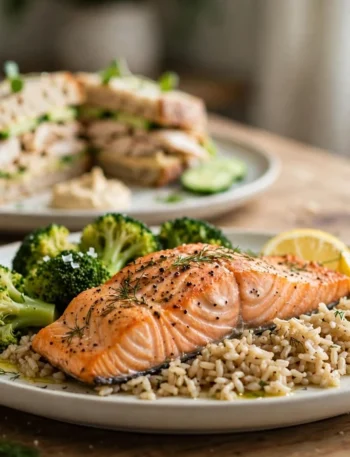
| Dinner | 5 oz cooked salmon; 1/2 cup cooked brown rice; 1 cup cooked green beans; 1 teaspoon olive oil | about 456 |
| Snacks | 3/4 cup plain nonfat Greek yogurt; 1 cup raspberries; 1/2 oz walnuts (about 2 tablespoons chopped) | about 256 |
Day 1 total: about 1471 calories, 102 g protein, 173 g carbohydrate, 46 g fat, 44 g fiber.
Day 2
| Meal | Foods and portions | Calories |
|---|---|---|
| Breakfast | 1 cup low-fat cottage cheese; 1 medium pear; 1/2 oz walnuts (about 2 tablespoons chopped) | about 356 |
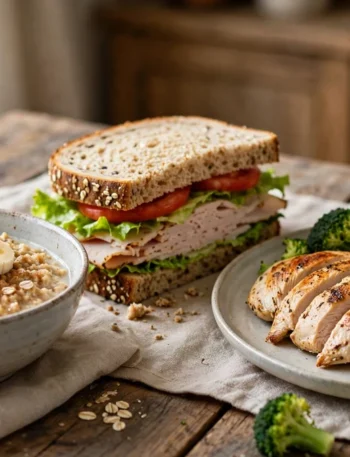
| Lunch | 4 oz cooked chicken breast; 2 slices whole-wheat bread; 2 cups green leaf lettuce; 1 medium tomato; 1/2 avocado | about 501 |
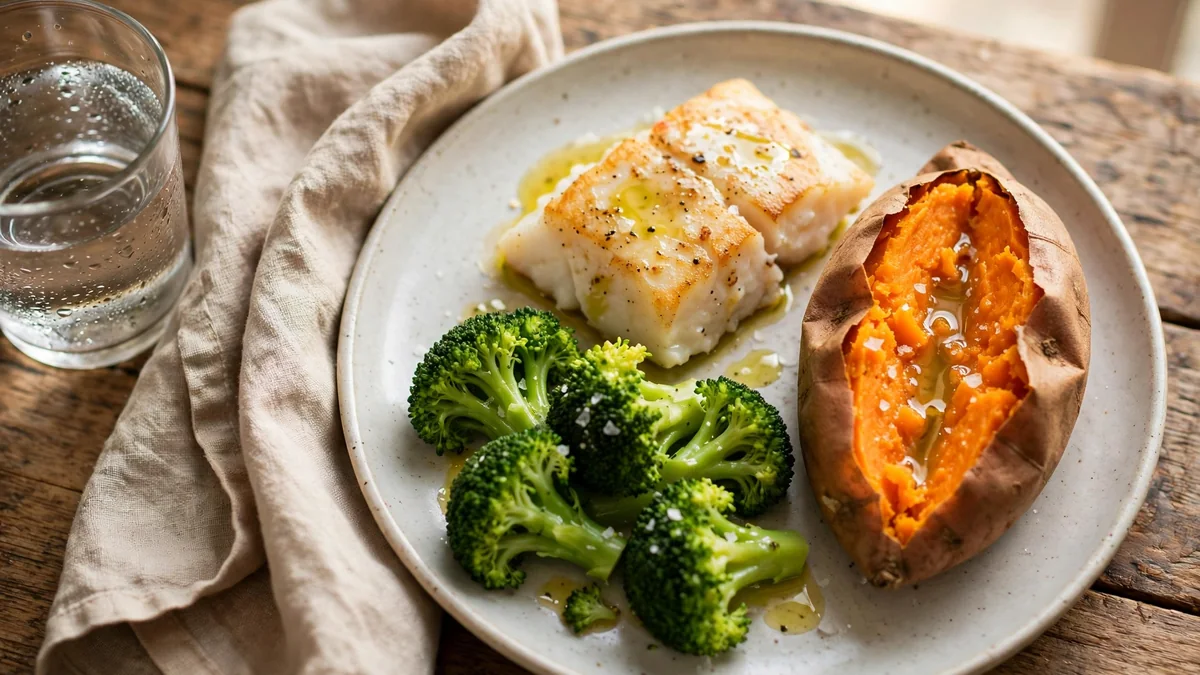
| Dinner | 6 oz cooked cod; 1 medium baked sweet potato; 1 cup cooked broccoli; 2 teaspoons olive oil | about 415 |
| Snacks | 1 medium apple; 1 tablespoon peanut butter | about 190 |
Day 2 total: about 1462 calories, 126 g protein, 139 g carbohydrate, 49 g fat, 32 g fiber.
Day 3
| Meal | Foods and portions | Calories |
|---|---|---|
| Breakfast | 2 large eggs; 2 egg whites; 1 slice whole-wheat toast; 1 orange; 2 cups raw spinach | about 345 |
| Lunch | 1 cup cooked kidney beans; 1/2 cup cooked brown rice; 1 cup cooked kale; 1 teaspoon olive oil | about 436 |
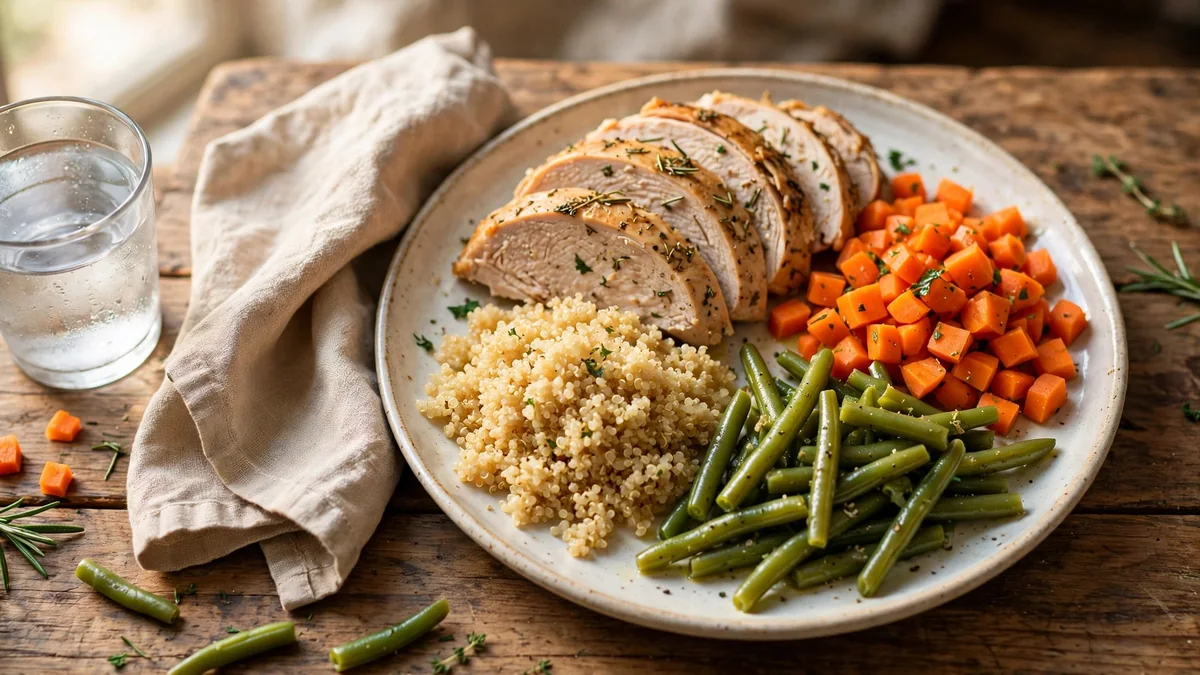
| Dinner | 5 oz cooked turkey breast; 1/2 cup cooked quinoa; 1 cup chopped carrots; 1 cup cooked green beans | about 417 |
| Snacks | 1 medium banana; 3/4 cup plain nonfat Greek yogurt; 1/2 oz almonds (about 12 almonds) | about 286 |
Day 3 total: about 1484 calories, 120 g protein, 182 g carbohydrate, 34 g fat, 39 g fiber.
Day 4
| Meal | Foods and portions | Calories |
|---|---|---|
| Breakfast | 1 cup plain 2% Greek yogurt; 1 cup blueberries; 1/4 cup granola | about 410 |
| Lunch | 1 can tuna in water, drained; 2 corn tortillas; 1/4 cup salsa; 2 cups green leaf lettuce; 1/2 avocado | about 416 |
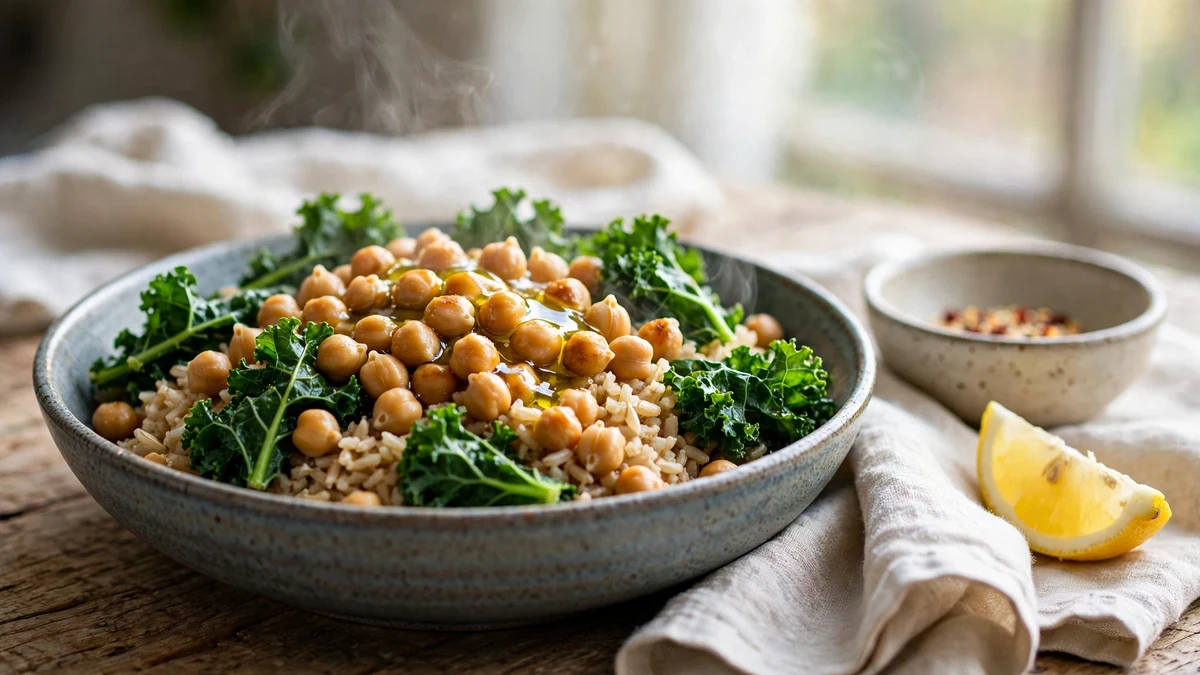
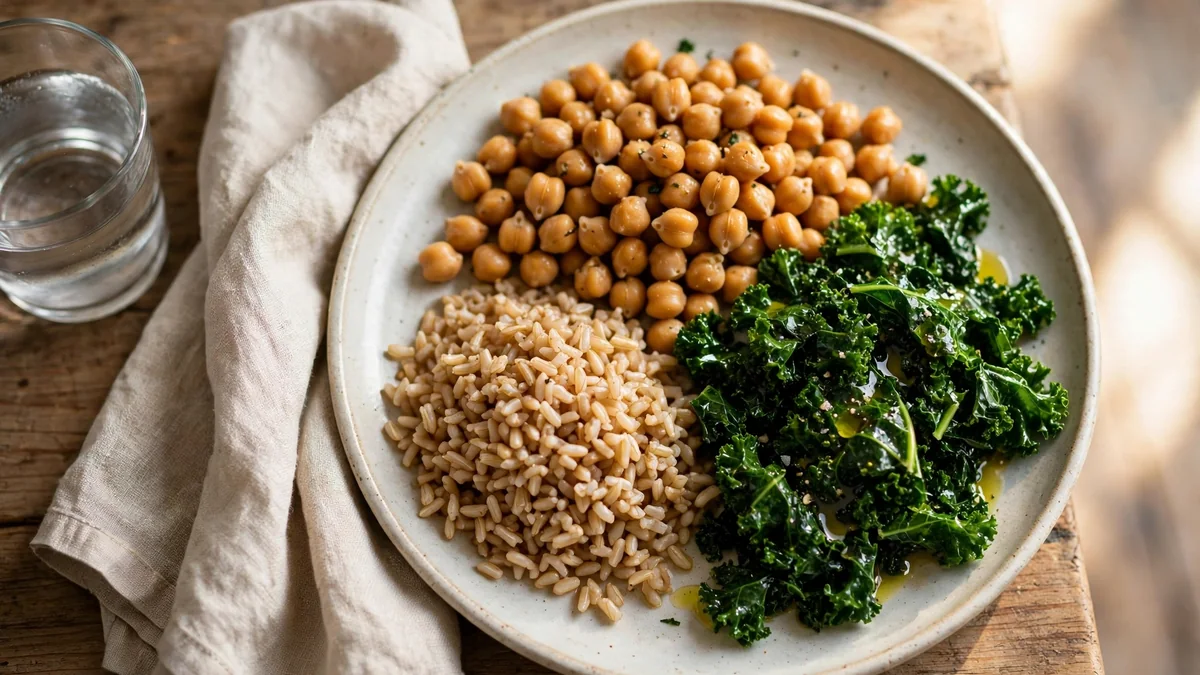
| Dinner | 1 cup cooked chickpeas; 1/2 cup cooked brown rice; 1 cup cooked kale; 1 teaspoon olive oil | about 480 |
| Snacks | 1 orange; 3 cups air-popped popcorn | about 154 |
Day 4 total: about 1461 calories, 90 g protein, 193 g carbohydrate, 41 g fat, 40 g fiber.
Day 5
| Meal | Foods and portions | Calories |
|---|---|---|
| Breakfast | 1/2 cup dry rolled oats, cooked; 1/2 oz walnuts (about 2 tablespoons chopped); 1 medium apple, diced; 3/4 cup skim milk | about 402 |
| Lunch | 1 cup cooked black beans; 1 cup cooked bulgur; 1 cup cooked corn; 1 medium bell pepper; 1/4 cup salsa | about 513 |
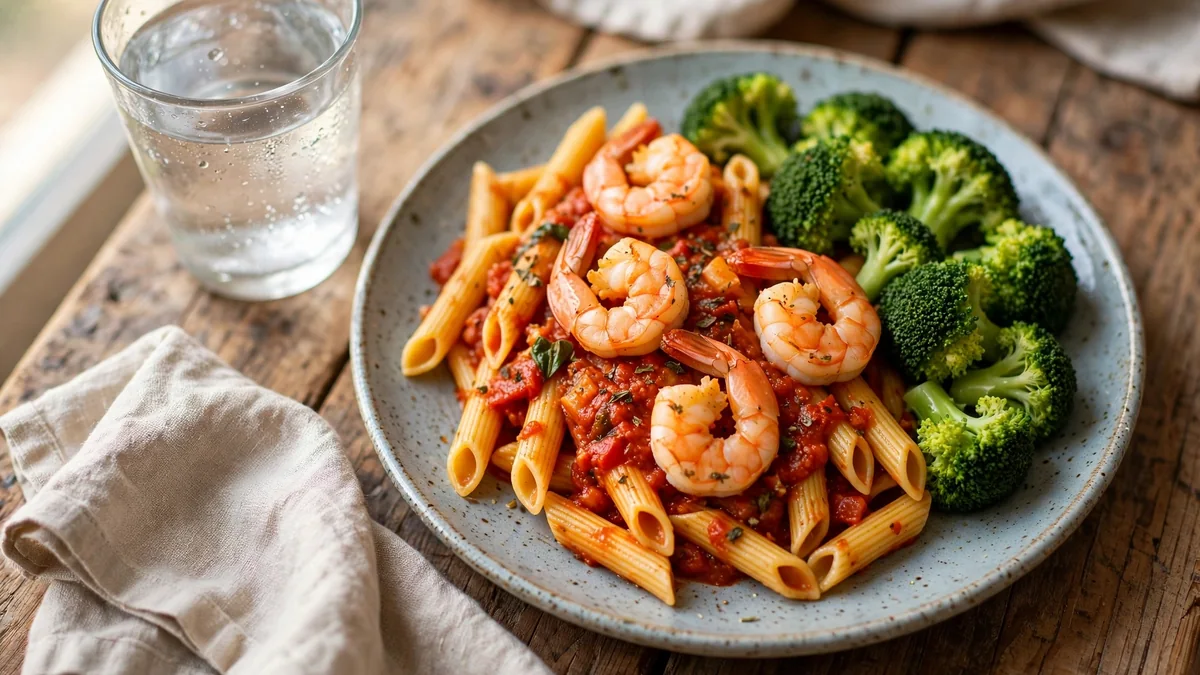
| Dinner | 4 oz cooked shrimp; 1 cup cooked pasta; 1/2 cup marinara sauce; 1 cup cooked broccoli | about 473 |
| Snacks | 1 cup grapes | about 104 |
Day 5 total: about 1492 calories, 81 g protein, 260 g carbohydrate, 22 g fat, 49 g fiber.
Day 6
| Meal | Foods and portions | Calories |
|---|---|---|
| Breakfast | 2 large eggs; 2 slices whole-wheat toast; 1 cup strawberries; 3/4 cup skim milk | about 429 |
| Lunch | 1 portion tempeh (about 3.5 oz); 1/2 cup cooked brown rice; 1 cup cooked green beans; 2 teaspoons olive oil | about 430 |
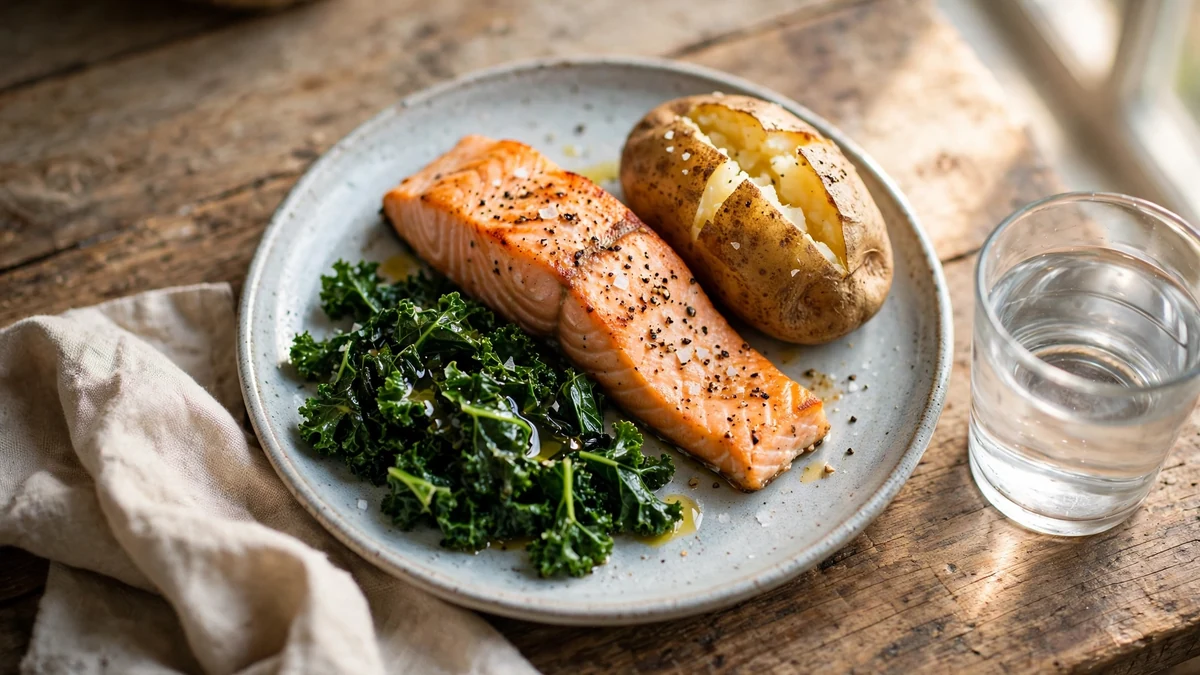
| Dinner | 4 oz cooked salmon; 1 medium baked potato; 1 cup cooked kale; 1 teaspoon olive oil | about 453 |
| Snacks | 1/2 cup low-fat cottage cheese; 1 cup blueberries | about 166 |
Day 6 total: about 1478 calories, 105 g protein, 156 g carbohydrate, 52 g fat, 22 g fiber.
Day 7
| Meal | Foods and portions | Calories |
|---|---|---|
| Breakfast | 3/4 cup plain nonfat Greek yogurt; 1/4 cup granola; 1 cup raspberries; 1 tablespoon honey | about 375 |
| Lunch | 5 oz cooked chicken breast; 1/2 cup cooked quinoa; 1 cup cooked broccoli; 1 teaspoon olive oil | about 440 |
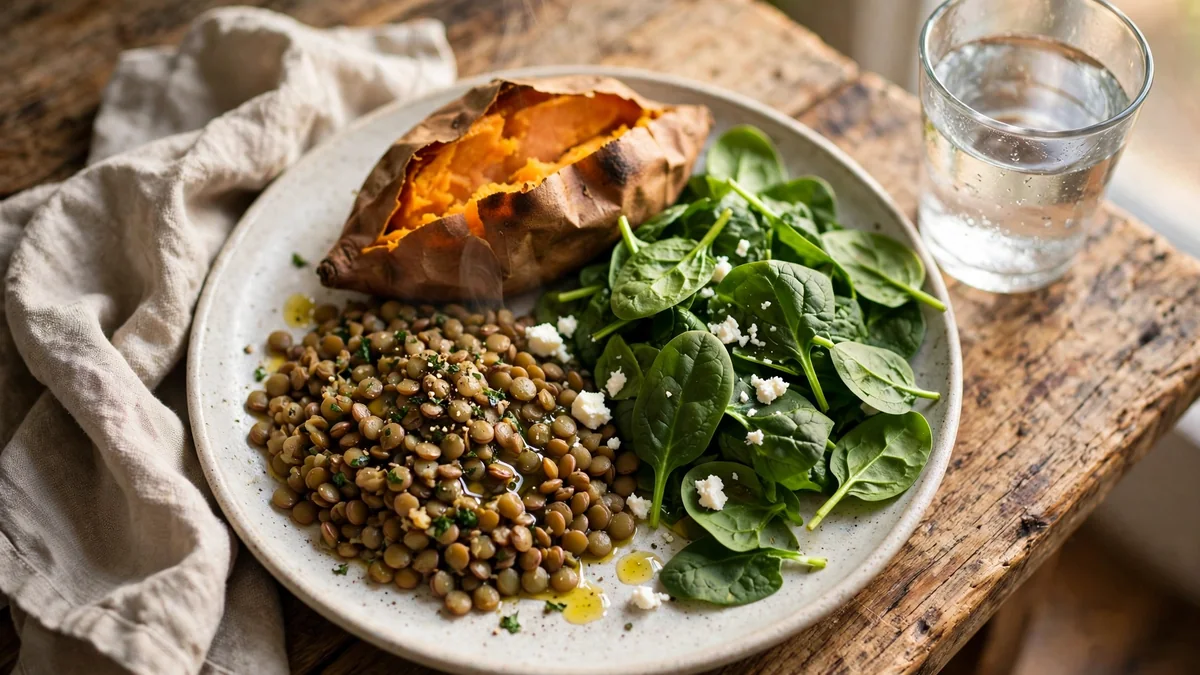
| Dinner | 1 cup cooked lentils; 1 medium baked sweet potato; 2 cups raw spinach; 2 teaspoons olive oil; 1 oz feta cheese | about 496 |
| Snacks | 1 medium pear; 1/2 oz almonds (about 12 almonds) | about 183 |
Day 7 total: about 1493 calories, 104 g protein, 181 g carbohydrate, 44 g fat, 46 g fiber.
Grocery list
Produce
- Strawberries, blueberries, raspberries, apples, pears, oranges, bananas, and grapes
- Spinach, green leaf lettuce, kale, broccoli, and green beans
- Carrots, bell peppers, tomatoes, and cucumbers
- Sweet potatoes and white potatoes
- Avocados
Meat and seafood
- Salmon fillets, cod fillets, and shrimp
- Chicken breast and turkey breast
- Tempeh
Dairy and eggs
- Eggs and egg whites
- Plain nonfat Greek yogurt and plain 2% Greek yogurt
- Low-fat cottage cheese
- Skim milk
- Feta cheese
Pantry
- Rolled oats and granola
- Brown rice, white rice, quinoa, bulgur, and pasta
- Lentils, black beans, kidney beans, and chickpeas (dry or canned, rinsed)
- Canned tuna in water
- Marinara sauce and salsa
- Peanut butter, almonds, and walnuts
- Olive oil and honey
- Popcorn kernels for air-popped popcorn
Frozen
- Frozen corn
- Frozen berries as a backup for fresh fruit
Bakery
- Whole-wheat bread
- Corn tortillas
Meal prep tips
- Cook quinoa and brown rice in one batch on day 1 and refrigerate them in measured portions for the week.
- Bake several sweet potatoes and white potatoes at once; they reheat well for lunches and dinners.
- Make the lentils for day 1 in a double batch and freeze half for a later week.
- Portion nuts into 1/2 oz servings when you unpack them, so snacks stay at the planned size.
- Wash greens and chop carrots and peppers ahead, so salads take minutes to assemble.
Easy swaps
- Swap salmon for cod or shrimp in the same portion; the day total stays close.
- Swap quinoa for brown rice or bulgur, 1/2 cup for 1/2 cup.
- Swap black beans, kidney beans, and chickpeas for each other in equal portions.
- Swap plain Greek yogurt for low-fat cottage cheese in equal amounts.
- Swap walnuts for almonds, 1/2 oz for 1/2 oz.
- Swap spinach for green leaf lettuce or kale in the same volume.
How to adjust the calories safely
This plan averages about 1,477 calories a day as written. If you are a man, are tall or active, or are losing weight faster than about 1 to 2 pounds a week, add about 200 to 300 calories a day using foods already in the plan: 1 oz of almonds (about 162 calories) plus 1 cup of skim milk (about 86 calories) adds about 248 calories. Spread additions across the day rather than skipping meals and doubling dinner.
Never go below 1,200 calories a day for women or 1,500 calories a day for men. Men following this plan should use the adjustment above every day, because 1,500 calories is the minimum level for men, not a target most men should aim at.
Common mistakes
- Replacing the fish and bean dinners with processed meats, which changes the whole pattern the plan is built on.
- Pouring olive oil freely instead of measuring it; a tablespoon has about 124 calories, so unmeasured pours add up fast.
- Drinking calories in juice, soda, or sweetened coffee drinks, none of which are in the plan.
- Treating a meal plan as a substitute for medical care, or changing medication because eating went well for a week.
- Skipping the snacks and arriving at dinner overly hungry, which usually leads to portions far beyond the plan.
Pair it with a workout
Regular movement supports the same goals as this style of eating, and the walking plans and beginner strength routines in our Exercise and Workouts category are a gentle place to start. Build up gradually, and stop any exercise that causes pain, dizziness, or chest pain. If you have a heart condition, ask your doctor what level of exercise is right for you before you begin.
Frequently asked questions
Is this plan a treatment for heart disease?
No. It is a general educational meal plan built from foods commonly included in heart conscious eating patterns. It does not treat, cure, or prevent any condition, and it does not replace the care of your doctor or registered dietitian.
How is this different from the heart-healthy beginners plan on this site?
Both plans use the same heart conscious pattern, but the menus are entirely different weeks of food. This plan leans on tempeh, kidney beans, and bulgur more heavily, while the beginners plan uses different fish and bean combinations, so the two can be rotated without repeating a single day.
I take heart or blood pressure medication. Can I follow this plan?
Review it with your doctor or a registered dietitian first, and keep taking your medication exactly as prescribed. Our 7-Day Weight Loss Meal Plan for High Blood Pressure is a companion read, and it carries the same advice: food choices support your care plan, they do not replace it.
Can men follow this plan?
Yes, with the adjustment section used every day. At about 1,500 calories the plan sits at the minimum level for men, and most men will feel and do better adding the extra 200 to 300 calories described above.
Do I need special products or supplements?
No. Every food in the plan is an ordinary grocery item, and no supplements, teas, or specialty products are part of it.
Sources and further reading
- USDA FoodData Central, the source for every calorie and nutrient value in this plan: fdc.nal.usda.gov
- American Heart Association, general healthy eating guidance: heart.org
- Dietary Guidelines for Americans, for the overall eating pattern this plan follows: dietaryguidelines.gov
- MedlinePlus, plain language health background from the US National Library of Medicine: medlineplus.gov
This article is for general educational purposes only and is not medical, nutrition, or fitness advice. Talk with your doctor or a registered dietitian before changing your diet or starting an exercise program.