Prints just the plan, like a recipe card.
Last updated: November 22, 2026.
This cheap plant based meal plan lays out a full week of eating at about 1,600 calories a day, built from the lowest cost staples in the grocery store: oats, beans, lentils, rice, potatoes, peanut butter, tofu, and everyday fruit and vegetables. It is fully plant based, with no meat, fish, eggs, dairy, or honey, and it uses no specialty products, no meat substitutes, and no protein powders. Every meal lists exact foods and US portions, and every calorie and macro number on this page was calculated from USDA FoodData Central values for the portions listed.
The plan keeps costs down with habits rather than coupons: store brand staples, dry or canned legumes, frozen vegetables as a backup so nothing is wasted, and cooking once to eat twice. Protein averages about 70 grams a day from lentils, beans, chickpeas, tofu, tempeh, edamame, and peanut butter, and fiber is high at about 51 grams a day, which helps a moderate calorie level feel like enough food. For many adults, a level like this lines up with gradual weight loss of about 1 to 2 pounds a week, though your own rate may differ and no plan can promise a result.
This plan is part of our By Diet Style collection in the Diet Plans library. If you eat eggs and dairy, our 7-Day No-Sugar High-Protein Vegetarian Meal Plan is a higher protein companion, and our 7-Day High-Fiber, No-Sugar Meal Plan uses many of the same legumes.
Who this plan is for, and who should not follow it
This plan is for adults who want to eat fully plant based on a tight food budget, who cook at home, and who are comfortable with beans, lentils, and tofu as everyday proteins. Because the week is built on a short list of staples bought in quantity, it also suits anyone who wants a smaller, simpler grocery list.
This page is general education only and is not medical advice. Anyone who eats fully plant based for the long term should ask their doctor about vitamin B12, which is not reliably available from plant foods. If you have diabetes, kidney disease, or any condition affected by food, or you take medication affected by food or weight change, review the plan with your doctor or a registered dietitian before starting. Do not follow this plan if you are under 18, pregnant, or breastfeeding.
If you have a history of disordered eating, talk with a doctor or a registered dietitian before following any diet plan. For eating disorder support in the US, visit the National Alliance for Eating Disorders at allianceforeatingdisorders.com.
Plan overview
| Measure | Amount |
|---|---|
| Target calories per day | about 1,600 |
| Average calories per day (as written) | about 1596 |
| Average protein per day | about 70 g |
| Average carbohydrate per day | about 230 g |
| Average fat per day | about 54 g |
| Average fiber per day | about 51 g |
| Meals per day | 4 (breakfast, lunch, dinner, and snacks) |
Every day pairs a legume or soy food with a grain, which is the classic way plant based eating covers its protein bases, and every day includes fruit and at least two vegetables. The grocery list repeats the same staples all week on purpose: buying fewer items in larger amounts is the core of the savings.
The 7-day cheap plant based meal plan
Portions are given in US household measures, for cooked foods as eaten. Dry lentils and beans can be cooked in big batches, or use canned beans in the same cooked portions, rinsed. Calories for each meal and day were calculated from USDA FoodData Central values for the exact foods and amounts listed. Season with herbs, spices, garlic, vinegar, and salsa as you like. Drink water, unsweetened tea, or black coffee freely.
Day 1
| Meal | Foods and portions | Calories |
|---|---|---|
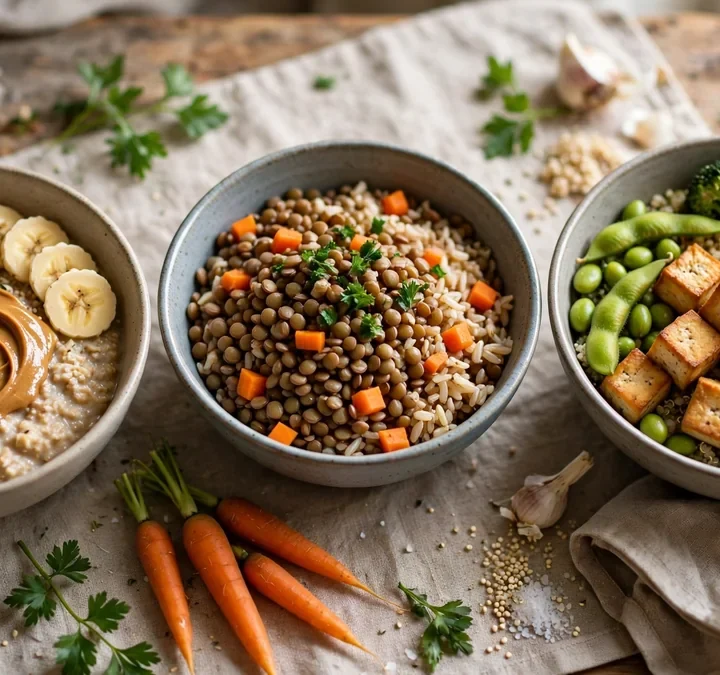
| Breakfast | 1/2 cup dry rolled oats, cooked; 2 tablespoons peanut butter; 1 medium banana | about 448 |
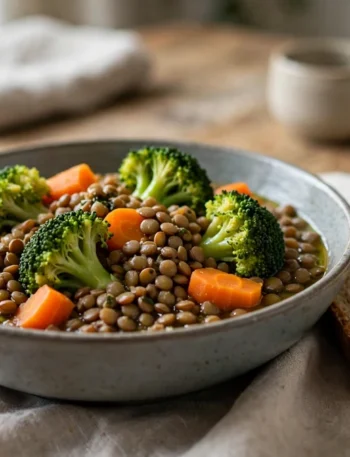
| Lunch | 1 cup cooked lentils; 1/2 cup cooked brown rice; 1 cup chopped carrots; 1 teaspoon olive oil | about 432 |
| Dinner | 125 g firm tofu (about 4 1/2 oz); 1/2 cup shelled edamame; 1/2 cup cooked quinoa; 1 cup cooked broccoli; 1 teaspoon olive oil | about 480 |
| Snacks | 1 medium apple; 3 cups air-popped popcorn | about 188 |
Day 1 total: about 1548 calories, 78 g protein, 221 g carbohydrate, 49 g fat, 52 g fiber.
Day 2
| Meal | Foods and portions | Calories |
|---|---|---|
| Breakfast | 1/2 cup dry rolled oats, cooked; 1 oz walnuts (about 1/4 cup); 1 cup raspberries; 1 tablespoon maple syrup | about 451 |
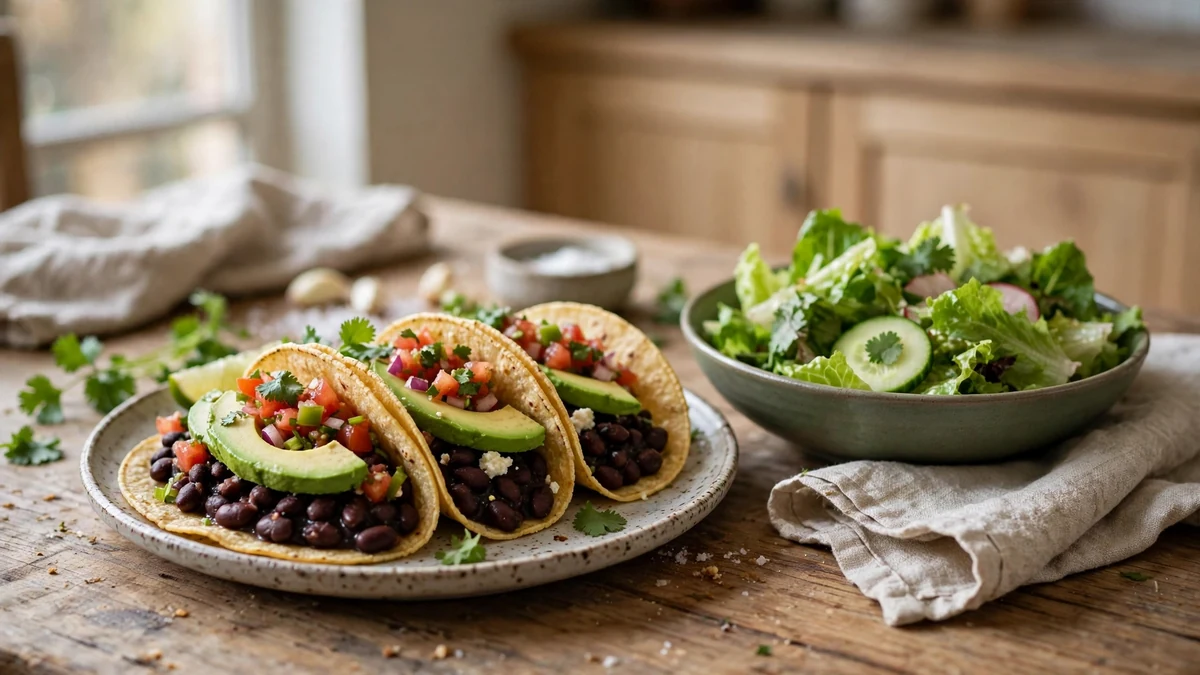
| Lunch | 1 cup cooked black beans; 2 corn tortillas; 1/2 avocado; 1/4 cup salsa; 2 cups green leaf lettuce | about 490 |
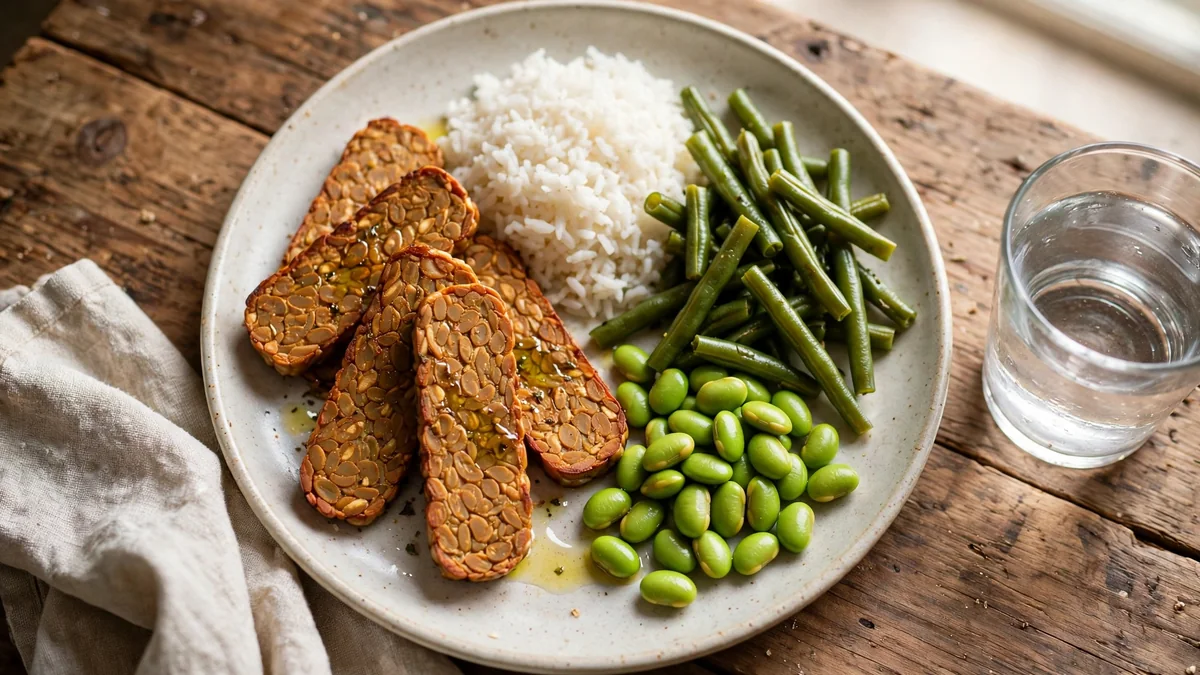
| Dinner | 100 g tempeh (about 3 1/2 oz); 1/2 cup cooked white rice; 1 cup cooked green beans; 1/2 cup shelled edamame; 1 teaspoon olive oil | about 491 |
| Snacks | 1 orange; 1/2 oz almonds (about 12 almonds) | about 143 |
Day 2 total: about 1574 calories, 71 g protein, 205 g carbohydrate, 62 g fat, 53 g fiber.
Day 3
| Meal | Foods and portions | Calories |
|---|---|---|
| Breakfast | 2 slices whole-wheat bread; 2 tablespoons peanut butter; 1 medium banana | about 458 |
| Lunch | 1 cup cooked chickpeas; 1/2 cucumber, sliced; 1 medium tomato; 2 teaspoons olive oil; 1 slice whole-wheat bread | about 466 |
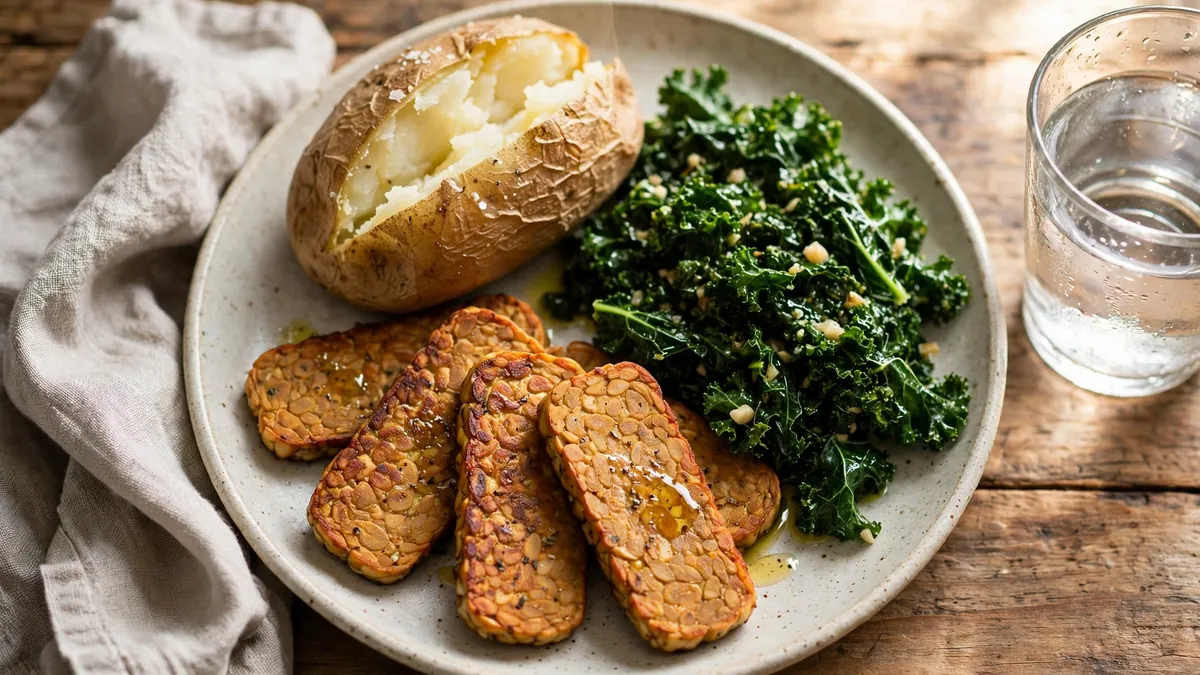
| Dinner | 100 g tempeh (about 3 1/2 oz); 1 medium baked potato; 1 cup cooked kale; 1 teaspoon olive oil | about 439 |
| Snacks | 1 medium pear; 3 cups air-popped popcorn | about 194 |
Day 3 total: about 1558 calories, 68 g protein, 223 g carbohydrate, 52 g fat, 40 g fiber.
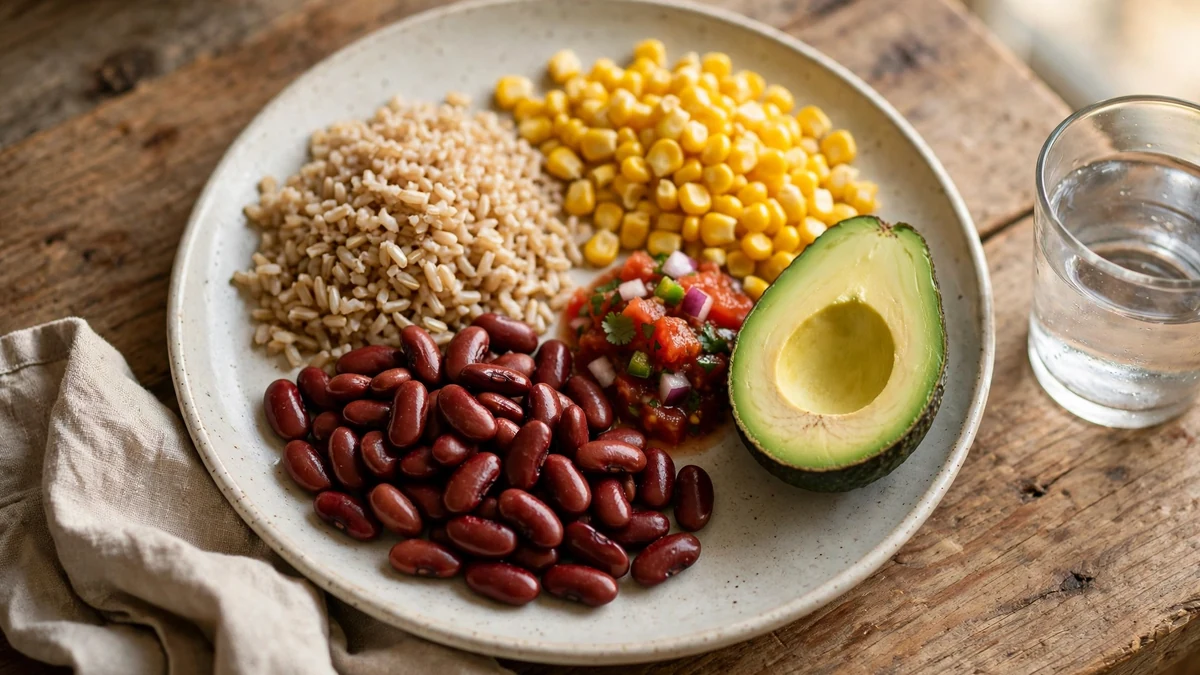
Day 4
| Meal | Foods and portions | Calories |
|---|---|---|
| Breakfast | 1/2 cup dry rolled oats, cooked; 1 tablespoon peanut butter; 1 cup strawberries; 1/2 oz walnuts (about 2 tablespoons chopped) | about 387 |
| Lunch | 1 cup shelled edamame; 1 cup cooked quinoa; 1 medium bell pepper; 1 medium carrot, sliced | about 458 |
| Dinner | 1 cup cooked kidney beans; 1/2 cup cooked brown rice; 1/2 cup cooked corn; 1/2 avocado; 1/4 cup salsa | about 556 |
| Snacks | 1 medium apple; 1/4 cup hummus; 1/2 cucumber, sliced | about 216 |
Day 4 total: about 1618 calories, 67 g protein, 242 g carbohydrate, 52 g fat, 56 g fiber.
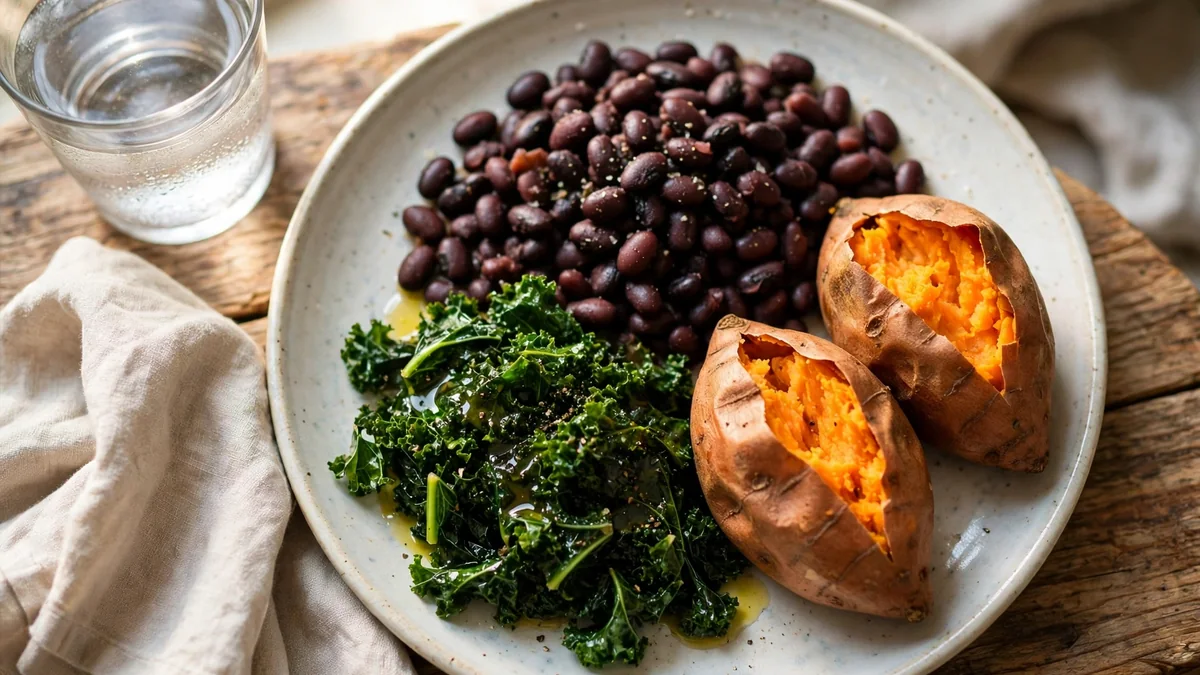
Day 5
| Meal | Foods and portions | Calories |
|---|---|---|
| Breakfast | 1/2 cup dry rolled oats, cooked; 1 medium banana; 1 oz walnuts (about 1/4 cup) | about 440 |
| Lunch | 125 g firm tofu (about 4 1/2 oz); 1 whole-wheat pita; 2 tablespoons hummus; 1/2 cucumber, sliced; 1 medium tomato | about 438 |
| Dinner | 1 cup cooked black beans; 2 medium baked sweet potatoes; 1 cup cooked kale; 1 teaspoon olive oil | about 529 |
| Snacks | 1 cup grapes; 1 tablespoon peanut butter | about 200 |
Day 5 total: about 1607 calories, 70 g protein, 237 g carbohydrate, 52 g fat, 47 g fiber.
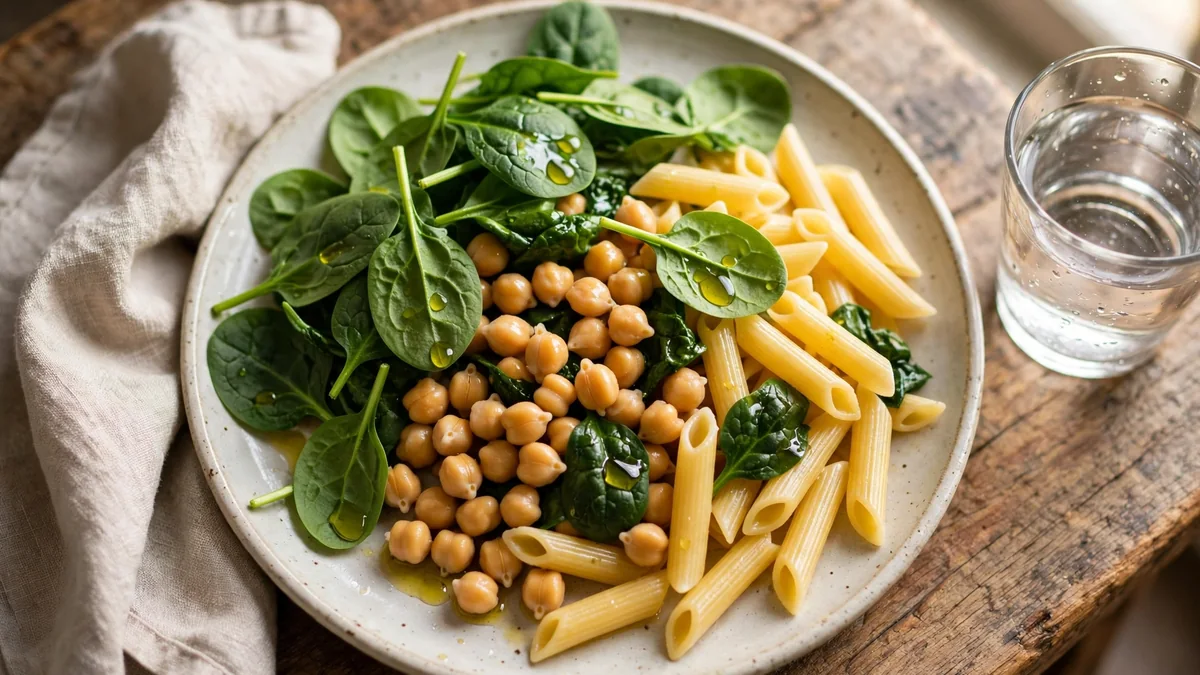
Day 6
| Meal | Foods and portions | Calories |
|---|---|---|
| Breakfast | 2 slices whole-wheat toast; 1 avocado; 1 medium tomato | about 423 |
| Lunch | 1 cup cooked lentils; 1 cup cooked bulgur; 1 cup chopped carrots; 1 teaspoon olive oil | about 469 |
| Dinner | 1 cup cooked chickpeas; 1 cup cooked pasta; 2 cups raw spinach; 1 teaspoon olive oil | about 544 |
| Snacks | 1 medium banana; 1/2 oz almonds (about 12 almonds) | about 186 |
Day 6 total: about 1622 calories, 65 g protein, 250 g carbohydrate, 48 g fat, 64 g fiber.
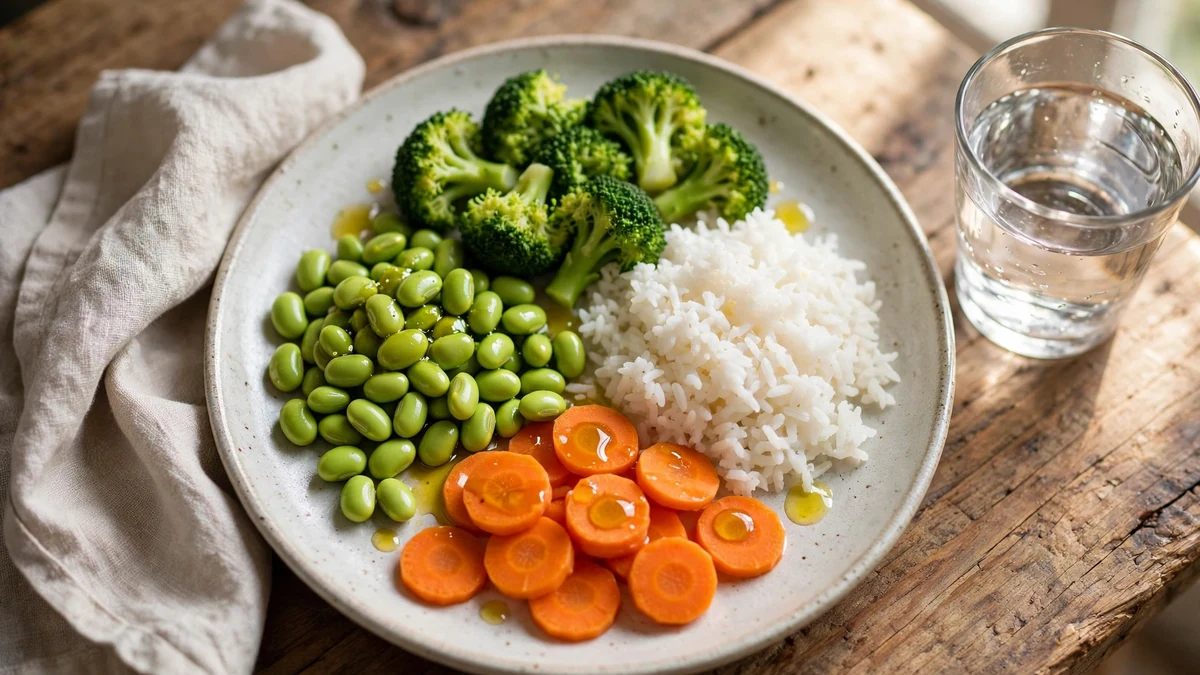
Day 7
| Meal | Foods and portions | Calories |
|---|---|---|
| Breakfast | 1/2 cup dry rolled oats, cooked; 1 tablespoon peanut butter; 1 medium apple; 1 tablespoon maple syrup | about 394 |
| Lunch | 100 g tempeh (about 3 1/2 oz); 2 corn tortillas; 1/4 cup salsa; 2 cups green leaf lettuce; 1/2 avocado | about 455 |
| Dinner | 1 cup shelled edamame; 1 cup cooked white rice; 1 cup cooked broccoli; 1 medium carrot, sliced; 1 teaspoon olive oil | about 547 |
| Snacks | 1 orange; 1/2 oz walnuts (about 2 tablespoons chopped); 3 cups air-popped popcorn | about 246 |
Day 7 total: about 1642 calories, 70 g protein, 232 g carbohydrate, 59 g fat, 43 g fiber.
Grocery list
Produce
- Bananas, apples, oranges, pears, grapes, strawberries, raspberries
- Carrots, broccoli, kale, spinach, green leaf lettuce, bell peppers, tomatoes, cucumbers
- Sweet potatoes and white potatoes
- Avocados, when they fit the week’s budget
Meat and seafood
- None. This plan is fully plant based; protein comes from the pantry and frozen groups below.
Dairy and eggs
- None. The plan uses no eggs, dairy, or honey.
Pantry
- Rolled oats
- Brown rice, white rice, quinoa, bulgur, and pasta
- Lentils, black beans, kidney beans, and chickpeas (dry for the lowest cost, or canned, rinsed)
- Firm tofu and tempeh
- Peanut butter and hummus
- Salsa and olive oil
- Maple syrup
- Almonds and walnuts
- Popcorn kernels for air-popping
Frozen
- Frozen shelled edamame
- Frozen broccoli, green beans, and berries as backups, so fresh produce is never wasted
Bakery
- Whole-wheat bread
- Corn tortillas and a whole-wheat pita
Meal prep tips
- Cook a large pot of lentils on day 1; they need no soaking and cover several meals.
- Cook rice in a double batch and refrigerate it in measured portions for the week.
- Bake potatoes and sweet potatoes together in one oven session.
- Portion peanut butter and nuts into single servings when you unpack, so the priciest items last the full week.
- Switch to frozen vegetables and fruit in the second half of the week, once the fresh supply runs low.
Easy swaps
- Swap black beans, kidney beans, chickpeas, and lentils for each other in equal portions; buy whichever is cheapest that week.
- Swap tofu for tempeh in the same portion, or the other way around.
- Swap quinoa for brown rice or bulgur, cup for cup; rice and bulgur are usually the thriftiest grains.
- Swap fresh fruit for frozen fruit in the same amount.
- Swap peanut butter for hummus in the same amount at snacks.
- Swap kale for spinach or green leaf lettuce in the same volume.
How to adjust the calories safely
This plan averages about 1,596 calories a day as written. If you are a man, are tall or active, or are losing weight faster than about 1 to 2 pounds a week, add about 200 to 300 calories a day using foods already in the plan: 2 tablespoons of peanut butter (about 191 calories) plus 3 cups of air-popped popcorn (about 93 calories) adds about 284 calories.
Never go below 1,200 calories a day for women or 1,500 calories a day for men. If this level leaves you persistently hungry, add food with the adjustment rather than cutting meals.
Common mistakes
- Spending the budget on specialty vegan products. This plan needs none of them; staples do the work.
- Forgetting protein at breakfast. Oats alone are light on protein, which is why most breakfasts here pair them with peanut butter, nuts, or fruit and a planned snack.
- Buying only fresh produce and losing some to spoilage. Frozen backups keep the week on budget and on plan.
- Drinking calories in juice, soda, or sweetened drinks, none of which are in the plan.
- Eating fully plant based for months without asking a doctor about vitamin B12.
Pair it with a workout
The walking plans and beginner strength routines in our Exercise and Workouts category cost nothing and pair well with this plan. Build up gradually, and stop any exercise that causes pain, dizziness, or chest pain.
Frequently asked questions
How does this plan keep costs down?
By design rather than by shopping tricks: a short list of store brand staples bought in quantity, dry or canned legumes instead of meat, frozen backups instead of wasted fresh produce, and almost no single purpose products. Prices vary by store and season, so the plan talks about habits, not amounts.
Is about 70 grams of protein a day enough?
For many adults it covers basic needs, especially with legumes or soy at every meal, as this plan does. Needs vary with size, age, and activity, and anyone who is unsure, older, or very active should ask a registered dietitian to check their intake.
Is this plan vegan?
Yes. It contains no meat, fish, eggs, dairy, or honey. If you follow a strict vegan diet, check the label on the bread and tortillas you buy, since recipes vary by bakery.
Can I use canned beans instead of cooking dry ones?
Yes. The portions in the plan are for cooked beans, and canned beans, drained and rinsed, measure the same. Dry beans cost less per portion and take more time; canned beans cost a little more and take none. Either fits the plan.
What about vitamin B12?
Vitamin B12 is not reliably found in plant foods, so anyone eating fully plant based long term should ask their doctor whether they need a supplement or fortified foods. That conversation is a normal part of plant based eating, not a flaw in the plan.
Sources and further reading
- USDA FoodData Central, the source for every calorie and nutrient value in this plan: fdc.nal.usda.gov
- Dietary Guidelines for Americans, for the overall eating pattern this plan follows: dietaryguidelines.gov
- MyPlate, for building balanced plant based plates: myplate.gov
- Academy of Nutrition and Dietetics, general vegetarian and vegan eating guidance: eatright.org
This article is for general educational purposes only and is not medical, nutrition, or fitness advice. Talk with your doctor or a registered dietitian before changing your diet or starting an exercise program.