Prints just the plan, like a recipe card.
Last updated: November 22, 2026.
This low sodium meal plan lays out a full week of eating at about 1,500 calories a day, built so the flavor comes from herbs, citrus, vinegar, garlic, and the food itself instead of the salt shaker. The approach is practical: meals are cooked at home from fresh and plain frozen ingredients, canned beans and vegetables are the no-salt-added versions and get rinsed before use, and salty extras like sauces and aged cheeses stay small and occasional. Every meal lists exact foods and US portions, and every calorie and macro number on this page was calculated from USDA FoodData Central values for the portions listed.
This page does not print a sodium number for the plan, on purpose. The sodium in a day like these depends heavily on the exact products you buy, so a single figure would be misleading. What the plan controls is the pattern: fresh proteins instead of processed meats, grains cooked in plain water, and labels checked on bread, canned goods, and sauces, which is where most everyday sodium hides. Protein averages about 105 grams a day and fiber about 36 grams a day.
This plan is part of our By Diet Style collection in the Diet Plans library. Readers managing blood pressure may also want our 7-Day Weight Loss Meal Plan for High Blood Pressure, which follows a similar home cooked pattern.
Who this plan is for, and who should not follow it
This plan is for adults who want to cook and eat with less salt without giving up satisfying meals, and who are willing to read labels on the handful of packaged foods the week uses. For many adults, a level like this lines up with gradual weight loss of about 1 to 2 pounds a week, though your own rate may differ and no plan can promise a result.
This page is general education only and is not medical advice. If you have high blood pressure, kidney disease, or heart disease, or you take medication affected by sodium, potassium, food, or weight change, review this plan with your doctor or a registered dietitian before following it. That review matters in both directions: beans, potatoes, and greens are naturally rich in potassium, which some kidney conditions and medicines require you to limit. If your care team has given you a personal sodium target, their number is the one to follow, and a dietitian can help you apply it to these menus. Do not follow this plan if you are under 18, pregnant, or breastfeeding.
If you have a history of disordered eating, talk with a doctor or a registered dietitian before following any diet plan. For eating disorder support in the US, visit the National Alliance for Eating Disorders at allianceforeatingdisorders.com.
Plan overview
| Measure | Amount |
|---|---|
| Target calories per day | about 1,500 |
| Average calories per day (as written) | about 1501 |
| Average protein per day | about 105 g |
| Average carbohydrate per day | about 191 g |
| Average fat per day | about 40 g |
| Average fiber per day | about 36 g |
| Meals per day | 4 (breakfast, lunch, dinner, and snacks) |
The habit that does the most work in this plan is label reading on four categories: bread, canned beans and tomatoes, sauces, and cheese. Choose the lowest sodium version you can find of each, in that order of importance, and the rest of the week largely takes care of itself.
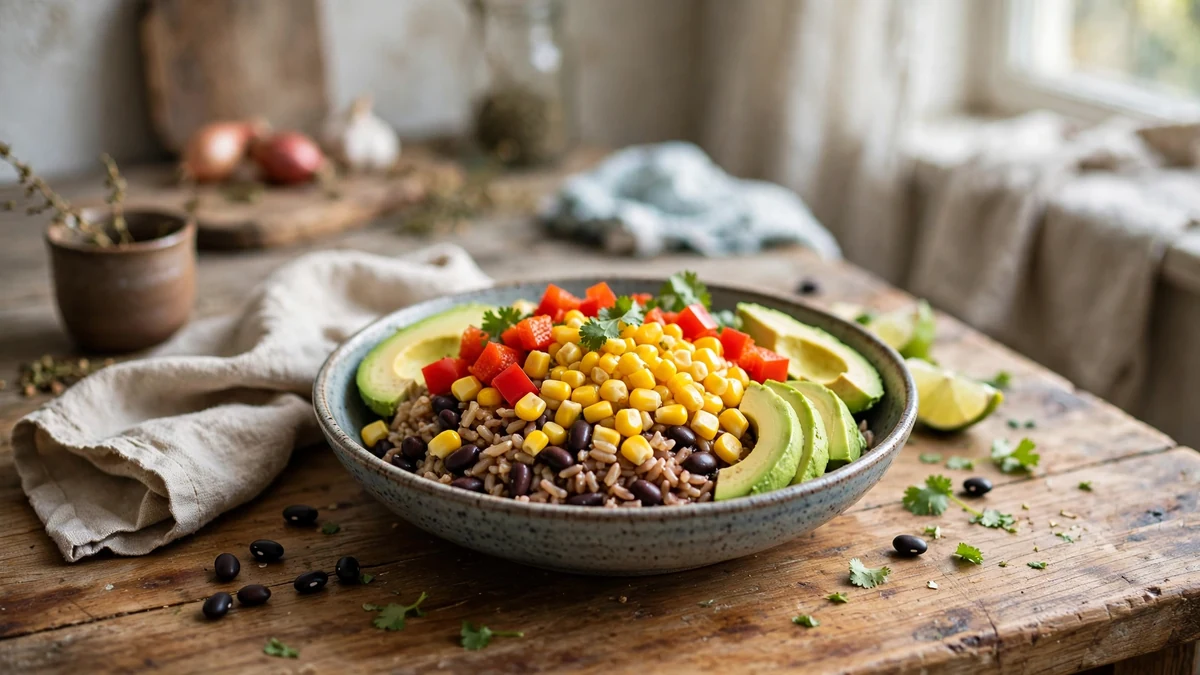
The 7-day low sodium meal plan
Portions are given in US household measures. Calories for each meal and day were calculated from USDA FoodData Central values for the exact foods and amounts listed. Cook grains and beans in plain water without added salt, choose no-salt-added canned tomatoes and beans, and rinse canned beans under running water before use. Season with lemon juice, vinegar, garlic, onion, black pepper, smoked paprika, and fresh or dried herbs as you like. Drink water, unsweetened tea, or black coffee freely.
Day 1
| Meal | Foods and portions | Calories |
|---|---|---|
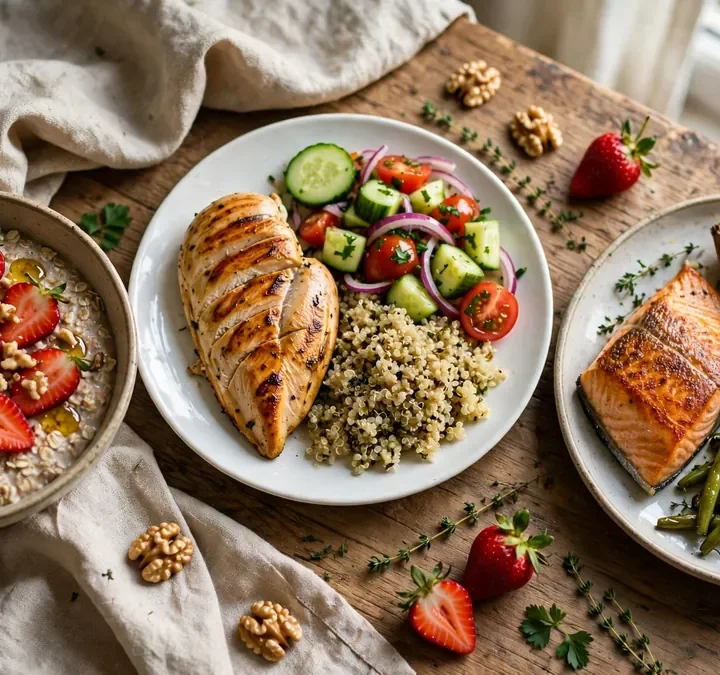
| Breakfast | 1/2 cup dry rolled oats, cooked; 1 cup skim milk; 1 cup strawberries; 1/2 oz walnuts (about 2 tablespoons chopped) | about 378 |
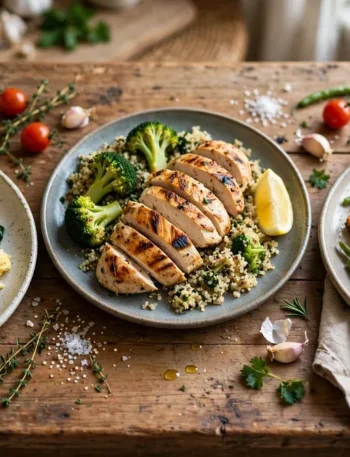
| Lunch | 5 oz cooked chicken breast; 1/2 cup cooked quinoa; 1/2 cucumber, sliced; 1 medium tomato; 1 teaspoon olive oil | about 423 |
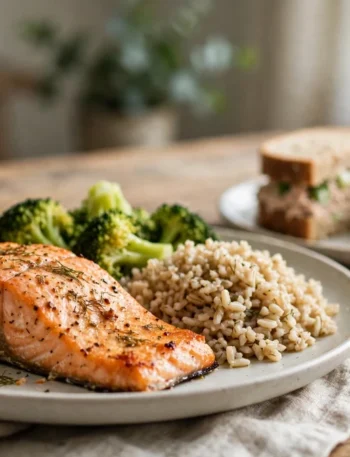
| Dinner | 4 oz cooked salmon; 1 medium baked sweet potato; 1 cup cooked green beans; 1/2 cup cooked brown rice; 1 teaspoon olive oil | about 506 |
| Snacks | 3/4 cup plain nonfat Greek yogurt; 1 cup blueberries | about 185 |
Day 1 total: about 1491 calories, 121 g protein, 166 g carbohydrate, 41 g fat, 25 g fiber.
Day 2
| Meal | Foods and portions | Calories |
|---|---|---|
| Breakfast | 2 large eggs; 1 slice whole-wheat toast; 1/2 avocado; 1 orange | about 417 |
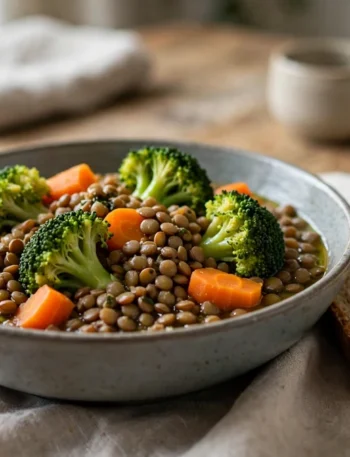
| Lunch | 1 cup cooked lentils; 1 cup chopped carrots; 1/2 cup crushed canned tomatoes; 2 teaspoons olive oil; 1 slice whole-wheat bread | about 478 |
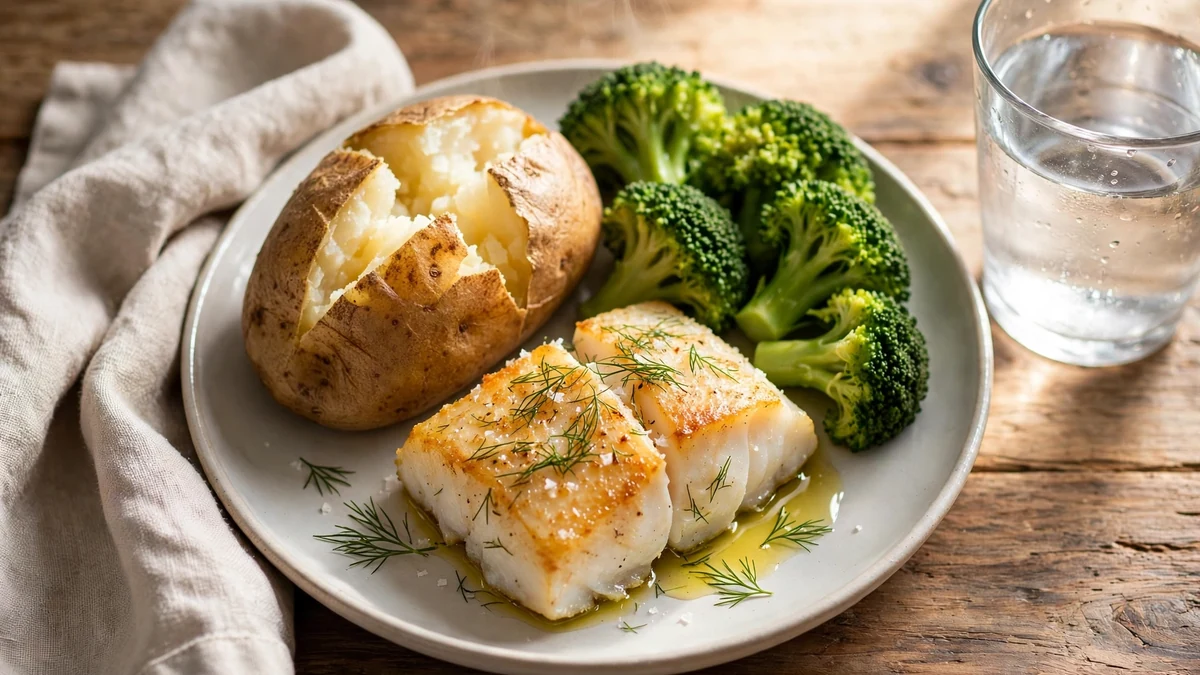
| Dinner | 6 oz cooked cod; 1 medium baked potato; 1 cup cooked broccoli; 1 teaspoon olive oil | about 423 |
| Snacks | 1 medium apple; 1/2 oz almonds (about 12 almonds) | about 176 |
Day 2 total: about 1495 calories, 94 g protein, 184 g carbohydrate, 49 g fat, 48 g fiber.
Day 3
| Meal | Foods and portions | Calories |
|---|---|---|
| Breakfast | 1 cup plain low-fat Greek yogurt; 1/4 cup granola; 1 medium banana | about 431 |
| Lunch | 4 oz cooked turkey breast; 1 whole-wheat pita; 2 cups green leaf lettuce; 1/2 cucumber, sliced; 2 tablespoons hummus | about 413 |
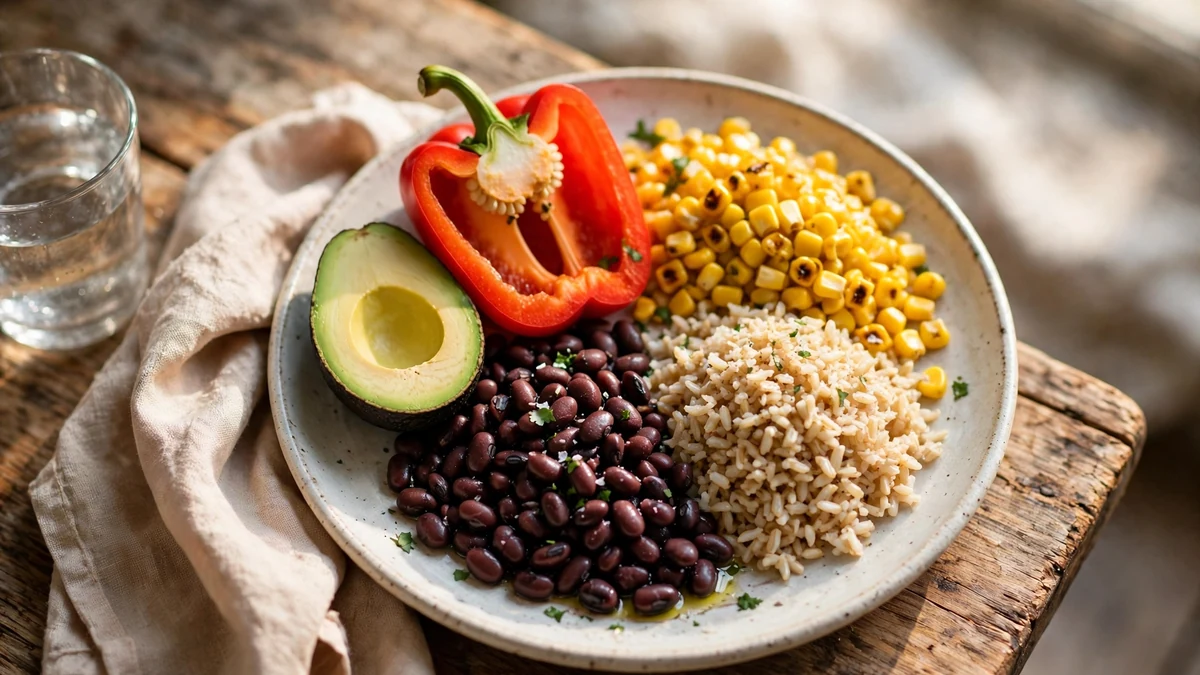
| Dinner | 1 cup cooked black beans; 1/2 cup cooked brown rice; 1/2 cup cooked corn; 1 medium bell pepper; 1/2 avocado | about 564 |
| Snacks | 1 medium pear; 1 cup strawberries | about 150 |
Day 3 total: about 1557 calories, 98 g protein, 233 g carbohydrate, 34 g fat, 46 g fiber.
Day 4
| Meal | Foods and portions | Calories |
|---|---|---|
| Breakfast | 1/2 cup dry rolled oats, cooked; 1 tablespoon peanut butter; 1 medium banana; 3/4 cup skim milk | about 417 |
| Lunch | 1 cup cooked chickpeas; 2 cups raw spinach; 1 medium tomato; 2 teaspoons olive oil; 1 slice whole-wheat bread | about 465 |
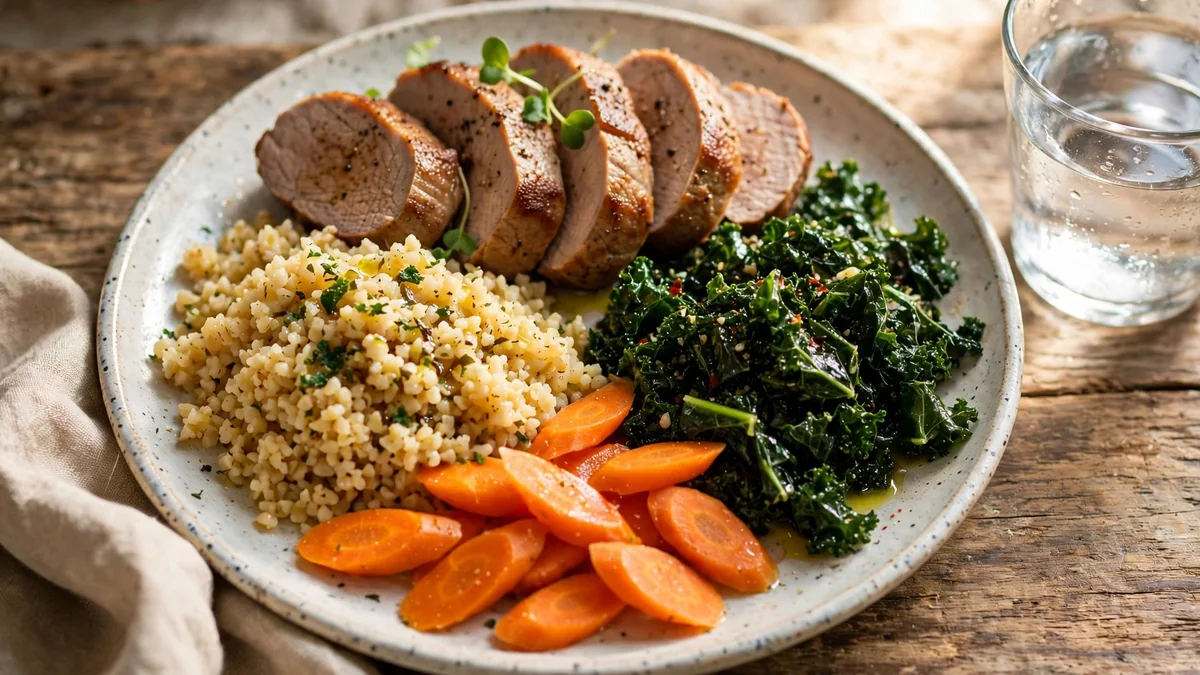
| Dinner | 5 oz cooked pork tenderloin; 1 cup cooked bulgur; 1 cup cooked kale; 1 medium carrot, sliced | about 436 |
| Snacks | 1/2 cup low-fat cottage cheese; 1 cup grapes | about 186 |
Day 4 total: about 1504 calories, 100 g protein, 209 g carbohydrate, 35 g fat, 39 g fiber.
Day 5
| Meal | Foods and portions | Calories |
|---|---|---|
| Breakfast | 2 large eggs; 2 large egg whites; 1 slice whole-wheat toast; 1 cup strawberries; 3/4 cup skim milk | about 383 |
| Lunch | 1 cup shelled edamame; 1/2 cup cooked white rice; 1 medium carrot, sliced; 1 medium bell pepper; 1 teaspoon olive oil | about 397 |
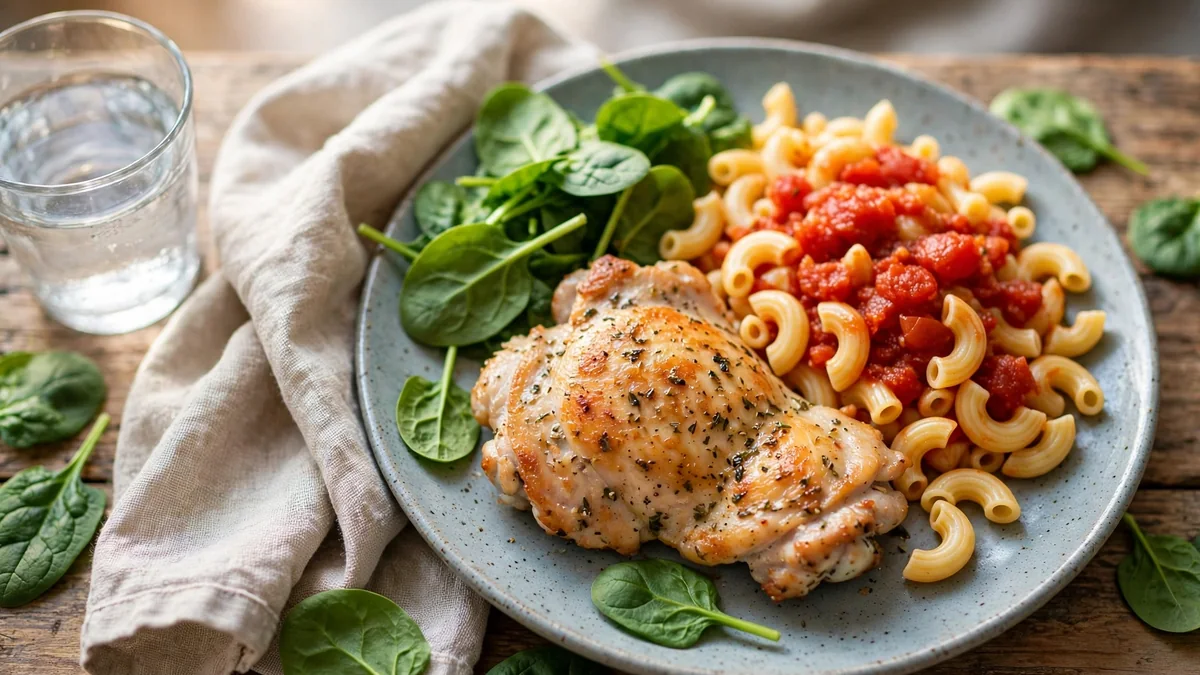
| Dinner | 5 oz cooked skinless chicken thigh; 1 cup cooked pasta; 1/2 cup crushed canned tomatoes; 2 cups raw spinach | about 529 |
| Snacks | 1 orange; 3/4 cup plain nonfat Greek yogurt | about 162 |
Day 5 total: about 1471 calories, 119 g protein, 163 g carbohydrate, 40 g fat, 26 g fiber.
Day 6
| Meal | Foods and portions | Calories |
|---|---|---|
| Breakfast | 1 cup low-fat cottage cheese; 1 medium pear; 1 slice whole-wheat toast | about 345 |
| Lunch | 5 oz cooked salmon; 1/2 cup cooked quinoa; 1 cup cooked green beans; 1 teaspoon olive oil | about 454 |
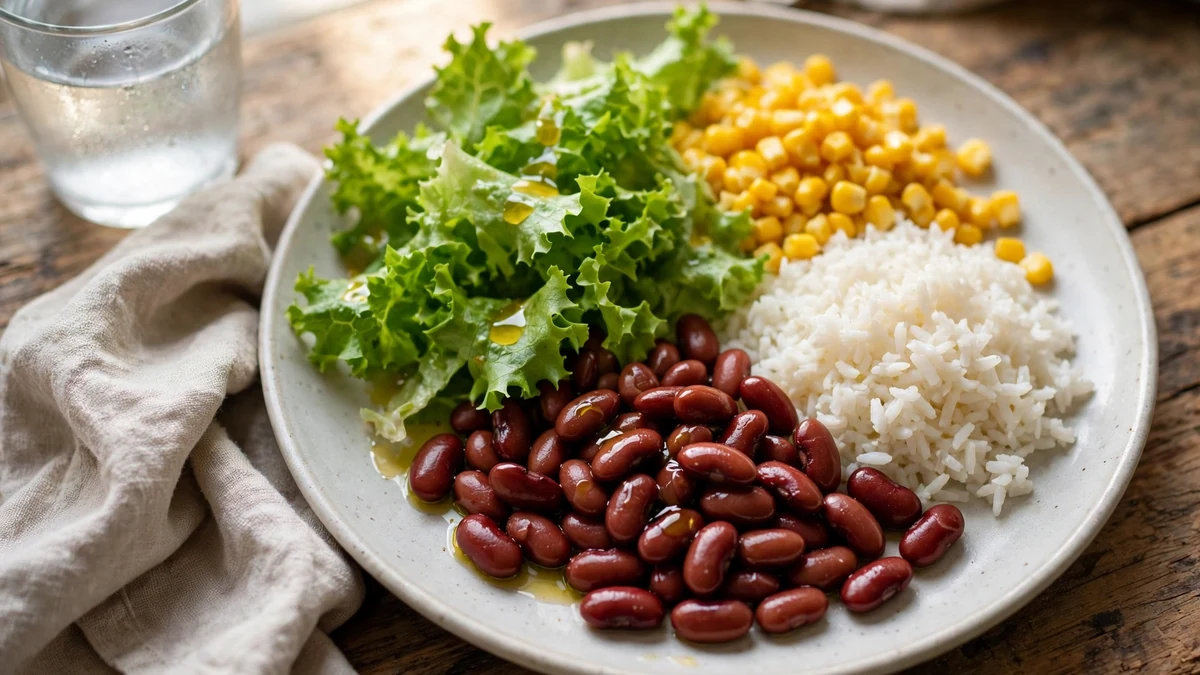
| Dinner | 1 cup cooked kidney beans; 1/2 cup cooked white rice; 1/2 cup cooked corn; 2 cups green leaf lettuce; 1 teaspoon olive oil | about 475 |
| Snacks | 1 medium banana; 1/2 oz walnuts (about 2 tablespoons chopped) | about 197 |
Day 6 total: about 1470 calories, 100 g protein, 191 g carbohydrate, 38 g fat, 34 g fiber.
Day 7
| Meal | Foods and portions | Calories |
|---|---|---|
| Breakfast | 1/2 cup dry rolled oats, cooked; 3/4 cup plain nonfat Greek yogurt; 1 cup raspberries; 1 tablespoon honey | about 380 |
| Lunch | 125 g firm tofu (about 4 1/2 oz); 1/2 cup cooked brown rice; 1 cup cooked broccoli; 2 teaspoons olive oil | about 429 |
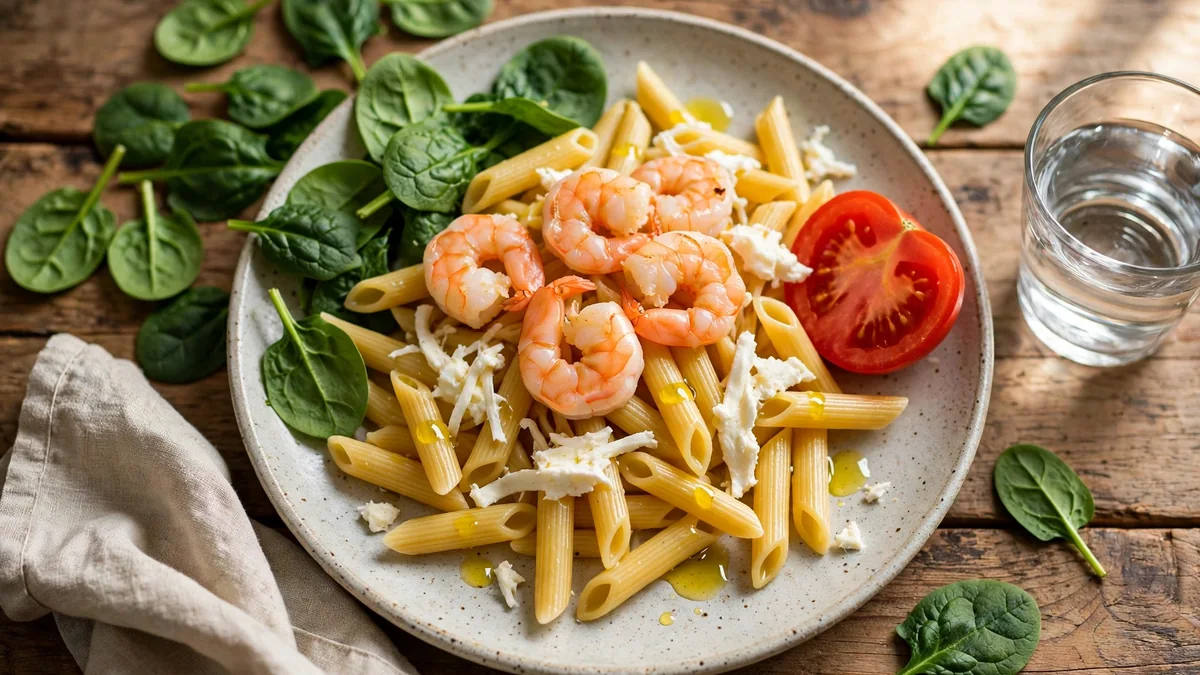
| Dinner | 4 oz cooked shrimp; 1 cup cooked pasta; 2 cups raw spinach; 1 medium tomato; 2 teaspoons olive oil; 1 oz part-skim mozzarella | about 554 |
| Snacks | 1 medium apple; 3/4 cup skim milk | about 159 |
Day 7 total: about 1521 calories, 102 g protein, 191 g carbohydrate, 44 g fat, 31 g fiber.
Grocery list
Produce
- Strawberries, blueberries, raspberries, apples, pears, oranges, bananas, grapes
- Spinach, green leaf lettuce, kale, broccoli, green beans, carrots, bell peppers, tomatoes, cucumbers
- Sweet potatoes and white potatoes
- Avocados
- Lemons, garlic, and fresh herbs for seasoning
Meat and seafood
- Chicken breast and skinless chicken thighs
- Turkey breast and pork tenderloin
- Salmon fillets, cod fillets, and shrimp
Dairy and eggs
- Eggs and egg whites
- Plain nonfat Greek yogurt and plain low-fat Greek yogurt
- Low-fat cottage cheese (compare labels and choose a lower sodium brand)
- Skim milk
- Part-skim mozzarella
Pantry
- Rolled oats and granola
- Quinoa, brown rice, white rice, bulgur, and pasta
- Lentils, black beans, kidney beans, and chickpeas (dry, or canned no-salt-added, rinsed)
- No-salt-added crushed canned tomatoes
- Hummus and natural peanut butter with no added salt, where available
- Unsalted almonds and walnuts
- Olive oil and honey
- Salt-free seasoning staples: black pepper, garlic powder, onion powder, smoked paprika, dried herbs, vinegar
Frozen
- Frozen shelled edamame, plain with no sauce
- Frozen vegetables with no added sauce as backups for fresh
Bakery
- Whole-wheat bread and a whole-wheat pita (bread is a common hidden source of sodium, so compare labels)
Meal prep tips
- Cook grains in plain water in one batch on day 1 and refrigerate in measured portions.
- Mix a salt-free seasoning blend you like, for example garlic powder, onion powder, smoked paprika, and dried oregano, and keep it by the stove.
- Rinse every can of beans under running water as you open it, and let them drain well.
- Cook double portions of chicken, turkey, or pork and use the extra for the next day’s lunch.
- Keep lemon wedges and vinegar at the table; a squeeze of acid makes unsalted food taste brighter.
Easy swaps
- Swap chicken breast for turkey breast in the same portion.
- Swap salmon for cod or shrimp in the same portion.
- Swap quinoa for brown rice or bulgur, 1/2 cup for 1/2 cup.
- Swap black beans, kidney beans, and chickpeas for each other in equal portions.
- Swap spinach for green leaf lettuce in the same volume.
- Swap any fresh fruit for another in the same portion.
How to adjust the calories safely
This plan averages about 1,501 calories a day as written. If you are a man, are tall or active, or are losing weight faster than about 1 to 2 pounds a week, add about 200 to 300 calories a day using foods already in the plan: 1 oz of unsalted walnuts (about 183 calories) plus 1 cup of grapes (about 104 calories) adds about 287 calories.
Never go below 1,200 calories a day for women or 1,500 calories a day for men. Men following this plan should use the adjustment above every day, because 1,500 calories is the minimum level for men, not a target most men should aim at.
Common mistakes
- Assuming a packaged food is low in sodium because it looks healthy. Bread, sauces, deli meats, and canned soups are frequent surprises; read the label.
- Salting the cooking water for pasta, rice, and potatoes out of habit. The food picks up plenty of flavor from the rest of the plate.
- Using regular canned beans without rinsing them. Choosing no-salt-added cans and rinsing what you use is a simple, meaningful step.
- Leaning on cheese and bottled sauces for flavor at every meal, instead of herbs, citrus, and vinegar.
- Stopping or reducing blood pressure medication because home cooking is going well. Medication changes belong to your doctor, always.
Pair it with a workout
The walking plans and beginner strength routines in our Exercise and Workouts category pair well with this style of eating. Build up gradually, and stop any exercise that causes pain, dizziness, or chest pain. If you have high blood pressure or a heart condition, ask your doctor what level of exercise is right for you before you begin.
Frequently asked questions
How much sodium is in this plan each day?
We do not print a number, because it depends on the exact bread, canned goods, and cheese you buy, and brands vary widely. The plan is built from fresh foods, plain frozen foods, and no-salt-added canned goods so that the total stays low for a home cooked week. If your doctor or dietitian has given you a personal daily target, use the labels on your products to check your days against it.
Does rinsing canned beans really make a difference?
Yes. Much of the sodium in canned beans sits in the canning liquid and on the surface of the beans. Draining and rinsing them under running water washes a meaningful share of it away. Choosing no-salt-added cans in the first place is the bigger step; do both when you can.
What can I use instead of salt for flavor?
Lemon juice and vinegar, garlic, onion, black pepper, smoked paprika, chili flakes if you like heat, and fresh or dried herbs all add flavor without salt. A salt-free seasoning blend you enjoy makes the habit easy to keep.
Is bread really a concern?
It is one of the most common everyday sources of sodium, simply because people eat it often. This plan keeps bread to a slice or two a day; compare labels and pick the lowest sodium loaf you enjoy.
I have high blood pressure. Is this plan enough on its own?
No meal plan is a substitute for medical care. Treat this week as a practical way to put home cooked, lower sodium eating in place alongside your care team’s advice, and keep taking any medication exactly as prescribed. Our 7-Day No-Sugar Mediterranean Diet Meal Plan offers a second week in a similar pattern.
Sources and further reading
- USDA FoodData Central, the source for every calorie and nutrient value in this plan: fdc.nal.usda.gov
- American Heart Association, general guidance on sodium and label reading: heart.org
- Dietary Guidelines for Americans, for the overall eating pattern this plan follows: dietaryguidelines.gov
- MedlinePlus, plain language background on low sodium eating: medlineplus.gov
This article is for general educational purposes only and is not medical, nutrition, or fitness advice. Talk with your doctor or a registered dietitian before changing your diet or starting an exercise program.