Prints just the plan, like a recipe card.
Last updated: November 22, 2026.
This mediterranean american meal plan lays out a full week of eating at about 1,600 calories a day. It takes the Mediterranean pattern, vegetables and fruit at every meal, beans and whole grains often, fish and poultry as the main proteins, and olive oil as the main added fat, and writes it in familiar American grocery terms: tuna salad, grilled chicken, pasta night, and big chopped salads. Exact foods and US portions are given for breakfast, lunch, dinner, and a snack every day, and every calorie and macro number on this page was calculated from USDA FoodData Central values for the portions listed.
This plan is a companion to, not a copy of, our other Mediterranean pages. The menus here are completely different from our 7-Day No-Sugar Mediterranean Diet Meal Plan, and this version does not restrict added sugar as strictly; sweetness here comes mostly from fruit, with honey at one breakfast and a small piece of dark chocolate at one snack. Protein averages about 114 grams a day and fiber about 37 grams a day. At 1,600 calories, it is sized for gradual loss of about 1 to 2 pounds a week for many adults, though your own rate may vary and no plan can promise a result.
You will find more eating styles in our By Diet Style collection, part of the full Diet Plans library.
Who this plan is for, and who should not follow it
This plan is for adults who like the sound of Mediterranean eating but shop at a regular American supermarket and want recognizable meals: sandwiches, salads, pasta, and grilled proteins with vegetables. It is a good starting point if stricter plans feel unfamiliar, because nothing here requires a specialty store.
Do not follow this plan if you are under 18, pregnant, or breastfeeding. If you have diabetes, kidney disease, heart disease, or any condition affected by food or weight change, or you take medication affected by either, review this plan with your doctor and a registered dietitian before you start. Bean and grain based menus are rich in potassium and carbohydrate, and only your care team can judge how they fit your treatment. This page is general education, not medical advice.
If you have a history of disordered eating, talk with a doctor or a registered dietitian before following any diet plan. For eating disorder support in the US, visit the National Alliance for Eating Disorders at allianceforeatingdisorders.com.
Plan overview
| Measure | Amount |
|---|---|
| Target calories per day | about 1,600 |
| Average calories per day (as written) | about 1581 |
| Average protein per day | about 114 g |
| Average carbohydrate per day | about 199 g |
| Average fat per day | about 40 g |
| Average fiber per day | about 37 g |
| Meals per day | 4 (breakfast, lunch, dinner, and snacks) |
Fish appears three times, poultry three times, and beans or lentils anchor several lunches and one dinner, which is the Mediterranean pattern in practice. Olive oil is used by the teaspoon, enough for flavor and dressing without letting it dominate the calorie count.
The 7-day mediterranean american meal plan
Portions are given in US household measures. Calories for each meal and day were calculated from USDA FoodData Central values for the exact foods and amounts listed. Season with garlic, lemon, oregano, basil, and black pepper as you like; herbs and citrus add flavor without meaningful calories. Drink water, unsweetened tea, or black coffee freely.
Day 1
| Meal | Foods and portions | Calories |
|---|---|---|
| Breakfast | 3/4 cup plain low-fat (2%) Greek yogurt; 1/4 cup granola; 1 cup blueberries | about 355 |
| Lunch | 4 oz grilled chicken breast; 2 cups green leaf lettuce; 1 medium tomato, diced; 1/2 cucumber, sliced; 1 oz feta cheese; 1 teaspoon olive oil; 1 whole-wheat pita | about 516 |
| Dinner | 5 oz grilled chicken breast; 1 cup cooked quinoa; 1 cup cooked green beans; 1 medium tomato, diced; 1 teaspoon olive oil | about 562 |
| Snacks | 1 medium apple; 1 tablespoon peanut butter | about 190 |
Day 1 total: about 1623 calories, 130 g protein, 174 g carbohydrate, 49 g fat, 29 g fiber.
Day 2
| Meal | Foods and portions | Calories |
|---|---|---|
| Breakfast | 2 large eggs, scrambled; 1 slice whole-wheat toast; 1/2 avocado, mashed on the toast; 1 medium tomato, sliced | about 378 |
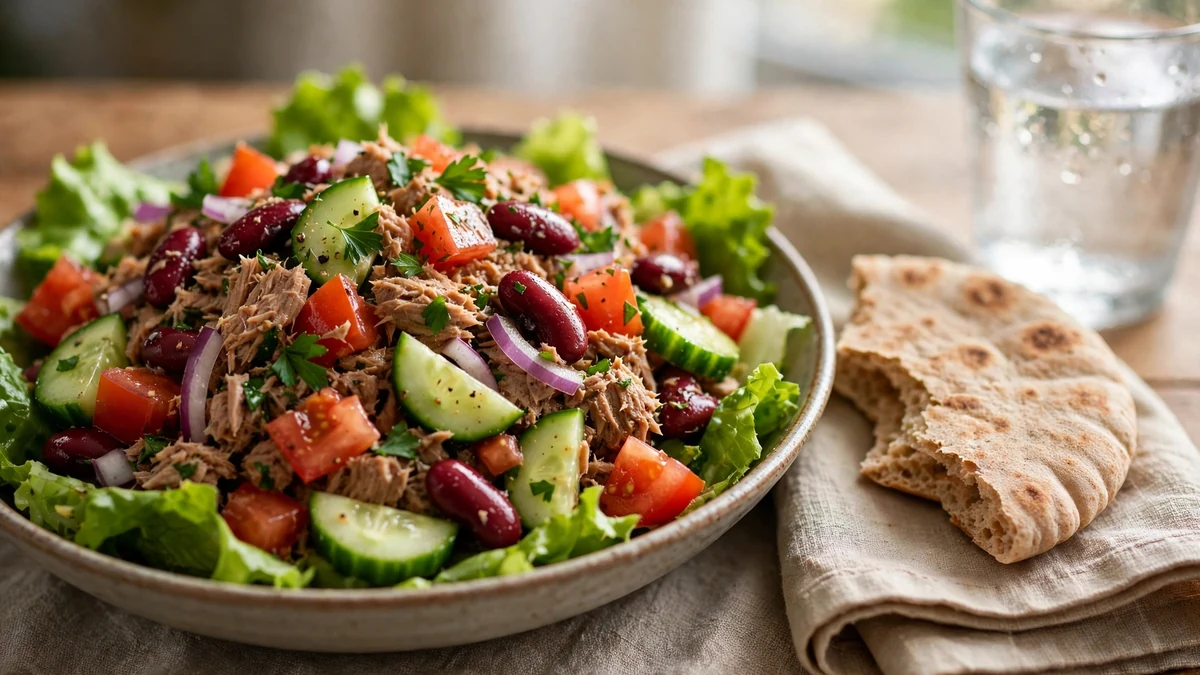
| Lunch | 1 can tuna in water, drained; 1/2 cup cooked kidney beans; 2 cups green leaf lettuce; 1 medium tomato, diced; 1/2 cucumber, sliced; 1 teaspoon olive oil; 1 whole-wheat pita | about 522 |
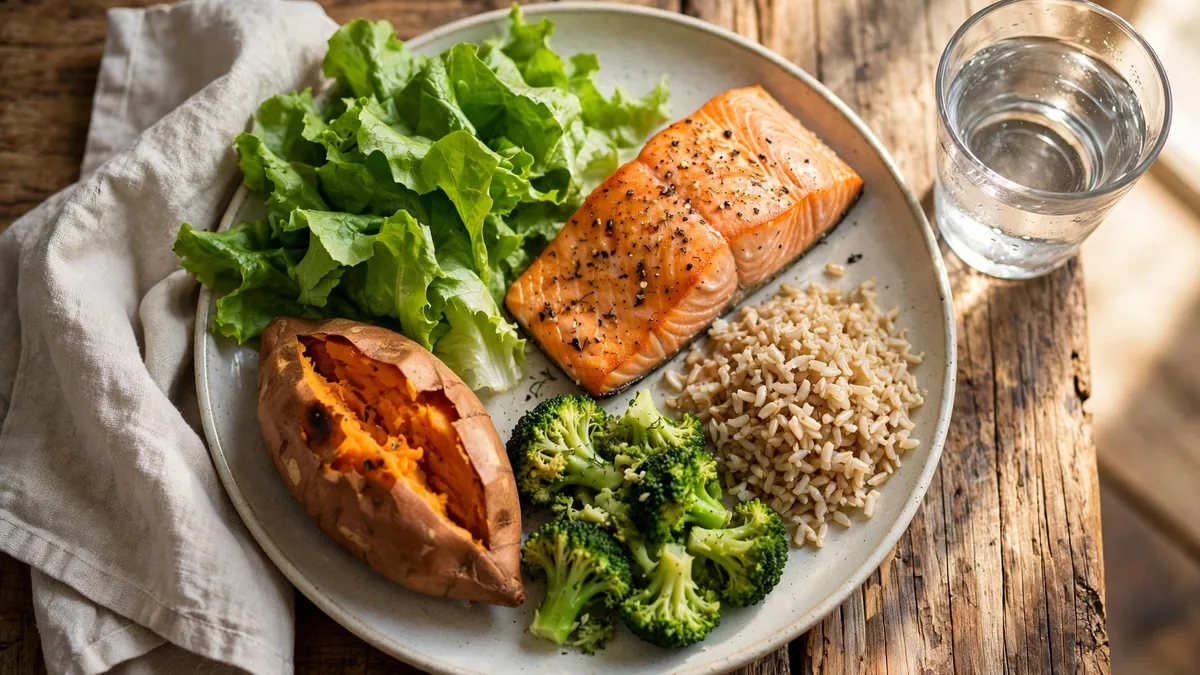
| Dinner | 4 oz cooked salmon; 1 medium baked sweet potato; 1 cup cooked broccoli; 2 cups green leaf lettuce; 1/2 cup cooked brown rice | about 488 |
| Snacks | 3/4 cup plain nonfat Greek yogurt; 1 cup raspberries | about 164 |
Day 2 total: about 1552 calories, 121 g protein, 174 g carbohydrate, 46 g fat, 41 g fiber.
Day 3
| Meal | Foods and portions | Calories |
|---|---|---|
| Breakfast | 1/2 cup dry rolled oats, cooked; 3/4 cup skim milk; 1 medium banana; 1/2 oz walnuts (about 1 tablespoon chopped) | about 413 |
| Lunch | 1 cup cooked lentils; 1 cup chopped carrots, cooked with the lentils; 1 cup cooked kale; 1 slice whole-wheat bread | about 416 |
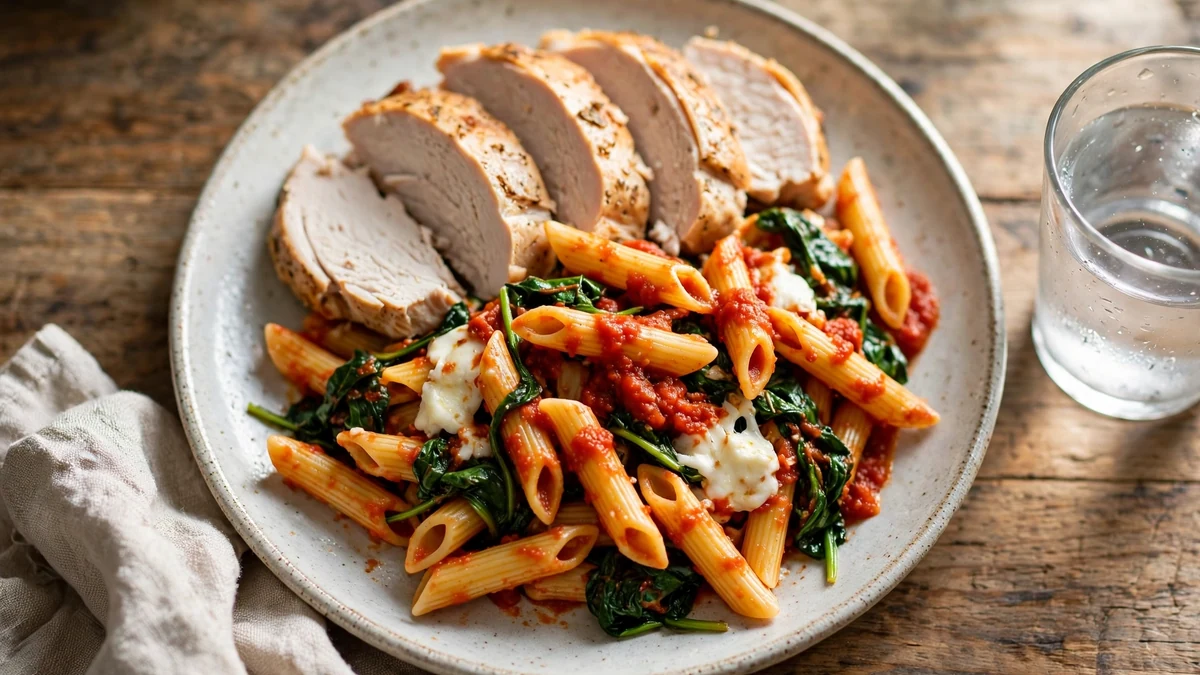
| Dinner | 5 oz cooked turkey breast, sliced; 1 cup cooked pasta; 1/2 cup marinara sauce; 2 cups raw spinach, wilted into the pasta; 1 oz part-skim mozzarella | about 589 |
| Snacks | 1 medium orange; 3 cups air-popped popcorn | about 154 |
Day 3 total: about 1572 calories, 107 g protein, 227 g carbohydrate, 29 g fat, 45 g fiber.
Day 4
| Meal | Foods and portions | Calories |
|---|---|---|
| Breakfast | 1/2 cup low-fat cottage cheese; 1 cup strawberries; 1 slice whole-wheat toast; 1 tablespoon honey | about 274 |
| Lunch | 1 cup cooked pasta; 1/2 cup cooked chickpeas; 1 medium bell pepper, diced; 1/2 cucumber, diced; 1 oz feta cheese; 1 teaspoon olive oil | about 508 |
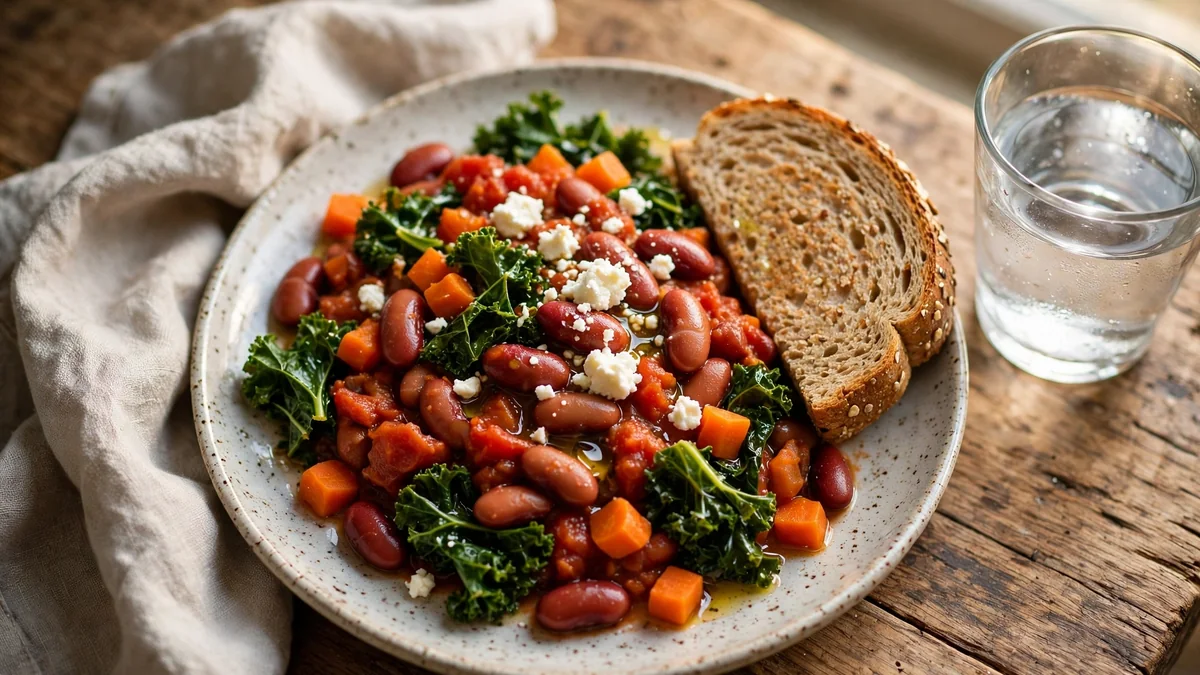
| Dinner | 1 cup cooked kidney beans; 3/4 cup crushed canned tomatoes, simmered with the beans; 1 cup cooked kale; 1 cup chopped carrots, cooked; 1 slice whole-wheat bread; 1 oz feta cheese; 1 teaspoon olive oil | about 593 |
| Snacks | 1/2 cup low-fat cottage cheese; 1 medium pear | about 183 |
Day 4 total: about 1559 calories, 86 g protein, 241 g carbohydrate, 33 g fat, 47 g fiber.
Day 5
| Meal | Foods and portions | Calories |
|---|---|---|
| Breakfast | 1/2 cup dry rolled oats, cooked; 3/4 cup plain nonfat Greek yogurt; 1 cup raspberries; 1 tablespoon peanut butter | about 412 |
| Lunch | 4 oz cooked salmon, flaked; 1/2 cup cooked quinoa; 2 cups raw spinach; 1 cup chopped carrots; 1 oz feta cheese | about 458 |
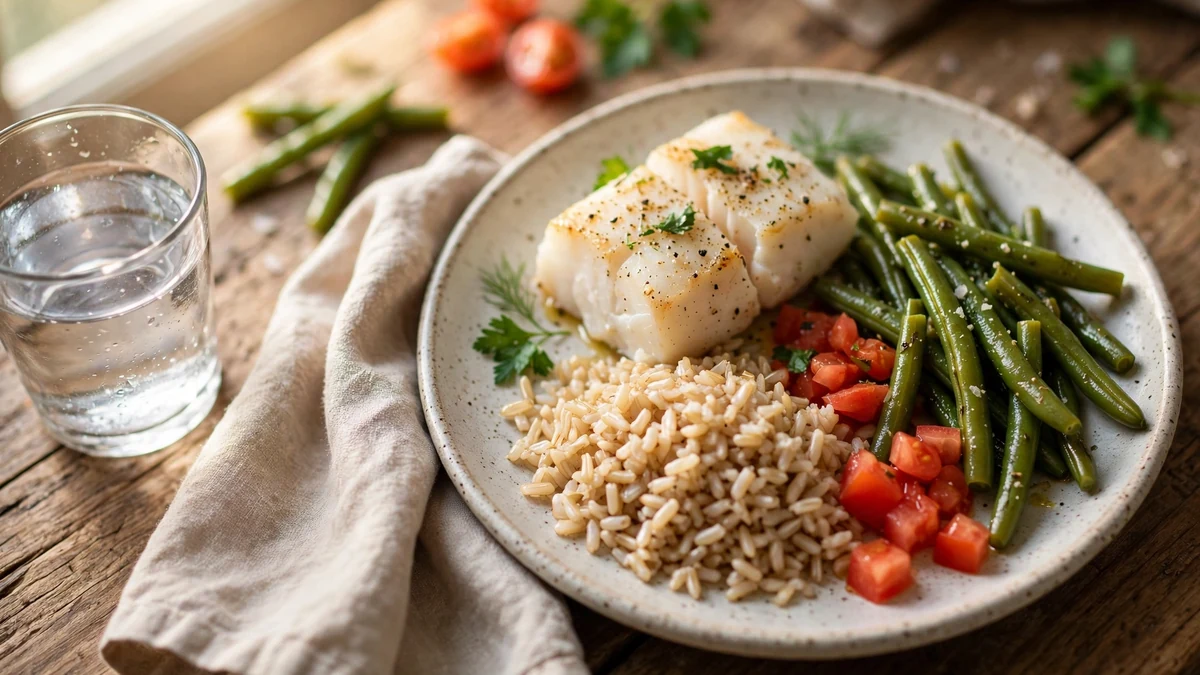
| Dinner | 6 oz cooked cod; 1 cup cooked brown rice; 1 cup cooked green beans; 1 medium tomato, diced | about 472 |
| Snacks | 1 medium banana; 1 cup skim milk | about 191 |
Day 5 total: about 1532 calories, 124 g protein, 188 g carbohydrate, 35 g fat, 32 g fiber.
Day 6
| Meal | Foods and portions | Calories |
|---|---|---|
| Breakfast | 1 large egg; 2 large egg whites; 2 cups raw spinach, wilted with the eggs; 1 oz feta cheese; 1 slice whole-wheat toast; 1 medium orange | about 360 |
| Lunch | 2 slices whole-wheat bread; 4 oz cooked turkey breast; 1/2 avocado; 2 cups green leaf lettuce; 1 medium tomato, sliced | about 480 |
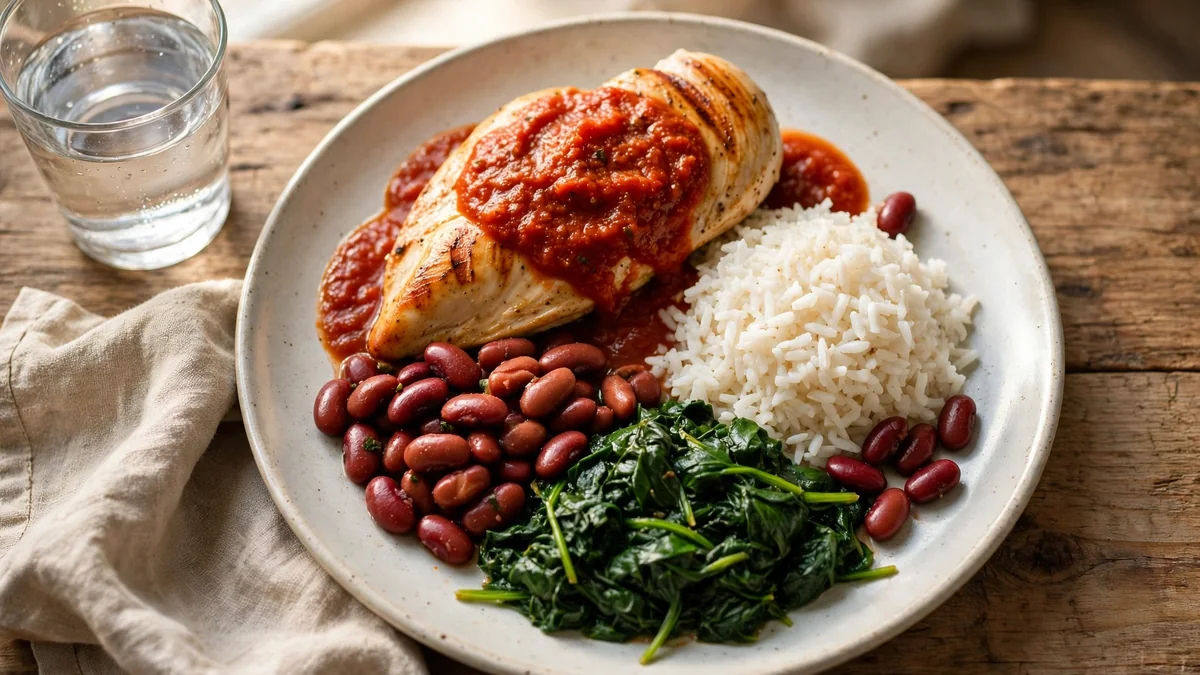
| Dinner | 4 oz grilled chicken breast; 1/2 cup cooked kidney beans; 2 cups raw spinach, wilted; 1 cup cooked white rice; 1/2 cup marinara sauce, spooned over the top | about 616 |
| Snacks | 1 oz dark chocolate (70% cacao); 1 cup strawberries | about 216 |
Day 6 total: about 1672 calories, 128 g protein, 183 g carbohydrate, 49 g fat, 35 g fiber.
Day 7
| Meal | Foods and portions | Calories |
|---|---|---|
| Breakfast | 3/4 cup plain nonfat Greek yogurt; 1/4 cup granola; 1 medium pear | about 348 |
| Lunch | 2 large eggs, hard-boiled and chopped; 1/3 cup plain nonfat Greek yogurt, stirred in as the dressing; 2 slices whole-wheat bread; 2 cups green leaf lettuce; 1 medium tomato, sliced | about 399 |
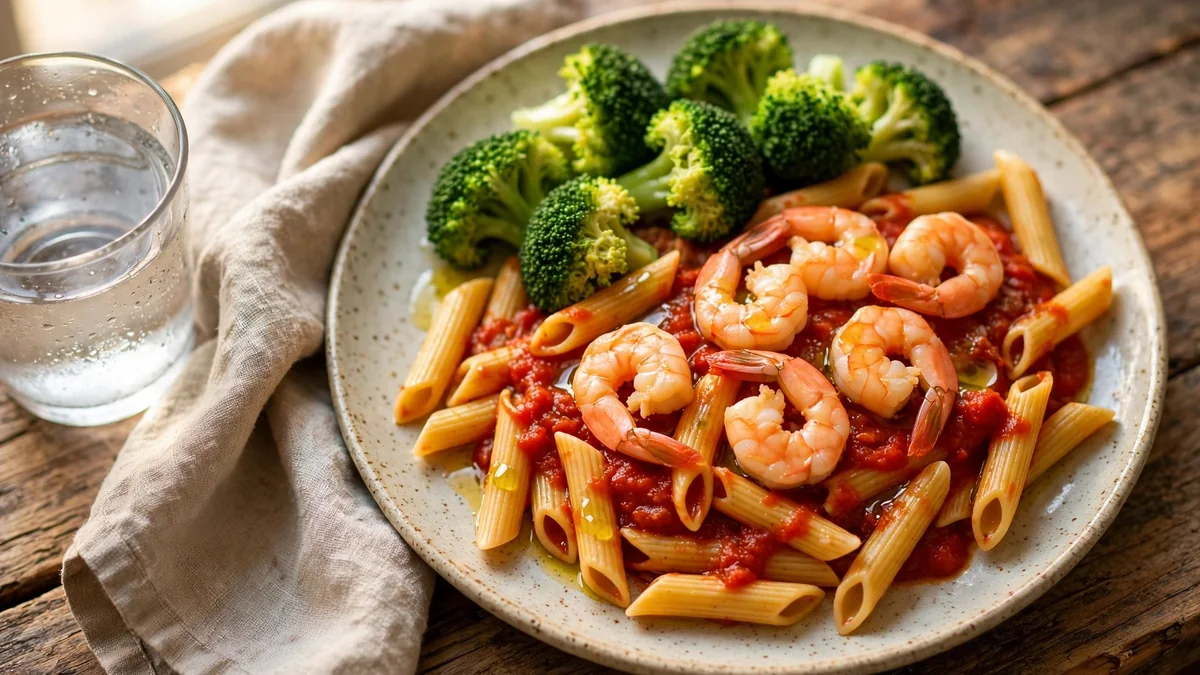
| Dinner | 4 oz cooked shrimp; 1 1/2 cups cooked pasta; 1/2 cup marinara sauce; 1 cup cooked broccoli; 1 teaspoon olive oil | about 623 |
| Snacks | 1 cup grapes; 1/2 oz almonds (about 12 almonds) | about 185 |
Day 7 total: about 1556 calories, 101 g protein, 205 g carbohydrate, 40 g fat, 29 g fiber.
Grocery list
This list covers the full week for one person following the plan as written. Buy at least the quantities the plan uses and keep the pantry staples on hand for repeat weeks.
Produce
- Blueberries
- Green leaf lettuce
- Tomatoes
- Cucumbers
- Green beans
- Apples
- Avocados
- Sweet potatoes
- Broccoli
- Raspberries
- Bananas
- Carrots
- Kale
- Fresh spinach
- Oranges
- Strawberries
- Bell peppers
- Pears
- Grapes
Meat and seafood
- Chicken breast
- Salmon fillets
- Turkey breast
- Cod fillets
- Shrimp
Dairy and eggs
- Plain low-fat Greek yogurt
- Feta cheese
- Large eggs
- Plain nonfat Greek yogurt
- Skim milk
- Part-skim mozzarella
- Low-fat cottage cheese
- Large eggs (for egg whites)
Pantry
- Granola
- Olive oil
- Quinoa
- Peanut butter
- Canned tuna in water
- Kidney beans
- Brown rice
- Rolled oats
- Walnuts
- Lentils
- Pasta
- Marinara sauce
- Popcorn for air-popping
- Honey
- Chickpeas
- Canned crushed tomatoes
- White rice
- Dark chocolate
- Almonds
Bakery
- Whole-wheat pita
- Whole-wheat bread
Meal prep tips
- Grill the chicken and turkey portions for days 1 to 3 in one batch on day 1; slice and refrigerate for the salads and pasta.
- Cook quinoa, brown rice, and a pot of pasta in one session; the pasta for the day 4 salad is meant to be served cooled.
- Cook a pot of lentils and a pot of kidney beans, or open and rinse canned beans, to cover the soup, salad, and skillet meals.
- Bake several sweet potatoes at once and refrigerate; they reheat well for the salmon dinner and lunches.
- Wash greens and chop cucumbers, tomatoes, and peppers ahead for two or three days so the big salads assemble in minutes.
Easy swaps
- Swap salmon, cod, and shrimp for each other in the same weight on any fish day; the calories are close.
- Swap kidney beans, chickpeas, and lentils cup for cup in the salads, soup, and skillet meals.
- Swap quinoa for brown rice or bulgur, cup for cup of cooked grain, on any day.
- Swap the turkey sandwich on day 6 for the same weight of chicken breast with the same avocado and greens.
- Swap feta for mozzarella in the same weight in salads and pasta when you prefer a milder cheese.
- Swap raspberries for blueberries or strawberries, cup for cup, depending on season and price.
- Swap the pita on day 2 for 2 slices of whole-wheat bread with the same tuna salad.
How to adjust the calories safely
If this plan leaves you persistently hungry, low on energy, or losing faster than about 2 pounds a week, add food. To add roughly 200 to 300 calories a day using foods already in the plan, choose one: 1 oz of walnuts (about 183 calories) plus 1 teaspoon of olive oil on your vegetables (about 40 calories); or an extra 1 cup of cooked quinoa split between lunch and dinner (about 222 calories); or 1/2 avocado (about 120 calories) plus 1 slice of whole-wheat toast (about 81 calories).
Never go below 1,200 calories a day for women or 1,500 calories a day for men. This plan is written at 1,600 calories, so it sits above both floors as written, but do not cut portions below the amounts listed to speed things up. Taller or very active adults may need one of the additions above every day.
Common mistakes
- Pouring olive oil freely because it is the healthy fat. It is the right fat for this pattern and it is still about 120 calories a tablespoon; the plan measures it by the teaspoon.
- Turning pasta night into an unlimited bowl. The plan serves 1 to 1 1/2 cups cooked, with vegetables and protein making up the rest of the plate.
- Skipping the beans because the day already has meat. The bean meals carry much of the fiber that makes this calorie level satisfying.
- Buying flavored yogurts and sweetened dressings. Plain yogurt and a teaspoon of olive oil with lemon do the same jobs here for far fewer calories.
- Eating the same grilled chicken salad every day after the week ends. Rotate this plan with the other Mediterranean pages on this site so the pattern stays varied.
Pair it with a workout
Regular movement supports weight loss alongside any eating pattern. Browse the walking plans and beginner strength routines in our Exercise and Workouts category, start with the level that matches your current fitness, and build up gradually. A short walk after dinner is a simple place to begin. Stop any exercise that causes pain, dizziness, or chest pain, and check with your doctor before starting if you have been inactive or have any medical condition.
Frequently asked questions
How is this different from the other Mediterranean plan on this site?
The pattern is the same, but the menus are completely different, and this version is written in everyday American grocery terms with familiar meals like tuna salad, turkey sandwiches, and pasta night. It also allows small amounts of honey and dark chocolate, which the no-sugar version leaves out. You can rotate the two plans week by week.
Do I need specialty or imported ingredients?
No. Every food in this plan is a standard supermarket item: canned tuna and beans, frozen and fresh vegetables, plain yogurt, pasta, rice, quinoa, chicken, turkey, and fish. That is the point of the American framing.
Is olive oil required, or can I use another oil?
Olive oil is traditional to the pattern and is what the numbers here use. Another neutral cooking oil has almost identical calories per teaspoon, so the swap does not change the plan’s math.
Can I eat red meat on this plan?
This week includes no beef meals, by design; the pattern leans on fish, poultry, and beans. An occasional lean beef meal in a similar portion fits the broader pattern, but it is not part of these seven days.
I have high blood pressure. Can I follow this plan?
Only after your doctor or registered dietitian has reviewed it. Eating patterns and weight loss can change blood pressure and medication needs, and your care team knows your readings. Bring this page to your appointment.
Sources and further reading
- USDA FoodData Central, the source for every calorie and nutrient value in this plan: fdc.nal.usda.gov
- Dietary Guidelines for Americans, which lists the Mediterranean style pattern as a healthy option: dietaryguidelines.gov
- MyPlate, the USDA guide to building a balanced plate: myplate.gov
- MedlinePlus, for plain language background on Mediterranean style eating: medlineplus.gov
This article is for general educational purposes only and is not medical, nutrition, or fitness advice. Talk with your doctor or a registered dietitian before changing your diet or starting an exercise program.