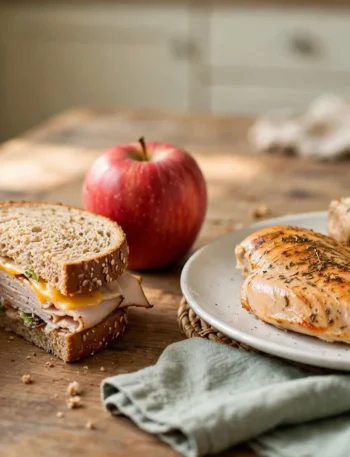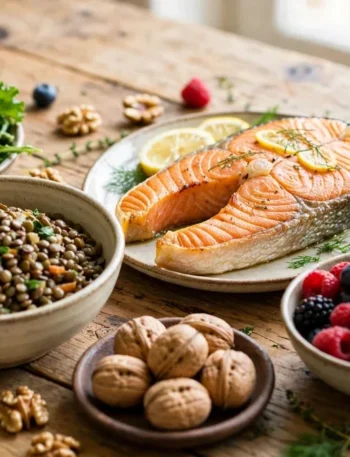
Prints just the plan, like a recipe card.
Last updated: November 22, 2026.
This middle eastern meal plan lays out a full week of eating at about 1,600 calories a day, built on hummus, whole-wheat pita, lentils, chickpeas, plain yogurt, cucumber, tomato, and chicken, with exact foods and US portions for breakfast, lunch, dinner, and a snack every day. Every calorie and macro number on this page was calculated from USDA FoodData Central values for the portions listed.
To be plain about what this plan is: it is inspired by the flavors of Middle Eastern home cooking, not a traditional menu from any one country. The region’s cuisines are many and varied, and this week borrows elements they often share, like chickpeas and lentils as staples, hummus and yogurt served with meals, and fresh cucumber and tomato at the table, then portions them for weight loss. Protein averages about 103 grams a day and fiber about 42 grams a day. At 1,600 calories, it is sized for gradual loss of about 1 to 2 pounds a week for many adults, though your own rate may vary and no plan can promise a result.
You will find more eating styles in our By Diet Style collection, part of the full Diet Plans library. Our 7-Day No-Sugar Mediterranean Diet Meal Plan covers the neighboring flavors with a completely different menu.
Who this plan is for, and who should not follow it
This plan is for adults who enjoy hummus, pita sandwiches, lentil soups, and chickpea salads and want a week of weight loss meals planned around those flavors. It suits people who like assembling lunches from a few ready components, since several meals here are plates rather than cooked dishes.
Do not follow this plan if you are under 18, pregnant, or breastfeeding. If you have diabetes, kidney disease, or any condition affected by food or weight change, or you take medication affected by either, review this plan with your doctor and a registered dietitian before you start, because legume based menus are rich in potassium and carbohydrate and only your care team can judge how they fit your treatment. This page is general education, not medical advice.
If you have a history of disordered eating, talk with a doctor or a registered dietitian before following any diet plan. For eating disorder support in the US, visit the National Alliance for Eating Disorders at allianceforeatingdisorders.com.
Plan overview
| Measure | Amount |
|---|---|
| Target calories per day | about 1,600 |
| Average calories per day (as written) | about 1594 |
| Average protein per day | about 103 g |
| Average carbohydrate per day | about 215 g |
| Average fat per day | about 42 g |
| Average fiber per day | about 42 g |
| Meals per day | 4 (breakfast, lunch, dinner, and snacks) |
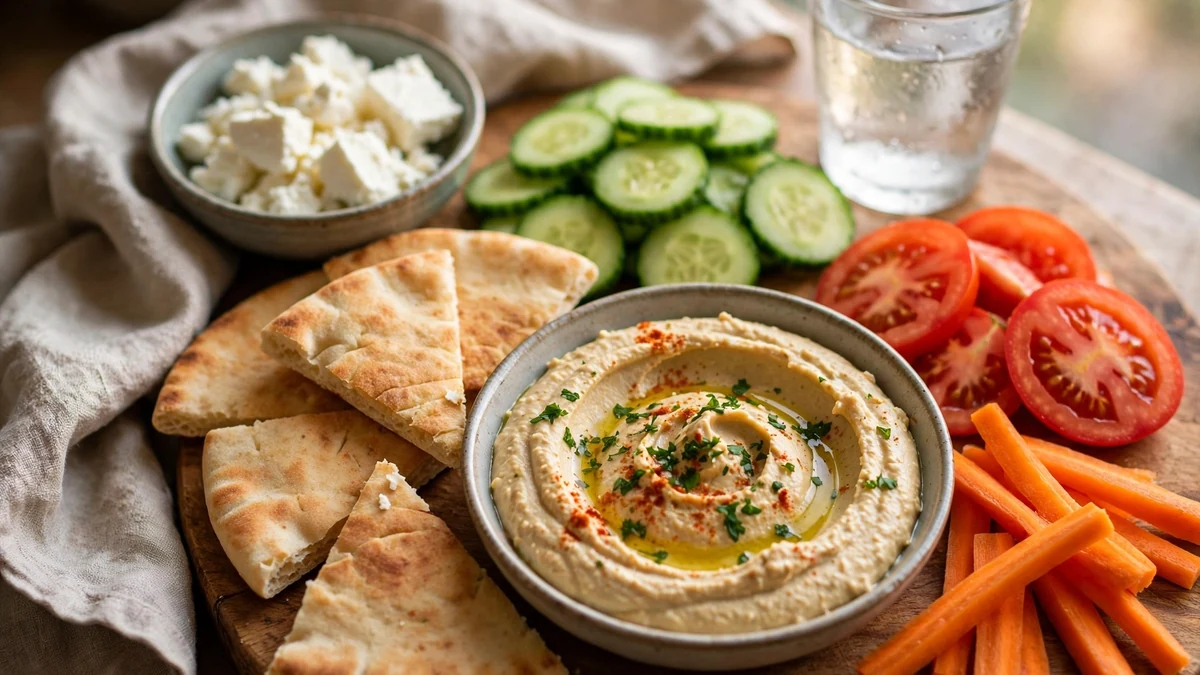
Chickpeas and lentils carry most days, with hummus and yogurt adding protein and staying power at small calorie cost. Fresh cucumber, tomato, and lettuce appear at nearly every lunch and dinner, which keeps plates large without making them heavy.
The 7-day middle eastern meal plan
Portions are given in US household measures. Calories for each meal and day were calculated from USDA FoodData Central values for the exact foods and amounts listed. Season with cumin, garlic, lemon juice, parsley, and a pinch of paprika as you like; herbs, spices, and citrus add flavor without meaningful calories. Drink water, unsweetened tea, or black coffee freely.
Day 1
| Meal | Foods and portions | Calories |
|---|---|---|
| Breakfast | 3/4 cup plain low-fat (2%) Greek yogurt; 1/4 cup granola; 1 medium banana | about 376 |
| Lunch | 1/4 cup hummus; 1 whole-wheat pita; 1/2 cucumber, sliced; 1 medium tomato, sliced; 1 cup chopped carrots; 1 oz feta cheese | about 438 |
| Dinner | 5 oz cooked chicken breast, sliced; 1 whole-wheat pita; 1/4 cup hummus; 1 medium tomato, diced; 1/2 cucumber, diced; 2 cups green leaf lettuce; 1/2 cup cooked brown rice | about 671 |
| Snacks | 1 medium apple; 1 tablespoon peanut butter | about 190 |
Day 1 total: about 1674 calories, 101 g protein, 230 g carbohydrate, 45 g fat, 33 g fiber.
Day 2
| Meal | Foods and portions | Calories |
|---|---|---|
| Breakfast | 2 large eggs, scrambled; 1 whole-wheat pita, warmed; 1 medium tomato, sliced; 1/2 cucumber, sliced | about 360 |
| Lunch | 1 cup cooked chickpeas; 1/2 cucumber, diced; 1 medium tomato, diced; 2 cups green leaf lettuce; 1 teaspoon olive oil; 1 slice whole-wheat bread | about 437 |
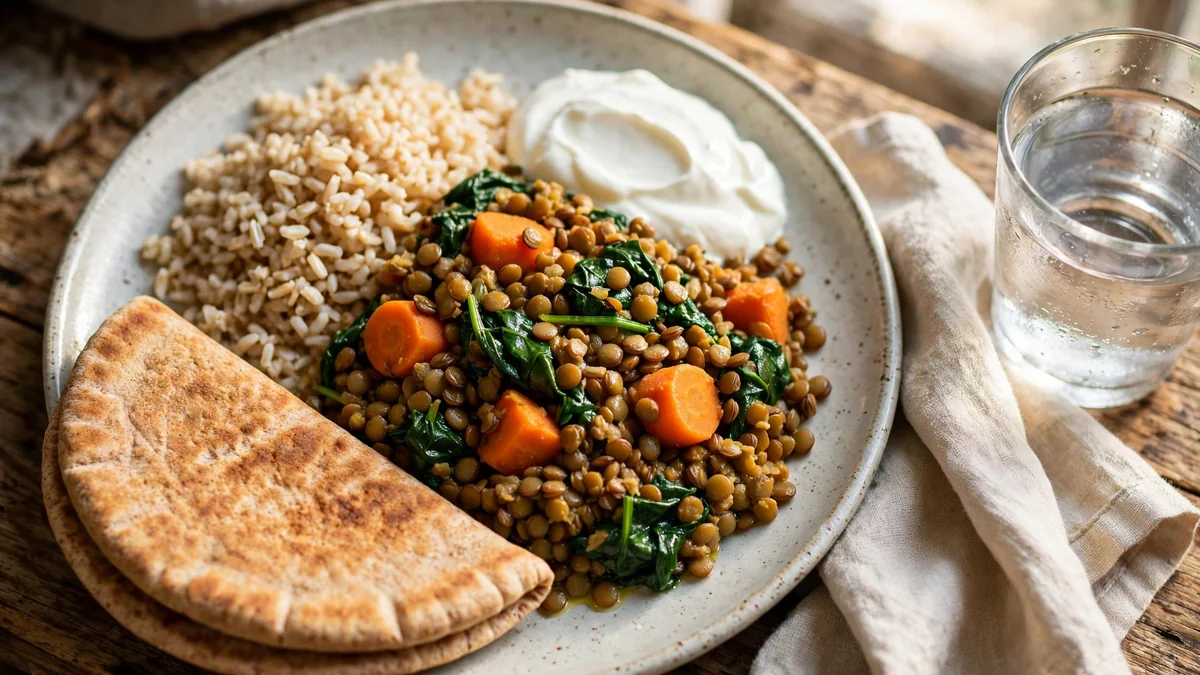
| Dinner | 1 cup cooked lentils, simmered with cumin; 1 whole-wheat pita; 1 cup chopped carrots, cooked with the lentils; 2 cups raw spinach, wilted into the lentils; 1/3 cup plain nonfat Greek yogurt; 1/2 cup cooked brown rice | about 624 |
| Snacks | 3/4 cup plain nonfat Greek yogurt; 1 cup raspberries | about 164 |
Day 2 total: about 1586 calories, 99 g protein, 251 g carbohydrate, 27 g fat, 57 g fiber.
Day 3
| Meal | Foods and portions | Calories |
|---|---|---|
| Breakfast | 1/2 cup dry rolled oats, cooked; 3/4 cup skim milk; 1 cup strawberries; 1 tablespoon honey | about 328 |
| Lunch | 1/2 cup cooked lentils; 1 cup cooked bulgur; 1 cup cooked kale; 1/3 cup plain nonfat Greek yogurt | about 371 |
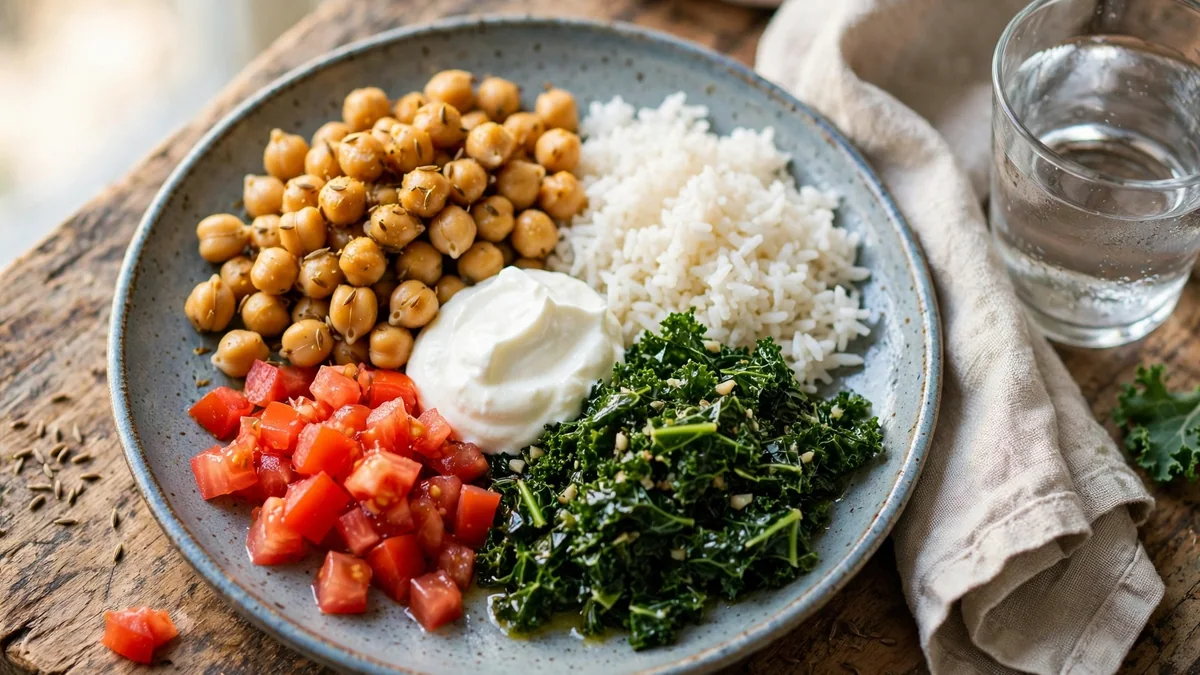
| Dinner | 1 cup cooked chickpeas, warmed with cumin; 1 cup cooked white rice; 1 cup cooked kale; 1 medium tomato, chopped; 1/3 cup plain low-fat (2%) Greek yogurt | about 651 |
| Snacks | 1 medium orange; 1 oz almonds (about 1/4 cup) | about 224 |
Day 3 total: about 1574 calories, 80 g protein, 262 g carbohydrate, 28 g fat, 50 g fiber.
Day 4
| Meal | Foods and portions | Calories |
|---|---|---|
| Breakfast | 2 large eggs, scrambled; 1 slice whole-wheat toast; 1 oz feta cheese, crumbled over the eggs; 1 medium tomato, sliced; 2 cups raw spinach, wilted with the eggs | about 346 |
| Lunch | 4 oz cooked chicken breast; 1 whole-wheat pita; 2 cups green leaf lettuce; 1 medium tomato, sliced; 1/2 cucumber, sliced; 2 tablespoons hummus | about 455 |
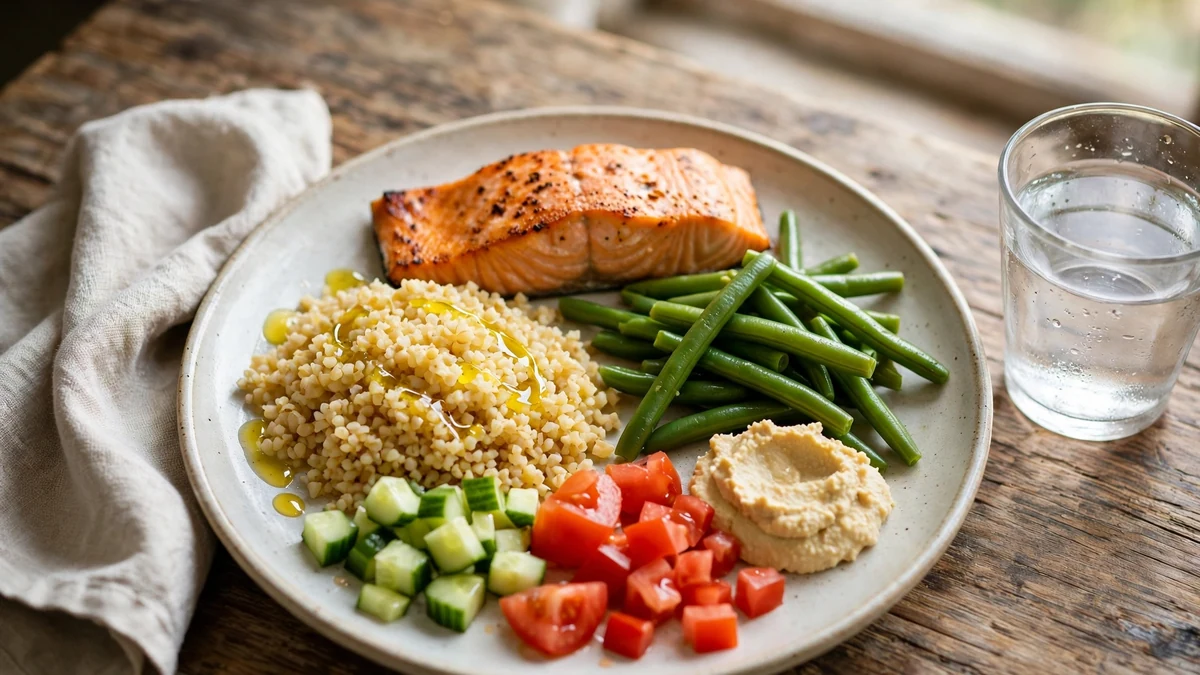
| Dinner | 4 oz cooked salmon; 1 cup cooked bulgur; 1 cup cooked green beans; 1 medium tomato, diced; 1/2 cucumber, diced; 1/4 cup hummus; 1 teaspoon olive oil, drizzled over the bulgur | about 584 |
| Snacks | 1/2 cup low-fat cottage cheese; 1 medium pear | about 183 |
Day 4 total: about 1567 calories, 125 g protein, 169 g carbohydrate, 48 g fat, 35 g fiber.
Day 5
| Meal | Foods and portions | Calories |
|---|---|---|
| Breakfast | 3/4 cup plain nonfat Greek yogurt; 1 oz walnuts (about 1/4 cup); 1 medium pear | about 385 |
| Lunch | 1 cup cooked chickpeas; 1/2 cup cooked brown rice; 2 cups raw spinach; 1 medium tomato, diced; 1/3 cup plain low-fat (2%) Greek yogurt | about 481 |
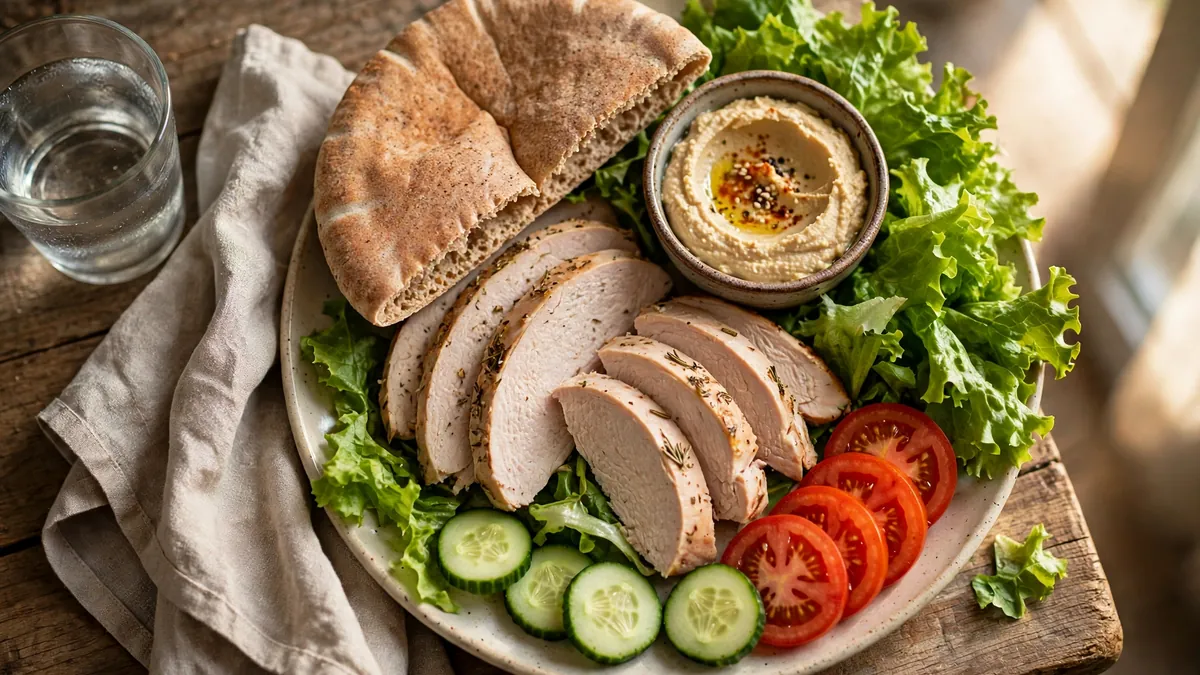
| Dinner | 4 oz cooked turkey breast; 1 whole-wheat pita; 1/4 cup hummus; 2 cups green leaf lettuce; 1 medium tomato, sliced; 1/2 cucumber, sliced | about 488 |
| Snacks | 1 medium banana; 1 cup skim milk | about 191 |
Day 5 total: about 1545 calories, 106 g protein, 213 g carbohydrate, 36 g fat, 36 g fiber.
Day 6
| Meal | Foods and portions | Calories |
|---|---|---|
| Breakfast | 1/2 cup dry rolled oats, cooked; 3/4 cup plain nonfat Greek yogurt; 1 cup blueberries; 1 tablespoon peanut butter | about 432 |
| Lunch | 1 can tuna in water, drained; 1/2 cup cooked chickpeas; 1/2 cucumber, diced; 1 medium tomato, diced; 2 cups green leaf lettuce; 1 teaspoon olive oil | about 376 |
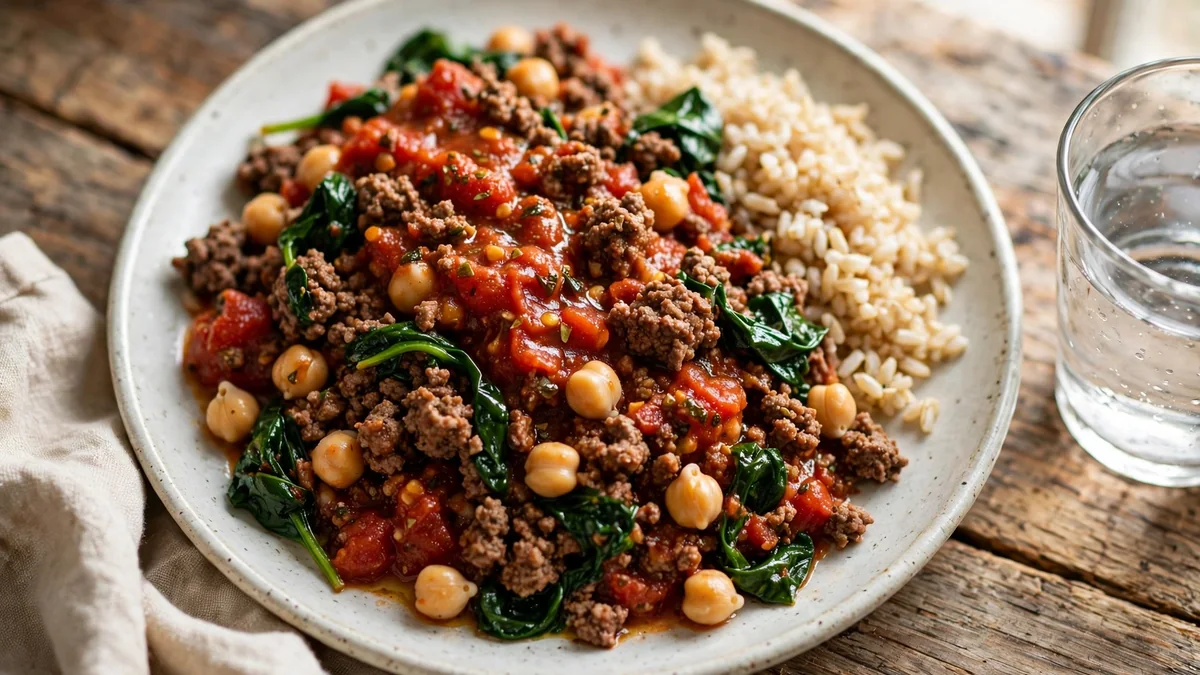
| Dinner | 4 oz cooked lean ground beef (90% lean); 1/2 cup cooked chickpeas; 3/4 cup crushed canned tomatoes, simmered with the beef; 2 cups raw spinach, wilted into the pan; 1/2 cup cooked brown rice | about 572 |
| Snacks | 1 oz dark chocolate (70% cacao); 1 cup strawberries | about 216 |
Day 6 total: about 1596 calories, 113 g protein, 179 g carbohydrate, 52 g fat, 36 g fiber.
Day 7
| Meal | Foods and portions | Calories |
|---|---|---|
| Breakfast | 1/2 cup low-fat cottage cheese; 1 slice whole-wheat toast; 1 medium tomato, sliced; 1 medium orange; 1 large egg, hard-boiled; 1/2 oz walnuts (about 1 tablespoon chopped) | about 415 |
| Lunch | 2 large eggs, hard-boiled; 1/4 cup hummus; 1 whole-wheat pita; 1 medium tomato, sliced; 1/2 cucumber, sliced | about 466 |
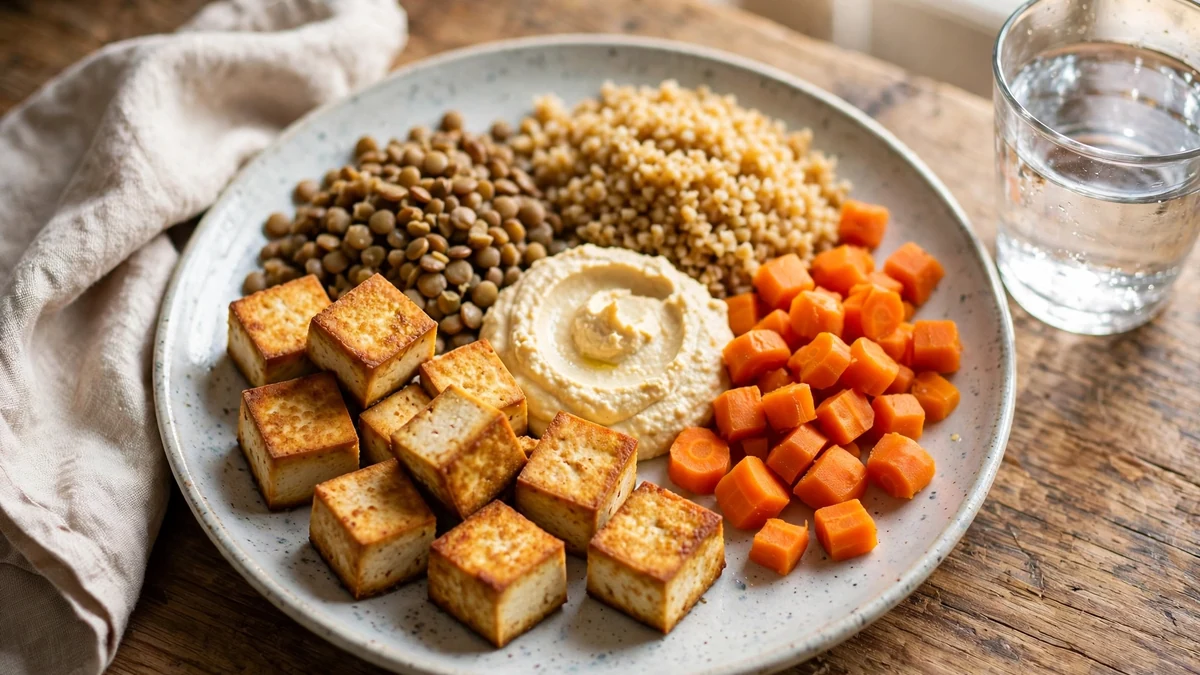
| Dinner | 125 g firm tofu, browned; 1/2 cup cooked lentils; 1 cup cooked bulgur; 1 cup chopped carrots, cooked; 2 tablespoons hummus | about 550 |
| Snacks | 1 cup grapes; 1/2 oz almonds (about 12 almonds) | about 185 |
Day 7 total: about 1616 calories, 95 g protein, 202 g carbohydrate, 56 g fat, 43 g fiber.
Grocery list
This list covers the full week for one person following the plan as written. Buy at least the quantities the plan uses and keep the pantry staples on hand for repeat weeks.
Produce
- Bananas
- Cucumbers
- Tomatoes
- Carrots
- Green leaf lettuce
- Apples
- Fresh spinach
- Raspberries
- Strawberries
- Kale
- Oranges
- Green beans
- Pears
- Blueberries
- Grapes
Meat and seafood
- Chicken breast
- Salmon fillets
- Turkey breast
- Ground beef (90% lean)
Dairy and eggs
- Plain low-fat Greek yogurt
- Hummus
- Feta cheese
- Large eggs
- Plain nonfat Greek yogurt
- Skim milk
- Low-fat cottage cheese
Pantry
- Granola
- Brown rice
- Peanut butter
- Chickpeas
- Olive oil
- Lentils
- Rolled oats
- Honey
- Bulgur
- White rice
- Almonds
- Walnuts
- Canned tuna in water
- Canned crushed tomatoes
- Dark chocolate
- Tofu
Bakery
- Whole-wheat pita
- Whole-wheat bread
Meal prep tips
- Cook a large pot of lentils and a large pot of chickpeas on day 1, or open and rinse canned versions; both cover most of the week’s lunches and dinners.
- Cook the bulgur and both kinds of rice in one session and refrigerate in flat containers.
- Keep hummus portioned in small containers so the 2 tablespoon and 1/4 cup servings in the plan are what you actually eat.
- Grill or bake the chicken and turkey portions for the week in one batch with lemon and cumin.
- Dice cucumbers and tomatoes ahead for two or three days at a time; add lemon juice just before serving so they stay crisp.
Easy swaps
- Swap chickpeas for lentils cup for cup in any bowl, salad, or simmered dish in this plan.
- Swap bulgur for brown rice or white rice, cup for cup of cooked grain, on any day.
- Swap hummus for plain Greek yogurt in the same amount as a pita spread when you want a lighter option.
- Swap chicken breast for turkey breast in the same weight on any day.
- Swap salmon for cod in the same weight on day 4, with the same bulgur and vegetables.
- Swap feta for cheddar in the same weight at breakfasts when feta is not available.
- Swap the pita for 2 slices of whole-wheat bread in any sandwich or plate; the calories are close.
How to adjust the calories safely
If this plan leaves you persistently hungry, low on energy, or losing faster than about 2 pounds a week, add food. To add roughly 200 to 300 calories a day using foods already in the plan, choose one: 1 oz of almonds (about 162 calories) plus 1 medium orange (about 62 calories); or an extra whole-wheat pita (about 168 calories) plus 2 tablespoons of hummus (about 53 calories); or an extra 1 cup of cooked bulgur (about 151 calories) plus 1 teaspoon of olive oil (about 40 calories).
Never go below 1,200 calories a day for women or 1,500 calories a day for men. This plan is written at 1,600 calories, so it sits above both floors as written, but do not cut portions below the amounts listed to speed things up. Taller or very active adults may need one of the additions above every day.
Common mistakes
- Eating hummus straight from a large tub. Hummus fits this plan well at 2 tablespoons to 1/4 cup; unmeasured dipping can quietly double a meal.
- Frying falafel style patties or pita chips in oil. This plan uses chickpeas whole and pita plain or warmed, which keeps the same flavors much lighter.
- Skipping the fresh vegetables. The cucumber, tomato, and lettuce are a real part of the meals here, adding volume that makes 1,600 calories feel generous.
- Using sweetened yogurt drinks or sweetened tea with meals. Those calories are not in the plan and add up quickly.
- Treating the plan as all or nothing. The plates are modular; if one component is missing, swap in another from the same group using the swaps list instead of abandoning the day.
Pair it with a workout
Regular movement supports weight loss alongside any eating pattern. Browse the walking plans and beginner strength routines in our Exercise and Workouts category, start with the level that matches your current fitness, and build up gradually. A short walk after meals is a simple place to begin. Stop any exercise that causes pain, dizziness, or chest pain, and check with your doctor before starting if you have been inactive or have any medical condition.
Frequently asked questions
Is this a traditional Middle Eastern menu?
No, and it does not claim to be. Middle Eastern cooking covers many countries and traditions. This plan is inspired by flavors and staples those cuisines often share, such as chickpeas, lentils, hummus, yogurt, pita, cucumber, and tomato, portioned for a weight loss calorie level.
Can I make my own hummus for this plan?
Yes. The values used here are for home prepared hummus, so a simple homemade version of chickpeas, lemon, garlic, and a little olive oil is the closest match. Store bought hummus is close enough if you keep the portions the same.
Is this plan vegetarian?
Mostly, but not fully. Chicken appears on days 1 and 4, turkey on day 5, salmon on day 4, and beef on day 6. Swap those for tofu or extra chickpeas and lentils in similar portions to make the week fully vegetarian.
Can I use canned lentils and chickpeas?
Yes. The values used here are for cooked legumes, and canned versions that are drained and rinsed are a close match. Choose no salt added cans when you can.
I have diabetes. Can I follow this plan?
Only after your doctor or registered dietitian has reviewed it. Pita, rice, and legumes all affect blood sugar, and the right portions for you depend on your treatment. Bring this page to your appointment.
Sources and further reading
- USDA FoodData Central, the source for every calorie and nutrient value in this plan: fdc.nal.usda.gov
- Dietary Guidelines for Americans, for the healthy eating patterns this plan follows: dietaryguidelines.gov
- MyPlate, the USDA guide to building a balanced plate: myplate.gov
- Academy of Nutrition and Dietetics, for general nutrition education: eatright.org
This article is for general educational purposes only and is not medical, nutrition, or fitness advice. Talk with your doctor or a registered dietitian before changing your diet or starting an exercise program.