Prints just the plan, like a recipe card.
Last updated: November 22, 2026.
This low carb meal plan is a moderate version: it trims the largest starch portions and builds meals around protein, vegetables, and healthy fats, while beans, fruit, and some whole grains stay on the menu. The week runs at about 1,500 calories a day with exact foods and US portions for breakfast, lunch, dinner, and a snack. Every calorie and macro number on this page was calculated from USDA FoodData Central values for the portions listed.
Carbohydrate averages about 108 grams a day, protein about 121 grams, and fiber about 32 grams. This is not a ketogenic plan and it makes no extreme claims: it is a structured, lower carbohydrate pattern sized for gradual loss of about 1 to 2 pounds a week for many adults, though your own rate may vary and no plan can promise a result.
You will find more eating styles in our By Diet Style collection, part of the full Diet Plans library.
Who this plan is for, and who should not follow it
This plan is for adults who feel better and less hungry with fewer starchy foods at meals, but who do not want to give up beans, fruit, or the occasional slice of toast. It suits people who cook most meals at home and want the carbohydrate decisions made in advance.
This page is general education, not medical advice. If you have diabetes, take medication that lowers blood sugar, or have kidney disease or another condition affected by food, do not start a lower carbohydrate plan without reviewing it with your doctor and a registered dietitian first, because changing carbohydrate intake can change how medication works. Do not follow this plan if you are under 18, pregnant, or breastfeeding.
If you have a history of disordered eating, talk with a doctor or a registered dietitian before following any diet plan. For eating disorder support in the US, visit the National Alliance for Eating Disorders at allianceforeatingdisorders.com.
Plan overview
| Measure | Amount |
|---|---|
| Target calories per day | about 1,500 |
| Average calories per day (as written) | about 1485 |
| Average protein per day | about 121 g |
| Average carbohydrate per day | about 108 g |
| Average fat per day | about 68 g |
| Average fiber per day | about 32 g |
| Meals per day | 4 (breakfast, lunch, dinner, and snacks) |
Most lunches and dinners pair a protein food with non-starchy vegetables and a fat such as olive oil, avocado, or cheese. Beans or lentils appear on four days, fruit appears every day, and a whole grain appears in measured amounts on three days.
What moderate low-carb means in this plan
Low carbohydrate plans span a wide range. Very strict versions cut carbohydrate to a small fraction of this plan’s level and remove beans, most fruit, and all grains. This moderate version instead removes the biggest, easiest to overeat starch servings: the large pasta portions, the second helpings of rice, and the bread at every meal. What stays is deliberate: legumes for fiber, whole fruit instead of juice or sweets, and a half cup of a whole grain where it makes a meal satisfying.
Each day lands between about 60 and 145 grams of carbohydrate, averaging about 108 grams. Protein is high enough to protect fullness at a lower calorie level, and vegetables are not restricted, so plates stay large. If you have been eating a very high carbohydrate diet, the first days may feel different; eat the plan as written, drink water, and give it a few days before judging it.

The 7-day low carb meal plan
Portions are given in US household measures. Calories for each meal and day were calculated from USDA FoodData Central values for the exact foods and amounts listed. Season foods with herbs, spices, lemon, and vinegar as you like. Drink water, unsweetened tea, or black coffee freely.
Day 1
| Meal | Foods and portions | Calories |
|---|---|---|
| Breakfast | 3 large eggs; 2 cups raw spinach, cooked with the eggs; 1 oz cheddar cheese; 1 medium tomato | about 383 |
| Lunch | 5 oz cooked chicken breast; 2 cups green leaf lettuce; 1/2 avocado; 1/2 cucumber, sliced; 1 tablespoon olive oil | about 504 |
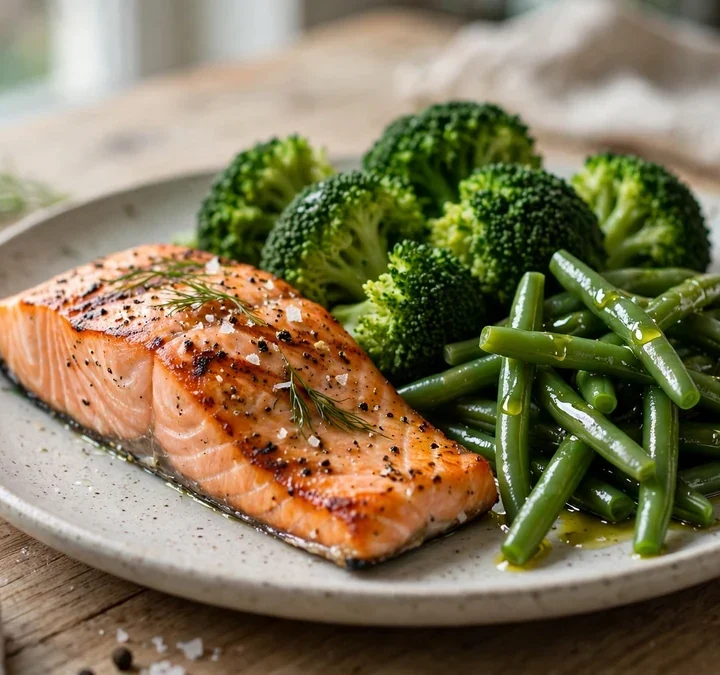
| Dinner | 5 oz cooked salmon; 1 cup cooked broccoli; 1 cup cooked green beans; 1 teaspoon olive oil | about 397 |
| Snacks | 3/4 cup plain nonfat Greek yogurt; 1/2 oz walnuts (about 2 tablespoons chopped); 1 cup strawberries | about 240 |
Day 1 total: about 1524 calories, 138 g protein, 62 g carbohydrate, 83 g fat, 22 g fiber.
Day 2
| Meal | Foods and portions | Calories |
|---|---|---|
| Breakfast | 3/4 cup plain low-fat (2%) Greek yogurt; 1 cup raspberries; 1 oz walnuts (about 1/4 cup) | about 371 |
| Lunch | 1 can tuna in water, drained; 1/2 avocado; 2 cups green leaf lettuce; 1 medium tomato; 1 tablespoon olive oil | about 430 |
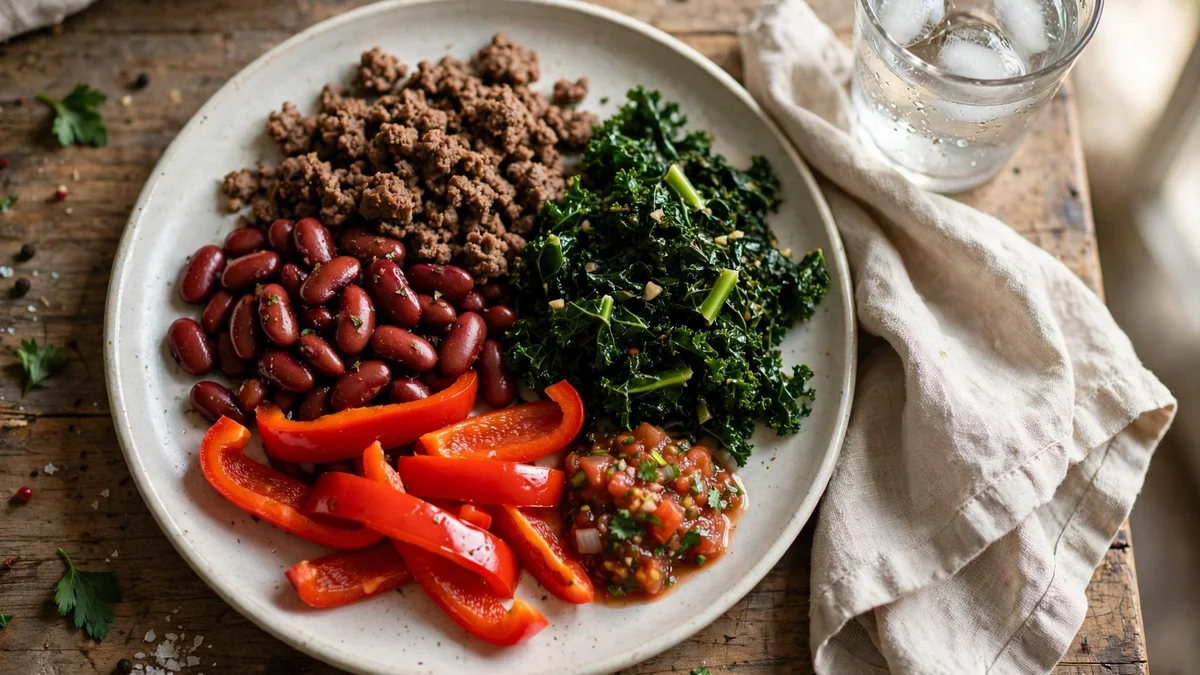
| Dinner | 4 oz cooked lean ground beef (90% lean); 1/2 cup cooked kidney beans; 1 cup cooked kale; 1 medium bell pepper; 1/4 cup salsa | about 454 |
| Snacks | 2 large eggs; 1 medium carrot | about 180 |
Day 2 total: about 1435 calories, 110 g protein, 82 g carbohydrate, 78 g fat, 32 g fiber.
Day 3
| Meal | Foods and portions | Calories |
|---|---|---|
| Breakfast | 2 large eggs; 1 oz part-skim mozzarella; 1 medium bell pepper; 2 cups raw spinach, cooked with the eggs; 1 slice whole-wheat toast | about 356 |
| Lunch | 125 g firm tofu (about 4 1/2 oz); 1 cup cooked broccoli; 1 cup cooked green beans; 1 tablespoon olive oil; 1 medium carrot | about 427 |
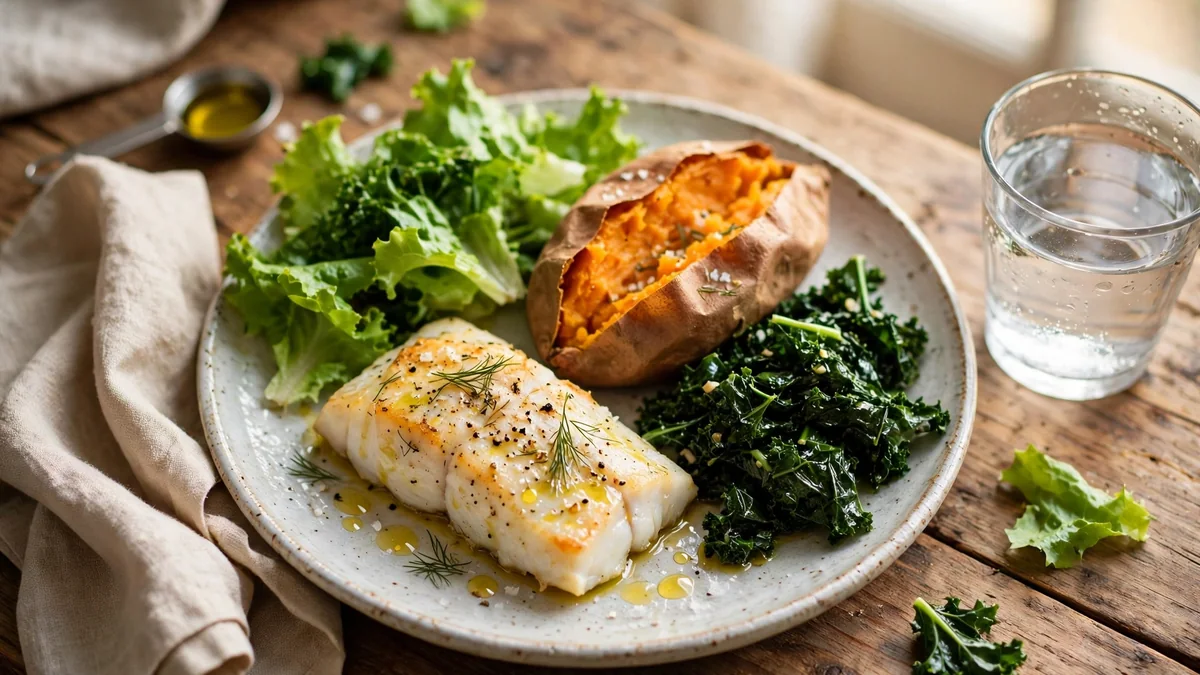
| Dinner | 6 oz cooked cod; 1 medium baked sweet potato; 1 cup cooked kale; 1 teaspoon olive oil; 2 cups green leaf lettuce | about 389 |
| Snacks | 1 cup low-fat cottage cheese; 1 cup strawberries; 1 oz almonds (about 1/4 cup) | about 373 |
Day 3 total: about 1545 calories, 135 g protein, 111 g carbohydrate, 68 g fat, 33 g fiber.
Day 4
| Meal | Foods and portions | Calories |
|---|---|---|
| Breakfast | 1/2 cup dry rolled oats, cooked; 1 tablespoon peanut butter; 3/4 cup skim milk; 1/2 medium banana, sliced | about 364 |
| Lunch | 4 oz cooked turkey breast; 1/2 cup cooked black beans; 1/4 cup salsa; 1/2 avocado; 2 cups green leaf lettuce | about 429 |
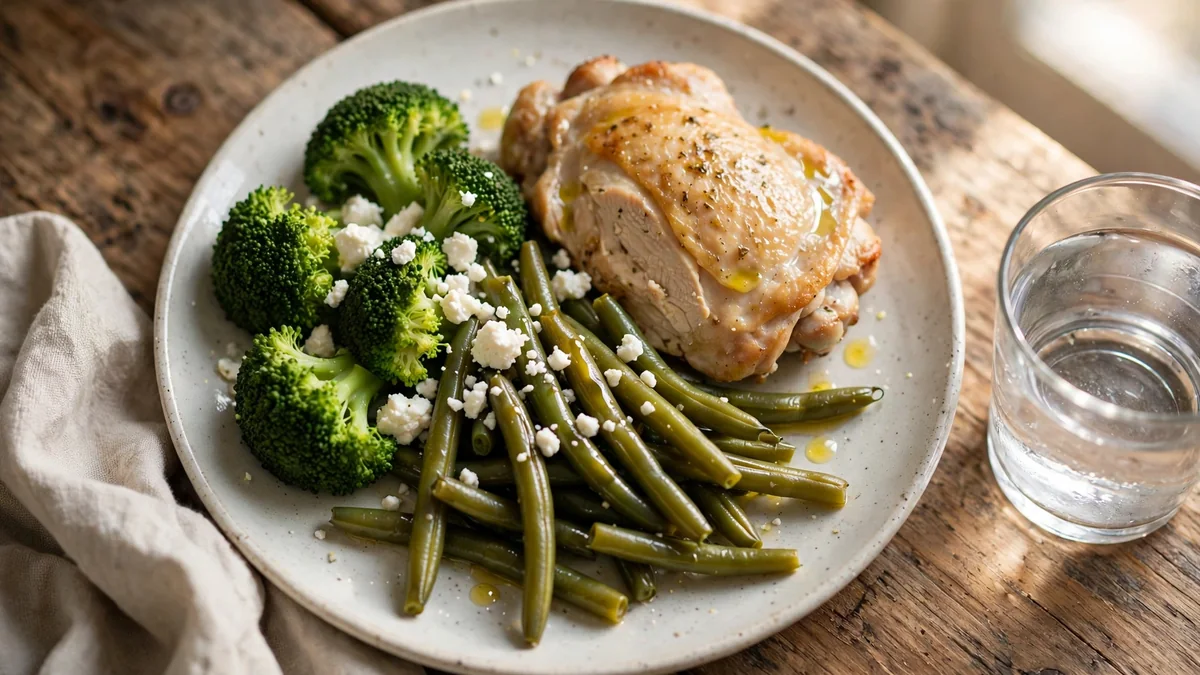
| Dinner | 5 oz cooked chicken thigh, skinless; 1 cup cooked green beans; 1 cup cooked broccoli; 1 teaspoon olive oil; 1 oz feta cheese, crumbled | about 467 |
| Snacks | 3/4 cup plain nonfat Greek yogurt; 1 cup blueberries | about 185 |
Day 4 total: about 1444 calories, 124 g protein, 136 g carbohydrate, 50 g fat, 34 g fiber.
Day 5
| Meal | Foods and portions | Calories |
|---|---|---|
| Breakfast | 3 large eggs; 1/2 avocado; 1 medium tomato | about 375 |
| Lunch | 100 g tempeh (about 3 1/2 oz); 1 cup cooked kale; 1 cup chopped carrots; 1 teaspoon olive oil; 1 oz feta cheese, crumbled | about 416 |
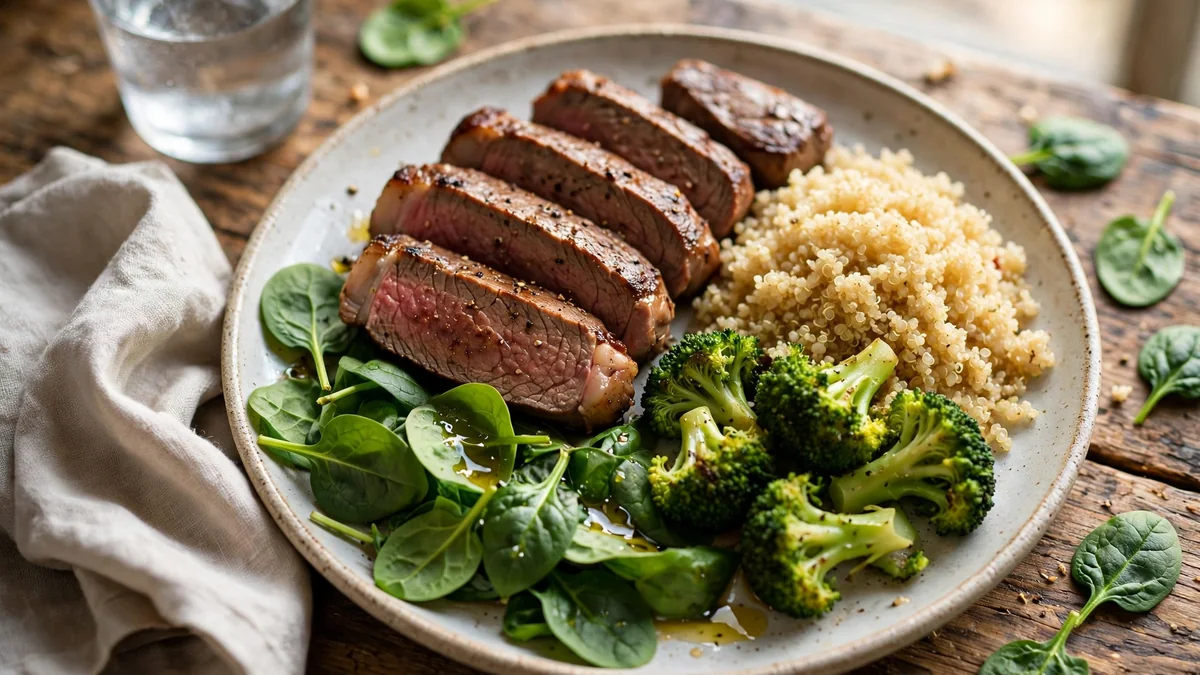
| Dinner | 4 oz cooked beef sirloin; 1/2 cup cooked quinoa; 1 cup cooked broccoli; 2 cups raw spinach; 1 teaspoon olive oil | about 432 |
| Snacks | 1 medium apple; 1 tablespoon peanut butter; 1/2 oz almonds (about 12 almonds) | about 271 |
Day 5 total: about 1494 calories, 101 g protein, 106 g carbohydrate, 80 g fat, 29 g fiber.
Day 6
| Meal | Foods and portions | Calories |
|---|---|---|
| Breakfast | 1 cup plain nonfat Greek yogurt; 1/4 cup granola; 1 cup strawberries | about 340 |
| Lunch | 6 oz cooked shrimp; 2 cups green leaf lettuce; 1/2 avocado; 1 medium tomato; 1 tablespoon olive oil | about 479 |
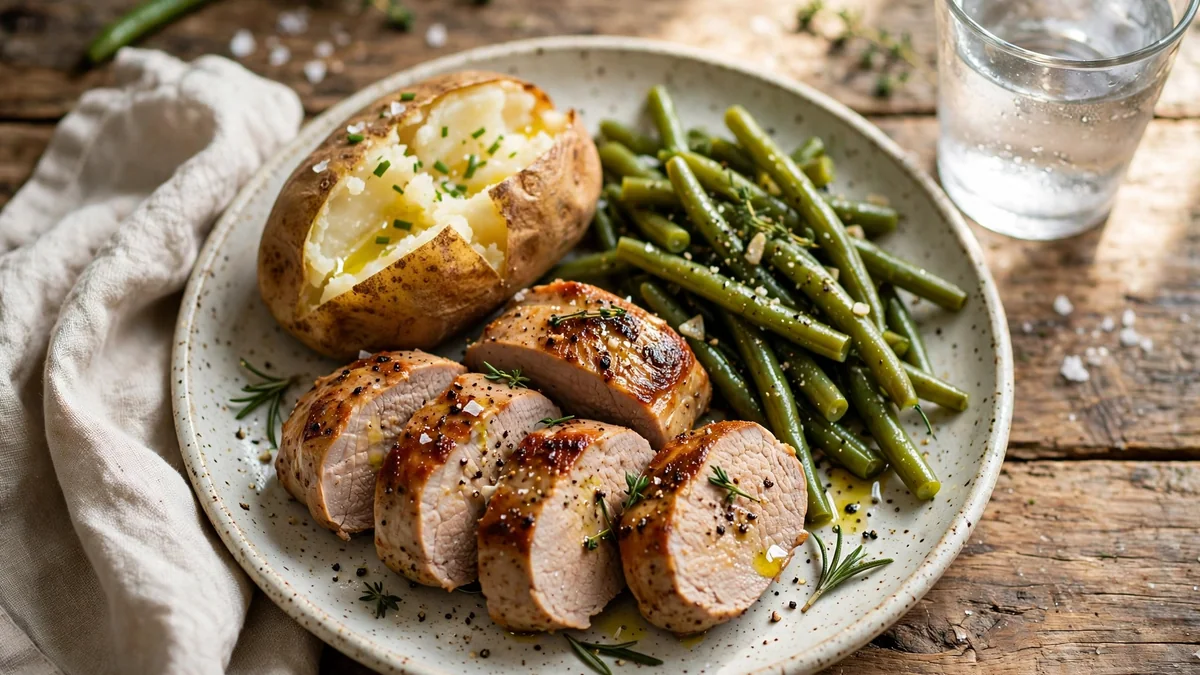
| Dinner | 5 oz cooked pork tenderloin; 1 cup cooked green beans; 1 medium baked potato; 1 teaspoon olive oil | about 437 |
| Snacks | 1 oz dark chocolate (70% cacao); 3/4 cup skim milk | about 232 |
Day 6 total: about 1488 calories, 124 g protein, 118 g carbohydrate, 59 g fat, 23 g fiber.
Day 7
| Meal | Foods and portions | Calories |
|---|---|---|
| Breakfast | 2 large eggs; 1 corn tortilla; 1/2 cup cooked black beans; 1/4 cup salsa; 1 oz cheddar cheese | about 459 |
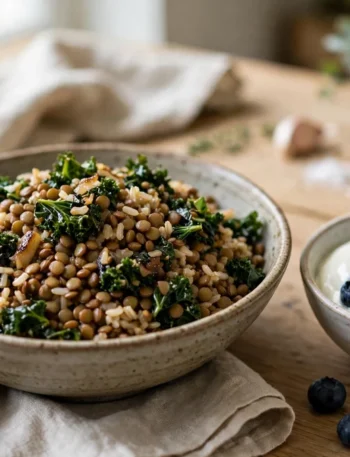
| Lunch | 1 cup cooked lentils; 2 cups raw spinach; 1 medium carrot; 1 teaspoon olive oil; 1 oz feta cheese, crumbled | about 379 |
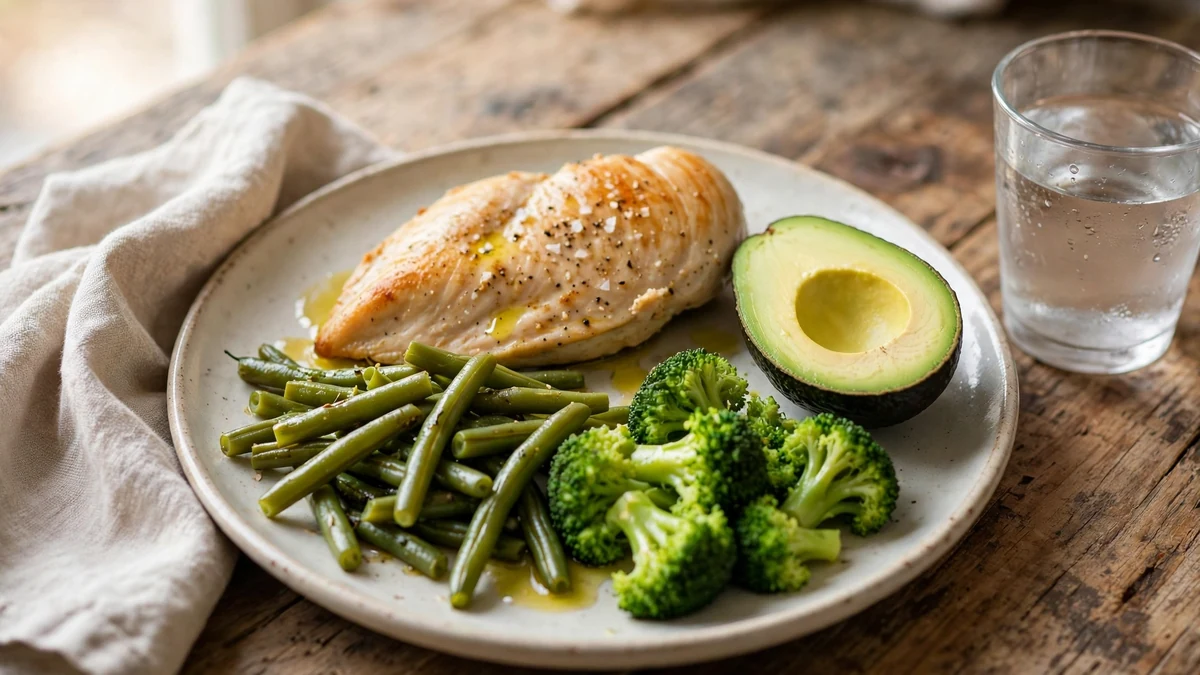
| Dinner | 4 oz cooked chicken breast; 1 cup cooked green beans; 1 cup cooked broccoli; 1/2 avocado; 1 teaspoon olive oil | about 445 |
| Snacks | 1/2 cup low-fat cottage cheese; 1 medium pear | about 183 |
Day 7 total: about 1464 calories, 111 g protein, 143 g carbohydrate, 55 g fat, 49 g fiber.
Grocery list
This list covers the full week for one person following the plan as written.
Produce
- Fresh spinach
- Green leaf lettuce
- Cucumbers
- Tomatoes
- Avocados
- Broccoli
- Green beans
- Kale
- Bell peppers
- Carrots
- Strawberries
- Raspberries
- Blueberries
- Apples
- Pears
- Bananas
- Sweet potatoes
- White potatoes
Meat and seafood
- Chicken breast
- Chicken thighs
- Turkey breast
- Salmon fillets
- Cod fillets
- Shrimp
- Lean ground beef (90% lean)
- Beef sirloin
- Pork tenderloin
- Canned tuna in water
Dairy and eggs
- Large eggs
- Plain nonfat Greek yogurt
- Plain low-fat Greek yogurt
- Low-fat cottage cheese
- Skim milk
- Cheddar cheese
- Part-skim mozzarella
- Feta cheese
Pantry
- Rolled oats
- Quinoa
- Brown rice
- Black beans
- Kidney beans
- Lentils
- Peanut butter
- Olive oil
- Salsa
- Granola
- Dark chocolate (70% cacao)
- Almonds
- Walnuts
Frozen
- Shelled edamame, if you swap it in for a bean lunch
Bakery
- Whole-wheat bread
- Corn tortillas
Meal prep tips
- Cook the chicken breast, chicken thighs, and pork portions in one batch on day 1; most lunches and dinners then only need vegetables.
- Hard boil a dozen eggs at the start of the week for breakfasts and the egg snack on day 2.
- Cook the quinoa and brown rice once, in the plan’s measured amounts, and refrigerate in single portions so the small grain servings stay small.
- Wash the greens and chop the peppers, cucumbers, and carrots ahead; the big salads in this plan assemble in minutes.
- Portion the nuts and dark chocolate into single servings. Both fit the plan and both are easy to overeat from the bag.
Easy swaps
- Swap any 4 to 5 oz cooked meat or fish portion for another in the same range; the plan’s dinners are built to interchange.
- Swap black beans, kidney beans, and lentils for each other in the same amounts on bean days.
- Swap raspberries, blueberries, and strawberries cup for cup at breakfasts and snacks.
- Swap Greek yogurt for low-fat cottage cheese in the same amount at breakfasts and snacks.
- Swap the cod dinner on day 3 for the same weight of salmon if cod is not available; the day total rises slightly and stays in range for most people.
- Swap avocado for 1 oz of cheddar or feta in the salads if avocados are poor quality or expensive that week.
How to adjust the calories safely
If this plan leaves you persistently hungry, low on energy, or losing faster than about 2 pounds a week, add food. To add roughly 200 to 300 calories a day using foods already in the plan, choose one: 1 oz of almonds (about 162 calories) plus 1 teaspoon of olive oil on your vegetables (about 40 calories); or 3/4 cup of plain nonfat Greek yogurt (about 100 calories) plus 1 tablespoon of peanut butter (about 96 calories); or an extra 1/2 avocado across the day’s meals (about 120 calories) plus a large egg (about 78 calories).
Never go below 1,200 calories a day for women or 1,500 calories a day for men. Because this plan is written at the men’s floor of 1,500, men should add one of the options above every day, and taller or very active adults should do the same when the plan is not enough.
Common mistakes
- Cutting carbohydrate further on your own. This plan is already the moderate version; removing the beans, fruit, and grains it keeps can leave fiber and energy too low.
- Replacing starch with unlimited cheese, nuts, and oil. Those foods fit the plan in measured amounts and are calorie dense enough to stall weight loss when poured freely.
- Skipping vegetables because the plan is lower carb. Non-starchy vegetables are the bulk of these plates and a main source of fiber.
- Forgetting the snack. The snack is part of the calorie design; skipping it usually leads to a much larger dinner.
- Judging the plan on day one. Appetite and energy take a few days to settle when carbohydrate intake drops; give it most of the week.
Pair it with a workout
Regular movement supports weight loss on any eating pattern. Browse the walking plans and beginner strength routines in our Exercise and Workouts category, start with the level that matches your current fitness, and build up gradually. Keep sessions moderate in the first week on a new eating pattern. Stop any exercise that causes pain, dizziness, or chest pain, and check with your doctor before starting if you have been inactive or have any medical condition.
Frequently asked questions
How many carbohydrates a day is this plan?
About 108 grams a day on average, with individual days ranging from about 60 to about 145 grams. That is well below a typical eating pattern but far above a ketogenic level, which is the point of the moderate design.
Is this a keto plan?
No. Ketogenic plans remove beans, most fruit, and grains almost entirely. This plan keeps all three in measured amounts, which keeps fiber up and makes the week easier to repeat.
How is this different from the high-protein plan on this site?
Our 7-Day High-Protein Meal Plan for Weight Loss is organized around a protein target and uses standard portions of grains and potatoes. This plan is organized around carbohydrate level instead: starch servings are smaller, and vegetables, eggs, cheese, and olive oil take their place. The menus are completely different.
Why are beans and fruit in a low carb plan?
Beans bring fiber and protein at a moderate carbohydrate cost, and whole fruit brings fiber and nutrients that juice and sweets do not. A moderate plan keeps both because they make the pattern healthier and easier to sustain.
I take blood sugar medication. Can I follow this plan?
Only after your doctor or registered dietitian has reviewed it. Lowering carbohydrate intake can change blood sugar and medication needs, sometimes quickly. Bring this page to your appointment and follow your care team’s advice over anything written here.
Can I repeat this week?
Yes. The seven days are self-contained and balanced, so you can repeat the week or rotate it with other plans in our By Diet Style collection. If you repeat it for several weeks, vary the proteins and vegetables using the swaps list to keep meals interesting.
Sources and further reading
- USDA FoodData Central, the source for every calorie and nutrient value in this plan: fdc.nal.usda.gov
- Dietary Guidelines for Americans, for the healthy eating patterns behind this plan: dietaryguidelines.gov
- MedlinePlus, for plain language background on low carbohydrate diets and diabetes: medlineplus.gov
- Centers for Disease Control and Prevention, for healthy weight and diabetes prevention guidance: cdc.gov
- MyPlate, for balanced plate ideas built from the same food groups: myplate.gov
This article is for general educational purposes only and is not medical, nutrition, or fitness advice. Talk with your doctor or a registered dietitian before changing your diet or starting an exercise program.