Prints just the plan, like a recipe card.
Last updated: November 22, 2026.
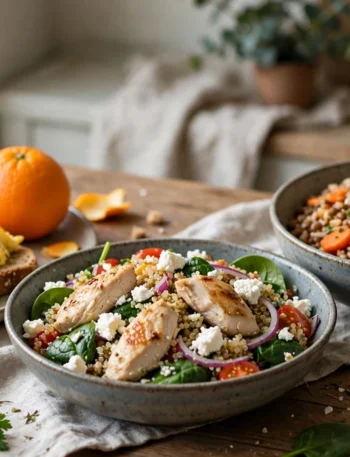
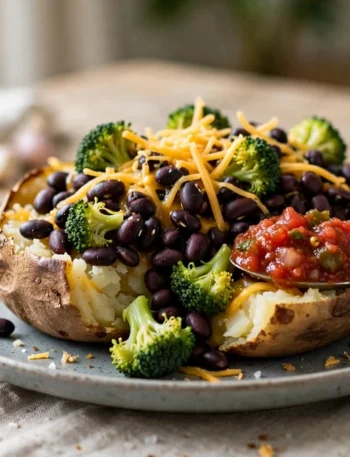
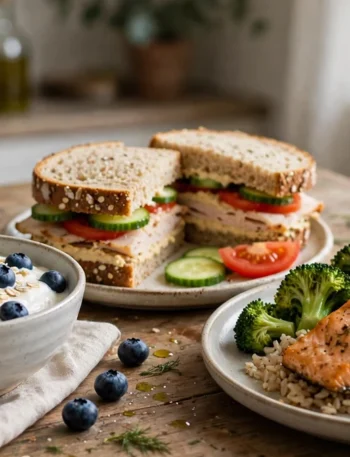
This volume eating meal plan lays out a full week at about 1,500 calories a day, with exact foods and US portions for breakfast, lunch, dinner, and a snack every day. The idea is simple: meals are built big, with large portions of foods that carry few calories per bite, such as vegetables, salads, soups, and fruit, while calorie-dense foods like oils, nuts, and cheese stay measured. Every calorie and macro number on this page was calculated from USDA FoodData Central values for the portions listed.
Protein averages about 116 grams a day and fiber about 42 grams a day, because volume alone is not enough; protein and fiber are what keep a big plate satisfying. At 1,500 calories, it is sized for gradual loss of about 1 to 2 pounds a week for many adults, though your own rate may vary and no plan can promise a result.
You will find more eating styles in our By Diet Style collection, part of the full Diet Plans library. If protein is your main concern, our 7-Day High-Protein Meal Plan for Weight Loss covers the same goal from that angle, with a completely different menu.
Who this plan is for, and who should not follow it
This plan is for adults who struggle with small portions and want plates that look and feel generous while they lose weight. It suits people who like salads, soups, and cooked vegetables, and who would rather eat a large bowl of the right foods than a small portion of rich ones.
Volume eating still depends on measuring the dense foods: oils, nuts, nut butters, cheese, and granola carry several hundred calories, and they are portioned here. This plan is not a license to eat unlimited amounts of everything; the low-calorie-density foods are the ones served large. If you have diabetes, kidney disease, or another condition affected by food, or you take medication that food or weight change can affect, review this plan with your doctor and a registered dietitian before you start. Do not follow this plan if you are under 18, pregnant, or breastfeeding. This page is general education, not medical advice.
If you have a history of disordered eating, talk with a doctor or a registered dietitian before following any diet plan. For eating disorder support in the US, visit the National Alliance for Eating Disorders at allianceforeatingdisorders.com.
Plan overview
| Measure | Amount |
|---|---|
| Target calories per day | about 1,500 |
| Average calories per day (as written) | about 1472 |
| Average protein per day | about 116 g |
| Average carbohydrate per day | about 188 g |
| Average fat per day | about 35 g |
| Average fiber per day | about 42 g |
| Meals per day | 4 (breakfast, lunch, dinner, and snacks) |
Vegetables or salad appear in large portions at lunch and dinner every day, soups appear twice, and snacks lean on fruit, yogurt, cottage cheese, and air-popped popcorn.
How this volume eating meal plan keeps portions big
Calorie density is the whole game. Broccoli, green beans, salads, and soups deliver a full plate for the calories in a few bites of cheese or oil, so this plan serves them at double the usual portion: two cups of vegetables at dinner, salads built on four cups of greens, and soup lunches built on beans and vegetables. Water-rich foods do most of this work, since water adds weight and volume without calories.
What volume eating does not mean is that dense foods disappear. A teaspoon or two of olive oil, a measured ounce of cheese, and a tablespoon of peanut butter still show up, because meals need some fat and richness to be satisfying. They are simply kept at the measured amounts in the tables.
The 7-day meal plan
Portions are given in US household measures. Cook poultry, beef, and pork thoroughly, refrigerate leftovers within 2 hours, and rinse canned beans to reduce sodium.
Day 1
| Meal | What to eat | Calories |
|---|---|---|
| Breakfast | 1 large egg; 3 large egg whites; 2 cups fresh spinach; 1 medium tomato; 1 slice whole-wheat bread; 1 cup strawberries; 3/4 cup plain nonfat Greek yogurt | about 394 |
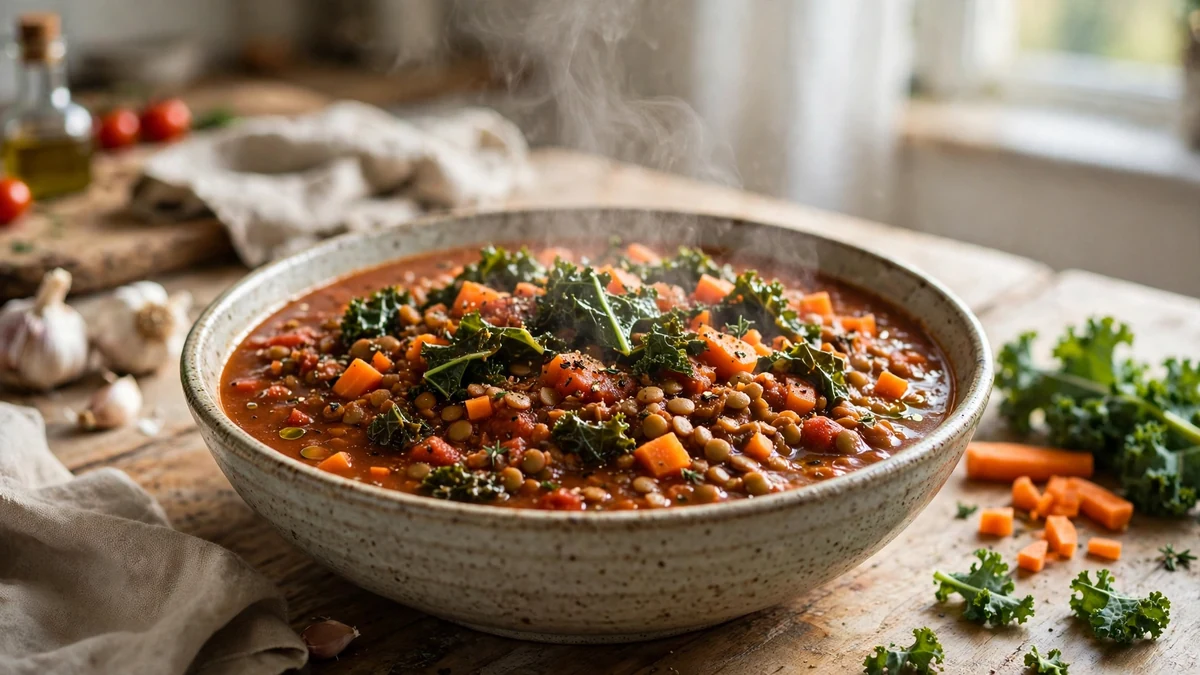
| Lunch | 1 cup cooked lentils; 1 cup crushed canned tomatoes; 1 cup chopped carrots; 1 cup cooked kale; 1 teaspoon olive oil | about 452 |
| Dinner | 5 oz cooked chicken breast; 2 cups cooked broccoli; 4 cups green leaf lettuce; 1/2 cucumber; 1 teaspoon olive oil | about 420 |
| Snacks | 3 cups air-popped popcorn; 1 medium apple | about 188 |
Day 1 total: about 1454 calories, 127 g protein, 189 g carbohydrate, 29 g fat, 55 g fiber.
Day 2
| Meal | What to eat | Calories |
|---|---|---|
| Breakfast | 1 cup plain nonfat Greek yogurt; 1 cup raspberries; 1/2 cup dry rolled oats | about 360 |
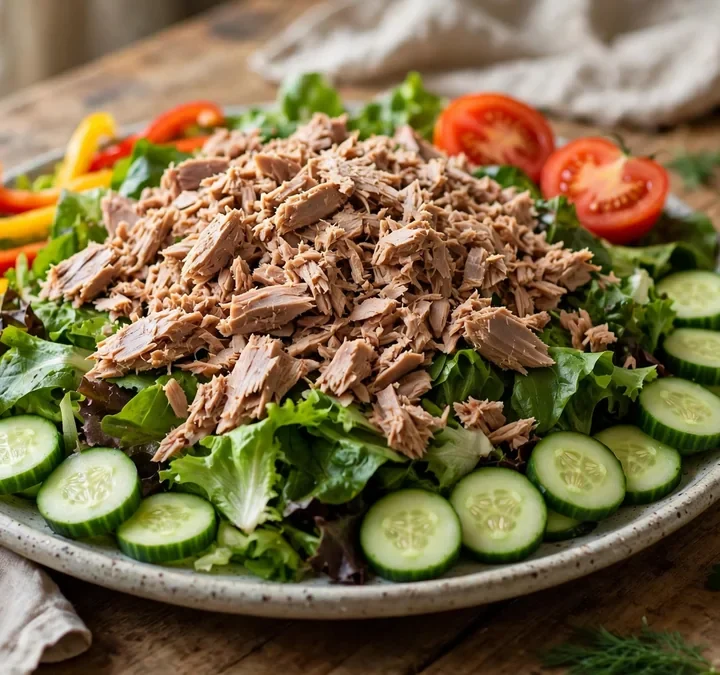
| Lunch | 1 can tuna in water, drained; 4 cups green leaf lettuce; 1 cucumber; 2 medium tomatoes; 1 medium bell pepper; 2 tablespoons hummus; 1 teaspoon olive oil; 1 slice whole-wheat bread | about 447 |
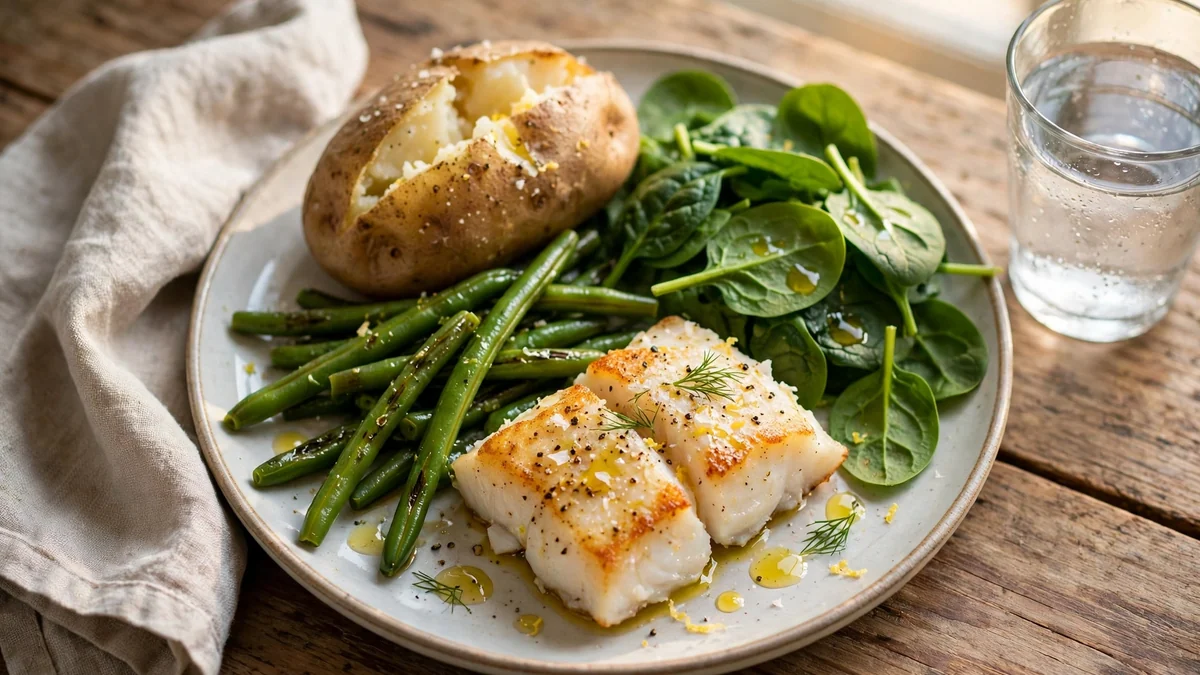
| Dinner | 6 oz cooked cod; 2 cups cooked green beans; 1 medium baked potato; 2 cups fresh spinach; 2 teaspoons olive oil | about 510 |
| Snacks | 1 orange; 1/2 cup low-fat cottage cheese | about 143 |
Day 2 total: about 1460 calories, 136 g protein, 171 g carbohydrate, 30 g fat, 39 g fiber.
Day 3
| Meal | What to eat | Calories |
|---|---|---|
| Breakfast | 1/2 cup dry rolled oats; 1 cup skim milk; 1 cup blueberries; 1 large egg | about 399 |
| Lunch | 1 cup cooked black beans; 1 cup crushed canned tomatoes; 2/3 cup cooked corn; 1 medium bell pepper; 2 cups fresh spinach; 1/4 cup salsa | about 456 |
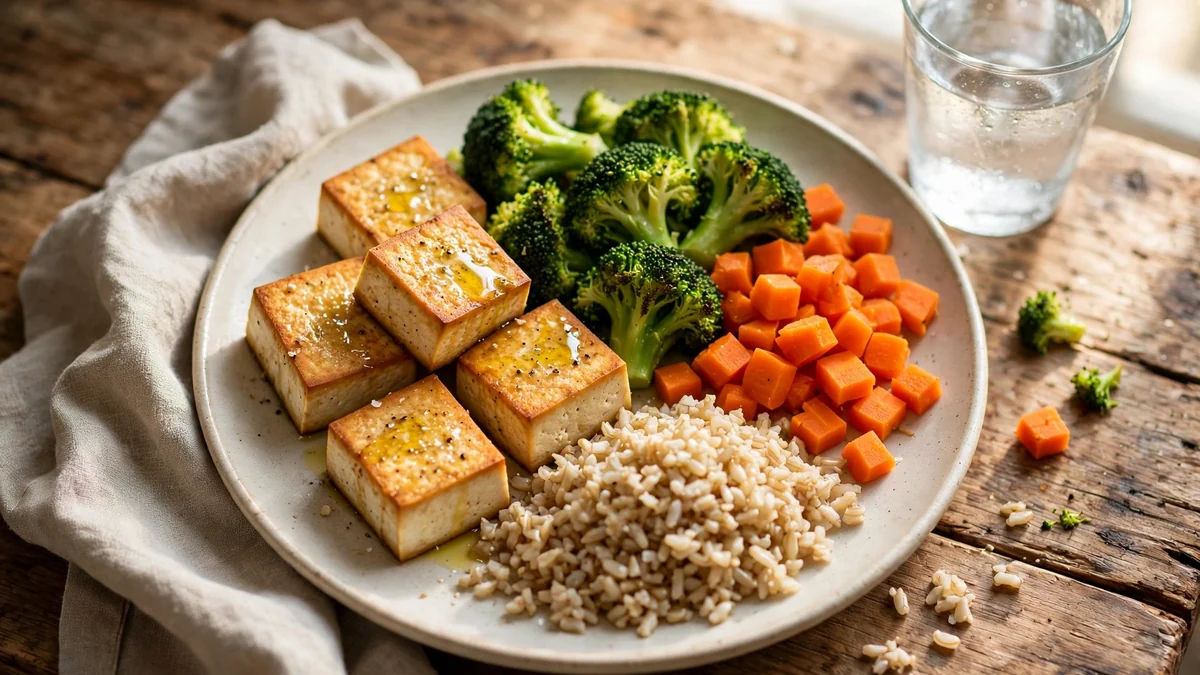
| Dinner | 125 g firm tofu (about 4 1/2 oz); 1 cup cooked broccoli; 1 cup chopped carrots; 1/2 cup cooked brown rice; 1 teaspoon olive oil | about 441 |
| Snacks | 2 cups strawberries; 1/3 cup plain nonfat Greek yogurt | about 147 |
Day 3 total: about 1444 calories, 87 g protein, 229 g carbohydrate, 31 g fat, 53 g fiber.
Day 4
| Meal | What to eat | Calories |
|---|---|---|
| Breakfast | 2 large eggs; 2 large egg whites; 1 medium bell pepper; 1 medium tomato; 2 slices whole-wheat bread | about 397 |
| Lunch | 1 cup cooked chickpeas; 1 cucumber; 1 medium tomato; 4 cups green leaf lettuce; 1 oz feta cheese; 1 teaspoon olive oil | about 457 |
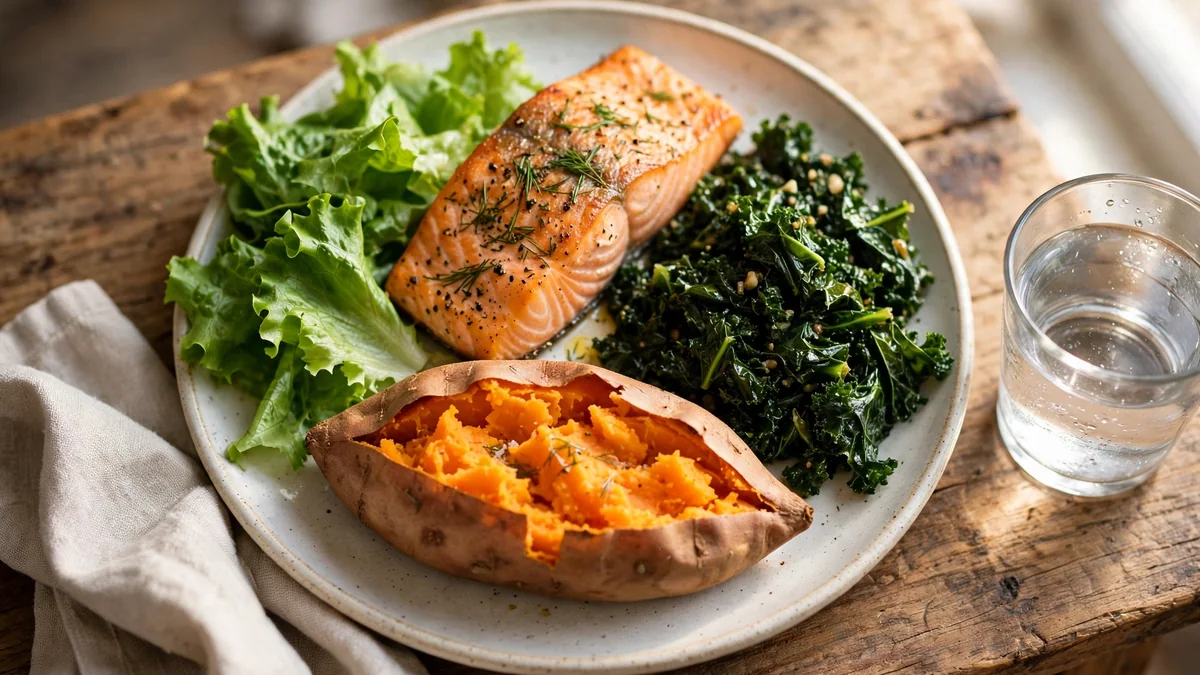
| Dinner | 5 oz cooked salmon; 1 cup cooked kale; 1 medium baked sweet potato; 2 cups green leaf lettuce | about 429 |
| Snacks | 1 medium pear; 3 cups air-popped popcorn | about 194 |
Day 4 total: about 1477 calories, 100 g protein, 180 g carbohydrate, 44 g fat, 41 g fiber.
Day 5
| Meal | What to eat | Calories |
|---|---|---|
| Breakfast | 1 cup low-fat cottage cheese; 1 cup strawberries; 1 medium banana; 1 slice whole-wheat bread | about 397 |
| Lunch | 4 oz cooked turkey breast; 4 cups green leaf lettuce; 1/2 cucumber; 1 medium tomato; 1 cup chopped carrots; 1/4 cup hummus; 1 corn tortilla | about 440 |
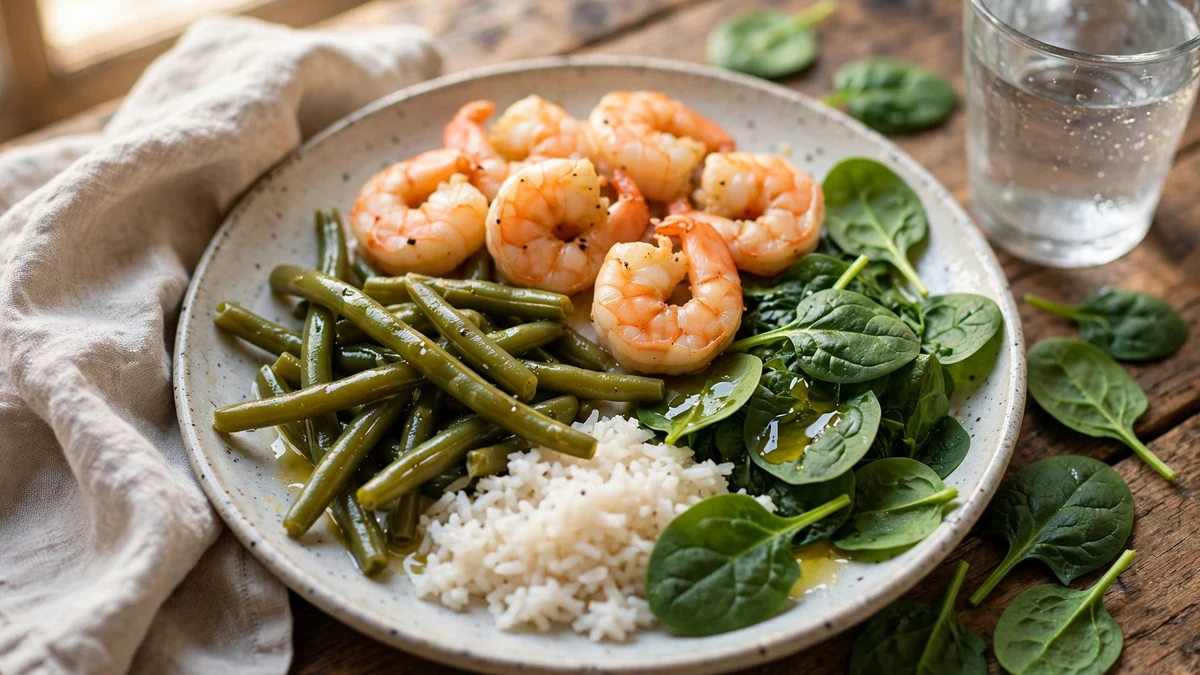
| Dinner | 6 oz cooked shrimp; 2 cups cooked green beans; 1/2 cup cooked white rice; 2 cups fresh spinach; 1 teaspoon olive oil | about 464 |
| Snacks | 1 cup grapes; 1/3 cup plain nonfat Greek yogurt | about 154 |
Day 5 total: about 1456 calories, 135 g protein, 188 g carbohydrate, 23 g fat, 31 g fiber.
Day 6
| Meal | What to eat | Calories |
|---|---|---|
| Breakfast | 1 cup plain low-fat Greek yogurt; 1 cup strawberries; 1/4 cup granola | about 374 |
| Lunch | 4 oz cooked chicken breast; 1 cup crushed canned tomatoes; 1/2 cup cooked kidney beans; 1 cup chopped carrots; 2 cups fresh spinach; 1 teaspoon olive oil | about 481 |
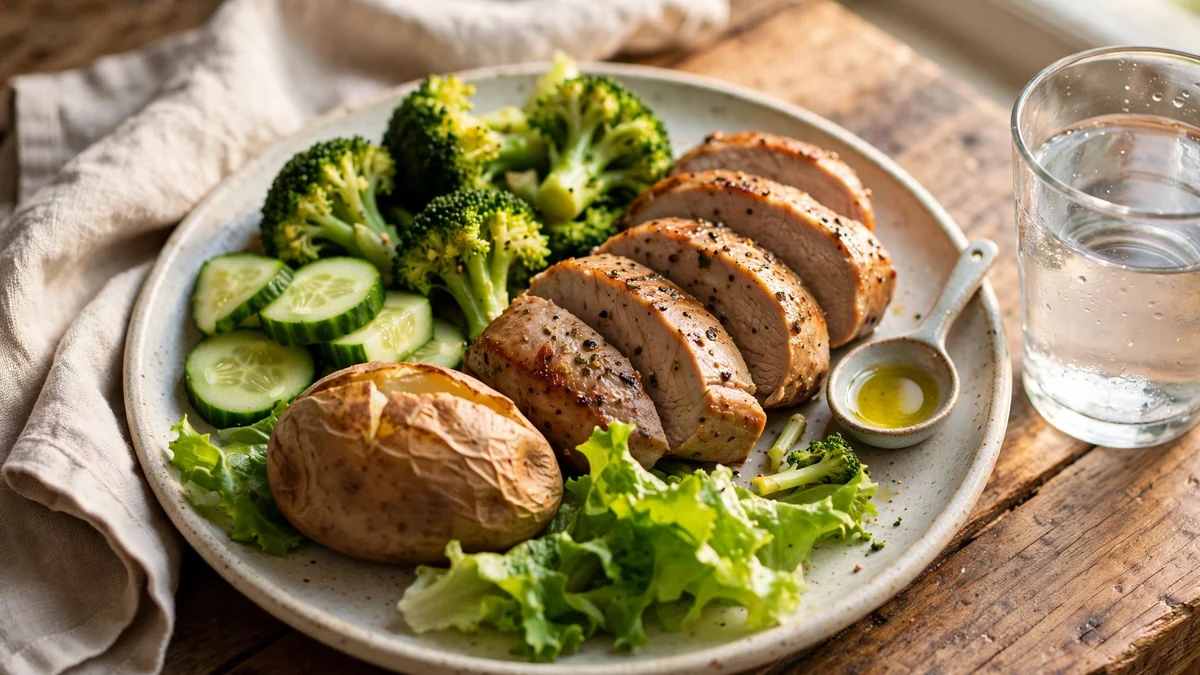
| Dinner | 4 oz cooked pork tenderloin; 2 cups cooked broccoli; 1/2 cucumber; 2 cups green leaf lettuce; 1 medium baked potato; 1 teaspoon olive oil | about 487 |
| Snacks | 1 medium apple; 1 tablespoon peanut butter | about 190 |
Day 6 total: about 1532 calories, 126 g protein, 180 g carbohydrate, 41 g fat, 42 g fiber.
Day 7
| Meal | What to eat | Calories |
|---|---|---|
| Breakfast | 2 large eggs; 2 cups fresh spinach; 1 medium tomato; 1 slice whole-wheat bread; 1 orange; 1 cup skim milk | about 419 |
| Lunch | 1 cup shelled edamame; 1/2 cup cooked brown rice; 1 cup chopped carrots; 1/2 cucumber; 1 medium bell pepper; 1 teaspoon olive oil | about 433 |
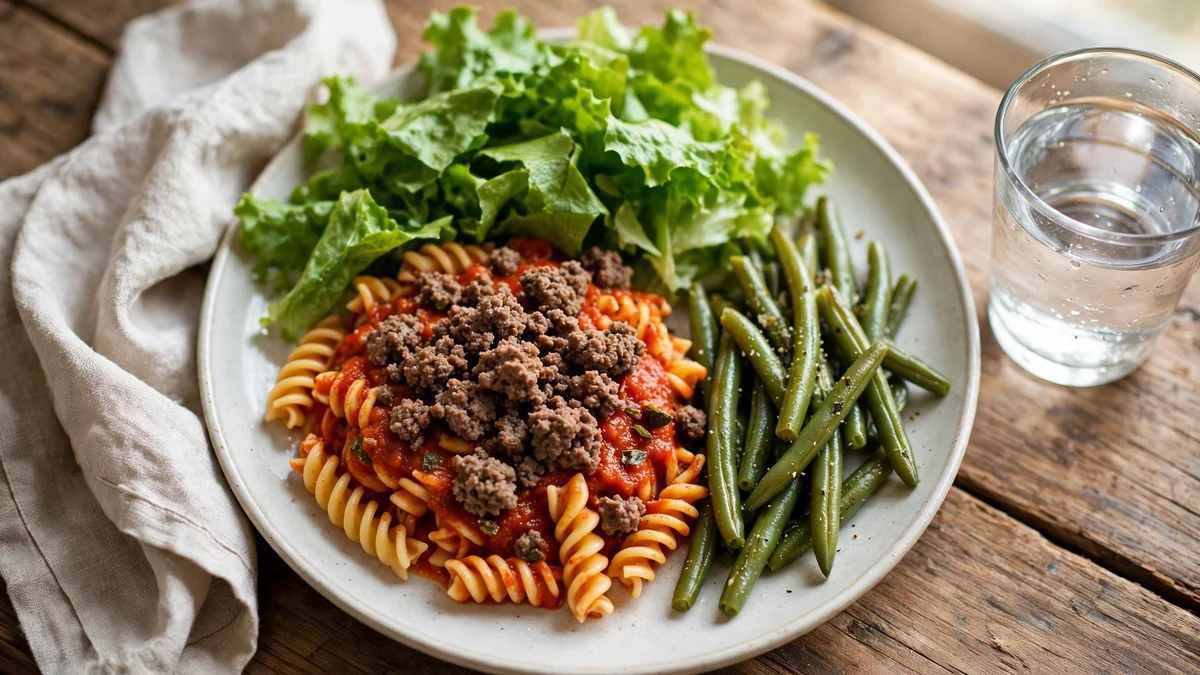
| Dinner | 4 oz cooked lean ground beef (90% lean); 1/2 cup marinara sauce; 1/2 cup cooked pasta; 4 cups green leaf lettuce; 1 cup cooked green beans | about 484 |
| Snacks | 1 medium banana; 1/4 cup low-fat cottage cheese | about 145 |
Day 7 total: about 1481 calories, 101 g protein, 181 g carbohydrate, 44 g fat, 36 g fiber.
Grocery list
This list covers the full week for one person, following the portions in the plan. Buy vegetables generously; this plan uses more produce than most.
Produce
- Large amounts of green leaf lettuce and fresh spinach
- Broccoli, green beans, and kale
- Sweet potatoes and white potatoes
- Carrots, cucumbers, tomatoes, and bell peppers
- Strawberries, raspberries, blueberries, and grapes
- Apples, pears, bananas, and oranges
Meat and seafood
- Chicken breast
- Turkey breast
- Cod fillets and shrimp
- Salmon fillets
- Pork tenderloin
- Lean ground beef (90% lean)
- Canned tuna in water
- Firm tofu
- Shelled edamame
Dairy and eggs
- Large eggs and egg whites
- Plain nonfat and low-fat Greek yogurt
- Low-fat cottage cheese
- Skim milk
- Feta cheese
Pantry
- Rolled oats and granola
- Brown rice, white rice, and pasta
- Lentils, black beans, kidney beans, and chickpeas (dry or canned)
- Crushed canned tomatoes, marinara sauce, and salsa
- Hummus
- Peanut butter
- Olive oil
- Corn tortillas
- Popcorn for air-popping
Frozen
- Frozen shelled edamame, if not bought fresh
- Frozen green beans or broccoli as a backup for fresh
Bakery
- Whole-wheat bread
Meal prep tips
- Make a big pot of lentil and tomato soup on day 1; it reheats perfectly and covers the busiest lunch.
- Wash and dry a large batch of greens on day 1, stored with a paper towel, so four-cup salads take two minutes.
- Cook brown rice and white rice in one session and refrigerate in measured portions.
- Chop cucumbers, peppers, and carrots into sticks and keep them at eye level in the refrigerator for plates and snacks.
- Bake potatoes and sweet potatoes ahead; they anchor several dinners.
- Portion the dense foods, oil, cheese, nuts, and granola, before the week starts, so only the big-volume foods are served freely.
Easy swaps
- Swap the two-cup vegetable sides for each other: broccoli, green beans, kale, and spinach carry similar calories.
- Swap cod, shrimp, and salmon for each other in the same portion; calories stay close.
- Swap black beans, kidney beans, chickpeas, and lentils for each other in equal portions in the soups and bowls.
- Swap strawberries, raspberries, and blueberries for each other, cup for cup, including the two-cup snack.
- Swap Greek yogurt and low-fat cottage cheese for each other at breakfasts and snacks.
- Swap chicken breast and turkey breast for each other, ounce for ounce.
How to adjust the calories safely
This plan averages about 1472 calories a day. If you are a man, if you are tall or active, or if you are losing weight faster than about 1 to 2 pounds a week, add about 200 to 300 calories a day as dense foods, not more volume: 2 tablespoons of peanut butter (about 191 calories) with a banana (about 105 calories); or 1 cup of cooked quinoa (about 222 calories) at a dinner; or 1 oz of walnuts (about 183 calories) plus an orange (about 62 calories). Piling on more vegetables will fill you up without fixing an energy shortfall.
Never go below 1,200 calories a day for women or 1,500 calories a day for men. Men using this plan should use the additions above to stay at or above 1,500 calories, and most men will feel and do better higher than that, based on size and activity.
Common mistakes
- Treating every food as a volume food. Oil, nuts, cheese, and granola are calorie-dense; at unmeasured amounts they erase the plan’s deficit.
- Building volume only from raw salads and feeling hungry an hour later. The plan’s soups, cooked vegetables, potatoes, and protein are what make the approach last all day.
- Skipping protein to save room for more vegetables. Protein averages about 116 grams a day here for a reason; it is what keeps you full between meals.
- Drinking calories alongside big meals. Juice and soda add up fast and do not fill you up.
- Eating past comfortable fullness because the food is low in calories. Volume eating works by reaching comfortable fullness sooner, not by stretching it.
Pair it with a workout
Food is only half of a weight loss week. Pair this plan with the walking plans and beginner strength routines in our Exercise and Workouts category, building up gradually and stopping any exercise that causes pain, dizziness, or chest pain. A 10 to 15 minute walk after a big dinner is an easy place to start.
Frequently asked questions
What is volume eating, in plain terms?
It means building meals mostly from foods with low calorie density: foods that give you a lot of bites for few calories, like vegetables, salads, soups, and fruit, because they are mostly water and fiber. Dense foods like oils, nuts, and cheese are still included, in measured amounts.
Will I actually feel full on 1,500 calories?
Most people find these meals surprisingly filling, because the plates are large and the week averages about 116 grams of protein and 42 grams of fiber a day. Hunger in the first few days is common on any plan; if it stays strong after a week, use the adjustment section to add 200 to 300 calories.
Can I eat unlimited amounts of the low-calorie foods?
No. The portions in the tables are already large; doubling them still adds calories, and eating far past comfortable fullness works against the habit you are building. Follow the written portions, including for vegetables and fruit.
Do I have to eat salad every day?
No. Salads are one tool here, but soups, cooked vegetable plates, potatoes, and fruit snacks carry just as much of the week. Days 1, 3, and 6 lean on soup and cooked vegetables rather than raw salads.
Is 1,500 calories the right level for me?
It suits many women for gradual weight loss. It is the floor for men, not a target: men should use the adjustment section to add 200 to 300 calories a day, and anyone who feels weak, constantly hungry, or is losing faster than about 1 to 2 pounds a week should eat more and talk with a clinician.
Sources and further reading
- USDA FoodData Central, the source for every calorie and nutrient value in this plan: fdc.nal.usda.gov
- Dietary Guidelines for Americans, for the overall healthy eating pattern this plan follows: dietaryguidelines.gov
- MyPlate, for balanced plate ideas built from the same food groups: myplate.gov
- Centers for Disease Control and Prevention, for healthy weight guidance: cdc.gov
- MedlinePlus, for plain language background on healthy weight and portion control: medlineplus.gov
This article is for general educational purposes only and is not medical, nutrition, or fitness advice. Talk with your doctor or a registered dietitian before changing your diet or starting an exercise program.