
Prints just the plan, like a recipe card.
Last updated: November 23, 2026.
The alarm goes off, the house is quiet, and you have a choice: scroll your phone in bed, or get up and move before the day starts making demands. If you have been thinking about a morning walking routine, that quiet half hour before everyone else wakes up might be the most reliable exercise slot you will ever find.
This morning walking routine takes about 25 minutes from door to door: 5 minutes of gentle preparation at home, then a walk built as 5 slow minutes, 15 comfortable minutes, and a slow finish. It is designed for beginners, needs nothing but shoes and a safe route, and it is realistic about groggy starts. The first few minutes are meant to feel easy, because at 6 a.m., they should.
This workout sits in our Exercise and Workouts collection, alongside walking plans for every schedule. If you are resetting your habits overall, it pairs well with the 7-Day Beginner Reset Meal Plan in our Diet Plans library, a gentle week of structured eating to match your new morning habit.
Key takeaways
- The routine takes about 25 minutes: a few prep minutes at home, then a 20-minute walk.
- Lay out shoes and clothes the night before. Morning willpower is a rumor; preparation is real.
- Start painfully slow. Your pace in minute 2 says nothing about minute 15.
- Keep the same wake-up time on weekdays so the habit becomes automatic.
- A missed morning is data, not failure. Adjust the alarm, not your opinion of yourself.
Who this workout is for, and who should check with a doctor first
This routine is for adults who want exercise done before work, school runs, and appointments can crowd it out. It suits beginners because the walk itself is moderate and the total time is short. It also suits people whose evenings reliably fall apart, which is most people.
Check with your doctor before starting if you have been inactive for a long time, have a heart condition or a history of chest pain, have joint problems, are pregnant, or have had recent surgery or an injury. If you take medication that affects blood sugar or blood pressure, ask your doctor whether early-morning exercise before breakfast needs any special planning for you.
If you have a history of disordered eating, talk with a doctor or a registered dietitian before following any diet plan. For eating disorder support in the US, visit the National Alliance for Eating Disorders at allianceforeatingdisorders.com.
What you need
- Walking shoes and clothes laid out the night before, where you will see them
- A safe, familiar route you could walk half asleep, well lit in darker months
- Reflective clothing or a small light if you walk before sunrise near traffic
- A glass of water before you leave
- Optional: a headlamp in winter, and a dog who will consider this the best idea ever
Before you head out: the 5-minute home prep
Do not go from pillow to pavement at full speed. While the coffee brews or the kettle heats, move gently: 1 minute of easy marching in place, 10 slow shoulder rolls each direction, 10 gentle ankle circles per foot, and a few easy sit-to-stands from a chair. Sip water. Your joints, which have been still for 7 or 8 hours, will thank you on the first hill.
Warm-up (5 minutes)
The first 5 minutes of the walk itself are your warm-up, and they should feel almost too easy.
- Minutes 1 to 2: shuffle pace. Walk slowly, shorter steps, arms loose. Let your eyes adjust to the light.
- Minutes 3 to 4: easy pace. Lengthen your stride a little. Breathe deeply and roll your shoulders back.
- Minute 5: build. Ease up toward your comfortable pace as your body wakes up.
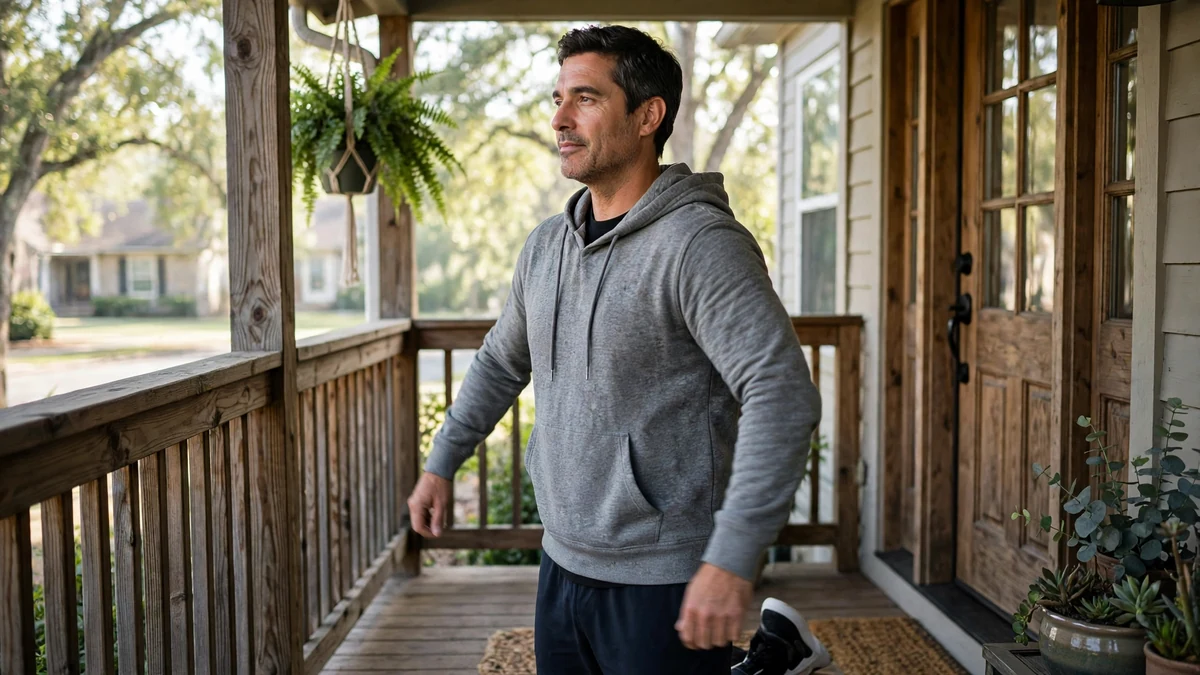
The morning walk
The working part of the walk is 15 minutes at a comfortable pace, with an optional brisk stretch in the middle once the routine feels familiar. Here is the whole outing at a glance.
| Segment | Time | Effort |
|---|---|---|
| Home prep | About 5 minutes | Gentle movement |
| Warm-up walk | 5 minutes | Slow to easy |
| Main walk | 10 minutes | Comfortable, short sentences |
| Optional brisk stretch | 3 minutes | Purposeful |
| Main walk | 2 minutes | Comfortable |
| Cool-down walk | 5 minutes | Slow |
The comfortable main walk
Settle into a pace where you can speak in short sentences. Look around, breathe the cool air, and let your mind plan the day or wander. This is the steady heart of the routine, and it should feel sustainable enough that you could keep going when the timer says stop.
Easier: Keep the whole middle at an easy pace for the first week or two. Harder: Extend the main walk by 5 minutes when mornings allow.
The optional brisk stretch
Once the routine feels easy, usually after a week or two, make the middle 3 minutes brisk: quicker steps, arms pumping, breathing harder, talking limited to a few words. Then return to your comfortable pace. This short lift wakes you up better than a second snooze ever did, and it gently raises the workout’s effect without adding time.
Easier: Skip it entirely on tired mornings, no guilt attached. Harder: Add a second brisk stretch of 2 minutes near the end of the main walk.
Cool-down and stretching
Walk the last 5 minutes slowly, arriving home breathing normally. While breakfast gets started, stretch for 2 to 3 minutes, holding each stretch about 30 seconds per side.
- Calf stretch against the kitchen counter or a wall, back heel down.
- Standing thigh stretch holding the counter for balance.
- Chest opener: hands clasped behind your back, gentle lift, deep breaths.
- Neck rolls: slow half-circles, ear toward shoulder, to undo a night of pillow posture.
How to progress
Protect the habit first and the workout second. Week 1: walk 3 mornings, easy pace, and learn what wake-up time actually works. Week 2: walk 4 mornings and add the brisk stretch. Week 3: hold 4 mornings and extend the main walk to 20 minutes if your schedule allows. Week 4 and beyond: choose your growth, either a fifth morning or longer walks, not both at once. Keep one sleep-in morning a week if you love it; a routine with a pressure valve lasts longer than a perfect streak. Over time these morning sessions add up toward the general weekly activity targets described in the Sources section.
Safety notes
- Stop and rest right away if you feel pain, dizziness, nausea, or chest pain. Morning is not a time to argue with warning signs; seek medical help promptly for chest pain.
- Talk with your doctor before starting if you have been inactive for a long time or have any health condition.
- Choose good form over speed: tall posture, eyes ahead, especially while your body is still waking up.
- Never walk through sharp joint pain. Stiff is normal at dawn; sharp is a stop signal.
- Be visible. In dark months wear something reflective and stick to lit, familiar streets.
- Hydrate before and after. You wake up mildly dehydrated every day, walk or no walk.
Common mistakes
- Setting the alarm for an heroic hour you will never keep, instead of a modest one you will.
- Skipping the home prep and wondering why the first 10 minutes feel creaky.
- Starting fast to “get it over with,” then fading and dreading tomorrow.
- Checking work email mid-walk and arriving home more stressed than you left.
- Quitting the routine after one bad night of sleep instead of doing the easy version.
Pair it with a diet plan
A morning routine and a reset week of eating reinforce each other nicely. The 7-Day Beginner Reset Meal Plan gives you simple, structured meals while the walking habit takes root. Wondering how much you should eat to match your new activity? The Calorie Calculator offers a general estimate to start the conversation with your doctor or dietitian.
Frequently asked questions
Should I eat before a morning walk?
For a gentle 20-minute walk, many people are comfortable with just water, while others prefer a small snack like half a banana. Experiment on easy days, and if you take medication related to blood sugar, follow your doctor’s guidance first.
How early do I need to get up?
About 35 to 40 minutes before you would normally start getting ready. That covers prep, the walk, and a few unhurried minutes when you get back. Modest and repeatable beats ambitious and abandoned.
What if I am simply not a morning person?
Give it 2 honest weeks before deciding. Many self-declared night owls find the routine grows on them once the alarm time is realistic. If it truly does not fit, the same walk works at lunch or after dinner.
Can I do this walk indoors or on a treadmill?
Yes. Use the same timings and effort levels. In bad weather, an indoor walking routine keeps the habit, and the habit is the whole point.
Will morning walking mess with my sleep?
For most people, morning daylight and activity support a steadier sleep schedule rather than disturbing it. Keep your wake time consistent, including weekends within reason, and your body clock will do the rest.
Sources and further reading
- Physical Activity Guidelines for Americans, US Department of Health and Human Services: health.gov
- CDC, physical activity for adults: cdc.gov
- American Heart Association, recommendations for physical activity in adults: heart.org
- MedlinePlus, exercise and physical fitness: medlineplus.gov
This article is for general educational purposes only and is not medical, nutrition, or fitness advice. Talk with your doctor or a registered dietitian before changing your diet or starting an exercise program.