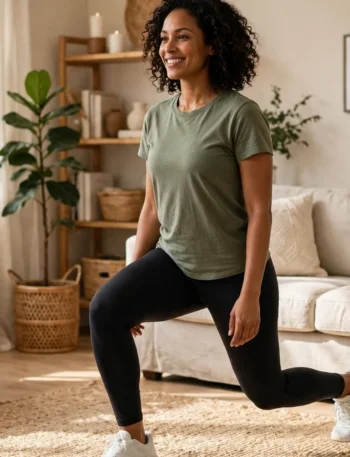
Prints just the plan, like a recipe card.
Last updated: November 23, 2026.
Maybe your doctor mentioned walking at your last checkup, or maybe you simply want to keep up with the grandkids without getting winded. A common question follows: how do you start walking after 60 without overdoing it in the first week?
This plan answers that with a gentle four-week build. You start with 15-minute easy walks and add a few minutes each week, at a pace where conversation stays comfortable. There is no special equipment, no gym, and no pressure to keep up with anyone else. All you need is supportive shoes, a safe route, and about half an hour on walking days.
This workout sits in our Exercise and Workouts collection, with our other low-impact beginner routines. It pairs well with the eating pattern in our 7-Day Meal Plan for Adults Over 65, and you can browse the full library in our Diet Plans section.
Key takeaways
- Start with 15 minutes at an easy pace and add about 5 minutes per week.
- Use the talk test: if you can chat in full sentences, the pace is right.
- Walk on even, well-lit routes and wear firm, supportive shoes.
- Rest days are part of the plan, not a break from it.
- Balance and leg strength matter too; the cool-down includes a gentle balance practice.
Who this workout is for, and who should check with a doctor first
This plan is for adults over 60 who are new to regular walking or returning after a long break. It is deliberately gentle, and it can be adjusted down as easily as up. If you already walk 30 minutes comfortably, start at week 3 or 4.
Check with your doctor before starting if you have been inactive for a long time, if you have a heart condition, joint problems, balance concerns or a history of falls, if you are pregnant, if you have had recent surgery or an injury (including joint replacement), or if you have ever had chest pain during activity. Bring your medication list to that conversation, since some medicines affect heart rate and balance. Ask first when in doubt; it is the smart way to start, not a delay.
If you have a history of disordered eating, talk with a doctor or a registered dietitian before following any diet plan. For eating disorder support in the US, visit the National Alliance for Eating Disorders at allianceforeatingdisorders.com.
What you need
- Firm, supportive walking shoes with low heels and good grip
- Comfortable clothing in layers you can adjust
- A water bottle
- A phone, carried with you
- A safe, familiar route: flat, even, and well lit, such as a neighborhood sidewalk, a track, or a mall
- Optional: a sturdy chair at home for the cool-down balance practice
Warm-up (5 minutes)
Never skip the warm-up; older muscles and joints appreciate a gradual start.
- Walk at a very easy pace for 2 minutes, or march gently in place indoors.
- Roll your shoulders forward and backward, 8 times each way.
- Circle each ankle 8 times in each direction, holding a chair or wall if needed.
- Do 8 slow standing knee lifts per side, at whatever height feels comfortable.
- Walk 1 more easy minute before settling into your walking pace.
The walking plan
Walk on the days shown, and rest or take a very short stroll on the other days. Every walk follows the same shape: an easy start, a steady middle, and an easy finish.
| Week | Walking days | Minutes per walk | Pace |
|---|---|---|---|
| 1 | 3 | 15 | Easy |
| 2 | 3 to 4 | 20 | Easy to moderate |
| 3 | 4 | 25 | Moderate |
| 4 | 4 to 5 | 30 | Moderate, with optional brisker minutes |
Easy walking (the start and finish of every walk)
Begin and end each walk with at least 3 to 5 minutes of easy walking. Your breathing should stay calm, your shoulders relaxed, and your stride natural. This gentle ramp matters more than the pace of the middle section.
Easier: Stay at this easy pace for the entire walk. That still counts, fully.
Harder: Shorten the easy start to 3 minutes once the full plan feels comfortable.
Steady walking (the middle of every walk)
Settle into a moderate pace where your breathing quickens and you can talk in short sentences, but would rather not sing. Keep your head up, look ahead, and let your arms swing naturally. If you walk with a friend, use conversation as your gauge: steady talking with slightly deeper breathing is about right.
Easier: Slow down until talking feels easy again, and stay there as long as you need.
Harder: In week 4, add two or three 1-minute brisker stretches, with easy walking between them.
Gentle hill or incline option (weeks 3 and 4)
If your route has one gentle hill and your joints feel good, walk up it at an easy pace once during the middle of the walk. Hills build leg strength at walking speed. Skip this entirely on days when knees or hips feel sore, and walk downhill slowly with short steps.
Easier: Stay on flat ground. Flat walking is the foundation of this plan.
Harder: Walk the hill twice, or choose a slightly longer route with rolling ground.
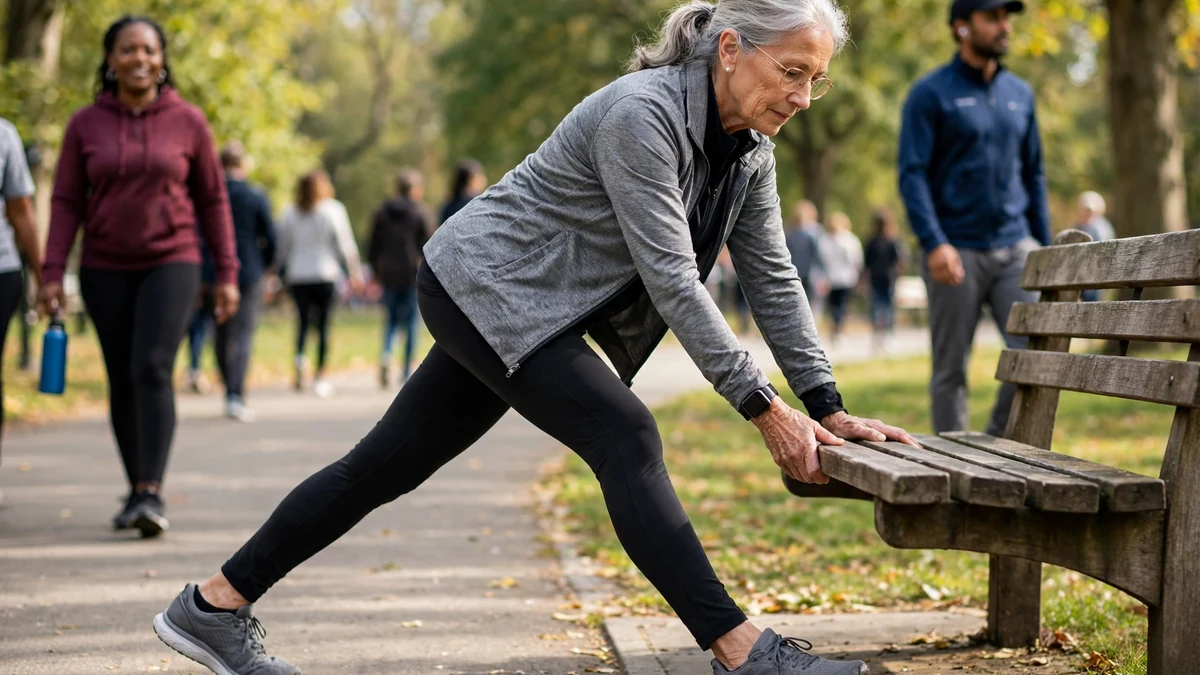
Cool-down and stretching
Finish with 3 to 5 minutes of easy walking, then these stretches, holding each for about 20 to 30 seconds per side. Use a chair or wall for balance whenever you want it.
- Calf stretch: Step one foot back, heel down, and lean gently toward a wall.
- Quadriceps stretch: Holding a chair, bend one knee and bring your heel toward your hip.
- Hip flexor stretch: In a short staggered stance, tuck your hips slightly and shift forward.
- Balance practice: Standing behind a sturdy chair with fingertips resting on it, lift one foot slightly and hold for 10 to 20 seconds per side. Keep your eyes on a fixed point ahead.
How to progress
After week 4, keep adding about 5 minutes per week, or add a fifth walking day, until you reach a level that fits your life. The Physical Activity Guidelines for Americans recommend that adults get at least 150 minutes of moderate-intensity aerobic activity each week, plus muscle-strengthening activities on 2 or more days a week. Five 30-minute walks reach that aerobic mark. If a week feels hard, repeat it. There is no deadline, and repeating a week is progress, not failure.
Safety notes
Stop and rest if you feel pain, dizziness, nausea, or chest pain, and seek medical help right away for chest pain or trouble breathing. Talk with your doctor before starting if you have been inactive or have a health condition. Choose a comfortable pace and good form over speed, and never try to push through sharp joint pain. Walk where footing is even, avoid routes with cracked pavement while you build confidence, carry your phone, and let someone know your route. In hot weather, walk early or late and drink water before and after.
Common mistakes
- Starting with a long walk on day one and feeling sore for a week.
- Walking in worn-out shoes with thin, smooth soles.
- Skipping rest days, then quitting when fatigue builds up.
- Comparing your pace to a younger walking partner’s pace.
- Skipping the warm-up because the walk itself feels gentle.
Pair it with a diet plan
Walking and steady eating habits support each other well. Our 7-Day Meal Plan for Adults Over 65 focuses on simple, protein-conscious meals that are easy to prepare. To estimate your daily calorie needs, try the free Calorie Calculator.
Frequently asked questions
Is 15 minutes really enough to start with?
Yes. A comfortable 15 minutes builds the habit and lets your joints, muscles, and confidence adjust. The minutes grow quickly once the routine feels normal.
What if I miss a week because of illness or travel?
Simply restart at the previous week’s level, or one week easier, and build back up. Your fitness returns faster the second time.
Should I use walking poles?
Poles are optional. Some people like them for balance and for sharing the work with their arms. If you try them, start on flat ground and keep the straps adjusted so your hands stay relaxed.
What pace counts as moderate?
Use the talk test: at a moderate pace you breathe harder than at rest and can speak in short sentences. If you can sing, you can go a little faster; if you cannot finish a sentence, slow down.
When should I walk indoors instead?
On icy days, in extreme heat, or when your usual route feels unsafe. Malls, hallways, and treadmills all work, and the plan’s minutes stay the same.
Sources and further reading
- Physical Activity Guidelines for Americans, US Department of Health and Human Services: health.gov
- Centers for Disease Control and Prevention, physical activity basics for adults: cdc.gov
- American Heart Association, recommendations for physical activity in adults: heart.org
- MedlinePlus, exercise and physical fitness: medlineplus.gov
This article is for general educational purposes only and is not medical, nutrition, or fitness advice. Talk with your doctor or a registered dietitian before changing your diet or starting an exercise program.