Prints just the plan, like a recipe card.
Last updated: November 23, 2026.
Maybe a bike has been sitting in your garage for years, or a friend keeps inviting you on rides and you keep saying no because you are not sure where to start. Cycling looks simple from the outside, but beginners have real questions: How high should the seat be? How long should a first ride be? What do all the gears do?
This guide answers those questions in order. You will set up your bike, take a first ride of about 15 to 20 minutes on flat ground, and build from there over four weeks. Cycling is low impact, which makes it a kind option for many knees, and it doubles as transportation once you are comfortable.
This workout sits in our Exercise and Workouts collection, with walking plans and home routines for every level. Many cyclists here also follow our 7-Day Meal Plan for Walkers, since walking and cycling weeks mix well, and the full library is in Diet Plans.
Key takeaways
- Seat height matters most: your knee should keep a slight bend at the bottom of each pedal stroke.
- Start with 15 to 20 minutes on flat, quiet routes, and add time before you add hills.
- Spin easily in a lower gear rather than grinding a hard one. Your knees will thank you.
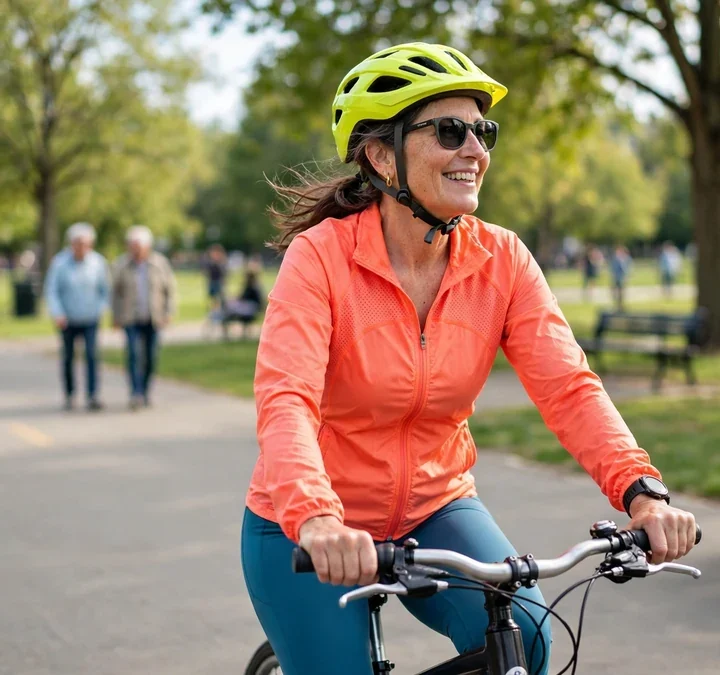
- A helmet on every ride, and lights and bright clothing if you ride near traffic or at dusk.
Who this workout is for, and who should check with a doctor first
This guide is for adults who can ride a bike but are new to riding for exercise, or returning after years away. It assumes quiet streets, a park loop, or a paved trail for your first rides, away from busy traffic.
Check with your doctor before starting if you have been inactive for a long time, if you have a heart condition, balance problems, joint problems, or a history of chest pain, or if you are pregnant or recovering from a recent surgery or injury. If balance is a concern, ask your doctor or a bike shop about options like a stationary bike or an adult tricycle.
If you have a history of disordered eating, talk with a doctor or a registered dietitian before following any diet plan. For eating disorder support in the US, visit the National Alliance for Eating Disorders at allianceforeatingdisorders.com.
What you need
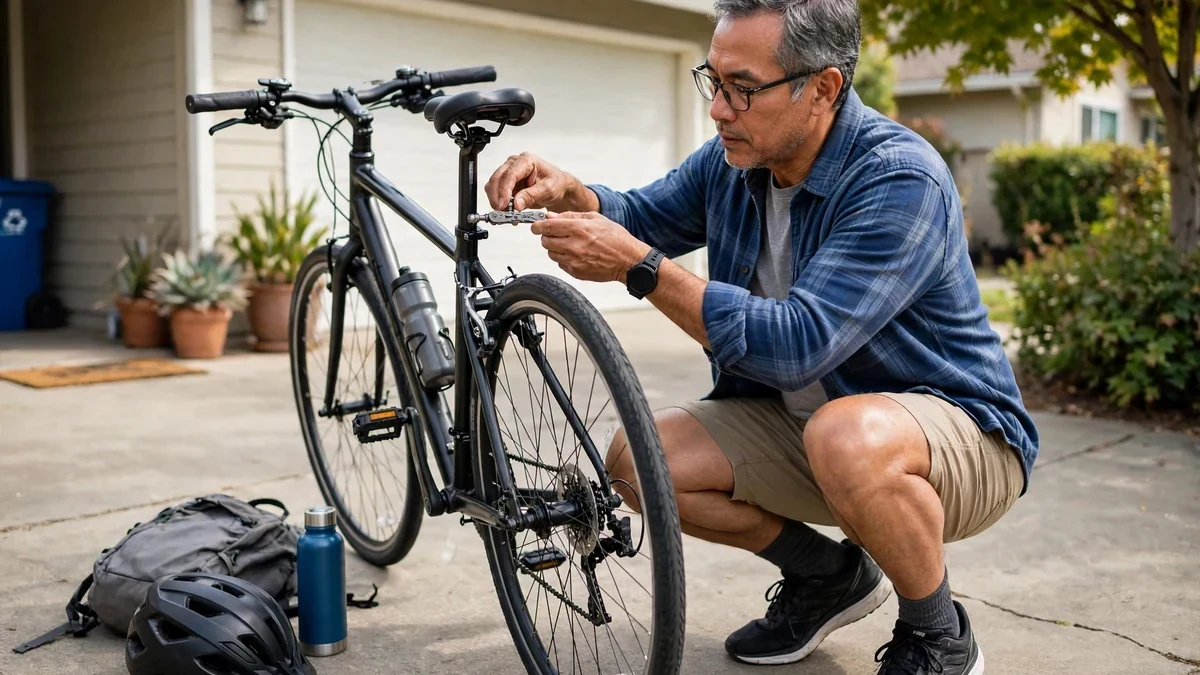
- A bike that fits you and works: tires pumped, brakes squeezing properly, chain moving smoothly. A local bike shop can do a basic safety check.
- A properly fitted helmet, worn on every ride.
- Comfortable clothes that cannot catch in the chain, closed-toe shoes, and a bottle of water in a cage or bag.
- Bright clothing for visibility, plus front and rear lights if there is any chance of low light.
- A phone, and a route you have already picked: flat, quiet, and easy to shorten.
Warm-up (5 minutes)
Your warm-up happens on the bike. Pushing off and sprinting in the first minute is how beginners end up with sore knees.
- Walk your bike to your start point and do a quick brake and tire check.
- Pedal very easily for 2 minutes in your lowest comfortable gear, on flat ground.
- Pedal at a relaxed, steady pace for 2 more minutes, breathing easily.
- Add 1 minute at a slightly brisker pace, still able to talk in full sentences. Then begin the ride below.
The workout: your first rides
Each ride has three parts: easy spinning, a steady middle, and an easy finish. The table shows a sample beginner ride. For each part, the easier and harder options let you match the ride to your day.
| Part | Time | Effort |
|---|---|---|
| Easy spin | 5 minutes | Easy, full sentences |
| Steady ride | 5 to 10 minutes | Moderate, short sentences |
| Easy spin home | 5 minutes | Easy, full sentences |
Easy spin
Choose a low gear so your legs turn over quickly and lightly, roughly one pedal revolution per second. Sit tall, relax your shoulders, and keep your grip easy. This should feel almost too easy.
Easier: Stay in your lowest gear the whole time and keep the pace gentle.
Harder: There is no harder option for the warm-up spin. Save the effort for the middle.
Steady ride
Shift up one gear at a time until your effort feels moderate: breathing deeper, able to speak in short sentences. Keep pedaling steadily rather than coasting and surging. On any small rise, shift down early and let your legs spin.
Easier: Keep the steady part to 5 minutes and stay on the flattest loop you have.
Harder: Extend the steady part to 10 or 15 minutes before adding any hills to your route.
Easy spin home
Shift back down and pedal easily for the last 5 minutes, letting your breathing settle. Finish feeling like you could have done a little more. That feeling is exactly right for a beginner ride.
Easier: Walk the last stretch if your legs are done. There is no rule against it.
Harder: Add a few minutes of easy spinning rather than more hard riding.
Cool-down and stretching
- The easy spin home is most of your cool-down. Add 1 slow minute of walking after you park the bike.
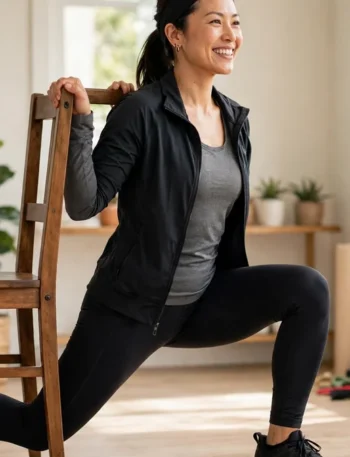
- Standing quad stretch, holding the bike or a fence, 20 to 30 seconds per side.
- Calf stretch against a wall or curb, 20 to 30 seconds per side.
- Chest and shoulder stretch: clasp your hands behind your back and lift gently. Hold 20 seconds.
- Neck and upper back: drop one ear toward your shoulder, hold 15 seconds per side, then finish with slow breaths.
How to progress
Week 1: two or three rides of 15 to 20 minutes on flat ground. Week 2: stretch one ride to 25 minutes. Week 3: add a gentle rise or two to your route, shifting down early. Week 4: try one ride of 30 to 40 minutes with an easy pace. Build time before difficulty, and keep at least one rest day between rides at first. Cycling counts toward the Physical Activity Guidelines for Americans recommendation of at least 150 minutes of moderate-intensity aerobic activity a week, and most beginners build toward that over a few months, not a few days.
Safety notes
Stop and rest if you feel pain, dizziness, nausea, or chest pain, and seek medical help right away for chest pain. Talk with your doctor before starting if you have been inactive or have any health condition. Good form matters more than speed: a smooth, easy pedal stroke protects your knees better than grinding a heavy gear. Never ride through sharp joint pain; shift down or stop. Wear your helmet on every ride, obey traffic laws, ride predictably in a straight line, and use hand signals where other road users expect them. If anything on the bike feels loose or the brakes feel weak, walk the bike to a shop instead of riding it.
Common mistakes
- Setting the seat too low, which strains the front of the knees. Aim for a slight knee bend at the bottom of the stroke.
- Pushing a hard gear slowly instead of spinning an easy gear.
- Making the first ride long or hilly and dreading the second one.
- Riding in traffic before your handling and confidence are ready.
- Skipping the helmet for short rides. Most rides are short rides.
Pair it with a diet plan
Riding days go well with the steady meals in our 7-Day Meal Plan for Walkers, built for people whose exercise week is mostly legs and fresh air. Use the Calorie Calculator to check your own estimated needs.
Frequently asked questions
How do I know if my seat height is right?
Sit on the bike with your heel on the pedal at its lowest point. Your leg should be nearly straight. When you then pedal with the ball of your foot, your knee keeps a comfortable slight bend. A bike shop can fine-tune this in a few minutes.
My knees ache after riding. What usually causes that?
A seat that is too low and pushing hard gears are the two most common causes for beginners. Raise the seat a little, shift down, and spin more easily. If pain is sharp or keeps returning, stop and talk with your doctor.
How many gears should I use?
As many as you need to keep your legs turning comfortably. Beginners often live in the easier half of the gears, and that is fine. Shift early and often rather than muscling through.
Is a stationary bike a good substitute?
Yes. It removes traffic, weather, and balance from the equation, and the riding motion is the same. Our stationary bike workout in this collection is a good companion for rainy or winter days.
What should I eat or drink on a beginner ride?
For rides under an hour, water is usually all you need, along with your normal meals. Eat a regular meal a couple of hours before longer rides, and drink when you are thirsty.
Sources and further reading
- Physical Activity Guidelines for Americans, US Department of Health and Human Services: health.gov
- CDC, physical activity basics for adults: cdc.gov
- American Heart Association, recommendations for physical activity in adults: heart.org
This article is for general educational purposes only and is not medical, nutrition, or fitness advice. Talk with your doctor or a registered dietitian before changing your diet or starting an exercise program.