Prints just the plan, like a recipe card.
Last updated: November 23, 2026.
By 3 p.m. your shoulders are up around your ears, your back feels like one solid plank, and your step counter has barely moved since breakfast. Sound familiar? Desk work keeps your body in one position for hours, and the fix does not have to be a full gym session. Small bursts of movement, done right where you work, can loosen stiff joints and wake up sleepy muscles.
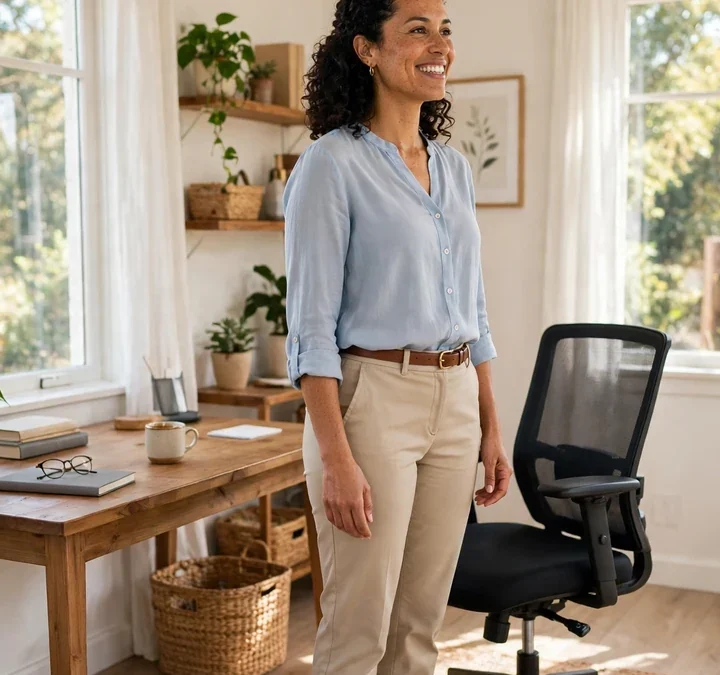
This desk worker workout is a set of simple moves you can do at your desk in normal work clothes, using your chair and the desk itself for support. The whole sequence takes about 10 to 15 minutes, or you can split it into mini-breaks of two or three moves at a time. No equipment, no floor work, and nothing that will leave you sweaty before a meeting.
This workout sits in our Exercise and Workouts collection, with walking plans, stretching routines, and home strength sessions. It pairs well with our 7-Day Meal Plan for Desk Workers, and you can browse everything in Diet Plans.
Key takeaways
- Short movement breaks of 2 to 5 minutes, repeated through the day, add up fast.
- Your chair and desk double as exercise equipment for strength moves.
- Standing up and sitting down well is one of the most useful exercises a desk worker can do.
- Set a timer or tie breaks to habits you already have, like finishing a call.
- Keep the intensity light; this is about moving more, not training hard at your desk.
Who this workout is for, and who should check with a doctor first
This workout is for adults who spend most of the workday sitting and want practical ways to move more without leaving their workspace. It suits beginners and anyone whose main exercise problem is time and opportunity, not motivation.
Check with your doctor before starting any new exercise routine if you have been inactive for a long time, have a heart condition, have joint problems, are pregnant, have had recent surgery or an injury, or have a history of chest pain. If you have ongoing back, neck, or wrist pain, a physical therapist can tell you which of these moves fit you. This workout is general information, not a treatment for pain.
If you have a history of disordered eating, talk with a doctor or a registered dietitian before following any diet plan. For eating disorder support in the US, visit the National Alliance for Eating Disorders at allianceforeatingdisorders.com.
What you need
- Your desk chair (lock the wheels, or brace it against the desk)
- A sturdy desk or table edge that will not tip
- A few feet of clear floor space behind your chair
- Comfortable shoes or bare feet on a non-slip floor
- A water bottle, which also reminds you to refill it on a walk
Warm-up (5 minutes)
If you are doing the full sequence at once, warm up first. If you are sprinkling moves through the day, the first minute of easy marching serves as your warm-up each time.
- March in place (2 minutes). Stand behind your chair and march at an easy pace, lifting your feet a few inches.
- Shoulder rolls (1 minute). Roll your shoulders forward in slow circles, then backward, making them bigger as you go.
- Torso turns (1 minute). Standing tall, turn your upper body gently from side to side, letting your arms swing loosely.
- Ankle circles and calf pumps (1 minute). Circle each ankle, then rise onto your toes and lower down several times.

The desk worker workout
Do the moves in order for a single 10 to 15 minute break, or pick two or three whenever you stand up. Keep everything controlled and quiet, and skip anything that does not feel right that day.
1. Chair sit-to-stands
Reps: 10.
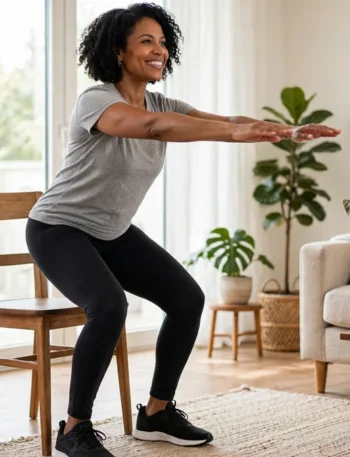
- Stand in front of your chair with your feet hip width apart, chair touching the backs of your legs.
- Push your hips back and bend your knees to sit down lightly on the chair.
- Immediately press through your feet and stand all the way back up.
- Keep your chest lifted and your knees tracking over your toes.
Easier: Sit down fully and rest for a breath, using your hands on your thighs to help you stand.
Harder: Hover just above the seat without fully sitting, or slow the standing phase to a count of three.
2. Desk push-ups
Reps: 10.
- Place your hands on the edge of a sturdy desk, shoulder width apart, and walk your feet back so your body forms a straight, leaning line.
- Bend your elbows to lower your chest toward the desk with control.
- Stop a few inches from the edge, then press back to straight arms.
- Keep your body rigid from head to heels; do not let your hips sag.
Easier: Stand closer to the desk so you are more upright, or use a wall instead.
Harder: Step your feet farther back, or lower yourself over a count of three on each rep.
3. Standing calf raises
Reps: 12.
- Stand behind your chair, holding the back for balance.
- Rise up onto the balls of your feet as high as comfortable.
- Pause at the top, then lower your heels slowly to the floor.
- Stand tall and keep the movement smooth.
Easier: Lift your heels only partway, or do the exercise seated with your toes pressing into the floor.
Harder: Lower over a count of three, or do a few reps shifting weight toward one leg.
4. Seated knee extensions
Reps: 8 per leg.
- Sit tall near the front of your chair, feet flat, hands holding the seat sides.
- Straighten your right leg slowly until it is as straight as is comfortable, foot flexed.
- Hold for a breath, then lower it back down with control.
- Finish one leg, then switch.
Easier: Straighten the leg only partway.
Harder: Hold the straight leg for a count of three, or add a small ankle circle at the top before lowering.
5. Standing glute squeezes
Reps: 10, holding each for a count of three.
- Stand tall behind your chair, feet hip width apart, hands resting lightly on the chair back.
- Squeeze your buttocks firmly and hold for a count of three.
- Keep your knees soft and your stomach gently braced while you hold.
- Release completely before the next rep.
Easier: Squeeze for a count of one and do fewer reps.
Harder: Lift one heel slightly off the floor while you squeeze, alternating sides, keeping your hold on the chair.
Cool-down and stretching
Finish with 3 to 5 minutes of stretching, especially if you did the full sequence at once.
- Neck side stretch (20 seconds per side). Tilt one ear toward your shoulder gently, keeping the opposite shoulder down.
- Chest opener (30 seconds). Stand in a doorway or beside your desk, forearm on the frame or wall, and turn gently away to stretch your chest.
- Standing back stretch (30 seconds). Hold the desk edge, walk your feet back, and let your back flatten and lengthen as you hinge from the hips.
- Wrist and finger stretches (30 seconds). Extend one arm, gently press your fingers back with the other hand, then make fists and open them wide a few times.
- Slow breathing (1 minute). Sit down, drop your shoulders, and breathe in for four counts and out for six.
How to progress
The real progression for desk workers is frequency, not intensity.
- Week 1: One full sequence per day, or two moves every time you stand up.
- Weeks 2 to 3: Add a second mini-break, and try the harder option on one exercise.
- Week 4 and beyond: Aim for brief movement every hour you sit, plus a walk at lunch.
The Physical Activity Guidelines for Americans recommend that adults get at least 150 minutes of moderate-intensity aerobic activity each week, plus muscle-strengthening activities on 2 or more days a week. Desk moves are a start and a supplement; pair them with walks and a couple of fuller workouts each week to cover the guidelines.
Safety notes
Stop and rest if you feel pain, dizziness, nausea, or chest pain during any move, and seek medical help right away for chest pain. Never exercise through sharp joint pain; shrink the movement or choose a different one. Talk with your doctor before starting if you have been inactive for a long time or have any health condition. Lock your chair wheels or push the chair firmly against the desk before leaning on it, and test the desk edge before putting weight on it for push-ups. Good form matters more than reps, and in an office, quiet and controlled also matters more than fast.
Common mistakes
- Leaning on a chair whose wheels are not locked, for push-ups or stretches.
- Saving all movement for one heroic session instead of spreading it through the day.
- Holding your breath during desk push-ups and sit-to-stands.
- Hunching over while doing seated exercises, which undoes the point.
- Skipping movement on busy days, exactly when stiffness builds the most.
- Treating desk moves as a full replacement for walks and workouts.
Pair it with a diet plan
Desk days also have a food pattern: skipped breakfasts, vending machine lunches, and a big evening meal. Our 7-Day Meal Plan for Desk Workers is built around that reality with packable lunches and quick dinners. If you want a general sense of your calorie needs, run your numbers through the Calorie Calculator.
Frequently asked questions
How often should I take movement breaks at my desk?
A practical rhythm is a few minutes of movement for every 30 to 60 minutes of sitting. Tie it to things you already do: stand after calls, march while the kettle boils, do calf raises while files print. The exact schedule matters less than making it a habit.
Will my coworkers think this looks odd?
Most of these moves are subtle: calf raises look like standing, glute squeezes are invisible, and seated extensions happen under the desk. Sit-to-stands and marching are the most visible, and even those read as taking a stretch break, which most workplaces now expect.
Can desk exercises replace my regular workout?
They are a helpful supplement, not a full replacement. The Physical Activity Guidelines for Americans recommend at least 150 minutes of moderate-intensity aerobic activity each week, plus muscle-strengthening on 2 or more days. Desk moves chip away at sitting time and keep joints happy, but walks and fuller sessions still matter.
My back aches by the end of the day. Will this fix it?
Regular movement breaks help many people feel less stiff, but this workout is not a treatment for back pain. If your pain is ongoing, sharp, or travels down a leg, see your doctor or a physical therapist for an individual assessment.
Sources and further reading
- Physical Activity Guidelines for Americans, US Department of Health and Human Services: health.gov
- CDC pages on physical activity in the workplace: cdc.gov
- MedlinePlus information on exercise and sitting time: medlineplus.gov
- American Heart Association guidance on moving more during the day: heart.org
This article is for general educational purposes only and is not medical, nutrition, or fitness advice. Talk with your doctor or a registered dietitian before changing your diet or starting an exercise program.