Prints just the plan, like a recipe card.
Last updated: November 23, 2026.
“How much exercise do I actually need?” is one of the most common questions beginners ask, and the honest answers online tend to be either vague or overwhelming. There is a clear, official answer for adults in the United States, and it is more reachable than most people expect.
This guide explains the federal activity guidelines in plain language: how much aerobic activity adults are advised to get each week, what counts as moderate or vigorous intensity, why muscle strengthening matters, and how to build up to the targets safely if you are starting from very little. It suits anyone who wants a trustworthy weekly goal to aim for, whether you walk, cycle, swim, or exercise at home.
This guide sits in our Exercise and Workouts collection, where you will find the walking plans, strength routines, and short workouts that can fill a week like the sample one below. If you are restarting your eating habits too, our 7-day beginner reset meal plan is a gentle companion, and the Diet Plans library has more options.
Key takeaways
- The Physical Activity Guidelines for Americans recommend that adults get at least 150 minutes of moderate-intensity aerobic activity each week, plus muscle-strengthening activities on 2 or more days a week.
- Vigorous activity counts for more per minute: 75 minutes a week is the vigorous alternative, and a mix of the two works too.
- Moderate intensity means you can talk but not sing. Brisk walking is the classic example.
- You do not have to reach the target in week one. Starting small and adding a little each week is the recommended approach.
The guidelines in plain language
The Physical Activity Guidelines for Americans, published by the US Department of Health and Human Services, recommend that adults get at least 150 minutes of moderate-intensity aerobic activity each week, plus muscle-strengthening activities on 2 or more days a week. That is the whole headline. Spread the aerobic minutes across the week in whatever pattern fits your life: five 30-minute sessions, three longer ones, or short bouts added together.
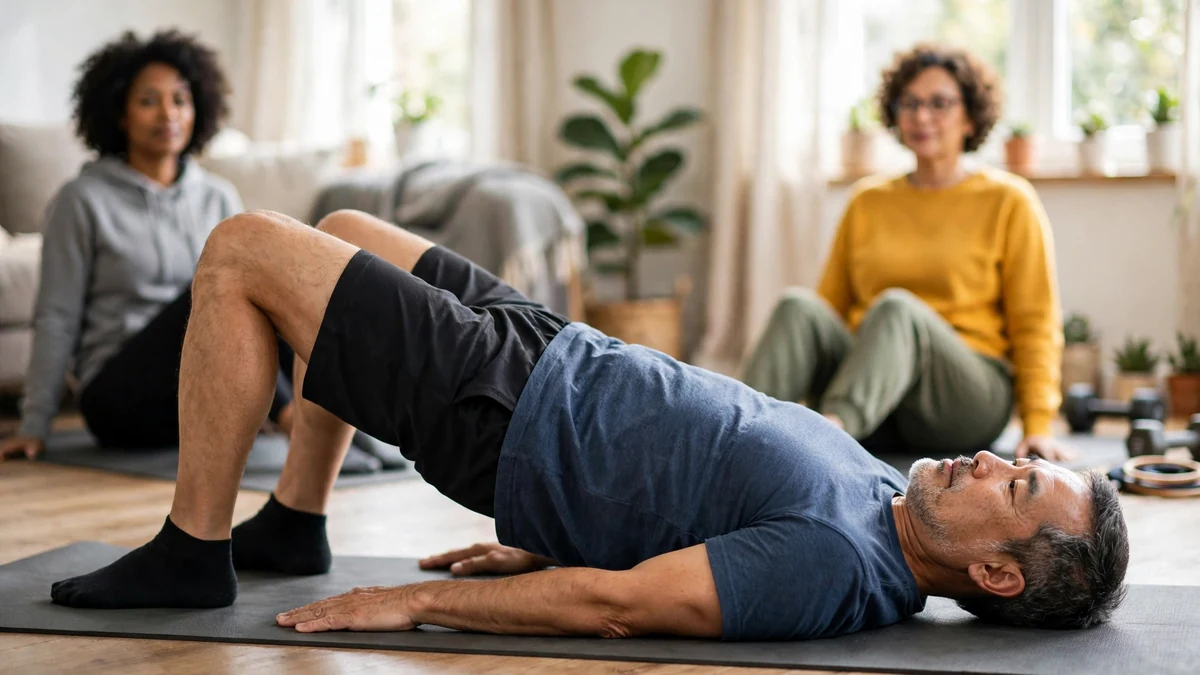
If you prefer harder exercise, vigorous-intensity activity counts double in practical terms: 75 minutes a week of vigorous activity is the alternative target, and combining moderate and vigorous activity across the week is fine too. Muscle strengthening means activities that make your muscles work harder than usual, such as bodyweight exercises, resistance bands, or weights, and it should cover the major muscle groups: legs, hips, back, core, chest, shoulders, and arms.
It is also worth knowing that the guidelines are a target to build toward, not a pass-or-fail test. Some activity is better than none, and adults who sit a lot are encouraged to sit less and move more throughout the day, even before they reach the full weekly amounts.
What counts as moderate or vigorous intensity
The simplest measuring tool is the talk test, which needs no device at all.
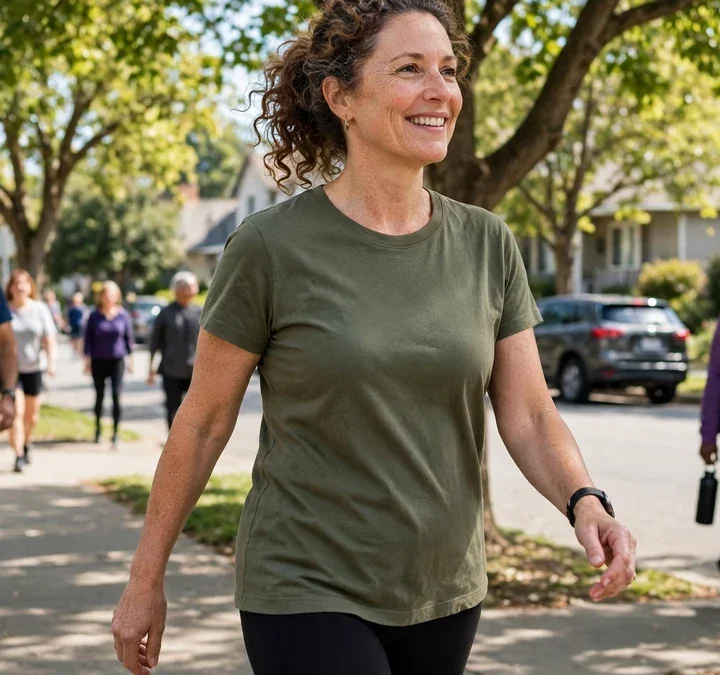
- Moderate intensity: Your breathing and heart rate are noticeably faster, but you can still talk in phrases. Singing would be hard. Examples include brisk walking, easy cycling on flat ground, water aerobics, and active household work like raking or mopping.
- Vigorous intensity: You can only say a few words before needing a breath. Examples include jogging or running, fast cycling, and swimming laps at a strong pace.
- Light intensity: Gentle movement such as slow walking or easy stretching. It does not count toward the 150 minutes, but it is valuable in its own right, especially for breaking up long periods of sitting and for warming up.
If you are new to exercise, most of your activity will naturally be light to moderate at first. That is a sensible place to start, and your fitness will quietly shift what feels moderate over the coming weeks.
Who these guidelines are for, and who should check with a doctor first
The guidelines are written for adults generally, including older adults, who can adapt the same targets with activities that suit their abilities and balance. They are a population-level guide, not a personal prescription.
Check with your doctor before building up if you have been inactive for a long time, if you have a heart condition, joint problems, a chronic condition such as diabetes, or a history of chest pain, or if you are pregnant or recovering from surgery or a recent injury. Your doctor can help you set a starting level and a pace of increase that fits your health.
If you have a history of disordered eating, talk with a doctor or a registered dietitian before following any diet plan. For eating disorder support in the US, visit the National Alliance for Eating Disorders at allianceforeatingdisorders.com.
What you need
- Nothing is required to start. Walking needs only comfortable shoes and a safe place to walk.
- A simple way to track your minutes, such as a notes app, a calendar, or a paper log
- For strengthening days, your own body weight is enough at first; a chair and a wall give you several beginner exercises
- Comfortable clothes and a bottle of water
A sample week that meets the guidelines
Here is one way an ordinary week can reach the targets. Notice that every session, even a walk, starts with a warm-up and ends with a cool-down. Those minutes are part of the session, and they make the middle part feel better.
| Day | Activity | Aerobic minutes |
|---|---|---|
| Monday | Brisk walk | 30 |
| Tuesday | Beginner strength session at home (plus an easy 10-minute walk) | 10 |
| Wednesday | Brisk walk | 30 |
| Thursday | Rest, or gentle stretching | 0 |
| Friday | Brisk walk | 30 |
| Saturday | Longer walk, gardening, or an easy bike ride | 50 |
| Sunday | Beginner strength session at home, or full rest | 0 |
| Total | Strength on 2 days, aerobic activity on 5 days | 150 |
Warm-up (5 minutes)
Before any session in the sample week, spend about 5 minutes warming up. Walk at an easy pace for 2 to 3 minutes, then add gentle movements that match what you are about to do: arm circles and shoulder rolls before a strength session, or easy knee lifts and ankle circles before a brisk walk. Your breathing should rise slightly and your muscles should feel warm, not tired.
Cool-down and stretching (5 minutes)
End each session with about 5 minutes of cooling down. Walk slowly until your breathing settles, then stretch the muscles you used: calves and the fronts of your thighs after walking, plus chest and shoulders after strength work. Hold each stretch for 20 to 30 seconds, breathing slowly, and never force a position. Cooling down is also a good moment to note your minutes in your log while you remember them.
How to progress toward the target
If you are currently doing very little, the target can look far away. The practical route is to add a small amount each week and let the habit settle before adding more. This table shows one gentle build-up using walking as the main activity, with strength added from week 2.
| Week | Aerobic activity | Strength days |
|---|---|---|
| Week 1 | Three 15-minute walks (45 minutes total) | 0 |
| Week 2 | Three 20-minute walks (60 minutes total) | 1 short session |
| Week 3 | Four 20-minute walks (80 minutes total) | 1 session |
| Week 4 | Four 25-minute walks (100 minutes total) | 2 short sessions |
| Week 5 | Five 25-minute walks (125 minutes total) | 2 sessions |
| Week 6 | Five 30-minute walks (150 minutes total) | 2 sessions |
Treat the table as a sketch, not a deadline. Staying on one step for two weeks is fine, and repeating a week after illness or a busy spell is normal. The direction matters more than the speed.
Safety notes
Stop and rest if you feel pain, dizziness, nausea, or chest pain during activity, and seek medical help right away for chest pain or severe breathlessness. Talk with your doctor before starting or increasing exercise if you have been inactive or have a health condition. Build up gradually, choose good form over speed in strength exercises, and never exercise through sharp joint pain. Wear shoes that support your feet, stay hydrated, and pick well-lit, even routes for walking. Rest days are part of the plan, not a break from it.
Common mistakes
- Trying to hit 150 minutes in the first week after doing nothing. Build up over several weeks instead.
- Counting only gym sessions. Brisk walking, active gardening, and cycling to the store all count as aerobic activity.
- Skipping muscle strengthening entirely. Two short sessions a week cover it, and bodyweight moves at home are enough to start.
- Assuming short bouts do not count. Minutes add up across the day and week, however you collect them.
- Treating the target as all or nothing. Falling short one week is normal; the habit of moving regularly is the real goal.
- Ignoring pain signals to complete a planned session. Adjust the day, not your standards for safety.
Pair it with a diet plan
Knowing your activity target is half of the picture; the other half is eating in a way that supports your energy. Our 7-day beginner reset meal plan is a simple place to start. To estimate the daily calories that match your size and activity level, try the free Calorie Calculator.
Frequently asked questions
Do I have to do 150 minutes right away?
No. The guidelines describe where adults are encouraged to end up, and they are clear that some activity is better than none. Start with what you can do comfortably, such as three 15-minute walks a week, and add a little at a time.
Can I split my activity into short bouts?
Yes. Aerobic minutes count however you gather them across the day, so three 10-minute walks add up to 30 minutes. Short bouts are a practical way for busy people and beginners to reach the weekly total.
Does walking count, or do I need a gym?
Walking counts, as long as the pace is brisk enough to raise your breathing while you can still talk. No gym is required for either part of the guidelines: bodyweight exercises at home cover muscle strengthening for beginners.
What kind of exercise counts as muscle strengthening?
Anything that makes your major muscles work harder than everyday activity: sit-to-stands, wall push-ups, glute bridges, resistance band rows, or lifting weights. Work the legs, hips, back, core, chest, shoulders, and arms across your two weekly sessions.
What if I have a chronic condition or a disability?
The guidelines encourage adults with chronic conditions or disabilities to be as active as their abilities allow, and to work with their doctor on suitable activities. The right target for you is a personal one, set with your care team.
Is more than 150 minutes better?
The guidelines note that going beyond the minimum brings additional health benefits, and many active people do more. For beginners, the sensible order is to reach the target comfortably first, then decide with fresh energy whether to add more.
Sources and further reading
- Physical Activity Guidelines for Americans, US Department of Health and Human Services: health.gov
- Physical activity basics and adult recommendations, Centers for Disease Control and Prevention: cdc.gov
- American Heart Association recommendations for physical activity in adults: heart.org
- Exercise and physical activity guidance, MedlinePlus: medlineplus.gov
This article is for general educational purposes only and is not medical, nutrition, or fitness advice. Talk with your doctor or a registered dietitian before changing your diet or starting an exercise program.