Prints just the plan, like a recipe card.
Last updated: November 22, 2026.
This 28 day meal plan covers four full weeks at about 1,600 calories a day. Week 1 is written out in full with exact foods, US portions, and USDA-calculated calories for every meal. Weeks 2 to 4 follow a rotation guide built on the same pattern, so the plan stays varied while the grocery list stays familiar. Every number in the core week was calculated from USDA FoodData Central values.
At about 1,600 calories, this is a moderate level that suits many women and smaller or less active men. Protein averages about 117 grams a day and fiber about 36 grams a day across breakfast, lunch, dinner, and a snack, which helps a four-week block feel sustainable rather than strict.
You will find this plan in our By Diet Style collection, part of the full Diet Plans library. Not sure which level fits you? Start with our calorie calculator for an estimate before you begin.
Who this plan is for, and who should not follow it
This plan is for adults who want a full month of structured eating: time to build the shopping, cooking, and portion habits and to see how a steady level works across normal life, including weekends and at least a few busy or social days. It suits home cooks who are comfortable repeating a base week with planned changes.
This plan is general education only and is not medical advice. Talk with your doctor or a registered dietitian before starting, especially if you have diabetes, kidney disease, or another condition affected by food, or you take medication that food or weight change can affect. It is not for children or teenagers, and it is not for anyone who is pregnant or breastfeeding.
Most adults can use 1,600 calories as written. Smaller, less active women who find it too much food should not force portions; talk with a registered dietitian about the right level instead of cutting this plan below the safe floors described in the adjustment section.
If you have a history of disordered eating, talk with a doctor or a registered dietitian before following any diet plan. For eating disorder support in the US, visit the National Alliance for Eating Disorders at allianceforeatingdisorders.com.
Plan overview
| Measure | Amount |
|---|---|
| Target calories per day | about 1,600 |
| Average calories per day (as written) | about 1606 |
| Average protein per day | about 117 g |
| Average carbohydrate per day | about 199 g |
| Average fat per day | about 42 g |
| Average fiber per day | about 36 g |
| Meals per day | 4 (breakfast, lunch, dinner, and snacks) |
The overview and day tables describe the fully written core week. Weeks 2 to 4 follow the same pattern and approximate totals using the rotation guide after the day tables.
The 7-day core of the 28 day meal plan
Portions are given in US household measures. Calories for each meal and day were calculated from USDA FoodData Central values for the exact foods and amounts listed. Season foods with herbs, spices, lemon, vinegar, and salsa as you like.
Day 1
| Meal | Foods and portions | Calories |
|---|---|---|
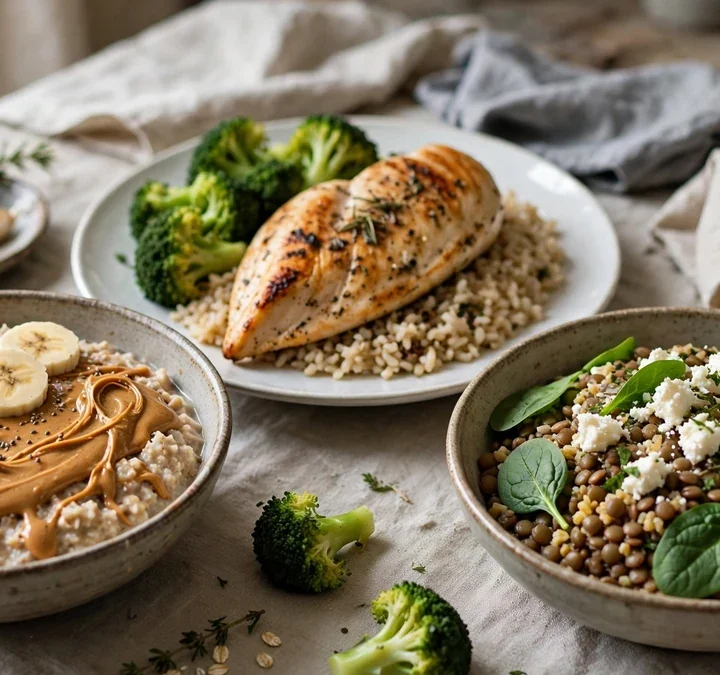
| Breakfast | 1/2 cup dry rolled oats, cooked; 1 cup skim milk; 1 medium banana; 1 tablespoon peanut butter | about 438 |
| Lunch | 5 oz cooked chicken breast; 1 cup cooked brown rice; 1 cup cooked broccoli; 1 teaspoon olive oil | about 556 |
| Dinner | 1 cup cooked lentils; 1 cup cooked bulgur; 1 oz feta cheese, crumbled; 2 cups raw spinach | about 465 |
| Snacks | 3/4 cup plain nonfat Greek yogurt; 1 cup raspberries | about 164 |
Day 1 total: about 1623 calories, 119 g protein, 225 g carbohydrate, 33 g fat, 49 g fiber.
Day 2
| Meal | Foods and portions | Calories |
|---|---|---|
| Breakfast | 2 large eggs, cooked any style; 2 slices whole-wheat toast; 1 oz cheddar cheese; 1 medium tomato, sliced | about 453 |
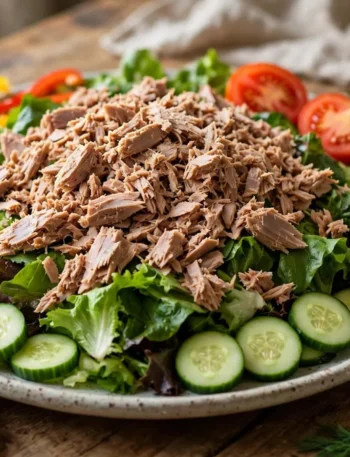
| Lunch | 1 can tuna in water, drained; 1 whole-wheat pita; 1/4 cup hummus; 1/2 cucumber, sliced; 2 cups green leaf lettuce | about 453 |
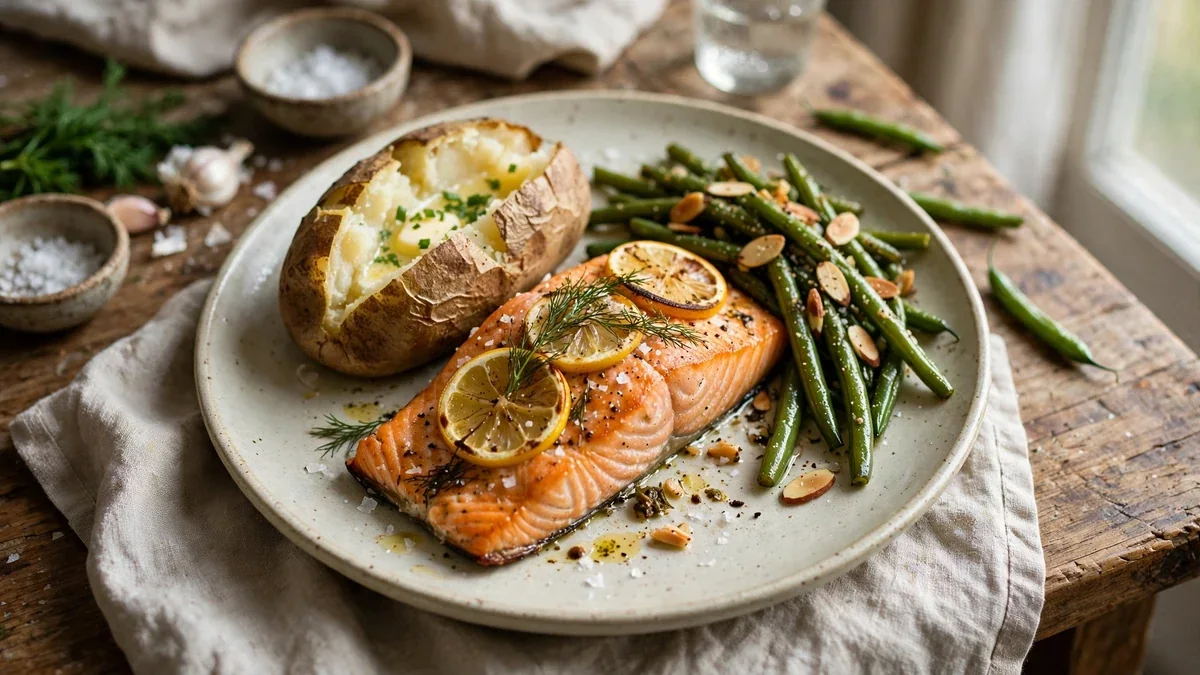
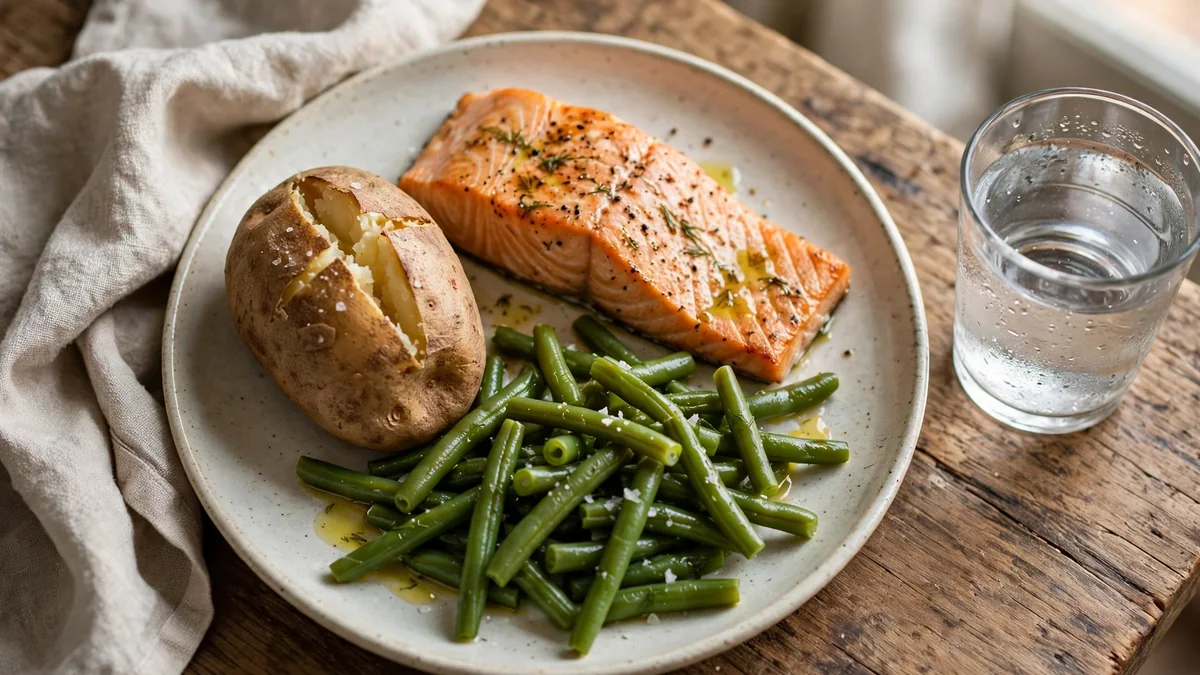
| Dinner | 5 oz cooked salmon; 1 medium baked potato; 1 cup cooked green beans; 1 teaspoon olive oil | about 492 |
| Snacks | 1 medium apple; 1/2 oz almonds (about 12 almonds) | about 176 |
Day 2 total: about 1575 calories, 113 g protein, 159 g carbohydrate, 57 g fat, 26 g fiber.
Day 3
| Meal | Foods and portions | Calories |
|---|---|---|
| Breakfast | 1 cup plain low-fat Greek yogurt; 1/4 cup granola; 1 cup strawberries; 1 tablespoon honey | about 438 |
| Lunch | 1 cup cooked black beans; 3 corn tortillas; 1/2 avocado; 1/4 cup salsa | about 536 |
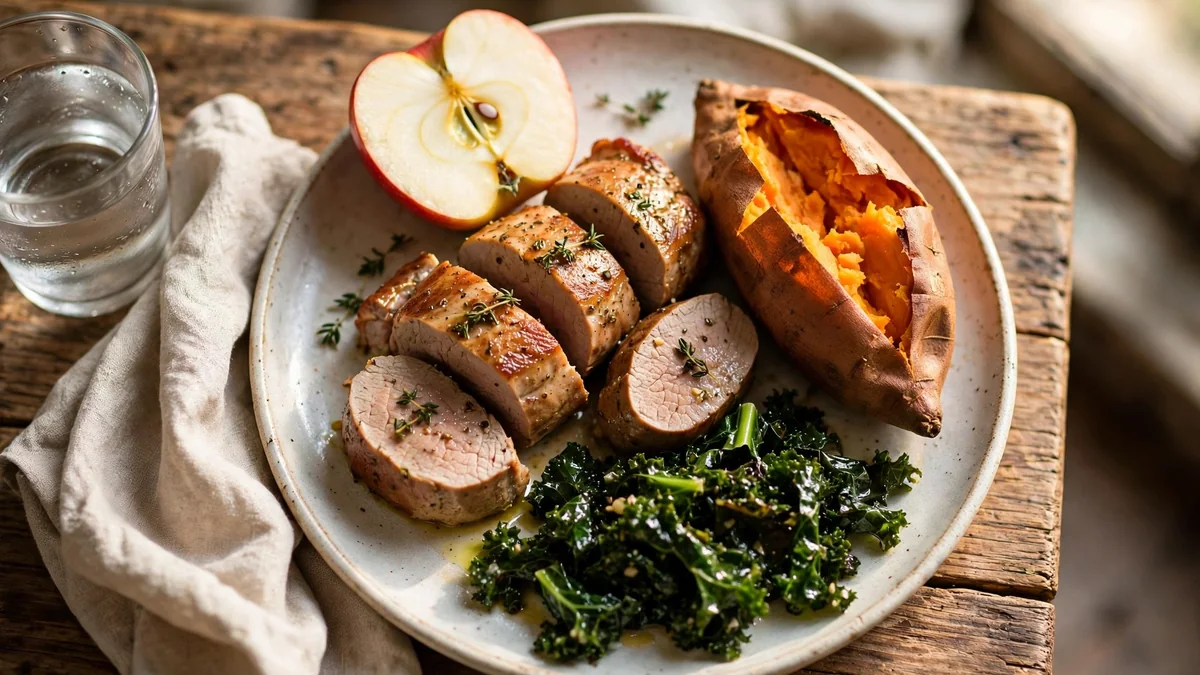
| Dinner | 6 oz cooked pork tenderloin; 1 medium baked sweet potato; 1 cup cooked kale; 1/2 medium apple | about 450 |
| Snacks | 1 cup skim milk; 3 cups air-popped popcorn | about 179 |
Day 3 total: about 1603 calories, 114 g protein, 215 g carbohydrate, 36 g fat, 44 g fiber.
Day 4
| Meal | Foods and portions | Calories |
|---|---|---|
| Breakfast | 1/2 cup dry rolled oats, cooked; 3/4 cup plain nonfat Greek yogurt; 1 cup blueberries; 1/2 oz walnuts (about 1 tablespoon chopped) | about 428 |
| Lunch | 1 cup cooked chickpeas; 3/4 cup cooked quinoa; 2 cups raw spinach; 2 teaspoons olive oil | about 529 |
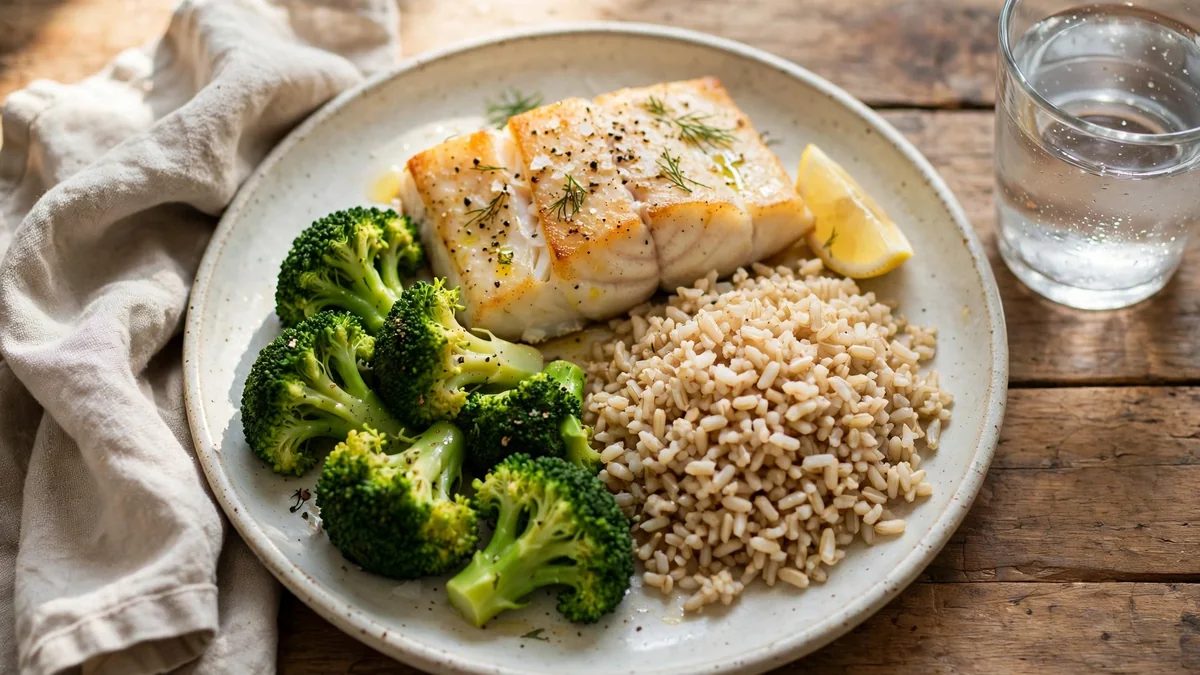
| Dinner | 6 oz cooked cod; 1 cup cooked brown rice; 1 cup cooked broccoli | about 461 |
| Snacks | 1/2 cup low-fat cottage cheese; 1 medium pear | about 183 |
Day 4 total: about 1600 calories, 110 g protein, 222 g carbohydrate, 34 g fat, 40 g fiber.
Day 5
| Meal | Foods and portions | Calories |
|---|---|---|
| Breakfast | 1 large egg, cooked any style; 2 large egg whites; 2 slices whole-wheat toast; 1/2 avocado; 1 orange | about 455 |
| Lunch | 5 oz cooked turkey breast; 2 slices whole-wheat bread; 2 tablespoons hummus; 1 medium tomato; 1/2 cucumber, sliced | about 460 |
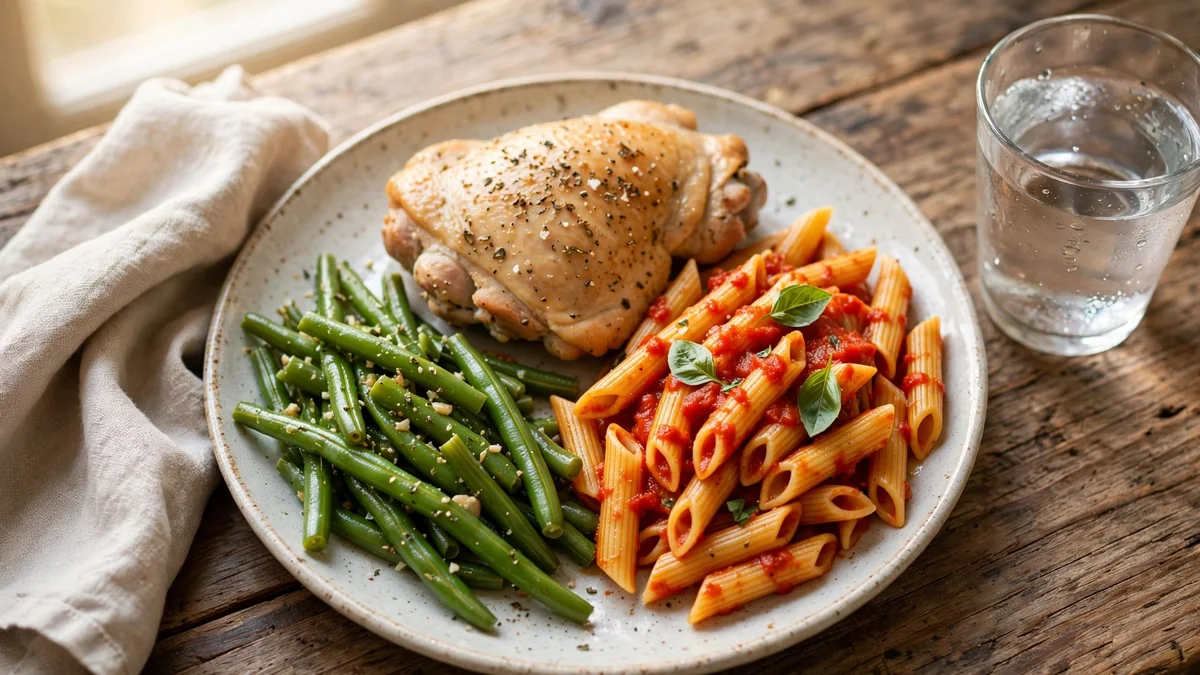
| Dinner | 5 oz cooked skinless chicken thigh; 1 cup cooked pasta; 1/2 cup marinara sauce; 1 cup cooked green beans | about 582 |
| Snacks | 3/4 cup plain nonfat Greek yogurt; 1/2 cup strawberries | about 125 |
Day 5 total: about 1621 calories, 143 g protein, 166 g carbohydrate, 43 g fat, 29 g fiber.
Day 6
| Meal | Foods and portions | Calories |
|---|---|---|
| Breakfast | 1 cup low-fat cottage cheese; 1 medium banana; 1 slice whole-wheat toast; 1 tablespoon honey | about 412 |
| Lunch | 100 g tempeh (about 3 1/2 oz); 1 cup cooked white rice; 1/2 cup shelled edamame; 1 teaspoon olive oil | about 567 |
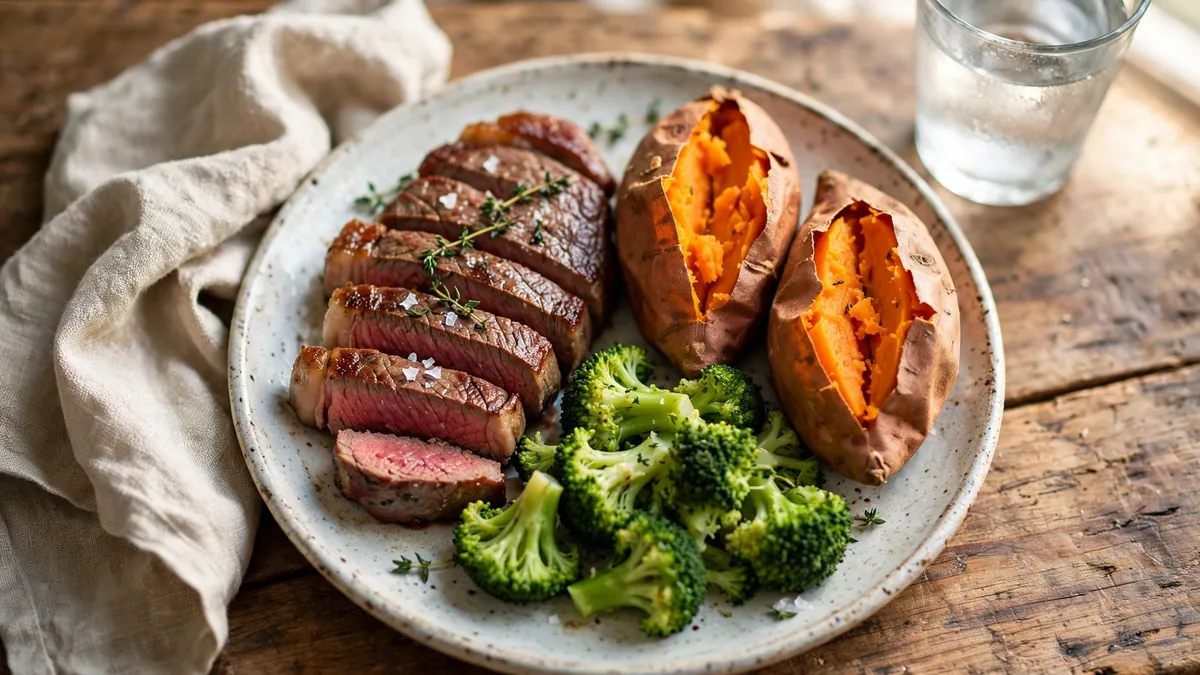
| Dinner | 5 oz cooked top sirloin; 2 medium baked sweet potatoes; 1 cup cooked broccoli | about 527 |
| Snacks | 1 orange; 1/2 oz dark chocolate (70% cacao) | about 145 |
Day 6 total: about 1651 calories, 122 g protein, 211 g carbohydrate, 40 g fat, 27 g fiber.
Day 7
| Meal | Foods and portions | Calories |
|---|---|---|
| Breakfast | 3/4 cup dry rolled oats, cooked; 3/4 cup skim milk; 1 cup raspberries; 1 tablespoon peanut butter | about 451 |
| Lunch | 5 oz cooked shrimp; 1 cup cooked quinoa; 1 cup cooked kale; 1 teaspoon olive oil | about 488 |
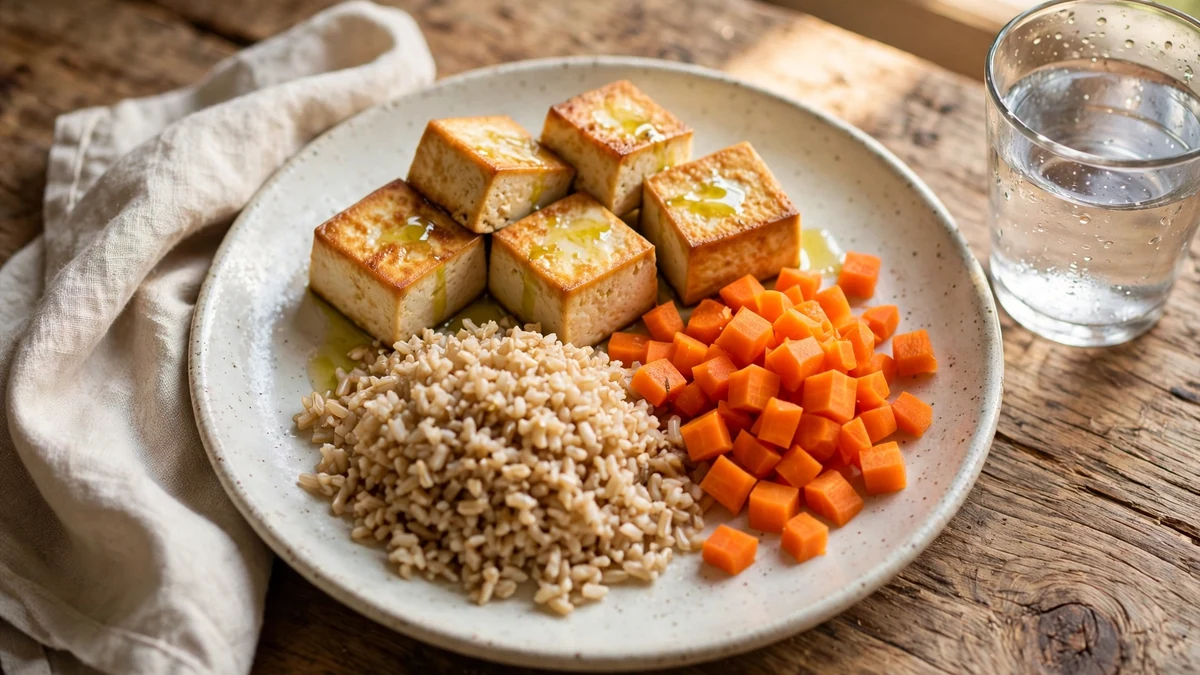
| Dinner | 1 portion firm tofu (125 g, about 4 1/2 oz); 3/4 cup cooked brown rice; 1 cup chopped carrots; 1 teaspoon olive oil | about 443 |
| Snacks | 1 cup grapes; 1 oz part-skim mozzarella | about 187 |
Day 7 total: about 1569 calories, 98 g protein, 196 g carbohydrate, 48 g fat, 33 g fiber.
Weeks 2 to 4: how to rotate this 28 day meal plan
Weeks 2, 3, and 4 repeat the pattern of the core week, not the identical menus. Every day keeps the same shape: a protein breakfast, a lunch built on a lean protein or legumes with a whole grain, a dinner with a protein, a grain or potato, and vegetables, and one snack. The outline below is a pattern guide with no separate calorie counts; keep core-week portions for every meal and the days land at the same approximate level.
Sample rotation week (use for week 2, then vary again for weeks 3 and 4)
| Day | Breakfast | Lunch | Dinner | Snack |
|---|---|---|---|---|
| Day 1 | Eggs, toast, cheddar, tomato | Tuna pita, hummus, greens | Salmon, baked potato, green beans | Apple and almonds |
| Day 2 | Yogurt, granola, strawberries, honey | Black bean tacos, avocado, salsa | Pork, sweet potato, kale, apple | Milk and popcorn |
| Day 3 | Oats, milk, banana, peanut butter | Chicken, brown rice, broccoli | Lentils, bulgur, feta, spinach | Yogurt and raspberries |
| Day 4 | Cottage cheese, banana, toast, honey | Tempeh, white rice, edamame | Sirloin, sweet potatoes, broccoli | Orange and dark chocolate |
| Day 5 | Oats, yogurt, blueberries, walnuts | Chickpea quinoa bowl, spinach | Cod, brown rice, broccoli | Cottage cheese and pear |
| Day 6 | Egg and egg whites, toast, avocado, orange | Turkey sandwich, hummus, vegetables | Chicken thigh pasta, marinara, green beans | Yogurt and strawberries |
| Day 7 | Oats, milk, raspberries, peanut butter | Shrimp, quinoa, kale | Tofu, brown rice, carrots | Grapes and mozzarella |
For week 3, change at least three proteins and two fruits from the week before. For week 4, return to your favorite days from the first three weeks; a familiar final week is easier to finish. Keep measuring oils, nuts, cheese, and granola all four weeks, because those portions drift first.
Grocery list
This list covers the full 7-day core week for one person, following the portions in the plan.
Produce
- Apples, bananas, oranges, pears, strawberries, raspberries, and grapes
- Blueberries (fresh or frozen)
- Spinach and green leaf lettuce
- Broccoli, green beans, kale, and carrots
- Cucumbers, tomatoes, and avocados
- Sweet potatoes and white potatoes
Meat and seafood
- Chicken breast and skinless chicken thighs
- Turkey breast
- Salmon fillets and cod fillets
- Shrimp
- Pork tenderloin and top sirloin steak
- Canned tuna in water
Dairy and eggs
- Large eggs and egg whites
- Plain nonfat Greek yogurt and plain low-fat Greek yogurt
- Low-fat cottage cheese
- Skim milk
- Cheddar cheese, feta cheese, and part-skim mozzarella
Pantry
- Rolled oats and granola
- Brown rice, white rice, quinoa, bulgur, and pasta
- Lentils, black beans, and chickpeas (dry or canned, rinsed)
- Tempeh, firm tofu, and shelled edamame
- Peanut butter, almonds, and walnuts
- Olive oil, salsa, marinara sauce, hummus, and honey
- Dark chocolate (70% cacao) and popcorn for air-popping
Frozen
- Frozen shelled edamame, if not bought fresh
- Frozen berries as a backup for fresh fruit
Bakery
- Whole-wheat bread
- Whole-wheat pita
- Corn tortillas (usually in the bread or international aisle)
Meal prep tips
- Batch-cook two proteins and two grains every Sunday; all four weeks are built from the same base.
- Keep a list of favorite meals as you go; week 4 is built from it.
- Freeze extra lentil and bean portions in weeks 1 and 2 for the busiest days of weeks 3 and 4.
- Shop from the same list each week and change only the proteins and fruit you plan to rotate.
- Portion oils, nuts, cheese, and granola rather than serving from the container.
Easy swaps
- Swap salmon for cod or shrimp in the same portion range on any fish day.
- Swap chicken and turkey for each other, ounce for ounce.
- Swap lentils, black beans, and chickpeas for each other in equal portions.
- Swap quinoa, bulgur, and brown rice for each other, cup for cup.
- Swap cottage cheese for the same amount of plain Greek yogurt.
- Swap any berry for another berry, cup for cup, and any nut for another nut, ounce for ounce.
How to adjust the calories safely
To add about 200 to 300 calories a day, for taller or more active people or anyone losing faster than about 1 to 2 pounds a week, use foods already in the plan: 1 oz of walnuts (about 183 calories) plus a hard-boiled egg (about 78 calories); or 2 tablespoons of peanut butter (about 191 calories) at breakfast; or 1 oz of almonds (about 162 calories) plus 1 cup of skim milk (about 86 calories).
Never go below 1,200 calories a day for women or 1,500 calories a day for men without medical supervision. Do not trim this plan down on your own to speed things up; if 1,600 calories is more than you need, choose a plan written at a lower level instead.
Common mistakes
- Planning four completely different weeks. The rotation system exists so each week is easier than the last, not harder.
- Letting portions drift by week 4 because the meals feel familiar. Keep measuring oils, nuts, cheese, and grains.
- Skipping the snack to bank calories for a big dinner later in the month. The day is designed as four eating times.
- Treating one off-plan day as the end of the block. A month is long enough to absorb several; return at the next meal.
- Weighing every day and reacting to normal ups and downs. Weigh weekly, in the same conditions, and judge the full four weeks.
Pair it with a workout
Build movement across the month: daily walks, plus two short strength sessions a week from our Exercise and Workouts category in weeks 1 and 2, adding a little time or a third session in weeks 3 and 4 if recovery feels good. Stop any exercise that causes pain, dizziness, or chest pain.
Frequently asked questions
How much weight will I lose in 28 days?
No plan can promise a number. A 1,600 calorie level lines up with gradual loss of about 1 to 2 pounds a week for many adults, but your own change depends on your size, activity, and starting point, and it will not be the same every week.
Do weeks 2 to 4 need new grocery lists?
No. The rotation reuses the same staples; only the proteins and fruit you choose to rotate change. Most people shop from one list all month.
What if I stall for a week or two?
Check the drift-prone portions first, oils, nuts, cheese, and granola, and confirm you are still eating all four meals. A flat week inside a four-week block is normal; if nothing changes across the whole block, talk with a registered dietitian about your level.
Can I take a break week in the middle?
You can pause and restart, but the block works best run straight through, because the habit is the point. For an unavoidable busy week, hold the pattern loosely with the plate structure and resume the written days the following week.
What should I do after day 28?
Keep your favorite week as a standing routine, raise calories gradually toward a maintenance level, and keep the portion habits. Many people repeat this plan after a maintenance period rather than cutting lower.
Is 1,600 calories right for men?
For smaller or less active men it can be a reasonable weight loss level, and it is above the 1,500 calorie men’s floor. Taller or active men should use the adjustment section to add food every day.
Sources and further reading
- USDA FoodData Central, the source for all food values used here: fdc.nal.usda.gov
- Dietary Guidelines for Americans: dietaryguidelines.gov
- MyPlate, meal building guidance: myplate.gov
- Centers for Disease Control and Prevention, healthy weight guidance: cdc.gov
- National Institute of Diabetes and Digestive and Kidney Diseases, healthy eating and physical activity: niddk.nih.gov
This article is for general educational purposes only and is not medical, nutrition, or fitness advice. Talk with your doctor or a registered dietitian before changing your diet or starting an exercise program.