Prints just the plan, like a recipe card.
Last updated: November 22, 2026.
This vegetarian meal plan for weight loss lays out seven full days of meat free eating at about 1,500 calories a day, with exact foods and US portions for breakfast, lunch, dinner, and a snack. Eggs and dairy are included, and every day is built around a protein source: Greek yogurt, cottage cheese, tofu, tempeh, edamame, lentils, or beans. Every calorie and macro number on this page was calculated from USDA FoodData Central values for the portions listed.
Protein averages about 93 grams a day and fiber about 41 grams, both common worries on a vegetarian plan and both covered here by design. At 1,500 calories, the plan is sized for gradual loss of about 1 to 2 pounds a week for many adults, though your own rate may vary and no plan can promise a result.
You will find more eating styles in our By Diet Style collection, part of the full Diet Plans library.
Who this plan is for, and who should not follow it
This plan is for adults who eat a lacto-ovo vegetarian diet, with eggs and dairy, and want a weight loss week without having to assemble protein from side dishes. It is also a useful template for anyone who wants several meat free days a week with the nutrition worked out.
This plan is not vegan: eggs, yogurt, cheese, and milk appear most days. This page is general education, not medical advice. Talk with your doctor or a registered dietitian before following it, especially if you have diabetes, kidney disease, or another condition affected by food, or if you take medication that food or weight change can affect. Do not follow this plan if you are under 18, pregnant, or breastfeeding.
If you have a history of disordered eating, talk with a doctor or a registered dietitian before following any diet plan. For eating disorder support in the US, visit the National Alliance for Eating Disorders at allianceforeatingdisorders.com.
Plan overview
| Measure | Amount |
|---|---|
| Target calories per day | about 1,500 |
| Average calories per day (as written) | about 1513 |
| Average protein per day | about 93 g |
| Average carbohydrate per day | about 190 g |
| Average fat per day | about 48 g |
| Average fiber per day | about 41 g |
| Meals per day | 4 (breakfast, lunch, dinner, and snacks) |
Every lunch and dinner has a legume, soy, egg, or dairy protein at its center, and snacks are built from yogurt, milk, nuts, and fruit rather than bars.
How this vegetarian meal plan for weight loss covers protein
The most common vegetarian weight loss problem is a day that looks healthy but adds up to very little protein, which makes hunger hard to manage at a lower calorie level. This plan prevents that by anchoring each meal. Breakfasts rotate Greek yogurt, cottage cheese, eggs, and oats with peanut butter. Lunches and dinners rotate lentils, black beans, kidney beans, chickpeas, tofu, tempeh, and edamame, each in a full cup or a standard soy portion rather than a garnish. The result is an average of about 93 grams of protein a day without protein powders or specialty products.
Two general nutrition notes belong in any vegetarian week. Iron from plant foods absorbs better when the same meal includes a vitamin C food, which is why beans here are so often served with tomatoes, salsa, or bell peppers. And anyone who eats no animal products at all over the long term should discuss vitamin B12 with their clinician, since B12 comes almost only from animal foods and fortified products; this plan’s eggs and dairy provide some, but intakes vary.
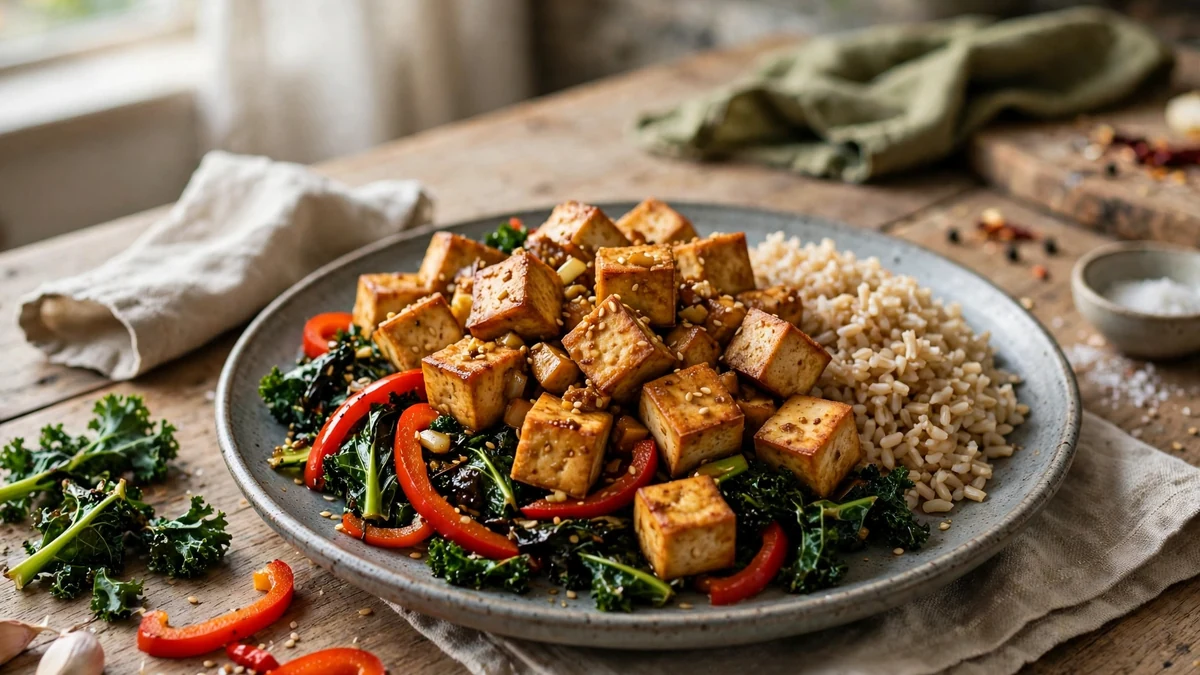
The 7-day vegetarian meal plan for weight loss
Portions are given in US household measures. Calories for each meal and day were calculated from USDA FoodData Central values for the exact foods and amounts listed. Rinse canned beans before use, and press firm tofu for a few minutes before cooking so it browns instead of steaming. Drink water, unsweetened tea, or black coffee freely.
Day 1
| Meal | Foods and portions | Calories |
|---|---|---|
| Breakfast | 2 large eggs; 1 oz cheddar cheese; 1 slice whole-wheat toast; 1 medium orange | about 412 |
| Lunch | 1 cup cooked lentils; 1 whole-wheat pita; 2 cups green leaf lettuce; 1/2 cucumber, sliced; 1 teaspoon olive oil | about 459 |
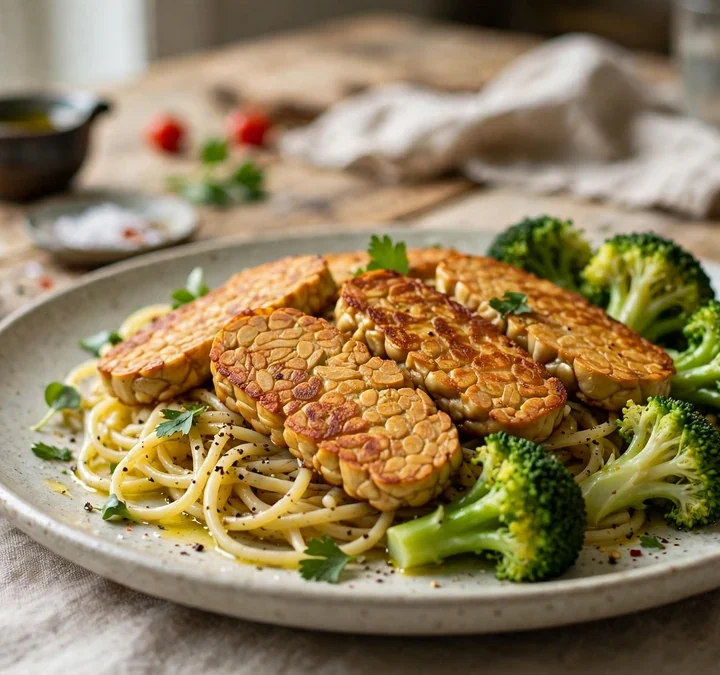
| Dinner | 100 g tempeh (about 3 1/2 oz); 1 cup cooked pasta; 1 cup cooked broccoli; 1 teaspoon olive oil | about 508 |
| Snacks | 3/4 cup skim milk; 1/2 oz almonds (about 12 almonds) | about 145 |
Day 1 total: about 1524 calories, 92 g protein, 185 g carbohydrate, 52 g fat, 35 g fiber.
Day 2
| Meal | Foods and portions | Calories |
|---|---|---|
| Breakfast | 1 cup plain nonfat Greek yogurt; 1/4 cup granola; 1 cup strawberries | about 340 |
| Lunch | 1 cup cooked black beans; 1 flour tortilla; 1/4 cup salsa; 1 oz part-skim mozzarella; 2 cups raw spinach | about 476 |
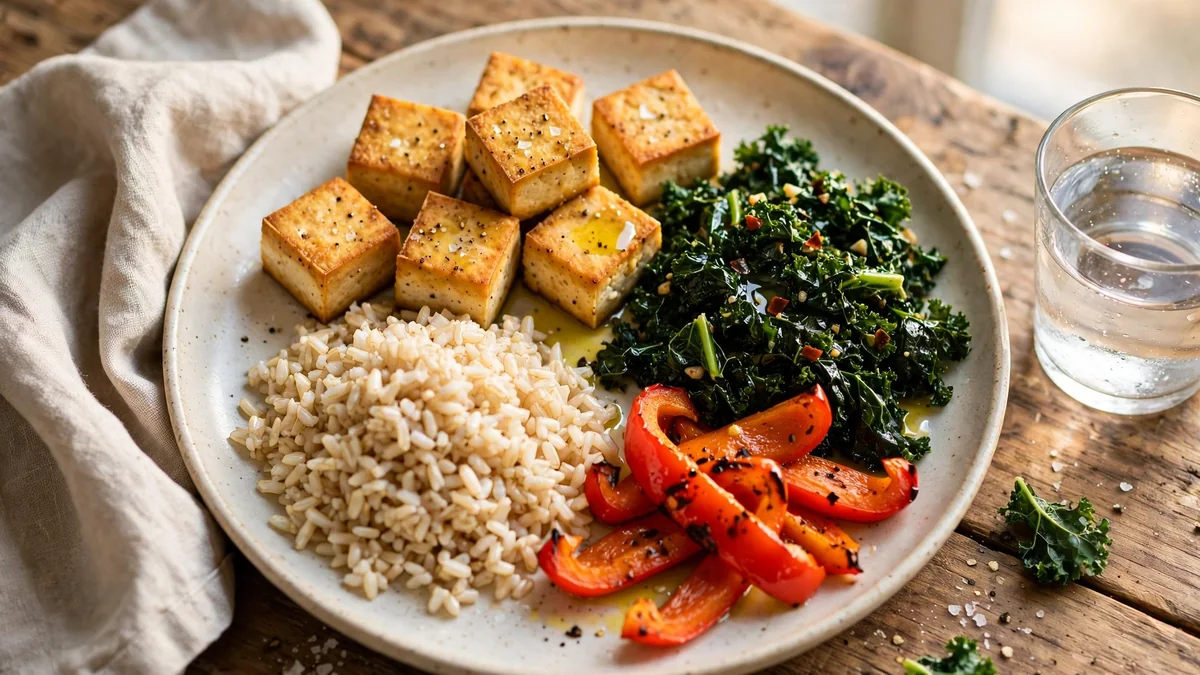
| Dinner | 125 g firm tofu (about 4 1/2 oz); 1/2 cup cooked brown rice; 1 cup cooked kale; 1 medium bell pepper; 1 tablespoon olive oil | about 499 |
| Snacks | 1 large egg; 1 medium apple | about 172 |
Day 2 total: about 1487 calories, 94 g protein, 173 g carbohydrate, 52 g fat, 38 g fiber.
Day 3
| Meal | Foods and portions | Calories |
|---|---|---|
| Breakfast | 1/2 cup dry rolled oats, cooked; 1 tablespoon peanut butter; 1 medium banana; 3/4 cup skim milk | about 417 |
| Lunch | 1 cup cooked chickpeas; 1/2 cup cooked bulgur; 1 medium tomato; 1/2 cucumber, sliced; 1 oz feta cheese, crumbled; 1 teaspoon olive oil | about 496 |
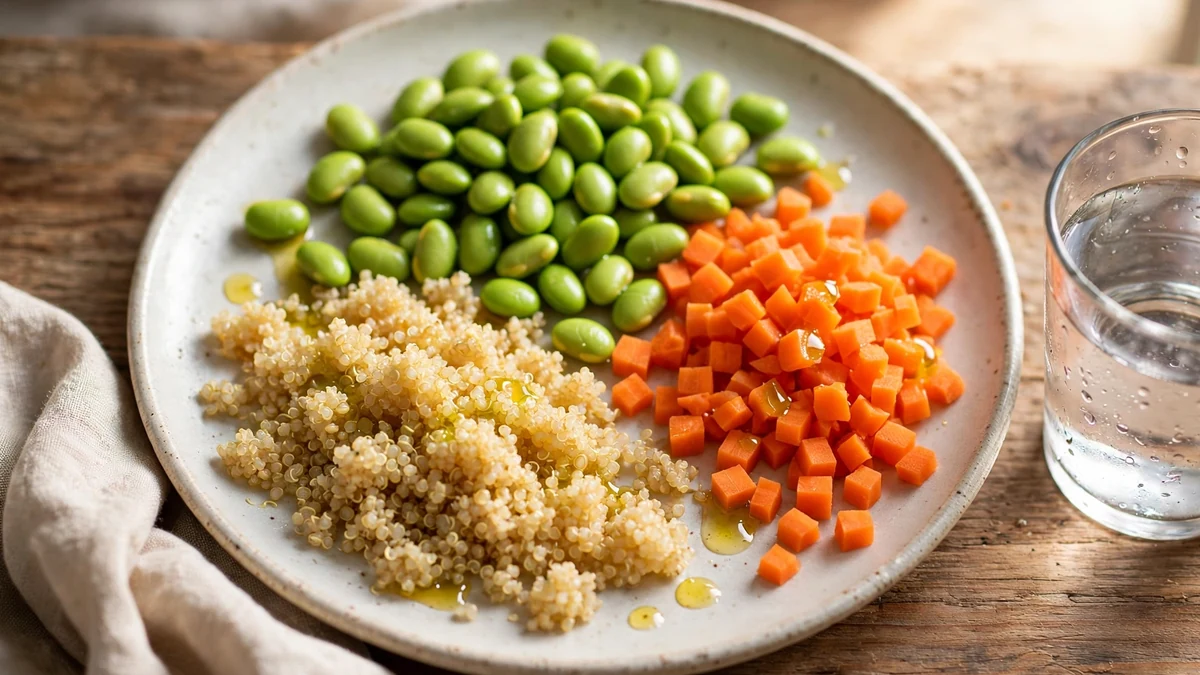
| Dinner | 1 cup shelled edamame; 1/2 cup cooked quinoa; 1 cup chopped carrots; 1 teaspoon olive oil | about 391 |
| Snacks | 3/4 cup plain nonfat Greek yogurt; 1 cup grapes | about 204 |
Day 3 total: about 1508 calories, 82 g protein, 217 g carbohydrate, 42 g fat, 42 g fiber.
Day 4
| Meal | Foods and portions | Calories |
|---|---|---|
| Breakfast | 3 large eggs; 2 cups raw spinach, cooked with the eggs; 1 medium tomato; 1 slice whole-wheat toast | about 349 |
| Lunch | 1 cup cooked kidney beans; 1/2 cup cooked white rice; 1 cup cooked green beans; 1 oz cheddar cheese | about 504 |
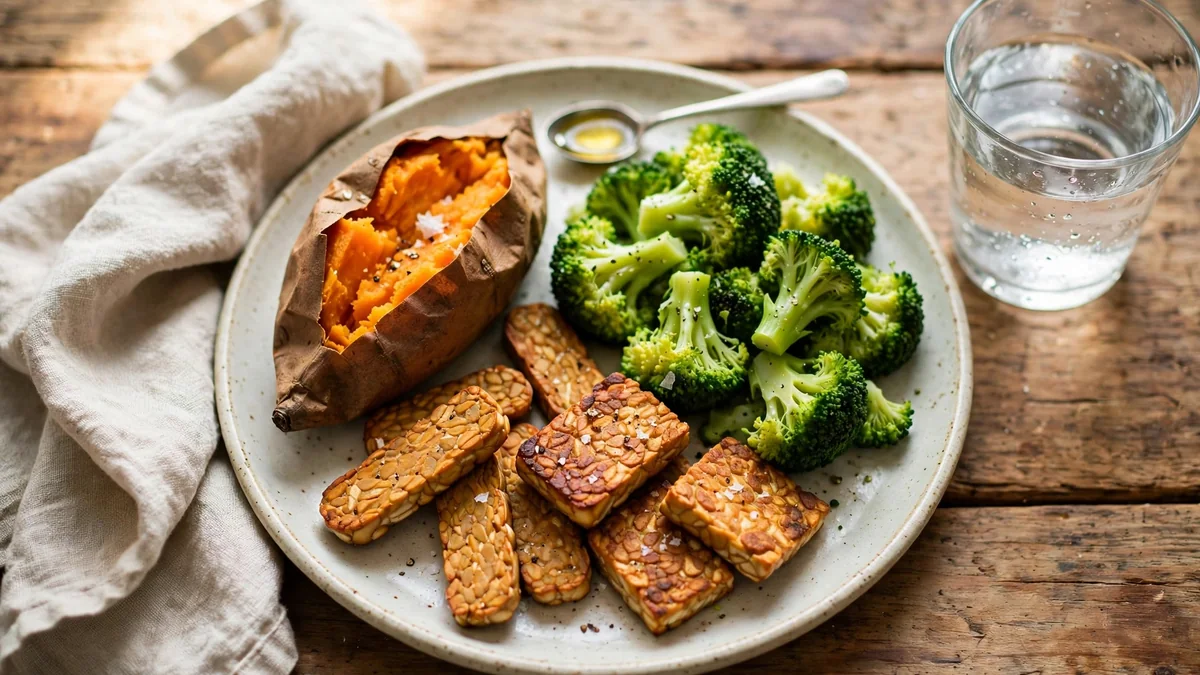
| Dinner | 100 g tempeh (about 3 1/2 oz); 1 medium baked sweet potato; 1 cup cooked broccoli; 1 teaspoon olive oil | about 389 |
| Snacks | 3/4 cup plain low-fat (2%) Greek yogurt; 1 cup blueberries | about 208 |
Day 4 total: about 1451 calories, 97 g protein, 170 g carbohydrate, 48 g fat, 35 g fiber.
Day 5
| Meal | Foods and portions | Calories |
|---|---|---|
| Breakfast | 1 cup low-fat cottage cheese; 1 cup raspberries; 1 slice whole-wheat toast; 1 tablespoon honey | about 371 |
| Lunch | 1 cup cooked lentils; 1/2 cup cooked pasta; 1/2 cup marinara sauce; 2 cups raw spinach; 1 oz part-skim mozzarella | about 495 |
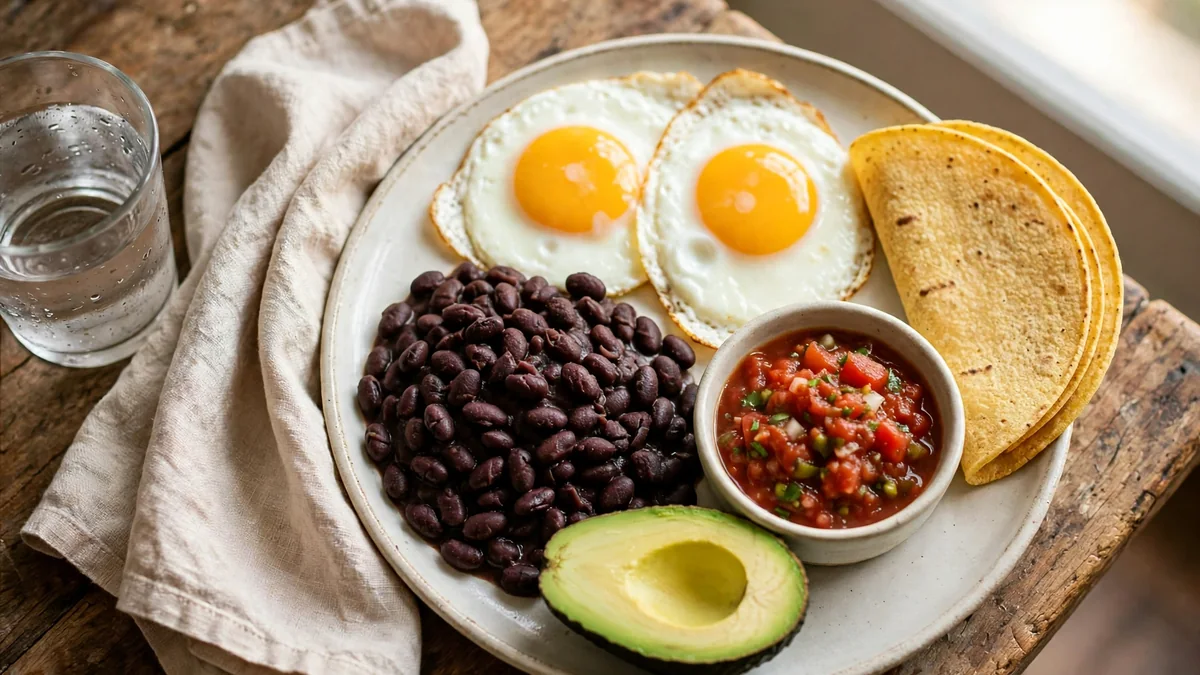
| Dinner | 2 large eggs; 1/2 cup cooked black beans; 2 corn tortillas; 1/4 cup salsa; 1/2 avocado | about 520 |
| Snacks | 3 cups air-popped popcorn; 1 cup skim milk | about 179 |
Day 5 total: about 1565 calories, 103 g protein, 211 g carbohydrate, 39 g fat, 51 g fiber.
Day 6
| Meal | Foods and portions | Calories |
|---|---|---|
| Breakfast | 1/2 cup dry rolled oats, cooked; 3/4 cup plain low-fat (2%) Greek yogurt; 1 cup blueberries | about 360 |
| Lunch | 125 g firm tofu (about 4 1/2 oz); 1 flour tortilla; 1/4 cup salsa; 2 cups green leaf lettuce; 1/2 avocado | about 463 |
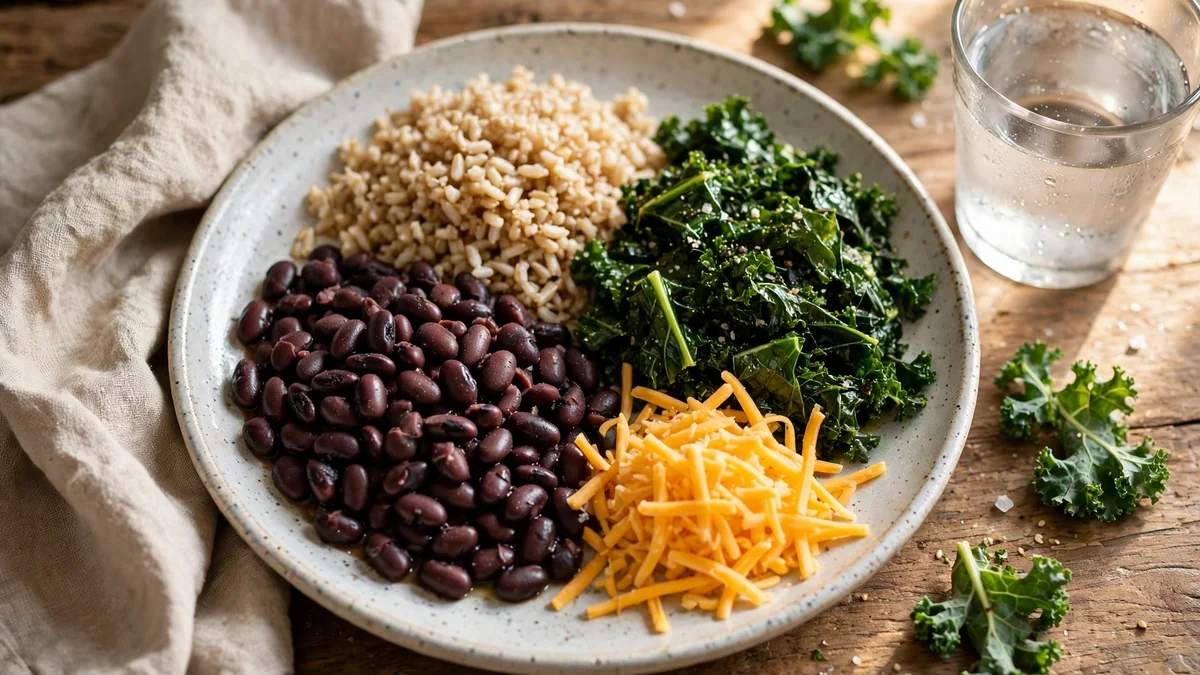
| Dinner | 1 cup cooked black beans; 1/2 cup cooked brown rice; 1 cup cooked kale; 1 oz cheddar cheese | about 513 |
| Snacks | 1 medium pear; 1/2 oz almonds (about 12 almonds) | about 183 |
Day 6 total: about 1519 calories, 84 g protein, 196 g carbohydrate, 52 g fat, 45 g fiber.
Day 7
| Meal | Foods and portions | Calories |
|---|---|---|
| Breakfast | 3/4 cup plain nonfat Greek yogurt; 1/2 cup dry rolled oats, cooked; 1 cup strawberries; 1/2 oz almonds (about 12 almonds) | about 382 |
| Lunch | 1 cup cooked kidney beans; 1/2 cup cooked quinoa; 1 medium bell pepper; 1 teaspoon olive oil; 1 oz feta cheese, crumbled | about 474 |
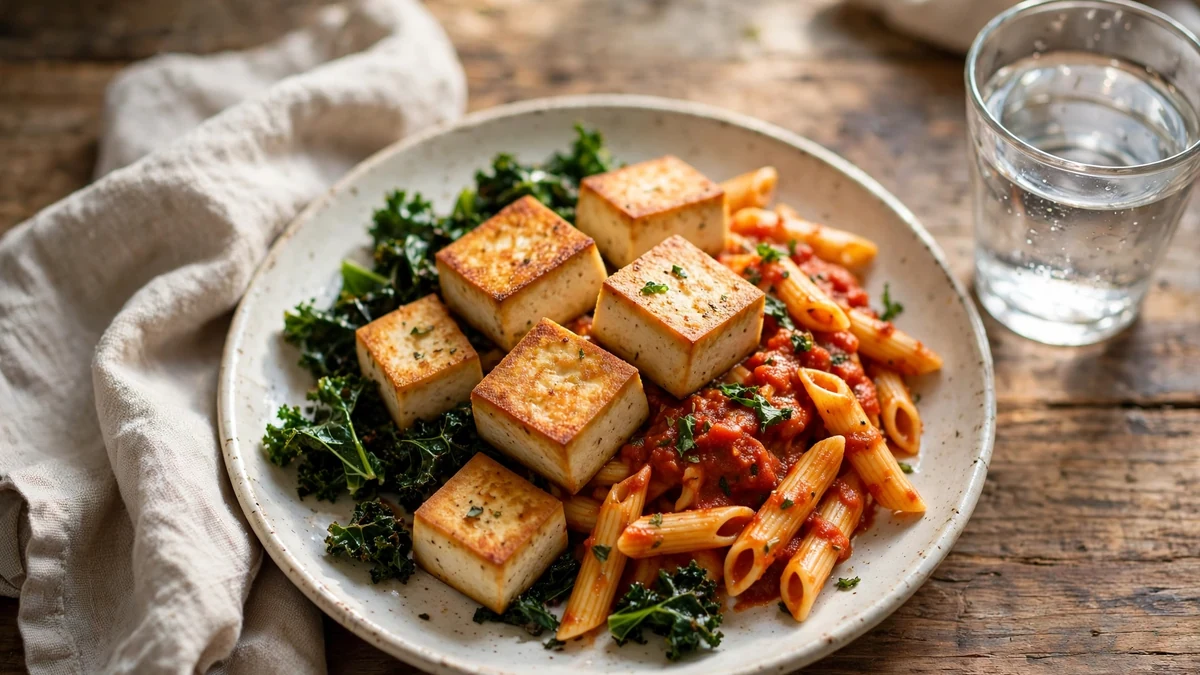
| Dinner | 125 g firm tofu (about 4 1/2 oz); 1/2 cup cooked pasta; 1/2 cup marinara sauce; 1 cup cooked kale | about 410 |
| Snacks | 3/4 cup plain nonfat Greek yogurt; 1 oz dark chocolate (70% cacao) | about 268 |
Day 7 total: about 1534 calories, 102 g protein, 175 g carbohydrate, 52 g fat, 39 g fiber.
Grocery list
This list covers the full week for one person following the plan as written.
Produce
- Oranges
- Apples
- Pears
- Bananas
- Strawberries
- Blueberries
- Raspberries
- Grapes
- Broccoli
- Green beans
- Kale
- Fresh spinach
- Green leaf lettuce
- Carrots
- Bell peppers
- Tomatoes
- Cucumbers
- Avocados
- Sweet potatoes
Plant proteins
- Firm tofu
- Tempeh
Dairy and eggs
- Large eggs
- Plain nonfat Greek yogurt
- Plain low-fat Greek yogurt
- Low-fat cottage cheese
- Skim milk
- Cheddar cheese
- Part-skim mozzarella
- Feta cheese
Pantry
- Rolled oats
- Brown rice
- White rice
- Quinoa
- Bulgur
- Pasta
- Black beans
- Kidney beans
- Chickpeas
- Lentils
- Peanut butter
- Olive oil
- Salsa
- Marinara sauce
- Honey
- Granola
- Dark chocolate (70% cacao)
- Popcorn for air-popping
- Almonds
Frozen
- Shelled edamame
Bakery
- Whole-wheat bread
- Whole-wheat pita
- Flour tortillas
- Corn tortillas
Meal prep tips
- Cook the lentils, black beans, and kidney beans in one session on day 1, or use canned beans rinsed well; the week’s lunches and dinners draw on all three.
- Cook the brown rice, quinoa, and bulgur in the same session and refrigerate in measured portions.
- Press and cube the tofu for days 2, 6, and 7 in one batch and store it in a covered container, so it cooks faster on busy nights.
- Wash the greens, berries, and salad vegetables when you get home, and portion the almonds and popcorn into single servings.
Easy swaps
- Swap lentils, black beans, kidney beans, and chickpeas for each other cup for cup in any lunch or dinner.
- Swap tofu and tempeh for each other in the same portions; tempeh is higher in calories, so the day total moves a little.
- Swap Greek yogurt for low-fat cottage cheese in the same amount at breakfasts and snacks.
- Swap raspberries, blueberries, and strawberries cup for cup depending on season and price.
- Swap the edamame dinner on day 3 for a cup of cooked lentils with the same quinoa and carrots.
- Swap cheddar, mozzarella, and feta for each other in 1 oz amounts where cheese appears.
How to adjust the calories safely
If this plan leaves you persistently hungry, low on energy, or losing faster than about 2 pounds a week, add food. To add roughly 200 to 300 calories a day using foods already in the plan, choose one: 3/4 cup of plain Greek yogurt (about 100 calories) plus 1 tablespoon of peanut butter (about 96 calories); or 1 oz of almonds (about 162 calories) plus a medium carrot (about 25 calories) and 1 teaspoon of olive oil on your vegetables (about 40 calories); or an extra 1 cup of cooked quinoa split between lunch and dinner (about 222 calories).
Never go below 1,200 calories a day for women or 1,500 calories a day for men. Because this plan is written at the men’s floor of 1,500, men should add one of the options above every day, and taller or very active adults should do the same when the plan is not enough.
Common mistakes
- Building meals from side dishes. A salad, a roll, and fruit is not a vegetarian meal for weight loss purposes; every meal here has a protein anchor, and yours should too.
- Relying on cheese as the main protein. Cheese appears in this plan in 1 oz amounts for flavor; the protein comes from legumes, soy, eggs, and yogurt.
- Skipping the snack and arriving at dinner ravenous, which usually leads to portions far beyond the plan.
- Assuming vegetarian automatically means low calorie. Nuts, oils, granola, and dark chocolate are all vegetarian and all calorie dense; they are measured in this plan for a reason.
- Forgetting variety. Rotating legumes and soy foods, as this plan does, covers a wider range of nutrients than eating the same bean dish daily.
Pair it with a workout
Strength training matters on any weight loss plan, and it matters at least as much without meat, because keeping muscle is part of keeping protein needs met. Browse the walking plans and beginner strength routines in our Exercise and Workouts category, start with the level that matches your current fitness, and build up gradually. Stop any exercise that causes pain, dizziness, or chest pain, and check with your doctor before starting if you have been inactive or have any medical condition.
Frequently asked questions
How much protein does this plan provide?
About 93 grams a day on average, from Greek yogurt, cottage cheese, eggs, tofu, tempeh, edamame, lentils, beans, and chickpeas. Every lunch and dinner is anchored by one of those foods in a full portion, which is how a vegetarian plan reaches that level without powders or bars.
How is this different from the high-protein vegetarian plan on this site?
Our 7-Day No-Sugar High-Protein Vegetarian Meal Plan targets a higher protein level and removes all added sugar, including honey and granola. This plan is the general version: moderate protein, grocery foods, and small amounts of honey and granola where they fit. The menus are different, so you can rotate the two.
Is this plan vegan?
No. It includes eggs, Greek yogurt, cheese, and milk. Several days can be made plant based with swaps, for example tofu in place of eggs at breakfast and extra beans or edamame in place of yogurt snacks, but the calorie and protein totals would change, so treat those as a variation rather than the plan as written.
Will I get enough iron without meat?
This plan includes lentils, beans, chickpeas, tofu, and spinach most days, all sources of plant iron, and it usually serves them with vitamin C foods such as tomatoes, salsa, or bell peppers, which help absorption. If you have been told your iron is low, ask your clinician whether this plan fits you before starting.
Can I repeat this week?
Yes. The days are balanced and self-contained, so you can repeat the week or rotate it with the other vegetarian plan on this site. Use the swaps list to change legumes, grains, and fruits so the second week does not feel identical.
What if I sometimes eat fish?
Then your pattern is pescatarian rather than vegetarian, and nothing about this week breaks. You can follow the plan as written on meat free weeks; there is no need to add fish to it.
Sources and further reading
- USDA FoodData Central, the source for every calorie and nutrient value in this plan: fdc.nal.usda.gov
- Academy of Nutrition and Dietetics, for vegetarian eating guidance: eatright.org
- MedlinePlus, for plain language background on vegetarian diets and vitamin B12: medlineplus.gov
- Dietary Guidelines for Americans, which includes a healthy vegetarian dietary pattern: dietaryguidelines.gov
- MyPlate, for balanced plate ideas built from the same food groups: myplate.gov
This article is for general educational purposes only and is not medical, nutrition, or fitness advice. Talk with your doctor or a registered dietitian before changing your diet or starting an exercise program.